Blog of the El Camino Real Chapter, Texas Master Naturalists, Milam County, Texas
Author: Sue Ann (Suna) Kendall
The person behind The Hermits' Rest blog and many others. I'm a certified Texas Master Naturalist and love the nature of Milam County. I manage technical writers in Austin, help with Hearts Homes and Hands, a personal assistance service, in Cameron, and serve on three nonprofit boards. You may know me from La Leche League, knitting, iNaturalist, or Facebook. I'm interested in ALL of you!
Sharing this post, since it’s all about the spring blossoms and our crazy weather! Remember to send me your ideas and nature sightings, fellow Master Naturalists–Sue Ann
Well, shoot, just when I was really getting into long walks and frolicking amid the wildflowers, a late cold front has driven me indoors. Yesterday, we hosted an event at 11 am at our office. The front showed up right as all the attendees were coming in or trying to find us. A big wind and brief rain surprised everyone, and blew away my meeting signs. March decided not to go out like a lamb after all!
We have a patch of pink evening primrose that is nearly white. It’s striking against the green grass.
But, I did get a lot of flower-viewing, pet walking, and iNaturalist uploading done before the front! It’s a great year for flowers, thanks to the winter rains, so I know I’ll be out finding more to share soon.
At the March 2019 Chapter Meeting, Cindy Travis shared her recipe for home-made suet blocks for bird feeders. These attract warblers, woodpeckers, chickadees, wrens, and more. She’s agreed to share it with readers of our blog!
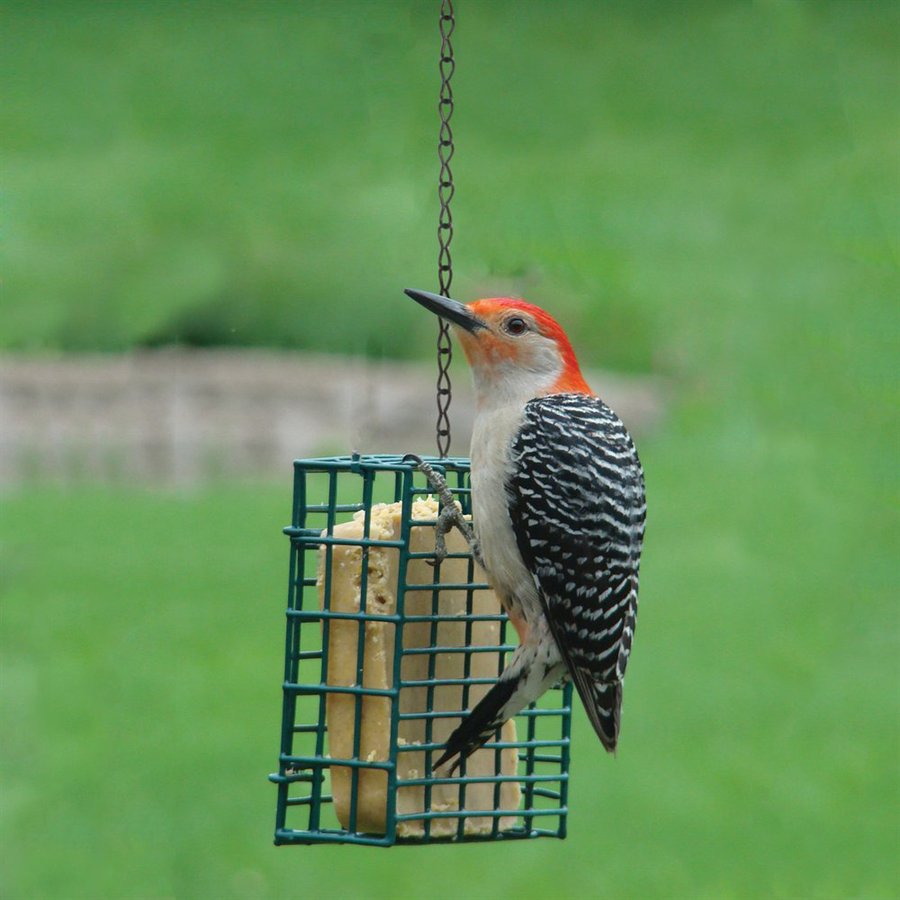
This red-bellied woodpecker likes the inexpensive feeder from Lowe’s. Photo from Lowe’s
Cindy says you can easily double or triple the recipe, so you’ll have plenty. The blocks freeze well.
Ingredients
1 cup lard
1 cup crunchy peanut butter
1/3 cup sugar
1 cup whole wheat flour
2 cups cornmeal
1 cup raisins, seeds, or crumbled eggshells (optional)
(Cindy recommends currants as fruit, because they are small)
Instructions
Dump all ingredients in a pot and heat over medium heat until the lard and peanut butter melt. Stir thoroughly.
Pour into a square pan, bread pan (you can slice the blocks), or into a Ziploc-type plastic storage container the size of your bird feeder.
Cool until solid, then hang in your block feeder.
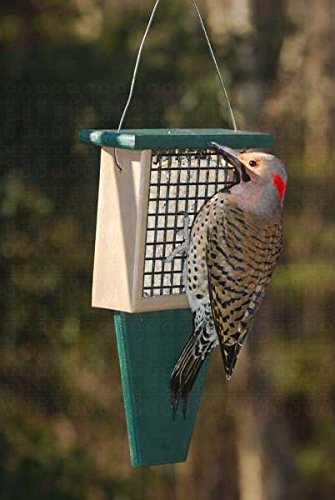
This flicker likes the feeder with tail rest from Amazon. Photo from Amazon.
PS: You can easily find suet feeders in home improvement stores (Lowe’s Home Depot) or big box stores with garden departments (Target, Wal-Mart, etc.). Specialty wild bird feeding stores will have a larger selection, and of course you can find them online (here is a sampling from Wild Birds Unlimited). You can attach them to trees, hang them on poles, etc.
Volunteers from our chapter have been hard at work! The Milam Wildscape Project that we’ve reporteed on before is progressing quite quickly.
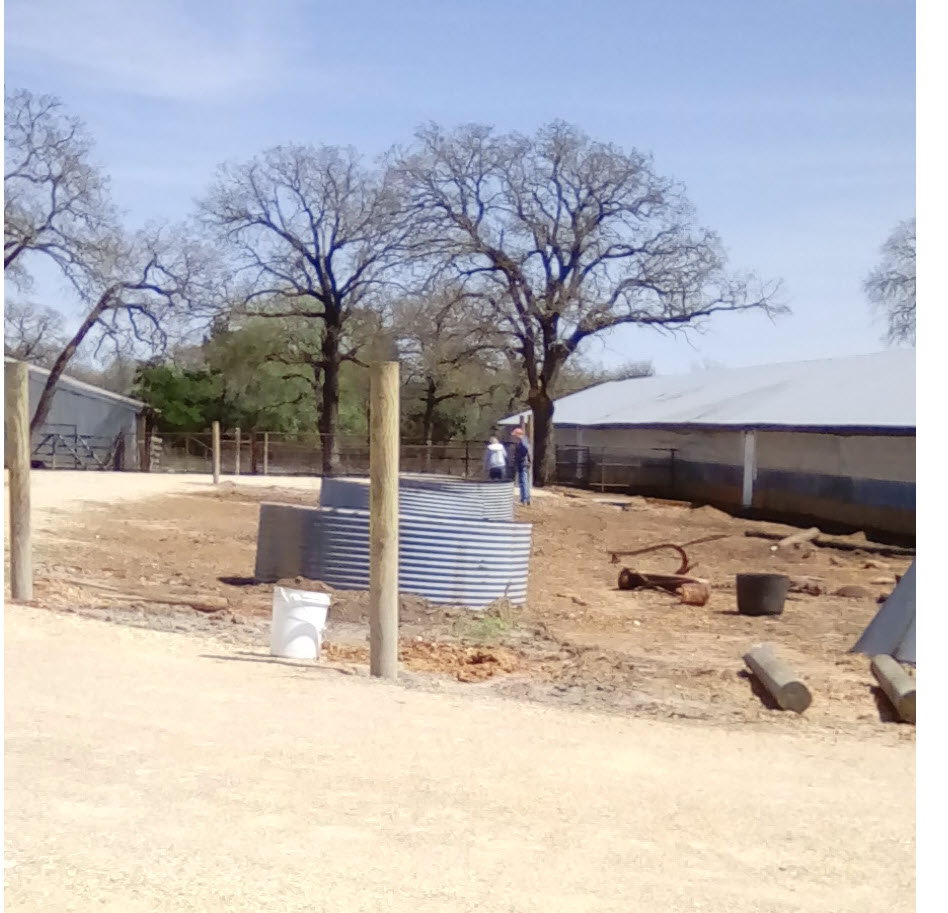
Getting ready to make a fence.
The team has managed to install fencing, arrange some of the cool metal structures at the site, and installed gates so people can get into the garden, but hungry animals stay out.
Here you can see the sturdy new raised path to the chicken house and future raised beds.
El Camino Real Chapter member Larry Kocian is designing pathways and garden plots. He knows the pathways need to be handicap accessible, so they will be wide and smooth.
The next phase is planting. We are now beginning to gather plants.
How are those animals?
So glad you asked! The beautiful kittens and all those hundreds of chicks are growing up at the farm. If you’re looking for chickens, it’s a great time to get some!
I’m also fine, thanks for asking.
The heritage Rio Grande Turkeys are not allowed to roam now, like they used to, as they are old enough that they would run off to make a nest and not come back at night. We don’t want that!
We can always use more volunteers. Check out Bird and Bee Farm for more information.
On Saturday, March 9, 2019, thirteen students; their teacher, Dr. Nichole Wiedemann, from the University of Texas School of Architecture; and Steven Gonzales, Director of El Camino Real de los Tejas National Historic Trail Association (ELCAT), arrived at Cedar Hill Ranch in Gause to hike a small part of El Camino de los Tejas National Historic Trail.
Figure 2: Dr. Estell Meets the UT Students
There they met Dr. Lucile Estell who explained how she and the late historian Joy Graham worked to get the approximately 2580 miles of trail nationally recognized as the 19th National Historic Trail in the United States in 2004 and then subsequently worked to get signage placed throughout most of Milam County. (Dr. Estell has authored/co-authored several books including El Camino Real de lost Tejas (Images of America) and Historic Bridges of Milam County; and served on the board of ELCAT for many years since its beginning, including as president and vice-president.)
Our chapter meets on the second Thursday of each month. We always look forward to a great speaker, and this month was no exception. El Camino Real chapter member Ann Collins put together a presentation on the birds that came to her back yard over this past winter, and she brought together two other members to provide additional information. Here are some highlights.
Ann Collins tells us you can still enjoy birding, even if you haven’t memorized all the pertinent features. Her well-loved Peterson’s Guide also helps a lot.
Ann both started and ended the presentation, first sharing some of the interesting birds she’s seen this year (leaving out the old favorites we all know and love). Her discussion of the three types of warblers helped me a lot, because I always have trouble with them, too, but now at least I’ll know a couple more. And she is GREAT with sparrows.
It impressed me that Ann has feeders that hold 40 pounds of black sunflower seeds. Wow. She did say that meant she didn’t have to fill the feeders so often. She also told us about the shallow wading ponds she had made, which birds really like, especially is the water is moving.
Recording Your Sightings
Joyce Conner then told us about some ways we can record the birds we see online and help to support research. She compared the relative merits of eBird versus the Project Feeder Watch. To quickly sum it up, on eBird you can document any bird you see, anywhere. Plus it’s free, though they appreciate a subscription to the Cornell Lab, who sponsor it. In the Backyard Feeder Watch, you watch just one spot for the winter birding season and record only what you see there on the same days of the week each week. It costs $15 per year, and they send you a lot of information, calendars, etc., when you join. So, they each collect slightly different kinds of data, but both are helpful for researchers.
Joyce explains the intricasies of bird-watching software, while Jackie looks on.
Joyce also noted there are many other places you can record bird sightings (like iNaturalist where most of mine go, though I’m trying to get up and running with eBird, too).
Also, she was kind enough to share with us some wonderful materials from the Feeder Watch folks. There’s even a little poster we can put up!
Attracting Birds
Next, Cindy Travis shared how she attracts birds that aren’t the “feeder” type by making her own suet feeders. The recipe seems easy (and gooey). That will be shared in another blog post, so you can try it, too! Suet (which contains lard, peanut butter, flour, and optional dried seeds, fruits and nuts) is great for woodpeckers and other birds that like to climb trees, as well as many other birds that prefer more hearty fare than seeds.
Cindy shares her suet recipe. You can see samples on the table.
Parts and More Parts
At the end of the presentation, Ann came back to talk to us a bit about bird anatomy, which she freely admitted was not her specialty, but the original speaker who was going to cover it was off in Austin becoming a Master Birder, which sounds really exciting!
All these parts make up a whole bird.
The part of this talk that fascinated me was when Ann talked about there being different ways to identify birds. She says she does it visually, taking in the entire bird. She said she learned to read the same way, word by word. She compared the other main way to ID birds as more like phonetics in reading, where you learn all the parts and put them together, often identifying a bird by just one pertinent feature. (Our auditory learner friends often identify birds by sound, which makes it easy to know what birds are there that you can’t see; for me it’s usually woodpeckers and Chuck-will’s-widows.)
The sun sets over Milano, Texas.
I was only SLIGHTLY distractred from the beautiful sunset that was going on during the meeting. I really shouldn’t sit near windows!






 Nature Along the El Camino Real