Wolf Spiders of Winter

by Eric Neubauer

Finding wolf spiders during winter is a challenge since favorable temperatures are uncommon and often short lived. It’s a good time of year for me to concentrate on local species that need better photo
coverage. One such species is Gladicosa pulchra, the contrary wolf spider that dwells in the treetops. They seem to be absent from the Blackland Prairie, and I’m only aware of them being at one location in each of Burleson and Milam Counties.
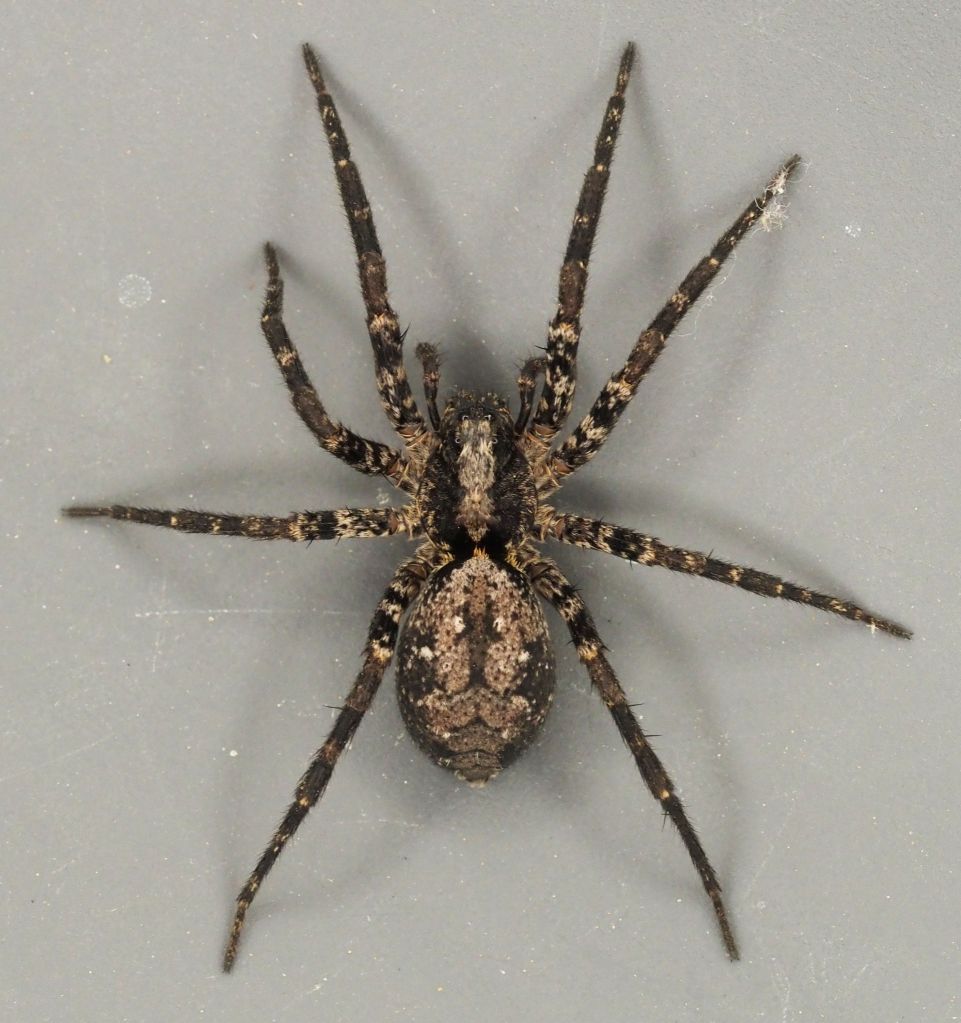
Female – dark

On December 25, I visited the Cedar Hill Nature Preserve, and on January 7 I visited Edwards Ranch. Spotlighting was the easiest way to find them. I quickly discovered they are more plentiful than I expected, and that December-January is the height of their mating season. I also found that while they live in the canopies of post oaks most of the time, they all follow the leaves down to the ground where they became a lot easier to catch for my photos of several adult females, some already gravid, and two adult males.
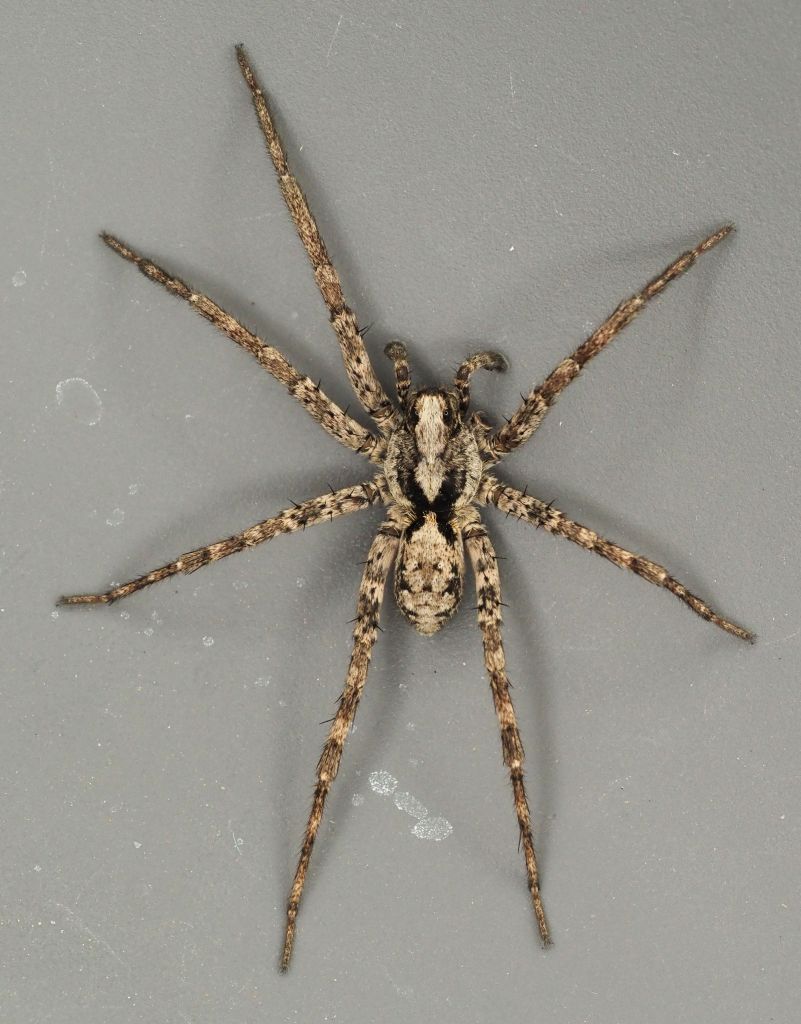
Male – light

Gladicosa pulchra was first described in 1877, spent time in several different genera, and was ultimately put into a new Gladicosa genus by Brady in 1987. Regarding the color, he wrote,

“The range of color in G. pulchra is greater than that of G. gulosa. I have noted light forms and dark forms of pulchra. These do not represent a genetic polymorphism but are the extremes in a color continuum. There is no discernible correlation between geographic locality and color pattern among the specimens examined. The darker forms are much more numerous than the light colored ones.”

With my recent observations, I believe I have a natural explanation for the two forms, and it’s most certainly genetic polymorphism though of the sexual dimorphism variety. A little field work certainly paid off. True to the last sentence, I saw more dark females than pale males which is typical of most species since males don’t live as long as females as adults. Females may even delay egg production while waiting for better conditions.


Addendum: Coincidentally, as I was getting this blog ready to upload, I looked over and there was a Hogna antelucana watching me. I took this friend outside to a warm spot — Sue Ann Kendall
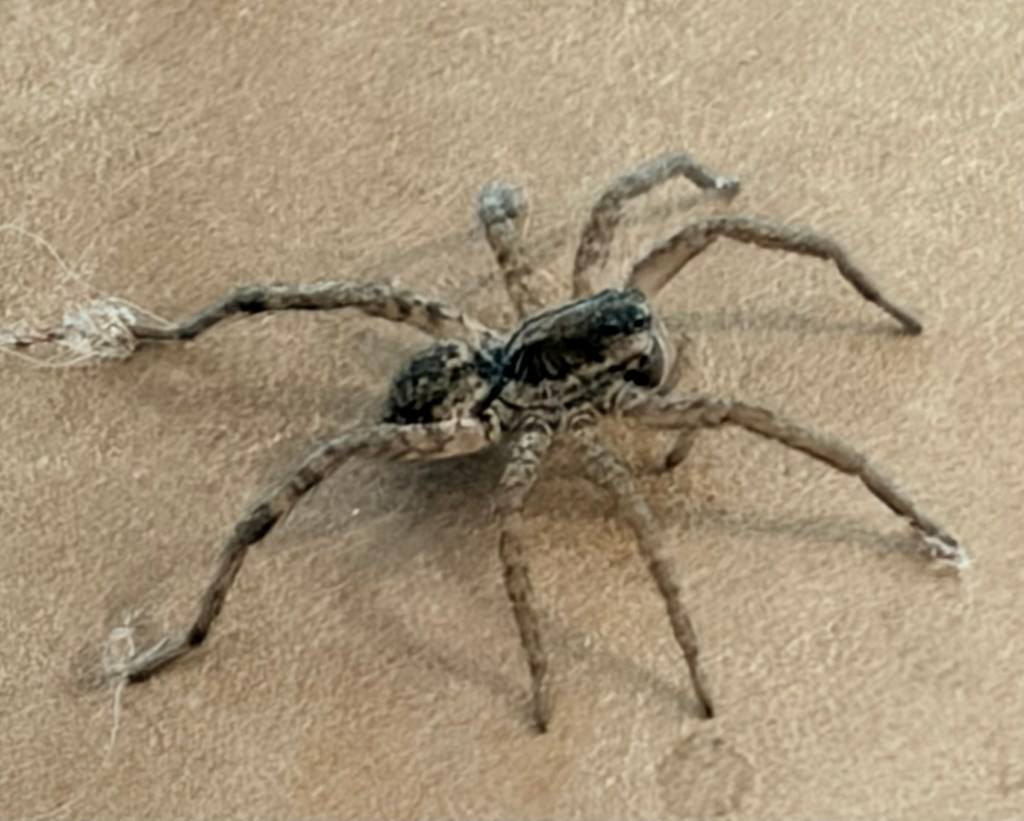
My phone doesn’t take as clear photos as Eric’s camera and lighting.

Are There Beavers in Milam County?

by Sue Ann Kendall
It turns out, the answer is yes, though I am sure many of you already know that. I went on a great adventure on Friday with my fellow Master Naturalist to see for ourselves. We escaped to the wilderness known as her property outside of Cameron and searched for a rumored beaver dam on the spring-fed creek that runs through the land. It was a beautiful warm day for exploring. (Note that I am not providing the exact location to maintain the beavers’ and property owner’s privacy.)

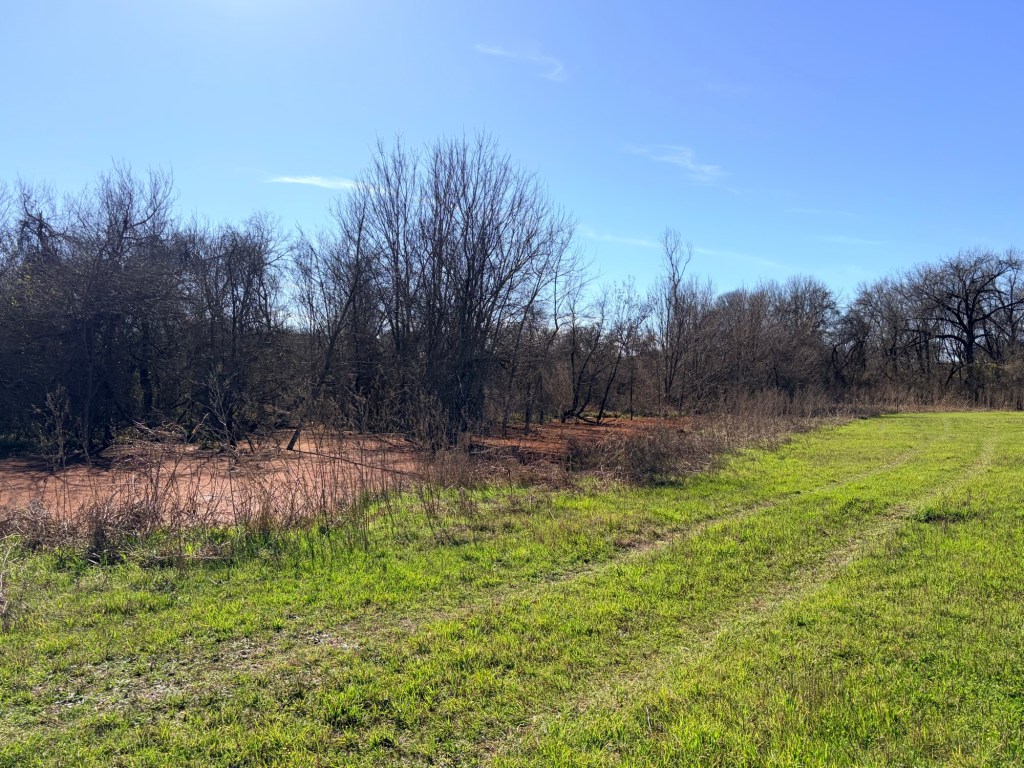
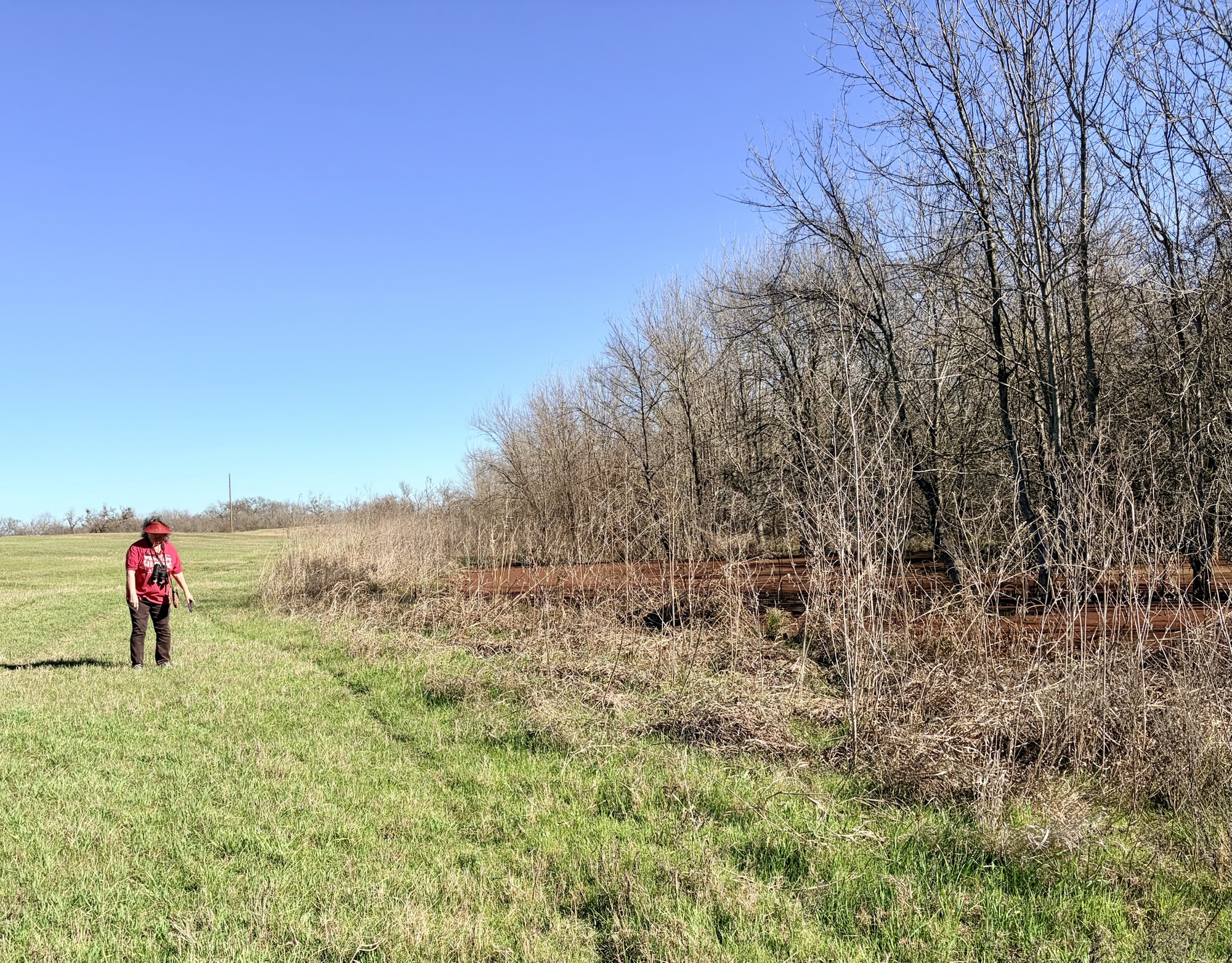
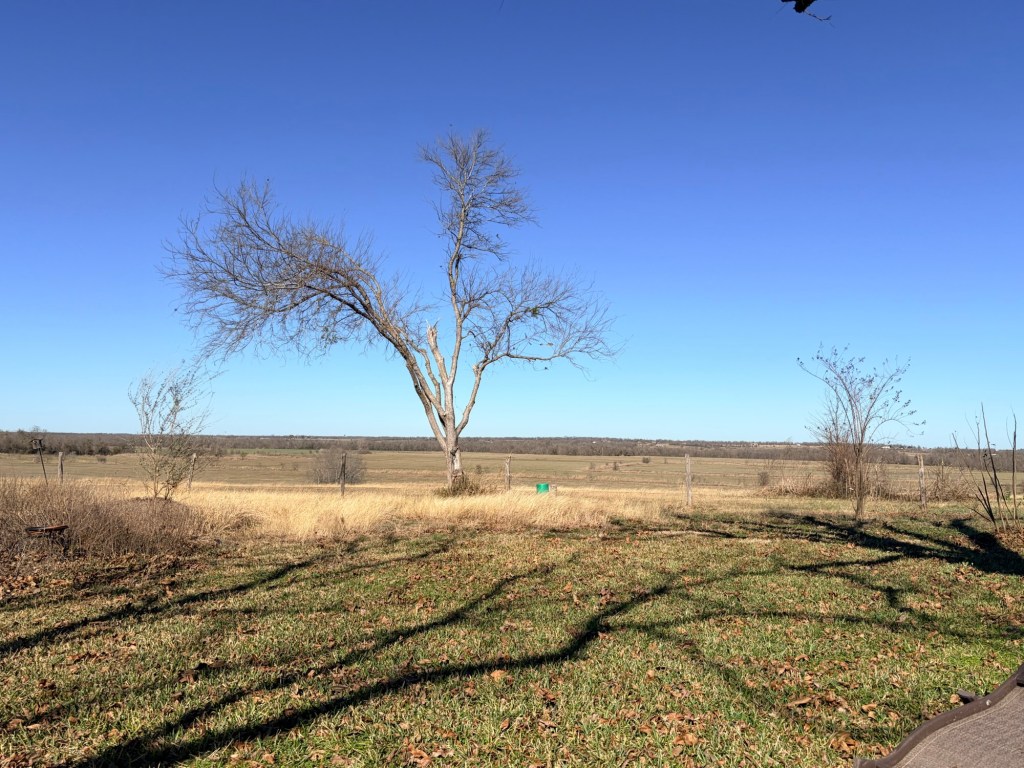
Proof that it was a beautiful day in Milam County

We got into the truck and took off for the spring-fed creek that runs from the property to Big Elm Creek. At first we looked in the wrong place and got attacked by much greenbrier and dewberry vines that tried very hard to trip us (I later determined that I got a tick on my head – darn nature). I did determine that the water was not out of its banks and was very clean.

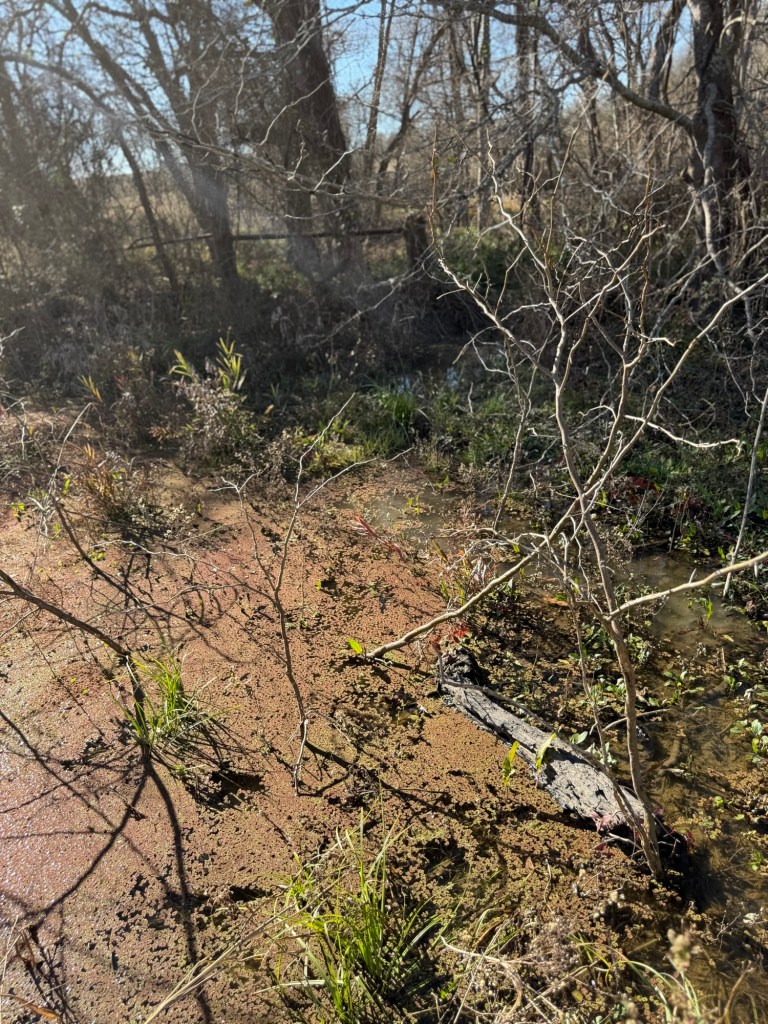
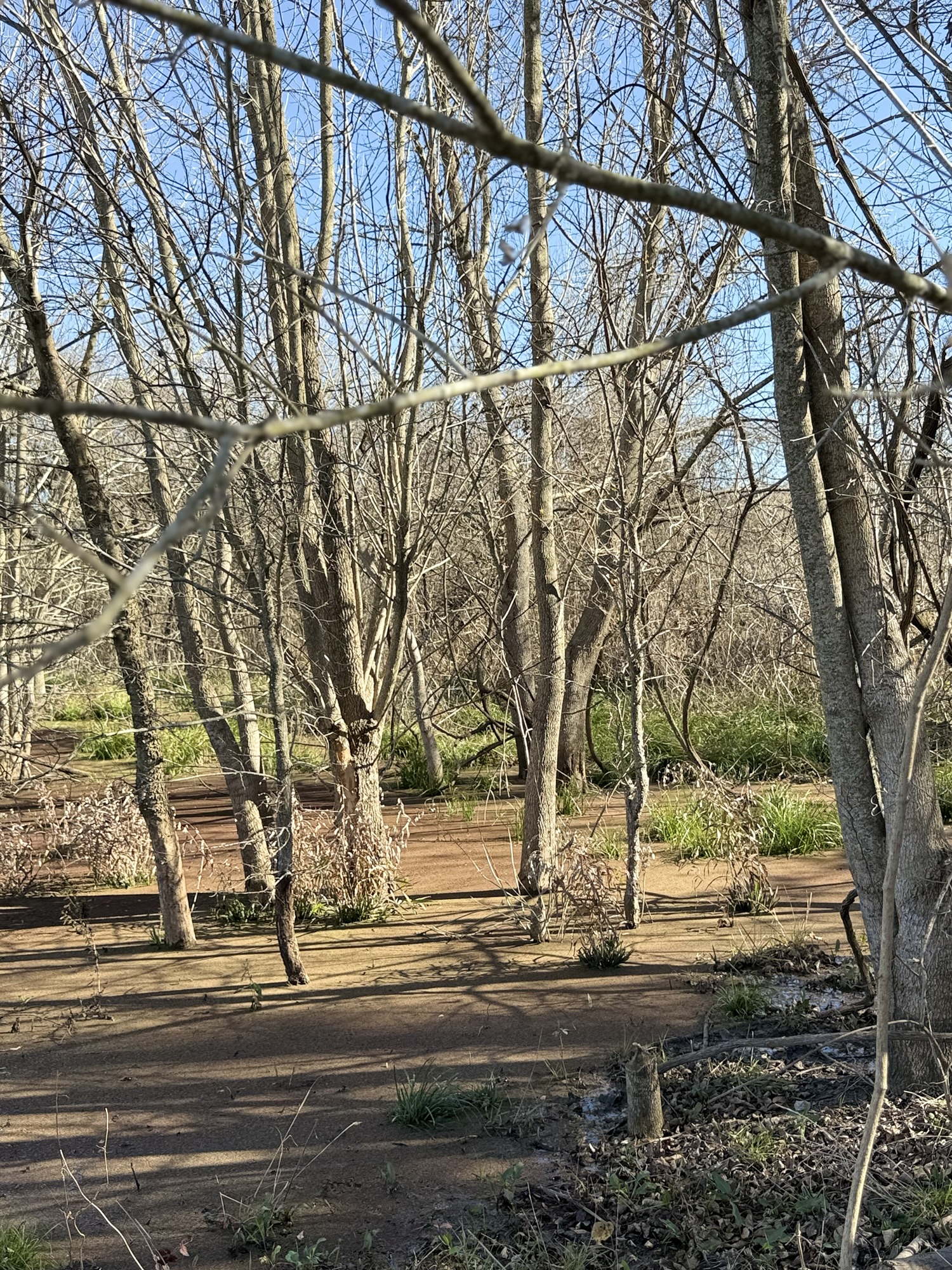
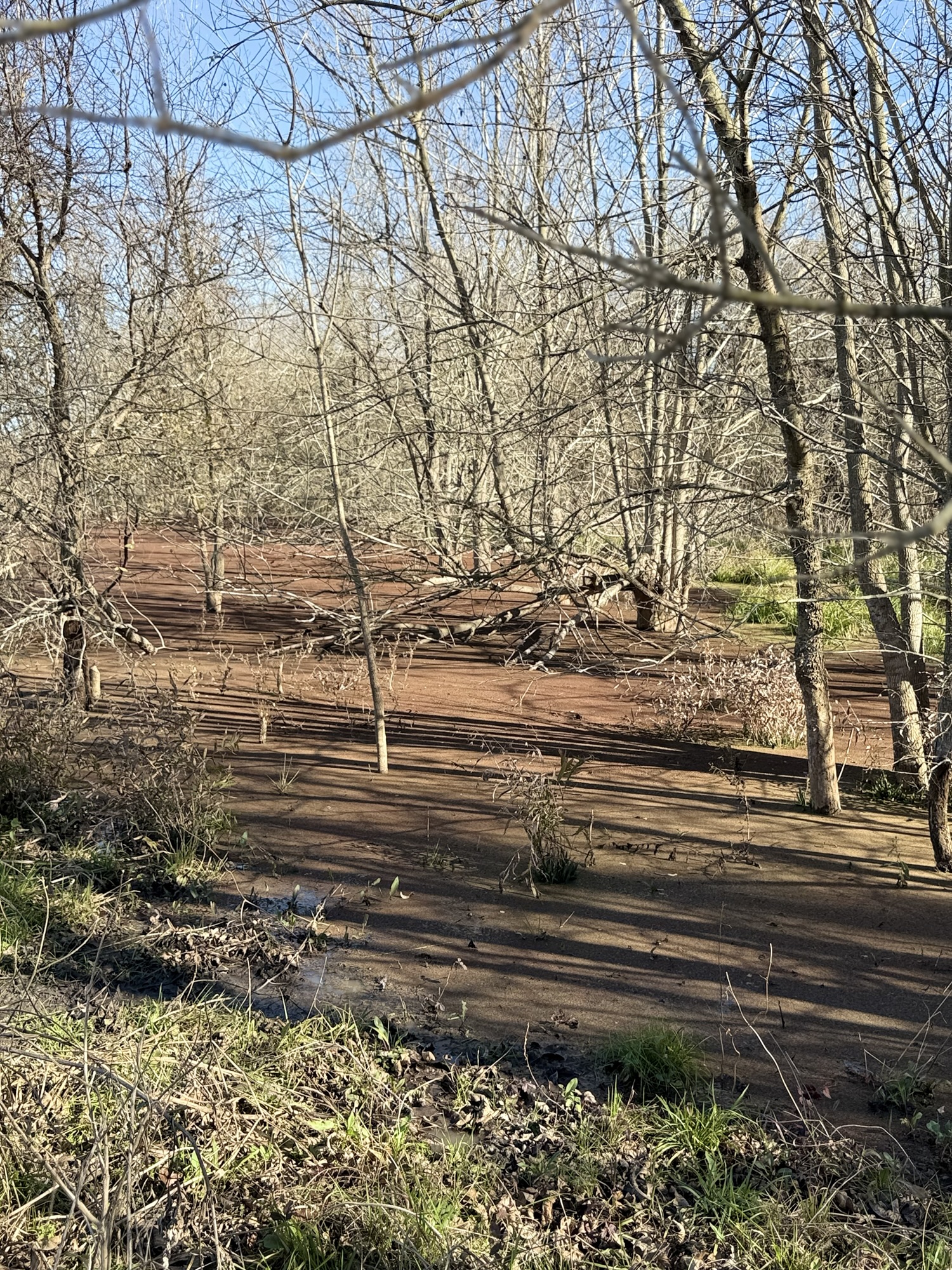
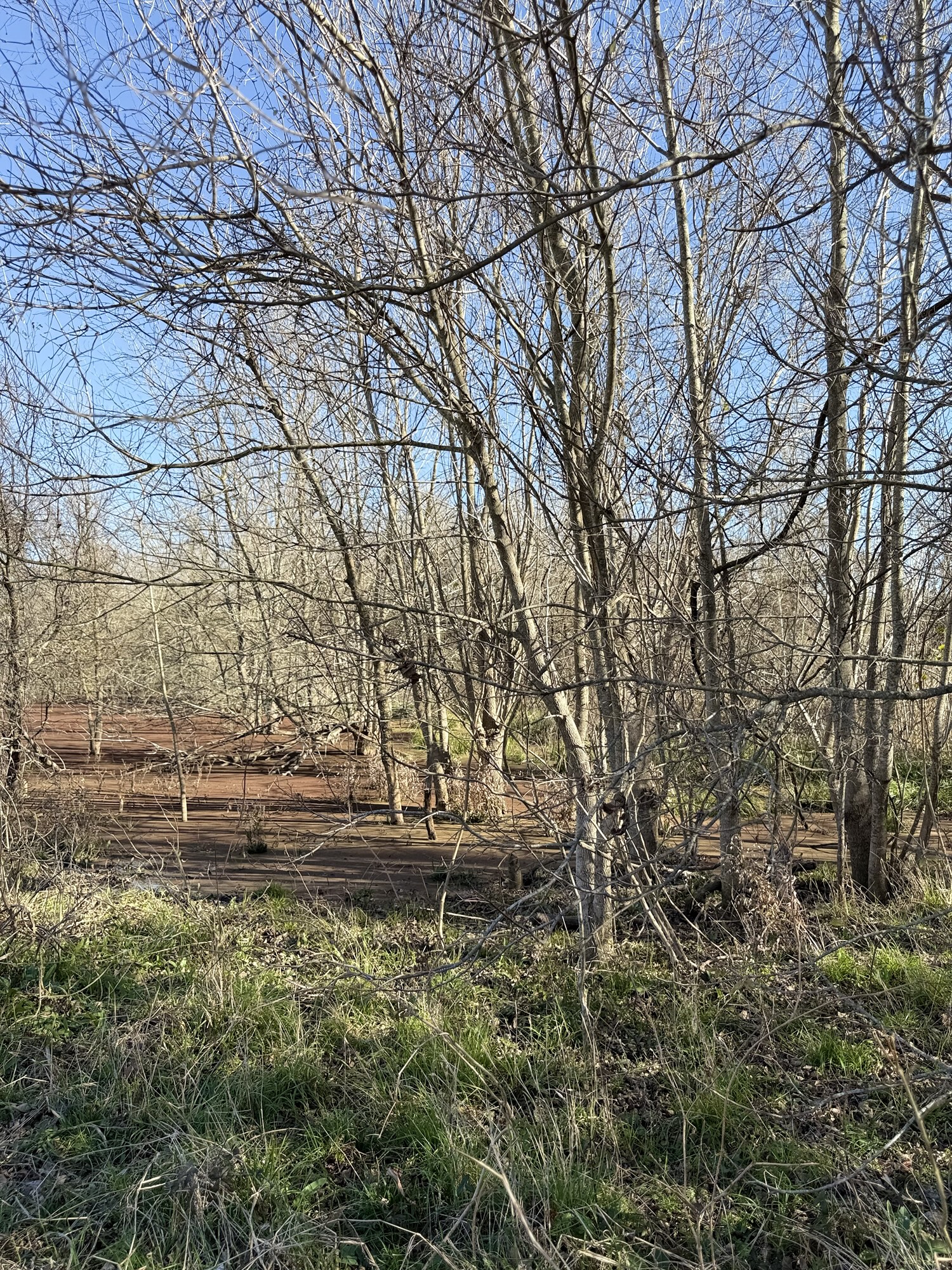
My friend called the folks who’d been on the property monitoring their deer lease or something, and they redirected us upstream. There we found what appeared to be weird flat areas with brown vegetation.

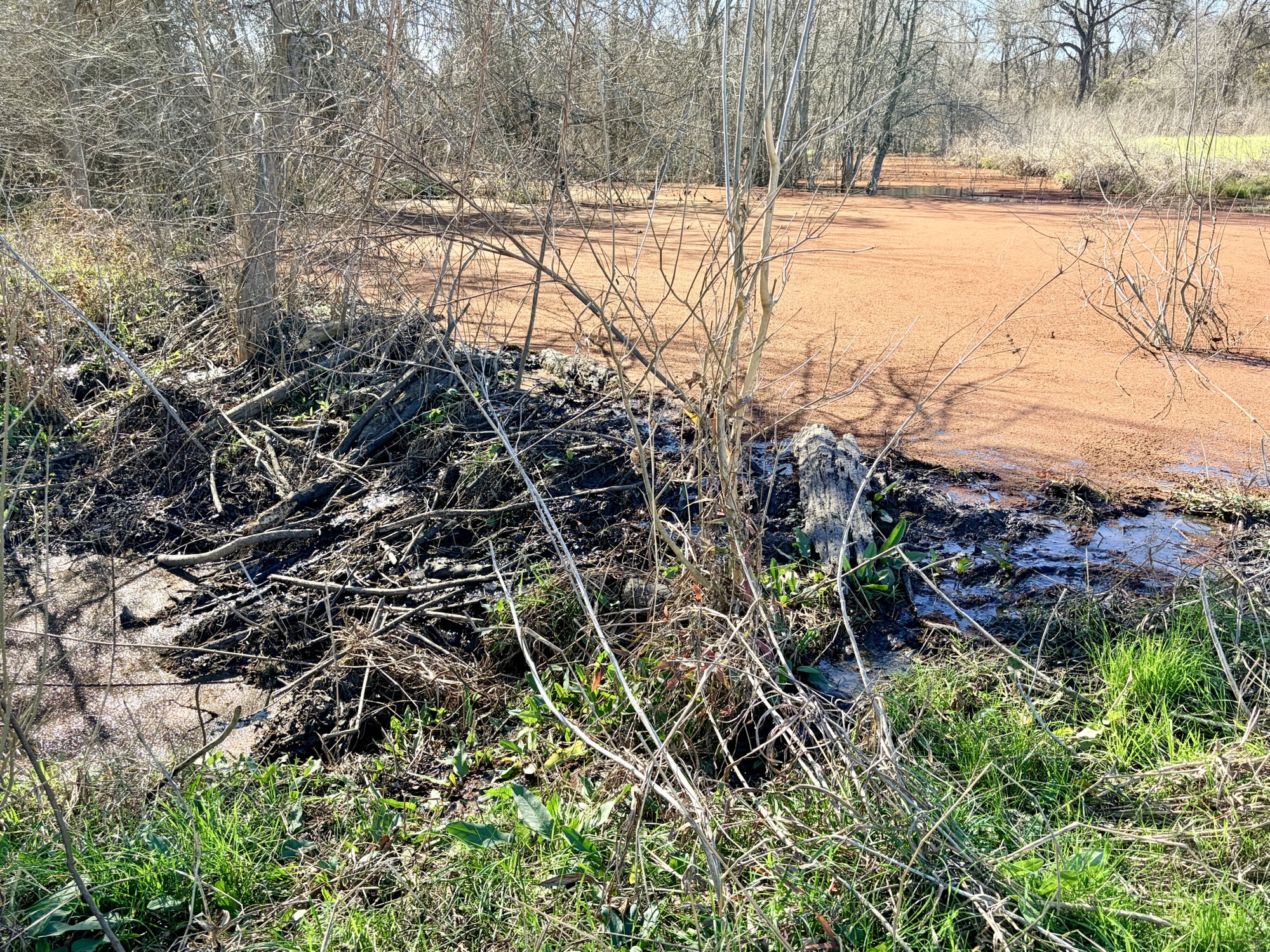
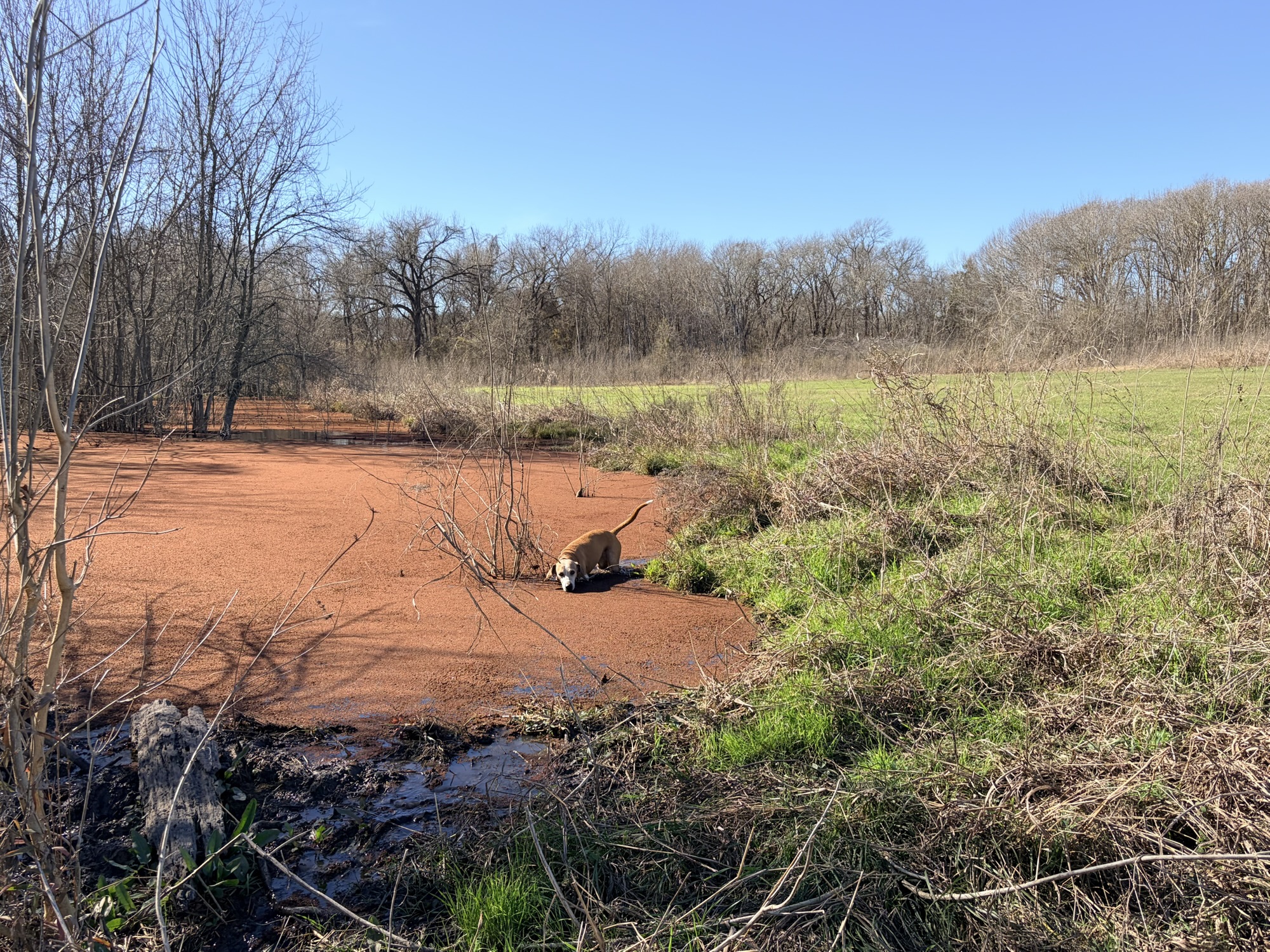
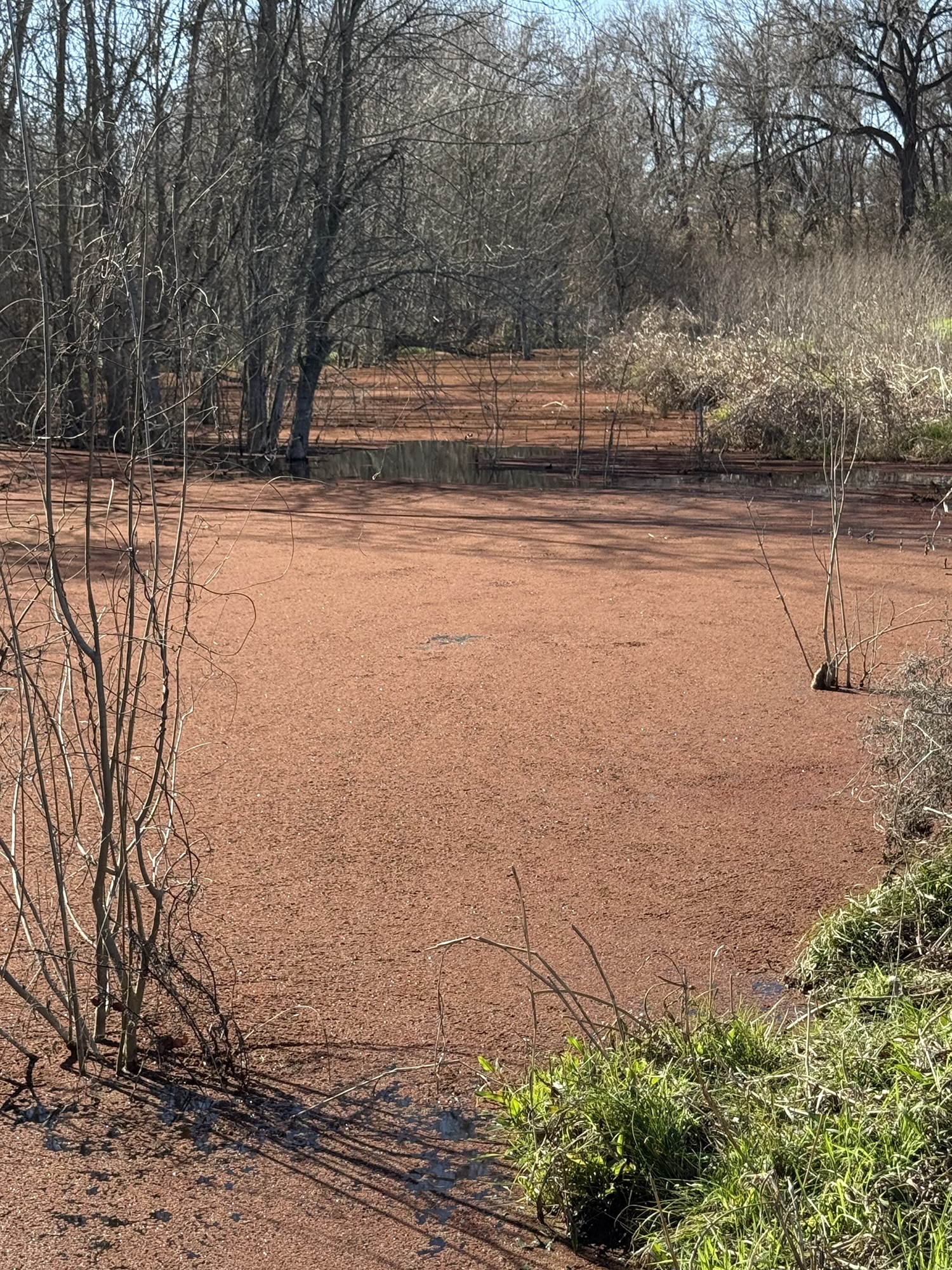
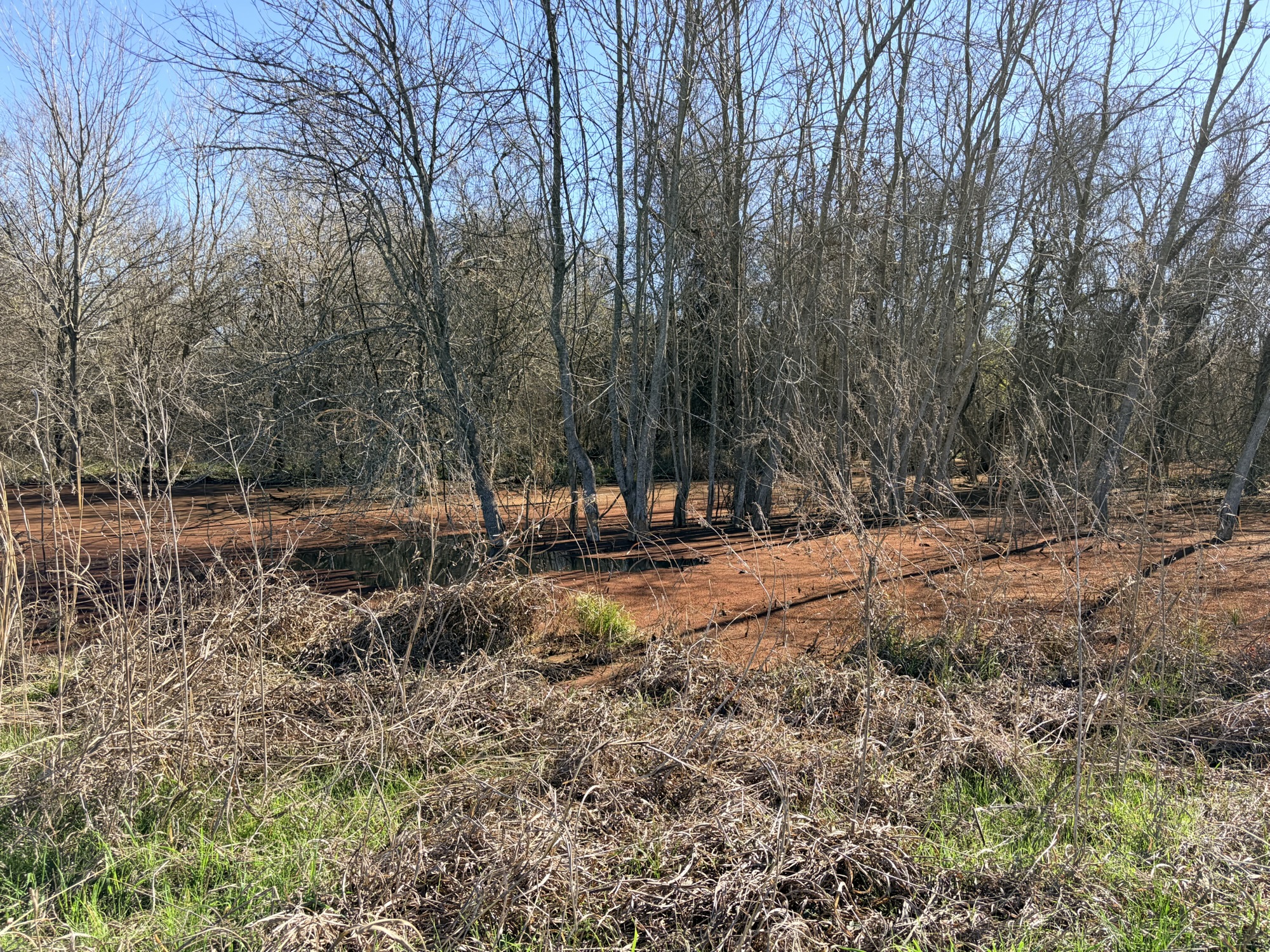
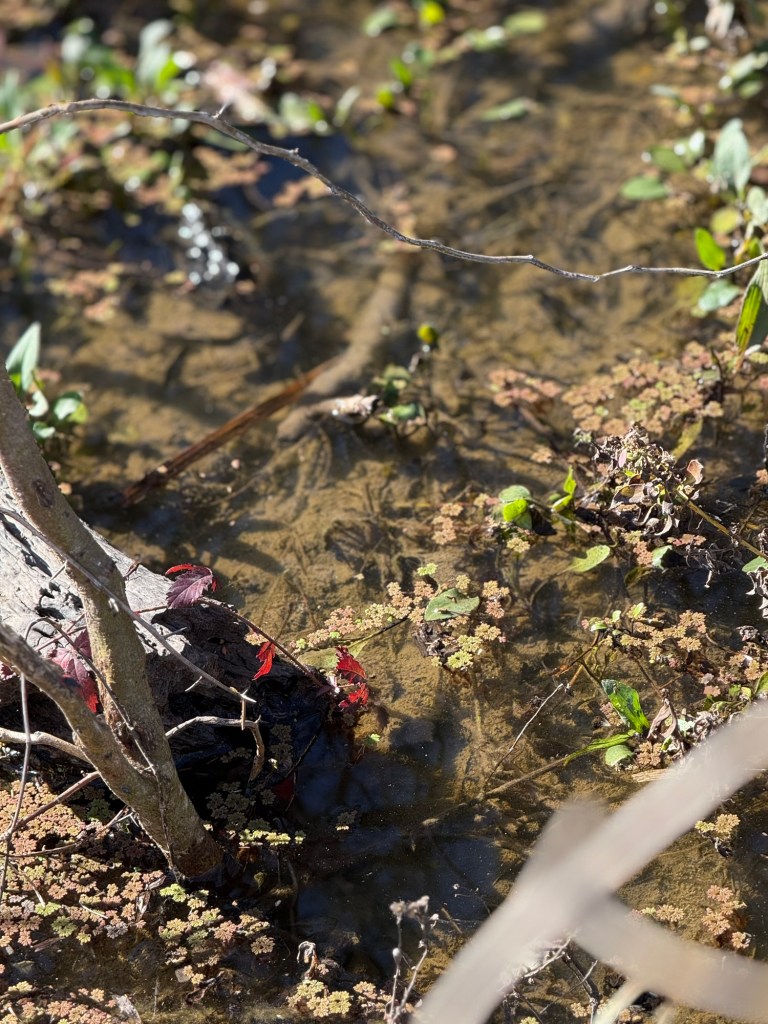
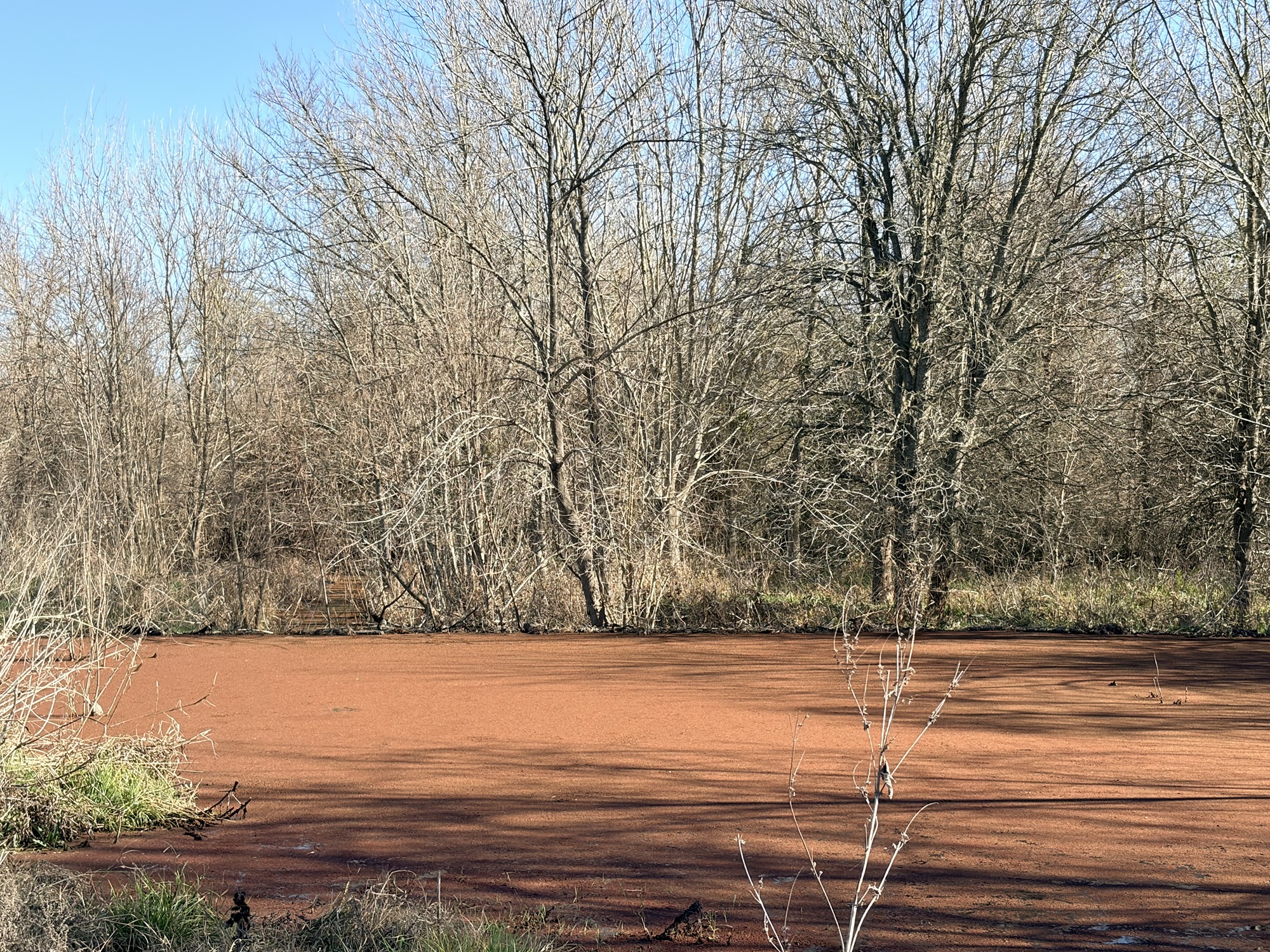
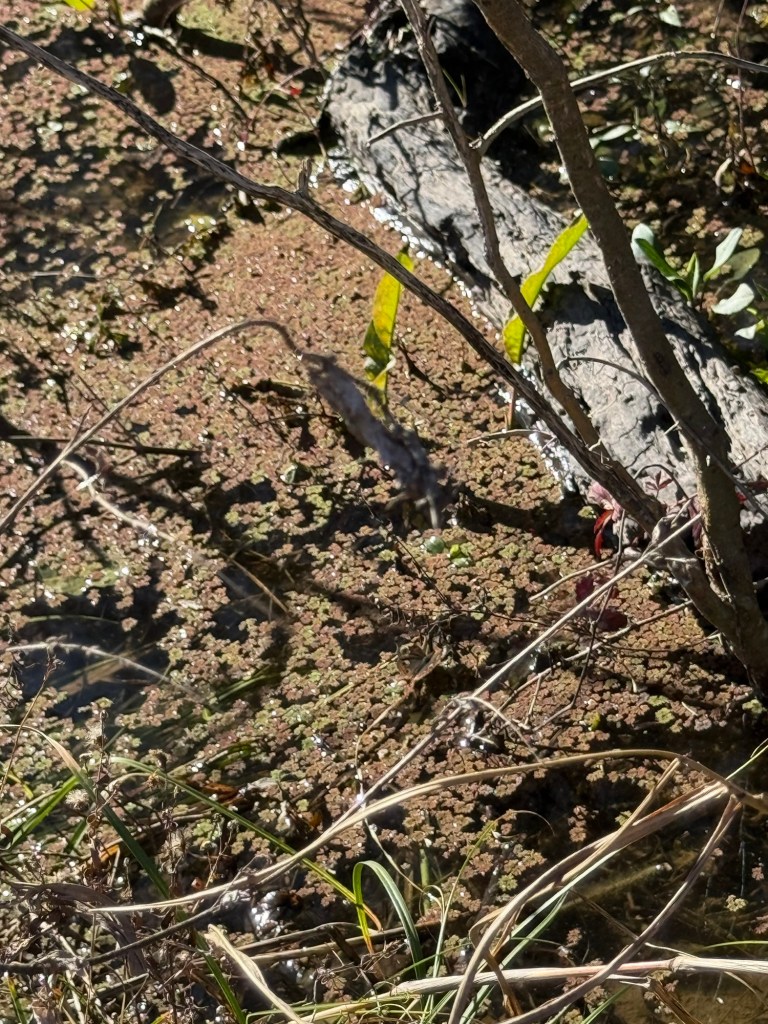
looks like a brown patch of dirt

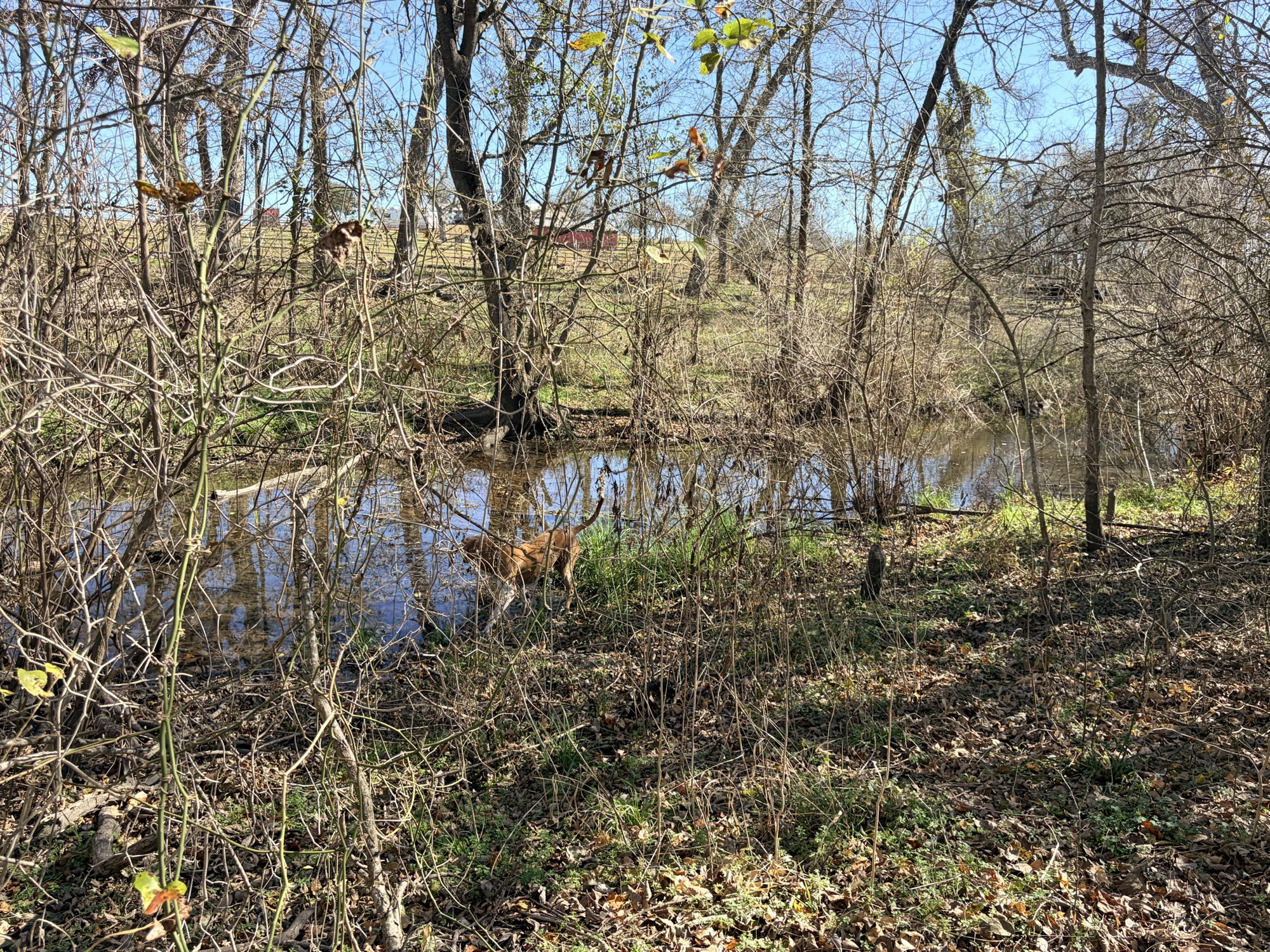
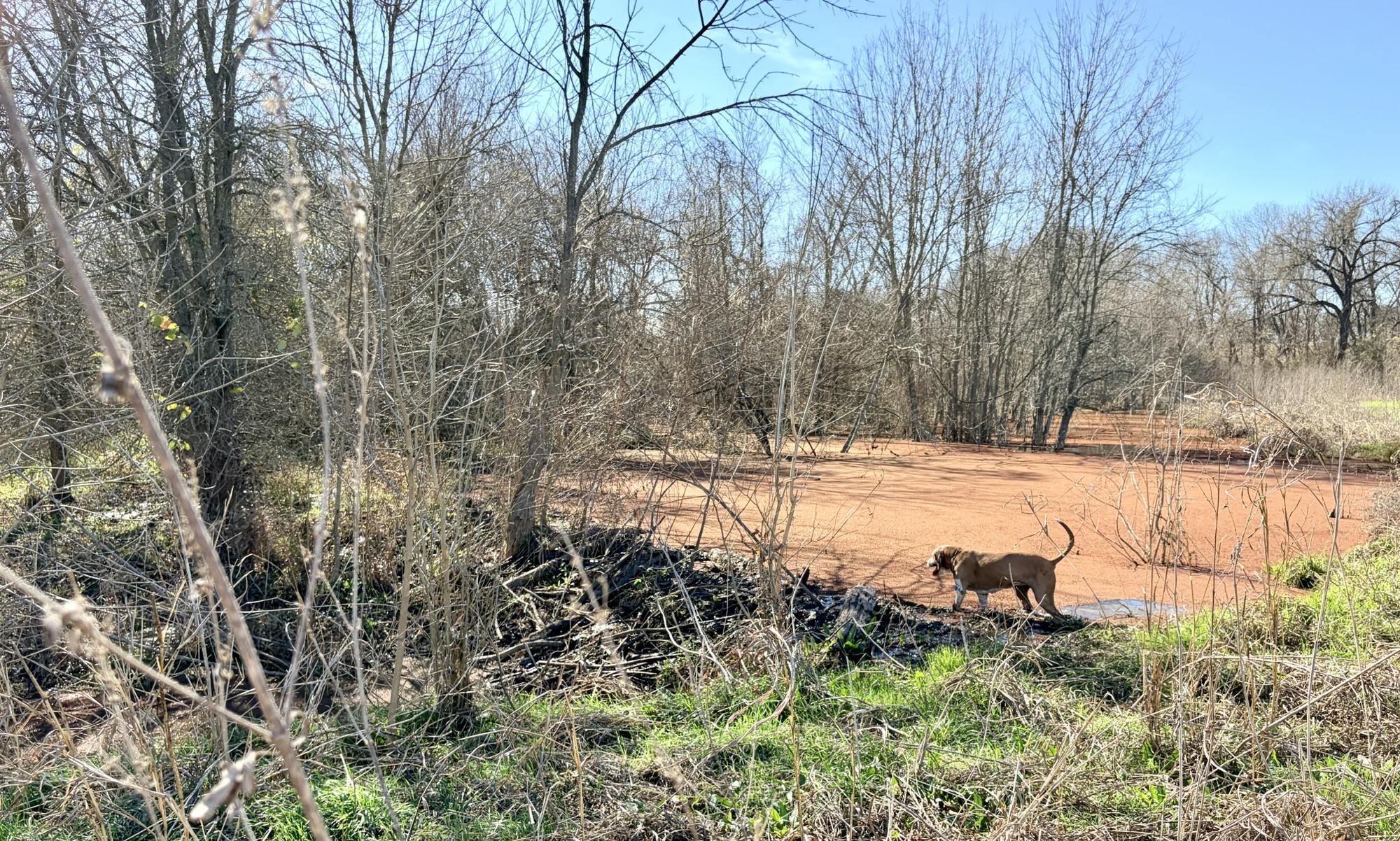
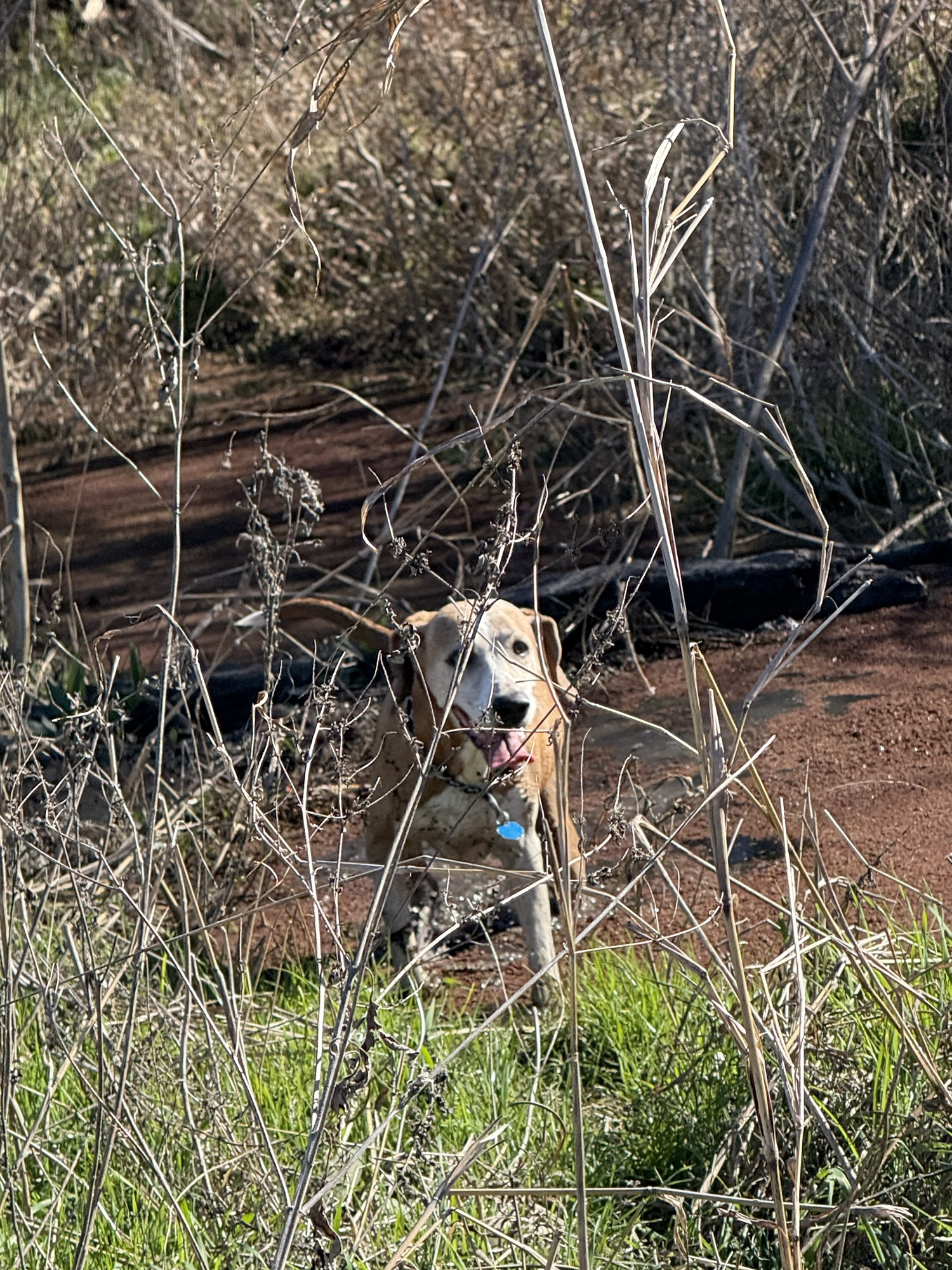
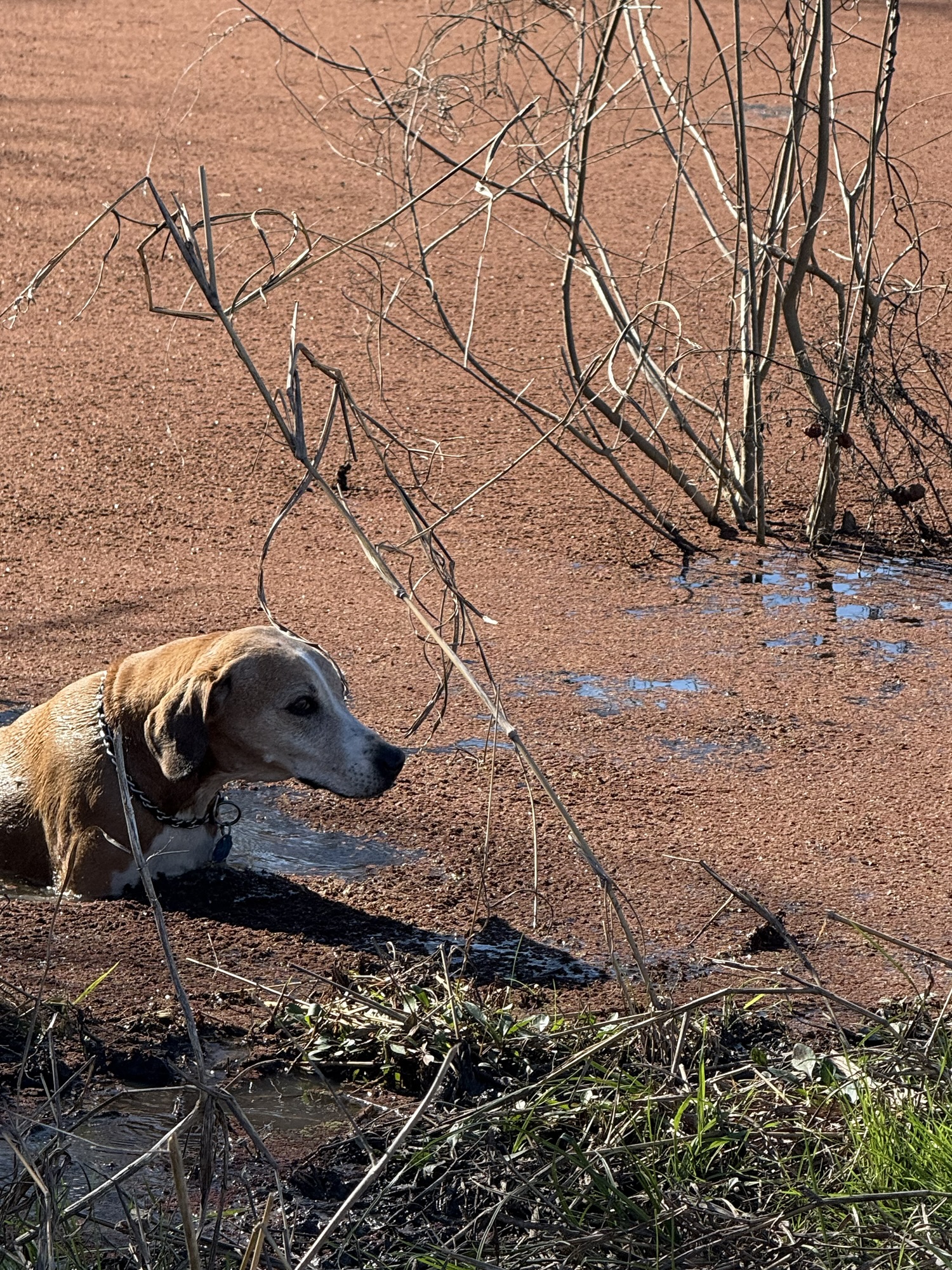
The brown stuff was actually duckweed on a big ole beaver pond! To say I was excited would be an understatement. The dog was also excited and immediately went swimming.

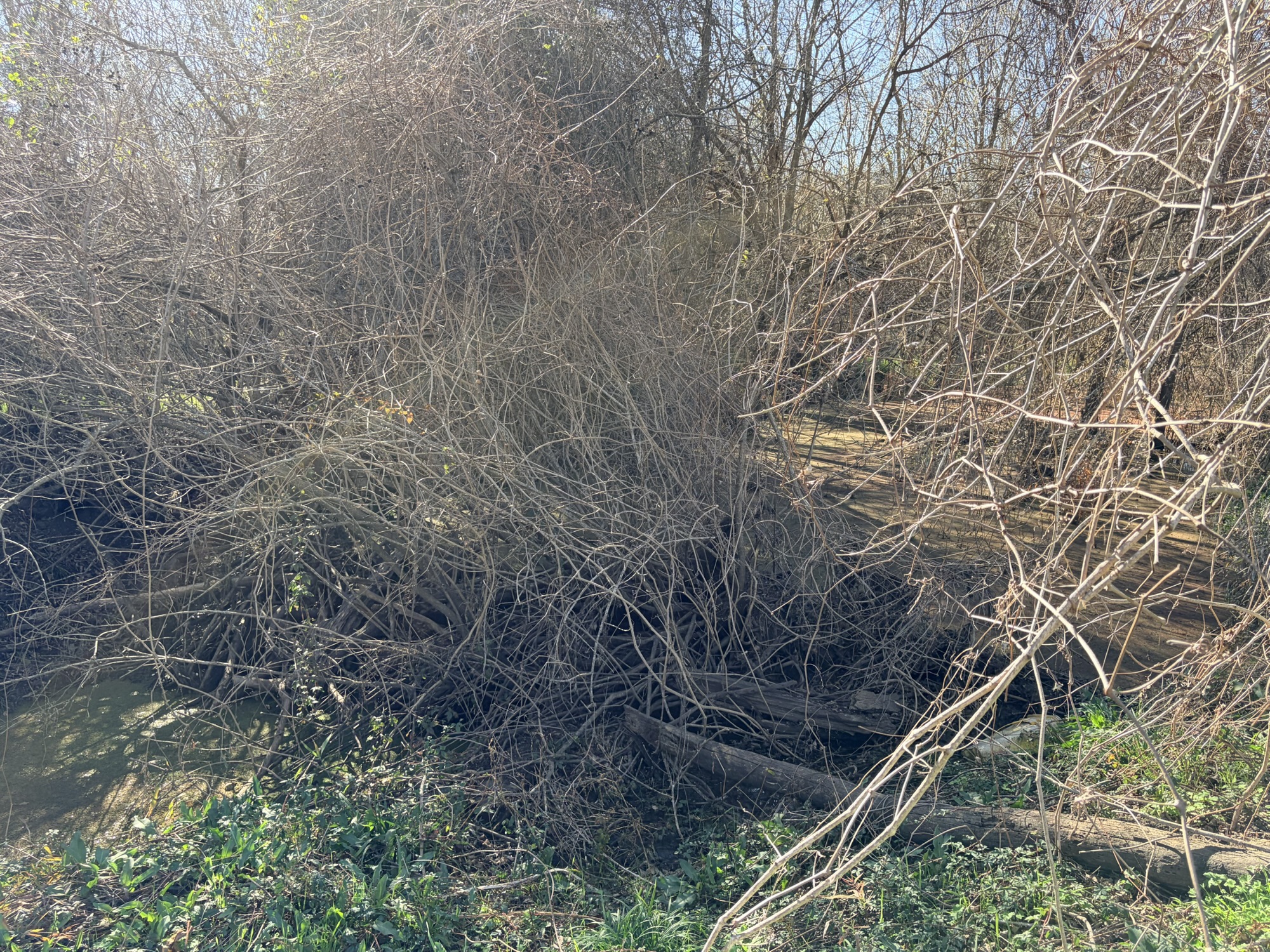
I enjoyed investigating the dam construction and listening to the water trickling through the spillways. It’s hard to believe animals can do this, even though I read a book all about beavers recently (and I highly recommend it to any fellow nature lover).
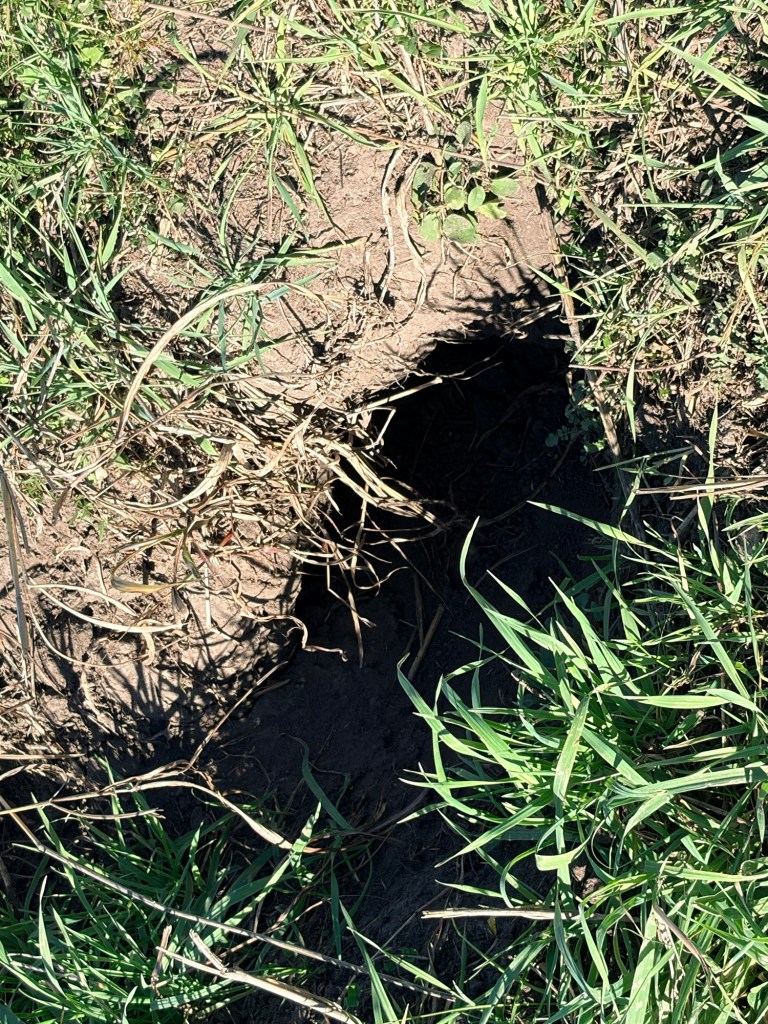
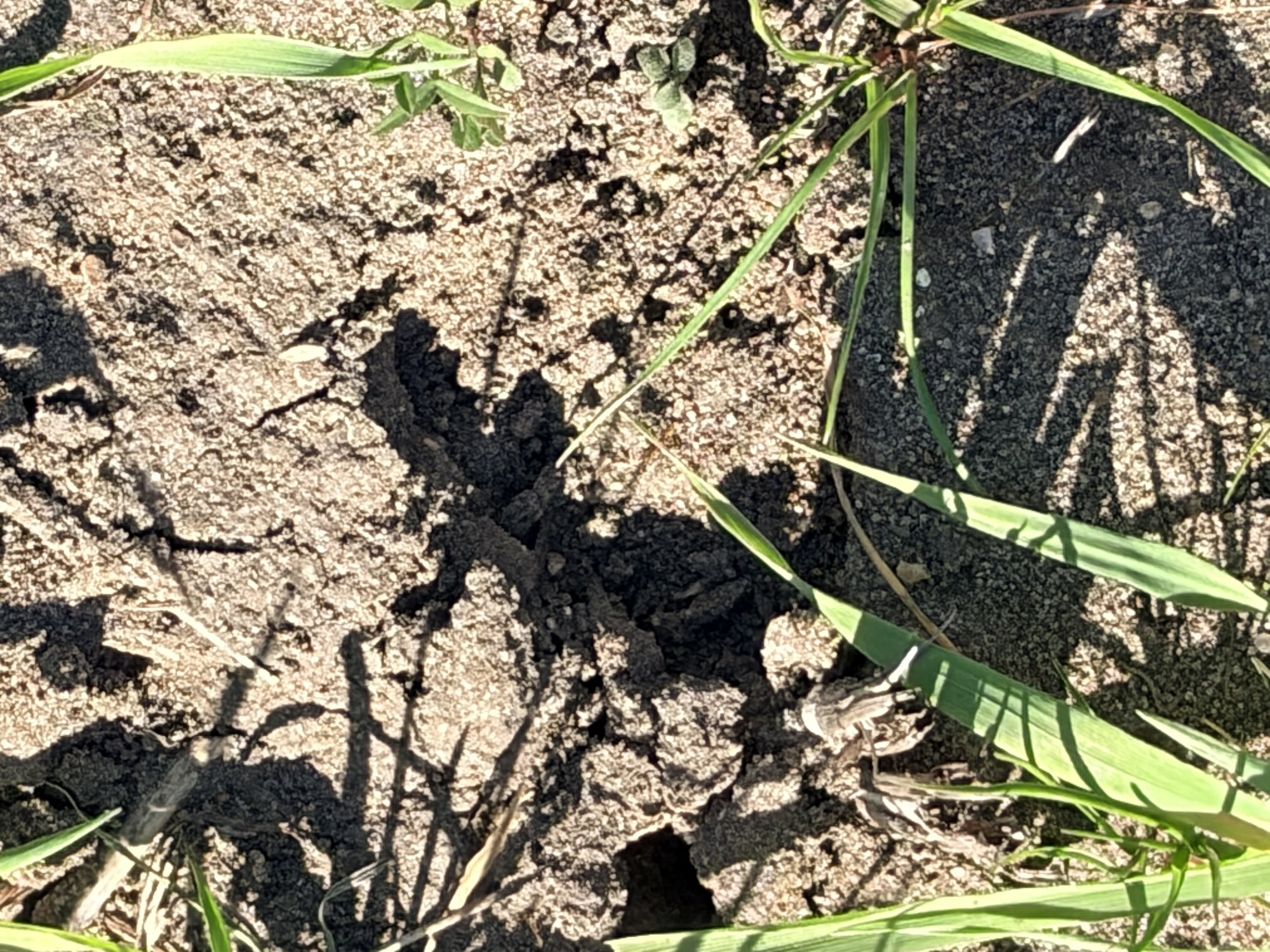
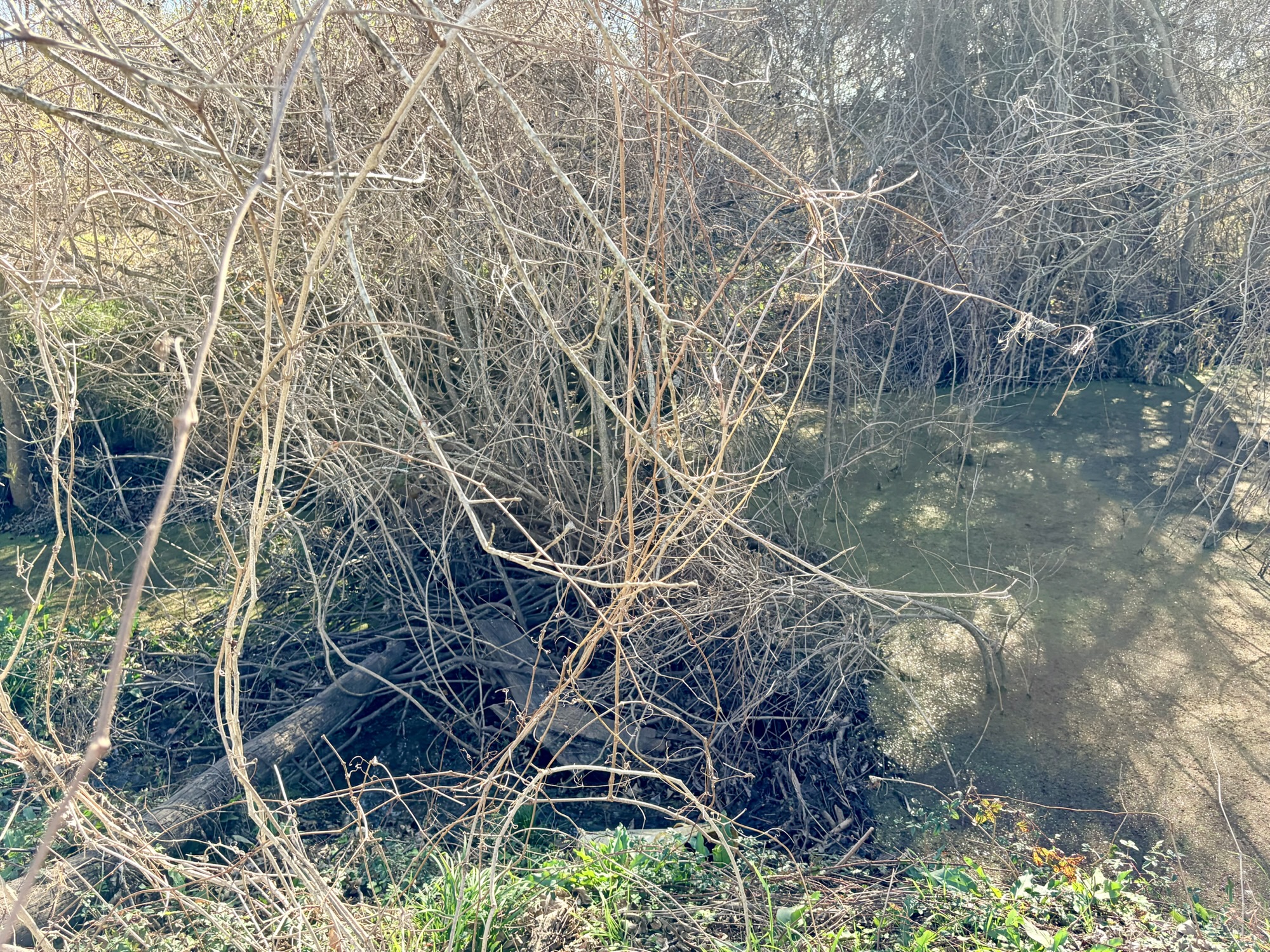
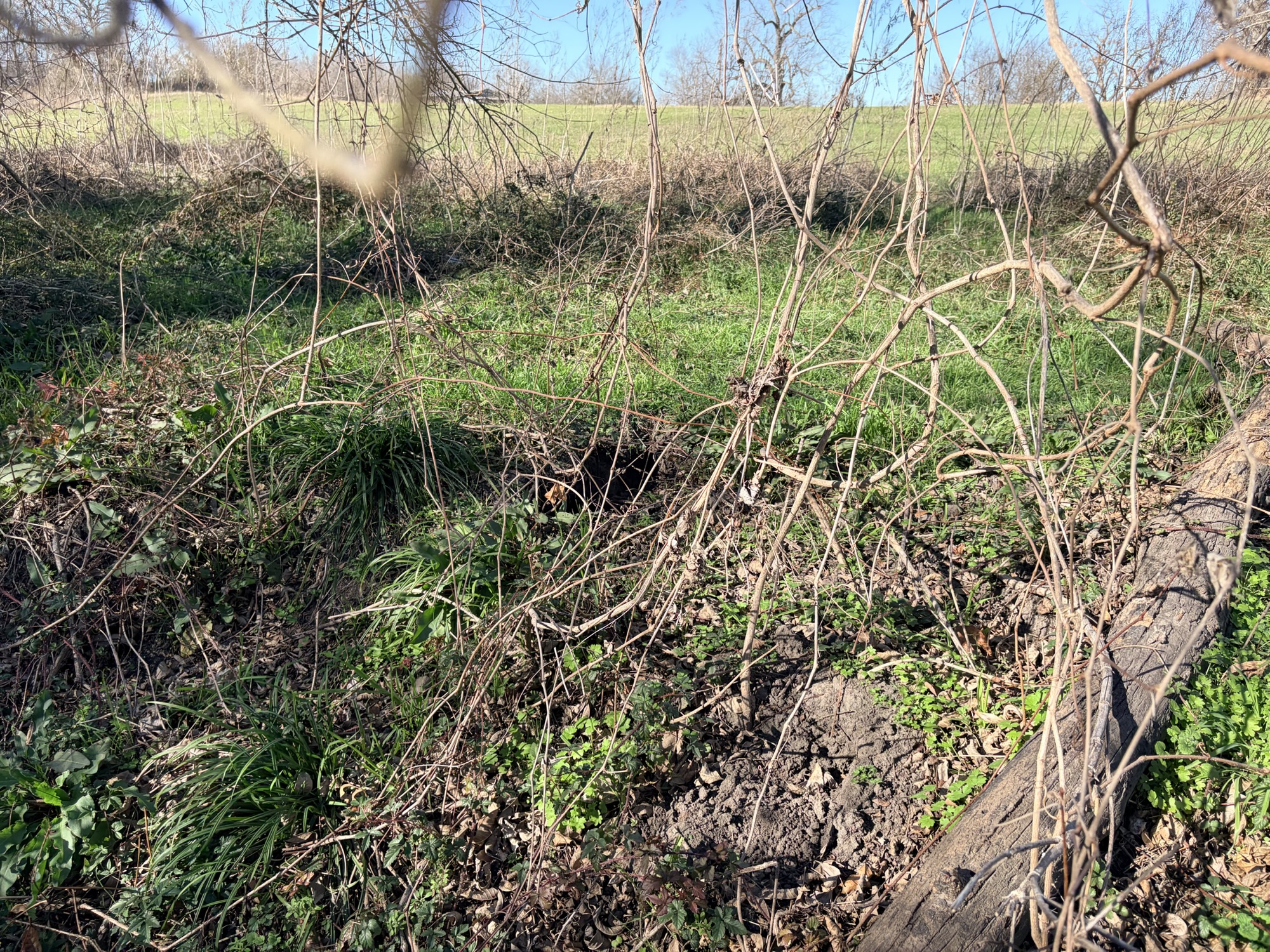
Also they build a lot of tunnels. Here is an entrance.

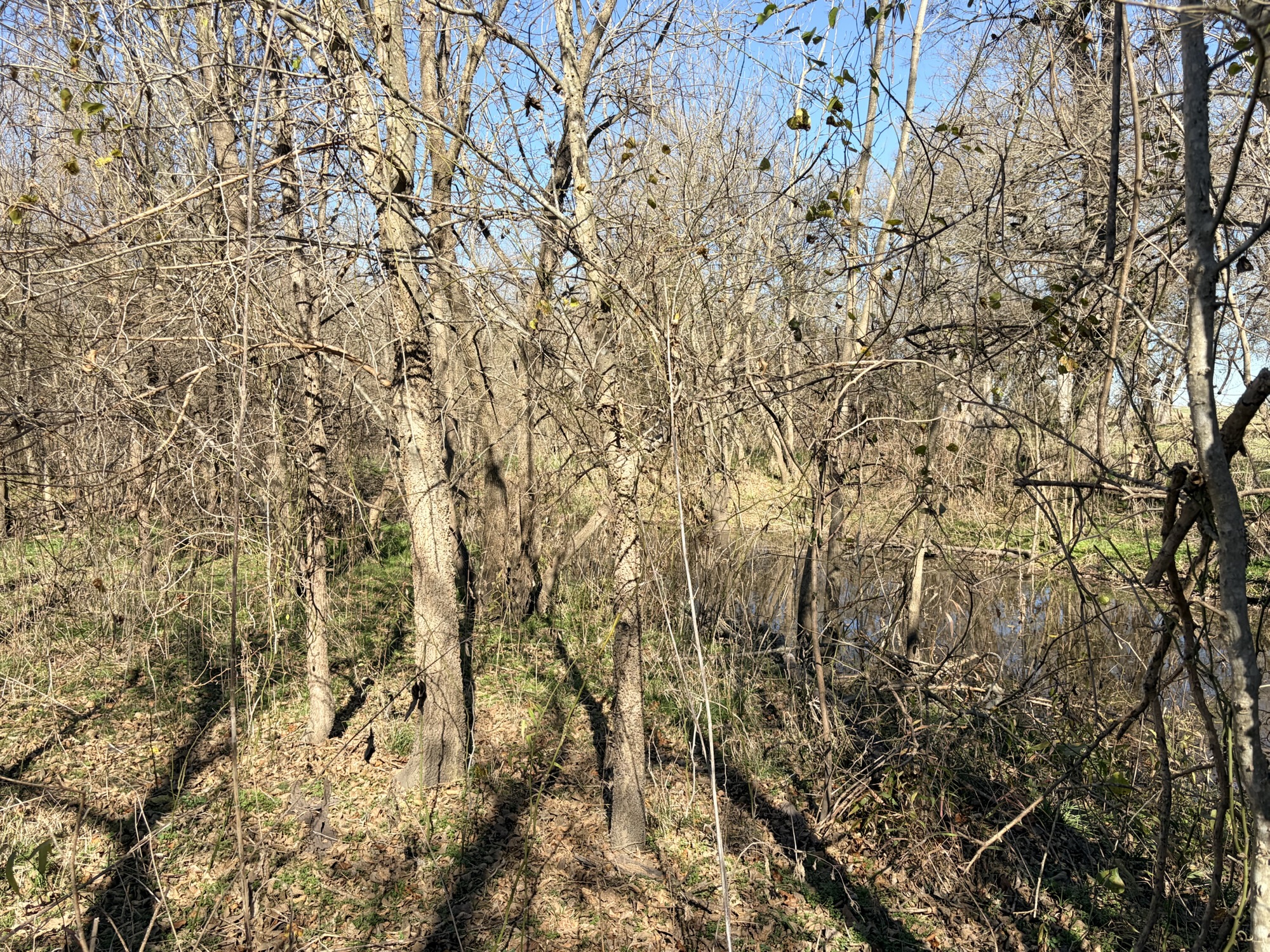
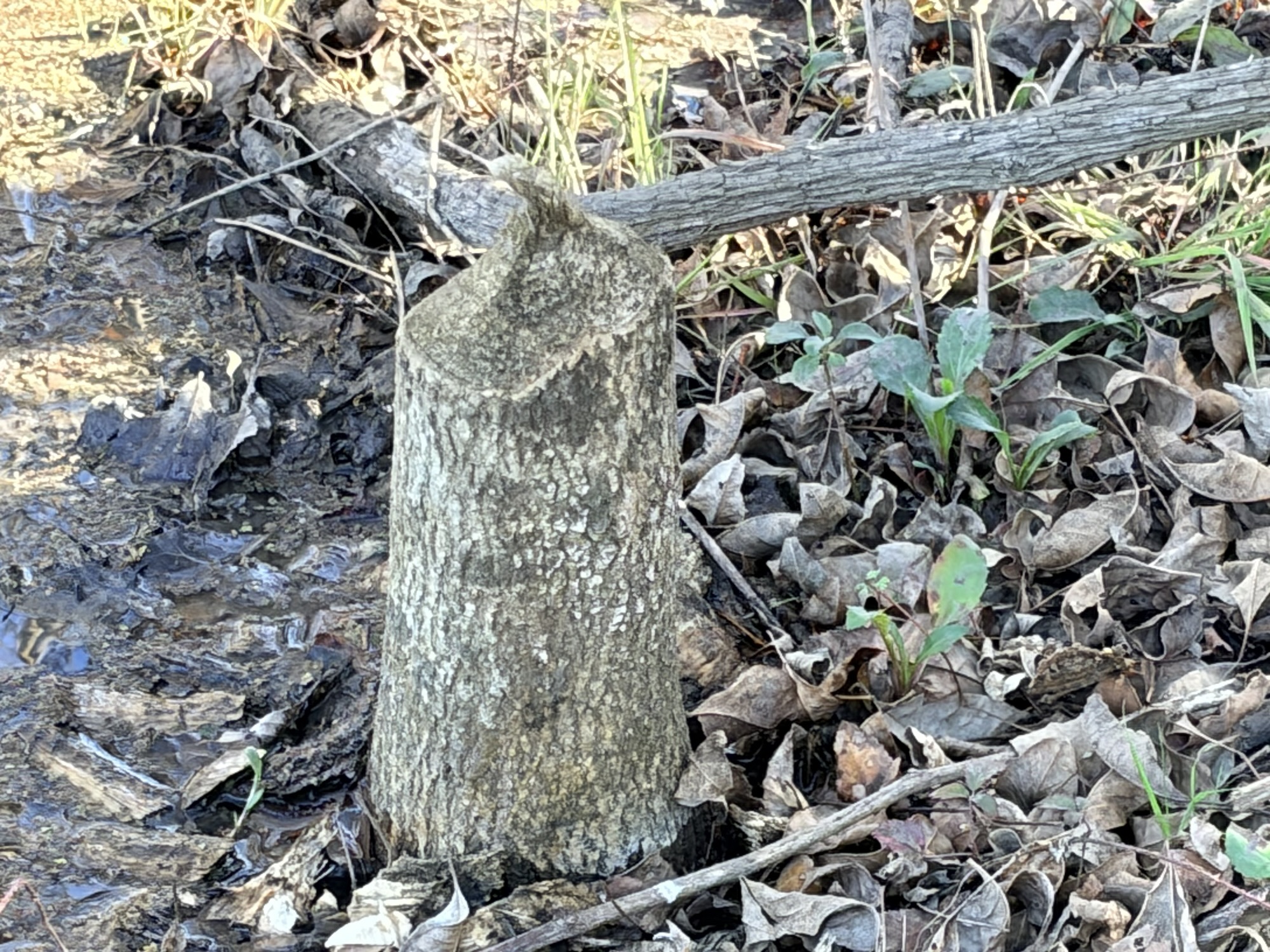
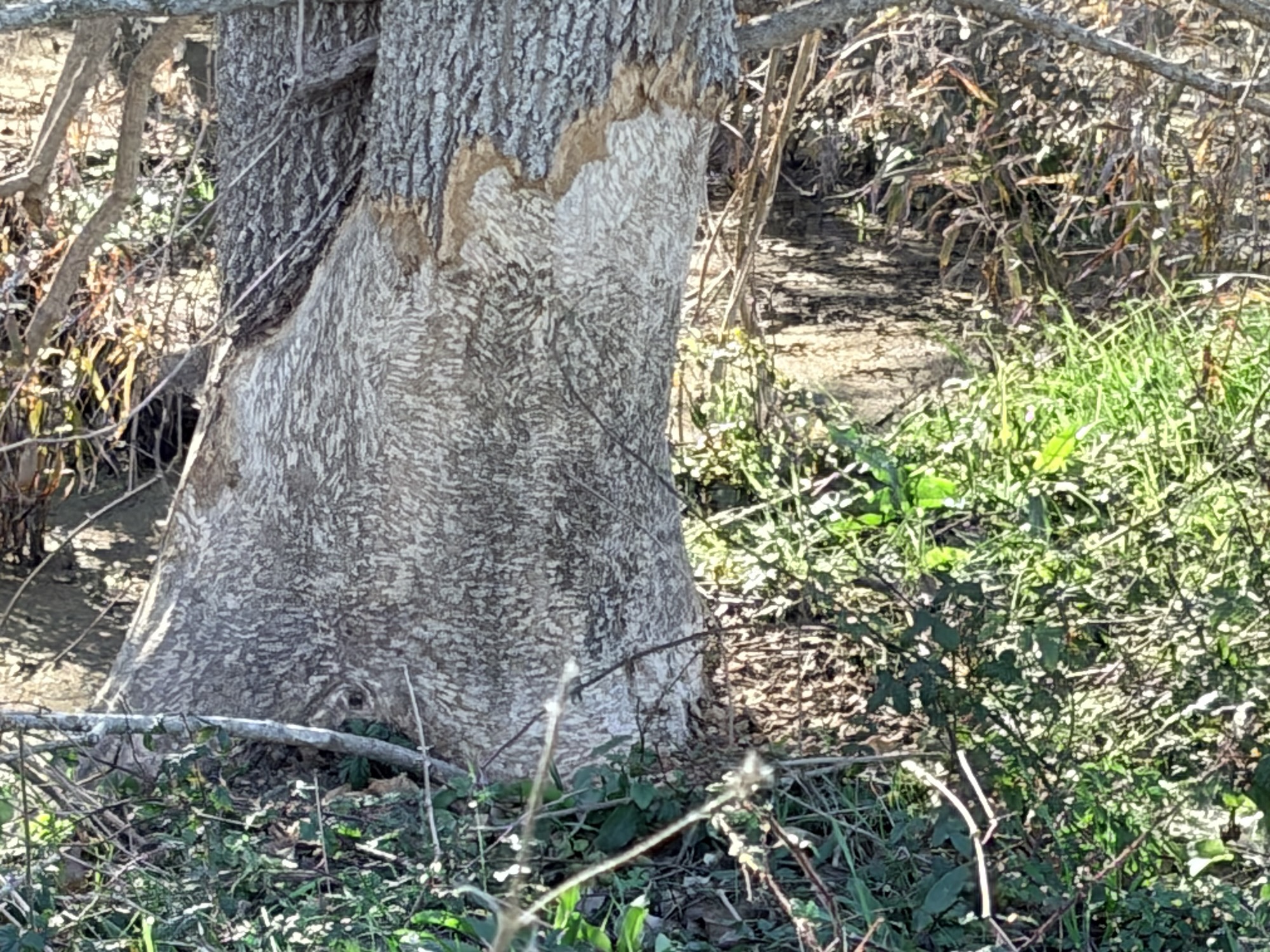
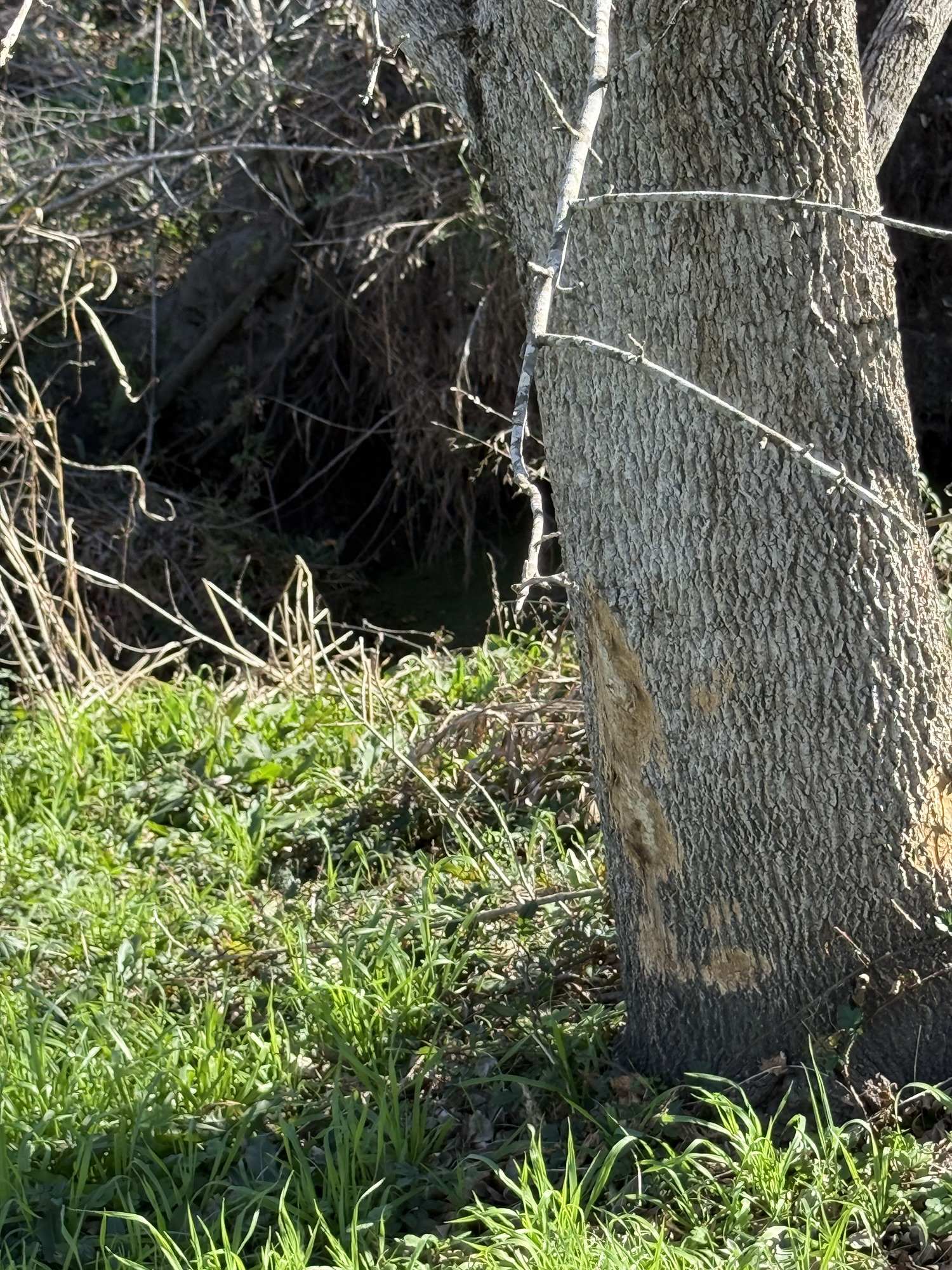
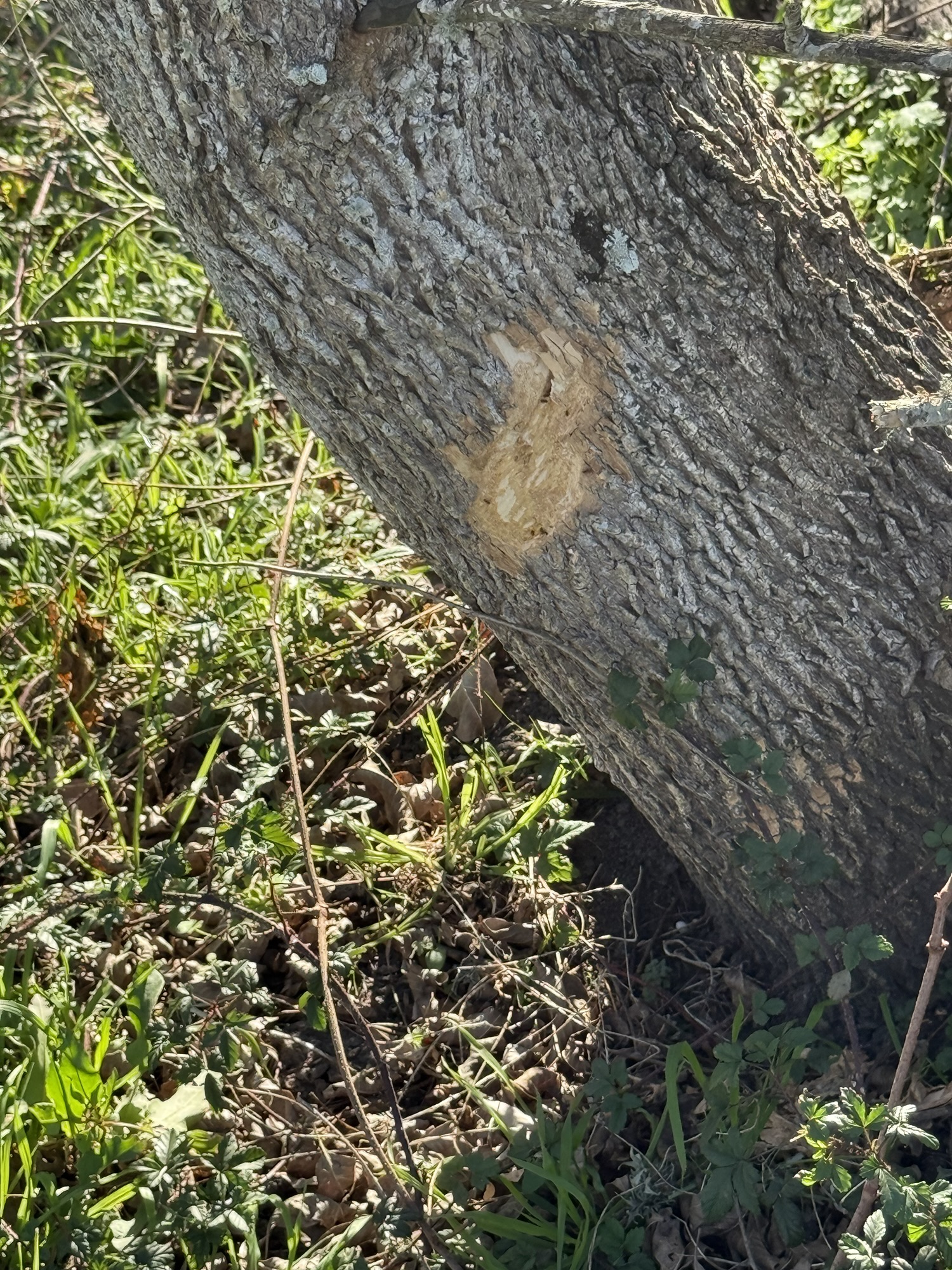
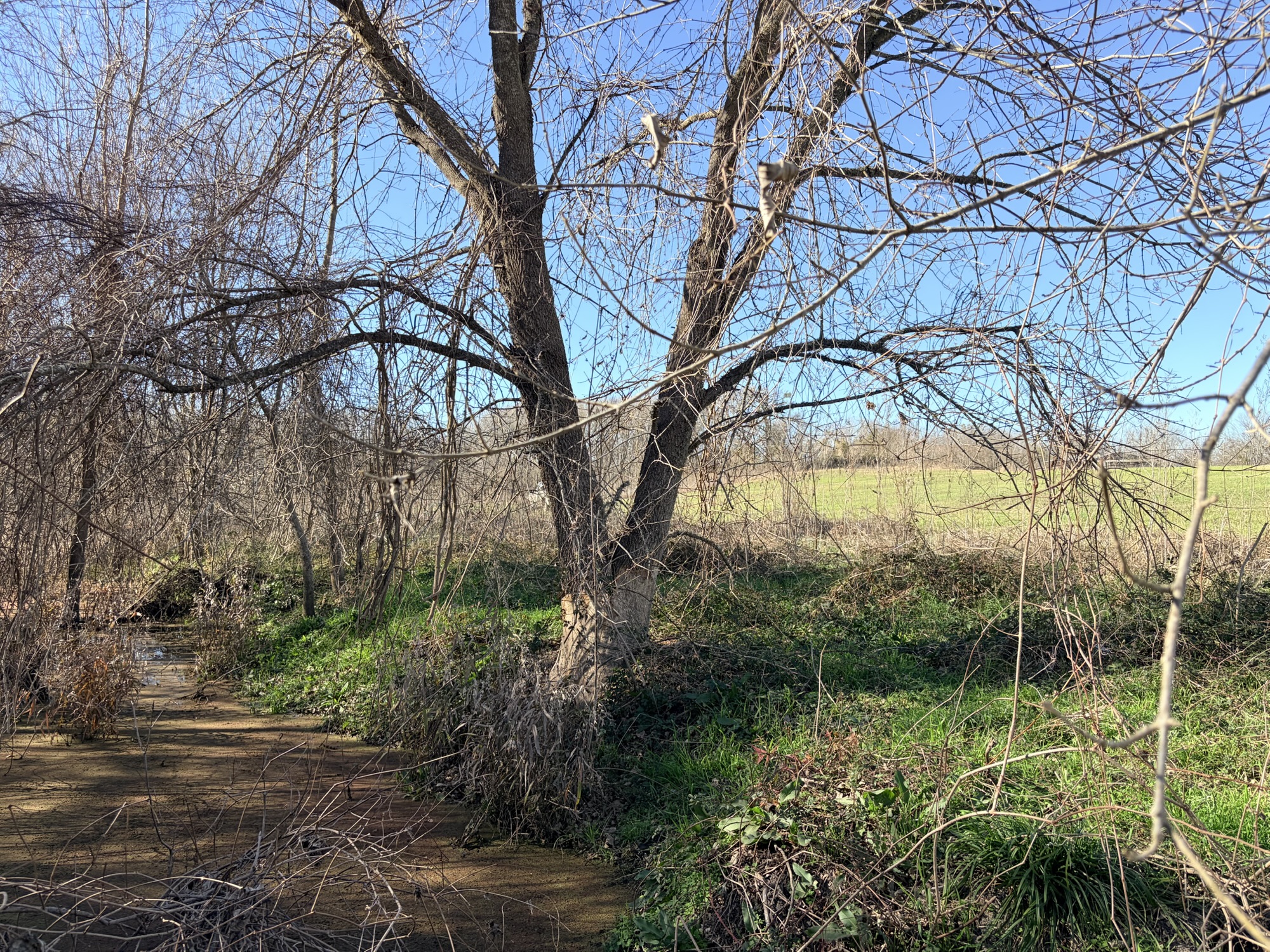
We found trees that had been gnawed by beavers (some from the previous dam a few years back). There were also trees whose bark had been gnawed. This definitely points to beavers!

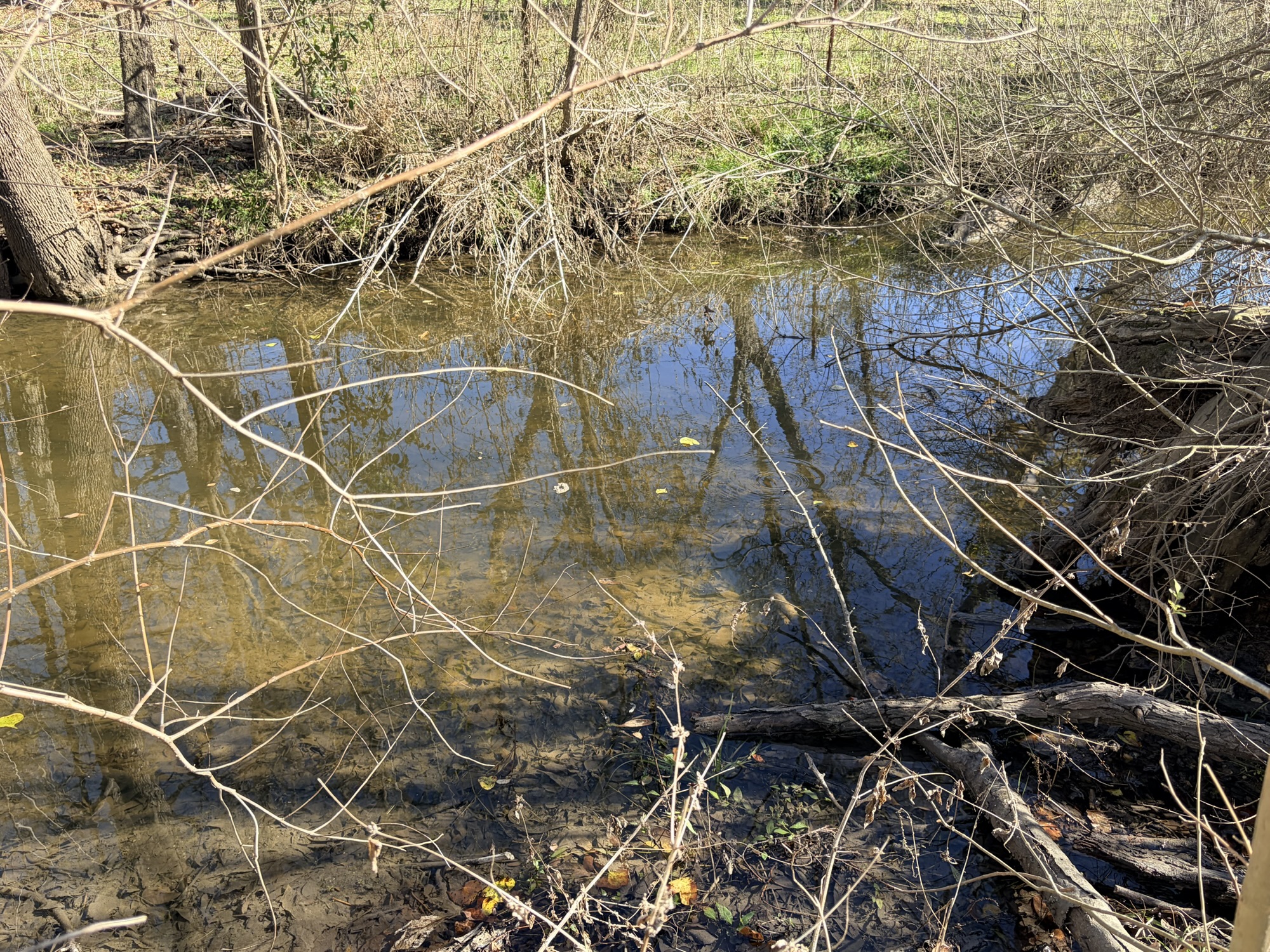
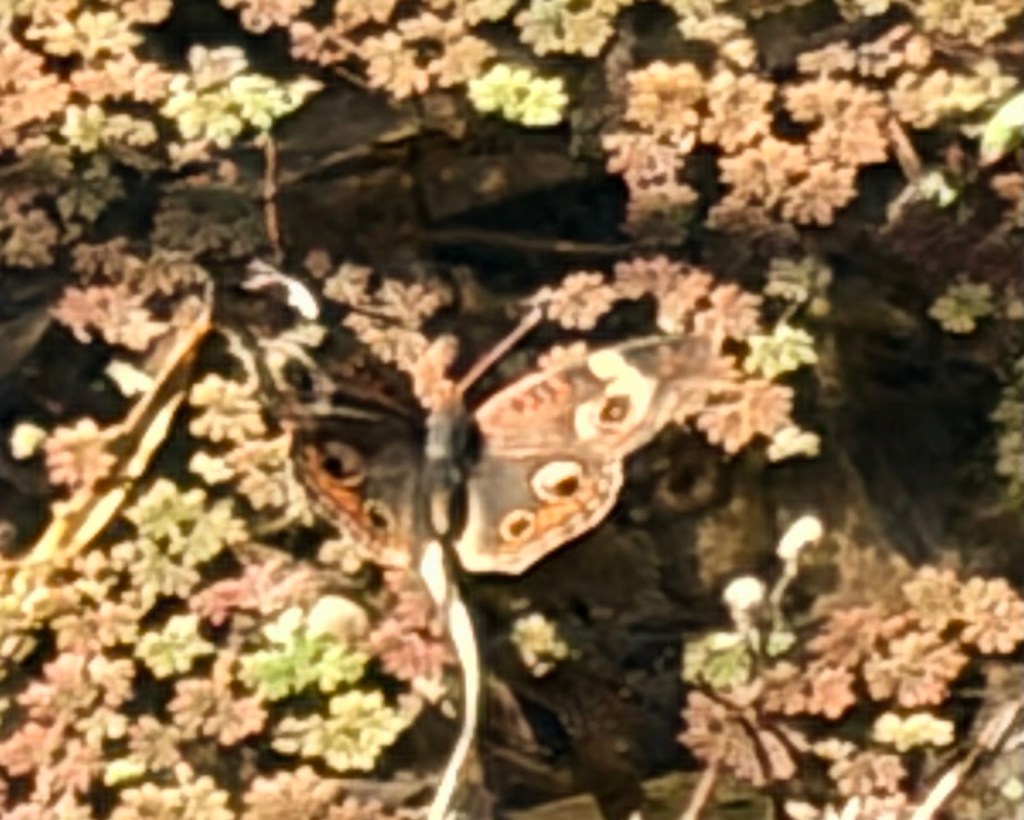
We moved upstream some more and found a second dam, which has created a magical pond full of fish, butterflies, and plants. One of the things beavers do is provide an environment for wetland plants, increasing diversity and creating more fertile soil after the dams are abandoned. It was hard to pull myself away from the tranquility.
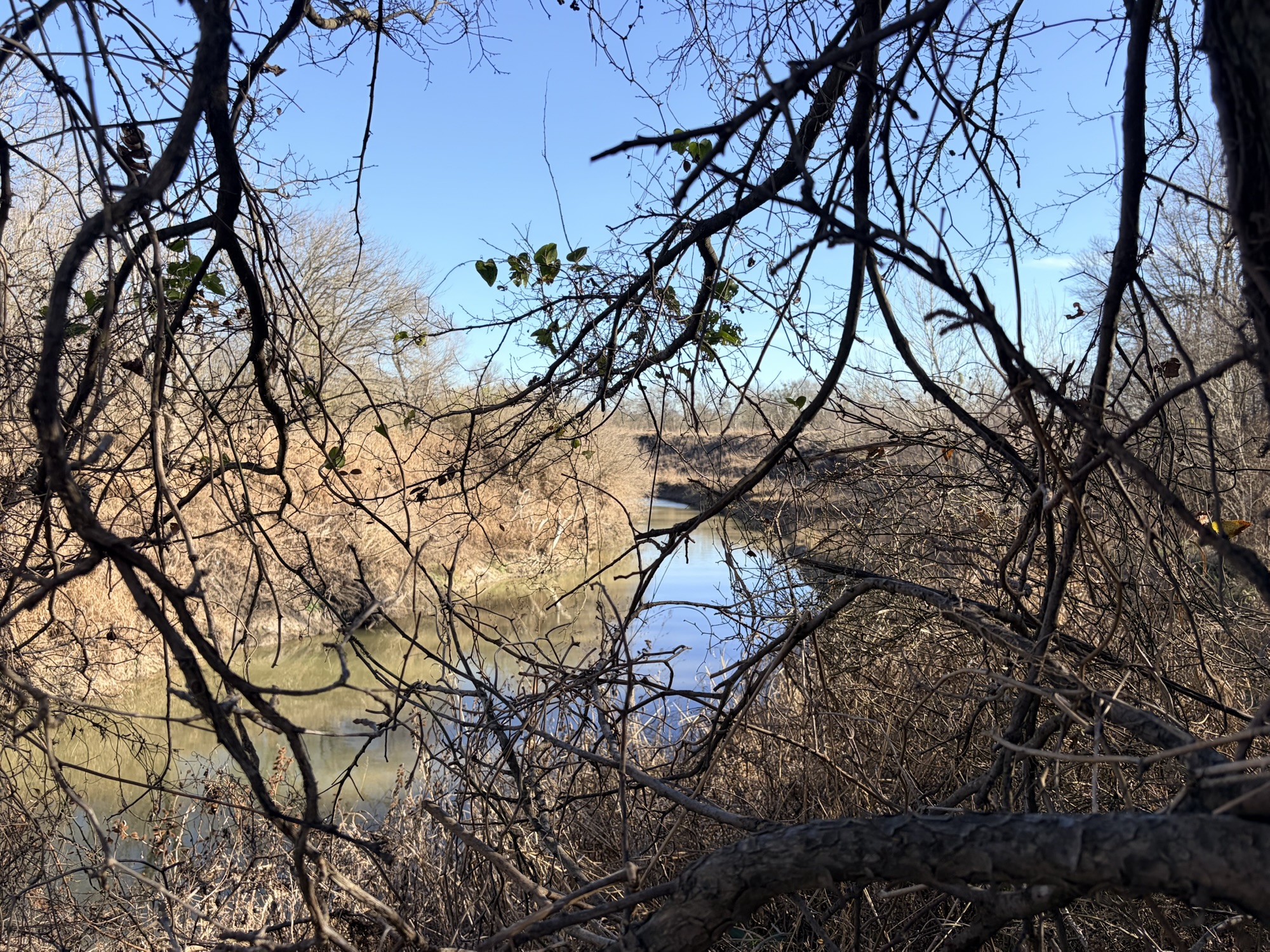
This is my favorite upper pond photo

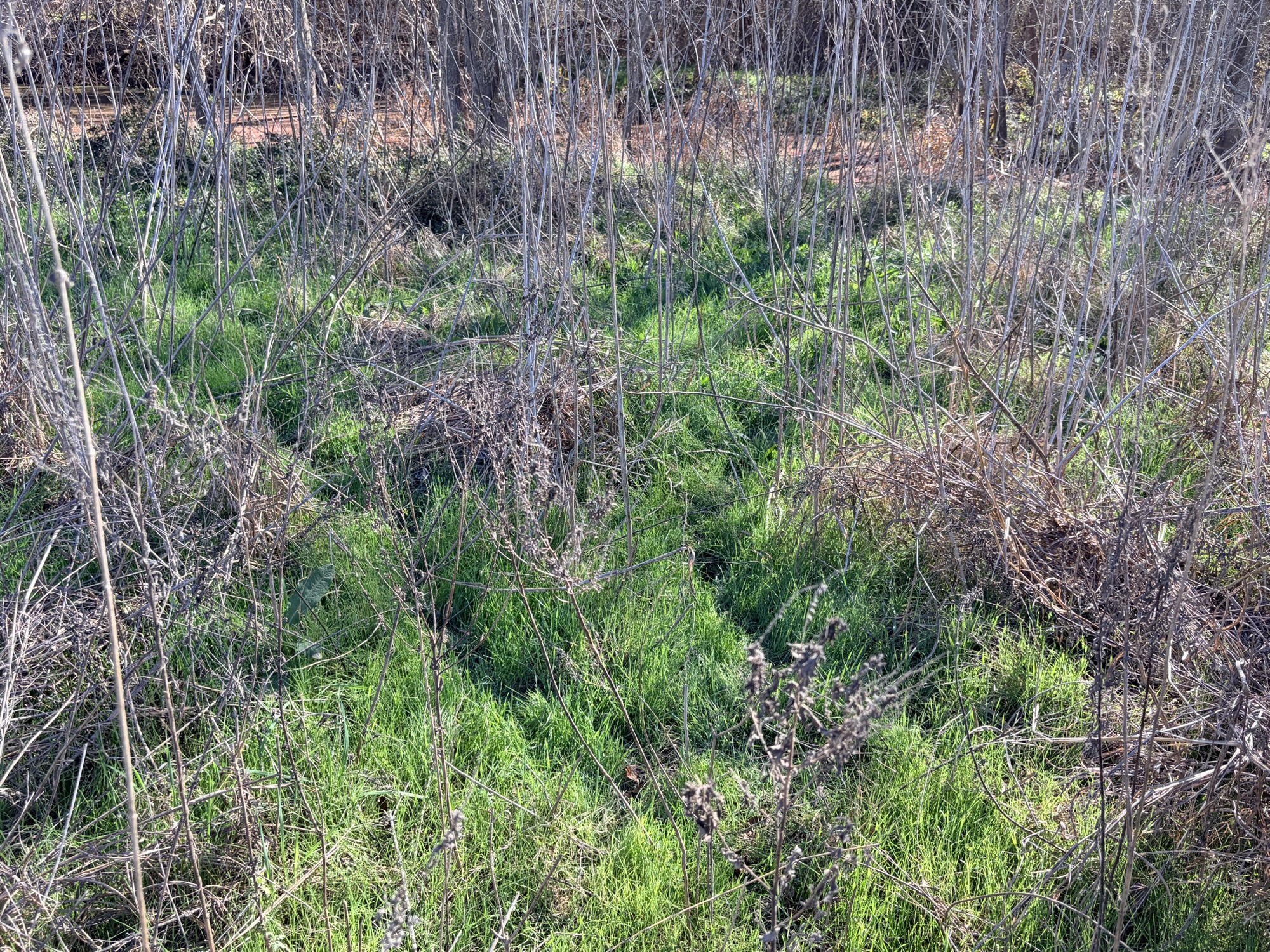
I wanted to see if there was a third dam below the first one we found. Sure enough, following the cool beaver trails led to another one that my friend thinks is a reconstruction of the original dam.

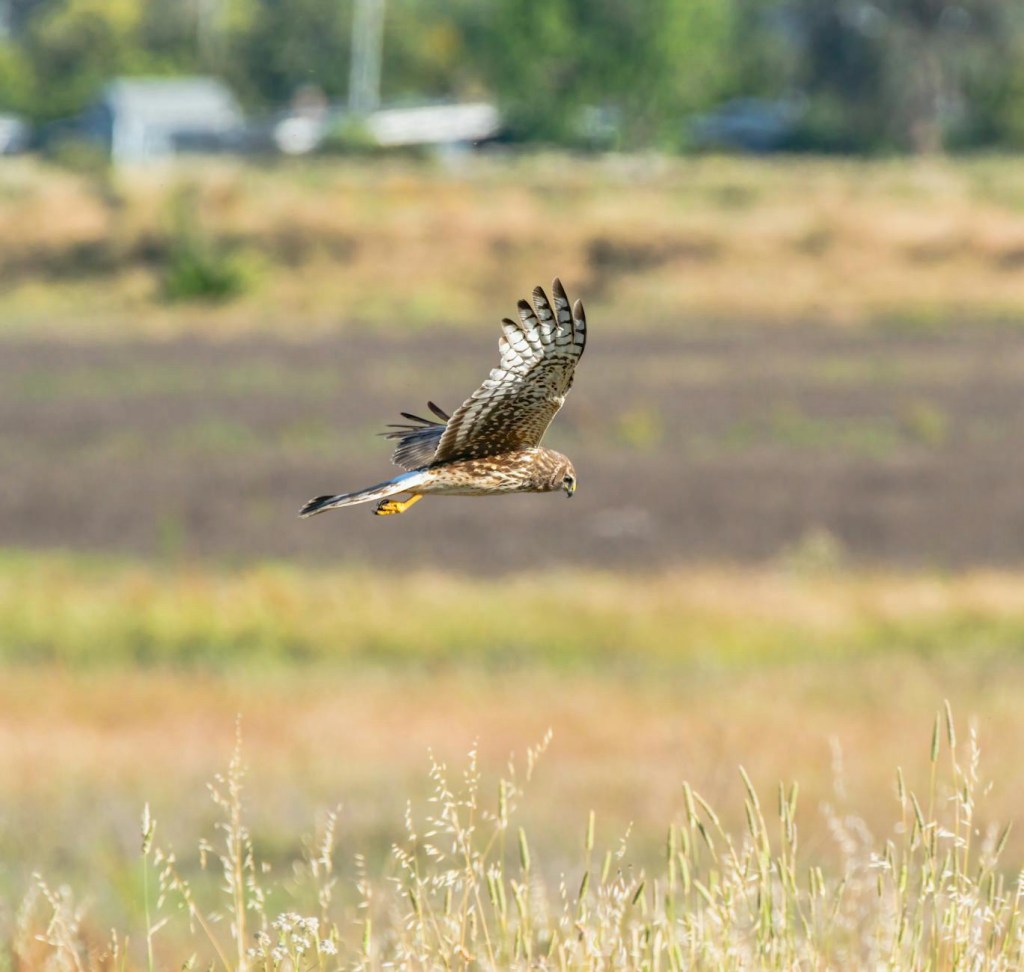
Since we had time and a truck, we went off exploring other parts of the property, which are mostly hay fields. We stopped and got to see a spectacular Northern Harrier fly right in front of us when we both had our binoculars. They’re beautiful hawks with a white patch just above their tail.

Northern Harrier from Pexels photo library

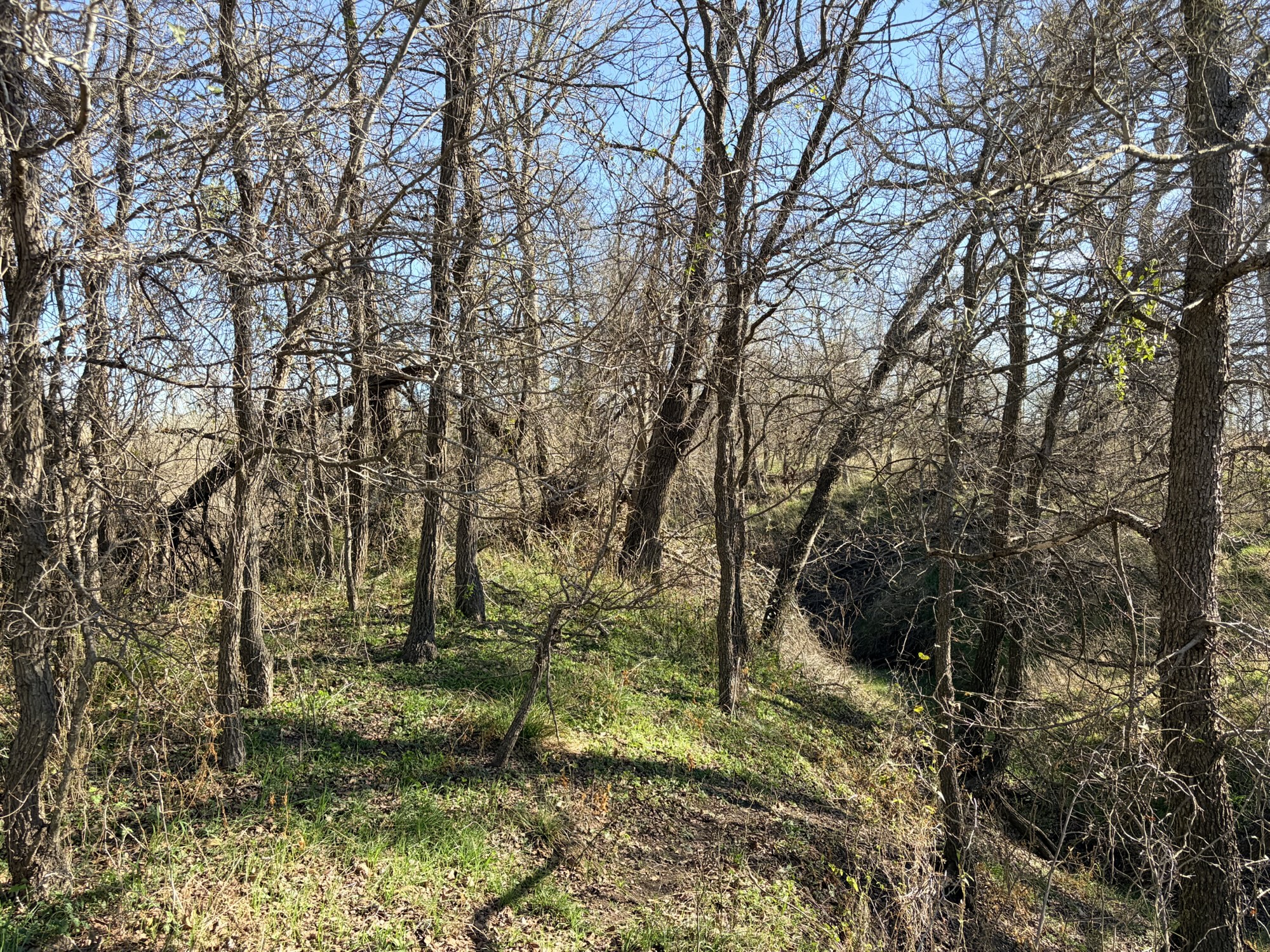
We then explored a ravine that lead to the big creek and observed how the creek is slowly moving northward. I did not fall down when I clambered down the embankment. I held onto trees. 

You can see where the creek used to be closer to the embankment

We ended our exciting afternoon doing some more birding back by my friend’s house and enjoying each other’s photos. I’m so pleased to cross another mammal off my list of Milam County sightings, even if I didn’t see an actual beaver. All my beaver knowledge really helped me see the signs of them. I’m sure the beavers are glad the prowling humans and dogs are gone!