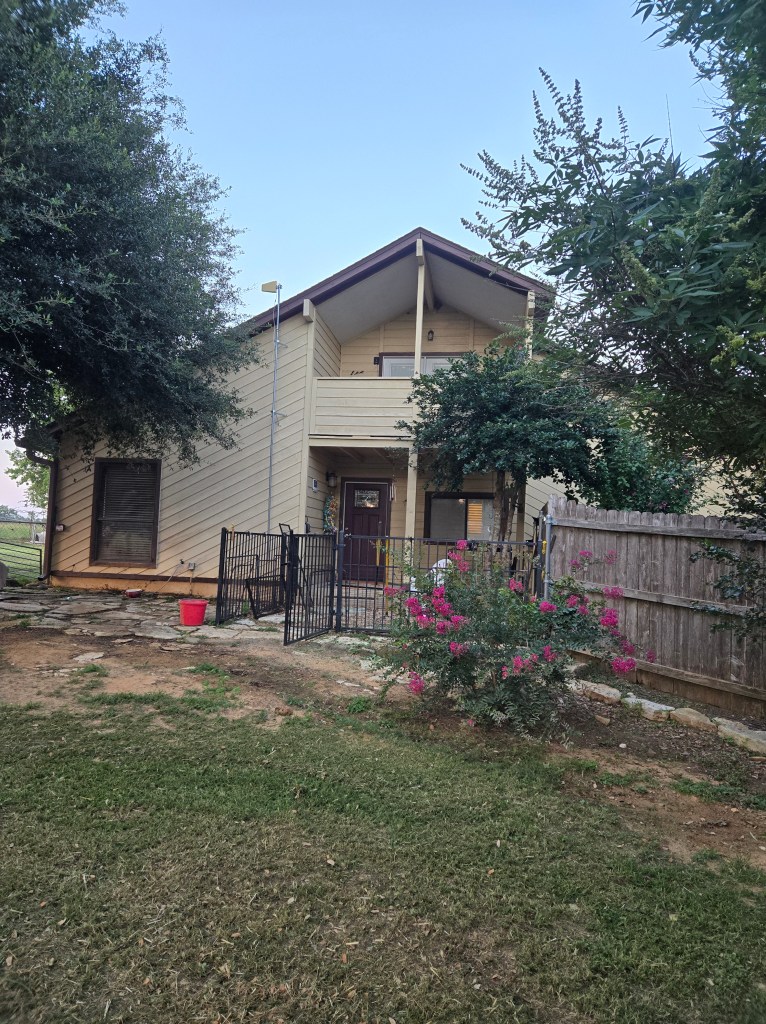
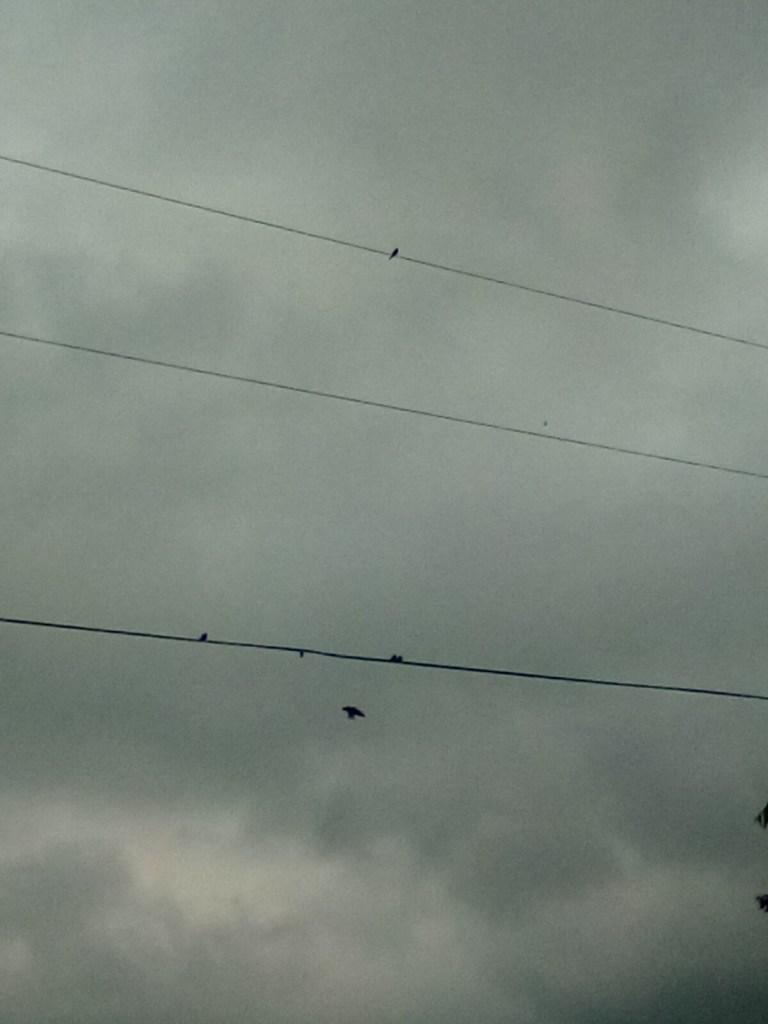
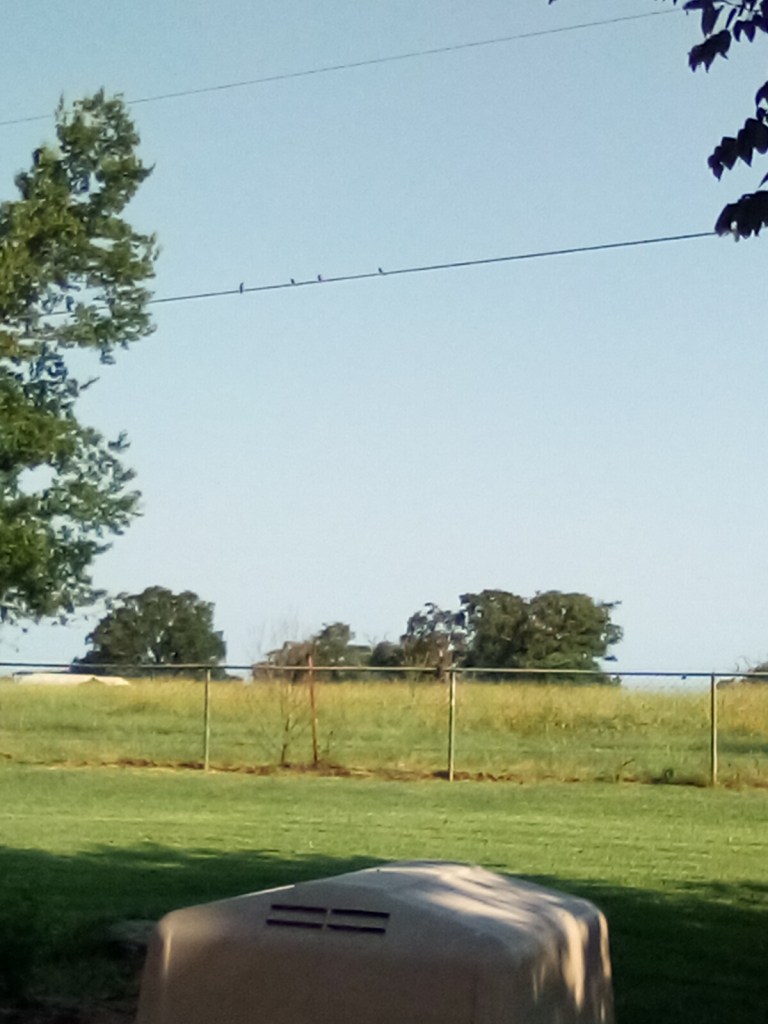
I decided to let Barn Swallows build another nest on the upper deck of my house this year. One group of three successfully flew away and stuck around as seen in the pictures of them on the power ines. We were hoping we could clean the deck as it also holds my daughter’s mini greenhouse and a seating area.
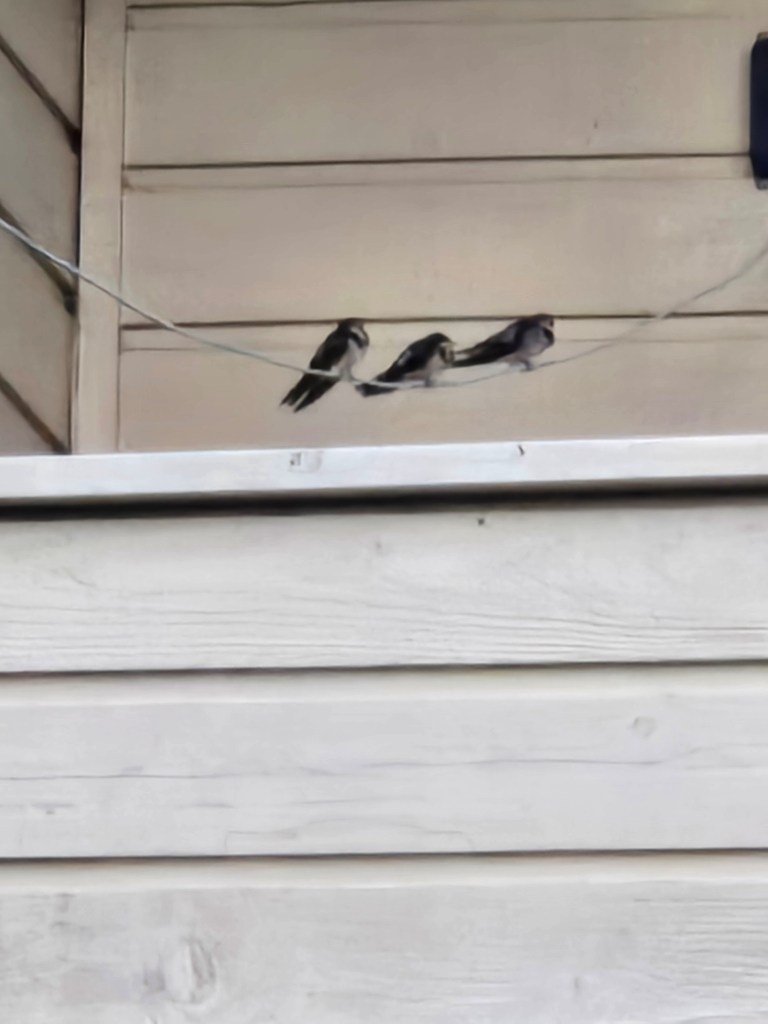
Mom had her second batch in a few days as seen in up close pics. We hope to install a swallow nesting structure, but nothing will be safer than where they are. We did add a fan that blows air under the nest.
Mom and Dad fed the first bunch on the power lines until they began to fly out to meet the parents and take the food. Then they hunted for short periods low to the ground and one day they flew away to find, I believe, the nearby pond. They are back now with their parents overlooking the siblings and the new colony.
I caught this beautiful male Tiger Swallowtail this afternoon while it was drinking nectar from a Zinnia.
I love this butterfly. The male is yellow, while the females can sometimes be black.
You can see the stripes on the wings, which look like those on tigers. They are very large and easy to see and photograph. They look like they float in the air while trying to land. But other times they are very fast and hard to keep up with.
Pipevine Swallowtail*
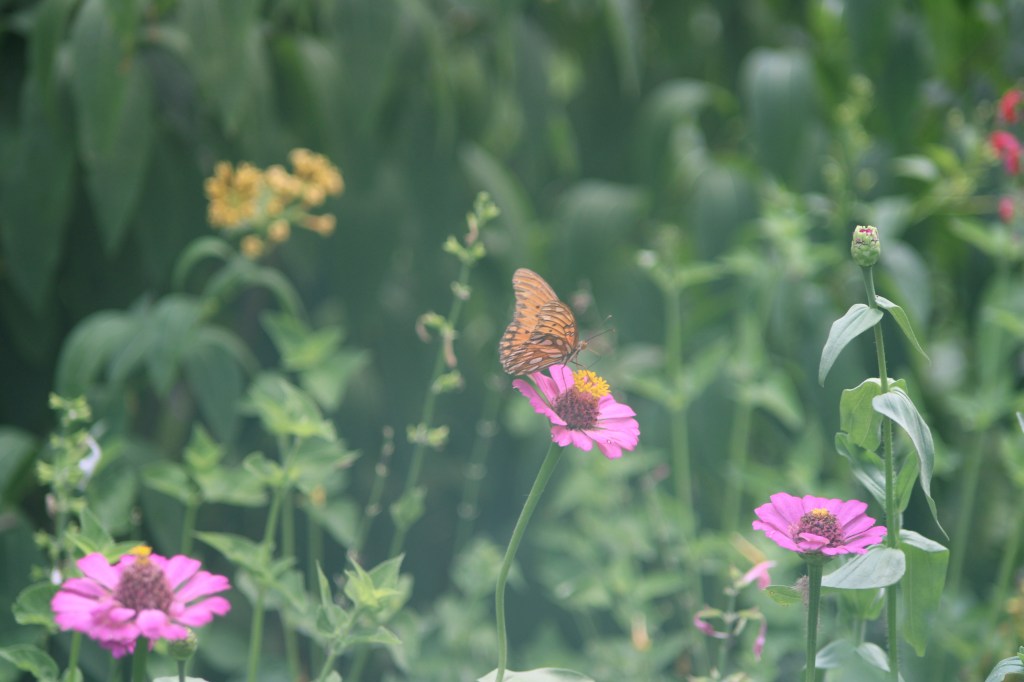
Mexican Silverspot (iNat suggestion)*
I have a lot of Purple Coneflowers and Zinnias in the garden, which are favorites of this species.
Purple Coneflowers
Their eggs are hard to find. The egg is green and round which blends in with the leaves of sweet bay magnolia and tulip poplar trees. The eggs are generally high up at the top of the tree.
There are also Fritillaries, Sulphurs, Pipevine Swallowtails, and Eastern Black Swallowtails in the pasture. I was too slow to get clear photos of them.
Lots to look at as always.
Butterfly identification from iNaturalist and not guaranteed accurate. Suggestions welcome.
My first adult incognita of the year. Like birds, wolf spider males are often more eye catching than the females. In the case of this species, this means a bolder pattern with greater contrasts like this one here.
Males mature ahead of the females, but I think I also observed a female with only one molt to go which means they’ll start maturing soon too.
I’m just learning how to recognize females as they approach maturity. At present I’m assuming that if they’re big enough to be recognizably male and they aren’t, then they must be females.
The timing appears to simultaneous across its range, with recent observations from Oklahoma, Kansas, and for the first time ever, Louisiana. Even those that have been lab raised since last October are on schedule with the first male molting into an adult last week.
Once again, we are breaking records for the heat here in Texas and the world.
I think that this is the new normal. My opinion…
So, there are a few simple things we can do for the wildlife.
One, we can provide water for them. It can be more important than food.
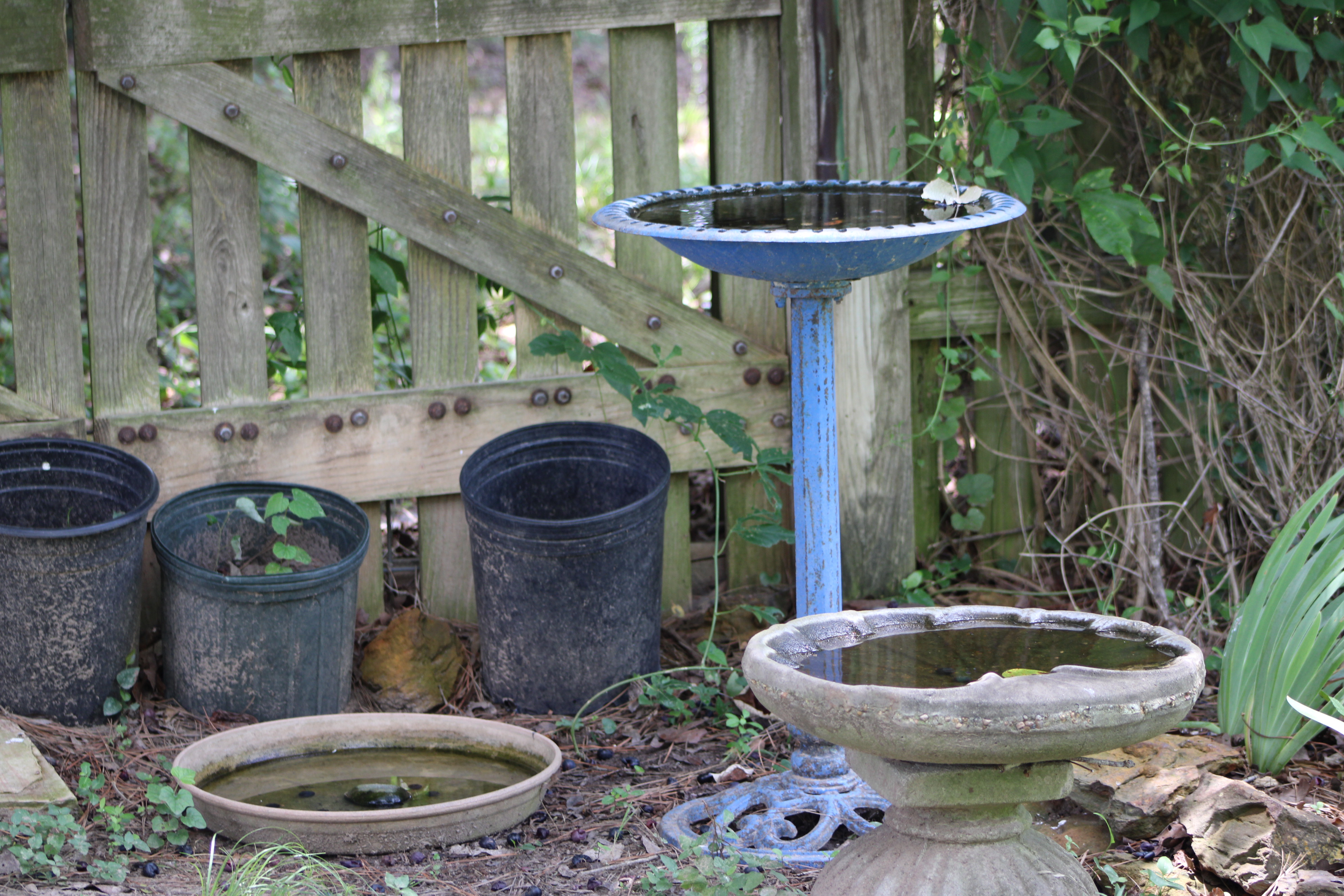
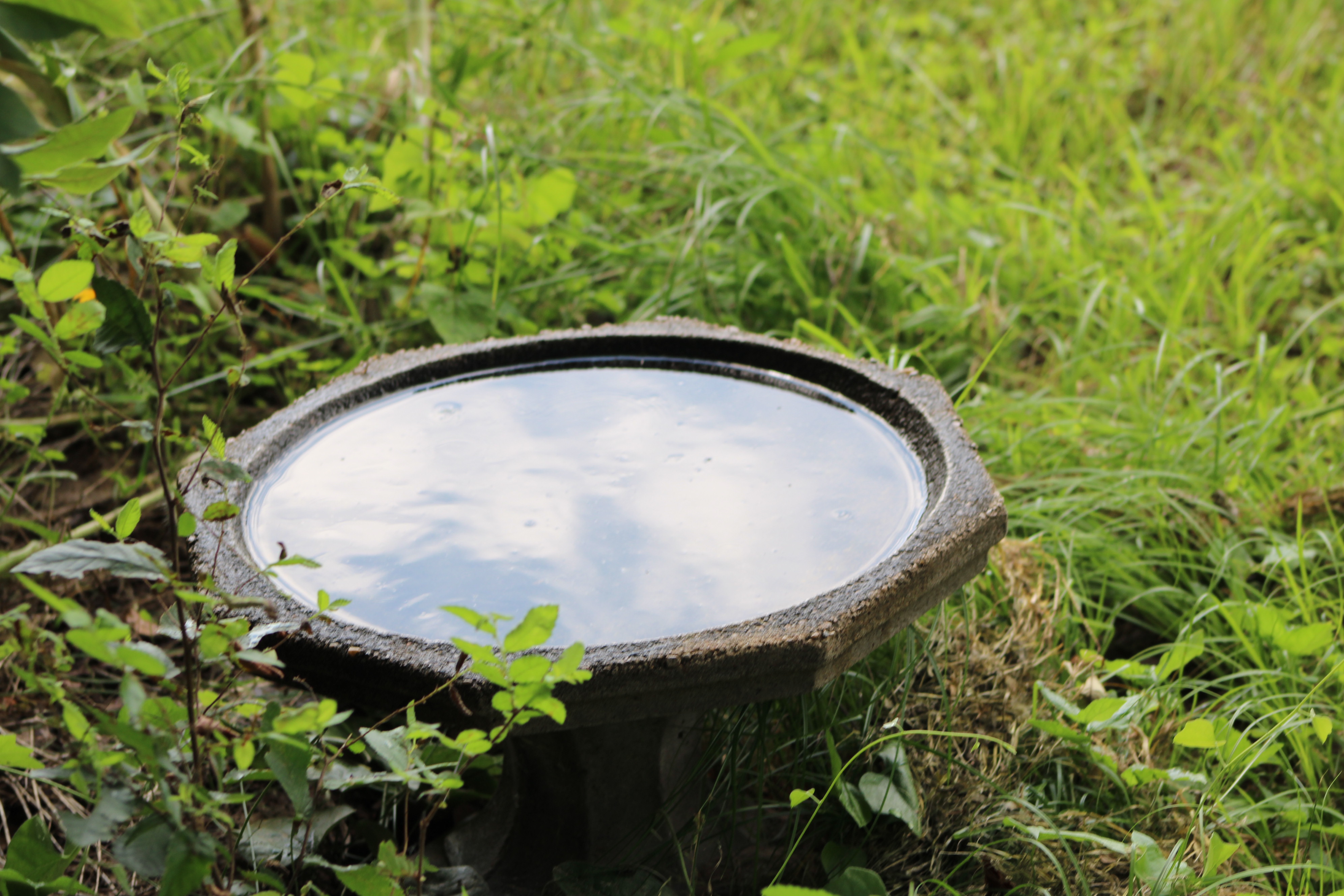
Containers that are not too deep are best. Place the containers under some shade if possible. Dump old water out as often as you can, and put fresh water in. That will keep the mosquitos to a minimum.
Birds need a perch of some kind to feel safe. There are lots of things you use for this. You can use cow panels, trellis, and old tree limbs. Be creative.
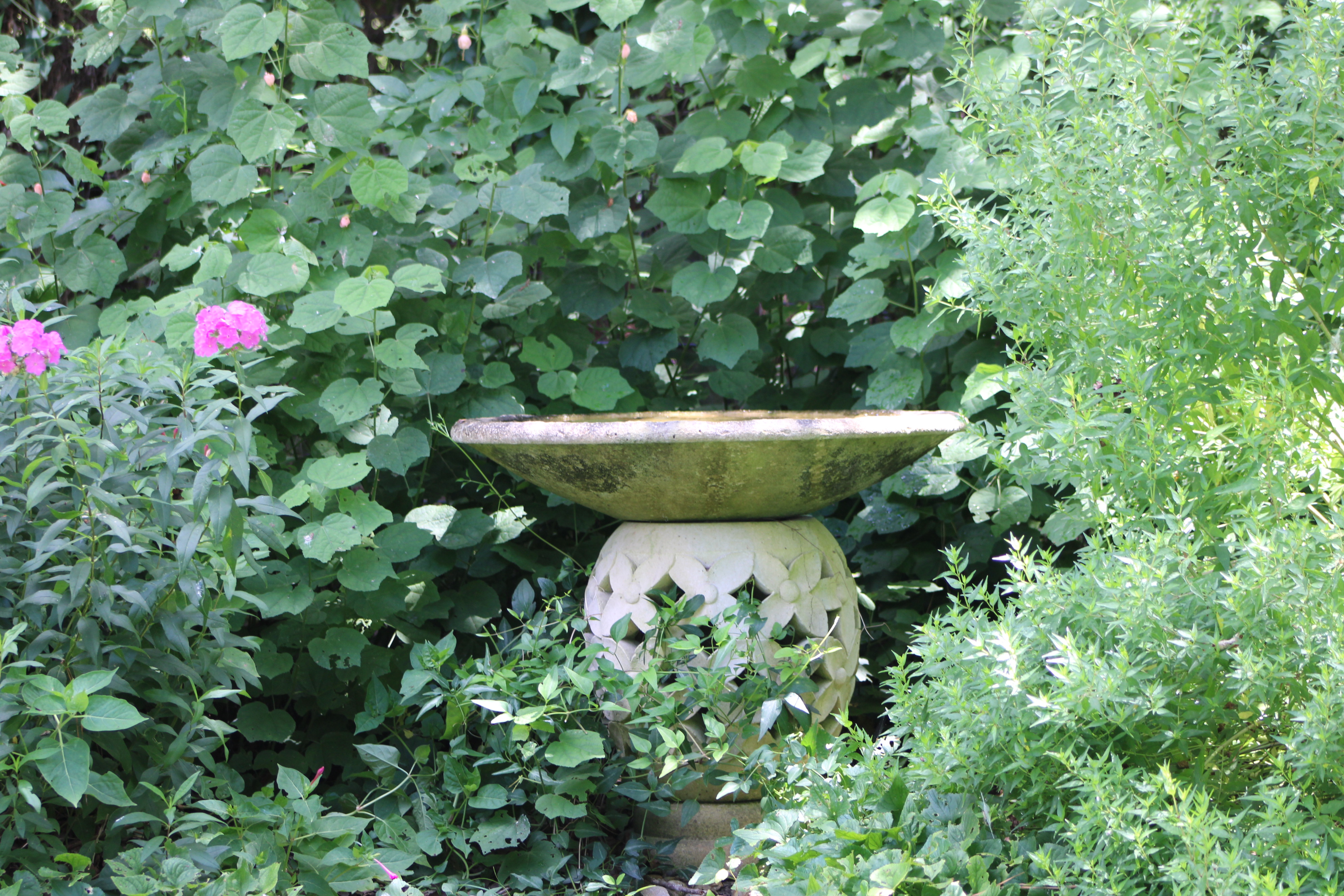
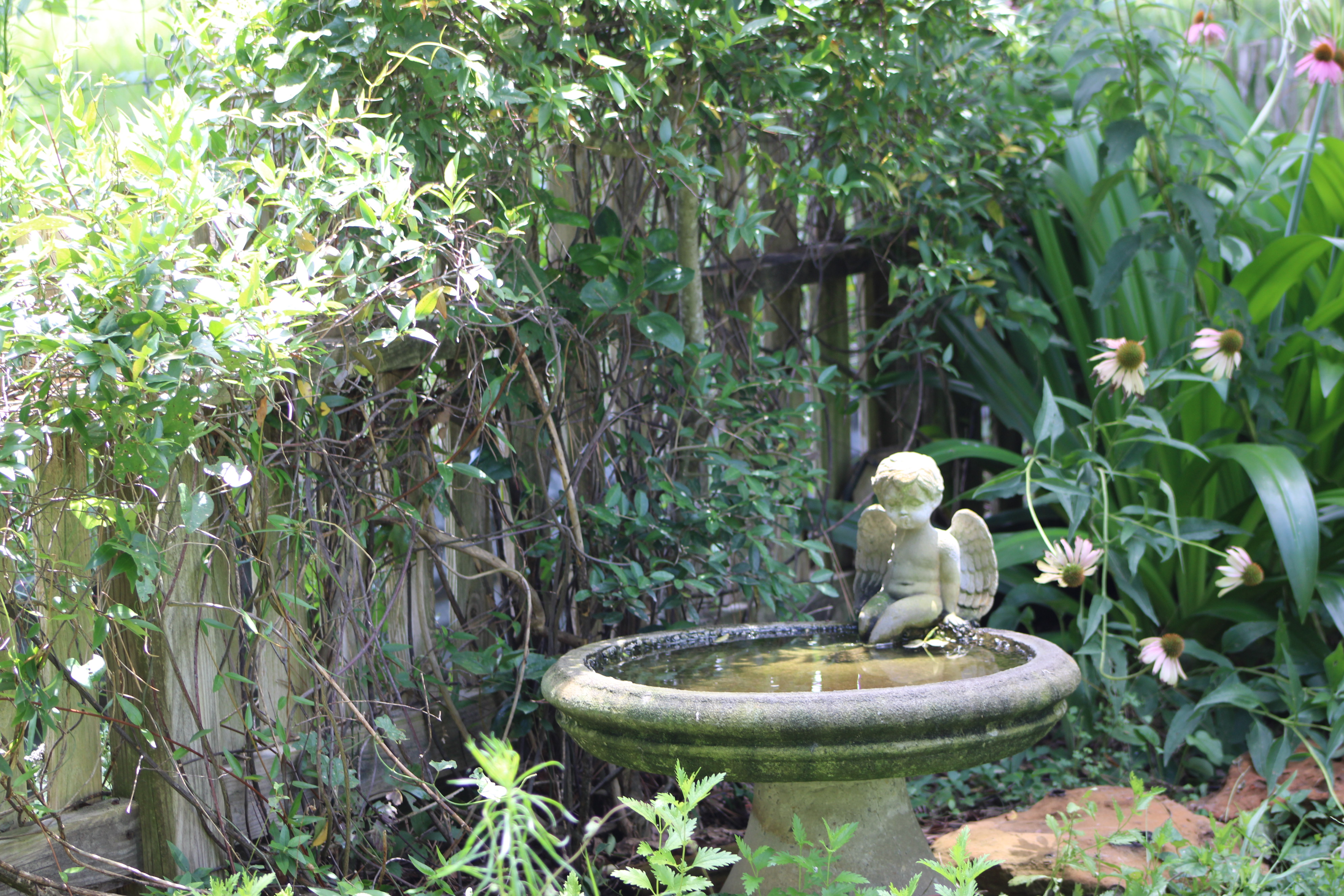
Here are a few photos of water containers I use.
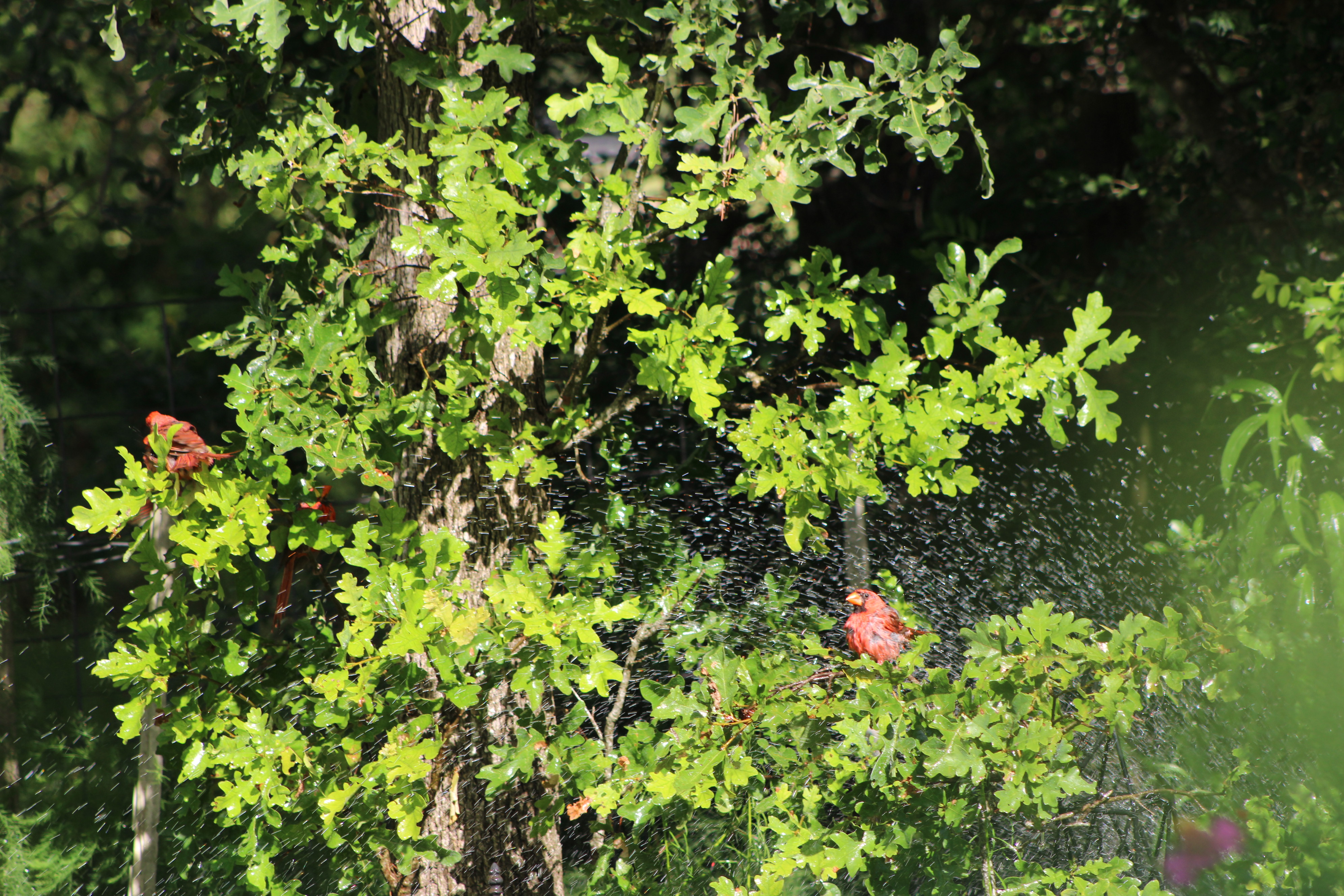
I also put the sprinkler on for about 30 minutes each day. They love that.
You will find many birds, mammals, and reptiles drinking from the water you provide.
It was a day when, like it or not, we got up hours before sunrise. Trying to paddle down a reach of the Brazos River on the last day of June, any boating crew is well advised to start early and finish early. Unlike most of the days in the rainy first half of 2024 this one promised to have few clouds, and therefore the full intensity of the midsummer sun.
Bluffs. Photo by Peggy Connor
We looked at weather apps as we rode along that describe the expected true air temperatures and the now ever so popular “FEELS LIKE” index. We noted that the “Feels Like” index was exactly the same for Houston, Waco, Terlingua, and Las Vegas, Nevada. All of these places have different levels of humidity due to their locations on the North American continent. But for the most part they all receive the same amount of solar radiation (sunlight) on any given day. The locations where the humidity was higher Houston and Waco were blessed with lower temperatures but they “felt” to be the same temperature as the two chosen desert localities. This is no new discovery: IN SUMMERTIME IT IS HOT. Therefore it “FEELS HOT.” Always has!
Fishing Spider. Photo by Victoria St. Everett
As it was, we got into the river and launched boats at 7:33 AM. Angie and Adam dropped us off under the Highway 7 bridge with Victoria, Alan, and Peggy in three boats. The river level was gently dropping into the 2400 cfs range after being higher during the wee hours of the morning. This was pretty-clear, cool water from Lakes Whitney and Aquilla that was being released upstream of Waco. The flow rate pushed us downstream and even in this wide, placid stretch of the Brazos you did not have to work hard to move rapidly. We saw Great Blue Herons, heard woodpeckers, and watched Bluff Swallows entering and leaving their nest holes in the colonies burrowed into the red soil riverbanks. Cliff Swallows mobbed the bridges where they had huge colonies of mud nests glued to the underside of the concrete structures.
The wide Brazos River. Photo by AE Rudd.
Victoria was in the lead when she passed an antlerless white-tailed deer swimming across the river. You could see why the cattle drovers from the Texas coastal plains always pushed their herds upstream of Waco before trying to cross the Brazos on the northward cattle drives. This deer was stuck below a high, steep, red alluvial soil embankment. Its thrashing hooves could not gain traction to climb the bluff and it repeatedly fell back into the river and was washed downstream where it would try again to clamber up the slick red clay. Finally, it arrived at a point where a small creek entered from the eastern shore, and it rapidly disappeared up the slope of this creek-bed.
I was reading about mammals’ swimming abilities recently, and the author pointed out that swimming motions are directly derived from walking motions. Humans (and probably other hominids) are a rare exception to this rule, and we must learn to swim with motions other than our walking strides. Even goofy arboreal species of mammals like tree sloths are surprisingly talented swimmers. I would like to travel back in time 16,000 years and watch a giant ground sloth swim across the Brazos River.
The trip was fast. We traveled 4.9 miles by kayak and canoe in 1 hour 35 minutes. We had a perfect pull-out point at the concrete boat ramp at Falls on the Brazos Park. A big thank you goes to the Falls County Commissioners court for keeping this old park open access. The recent two months of flood stage water levels have rebuilt sand and gravel bars and scoured clean the riverbed. Every river benefits from a good flushing to renew the system. I had to risk exposure to the heat to get a quick look at the cleaned-up face of the Brazos.








 Nature Along the El Camino Real