There are still really neat little creatures to see, even though there is no rain and it is very hot outside. You really have to look.
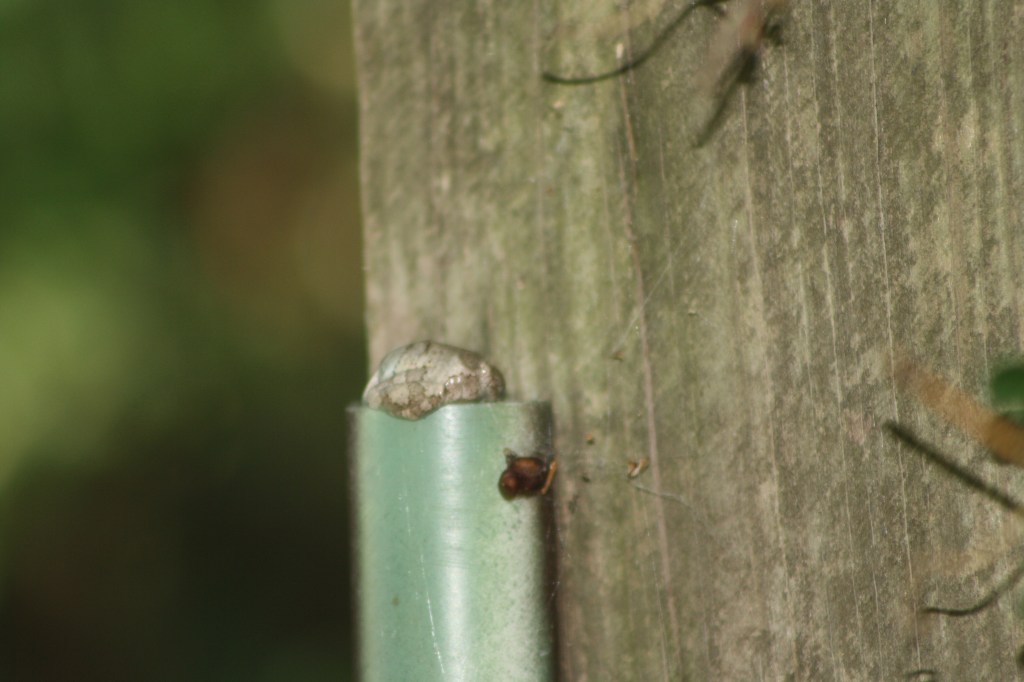
Right by some of my birdbaths and a large vine, I found a tiny Common Gray Tree Frog.
It was in the shade and sitting on a frog tube I made just for tree frogs. There is an inch of water in the bottom of the tube. It was so little it was hard to get a good photo of it.
It turned its back to me just as I took the photo. I guess it was camera shy.
The Gray Tree Frogs are a little bit smaller than the green ones. I don’t see these often, because they have a camouflage pattern on them. That’s great for hiding.
All my Purple Martins have fledged. The last baby left the house on July 9th. It’s a good thing because it is way too hot in the martin houses. I actually had a few deaths related to the extreme heat. I was happy and sad when they got out and up into the air where the breeze could cool them and lift them up. It’s where they do their magic.
So, after they leave the nest, they visit their house occasionally. They will live in the trees now like other birds. This is when they learn to fly and catch their food in the air. Learning to drink on the fly is also a skill they will have to master.
Right now, they are honing all their new skills and getting stronger every day.
When it’s time, they will head South to Brazil. Only they know when it’s time. Some have never been there, but the older ones will return to the forests they know.
Then next February they will return here again and start breeding all over again.
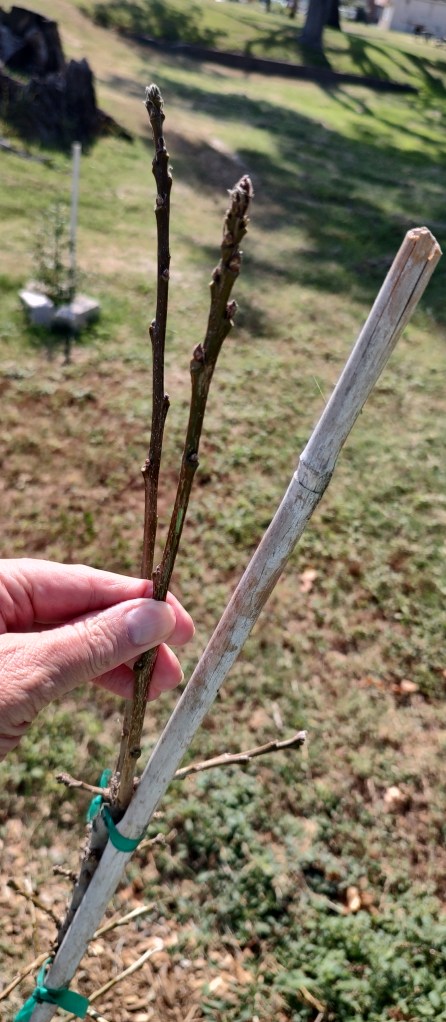
Several members and some spouse helpers planted three Bur Oaks in April on Earth Day, and they are still alive – so far. They are planted at Cameron City Park, Orchard Park and Wilson Ledbetter Park. I see the Orchard Park tree on a daily basis. I see the Cameron City Park tree about every two weeks. The last one not so often.
Cameron City Park tree with no leaves
They all took a serious wind storm hit about a week (or so) after they were planted. It caused two of them to lean notably, but a little action was taken to try and set them upright. The Wilson Ledbetter Park tree was nearly on the ground. They did seem to recover from that event. Then came the heat. About three weeks ago, I drove by the city park to take a look at it and found it leafless. The leaves had died on the tree and fallen around it. This was a surprise because it seemed to be doing very well. It didn’t even lean over in the storm. I got out of my car to take a closer look. It appeared like it was going to bud out again. A week later it had new leaves. I don’t know what made the leaves die, but the theory is transplant shock.
Same tree with what I thought were going to be new leavesOne week later, it is putting out new leavesSame tree with many more leaves
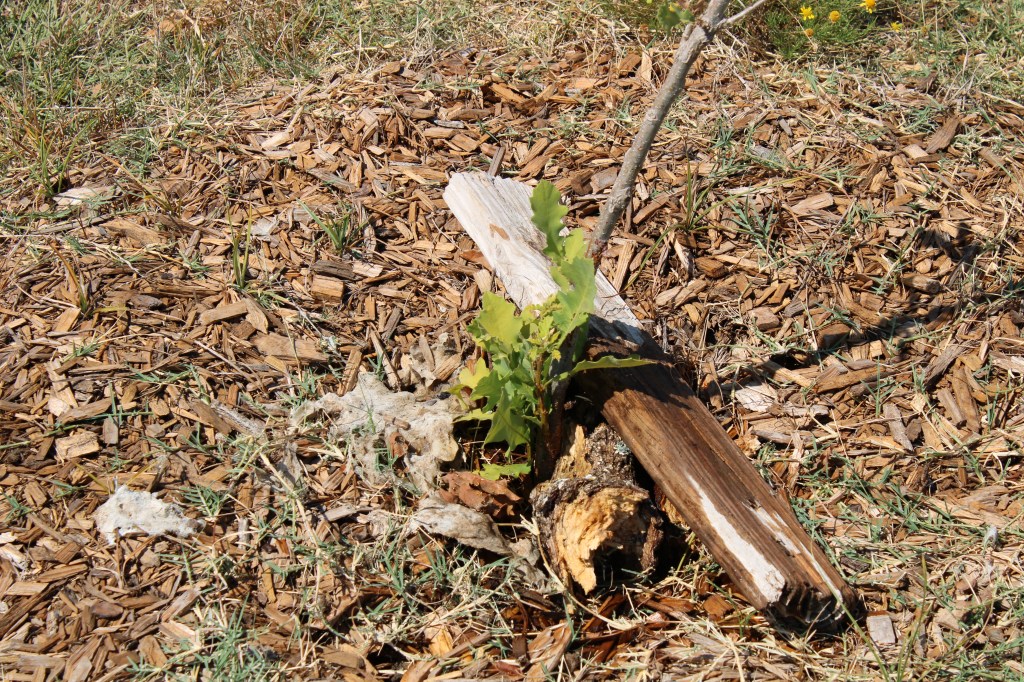
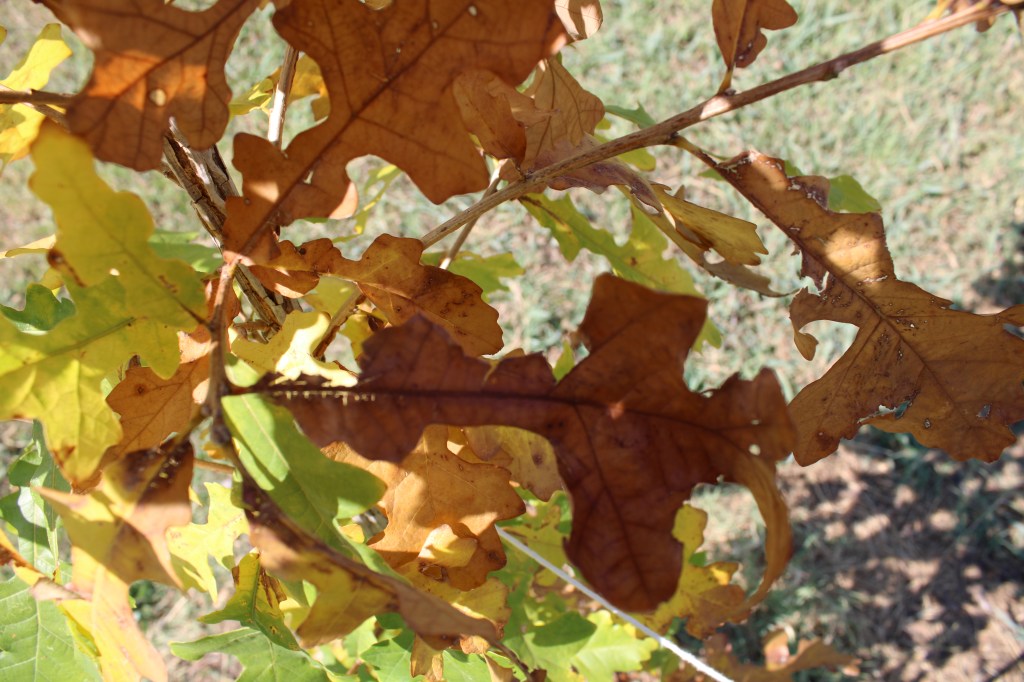
The Orchard Park tree has looked very good until just this week. It is losing some leaves. On close inspection, it looks like some of them are being eaten by something. There are still mostly green leaves on it. The Wilson Ledbetter tree is the one that was laid over from that storm. It still leans a lot, but it is putting up new leaves from the ground. I’m not sure what to do about the still leaning part. The tilt is about a 45 degree angle.
What they all need right now is regular watering. If you volunteered, please don’t forget to take them a drink as often as you can. Wilson Ledbetter Park has a working faucet right by the American Legion, or you can dip it from the little lake. The Orchard Park tree is right beside the pond, so it can be dipped from there. The Cameron City Park requires transporting the water. If they have made it this far, I think some regular watering can get them through to cooler, wetter weather.
Wilson Ledbetter Park TreeClose up of Wilson Ledbetter tree new growthClose up of leaves at Orchard Park
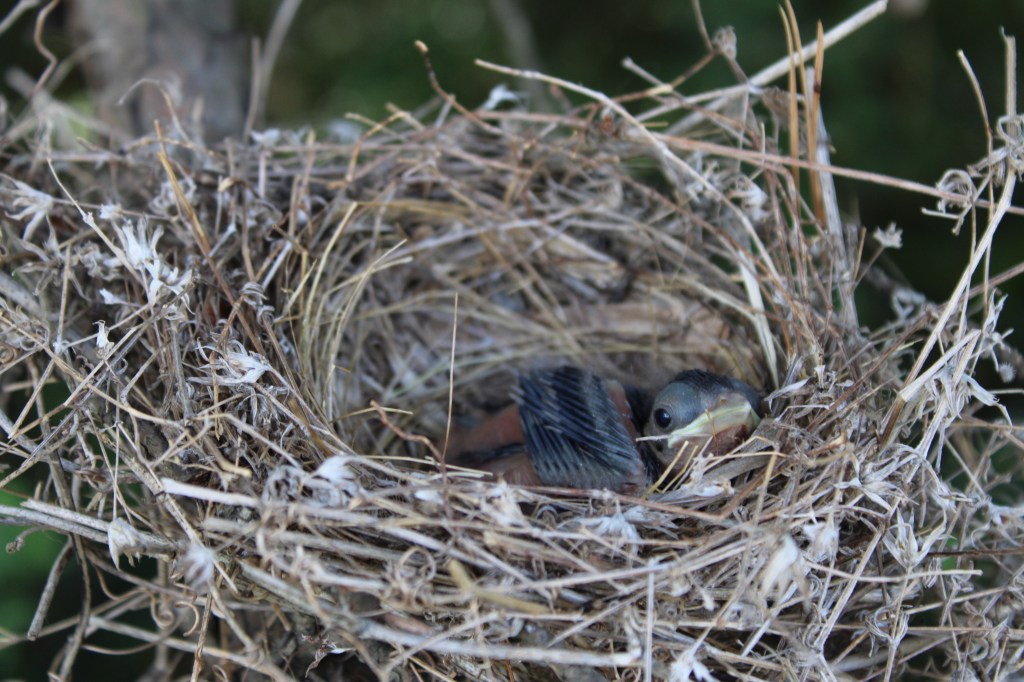
Yes, I thought most of our local birds had finished with having babies still in the nest. It is way too hot to tend to them. I was very surprised when my Linda cut a branch off that she kept heading her head on, to find a Cardinal nest about ten inches from the cut.
Now the nest is pretty much open to the elements. I cannot move it; it is too fragile.
There is one baby in it. I have been watching it with my binoculars for three days now, and thankfully the baby is still safe. The mother is still feeding it. I pray every night that a predator doesn’t find it.
So, keep in mind while you trim branches, there are still babies in their nests now in late July.
This past Monday, at 6:30 pm, a large bird landed on the shepherd’s crook with an open seed feeder. It is very close to the living room window. This disadvantage is that it is backlit.
I spotted a large bird, navigating an unfamiliar branch – the metal shepherd’s crook – and processing how to get to the seed. Finally, after attempting various angles, he jumped down. I was successful in moving around in the house without spooking the bird, but not near my bird book.
With the help of a couple of books, I identified it as a White Wing Dove. I’ve not seen one before and I didn’t know we had them here. Estimating the areas from the range maps, Milam is right on the edge of the range.
Ten minutes later he/she is back sitting on a branch, eying the seed, and fifteen minutes have passed! As White Wing Doves enjoy small colonies, and are monogamous, I’m expecting his/her friends.






 Nature Along the El Camino Real