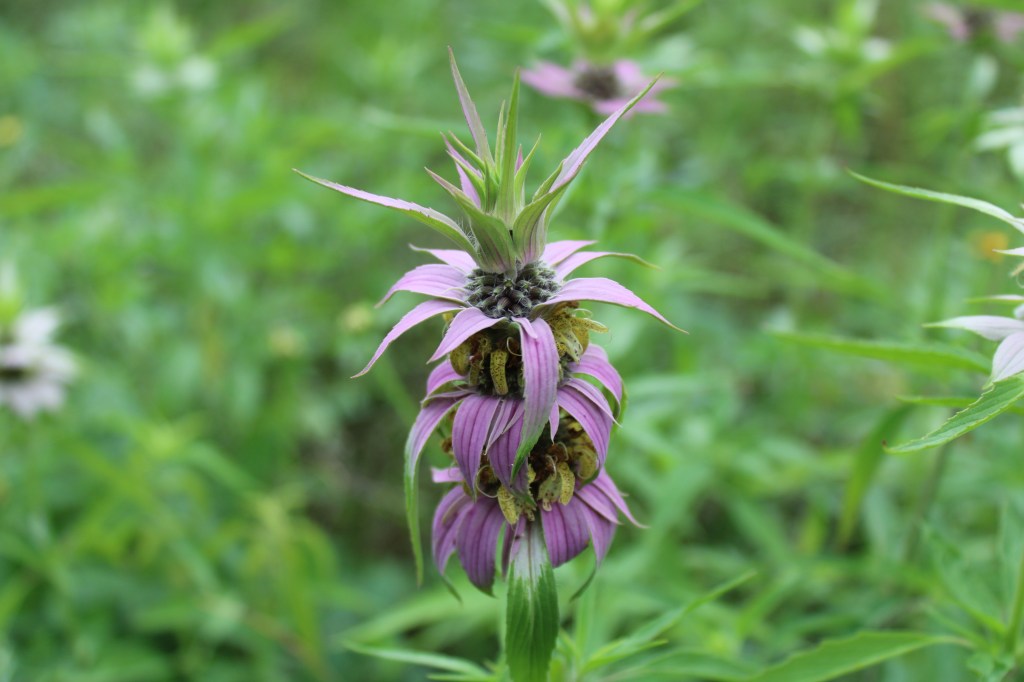
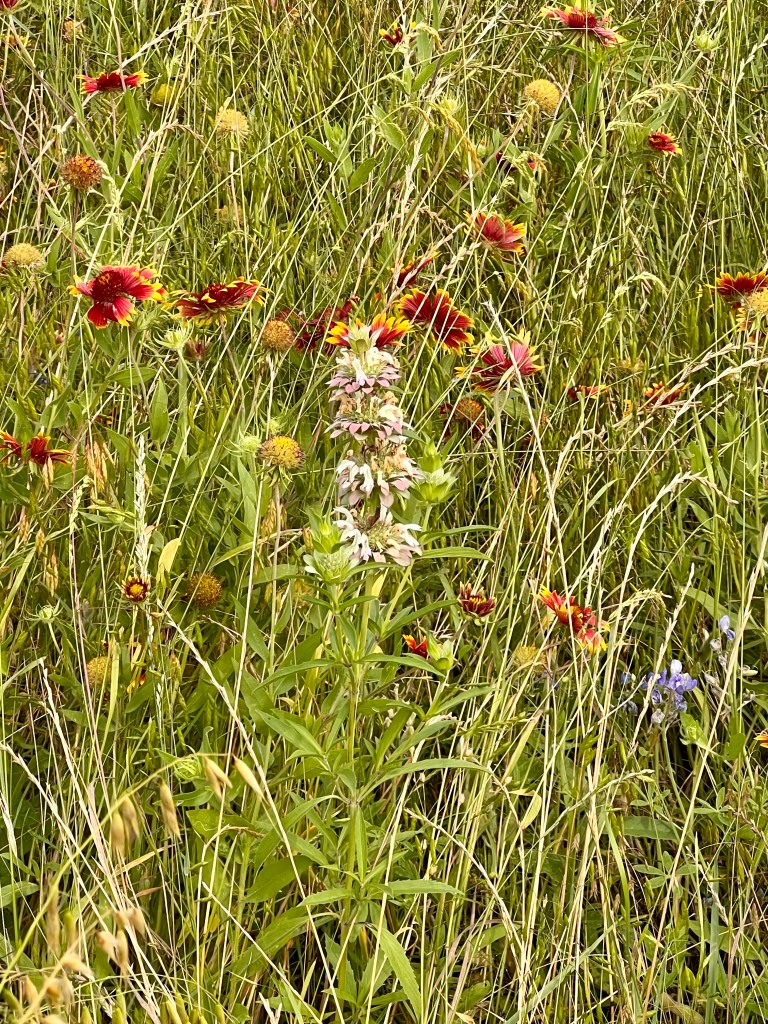
Many of us who own some acreage probably are seeing this unusual plant right about now It goes by several names: Beebalm, Plains Horsemint, Lemon Beebalm, or Purple Horsemint, while its Latin name is Monarda citriodora. Wow…who knows what to call it? I don’t think the botanists can agree. Myself, I like easy things to remember.
I also have noticed that after looking in four different reference books from my own library, it can look very different from the photo in each book. That is confusing for sure. I think the soil has something to do with the shade of pale yellow and the purple color.
This one at Donna’s house is quite purple.
This plant likes dry, sandy, or rocky soils. It grows one to three feet tall with leaves up to two to three inches long and is a member of the mint family. It is an important pollinator plant here in Texas.
This one is from the Walker’s Creek area near Cameron and is more pink. Photo by Sue Ann Kendall.
So don’t mow it down, it’s NOT a weed.
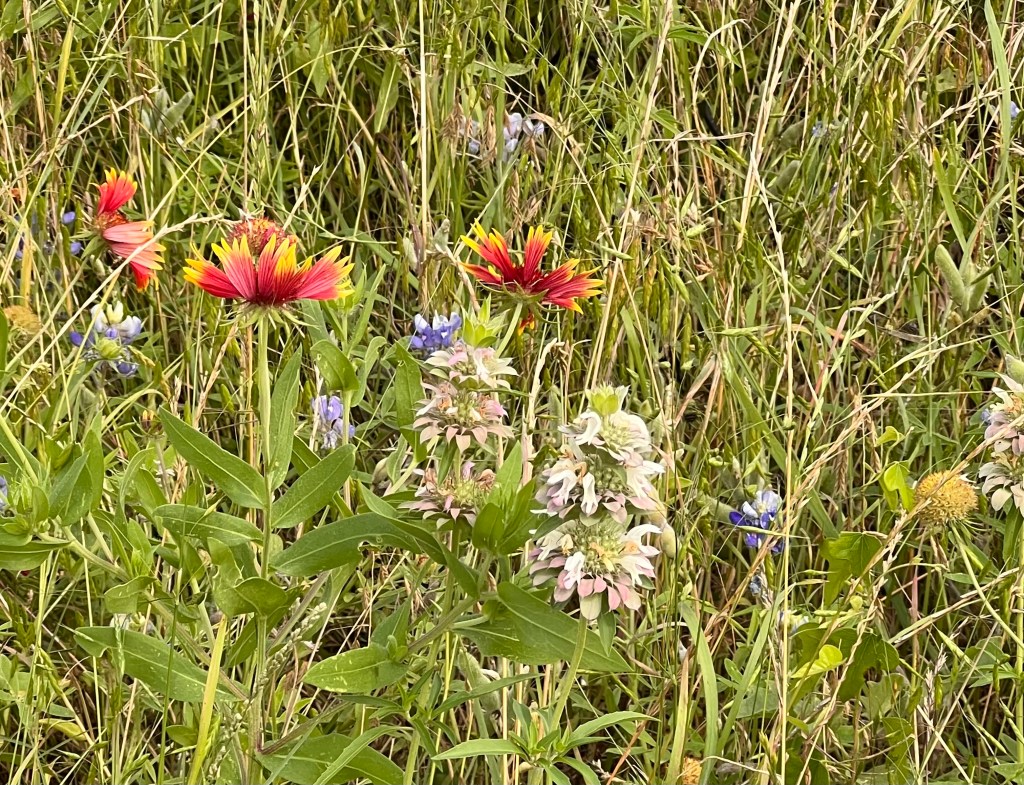
Monarda growing along County Road 140, with Indian blanket and bluebonnets.
Success with growing Pink Turk’s Caps from seed is looking more possible every day. I now have seven growing from seeds that wintered in the refrigerator. Then I was surprised to find that the one whole seed pod I planted in the ground last November had come up. I had flagged the site, so I could remember exactly where I put it.
So, they will come up from a baby plant planted in the fall, seeds that have been removed from the red pod covering, cleaned, dried, and refrigerated over the winter, and a whole pod placed in a flower bed in the fall. The only version that didn’t produce plants were the cleaned and dried seeds planted in the fall in containers and left outside.
Now, I’m waiting to get them a little larger, so I can transplant them to the mostly shaded flower bed.
It pays to pay attention to your Facebook groups, because you never know what treasures you will find hiding in there. Yesterday, I saw a post In Milam County Veggie and Plant Exchange by one of our group, Larry Kocian, that talked about one of the predominant blooming plants around my ranch this time of year, henbit deadnettle Lamium amplexicaule. I have to admit I knew little about this little purple bloomer, other than the fact that I can ID it on iNaturalist. Now, thanks to the fascinating article Larry linked to, I know a lot more, and think you should, too!
What a beauty!
This plant can be so abundant in fields that it turns them purple with its tiny orchid-like blooms. I was surprised to learn that it’s not a native plant but was brought over by European settlers as food for, you guessed it, hens (and roosters). Now you’ll never forget the name of this plant! I have taken lots of pictures of it,as you can see here, because there’s little to take pictures of this time of year.
Henbit festival
That’s right, it’s edible. The article told me it was quite good in salads and with eggs, so after feeding my hens some henbit, I picked some for myself and ate it with a fresh scrambled egg. It was quite good, as you’d expect from most members of the mint family (Lamiaceae). How did I know it was a mint? I felt its stem, which is quite square, like a member of its family.
Square stem
Although henbit is originally a plant from the Mediterranean and North Africa, it’s useful here, since it provides nectar to the honeybees and early butterflies at a time when little else is flowering (here at my house, its fellow bloomers are mostly dandelions and crow poison). My horses like it, too, judging from the lack of it in the pastures, and sure enough, the hens gobble it down.
Early spring field near my henhouse.
From what I read, it’s not dangerously invasive. Mowing can keep it under control, though I find it too pretty to mow and have noticed that when it’s done, the other plants have no trouble taking it over (sadly, that includes bur clover).
Here’s a pretty pale one.
As for me, I thought it tasted pretty good, for a green. It’s sort of like a peppery celery. It perked up my scrambled eggs quite well.
MMM, lunch.
So, go out and harvest yourself some free greens. You can cook them, too! Just be sure to harvest them in a place where it hasn’t had chemicals on it. I avoided my septic field, though I’m not sure that would have been a problem.
Where? Milam Wildscape Project – Bird and Bee Farm – 1369 County Road 334, Milano, Texas.
What? Nature Days
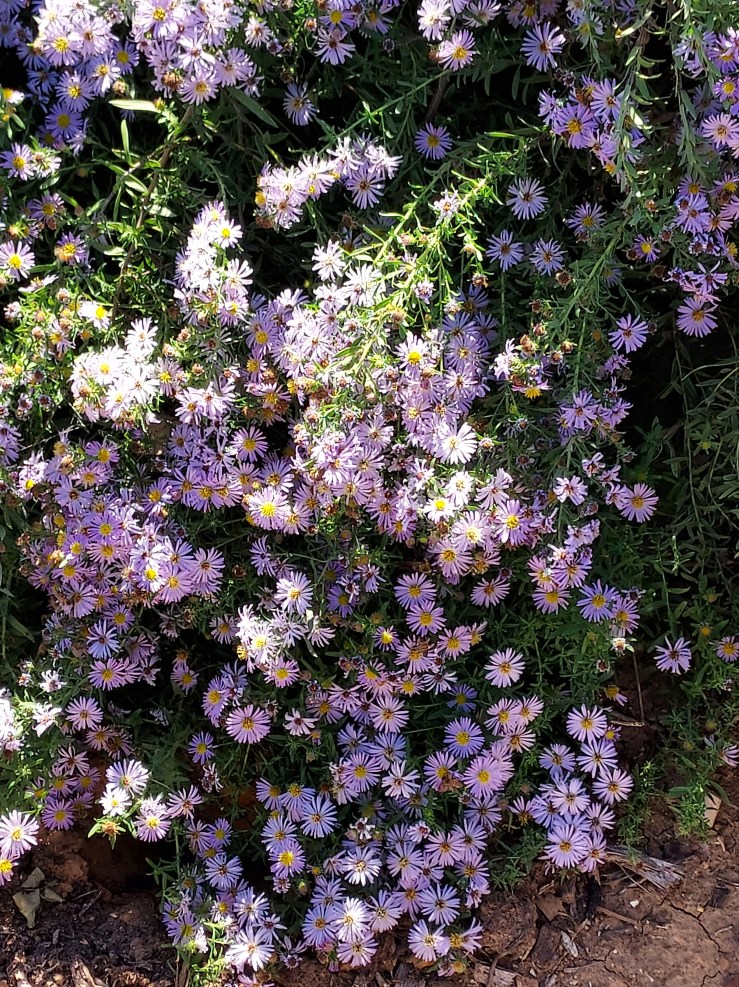
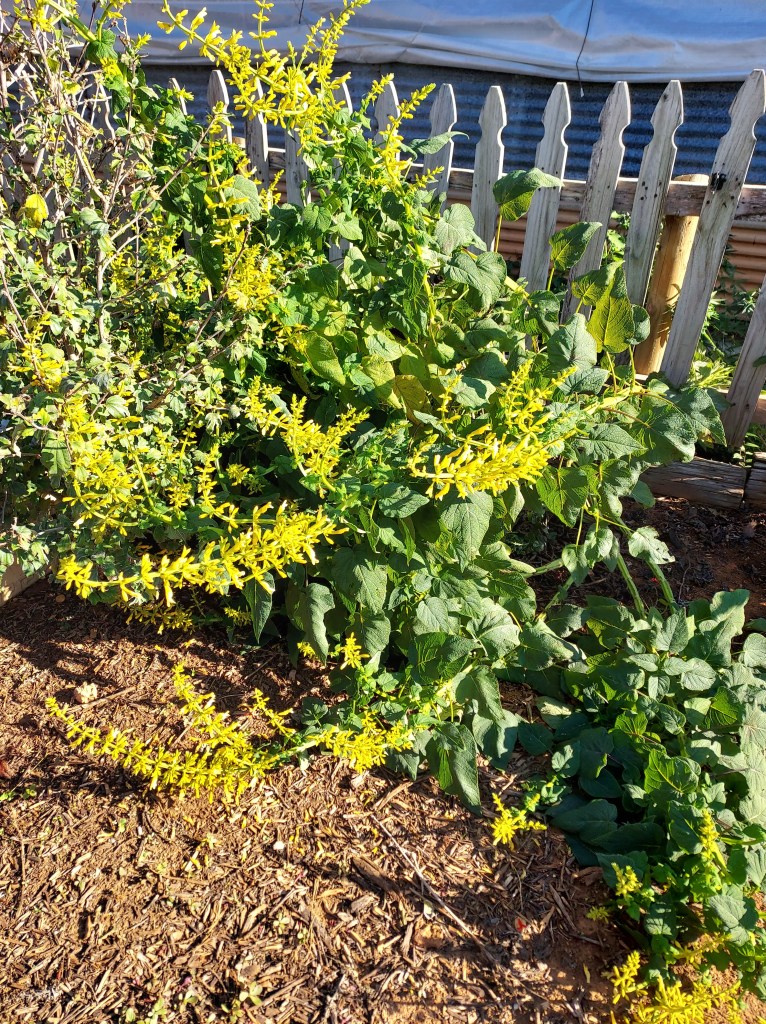
Come see blooming tall purple asters, red and pink Turk’s cap, white fragrant mist flower, Mexican bush sage, Mexican honeysuckle, forsythia sage, Gulf muhly, and more.
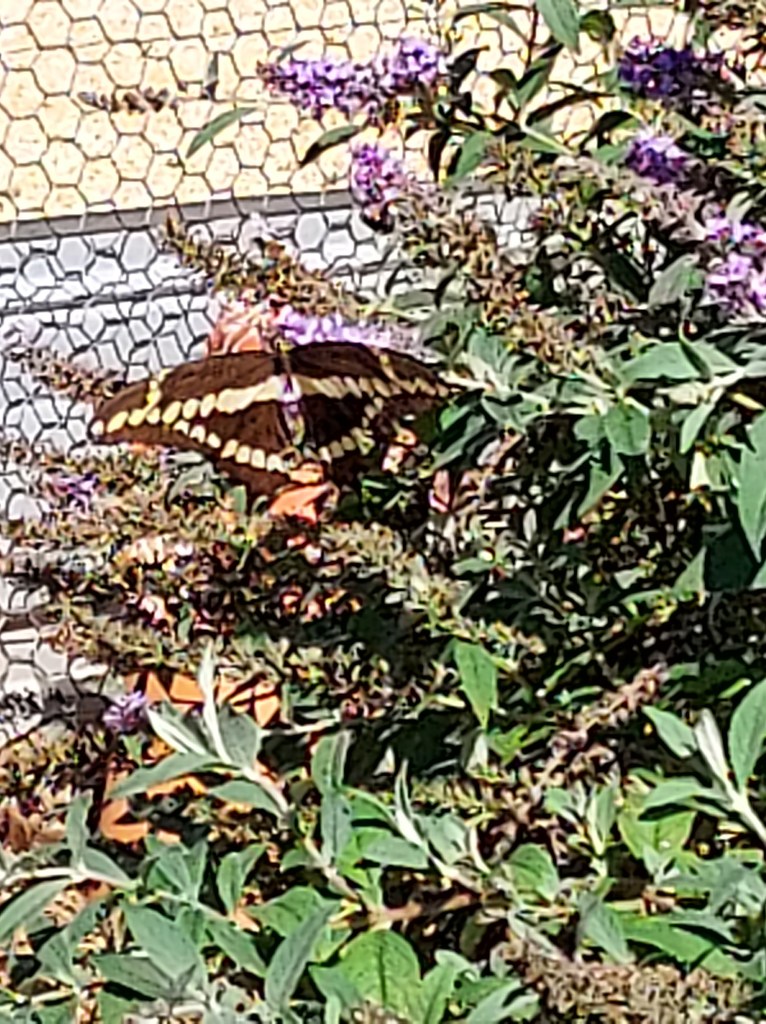
View this video for a sample of the thousands of pollinators. We will be giving away free native plants, goody bags for all, bee houses, plus refreshments.
Come tour the garden and share YOUR nature stories with us.
Our garden is never finished, beautiful, and always WILD.










 Nature Along the El Camino Real