All the preparations have paid off for our pollinator project at the Milam Wildscape. Our grant from the H-E-B Pollinators for Texas is going a long way toward creating just what our target species need.
The pollinators are waiting patiently for their new nectar and pollen sources.
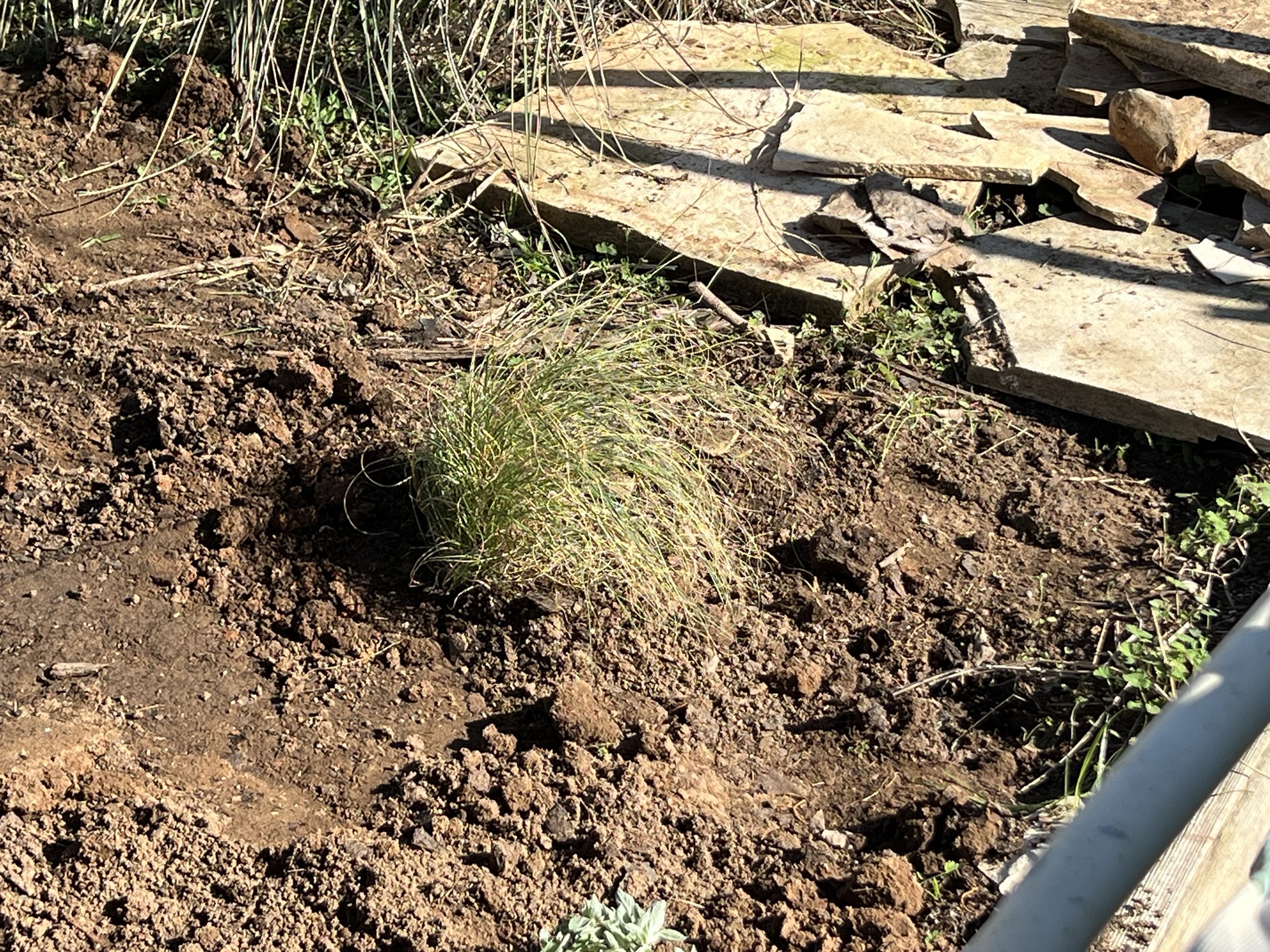
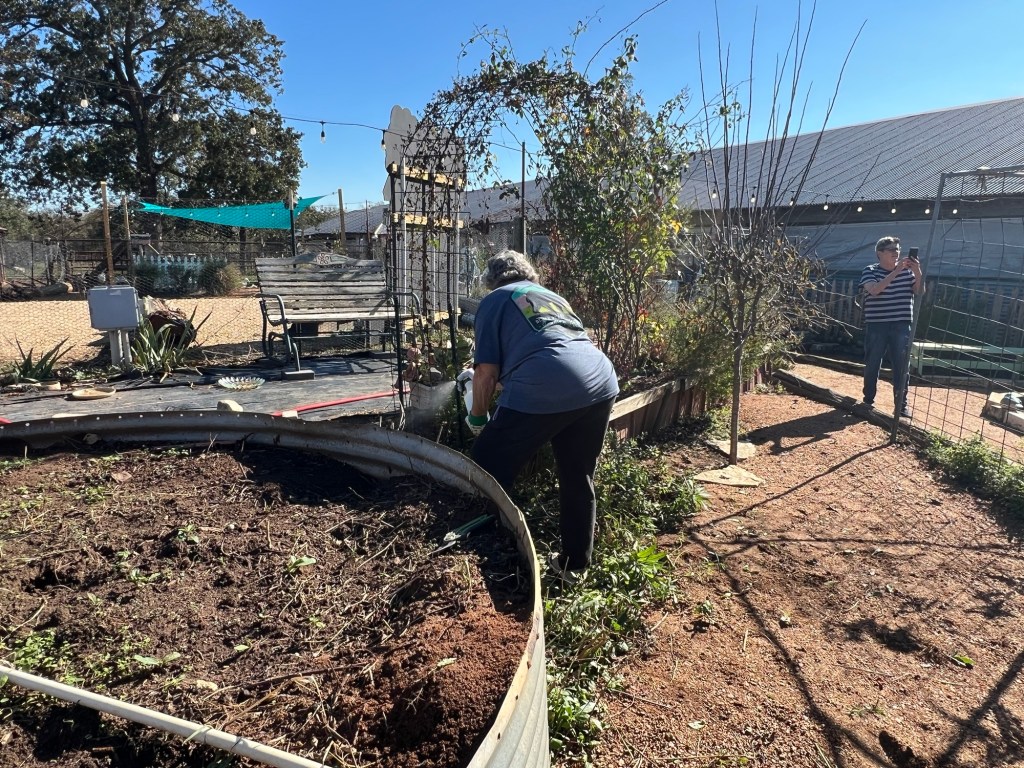
Starting early on Saturday morning, volunteers got their hands dirty and planted many interesting native grasses and ground covers in the new prairie area.
Catherine Johnson explains what kinds of grasses have been planted.
This new section isn’t covered in plastic, because the grasses and ground covers should quickly fill in the space and eliminate unwanted volunteers.
The new area
All the different textures and colors of these grasses will provide a beautiful background for other annual and perennial natives.
Lindheimer muhlyWith apologies, I can’t remember the names Catherine told me for these plants.
There are various new plantings elsewhere, thanks to all the creativity and hard work of our team.
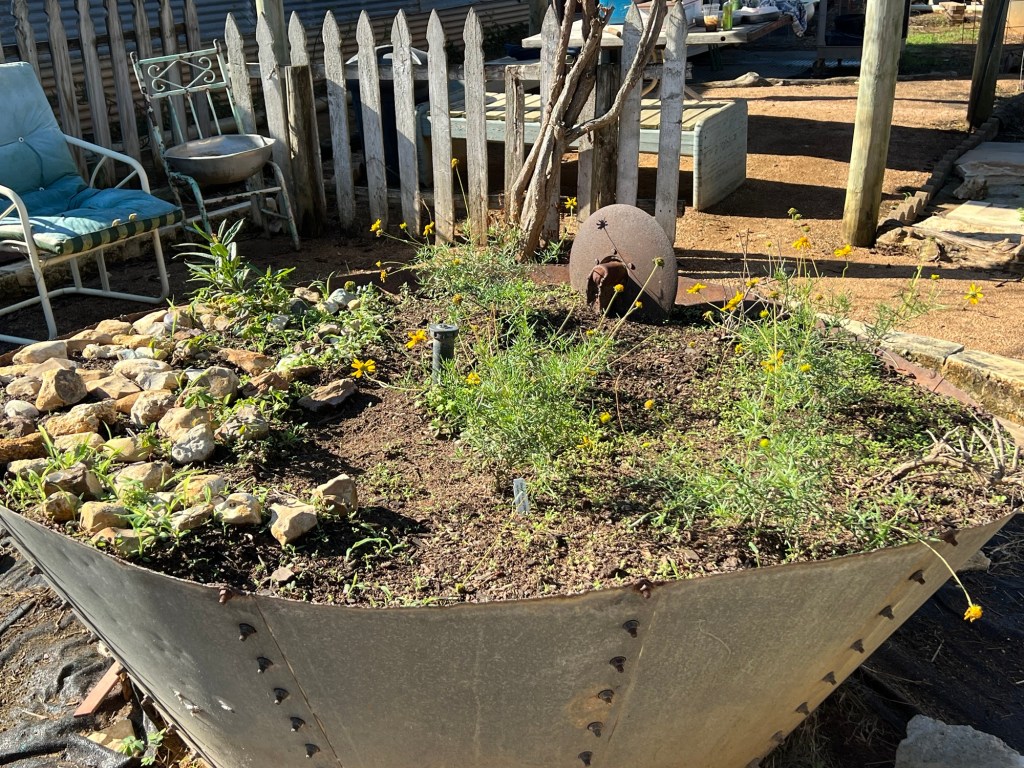
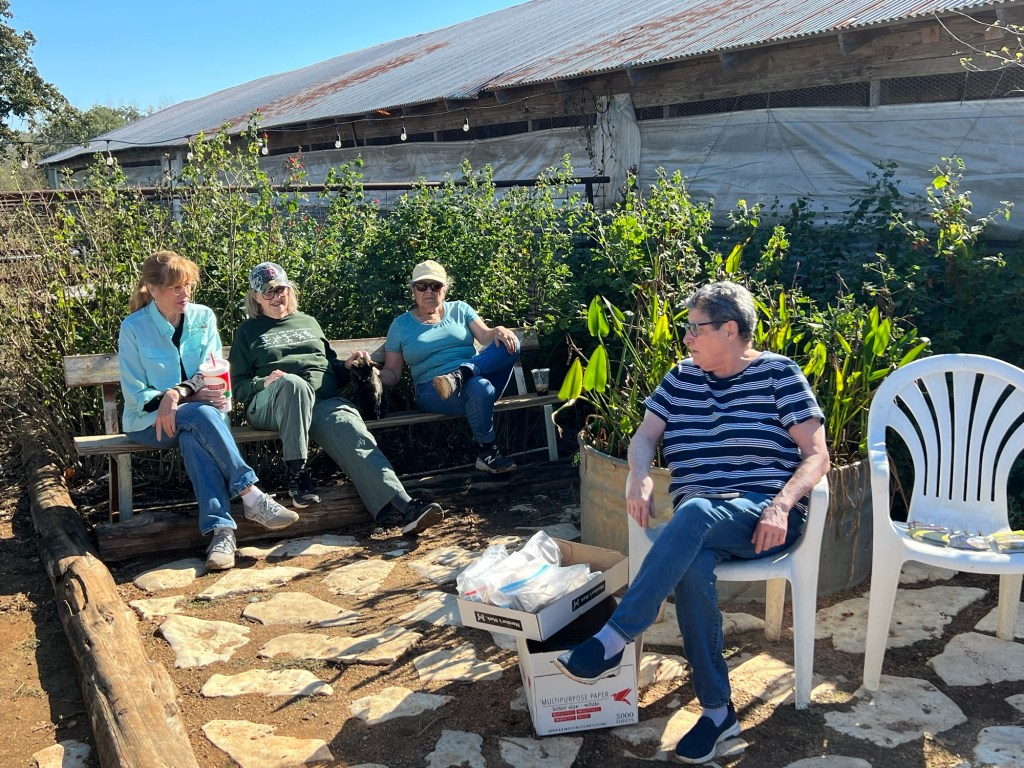
New plants I. The giant planterNew items in the succulent areaworkingWorkingTaking a break Kitty had to take a break, tooNew redbud
Of course, a visit to the Wildscape isn’t complete without some pollinators. We hope their descendants enjoy all the new plants.
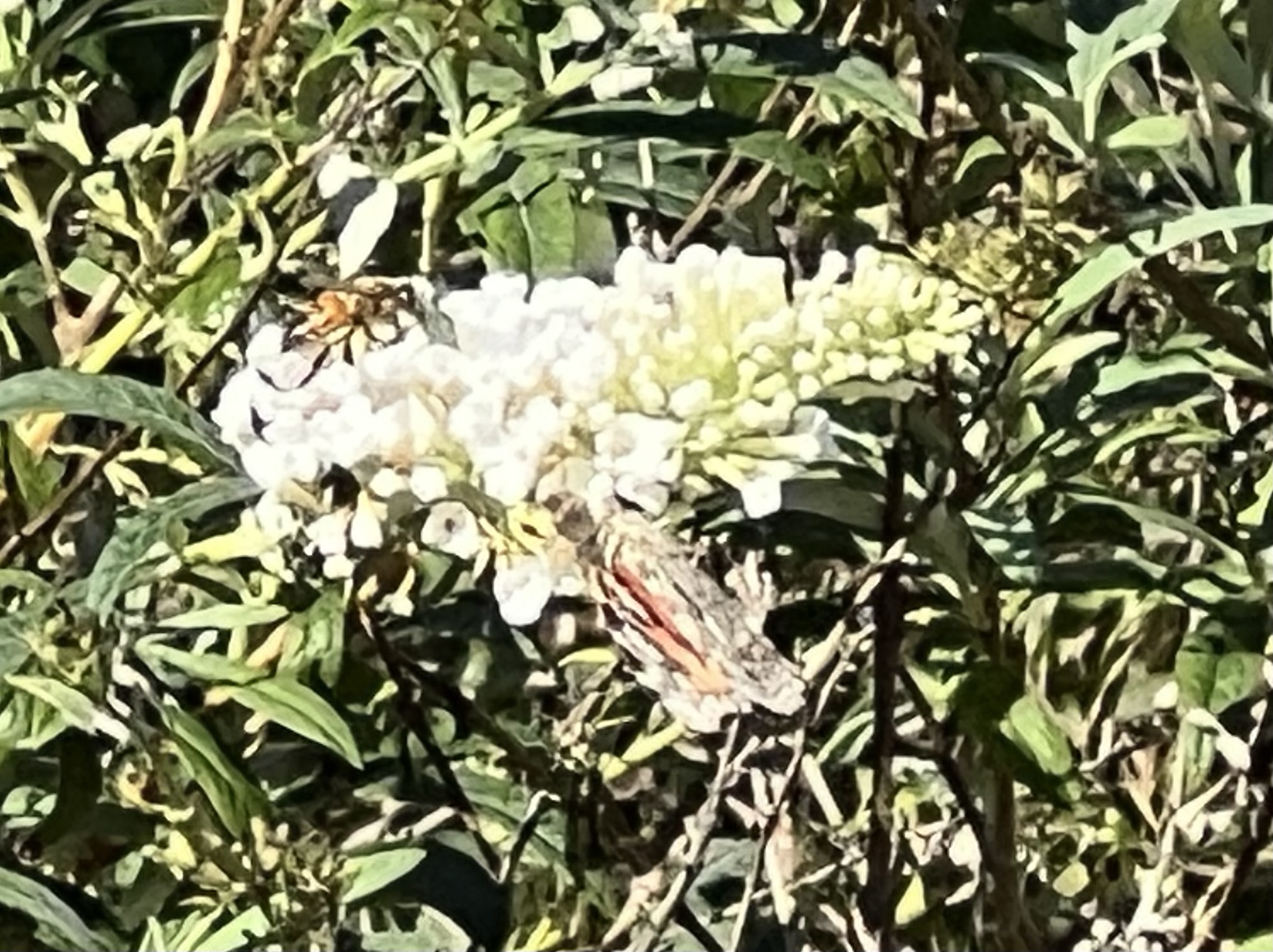
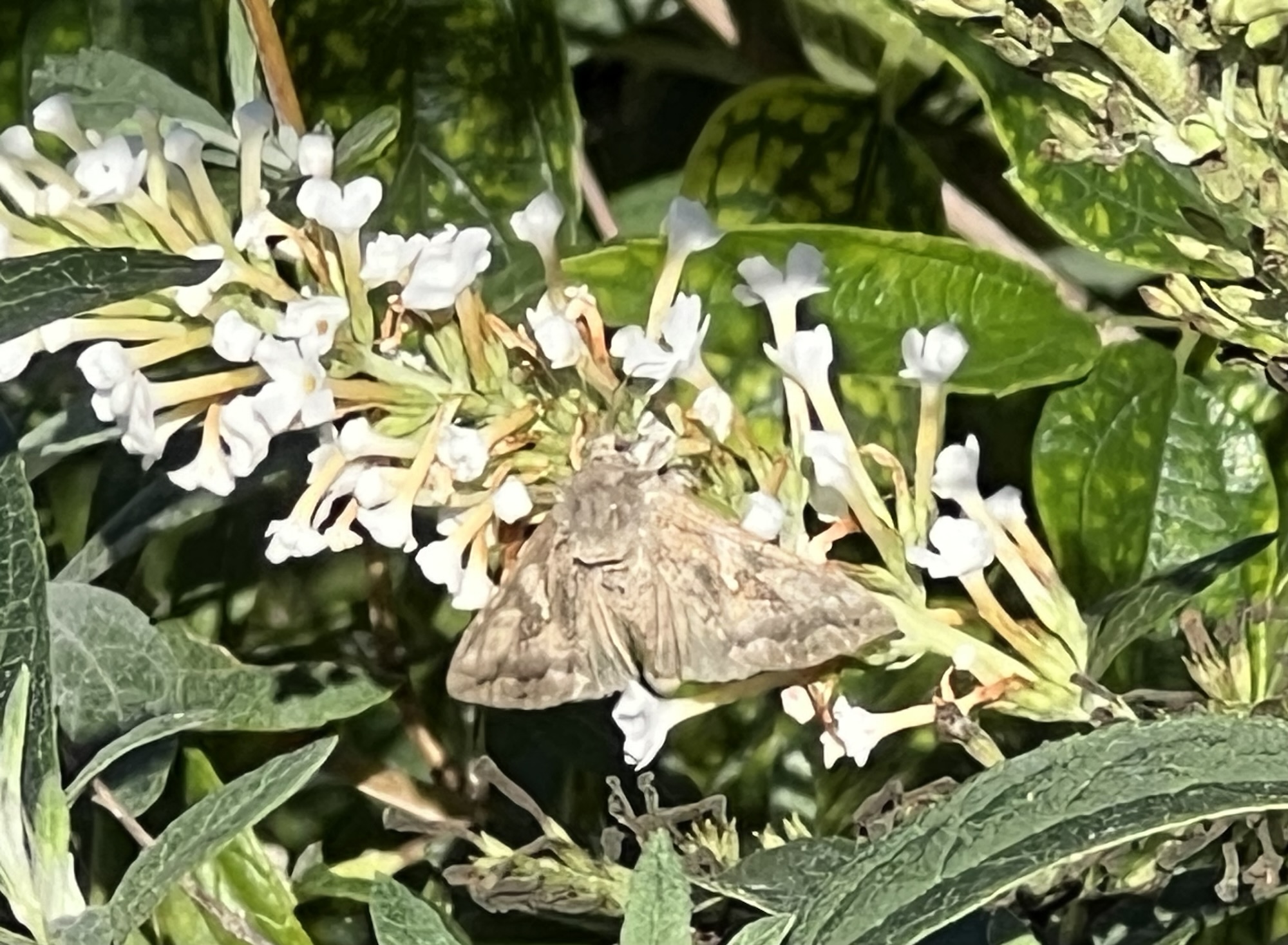
A tiny skipperPainted ladyBee and butterflyGulf Fritillary Another fritillary Gray looper mothHoneybee digging deepResting carpenter bee.
There’s another workday next week, then the plants will settle in next month.
The Pollinators for Texas project is a collaborative effort with H-E-B and the Texas Master Naturalist (TMN) Program focused on enhancing native pollinator conservation across the state by promoting awareness, conservation efforts and creating sustainable pollinator environments. The initiative aims to engage communities in supporting pollinator-friendly practices through funding TMN chapter-led projects and programs.
I recently got back from the TX/NM border region including Monahans Sandhills State Park. Not great timing for wolf spiders because only a few species were in or nearing their breeding season, but I was still able to add two species to my life list. There were other compensations:
Ascalapha odorata (Black Witch) is a huge moth. I had seen a couple of very worn ones in a dark alcove at Devils River last fall where they couldn’t be readily photographed. As I made my way down into a sand dune blowout, I flushed one that flew around for a while before settling down about 5′ away. Unbelievably it let me approach quite close. The photos were amazing and were a credit to the Olympus camera. Light levels were very low and the setting sun had already left most of the blowout in shadow.
Not far away was a Euploca convolvulacea (Phlox heliotrope) which had only the bare essentials of a mature plant. Many plants were covered with hundreds of bloom.
I’ve known about the Black Witch for decades but never expected to see one, so never looked up the details. The range map on iNat is amazing and includes all of North and South America except the coldest extremes. It has even turned up on Wake Island in the eastern Pacific. It is quite a flier and apparently has some sort of northward migration in the fall.
Mine was in perfect condition, so it must have matured nearby rather than migrating there. There had been 8 previous observations scattered around Ward County, all in good condition suggesting there is a healthy local breeding population there.
The garden is undergoing major alterations, so hosting programs will be easier and with more room.
Weston and his brother are new helpers who are eliminating massive overgrowth.
Some aggressive natives in the space are Passionflower vine and Climbing Cypress.
Most all plants are doing fine since the rains. However, as it dries out, it is always helpful for members or visitors to pick up a hose and water a plant in stress.
The native trees are tall, including Texas kidneywood, wax myrtle, elbow bush, and button bush.
Seeds are becoming available for the seed library, too. We will have seeds available at the Wildscape very soon.
If you would like to volunteer for chores, email me at cpc69earth@gmail.com. Or, just go see what is going on in June.
A week ago, two members of the El Camino Real Chapter, Texas Master Naturalist were invited to scope out the property of a third member to see if there were any interesting plants, birds, or other organisms there. Ann Collins and I made many discoveries at Carolyn Muller’s Burleson County property.
Ann and I experiencing species overload.
It’s always a privilege when private landowners allow you to catalog what’s on their land, so we’re very grateful to AD and Carolyn for their hospitality. We enjoyed finding out what thrives in this sandy soil with a nice mix of hardwood forest and untouched prairie-like fields.
A stand of Lemon Beebalm leads to the woods.
While Ann and Carolyn worked on bird observations from a guest cabin porch, I ran off and checked out the woods and open area under electric lines. There are often great flowers in those areas.
I then found a nice wide path through the woods with many Halloween decorations on it. While they weren’t great for iNaturalist, I’m sure little kids love it. And I found my first interesting milkweed, Tayalote (Cynanchum unifarium).
Too bad it wasn’t in bloom.
After I got back and we practiced entering sightings into iNaturalist, Carolyn took us on a ride around all the impressive paths that wind around to various outbuildings and such. There we found interesting mosses and fungi.
Pale Cow-hair Moss (Ditrichum pallidum) was interesting Coral-pink Merulius (Phlebia incarnata)Meadow pink (Sabatia campestris)Not sure Ringless Honey Mushroom (Desarmillaria caespitosa)
The highlight of the visit was the magical wildflower patch. It grows in a strip where a neighbor had erected a tall wildlife fence about ten feet behind regular cattle fencing. This strip doesn’t get mowed or grazed. It was spectacular.
Wildflowers galore!
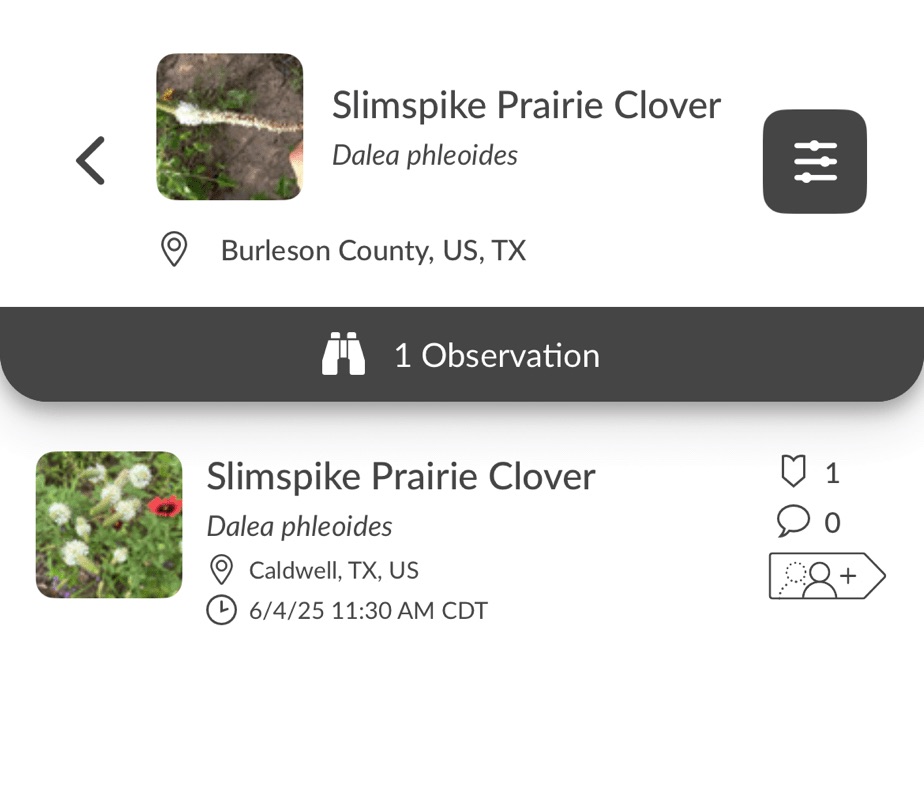
This area also contained plants neither Ann nor I were familiar with. Upon investigating, I found some of these natives have very few sightings in Milam or Burleson Counties. In fact, this Slimspike Prairie clover was the first observation in Burleson County. There are only 4 observations in Milam, all but one by a chapter member!
They are so prettyJust one observation in Burleson CountySlimspike Prairie Clover (Dalea phleoides)
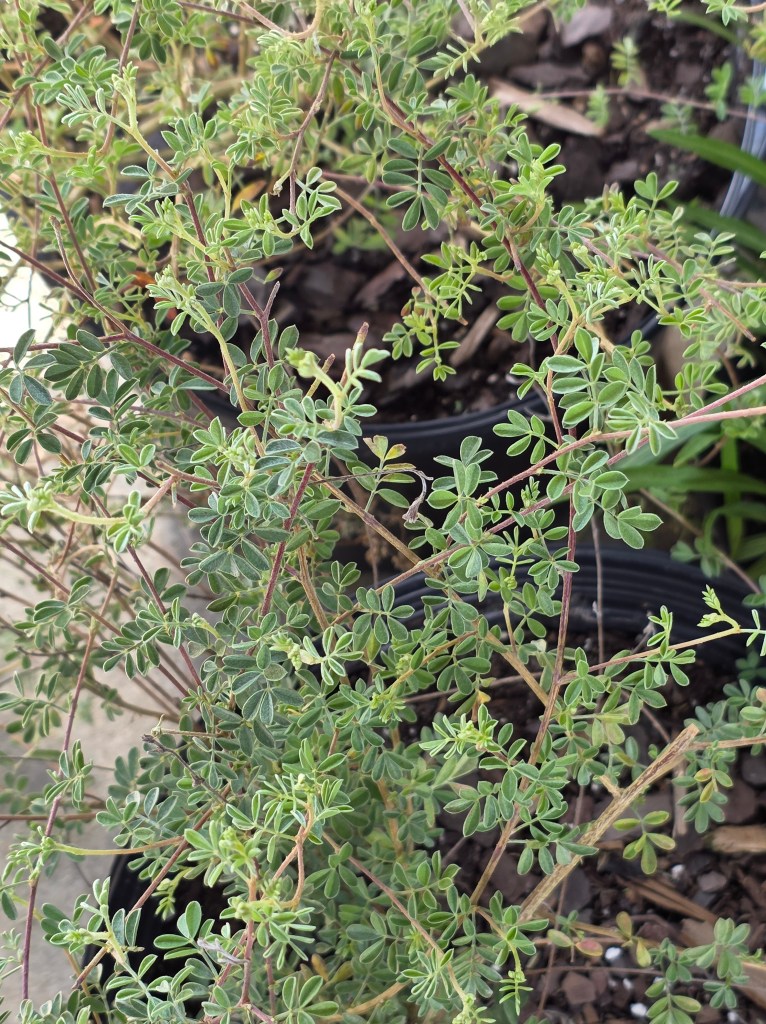
Other interesting rare plants were these. Maybe they’re not spectacular, but they’re not observed often.
Ann and I were pretty hyped up about all these new plants, and Carolyn was thrilled to find out her property had plants we got excited about. As we looked around the property more, we also found yellow passionflower and the beautiful propeller flower, purple pleatleaf or Alophia drummondii. I stuck in some scenery so you can see the big picture!
Yellow passionflower, a favorite of mine (Passiflora lutea)Alophia
After another fun ride through the paths, we headed out, but I had my brain full of new-to-me plants, and Ann enjoyed hearing and seeing Swainson’s Warblers, Summer Tanagers, and two vireos (white-eyed and yellow-throated).
What a varied place to investigate.
We’d all love to return, and we plan to arrange friend trips. The presence of air conditioned rest facilities with refrigerators and water will make this a great place for our chapter’s naturalists to explore and learn about the amazing variety of ecosystems in this part of Texas.














 Nature Along the El Camino Real