Beautiful Arachnid Mystery

by Sue Ann Kendall

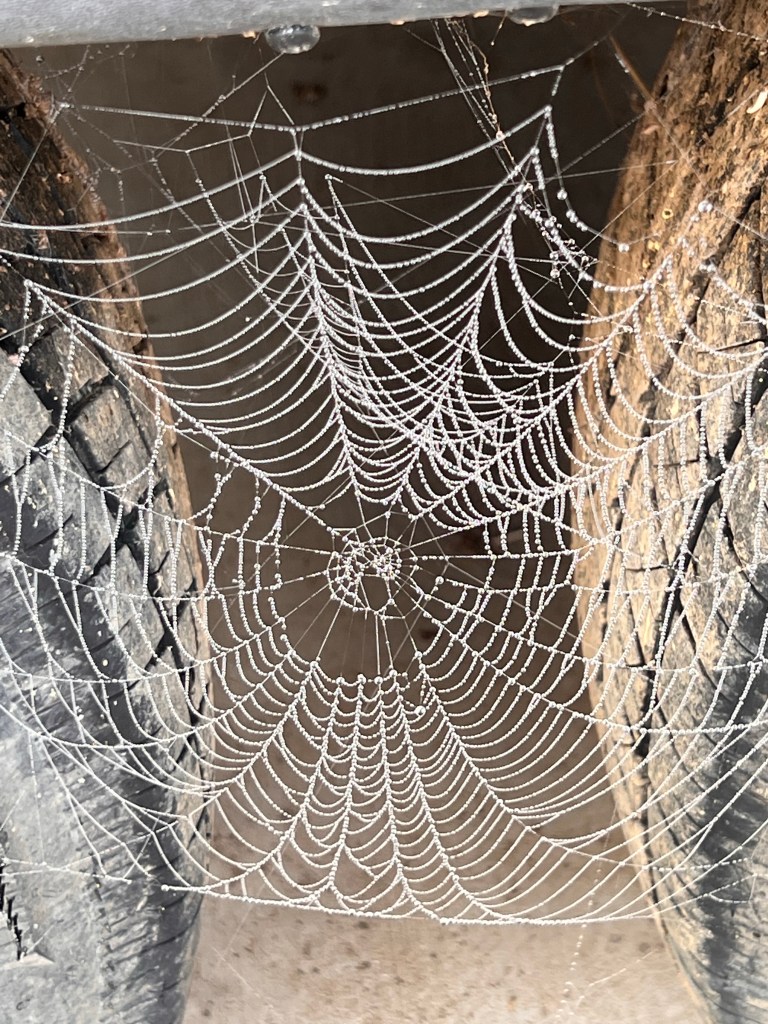
Yesterday morning, it was very foggy at my house. As usual, I stopped to enjoy the droplets of water in the grass and hanging on the chicken wire at the henhouse. On my way back from feeding the chickens, I happened to glance at the steps to the RV that’s parked next to our garage. I was entranced by the jewel-like effect the dew had on the spider webs that are usually just busy trapping flies and other insects.

Arachnid artistry

Yes, spiderwebs have a job to do, but that doesn’t mean one can’t admire their construction and strength. That water had to be heavy, but the webs held up. There was also a light breeze, and I wish I’d thought to take video of the webs as they danced around, still holding on to most of their water droplets.

I didn’t see any evidence of spiders in any of the webs I saw, including ones around the grounds near my house. They were probably avoiding their webs until it dried off a bit.

You can see how dewy it was in the background grass

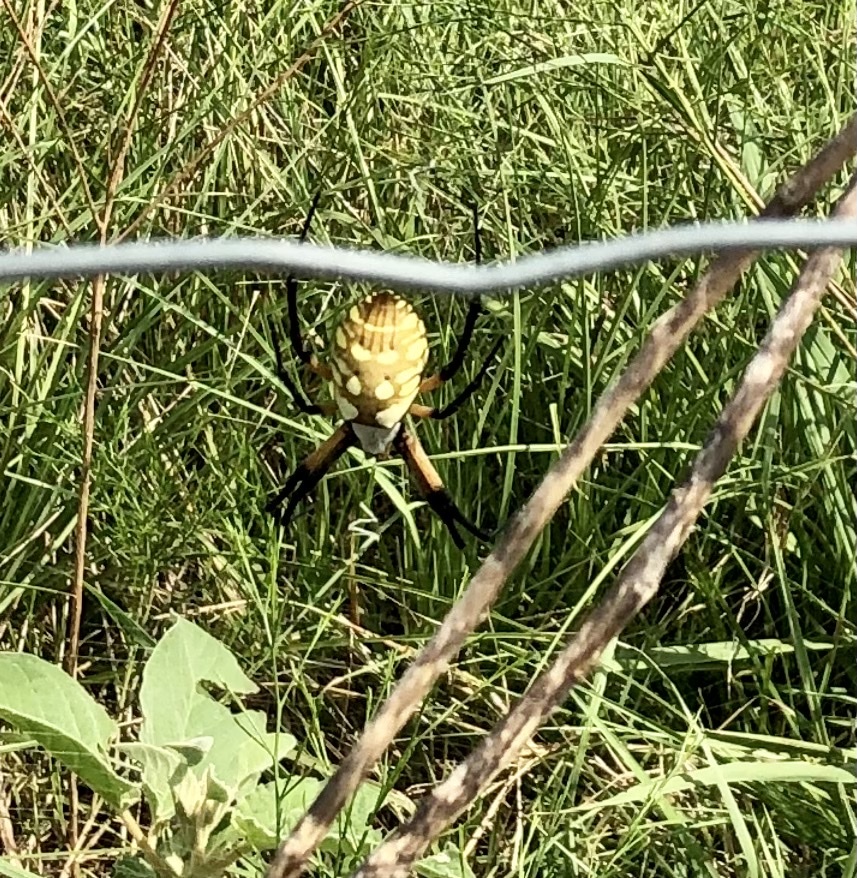
I figured most of the webs I saw were woven by an orbweaver, judging from their shape. I know that the yellow garden spiders (Argiope aurantia) are mostly gone, so I ruled them out. But I’ve seen a couple of different orbweavers around this fall and I’m not sure which ones they are, because I haven’t gotten any confirmation from iNaturalist reviewers (follow the link to view and confirm or deny my guesses!). Most appear to have been Western spotted orbweavers (Neoscona oaxacensis) or tuft-legged orbweavers (Mangora placida).
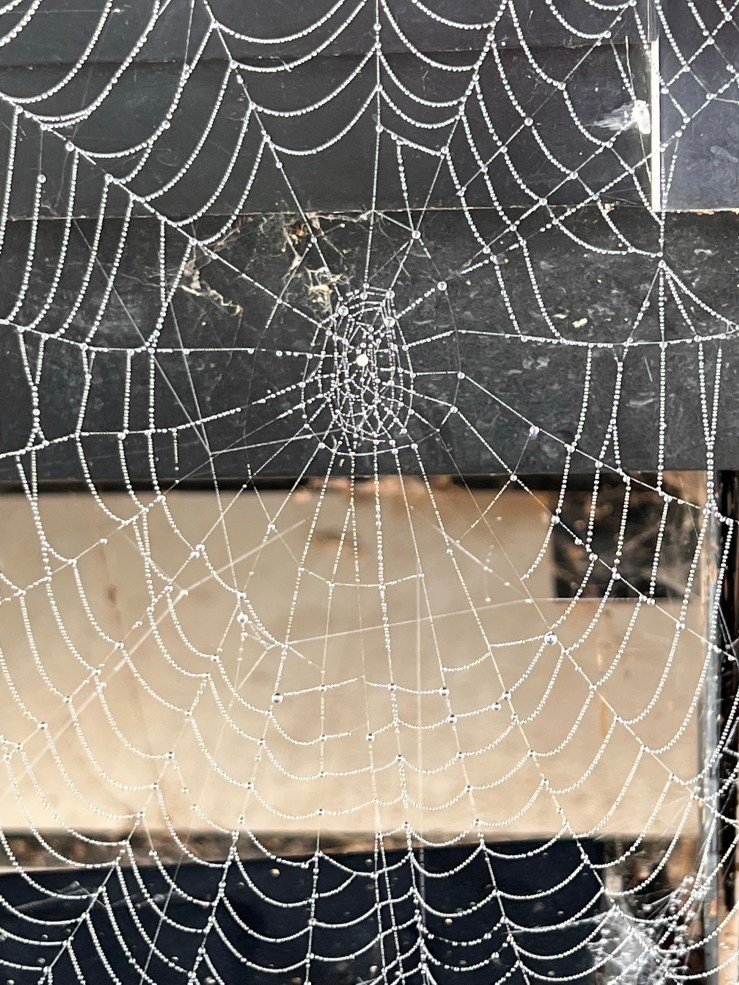
The center of this one is rather wonky but does the job.

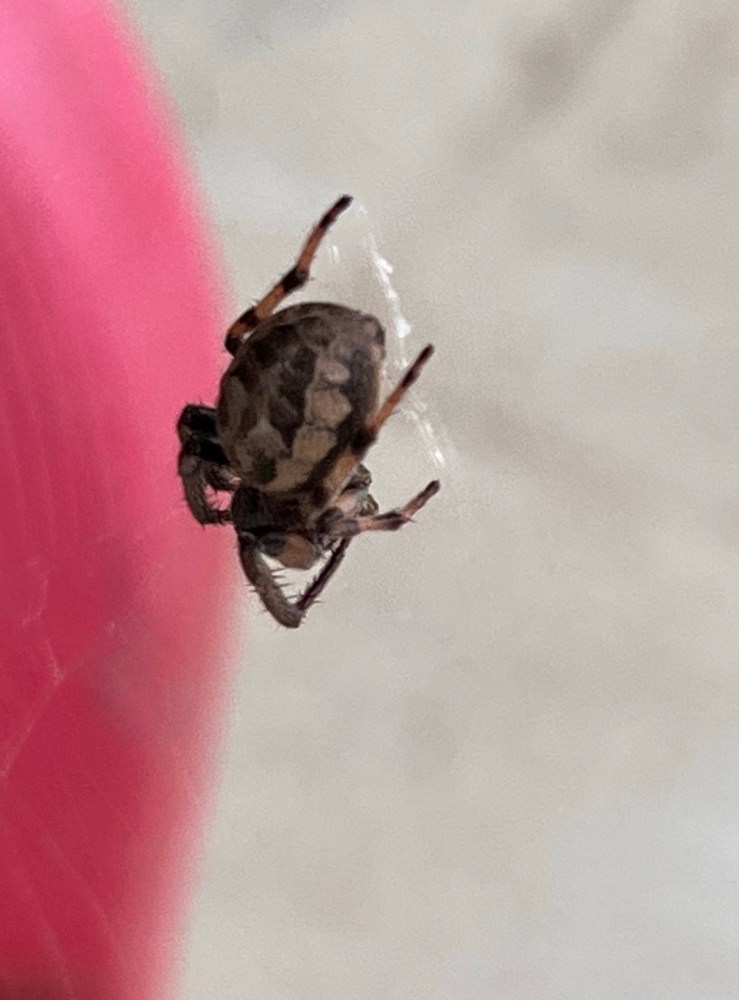
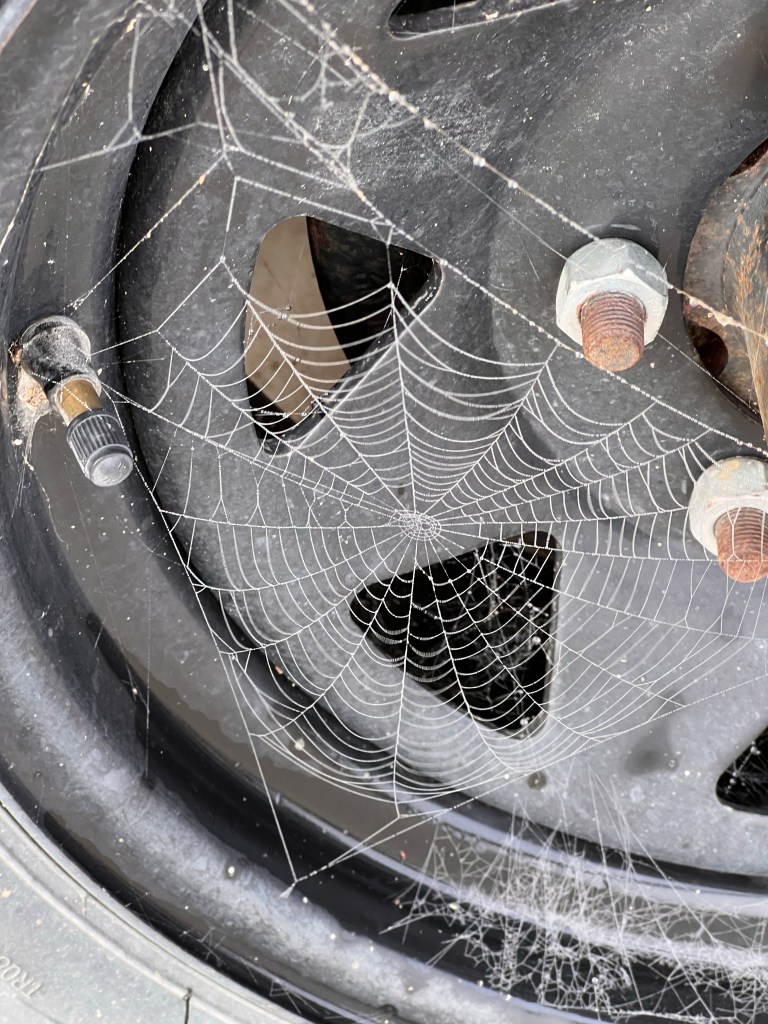
This morning was still damp, but not as foggy, so the webs were back to being almost invisible, but hey, I spotted a brown lump in one of the webs. I found her! The webs by the RV seem to be made by yet another orb weaving friend, the furrow orbweaver (Larinioides cornutus), which I have seen before in Milam County. The pattern is quite different from the others I’d been seeing this summer, so I’m fairly confident, even though no one has confirmed the observation yet (I just put it up a couple of hours ago).

I was happy to be able to know to whom I owed the debt of gratitude for the spectacle of web adornment I got to enjoy yesterday.

I do think maybe one or two of the webs were made by different spiders, especially the one by the front gate, which was made by an old spidey buddy of mine, who, judging by her coloration, is probably the Spotted Orbweaver (Neoscona crucifera). These webs aren’t quite as neat and tidy as the ones by the RV.

Well, regardless of whether my identifications are right or not, I’ve had fun with the orbweavers in my vicinity, and hope you enjoyed learning a little more about them. Below are some more of my photos of these cool arachnids and their webs.

Developing Observation Skills

by Sue Ann Kendall

I see some pretty cool things on my walks around my ranch. I think part of my poor posture comes from looking down all the time, in case I see something. But that’s a small price to pay. I’ve been doing a lot more aural observation lately, and that’s come in really handy when I’m looking for new species to add to my collection on iNaturalist. I have almost 600 species identified since I started, 62% of my 1600+ observations are research grade. I’m trying to get a good picture of what can be found in this little piece of the Earth.

Yesterday and today I’ve put my listening skills to a test. I can’t take a picture of something if I can’t find it, and sounds often lead me to something interesting. For example, I went to check the mail, which is a third of a mile walk from my house. I often stop to observe in the pond and arroyo I go by. That’s hard right now since the pond is being dug up to make it deeper if it ever rains, and our gate emits an annoying beep that I once accidentally identified as a South American bird via an app. But yesterday I was alarmed to hear what sounded like someone talking in the stream. It sort of sounded like, “Help, help!” So I put down my mail and went searching.

I followed the eerie sounds and got closer to where our “spring” starts. I didn’t want to get my feet wet, so I was careful. At one point it seemed like I was right on top of whatever it was, but I couldn’t see anything, so I stomped my feet. That caused something to move and gave me a focus for my eyes. Finally I saw something.

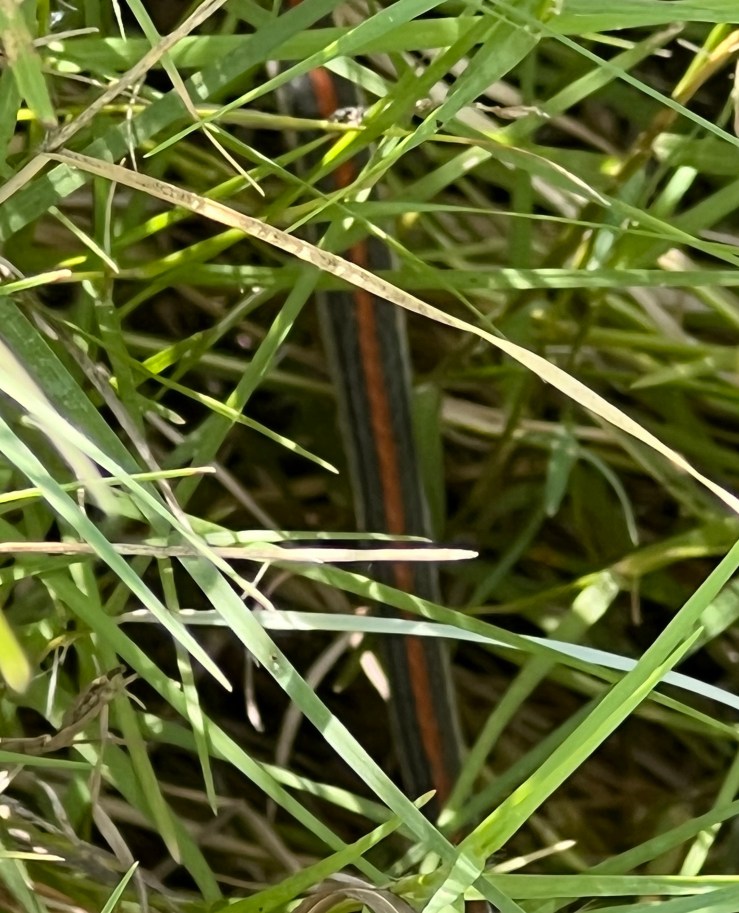
Is it a water hose?

Now I know why my friend’s orange and black water hose spooks the horses. That Western Ribbon Snake (Thamnophis proximus) sure looked like a garden hose. I was not inclined to grab it to get a better photo. But what was the sound?

I knew right away that it was a cricket frog, since that’s the kind of frogs I hear all the time from that location (I learned how they sound from one of our Chapter Meetings). I guess it’s now a former cricket frog, thanks to the circle of life. So, my aural observation skills clued me in without even having to see the frog. I was happy to learn from reading about these ribbon snakes that they hang out on the edges of wet areas (check) and primarily eat…of all things…cricket frogs! I also learned that the one we have here at the ranch is the orangestripe subspecies, T. proximus proximus, which is why it didn’t look like the one in the main photo on iNat, which had originally confused me.

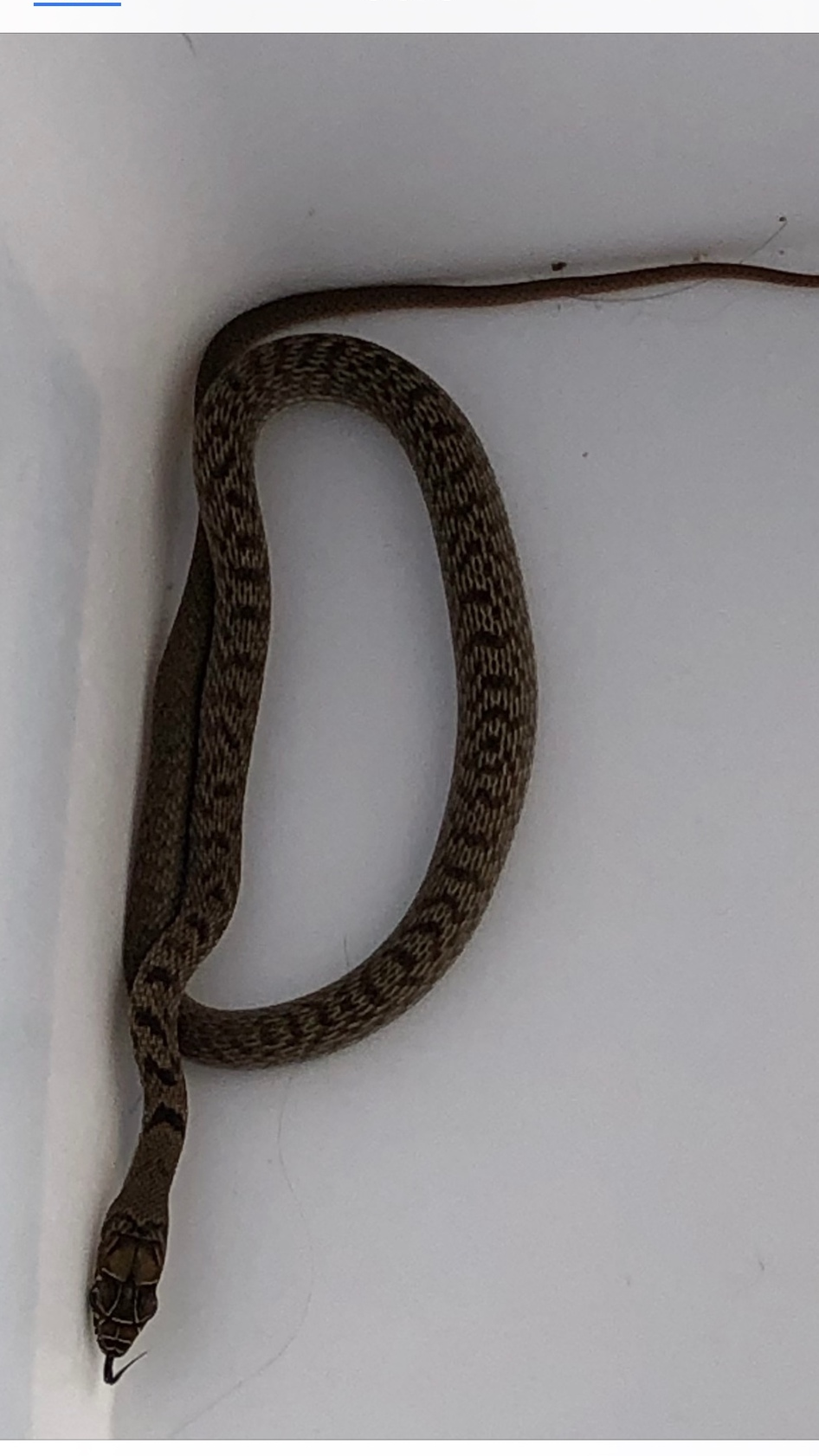
Coachwhip

By the way, I am only seeing ribbon snakes and coachwhips lately. I haven’t seen a rattlesnake or a rat snake in a month or two (the hens are glad about that). The coachwhip in this picture climbed into my son’s cabin and was hanging out on the ceiling. Luckily, he’s had pet snakes before, so he just knocked it into a laundry basket and took it outside (then sealed the hole the snake came in).

Back to my observations. Today was the same story. I was putting mail in the box to be picked up, this time. I kept hearing a sharp chirp, and it wasn’t the broken gate. It was coming from the black willow trees on our dam, which no, I’m not cutting down, because they are native and feed lots of things. I looked and looked, trying to home in on where the chirps were coming from. To the bird’s credit, it didn’t stop chirping until it began making tapping sounds. Aha. Now I knew to stop looking in the branches and look at the trunks of the trees instead.

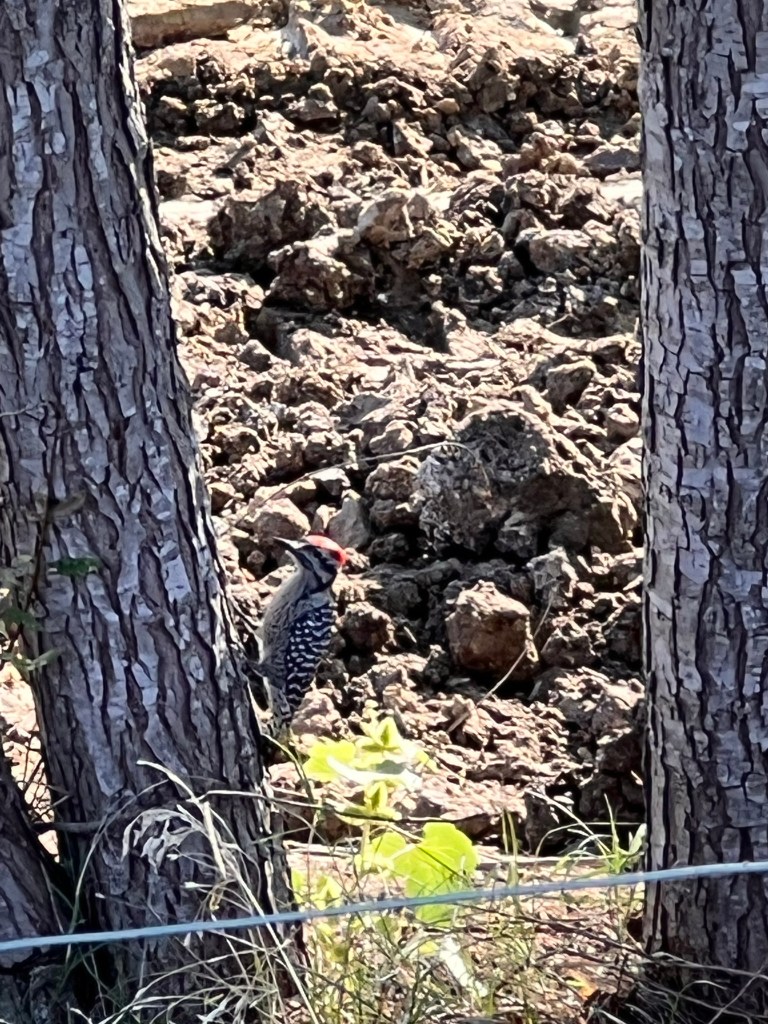
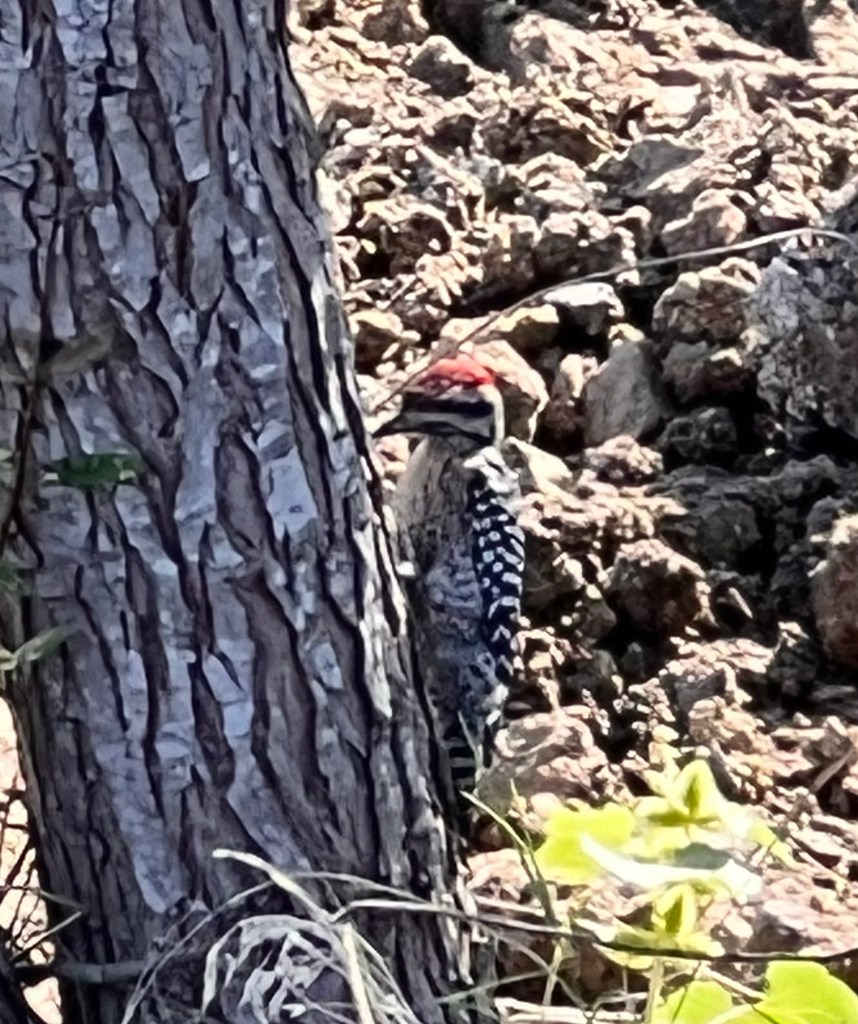
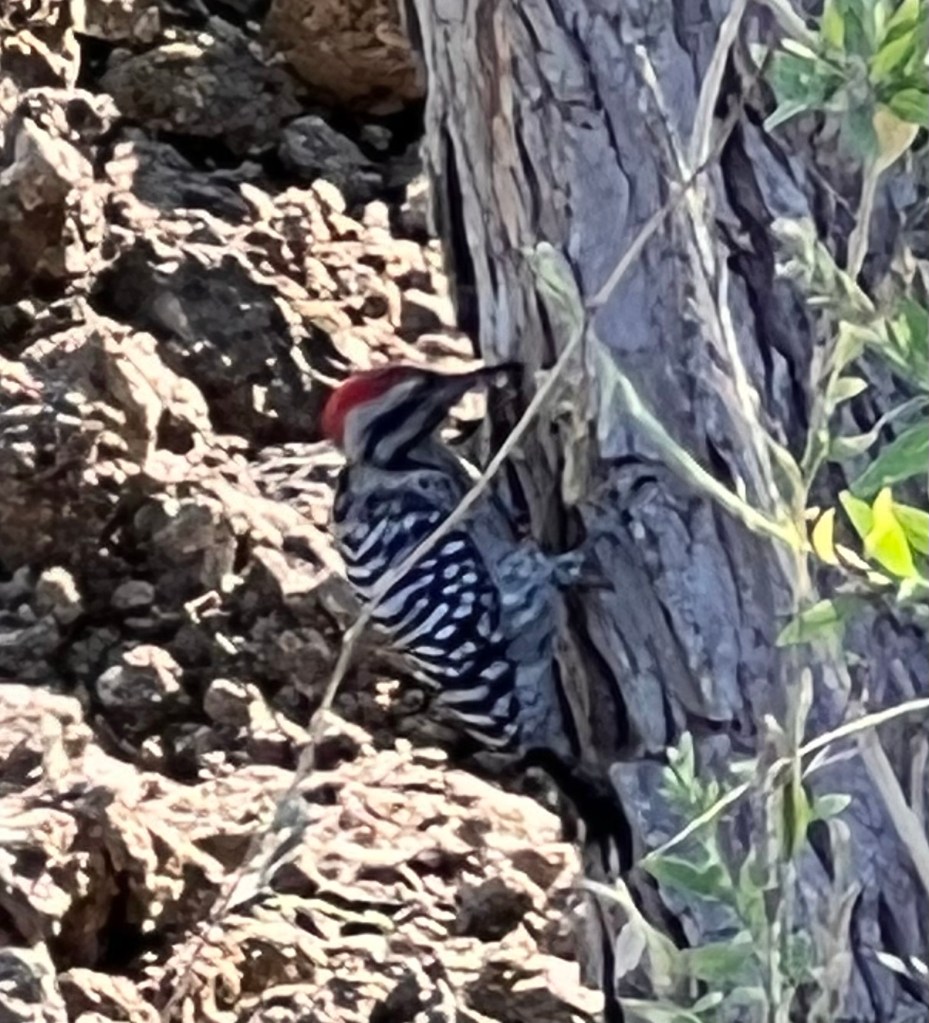
Sure enough, there was a perky little ladder-backed woodpecker (Dryobates scalaris), pecking away and chirping during rests. There are a lot of woodpeckers around here (they like the grapevines to hide in and are especially fond of the telephone pole across the road), but I mostly see larger ones. Neither I nor the bulldozer grinding away behind this bird deterred it one bit from its mission.

I’m glad I keep listening when I go outside. I might have missed both of these interesting observations and new species!

Spoonbills in Milam County

by Sue Ann Kendall

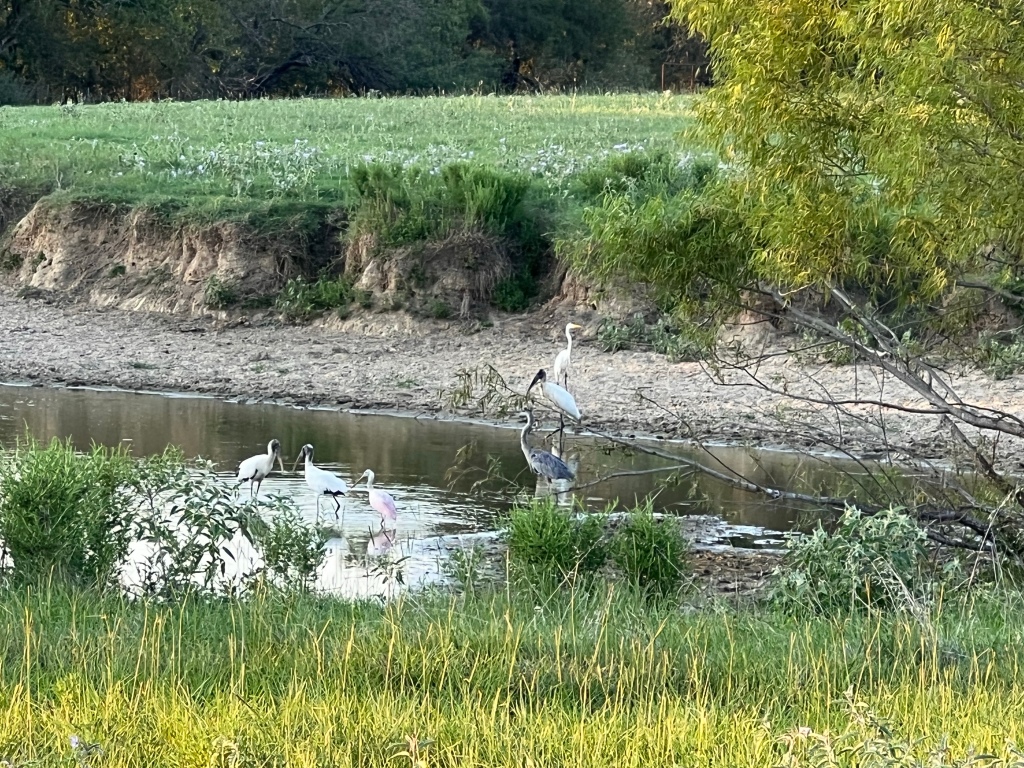
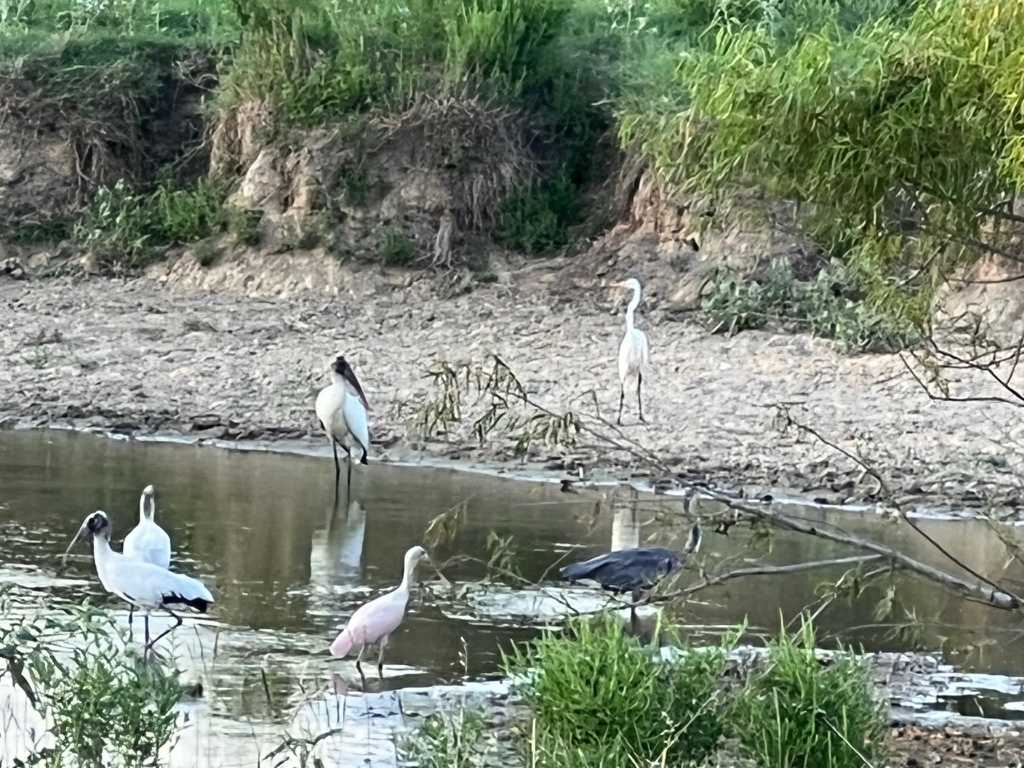
I still get the feeling sometimes that I live in an aviary. I can’t believe how many interesting birds drop by my property and let me observe them. Yesterday was a particularly good day, because in addition to the storks who’ve been visiting for a couple of weeks, I found something different, a roseate spoonbill!

There you go, three storks, one very pink spoonbill, a great blue heron, and a great egret!

It was especially good to see the spoonbill (Platalea ajaja) in person and watch it eating up close through my binoculars, since I had seen some specimens when we went to the Texas A&M Biodiversity Research and Teaching Collections last month. Oops, I just realized that I hadn’t written up that event, so darn it! You can go read about it in my personal blog post, So Many Dead Things. Below are the specimens I looked at.

Linda Jo Conn investigates the spoon-shaped bill as Dr. Gary Voelker looks on. Heather Prestridge, who gave us our tour, is holding the specimen.
You can see the variety of shades of pink they have, depending on what they’ve been eating.

The spoonbills are coastal birds, which is why you don’t see too many of them here in the middle of Texas. I’ve seen them one other time, though. According to Wikipedia as reproduced on the iNaturalist site, many were seen outside their usual range in 2021, so perhaps this behavior is continuing this year.

They’d just finished feeding, so I don’t have a good photo of that.

They are fun to watch as they eat, swinging their bills from side to side to catch delicious (and hopefully pink, to keep their feathers pretty) foods. The one I saw was parading alongside three storks on the shore of the tank behind my house, which appears to be a hotbed of small edible items these days.

I wonder if this one got separated from his or her buddies and took up with the storks, which also hang around in small groups. They were getting along just fine and didn’t seem to be bothering my resident shore birds at all.

Here’s some more about their eating habits:

This species feeds in shallow fresh or coastal waters by swinging its bill from side to side as it steadily walks through the water, often in groups. The spoon-shaped bill allows it to sift easily through mud. It feeds on crustaceansaquatic insects, frogs, newts and very small fish ignored by larger waders… Roseate spoonbills must compete for food with snowy egretsgreat egretstricolored herons and American white pelicans.

Roseate Spoonbill, iNaturalist
These guys fly with outstretched necks, like the storks, and unlike herons.

I’m wondering if I’m seeing so many interesting shore birds here lately because other shallow waters have dried up from the drought. I’ve also been enjoying a tricolored heron and a kingfisher. I’ve seen the resident green heron more and more recently, as well.

Keep your eyes open as you drive through Milam County, especially as migration time approaches. You’ll be seeing snow geese, sandhill cranes, ducks, and other interesting birds. Admittedly, you will probably find many of those by also listening. Those geese and cranes make quite a racket as they fly by. Look for the dark wing areas on the geese and listen for the clacking sounds of cranes.

I hope you enjoyed learning about a fascinating visitor. Here are some more of my photos of the spoonbill and friends.

Learning about Vultures at the Chapter Meeting and Beyond

by Sue Ann Kendall

The September Chapter Meeting presentation for El Camino Real Master Naturalist was by Debbi Sorenson, who has been observing vultures on her property for years and decided to do some research on these fascinating scavengers.

Debbi listens to questions and comments during her presentation

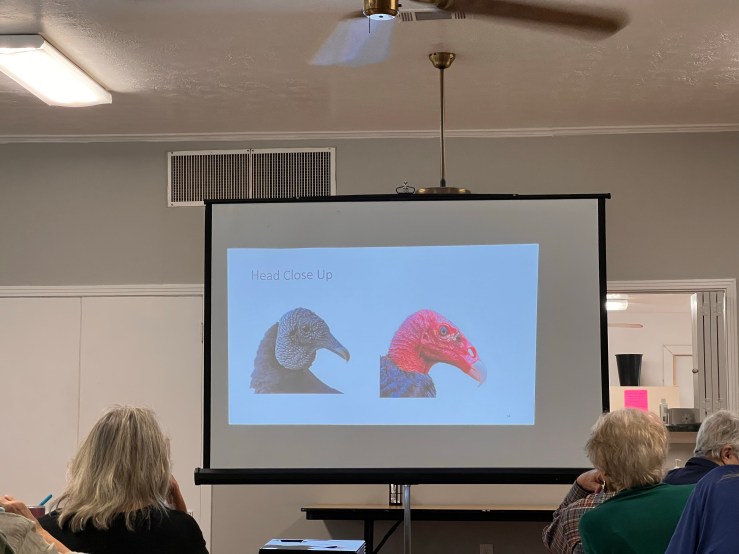
We learned how to distinguish our two resident vultures, the turkey vulture and the black vulture from each other. The easiest way is to look at their heads. Turkey vultures have red heads and black vultures have black heads. In flight, turkey vultures have white on their lower wings, while black vultures just have white “fingers” or wing-tips. The turkey vultures are also a little larger.

There you go, heads

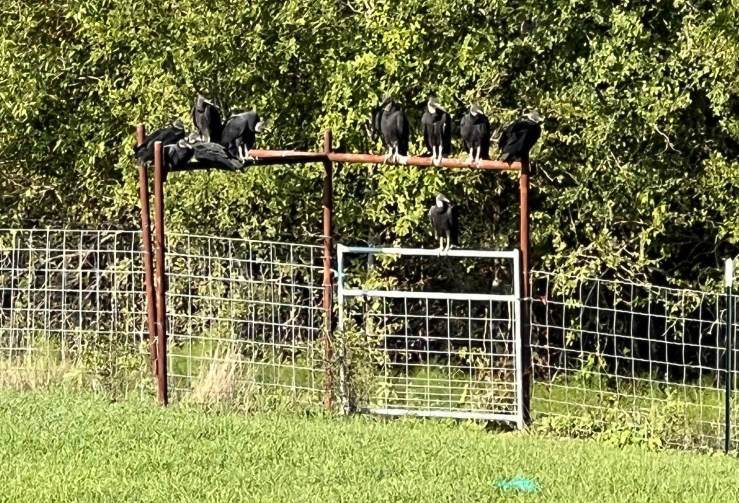
Other interesting tidbits I gleaned were that turkey vultures are almost exclusively carrion feeders an find their food through extra-sensitive senses of smell. Black vultures both hunt and eat carrion and use sight to locate their food. They often see the red vultures eating and take over from them. I’ve seen this at my house.

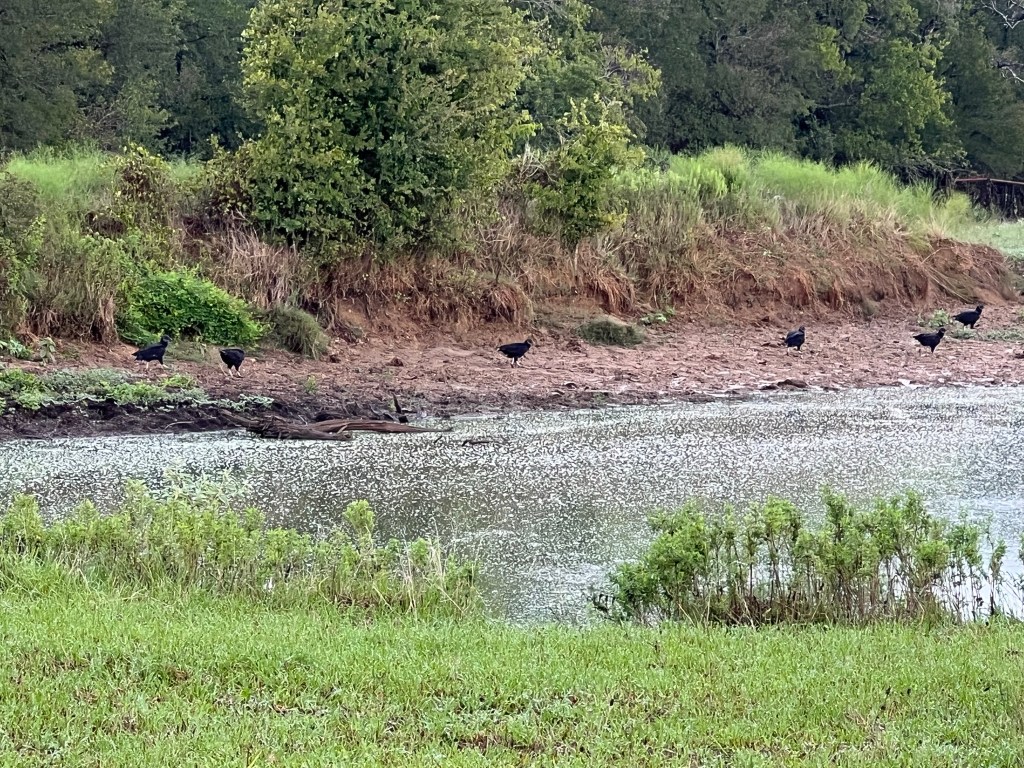
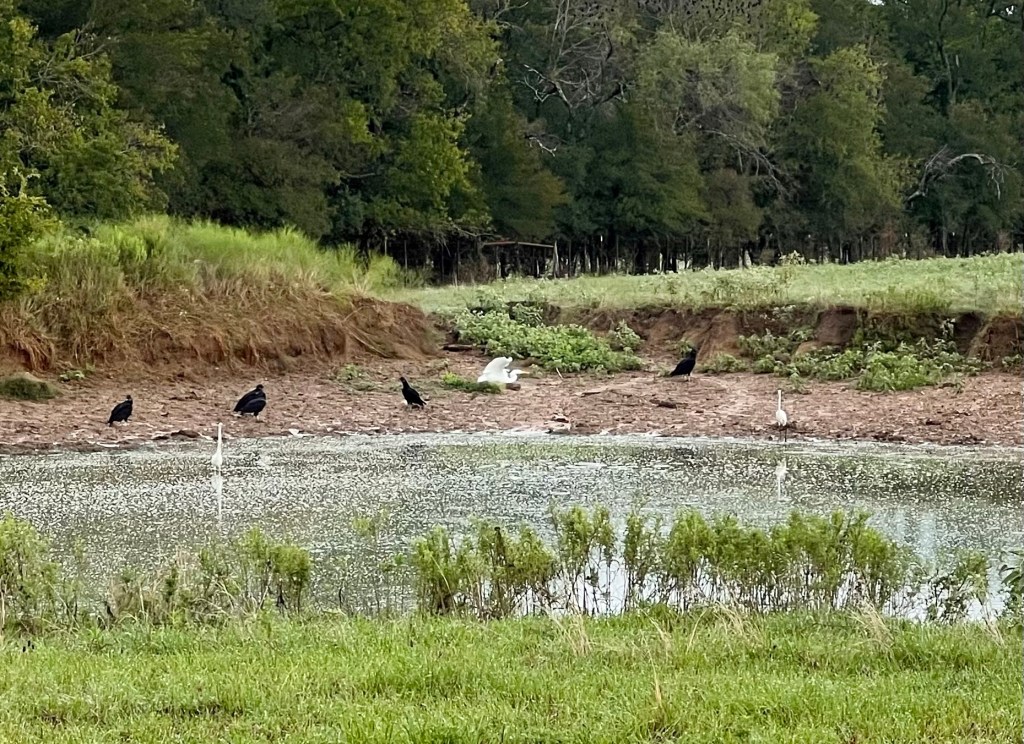
These black vultures at my ranch found a dead snapping turtle that turkey vultures were eating, and took over.

Debbie also shared the ranges of both birds and told us about their breeding behavior, which is to lay two eggs in abandoned buildings or dead trees and raise them there. George Bowman, a visitor to our meeting, shared how he had a baby vulture raised on his front porch this year (which many of us had enjoyed on Facebook). He ended up with a poopy porch, but a successful fledging of the baby.

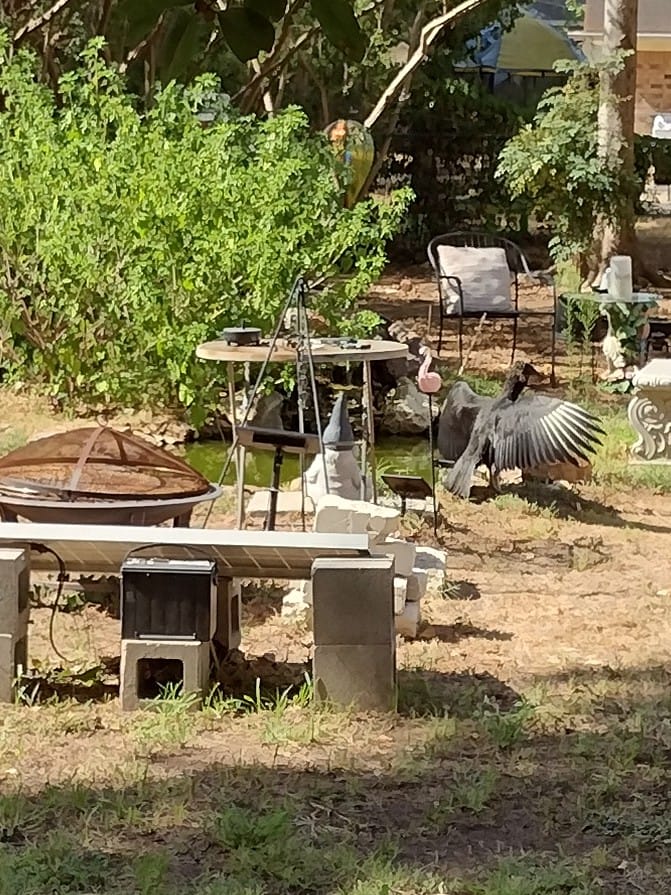
Debbi shared that their barn is a vulture nesting headquarters for a pair, and that they enjoyed watching one with just stumps for feet (Old Peg) as it grew. Debbi shares her garbage with them and gets lots of observations in return. I also enjoy watching them. They are graceful in the air but are pretty fun on the ground. I love to watch them as they hop, hop, hop around my tank behind the house.

I guess Debbi isn’t alone in enjoying vultures and their behavior. She had lots of questions to answer, and she also explained that our other resident carrion eater, the crested caracara, is not a vulture at all, but is a falcon, also known as the Mexican eagle.

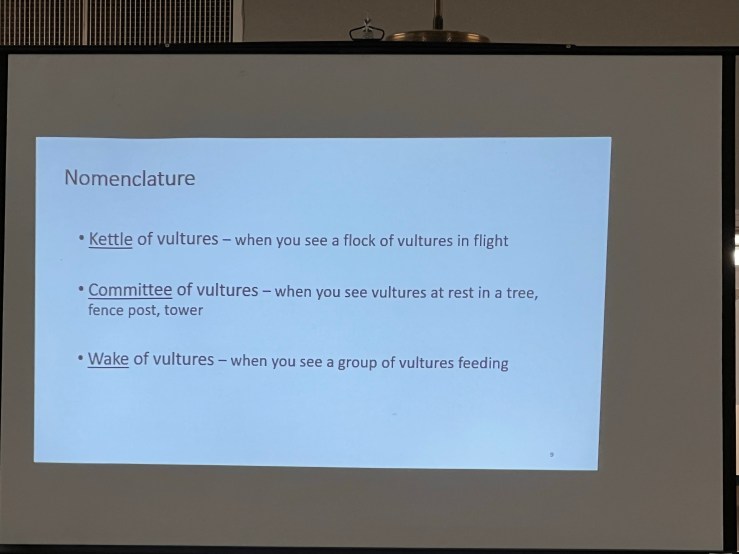
Here’s what you call a group of vultures, depending on what they are doing.

Our meeting concluded with the recognition of two of our members. Congratulations to Alan Rudd and Scott Berger for getting their annual recertification for forty volunteer hours and eight advanced training hours. And Scott received a milestone recognition for 250 hours contributing to the Master Naturalist organization. We appreciate our members!

A Visiting Snapper

 by Sue Ann Kendall

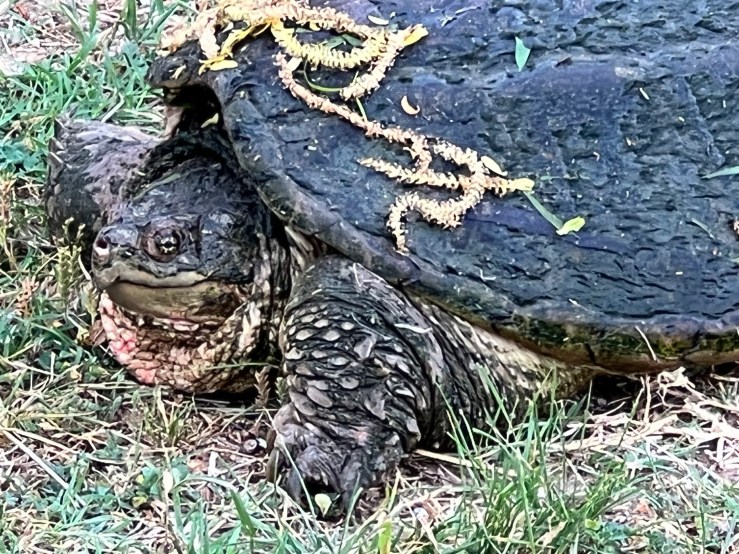
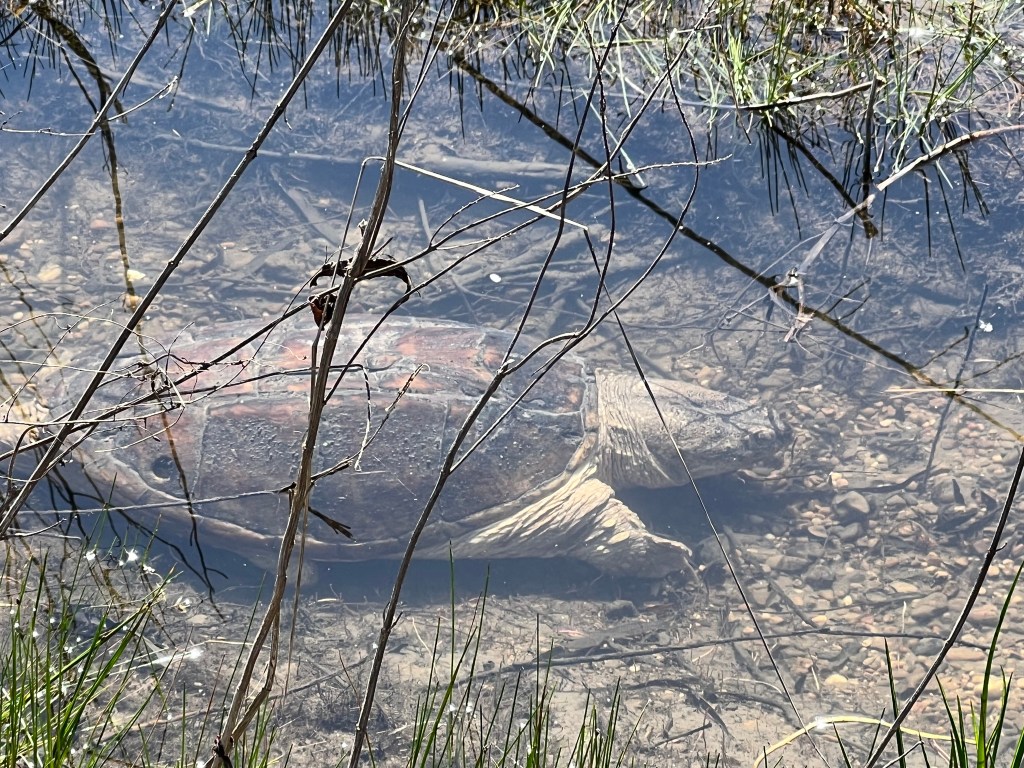
I went out Friday morning to see if I could get a photo of the feral cat that’s showed up at our ranch (brave thing, considering our predator density). Thus, I had my camera out and ready when I detected movement over by my tack room. It wasn’t a cat, though. At first, I thought it might be an armadillo, but as I got closer, I recognized a common snapping turtle (Chelydra serpentina) was lumbering along across the property, heading from one body of water to another.

snapping turtle
I’m busy. Leave me alone.

We’ve always had snapping turtles at our ranch. For a long time there was one much bigger than this (those tend to be males), with a head as big as a pro football player’s fist. We’d usually run across it in April or May, heading somewhere across a pasture. The dogs bark at them, but horses don’t seem to mind them. I’ve never seen one snap, though my mother used to tell a story of how she narrowly avoided losing a finger once.

snapping turtle
Obviously, it came out of a body of water next to the blooming black willow trees.

These turtles tend to live in shallow water, especially streams and creeks. That’s where at least one of the snapping turtles on our property was for much of this spring. I don’t know if it’s the same one. This one looks less ancient somehow.

This is in the creek in front of our house and is smaller than the other one. Notice the hole in its shell. I wonder if someone tried to eat it or shot it.

These turtles are really cool, and I’m glad they are still around. They seem like relics of a long-ago age, to me. Here’s a fact I found that you might like:

In shallow waters, common snapping turtles may lie beneath a muddy bottom with only their heads exposed, stretching their long necks to the surface for an occasional breath. Their nostrils are positioned on the very tip of the snout, effectively functioning as snorkels.

iNaturalist

I’ve seen them doing just that in Austin in the limestone creeks, which was fun. Whenever I saw people and their dogs frolicking along Barton Creek, I remembered how many snapping turtles I had seen there, in Lake Creek, and in Brushy Creek. They are quite common, as their name hints. Still, it’s always fun to see them out of the water, since they spend most of their time submerged and snorkeling along with those handy nostrils out, unless there’s a mating mission or something.

The tail looks pretty scary, too!

What Else Is New?

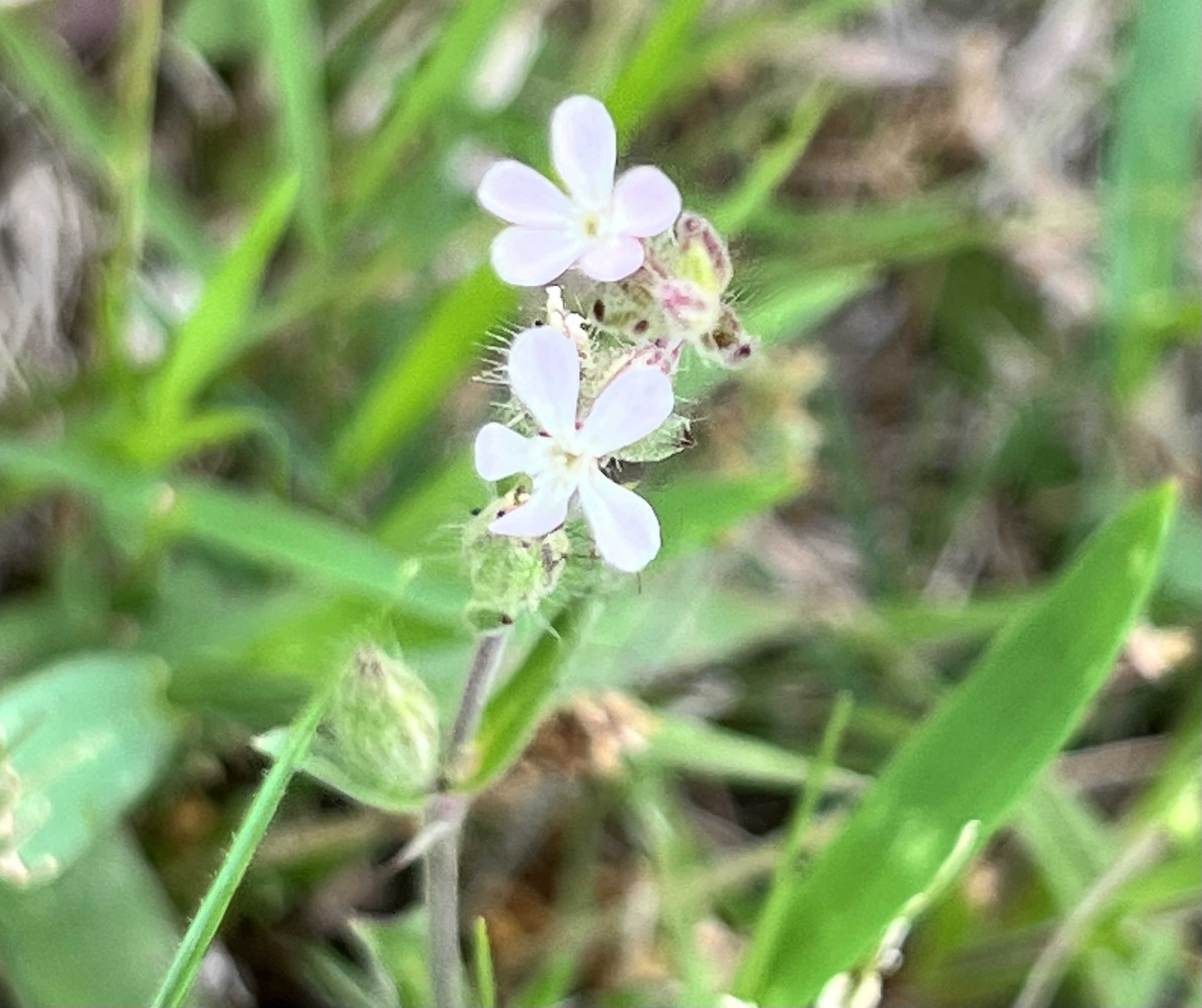
I’m always on the lookout for new flowers and such, and sure enough, every day seems to bring something fun and/or pretty. Who needs all those bluebonnets and paintbrushes when the other guys are just getting started? My Engelmann daisies are taking over, as usual, but I’ve been seeing some other favorites popping up, as well. Take a look!

I’ve tried my luck at posting sound files on iNaturalist, too. So far, I have a confirmed (and VERY loud) Chuck-will’s widow and dickcissels. You’d think I could get a red-winged blackbird, but there are always bunches of other birds around when they are calling. I could get other birds, but I don’t know what a lot of them are, and there’s no help identifying the sounds if you can’t see the bird.