Earlier this week, I happened to be checking my Martin House poles when I thought I saw something in the netting around the poles. I looked closer and there was a female Mantid (Praying Mantis) who had gotten tangled in the netting.
It took me an hour to get her out unharmed. As soon as she was free she flew onto my arm and proceeded to climb up till she was on my shoulder. She looked at me with her triangular shaped head and turned her head back and forth. Kinda neat and creepy at the same time. I guess we were bonding…
Ms. Mantid
Mantids are a sit-and-wait predator. The females are larger than the males. It is rumored that sometimes if a second male comes near her during mating, well, she just eats the first guy by biting his head off. Maybe that’s where that saying comes from?
They mostly eat other insects or small lizards. They do call to attract a mate, but otherwise are silent.
She was interesting to say the least, and I guess she was thanking me for saving her, because when she finally flew down to the grass, she started following me.
I finally out-distanced her and everyone went home.
This is a bonus photo of a green lynx spider Donna saw. It’s messing with a butterfly.
Today, Cathy is sharing some of the wildlife she’s found around her home outside of Rockdale. That moth is amazing, isn’t it? We hope you enjoy this photo essay!
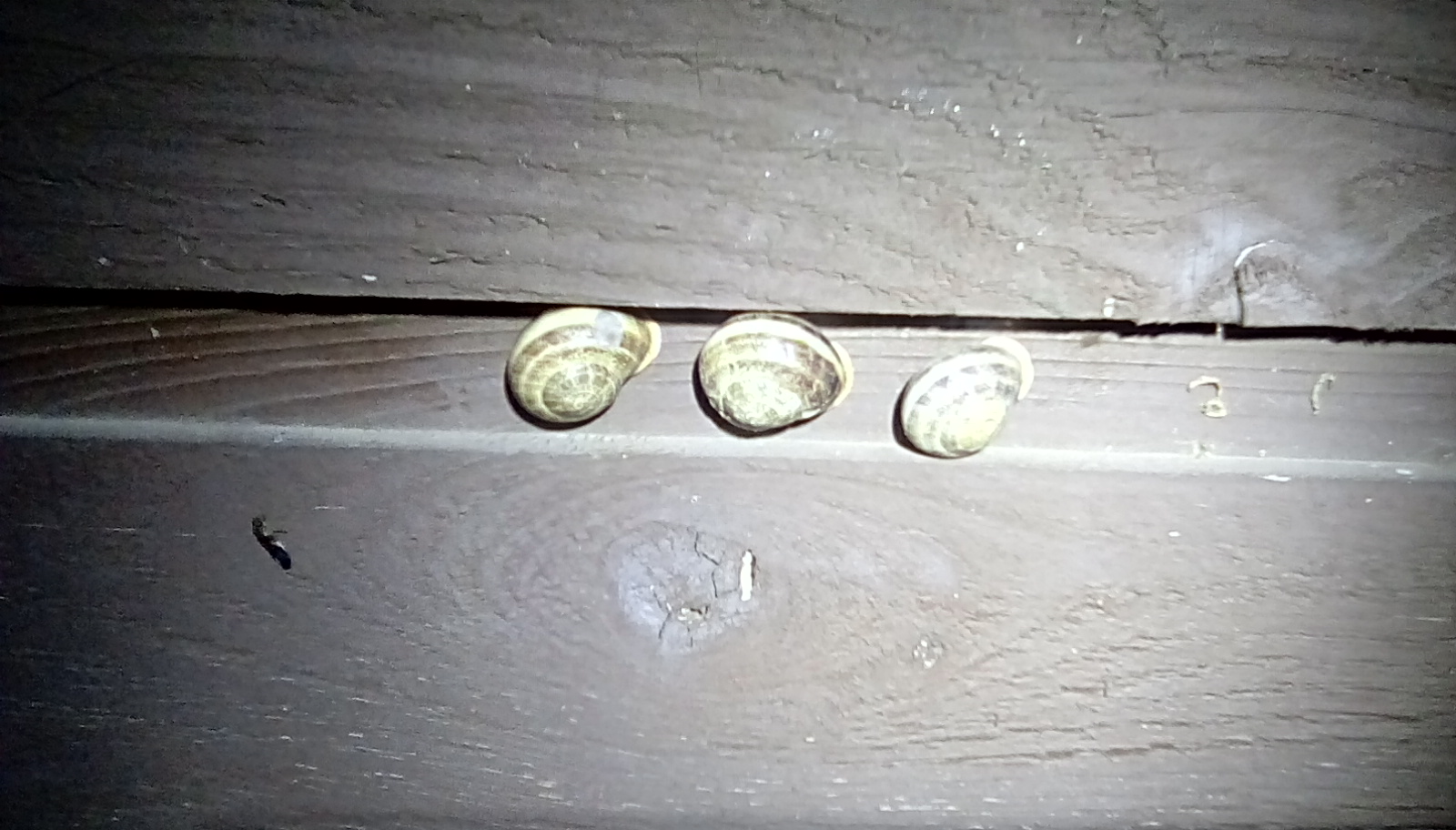
From top left, clockwise: Gulf Coast Toad and toad house, black witch moth (I think), wolf spider, milk snails, leopard frog.
I was hardly a fan of spiders, but circumstances have determined otherwise. The pandemic has kept me almost exclusively at home, and the Texas Blacklands appear to be excellent habitat for wolf spiders (Lycosidae).
In the past, getting identifications down to the species level almost always ended up in frustration, except for Rabidosa rabida. I have identified at least three other genera on my property, and there are likely to be more.
Rabid Wolf Spider Rabidosa rabida. Photo by the author.
This year, I decided to make observations of them as they grew up. My goal was to upload at least a hundred observations to iNaturalist before trying to identify them down to species level. I passed my goal by getting 23 in 43 minutes a few days ago.
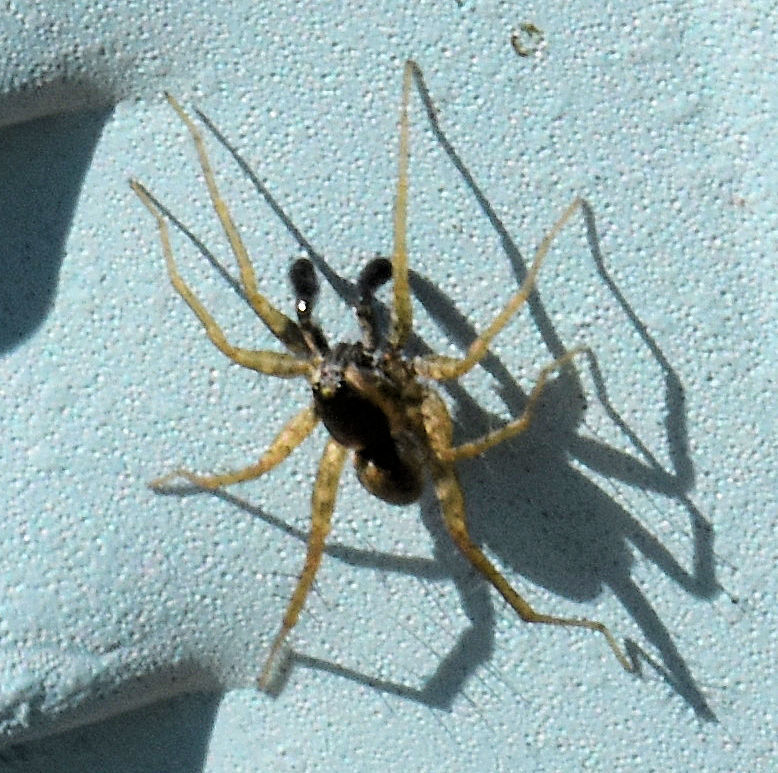
This Thin-legged Wolf Spider (Genus Pardosa) is a young one. Photo by the author.
Lycosidae are generally considered nocturnal, but this isn’t entirely true. Daytime hunting is hit or miss, but a combination of high humidity after a rain, temperatures in the high 70s, and cloudy skies apparently combined to bring them out in the middle of the day.
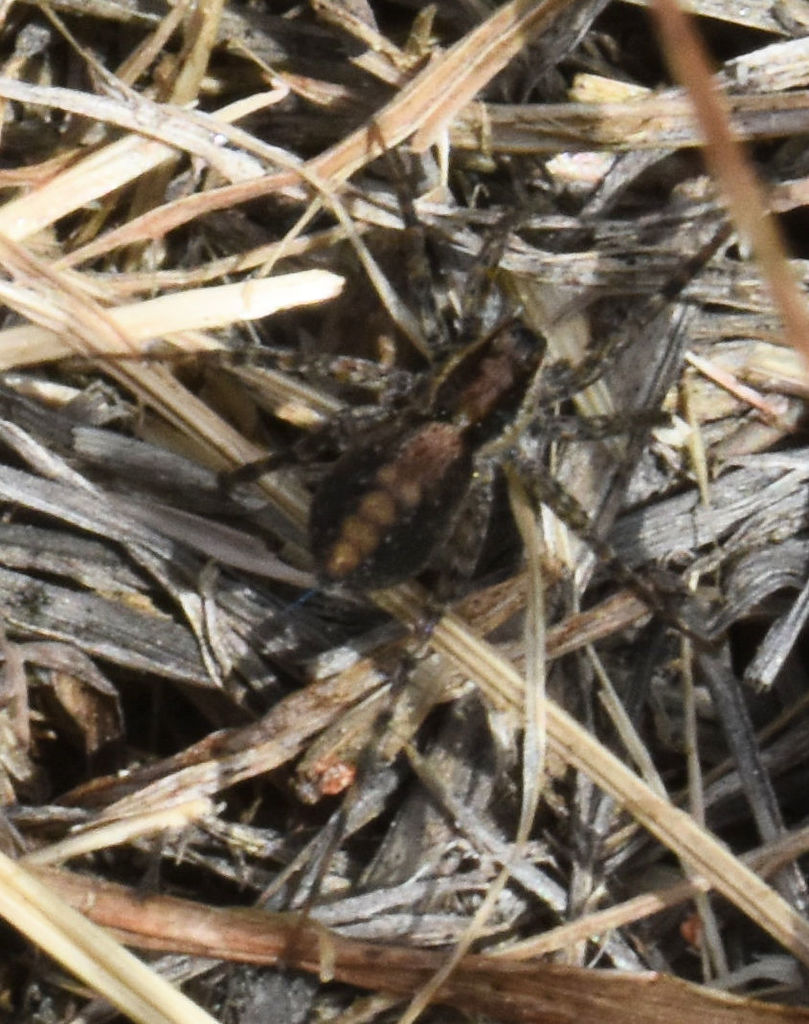
This one is not identified yet. Photo by the author.
There is also a matter of technique. I’ve found that closely cut grass next to high grass is the best place to look and photograph them. You can just walk around slowly and watch for movement, but many will escape into the high grass. If you lead with one foot along the edge of the high grass, this flushes more of them into the low grass where they can be photographed.
There is one particular species that is so well camouflaged it’s impossible to see unless it moves. Right now, they are mostly a half to an inch long including the legs, and they are old enough to identify the genus.
Brush-legged Split Wolf Spider Schizocosa ocreata. Photo by the author.
You may also see holes of various sizes in the ground. At present, many are probably Lycosidae burrows. They can be enticed out with a blade of grass, but I’ve found they disappear back down their burrows too quickly to photograph, making it a two person job whenever that becomes an option again.
My habitat is returning prairie on blackland with paths mown through the high grass. Confirmed genera: Hogna, Pardosa, Rabidosa, and Schizocosa. Other non-Lycosidae genera including Dolomedes are encountered.