Pepper Pot Mushroom: A Rare First for Milam County

by Michelle Lopez

Sometimes the most extraordinary discoveries happen quietly—right under our feet.

While exploring Twisted Creek Ranch, I came across an unfamiliar mushroom growing beneath a mix of native trees. At first glance, it didn’t resemble the common fungi we see after rains. Its clustered form and unusual structure immediately stood out, prompting a deeper look and documentation.
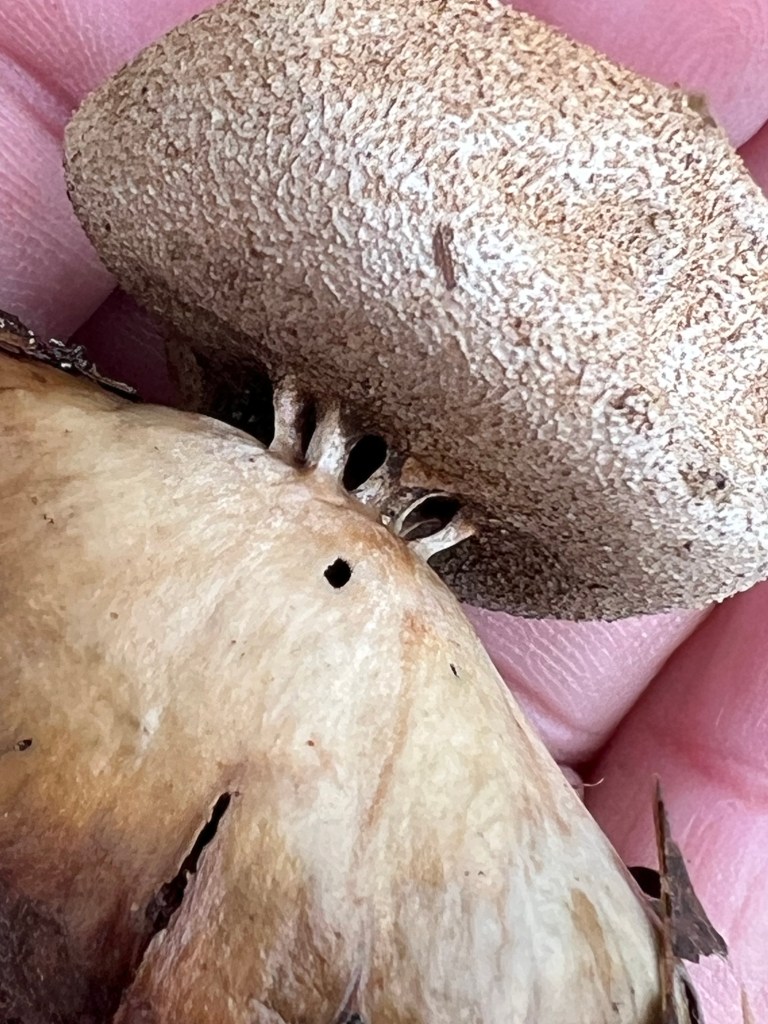
After careful observation, photo documentation, and consultation, the mushroom was identified as the Pepper Pot mushroom—a species with only around 820 documented sightings worldwide. Even more exciting, this appears to be the first recorded sighting in Milam County, Texas.

Why This Find Matters

Pepper Pot mushrooms are not just rare; they are indicators of something larger. Fungi play a critical role in ecosystems—breaking down organic matter, recycling nutrients, and supporting soil health. The presence of such a rarely documented species suggests a healthy, functioning habitat with intact ecological relationships.
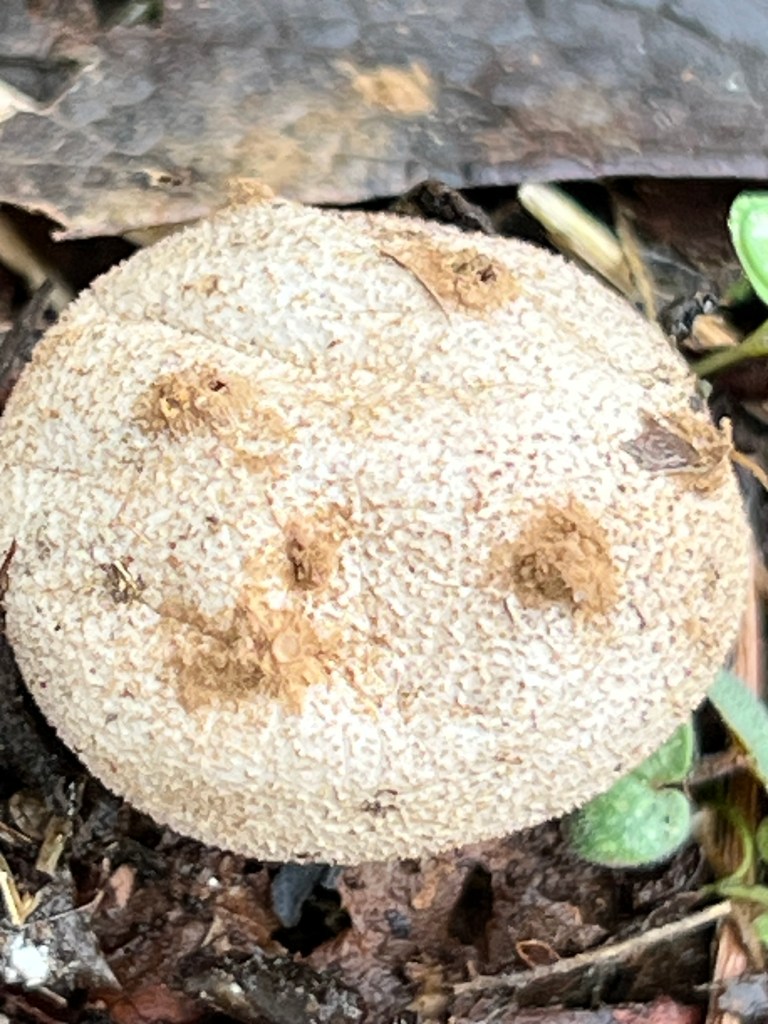
Twisted Creek Ranch is a National Wildlife Federation–certified wildlife habitat, and discoveries like this reinforce the importance of preserving native landscapes. Undisturbed leaf litter, mature trees, and minimal chemical inputs all create the conditions fungi need to thrive—but that are increasingly hard to find.
The Value of Paying Attention

This find is a reminder of how much there still is to discover, even in places we walk every day. Fungi often go unnoticed, emerging briefly and disappearing just as quickly. Without slowing down, looking closely, and being curious, moments like this are easy to miss.

As Master Naturalists, documenting these occurrences—especially rare ones—is invaluable. Each observation adds to our collective understanding of species distribution and habitat health.

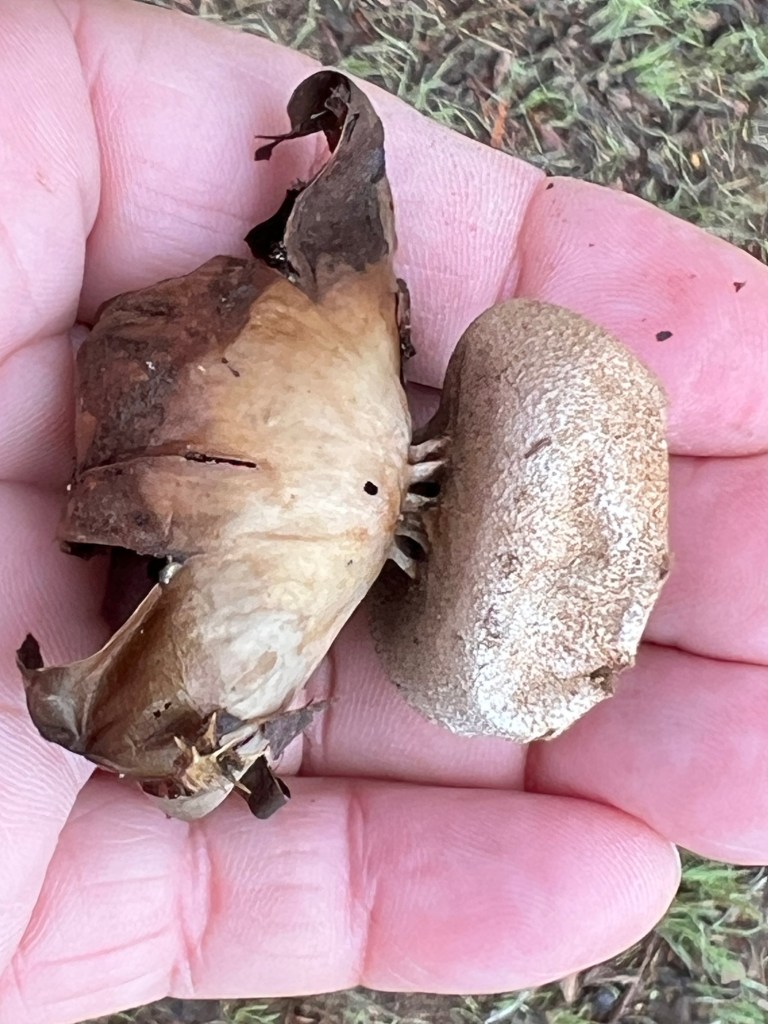
I’ve included photos from the original discovery to help document this sighting and to encourage others to keep their eyes on the forest floor. You never know when your next walk might turn into a county first—or even a global rarity.

Discoveries like this are why I’ll always advocate for leaving the leaves, protecting native spaces, and staying curious.
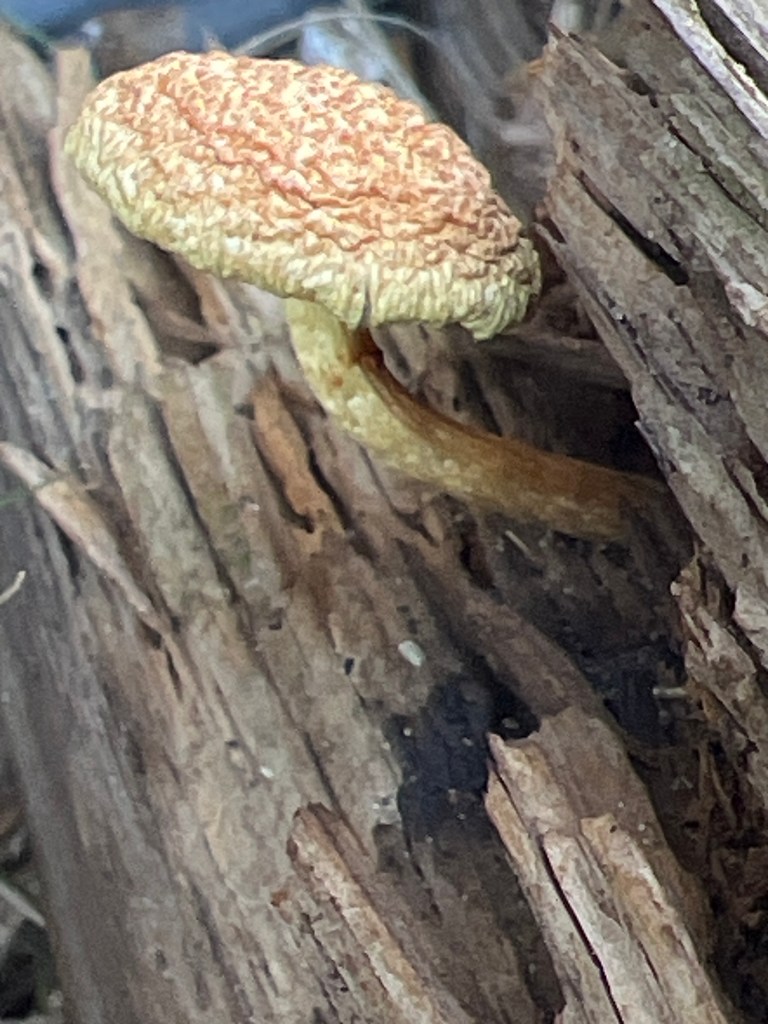
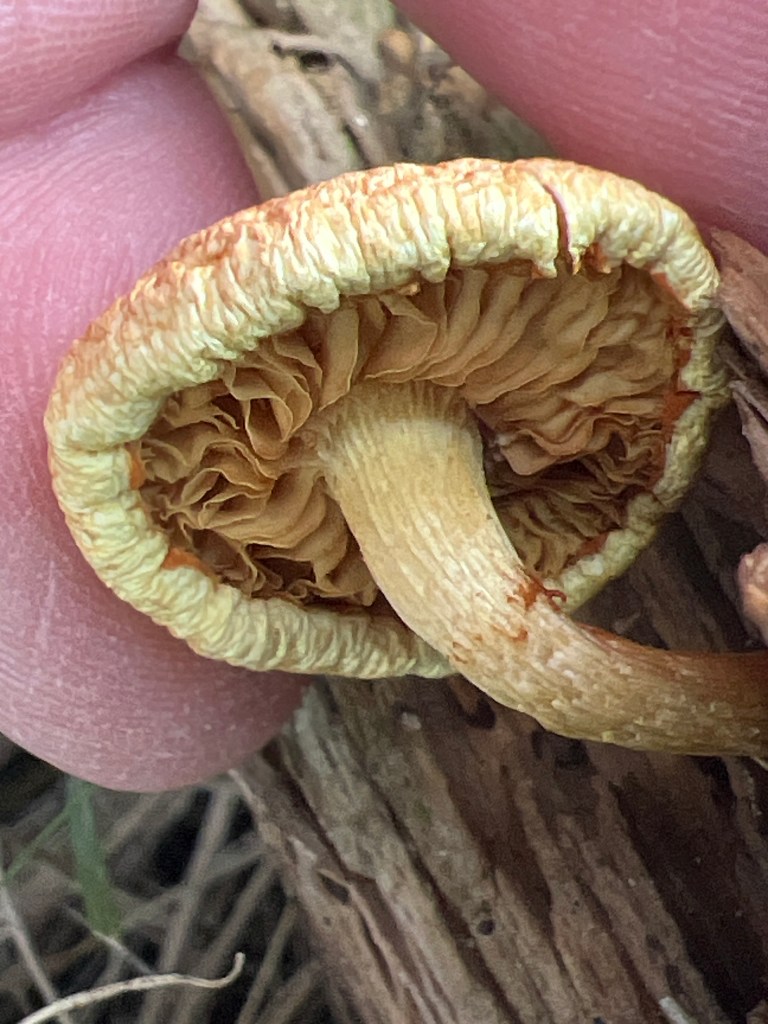
The Third Time’s the Charm: A Rare Mushroom Find in Texas

by Michelle Lopez

I was standing behind the barn the other day, not looking for anything in particular, when I happened to glance down at an old board on the ground. Growing right out of it was a small, unassuming mushroom—one of those moments where something ordinary suddenly asks you to pay closer attention.

Of course, I did what any curious naturalist would do: I took a photo and uploaded it to iNaturalist.

That’s when the surprise came.

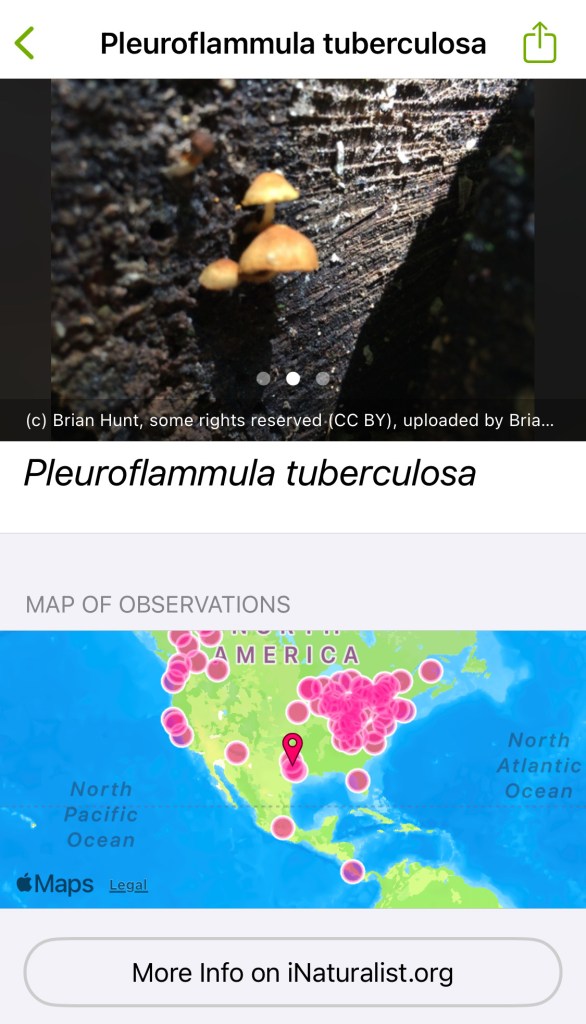
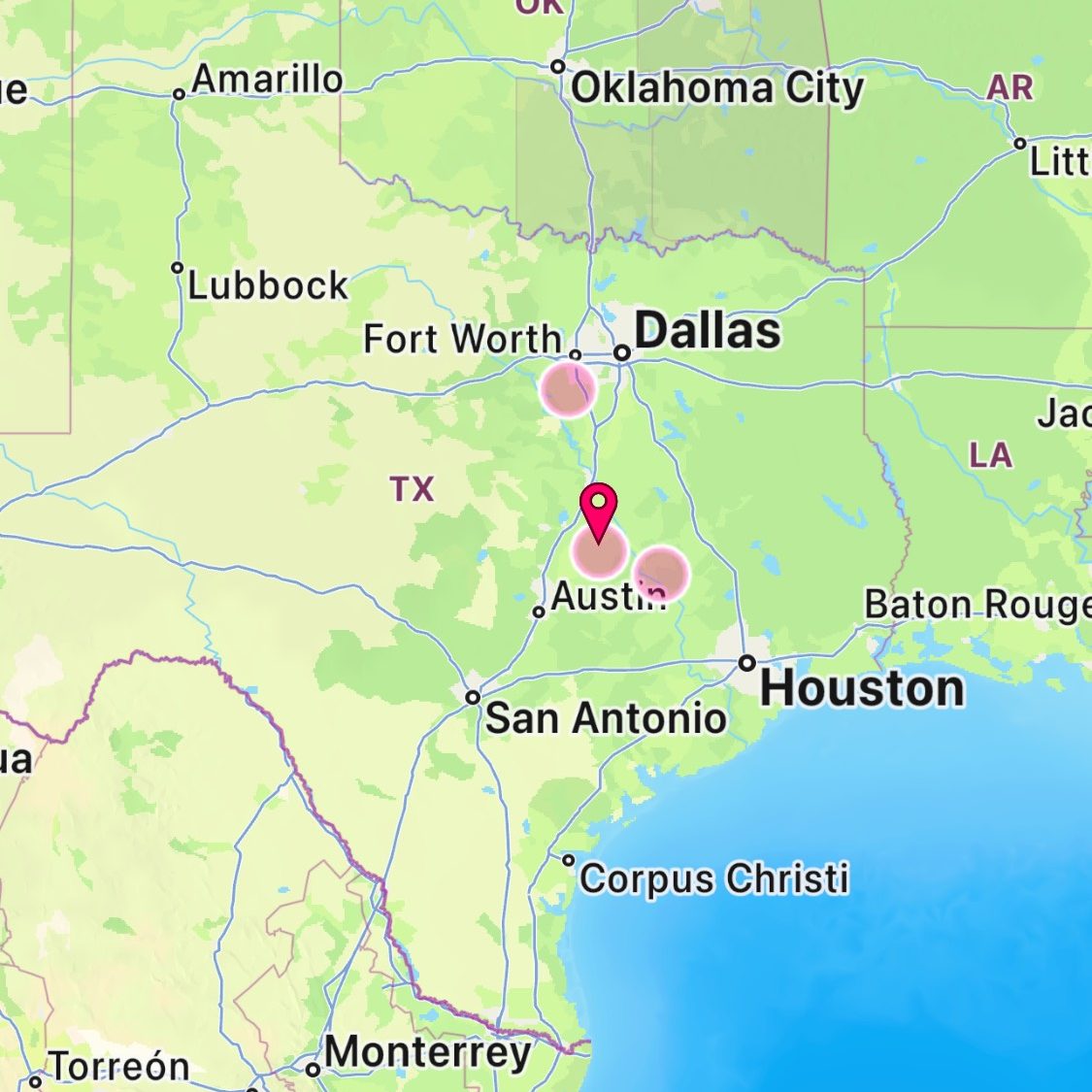
The mushroom turned out to be Pleuroflammula tuberculosa, a species with only 527 documented observations worldwide—and just two prior sightings in the entire state of Texas. Mine became the third.

Finding something so rare without intentionally searching for it feels like a quiet gift from the land. It’s a reminder that nature doesn’t always announce itself with fanfare. Sometimes it waits patiently for us to slow down, look down, and notice what’s right at our feet.

Moments like this are why I love spending time outdoors. Nature never disappoints. There is always something interesting happening—fungi recycling old wood, birds passing through unseen, insects going about their lives—if we’re willing to stop and observe.

Who knows how many rare, beautiful, or important things we walk past every day without realizing it? This little mushroom was a good reminder to keep my eyes open and my curiosity alive.

May 6, 2024 – Day of Discovery

by Ann Collins

You just never know what might pop up, do you? I’ve seen some strange things on my little slice of Heaven, right here in Milam County.

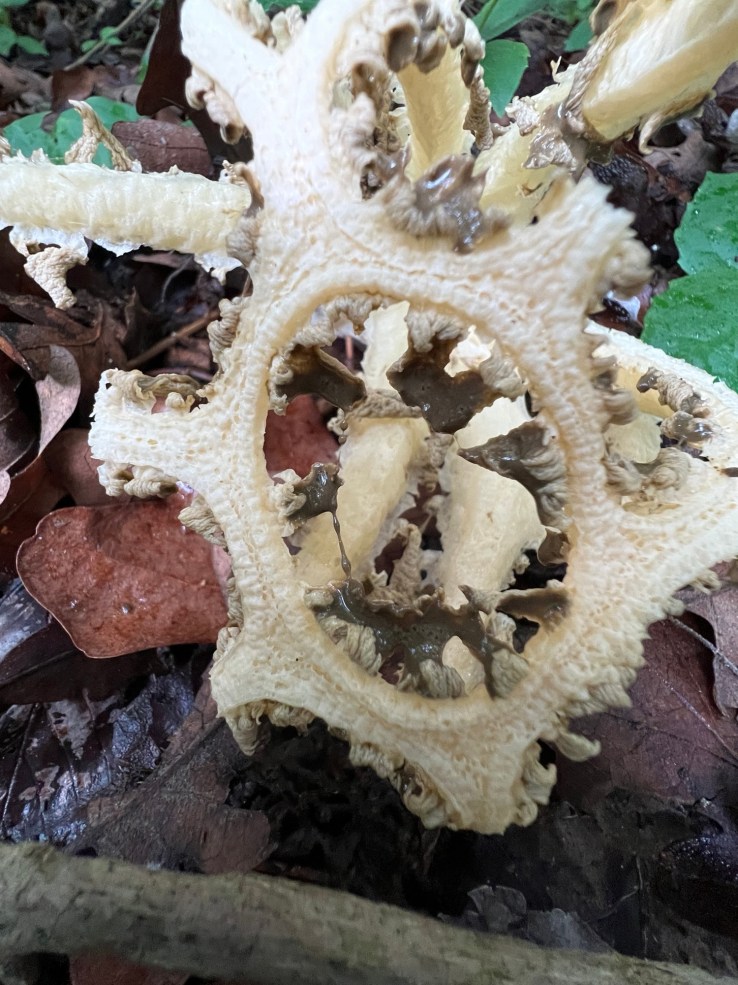
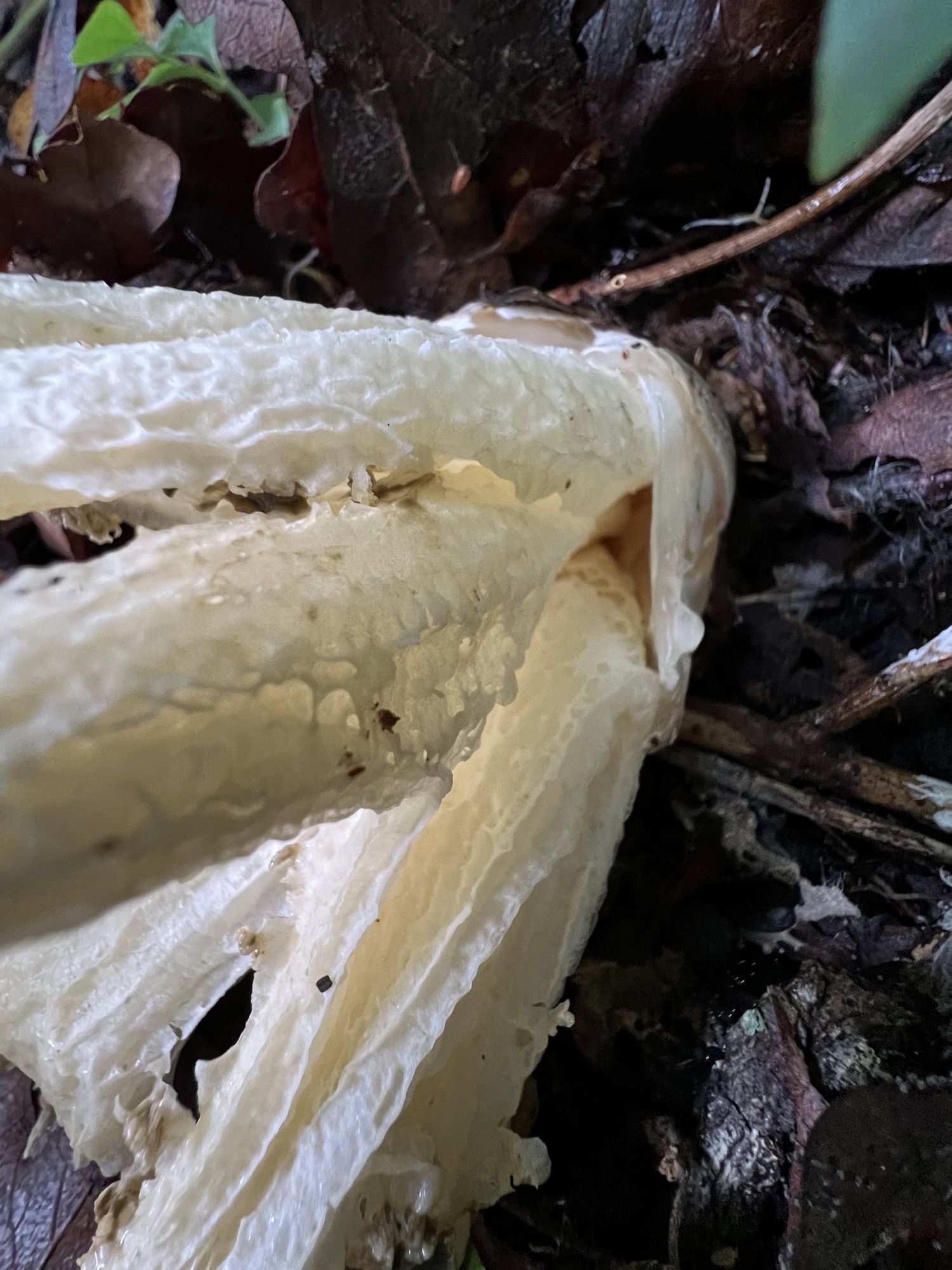
After a whole lot of rain, the oak leaves are coughing up quite a few interesting mushroom/fungus spores. I was cleaning one of my bird baths and spotted something in the tangle of yaupon, Japanese honeysuckle (no, I did not plant it!), mock orange, and who knows what else. It looked like a bunch of decaying celery to me. On closer inspection it looked more like the embryo of a space alien from a dark planet.

Of course, I couldn’t ignore it, just not in my nature. So, pushing and pulling the tangled limbs away, I crawled through the low tunnel with my trusty camera phone cocked and ready in case this little monster tried to attack. Fortunately, it didn’t. In actual fact, it was “rooted” to the ground. Had I known what it was I would have tried to dig it up.

Not nearly enough camera snaps and some pretty wet knees later, I edited my pictures and immediately posted them; only four are allowed on the iNaturalist phone app. In less than five minutes, a guy in Sweden identified it for me. I had entered it under the genus Blumenavia but @nSchwab took me a step further with Blumenavia rhacodes.

Not too much later, @masaki_hamaguchi from Hokkaido in Japan confirmed the identity for me. At 10:29 am Texas time, Masaki much have been burning the midnight oil like my friend LJC. I’m too lazy and really don’t care to figure out what time it was there. You techy types can figure it out if you want to. Thrilled to have my baby alien identified I quickly agreed with them.

Enough of the excitement of discovery. I proceded to dig deeper and found out that @loganwiedenfeld is at the top of the leaderboard as the top observer of “Blumy” with the massive number of three! Yes! 3! Three! The total observations on iNat is 37! Yes! Thirty-seven! This little old lady from south Milam, Texas has joined a pretty eite group with nothing more than a keen eye for spotting stuff! No months of observation, no collecting data, just plain dumb luck!

Just 37!

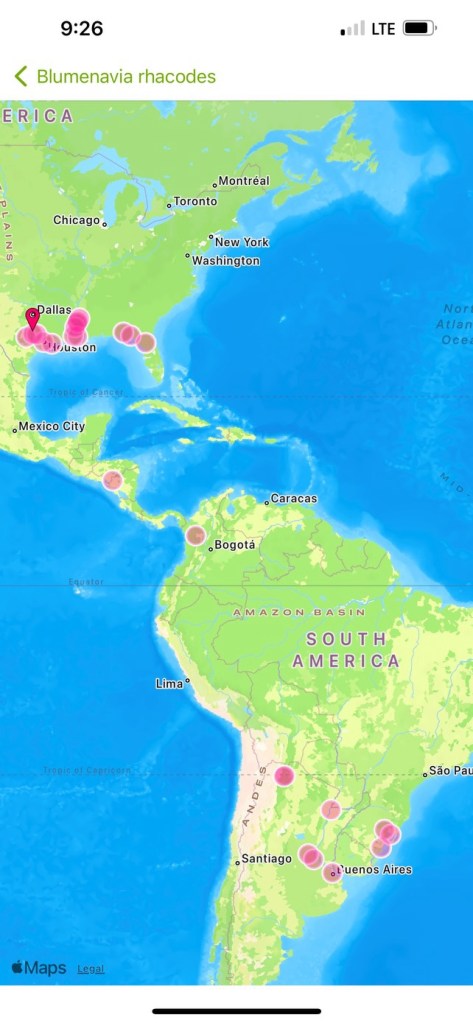
There’s not much information about Blumenavia online. Wikipedia simply says it’s “a genus of fungi in the family of Phallaceae.” The genus contains three species in South America and Africa. iNaturalist has a map locating sightings along the Gulf Coast of North America. A. Moller apparently named it in 1895.

Screenshot