Transforming My Property into a Modern Prairie

by Eric Neubauer

Thanks to google maps updating the satellite view in my neighborhood, I have a recent look at the part of my property that is turning into a three-acre modern prairie with little help from me except for pulling up Johnson Grass.
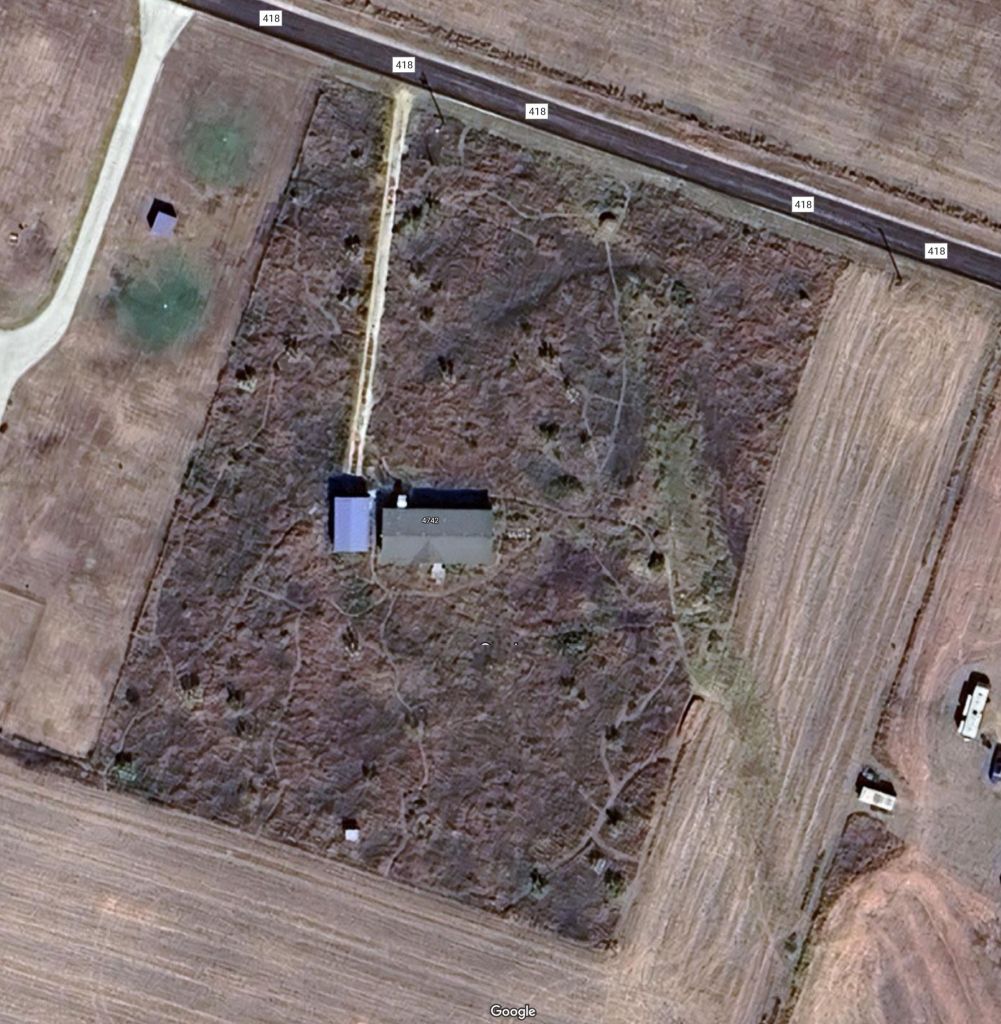
As you can see, I’ve been wandering all over the place during the last year pulling the damned stuff except for the upper right, where I suspect there was a large rattler about a month ago. I’d also done little in the lower left until recently but have begun expanding and deepening an area prone to flooding. The property is generally flat, and there is a drainage swale running across the northeast corner. The runoff from an eight-acre hay field comes in from the southwest along several terraces.

After a dry spell, about the first 2″ of rain disappears into the Blackland cracks. So, there is little runoff except in winter and early spring, and flooding is rare; it can even skip a year. When they form, vernal ponds last a week to two weeks and make the frogs, toads, and plains crayfish very happy.

I believe the multiple paths have been a plus for wildlife. During the last year I’ve seen the return of jackrabbits, at least three does dropped their fawns in my yard, and at least the pairs of dickcissels have nested. Several other species of birds have brought their fledglings in for foraging. Recently a bobcat has been around at night, although I’ve never gotten a good look at it. Pretty good for a place with no permanent surface water.

Did I mention how many wolf spiders I host?
Johnson Grass War Update

by Eric Neubauer

Finally, I’m seeing significant results in my attempt to convert about three acres to a modern bunchgrass prairie. It’s been five years since the last crop, wheat, grew here. After a couple of years, it became obvious that Johnson Grass was my greatest enemy because it could out compete all the
other plants leaving dense, impenetrable groves of nothing else. Herbicides weren’t an option because there were many native species coming up that I wanted to preserve. So, my only option was pulling up the Johnson Grass by hand. There were also several other non-native grasses, but nothing that would take over.

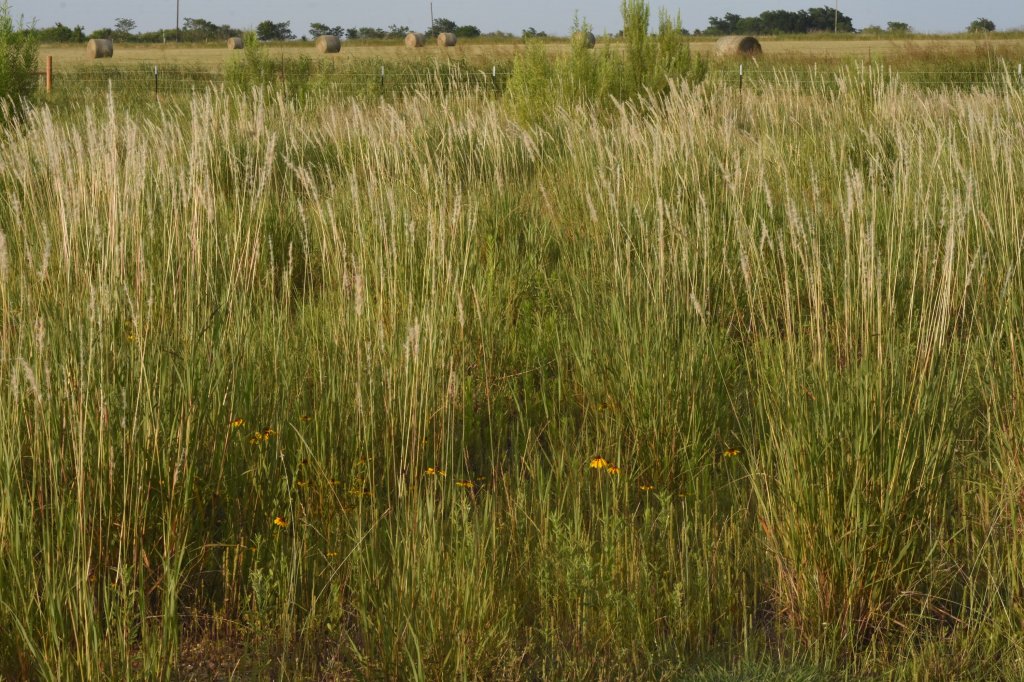
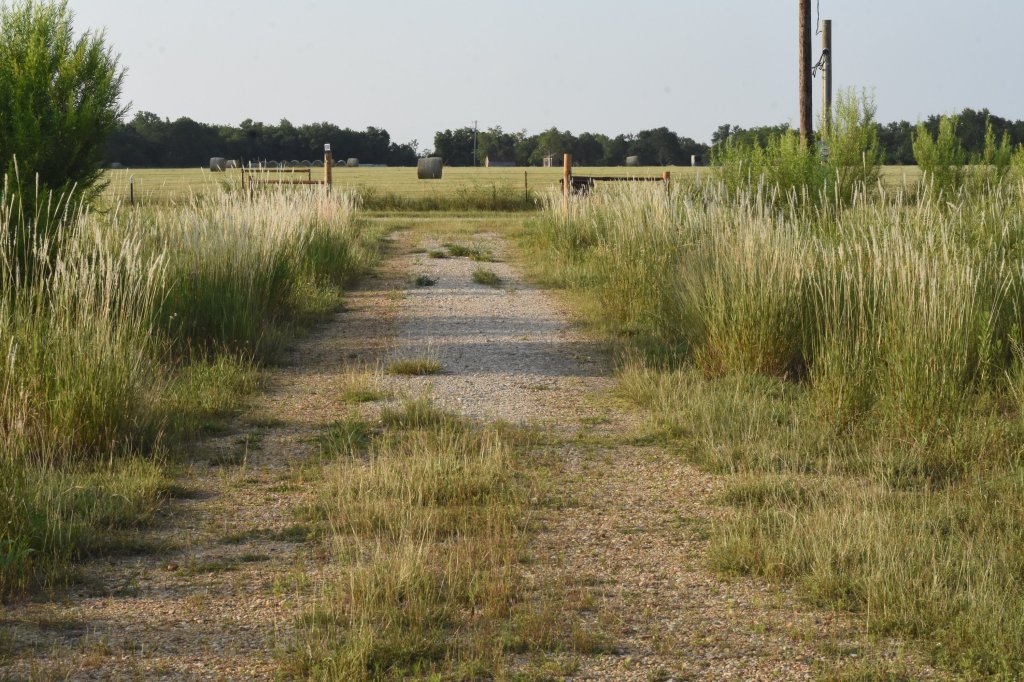
The first image is looking down the driveway. Instead of being lined with Johnson Grass, it’s lined with 5′ tall Long-spike Beardgrass.

The second image is looking to the side. Although the Beardgrass appears impenetrable, it’s possible to walk between the bunches. In the meantime, the wildflower seed bank has been gradually returning and filling in the gaps. Pinkladies and Frogfruit were some of the earliest species to arrive, but others have followed.

The third image is a place where wildflowers have taken over. That area was entirely Johnson Grass
three years ago, and now only requires occasional attention to remove any new Johnson Grass seedlings. Not shown is the Poverty weed and Mesquite that has sprung up to give the landscape texture. It’s apparent I’ll need to thin out the Mesquite eventually.

Prairie Restoration Progress: Johnsongrass Removal

by Eric Neubauer

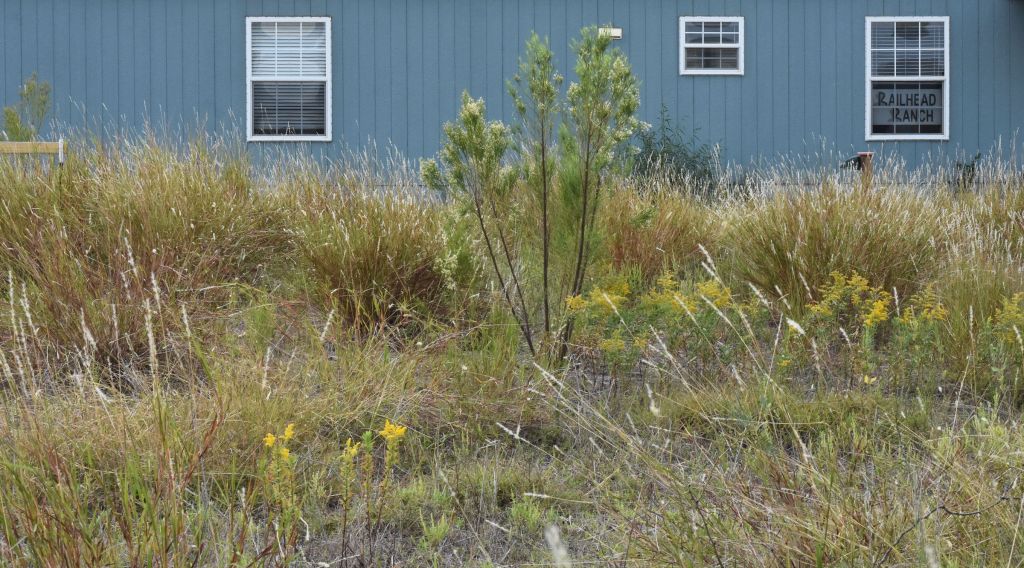
Many people in the chapter have probably heard about my continuing war on Johnsongrass. Here’s a shot from out in the yard of an area that was once overrun. You can see bunches of native grass which grow to about 4′, drifts of goldenrod, and a poverty weed. It’s about 30′ from the bunchgrass to the house. Although the initial Johnsongrass pulling was taxing, maintaining the area got easier with time. After several years it has dwindled to pulling scatted seedlings once or twice a year. The native plants were already there and just needed sunlight to thrive.

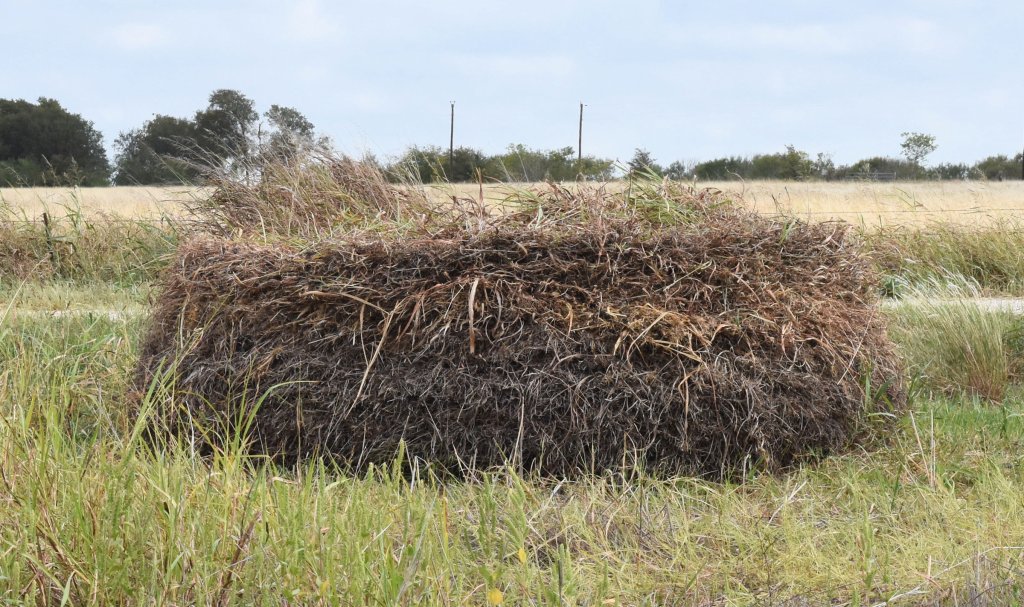
What do I do with all the pulled Johnsongrass? I decided to build haystacks to provide shelter for various animals. This one is conveniently located near the powerline that various raptors were hunting from last winter. The canes are arranged with the roots on the outside so they dry out and die, and the seed heads are on the inside where they won’t spread and germinate. The stack is about 12′ in diameter and 4′ tall now.

Johnson grass haystack

A Prairie Project Report

by Eric Neubauer

In 2018, wheat was planted here at my property, where there was once blackland prairie. Since then, nature has taken over. A mix of native and non-native grasses and forbs quickly came up by themselves. Each year the mix changed, but by 2021 it was obvious Johnson Grass was a huge threat and would eventually outcompete and overwhelm everything else. I was reluctant to use herbicides, because they might affect the plants and animals that I wanted to keep. For example, it’s unlikely anyone tested the effect on wolf spiders. So, I was left with only mechanical means of control.

I decided to focus only on the Johnson Grass to keep it simple. I came up with several plans depending on how thick the Johnson Grass was and whether an area would be mowed. One image shows an area where I pulled the Johnson Grass and ragweed starting early in the year. It looks pretty nice now and only a few unwanted seedlings have come up since. I’ll mow this area in early spring before the bluestem comes up and after it goes to seed. You can see some Johnson Grass I haven’t gotten to lurking in the background on the right.

The other image shows where the mowed area meets the unmown area. Johnson Grass doesn’t like regular mowing. There are numerous small plants in the foreground, but these have limited root systems and will die or are easy to pull. King Ranch Bluestem tolerates regular mowing. I mowed around the plant in the foreground and now it’s going to seed. I mowed around other plants, primarily legumes, and hand pulled any Johnson Grass that didn’t get cut. In the background is a mass of Johnson Grass. I’m hand pulling this. You can see little of anything is left except leaf litter where I have pulled it to the right. Some will  regrows, and I’ll have pull it again, but subsequent pulling goes much quicker than the first. In the meantime, other plants, such as asters, now have enough light to spout and grow. By the way, if you hand pull Johnson Grass, wear good gloves. Otherwise it can give you a nasty cut if your hand slips.

Other areas I’ve promoted with selective weeding are stands of goldenrod and a large patch of frogfruit where water collects sometimes.

It’s possible another threat will rise out of the several species of non-native grasses present, but for now I have a plan.