Out-of-Sight Parasite

by Lisa Milewski

Why Do Birds Sunbathe?

As I look out the window, as I often do to bird and butterfly watch, to my surprise, I see these European Starlings all laying on the ground with their wings spread out. At first, I thought they fell to the ground due to the extreme heat and were in trouble. 
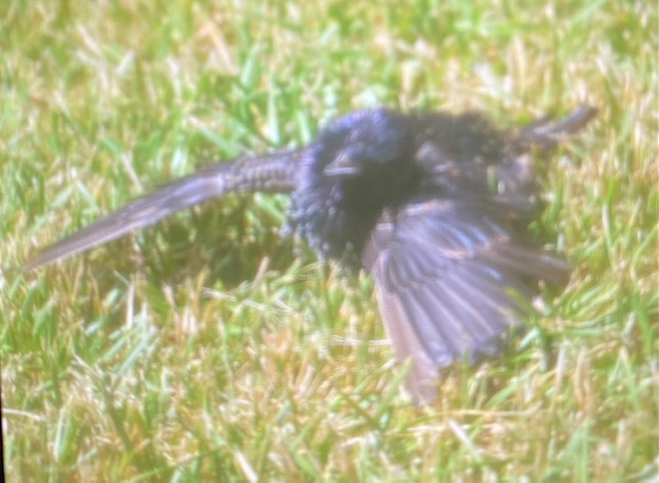
Photos were taken through a window, to not frighten the birds, so they are a little blurry.

I then looked up why the birds would do this and if intervention was needed and I found this:

According to an online Audubon Society article called “Hot, Bothered, and Parasite-free: Why Birds Sun Themselves,” when it is hot enough, they do this not only for warmth and dryness but to rid themselves of parasites living on their skin and feathers. 

It’s not known exactly how sunlight might kill the parasites; however, scientists believe that short blasts of heat, UV radiation, or some combination of both from the sun’s rays is likely the cause. The researchers found that even in a relatively short time in the direct sunlight, around 10 minutes, heated the wings to 140 to 160 degrees Fahrenheit, which far exceeds the temperatures required to kill bedbugs, for example, which die at around 120 degrees. According to another study, 84% of other parasites, such as lice, died in direct sunlight at 140 degrees Fahrenheit in three minutes. At 158 degrees they all perished. 

There are birds from more than 50 families that sunbathe, including birds of prey, rails, doves, larks, swallows, thrushes, finches, buntings, and more, though they may bathe for different reasons and different times.  

Big Versus Little in Nature

by Carolyn Henderson

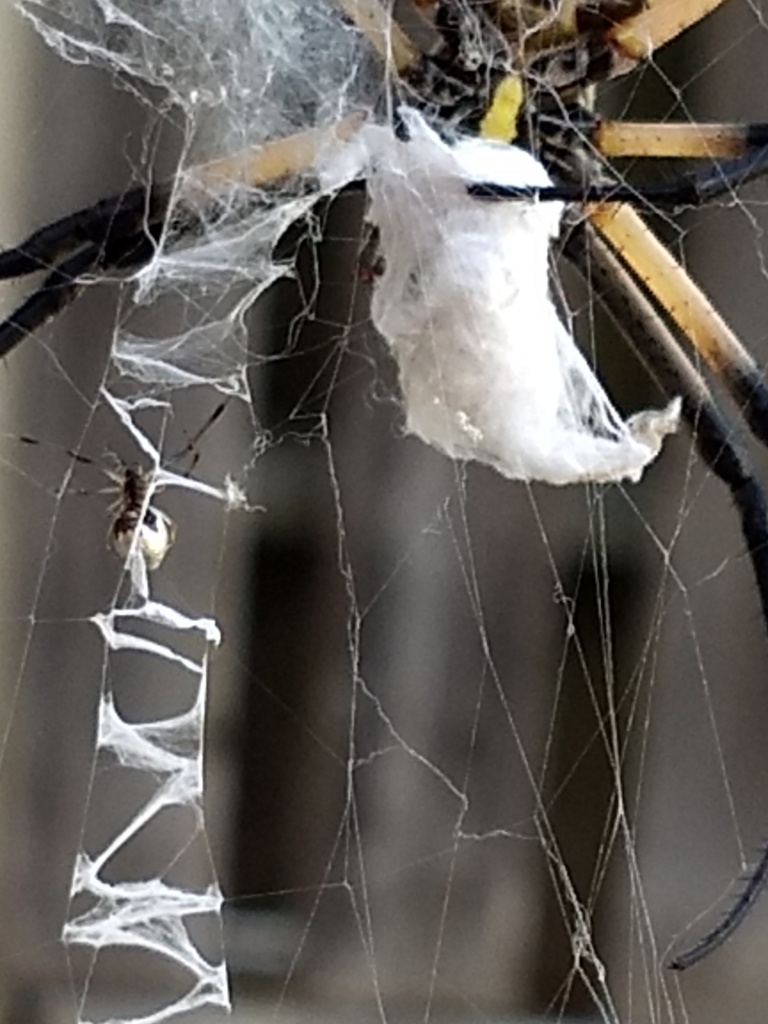
I have developed a relationship with a Yellow Garden Spider over the spring and summer this year, all courtesy of a tomato plant. Then, a kleptoparasitic Theridiidae genera intruded. This illustrated that big does not always win. 

This large yellow spider (pictured) showed up on my tomato plant (I only planted one) when it reached about two feet tall, sometime in April. It set up house, via a web, and seemed to just stay parked there. It never moved off the web nor did it bother my plant. The tomatoes grew all around it, and I picked them without problem. The growing spider and I were coexisting on friendly terms. I eventually posted it on iNaturalist, and it reached research grade. The tomato plant has become spindly and leaves are turning brown. I normally would have removed it by now, but I didn’t want to remove the spider’s home. 

On Wednesday, my son noticed some very small, metallic spiders on the web with the big one. The big spider had snared and wrapped its daily catch in webbing, and these little spiders were attempting to get at it. You can see it in the pictures.

I thought at first that they were recently hatched babies of the big spider, but I was wrong. I posted a picture on iNaturalist and a helpful identifier who goes by chuuuuung said the little spider is a kleptoparasitic Theridiidae genera – a thieving parasite. The little thieves were going to work on the big spider’s catch. (We are trying to get a video to attach, so come back later if you see this message.)

I have left them both alone. Nature is nature, and you definitely  don’t always win if you are larger. Today (8-6), the garden spider caught a good size wasp and wrapped it up. The Theridiidae were waiting in the outer reaches of the web to take their shot at it.  Meanwhile, the tomato plant is growing more tomatoes.