
by Carolyn Henderson
At just after noon on Saturday, I was standing on my patio when a Monarch butterfly flew by very close to me. Unfortunately, I didn’t have a camera to get a photo of it, but I probably wouldn’t have gotten it anyway. It flew straight by into my neighbor’s back yard. It did, however, inspire me to go chasing them.
I go to the Little River Basin Texas Master Gardeners Triangle Garden seasonally to take pictures of pollinators, and I usually see Monarchs, and many other types of butterflies, there. So I took my camera to see what I could see.
I found huge Giant Swallowtails eating from abundant Zinnias. The Fritillarys, both Gulf and Variegated, also were fond of the flowers. So was a Bold Jumping Spider that seemed to be after the Variegated Fritillary. I also found Gulf Fritillary on Tropical Sage. I am unsure if the Giant Swallowtails are Eastern or Western variety. iNaturalist thinks they are Western, but Eastern are more common here.

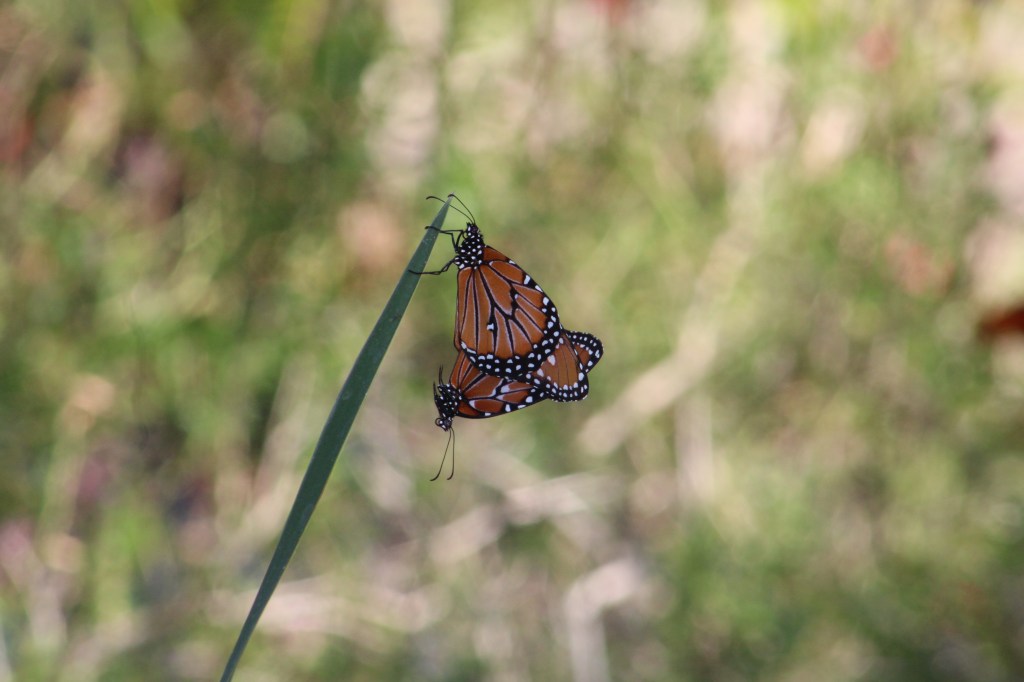


One of my favorite butterflies is Queens. They were abundant on Gregg’s Mist. I can always find them on this plant. They also were mating. I’ve seen more of them there, but it may be early in the migration. Bordered Patch and Fiery Skippers also were enjoying the Gregg’s Mist.
What is not there, at least yet, are Monarchs nor Pipevine Swallowtails. The Flame Acanthas and Tropical Sage and Gregg’s Mist are ready for them. So is the cat in residence (see photo).


I also found a few others at my house. My yard is inundated with Hackberry Emperors, and some Clouded Skippers are hanging out there. So are Carolina (or Arizona?) Praying Mantis and Spinybacked Orbweavers with an elaborate web, and grasshoppers that were abundant at the triangle garden, too. I also had a hummingbird that was interested in the Texas Purple Sage at my house.

The iNaturalist fall project to submit as many pollinators as you can find is coming up in October. If you are participating, you might want to try the El Camino Real Wildscape which is usually full of butterflies in October – including Monarchs. Or, you also can try the Triangle Garden.


 Nature Along the El Camino Real