The Ugly Caterpillar’s Demise

by Lisa Milewski

So many times, I have heard someone say, “I just killed the most ugly caterpillar I have ever seen.” 

My face turns to horror in my barely contained reaction. After a brief pause to gather my thoughts, I swiftly turn this into an opportunity to educate others.
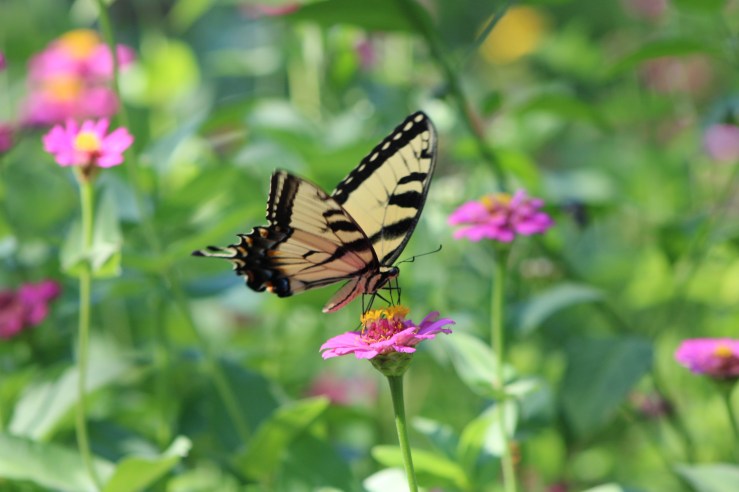
Remember, this was once a caterpillar! Photo by Donna Lewis.

I ask two questions. One, to describe the caterpillar, and two, what plant or vegetable was it on.  Based on those two things, I am usually able to identify the caterpillar. I then proceed to let them know that the ugly caterpillar was going to turn into a beautiful butterfly which in turn is a pollinator that will actually benefit your plant or vegetable. They had no idea! 
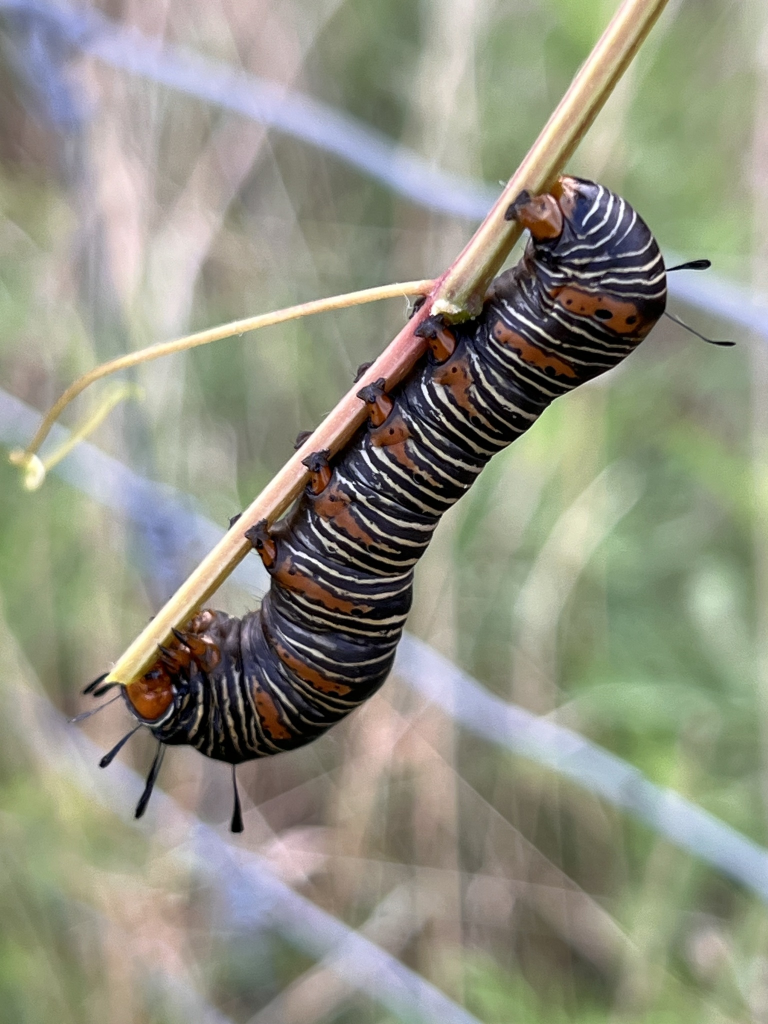
Wilson’s Wood-nymph Moth. Photo by Sue Ann Kendall.

Sometimes the reaction is, “but they were eating up the leaves.”  I then ask if it was a miniscule number of leaves or is it completely devoured. If it’s miniscule and it is a mature plant or vegetable or fruit tree, I say let it be since it won’t be long until it turns into a beautiful butterfly and that mature plant will quickly recover. If it is an immature, young, plant or vegetable, I suggest protecting it with crop covers until it matures and can handle the occasional munching from those caterpillars. 
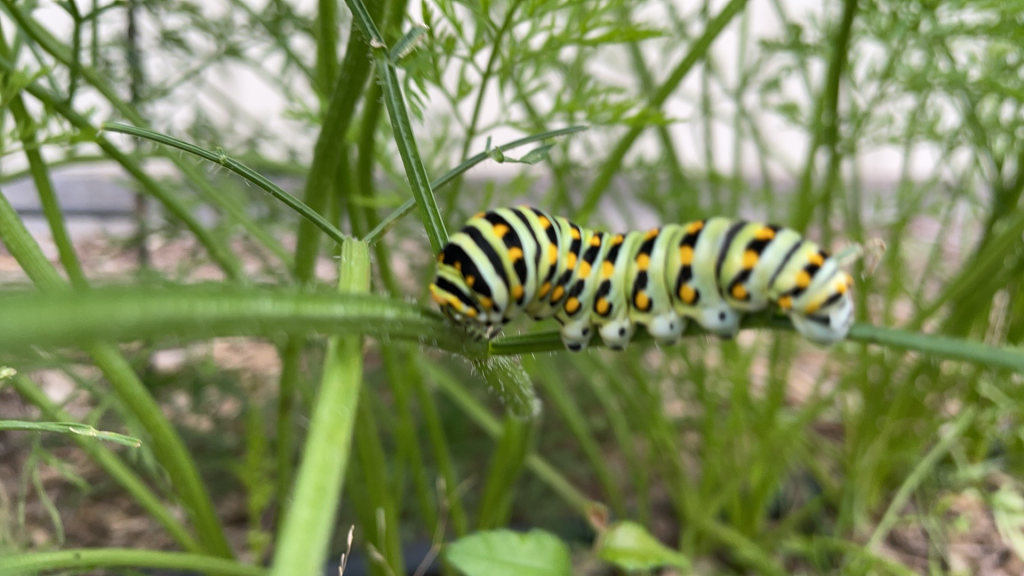
Black Swallowtail. Photo by Sara Faivre.

At this point, I remind them of the many benefits the pollinators provide to include bees, wasps, hummingbirds, etc., and how it actually benefits their plants, vegetables or fruit trees by pollination.  For most (not all), it is critical that the pollen gets transferred from the male plants to the female plants in order to reproduce. Although some plants, like cedar trees, reproduce by the wind that spreads their pollen, most others rely on pollinators. 

Checkered White. Photo by Sue Ann Kendall.

The next time you think about killing that “ugly” caterpillar, bee or insect, please look it up to identify whether or not it is a friend or foe. If it a beneficial pollinator, we can always find a way to co-exist. 

Bad Hair Day for Blue Jays

by Lisa Milewski

According to The Cornell Lab, All About Birds, many birds, especially Blue Jays and Cardinals, molt in late summer and fall. It grows and replaces feathers gradually but occasionally a bird may lose all the feathers on its head at once, particularly Blue Jays, in which molt of the feathers of the head “capital tract” in synchrony. This usually occurs in juveniles undergoing their first prebasic molt.

My apologies for somewhat blurry photos since they were taken through the window to not scare off the bird.

The last one is filling in a bit, but don’t worry! They will all be beautiful again eventually.

Oh the Sounds of Summer – Cicadas

by Lisa Milewski

Growing up, my siblings and I would hear the infamous sounds of summer. Yes, the Cicadas. We would always hear them but never see them.  We would see their shells once they emerged, usually on trees but not a live one. 

Cicada shell

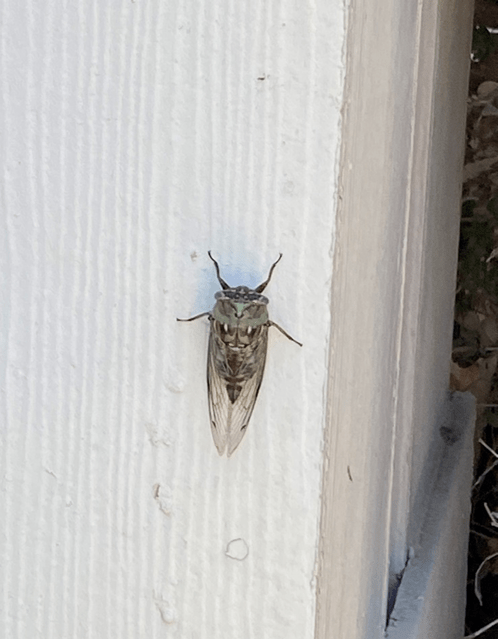
To my delight, my son was playing basketball in the front yard and rushed in to tell me I might want to see this big bug. My eye for birds, insects, lizards, etc. has rubbed off on my children annd husband; I love it! They know how excited I get. Low and behold, it was a cicada. I slowly move in for a close-up picture to not scare it away. Yay, I got it! 

I posted it in iNaturalist and identified it as a Resh Cicada.  Per iNaturalist, the Megatibicen resh, the resh cicada or western dusk singing cicada, is a species of cicada in the family Cicadidae, found in North America.

An internet article on Cicada Mania stated it’s known as the Resh Cicada because of the markings on its back resemble the Hebrew symbol Resh “x” (Hebrew letter that looks like an upside down “L”). The Resh Cicada has been documented to be found in Arkansas, Kansas, Louisiana, Mississippi, Nebraska, Oklahoma, South Carolina, Tennessee, and Texas. During the molting process, up until the cicada’s body sclerotizes (hardens), the cicada’s body is leaf-green (camouflaged like a hanging leaf).

Lisa’s Watering Hole

by Lisa Milewski

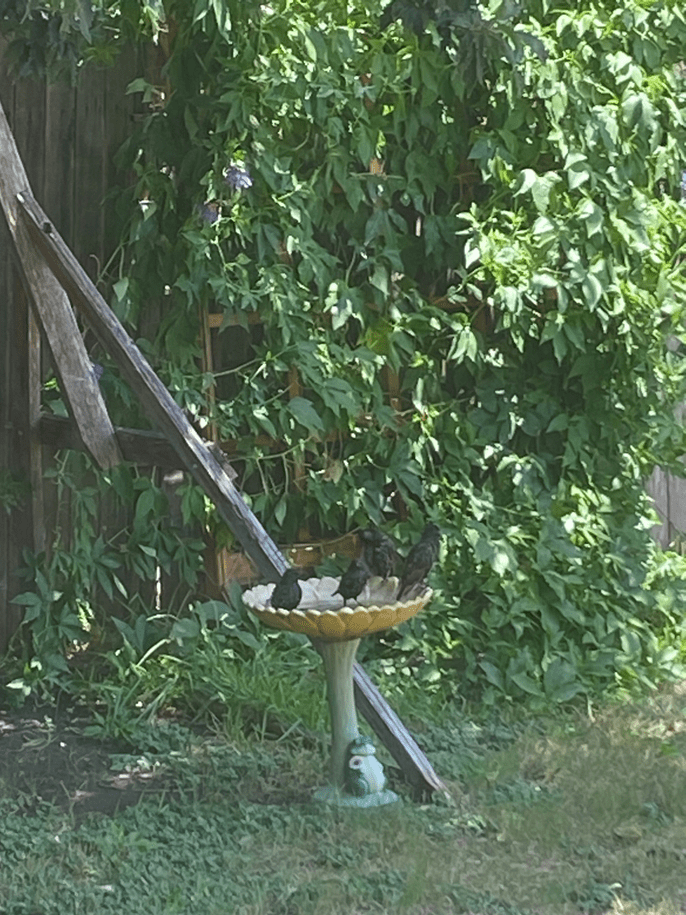
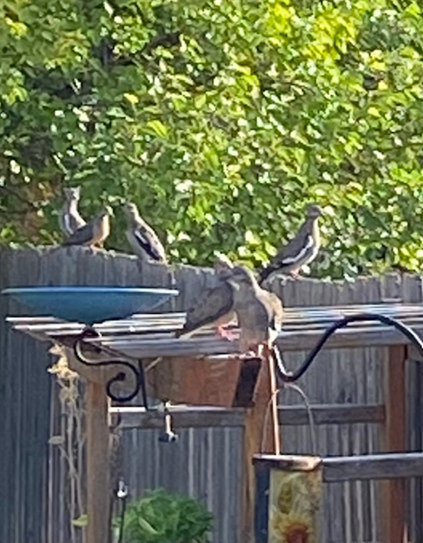
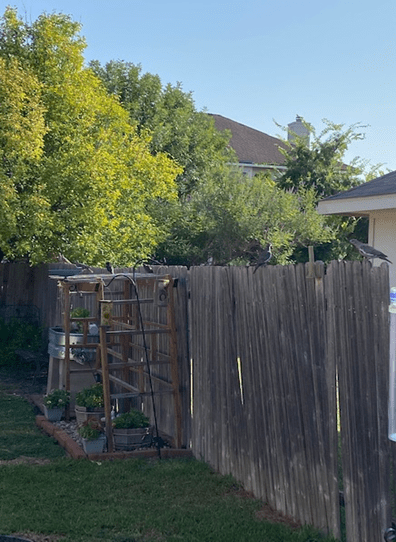
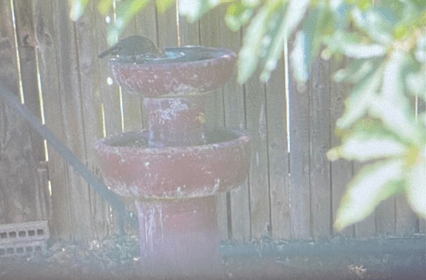
During this heat, I have been filling the bird baths once or twice a day while enjoying watching the birds drink, splash, and bathe. So far, the birds I mostly see are cardinals, blue jays, northern mockingbirds, finches, house sparrows, mourning doves, white-wing doves, European Starlings, ruby throated hummingbird. Even the fox squirrel, cottontail rabbit, and bees seem to appreciate the water left out for them. Here are just a few that I have been able to get pictures of so far.

European Starlings

You don’t want to know my nickname for the doves. Let’s just say that I have to wash my driveway and car often.

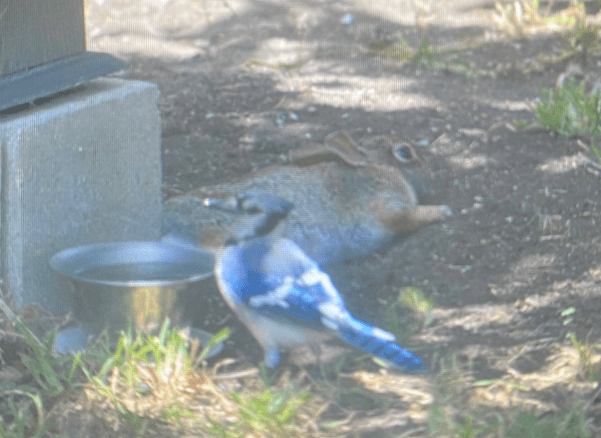
“Peter” the cottontail rabbit in his favorite spot sharing his water with “Jay” the blue jay
“Peter” getting a drink

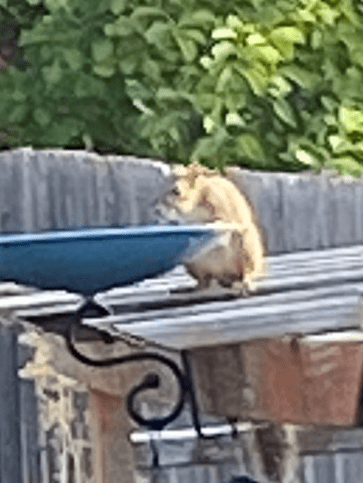
Here’s “Rocky” the fox squirrel getting a good drink

I found that with these larger bird baths, it’s easier to fill them with rocks and top with soil and then place smaller bowls in them. This makes it a lot easier to clean them out daily and refill.

And here’s my favorite, “Ruby” the ruby throated hummingbird drinking from the hummingbird feeder.

Remember to wash out the bird baths and change hummingbird feeders daily or every other day in this heat. We want to help our friends, not make them sick.

Out-of-Sight Parasite

by Lisa Milewski

Why Do Birds Sunbathe?

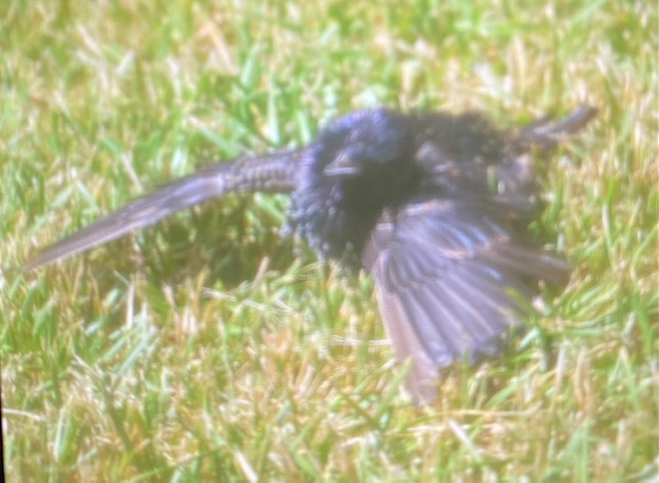
As I look out the window, as I often do to bird and butterfly watch, to my surprise, I see these European Starlings all laying on the ground with their wings spread out. At first, I thought they fell to the ground due to the extreme heat and were in trouble. 

Photos were taken through a window, to not frighten the birds, so they are a little blurry.

I then looked up why the birds would do this and if intervention was needed and I found this:

According to an online Audubon Society article called “Hot, Bothered, and Parasite-free: Why Birds Sun Themselves,” when it is hot enough, they do this not only for warmth and dryness but to rid themselves of parasites living on their skin and feathers. 

It’s not known exactly how sunlight might kill the parasites; however, scientists believe that short blasts of heat, UV radiation, or some combination of both from the sun’s rays is likely the cause. The researchers found that even in a relatively short time in the direct sunlight, around 10 minutes, heated the wings to 140 to 160 degrees Fahrenheit, which far exceeds the temperatures required to kill bedbugs, for example, which die at around 120 degrees. According to another study, 84% of other parasites, such as lice, died in direct sunlight at 140 degrees Fahrenheit in three minutes. At 158 degrees they all perished. 

There are birds from more than 50 families that sunbathe, including birds of prey, rails, doves, larks, swallows, thrushes, finches, buntings, and more, though they may bathe for different reasons and different times.