We will be celebrating Valentine’s Day soon and at my age that doesn’t mean a dozen roses or a box of candy from a six-foot good-looking guy! It is a time that gives me pause to think about the appreciation I feel for a group of people.
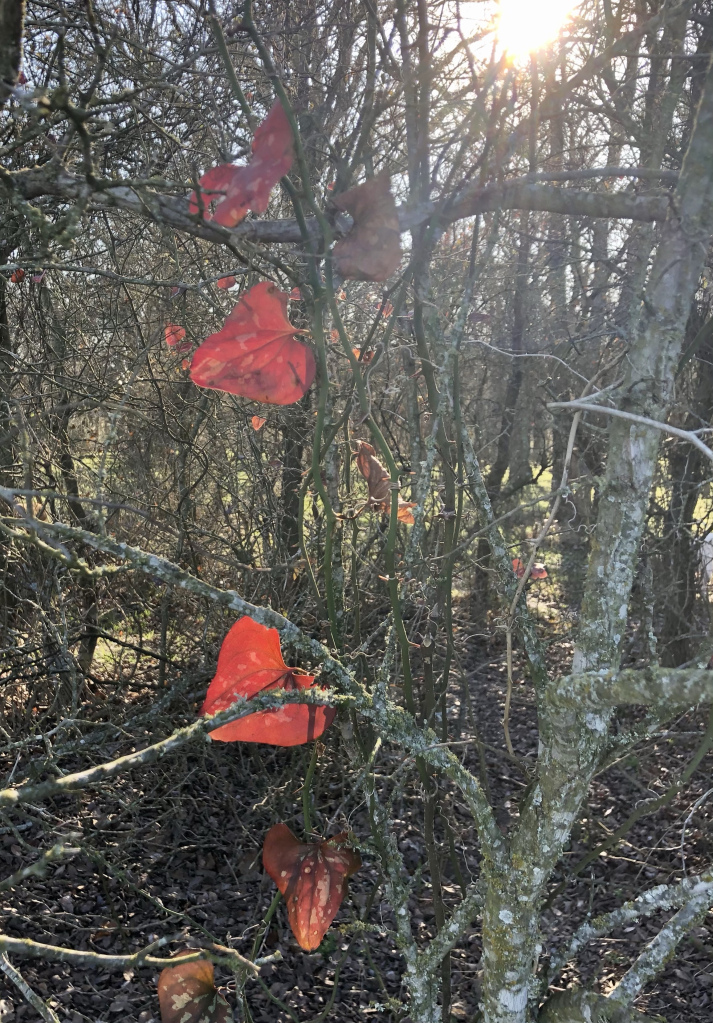
Here’s a Valentine from Sue Ann, saw greenbrier hearts in my woods.
I appreciate the value system of our Master Naturalist group. There has been due diligence in protecting us and still providing opportunities. On the state level, the Virtual Volunteer Fair was awesome, but the event impacting me the most is joining the Winter BioBlitz. Linda Jo has been such a supporter for all of us in participating in iNaturalist, but I always found an excuse.
Excuses including: I need a new iPhone, more books, more expertise…
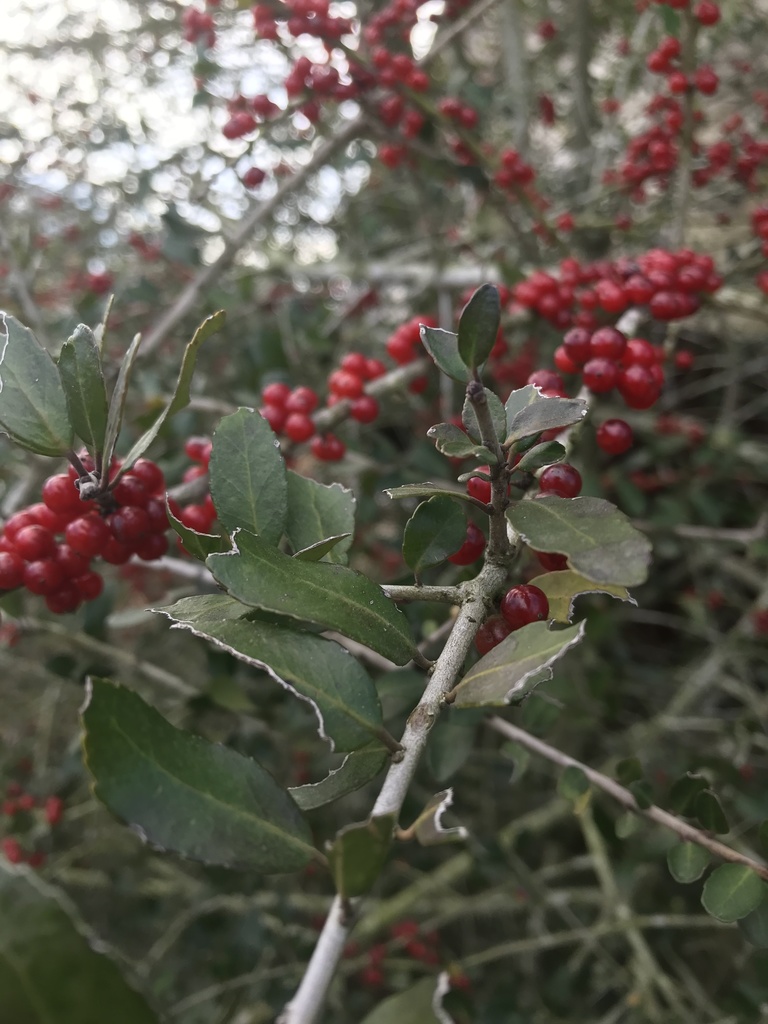
First time out I came back with my photographs and spent hours pouring over plant identification references. I don’t regret the time spent, but it was overkill when you have Linda Jo checking your work! I ended up with three research-quality entries (my yaupon holly is shown below), and you would have thought I had just gotten a gold star on my research paper. ( Please do not ask me about lichens or mosses though.) I encourage anyone hesitating to take the big step, take it!
So, to all of you that have worked so hard to keep us active, safe and appreciated, thank you and Happy Valentine’s Day!
Thursday, February 4, marks the day! Our El Camino Real Seasonal Winter 2021 iNaturalist BioBlitz begins at 12:00 am that morning and continues until Wednesday midnight, February 10, the following week. For some time, our chapter has not been able to gather as a group for a nature survey, so the week will be an opportunity to figuratively join forces to document the fauna and flora of the areas where we reside. Yes, this does include our personal property as well as our neighborhood and the places we go as we physically distance during the COVID restrictions. So get that camera ready!
The BioBlitz is an iNaturalist project. See: https://www.inaturalist.org/projects/ecr-seasonal-winter-bioblitz. Yes, you must be a member of iNaturalist to participate. And yes, to get volunteer hour credit for participating, you must email connlindajo@gmail.com and state that you want to join the project. OK, I can hear the groans from miles away. Must I again emphasize that iNat is a valuable tool that documents nature and is used not only by TPWD but other organizations and university researchers as well?
A prime example is the rare sighting of a live Spotted Skunk (Spilogale putorius) by Ann Collins on her porch in the suburbs of Milano. It is the only Milam County observation on iNat and one of the few documented observations in Texas. (https://www.inaturalist.org/observations/2710384) Ann’s observation caused a lot of excitement and interest at TPWD. Clint Perkins, a graduate student at Texas Tech, did field research on Ann’s private property and continues to review all mammal observations on iNaturalist.
Eric Neubauer has the only observations of the Southwestern Dusky Grasshopper (Nebulatettix subgracilis in Milam County. (https://www.inaturalist.org/observations/34920111) Again, there are few documented sightings in Texas and those were probably not made at a state or city park.
Countless unique observations added to iNat have been documented on personal property by a Texas Master Naturalist, but those species we may consider common or mundane also have a definite need for documentation. I have personally noticed the apparent change in bloom times for wildflowers, the species of migrant birds I see, along with the disturbing spread of invasive species, and so I document even the ubiquitous species. Each and every legitimate observation has value.
So what is the point of all this? Some Texas Master Naturalists have been disgruntled by the exclusion of the time spent on iNaturalist observations on one’s private property as valid volunteer hours. As a result, many have lost interest in using iNaturalist as a personal tool for sharing and learning about nature.
Well, I have two points to make:
Number One: Since approximately 95% of the land in the state of Texas is privately owned, neglecting to enter observations from our personal properties skews the data. I urge you to continue your contributions as citizen scientists by observing and documenting on iNat what you see around you every day.
Number Two: This is an approved project where El Camino Real Master Naturalist members have an opportunity to observe at leisure on their private property and earn volunteer hours without having to travel to participate in a BioBlitz.
So join iNaturalist and the ECR project. Take photos. Share them on iNaturalist. Report your volunteer hours. It is that simple.
It’s been quite a few days since I participated with other nature-loving folks in a self-guided hike at a nearby state park, on the first day of 2021. I think it has taken me that long to recuperate before sharing my adventure.
The four state parks closest to my home are each about 35 miles away. I chose to visit the Birch Creek Unit of Lake Somerville in Burleson County. The last time I visited it was on an El Camino Real Chapter field trip in October 2013.
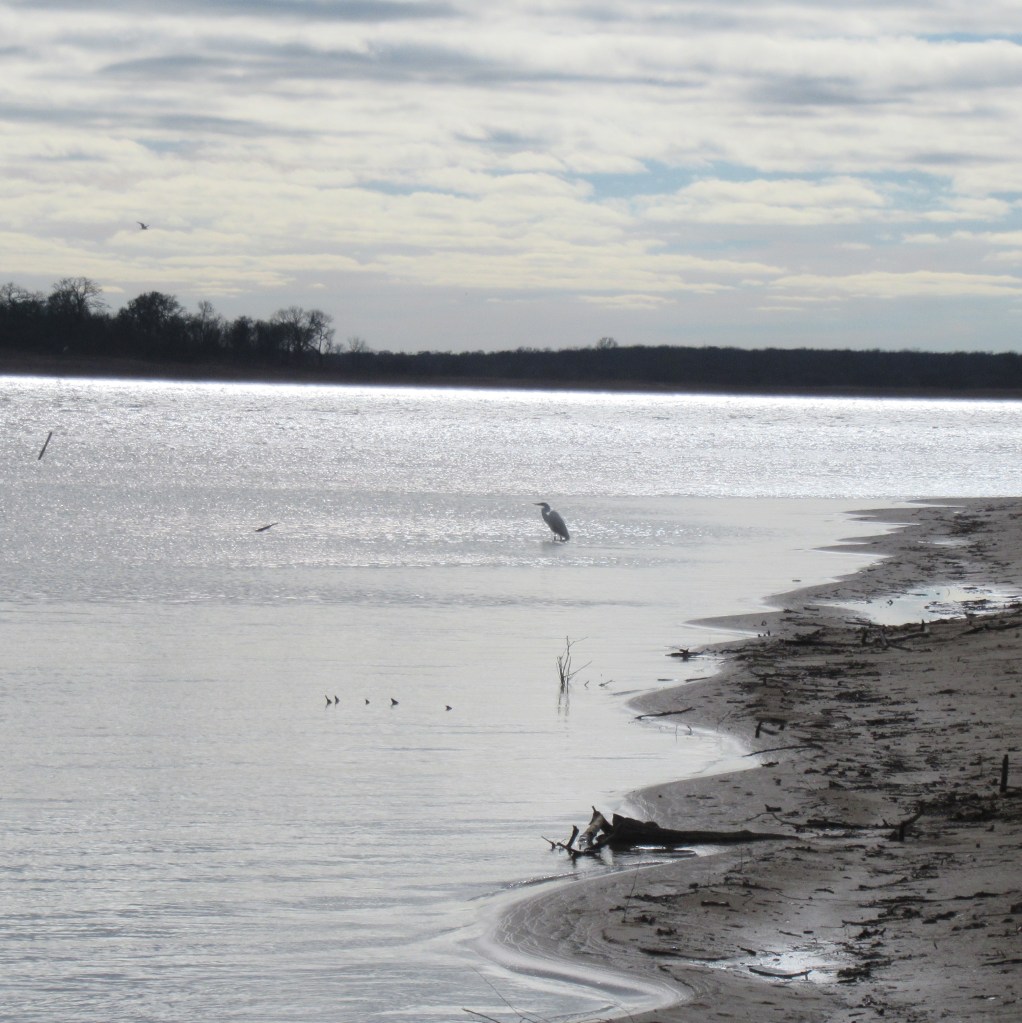
Heron at Birch Creek
It was not a warm day, in the mid 50’s, so I did not have to worry about breaking a sweat. My jacket felt good when I was not protected by trees from the wind.
I initiated several physically-distanced conversations with several folks, including a couple from Iowa who had come to Texas to eat BBQ at Snow’s in Lexington the next day. (I could not resist wowing them with the fact that the famous pit master Tootsie is my former sister-in-law.) It was interesting to hear from each person where they had traveled from for this event.
I obtained my printed copy of the designated trail showing locations of several orange flags marking points of interest. I walked down the path, stopped at the first orange flag, read about the lake in the pamphlet, proceeded along the way, and never saw another orange marker. I got totally and hopelessly lost.
Freshwater Mussel
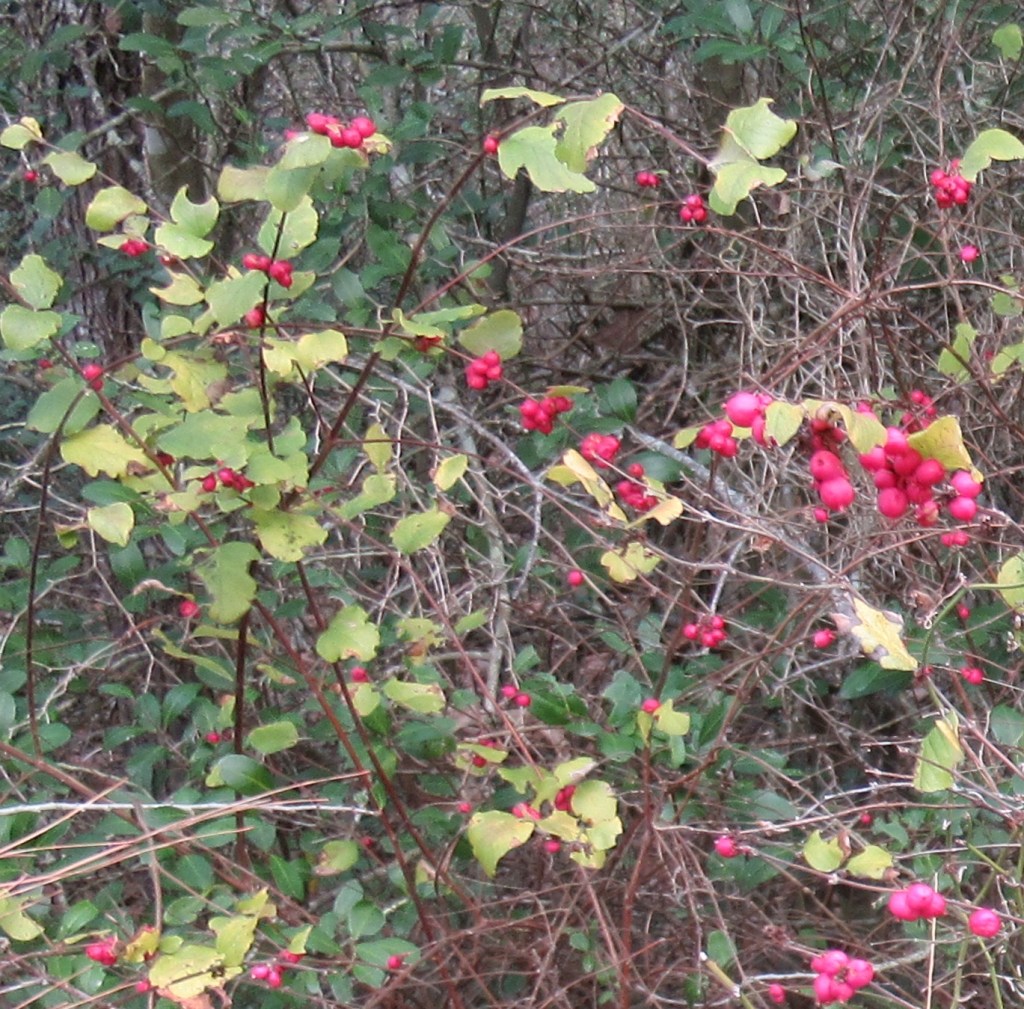
Eventually, I encountered an equally lost college student and her younger brother from Houston. We teamed up to find our way back to the park headquarters. Although not the ideal situation for nature talk, as we walked along I enjoyed answering their questions about the plants we passed and showing them interesting species such as soapberry, yaupon holly, and coralberry. I even pointed out feral hog, deer, and raccoon tracks for their edification. I realized how much I have learned by being a Texas Master Naturalist and iNaturalist addict since that 2013 visit to Lake Somerville.
Coralberry
My hike about the park took a bit more time and effort than I had planned, but was certainly worth the experience. Perhaps our chapter members can hike Mother Neff or another state park together New Year’s Day 2022. I will certainly appreciate some companions to guide and direct my steps.
On Tuesdays for the past month, several El Camino Real Texas Master Naturalist members have met to explore nature in several public locations in Milam County. The sites have ranged from a roadside historical marker to a manicured downtown lot. We’ve been careful to follow current guidelines, by wearing masks when we are closer than six feet apart, and not gathering in numbers over ten.
We have not made an earth-shaking discovery, but we have seen some interesting organisms. The past week, we observed at four Rockdale locations: Veterans’ Park, Skate Plaza, George Hill Patterson Civic Center, and the Fair Park.
Catching an elusive insect.
On a large “spineless” cactus, we found dozens of cactus bugs (Hesperolabops gelastops). A large Chinese tallow tree had a leaf-footed bug (Leptoglossus sp.) resting on its bark. An elusive beetle had to be ferreted out from the vegetation to which it had escaped during a photo session. It turned out that Catherine Johnson is a tenacious and successful bug hunter.
Cactus bug
Leaf-footed bug
Several in the group are interested rocks and geology. Debra Sorenson noted the iconic petrified rock and sandstone pillars at the Fair Park entrance.
Deb enjoys petrified wood used at Fair Park.
Farther into the park, I observed my first gomphrena weed (Gomphrena serrata) and Spanish gold (Grindelia ciliata) in Milam County.
Spanish gold
Gomphrena weed
However, our park investigations are not just about nature. It is not just about recording and sharing the species we see. Our gatherings during the past month have been bright spots: Time I spent outdoors with other folks who find joy in learning and exploring new and old places.
We shared our time, thoughts, and experiences with each other. My most memorable moment of our last park survey session was not a bug or a plant, but was when we paused at the new recently dedicated granite markers installed at Veterans’ park next to the city swimming pool.
War is hell.
Our thoughts turned to those who had served in wars. One shared their father’s experiences during the D-day invasion. Another shared their father’s thoughts about the atomic bomb. My own father never spoke of the war. The time we spent at the site was solemn and memorable. That semi-circle of granite markers fulfilled its purpose. We had paused and honored our veterans.
So, I repeat. It is not just about nature. It is also the social (yet physically distanced) sharing of thoughts and experiences among a community of folks who appreciate the wonder and glory of our world. It is a reason I am a Texas Master Naturalist.
A couple of weeks ago, several ECR members visited three of the city parks in Rockdale.
Eric checks out the park up close
The first was Wolf Park, which is located on Main Street in town where the former American Legion Hall once stood. When we arrived, a crew was at work erecting the framework for a Christmas tree near the pavilion in the center of the lot.
Yard asters, still blooming
The closely trimmed city block has a border hedge of holly festooned with Carolina snailseed (Cocculus carolinus ). The lawn contains the usual scattering of straggler daisy (Calyptocarpus vialis), turkey tangle frogfruit (Phyla nodiflora), and yard asters (Symphyotrichum divaricatum). A couple of large lilac chaste trees (Vitex agnus-castus) and a bur oak (Quercus macrocarpa) are the landscape trees.
Carolina snailseed and holly
Leaving the busy scene at Wolf Park, we drove across the railroad tracks to visit Sumuel Park which was funded in part by a Texas Parks and Wildlife Department grant. It has a splash pad water feature (unused this summer due to COVID), a playscape, picnic area, walking trail, basketball half court, restrooms, and free WiFi.
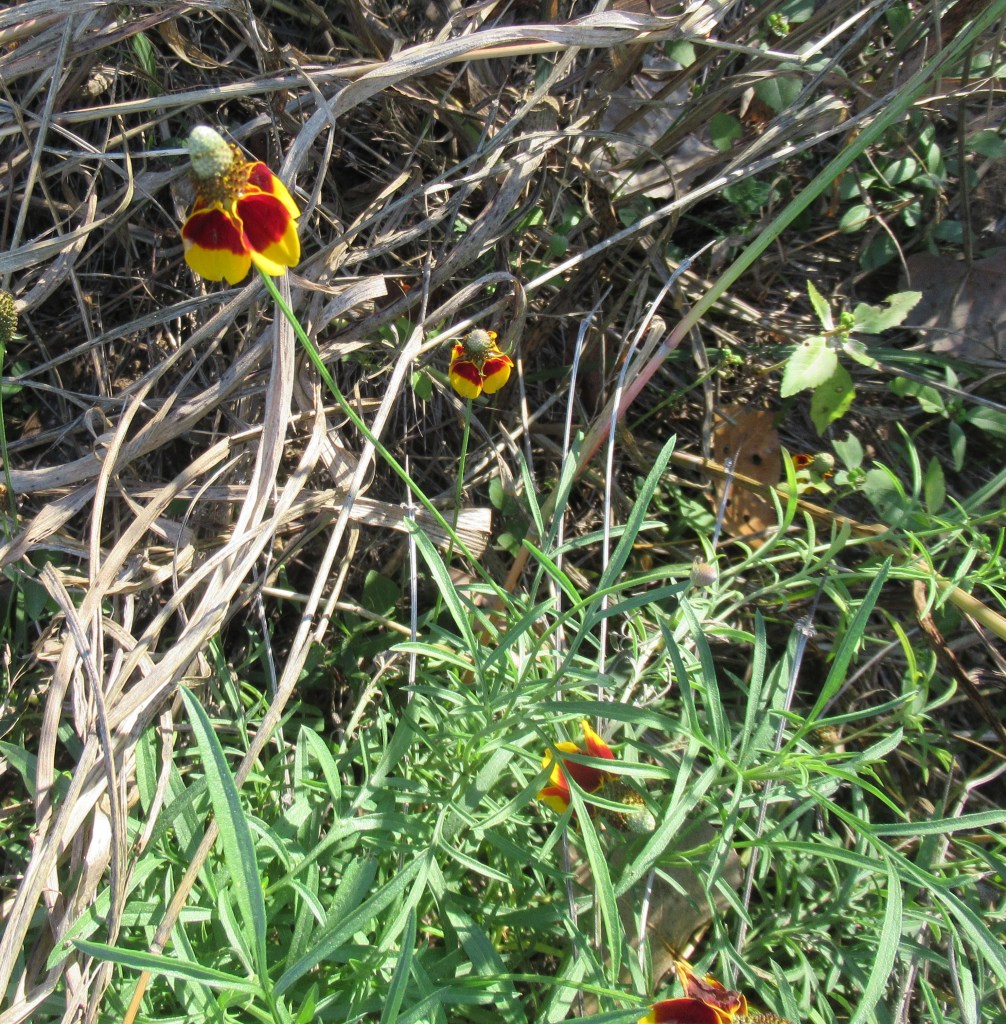
Upright Prairie Coneflower
There was a bit more nature to observe at this park, including upright prairie coneflower (Ratibida columnifera) and buttonweed (Diodia virginiana) in bloom. A black vulture (Coragyps atratus) watched our activity from a nearby tree.
Black vulture keeps watch
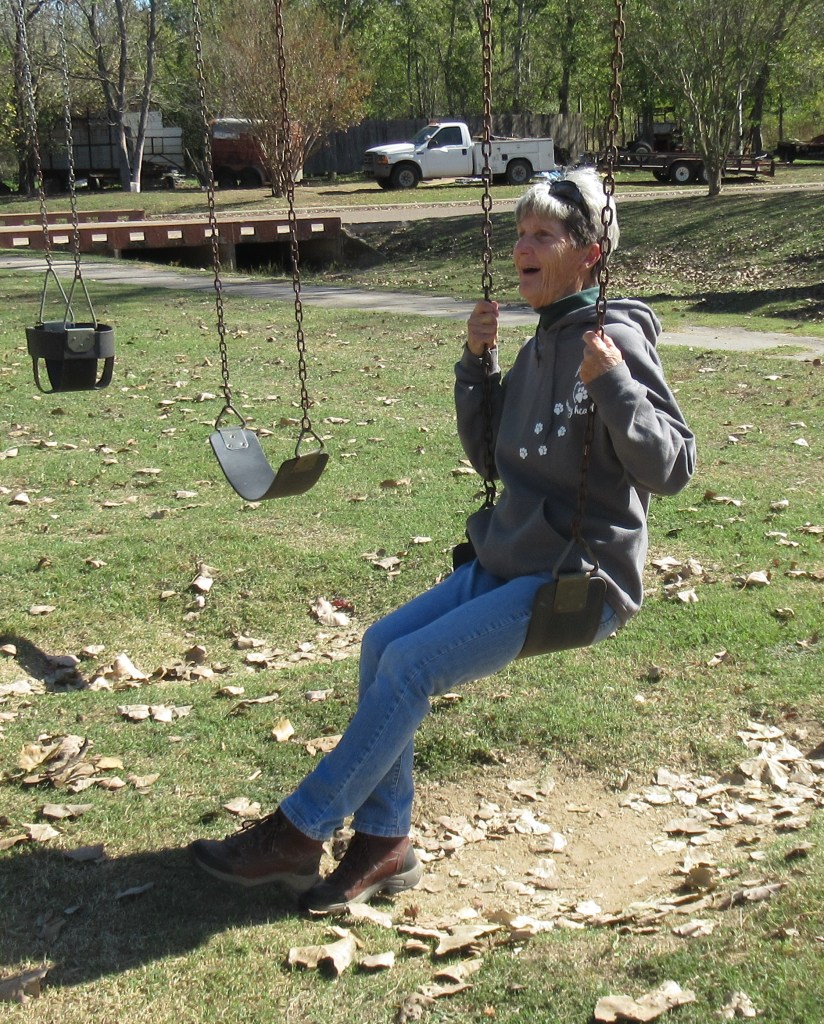
While Eric Neubauer captured another image of a grasshopper, Donna Lewis tried out the swing set.
Master Naturalists know how to have fun!
I suppose the high point of the visit to this park was our discovery of an enormous cottonweed tree. ECR nature explorers Debbi Sorenson, Donna, Scott Berger, and Eric physically distanced themselves around the tree for a photo to show its size. It turned out that this tree had already been noticed by our ECR chapter. You can read more about this towering cottonwood on our ECR website: https://txmn.org/elcamino/chapter-projects/special-projects/big-trees-of-milam-county/ .
That’s one amazing cottonwood!
We traveled on to Moultry Park, located behind the former Aycock School on Baxter Street. The park was being enjoyed by a mother with her young children when we arrived. A spacious area, it contains a basketball court, baseball field, and restrooms.
Buttonweed at Sumuel Park
This park visit was a sobering and disturbing personal experience for me. The adjacent brick building, used by various community organizations until a 1993 fire, remains in ruins. I could literally hear the echoes of children chattering in the hallways, chalk screeching on the blackboards, and bouncing balls in the gymnasium.
Orange Sulphur butterfly
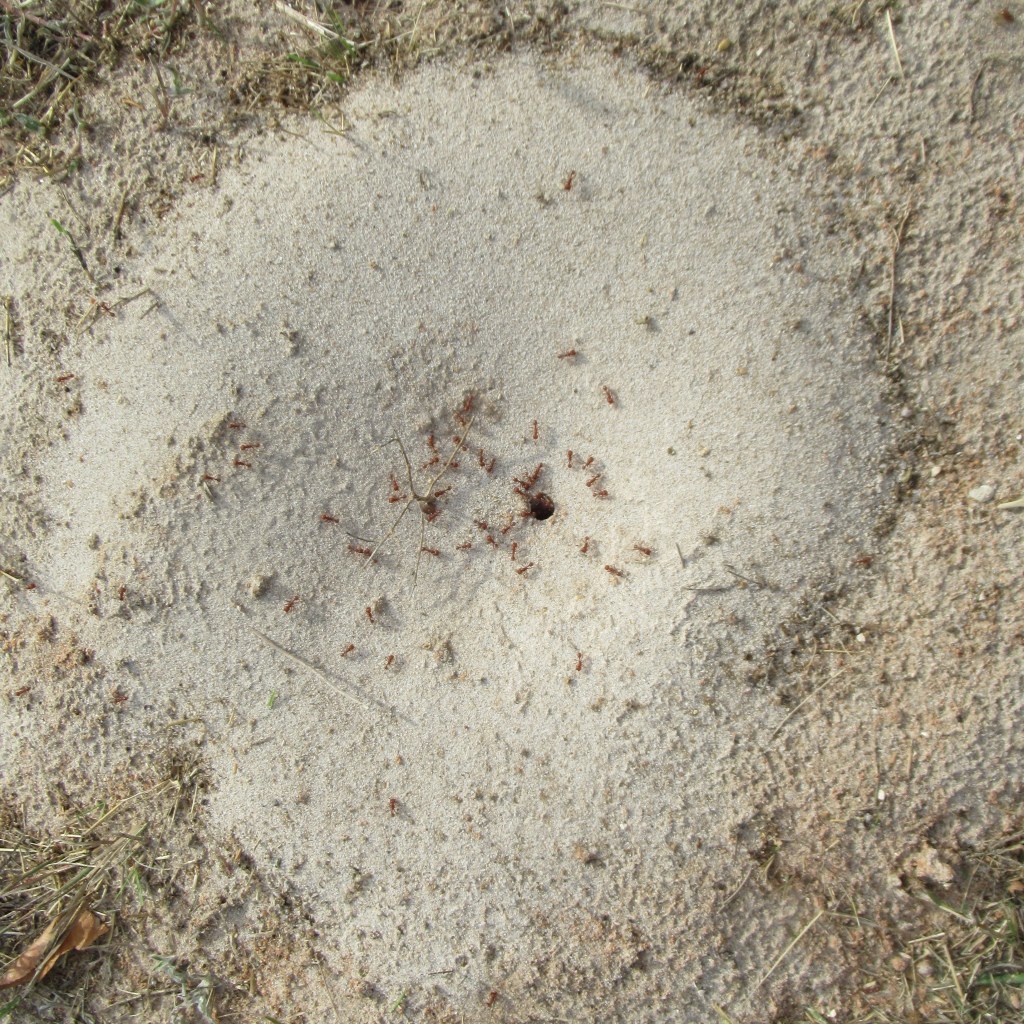
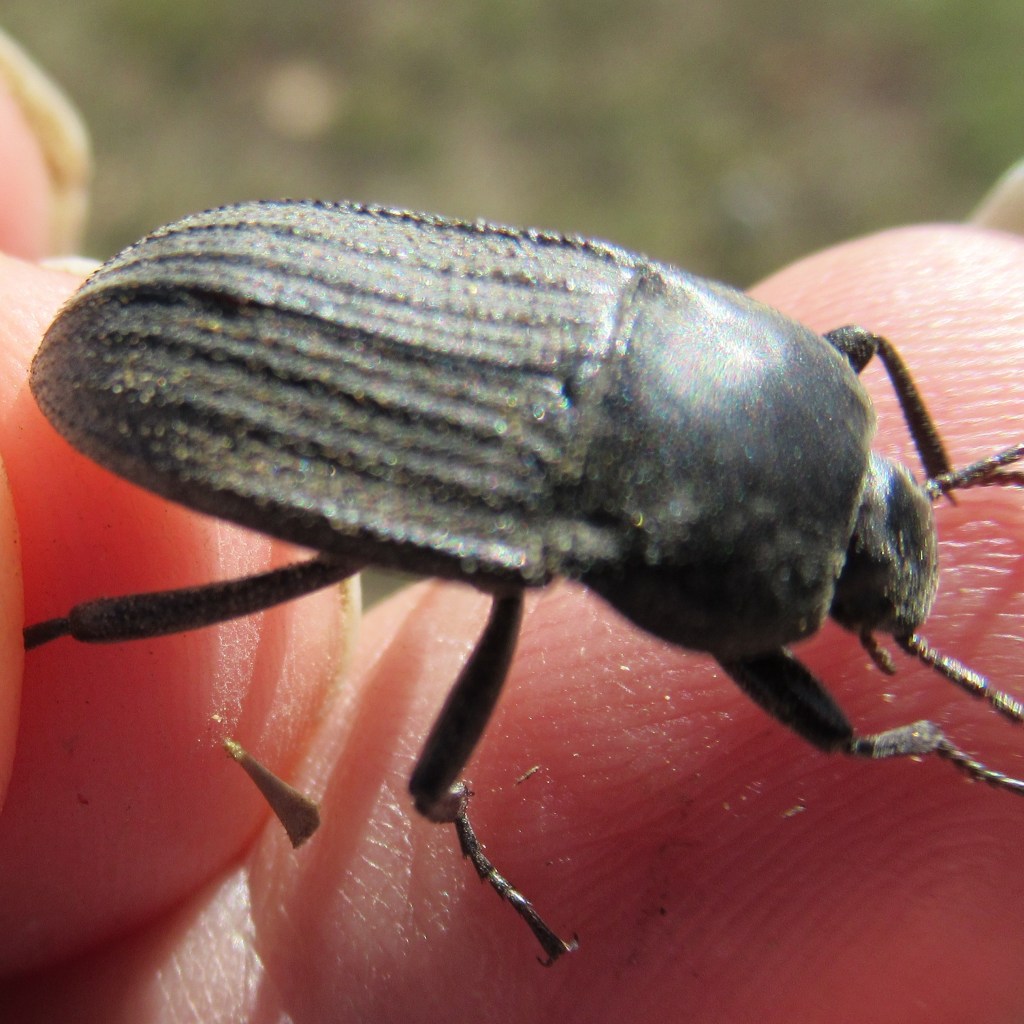
We did observe some interesting species in and around Moultry park: an appropriately named three-ribbed darkling beetle (Eleodes tricostata), a flighty orange sulphur butterfly (Colias eurytheme) visiting a camphorweed flower (Heterotheca subaxillaris) and several mounds of harvester ants (Pogonomyrmex sp.).
Hooray! Harvester ants!
The area is a perfect habitat for horned lizards.
The darkling beetle
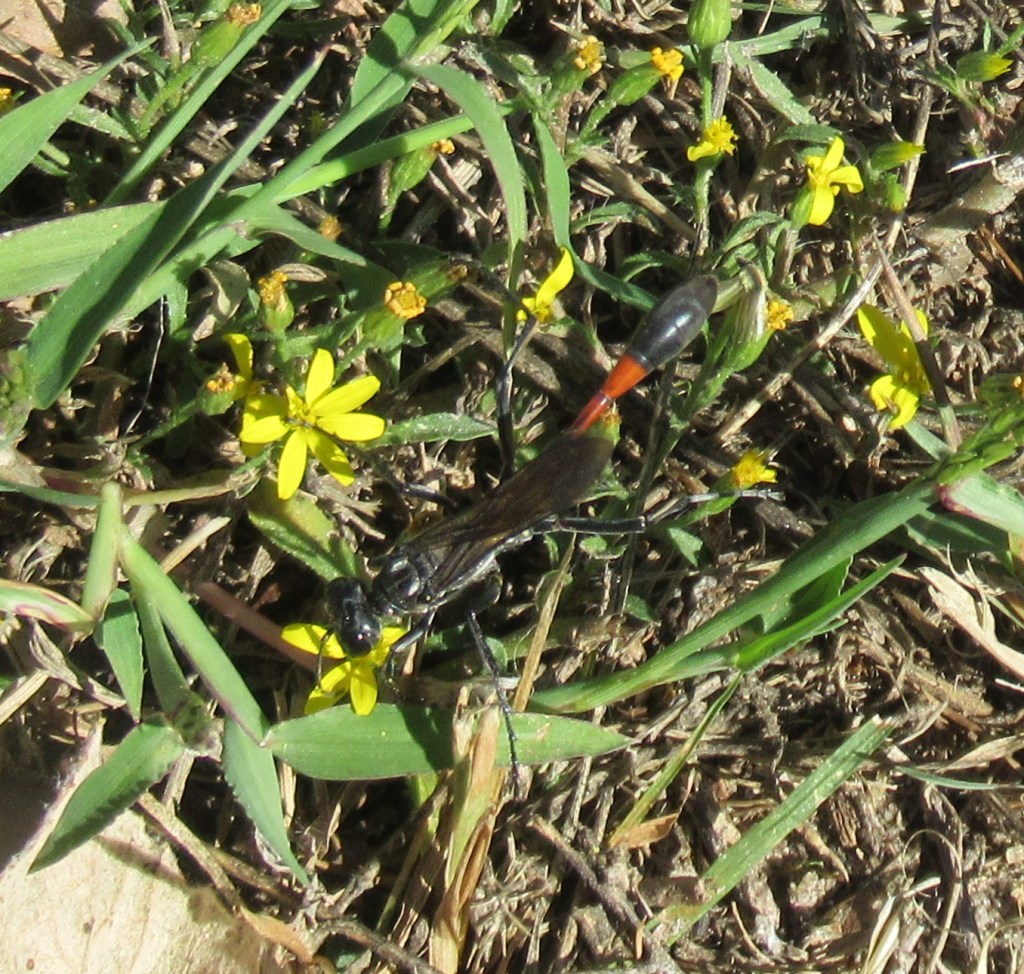
Eric stalked what he has identified as a common thread-waisted wasp (Ammophila procera) until we were both able to take photos of the large wasp.
The big wasp
He also graciously pointed out a couple of grasshoppers (Melanoplus sp).
One of the many grasshoppers Eric spotted.
After some unexpected and serendipitous happenings at the park we headed to our homes for the day. A good time was had by all. I think. You will have to ask Donna about that.








 Nature Along the El Camino Real