Hummers Have Arrived

by Donna Lewis

At last, our tiny hummingbird friends have returned from down South ole Mexico way. It is hard to believe these little jewels are real living beings. A miracle for sure.

Tiny, but mighty. The two main species that visit Central Texas are the Black-Chinned and the Ruby-Throated. Both only weigh 0.1 ounce each. There are several other species that can be in our area also, but these are the most prevalent and easy to identify. They can beat their wings approximately 75 times per second! Yes, I said second, not a minute. WOW!!! I can’t move anything that fast.

Black-chinned Hummingbird. Photo by Mike Kit on Pexels.com

The males usually arrive first and get ready for the ladies to arrive soon after.

These birds drink nectar and eat insects. The plant they like the most for me is the Coral Honeysuckle. Turk’s Cap is another favorite bush.

Ruby-throated Hummingbird. Photo by Skyler Ewing on Pexels.com

Let’s talk about the human feeders we love to put up so we can watch them and assist in times of stressful weather events. There are some rules to follow so the nectar is safe.

Use regular white cane sugar. One part sugar to four parts water. I use our well water because I am in the country. No need for me to boil anything. If you are in the city, you probably should boil it. The feeders are usually red; do not use dye.  You can tie a red piece of cloth or ribbon if you need to. Year to year in the same place, the hummers will remember where they are.

Here is the MOST important thing of all.  Always change out the sugar water every three or four days in hot weather, or simply every time. The sugar water will ferment, and the bird will become drunk, and many will fly into a window or door and break their neck.  Very sad.

If you can place the feeder under some cover to shade it, that helps.

Cats and snakes like to get our friends, so try to keep them where they cannot be reached. Everybody has to eat.

So get your feeders up, clean them with soap and water every few times and watch a little amazing bird show off its flying skills for you.

Remember who you garden for.

Wild Wings Bird Sanctuary Update: Hummingbirds, Caracaras, and Bird Baths

by Ann Collins

The Hummingbirds

I bribed my little sidekick (not really so little at a bit over six feet and weighing well over two hundred pounds. Anyway, he’s my baby boy, so he will always be “little” to me) to drive me out to Wild Wings Bird Sanctuary to refill the hummingbird feeders. Anthony/sidekick had hung the feeders and of course he “hung ’em high!” I couldn’t reach them, anyway!

The feeders had only a token amount of nectar, so it’s a good thing we went. When we filled them the week before, the hummers were all over them. no hummers were circling this trip. Just FYI, if you go out to the bird station and think the mix looks a bit off, please note that I do not use bleached sugar. If you have ever seen my sugar cane juice, you know it is a dark brownish yellow in color. The color doesn’t make a lot of difference as long as it isn’t colored red with Red 44. Please don’t ever put that poison in your nectar mix.

The hummers are migrating now, so please be faithful to keep your feeders clean and full at all times.

The Wild Wings Bird Santuary

Ruby-throated are the most prevalent in our neck of the woods, but Black-chinned might visit if you have a more open area. You could see a Rufous during migration if you are so blessed.

The Caracara

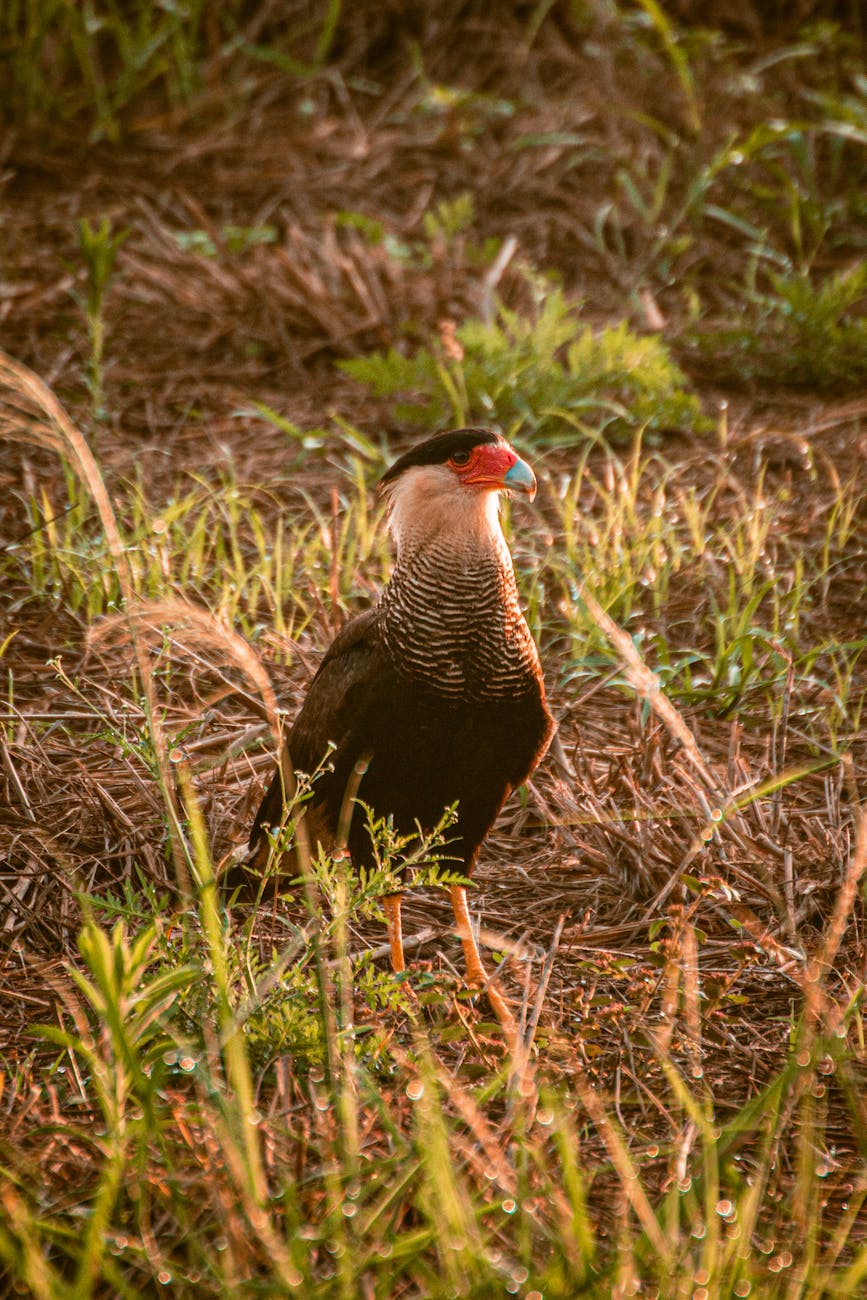
Just before we turned in to Bird and Bee Farn, there was a Crested Caracara perched on the side of a cattle water trough across the road. He posed nicely for us. I say “he” but there is no difference between the sexes. The juveniles are brown with no distinctive white markings.

When we arrived at the gate to the bird station, a caracara came sailing in. There was another one in one of the tall oaks, and “he” can flying out, so we got to witness a bit of a back-and-forth chase. So special! They really are magnificent creatures, even if they do enjoy some freshly killed carrion.

Caracara. Photo by Felipe Gonu00e7alves on Pexels.com

Locally, some folks call the caracara a “Mexican Eagle.” Sorry, but they are not related to eagles at all. In fact, they aren’t related to hawks, falcons, or vultures, either. They seem to be in a class by themselves. They are birds of prey, so I guess that means they can kill if necessary. They are frequently seen feeding with vultures, so maybe they are opportunistic of just plain lazy.

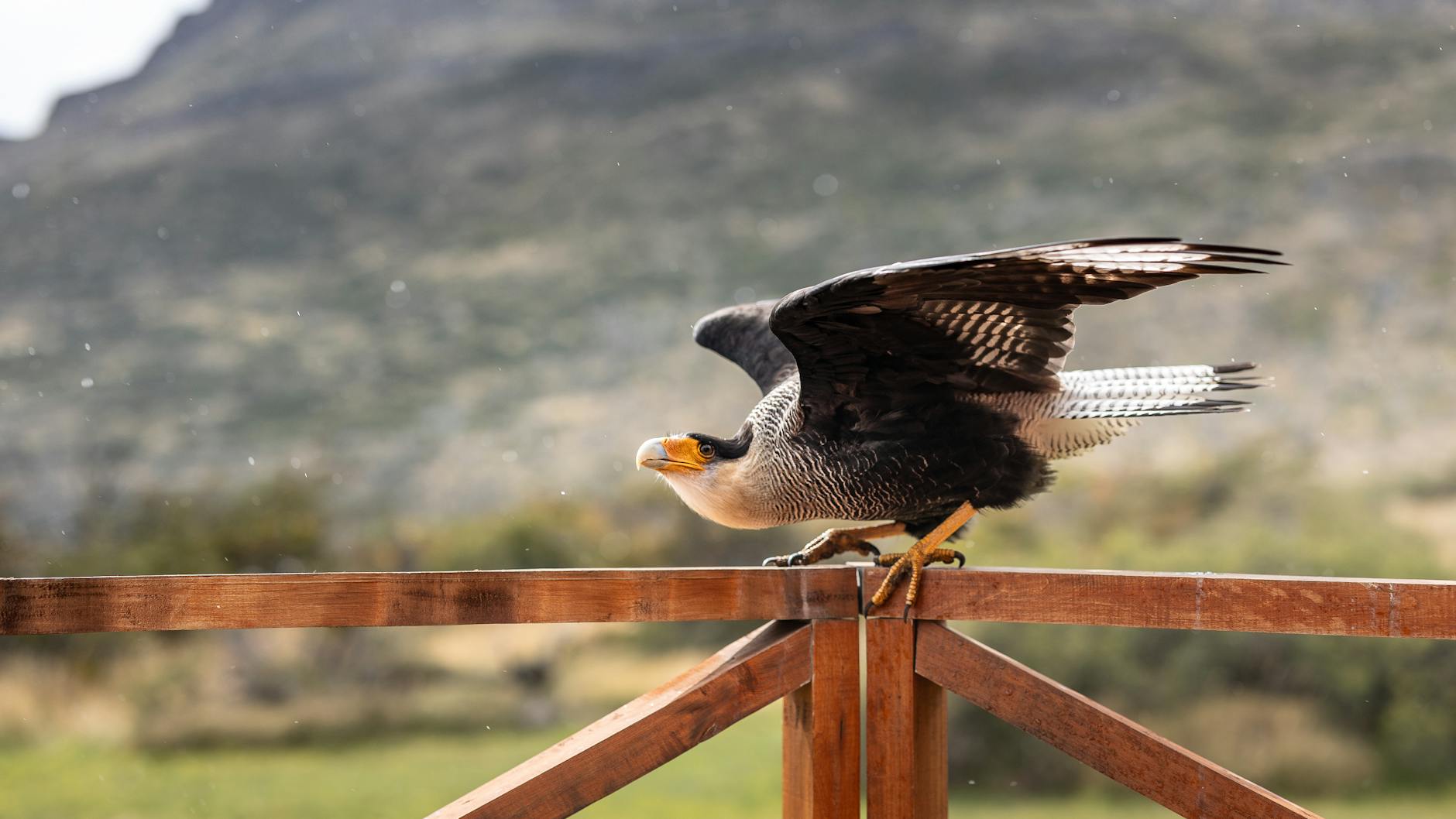
They are regal birds, for sure. Photo by Marek Piwnicki on Pexels.com

A black crest adorns their heads and part of their beak is orange-red, giving them the appearance of having a red face. The chest, tail, and wing tips are white, so they are often descrivved as “white on all four corners.” They are the only species of caracara in the US, but there are probably more to the south of us.

The Bird Bath Saga

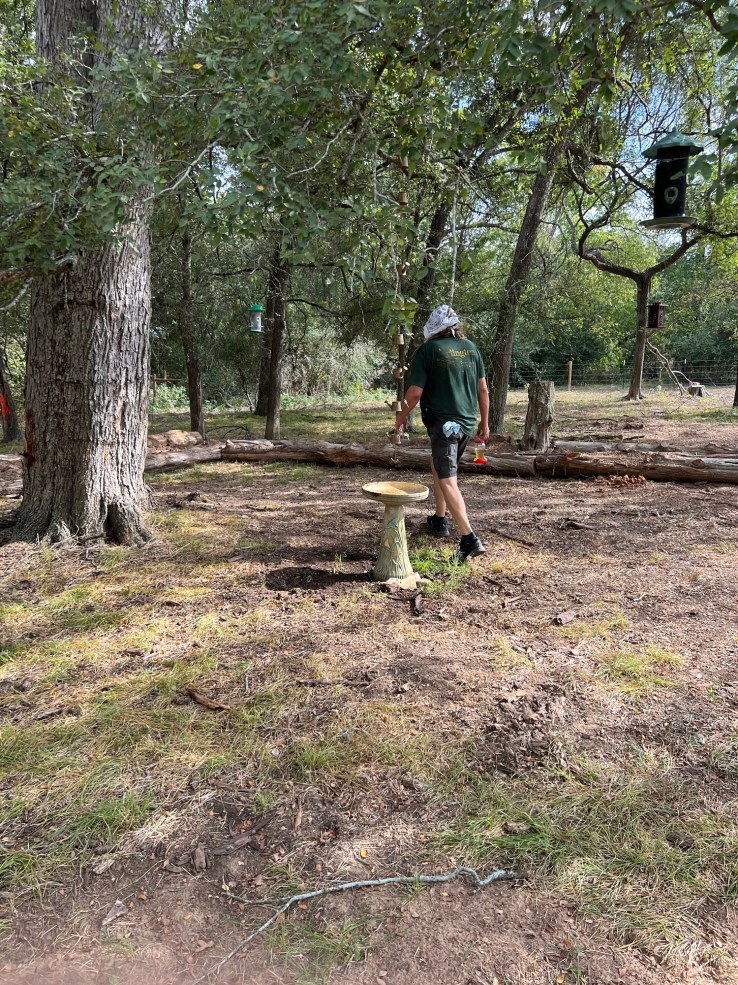
There is a lovely little bird bath at the santuary that the rain chain drips into. We had hoped to be able to keep a steady drip for the birds to have a safe souce of water for drinking and bathing. It’s barely a couple of inches deep, but the heifers or raccoons think Gene put it out exclusively for them. Sadly, they dismantle it and knock the bowl on the ground so that the rain chain just makes a damp spot on the ground. Cindy and Catherine have been diligently seeking a larger, heavier one to put in its place. Lots of dead ends and “sorry, you’re too late” have put quite a damper on the search. Of course, we want one cheap or free.

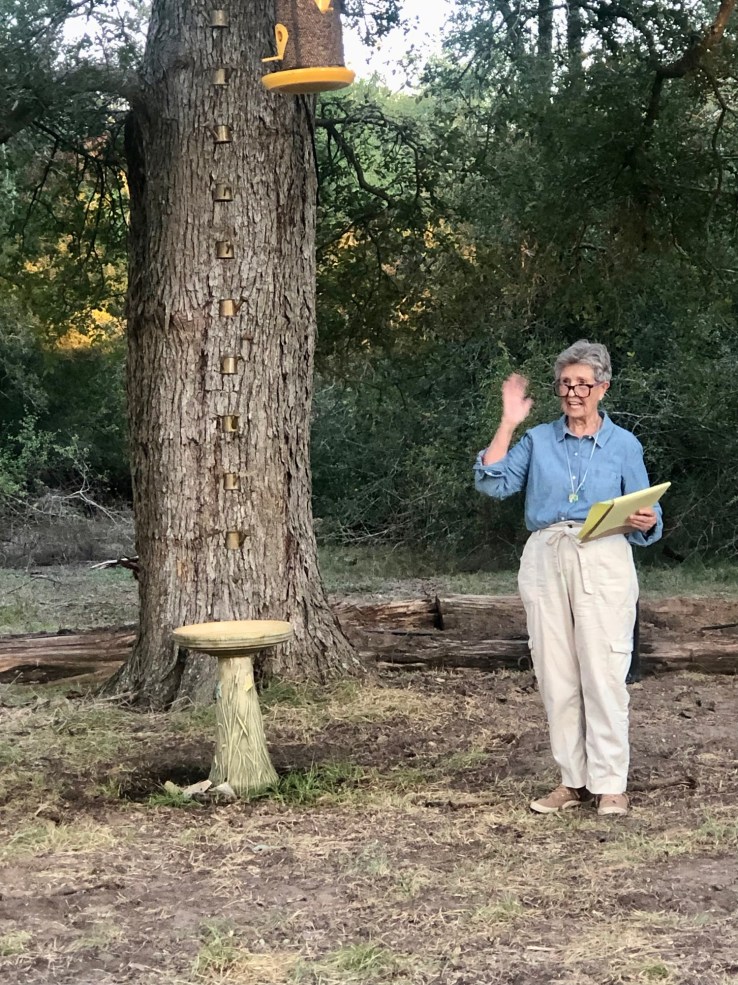
Ann with the original bird bath.

Update: I just heard from Cindy, and she actually has one for us! Yay! Good job! I know the birds will be happy, too. Pay attention to their tweets for the next few weeks.

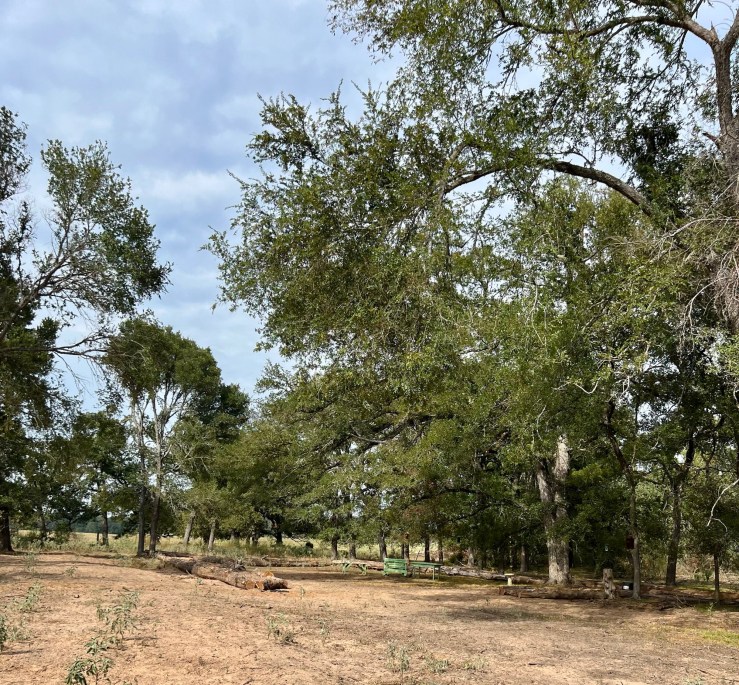
Please come for a visit and sit a spell. Even if the birds are still shy, there is always a cool breeze and blissful quiet.

Summer Hummers

by Donna Lewis

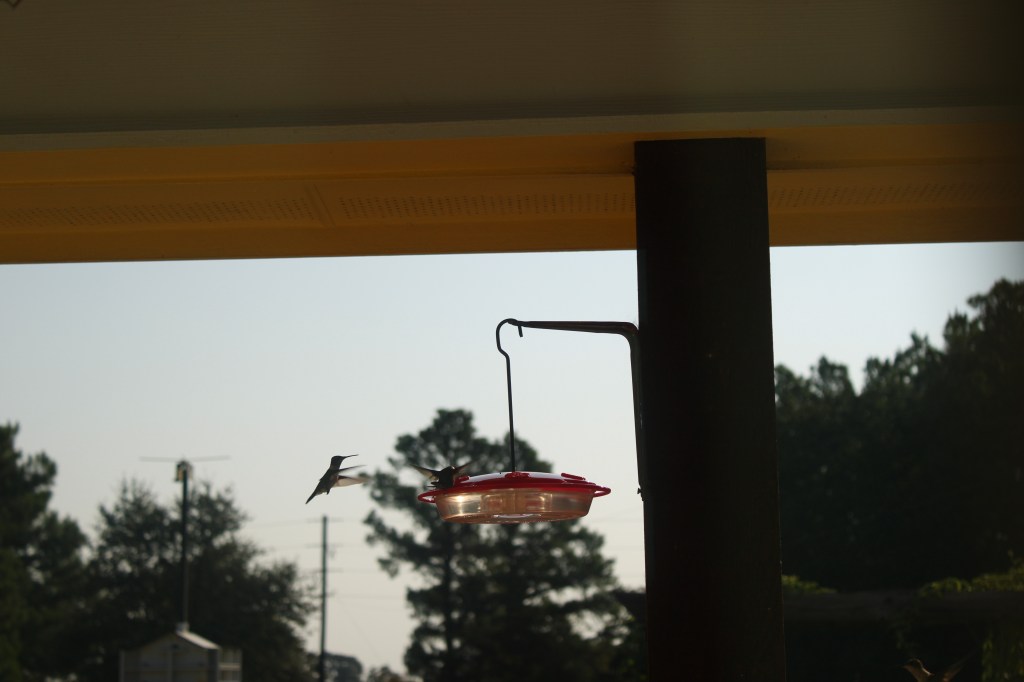
Here we are at the close of summer and we still have 100-degree temperatures. I maintain my hummingbird feeders year-round. In this heat, I change out the sugar water every third day.

This morning I had a nice surprise!  I looked outside on our front porch and saw about 8 Ruby-throats trying to run each other off the feeder. Hummingbirds do not share very easily.  They must have to talk to each other first and come to an agreement before they all land and take a meal together.  Always competitive.

Out in the yard there are not many plants with nectar that are still alive. This drought has been very hard on all our wild friends, not just on us.

We have air conditioning and grocery stores; they have whatever didn’t die or dry up. Somehow, they manage each year to survive another season in Texas. I hope they always will. Need will find a way.

Remember to clean the feeders, change the water often and put the feeder under shade if possible.  If the water is not changed and is left out under the sun, it will become more like a hot toddy than a cool refreshing drink. Just a little care by humans will go a long way to helping out our tiny little winged friends.

I was lucky enough to attend a hummingbird banding years ago.

I paid the fee to adopt one at the event.  So, when a hummer was being released after it received the tiny lightweight band it was placed in my open hand. It stayed in my hand for a few seconds and flew up and away.

I have to say, it was so moving that I actually cried from the experience.

Its heartbeat and it felt like a bond was forged at that moment. I am sure it was scared, so I hope it got over that quickly. I would never harm an animal. Its band will help scientists follow their journey through Mexico.

Remember who we garden for…

Hummingbirds: Feeders Aren’t Necessary to Attract Them

by Carolyn Henderson

The only time that I find being outside tolerable during this long heat wave/drought is early morning or late evening. I think Hummingbirds agree with me. And I don’t feed them intentionally. 

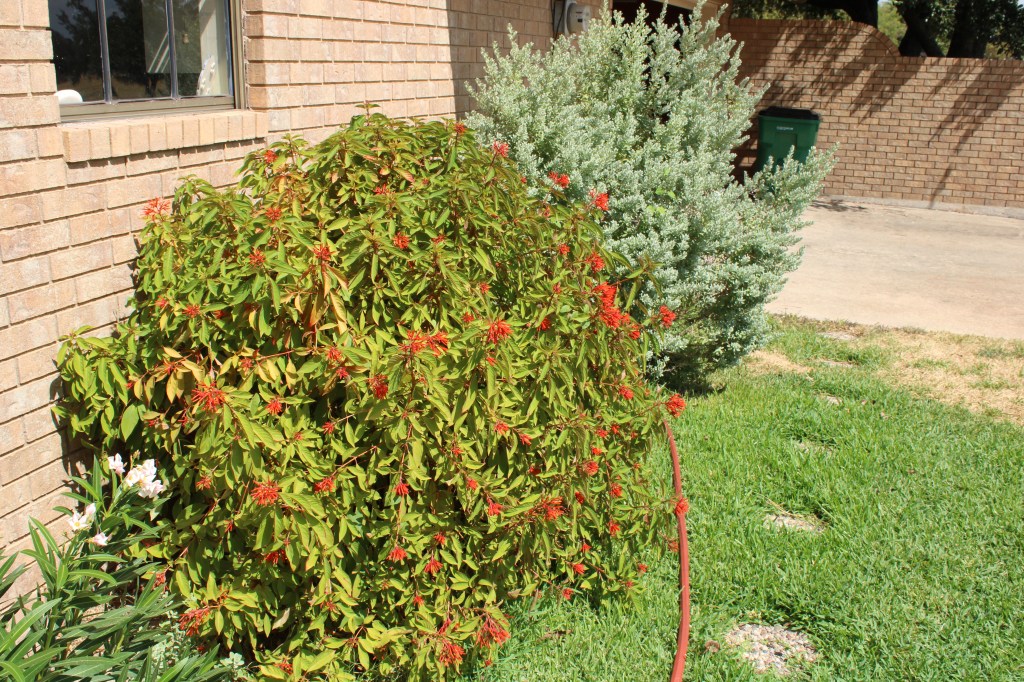
I stopped putting out bird food of any sort several years ago after I saw my sometimes-outside cat, with a Hummingbird then a Yellow Rumped Warbler in his mouth. I decided to limit his pickings as much as possible. However, I did plant a Mexican Honeysuckle bush from the El Camino Real Texas Master Naturalist Wildscape, and I also have a Fiery Hummingbird Bush (also called a Fire Bush) that was here when I bought the house. They both are in full bloom now, and Hummingbirds and several types of butterflies are very fond of feeding on them. The multitude of wasps that I have nesting at my house like them, too. 

These two bushes, my Crape Myrtle and a couple of Mexican Hats are all in bloom now. These plants are heat wave tolerant, feeding birds, butterflies, Western Honeybees, and three types of wasps. I only see the Hummingbirds in the very early morning and evening. They come in groups of three to four. I believe they are the Ruby Throated version. Three of them have white undersides and one, that I finally got a photo of this morning, looks to be Ruby Throated (according to iNaturalist). I’ve been trying to get photos of them for a few weeks, but I never have my camera ready at the right time. It seems that if they see that I have seen them, they head for the tallest trees. 

Hummingbird zooming in on Fiery Hummingbird Bush

The Crape Myrtle, which bloomed late this year, attracts mostly wasps and honeybees. I normally have a Texas Purple Sage in bloom that the bees really like, but it has not put out more than 5 or 6 blooms a few times. The Mexican Hats are just about done for the year. Luckily for the feeders, the Mexican Honeysuckle Bush and Fiery Hummingbird Bush bloom until it freezes – which may not occur this year. 

I must say, being able to watch the birds and butterflies eat without having to frequently clean out the feeder is nice. They really like my new bird bath, too. They, along with Robins, Blue Jays, Doves, Cardinals, and Mockingbirds have become very fond of it. They drink it and cool themselves off in it. 

The Guardian

by Donna Lewis

Hummingbirds do not like to share their nectar flowers or the feeders they claim for their own. Right now, I have about four to five Ruby throated hummers hanging around.   They are most likely heading back south of the border. The plant they like the most in my garden is the coral honeysuckle.

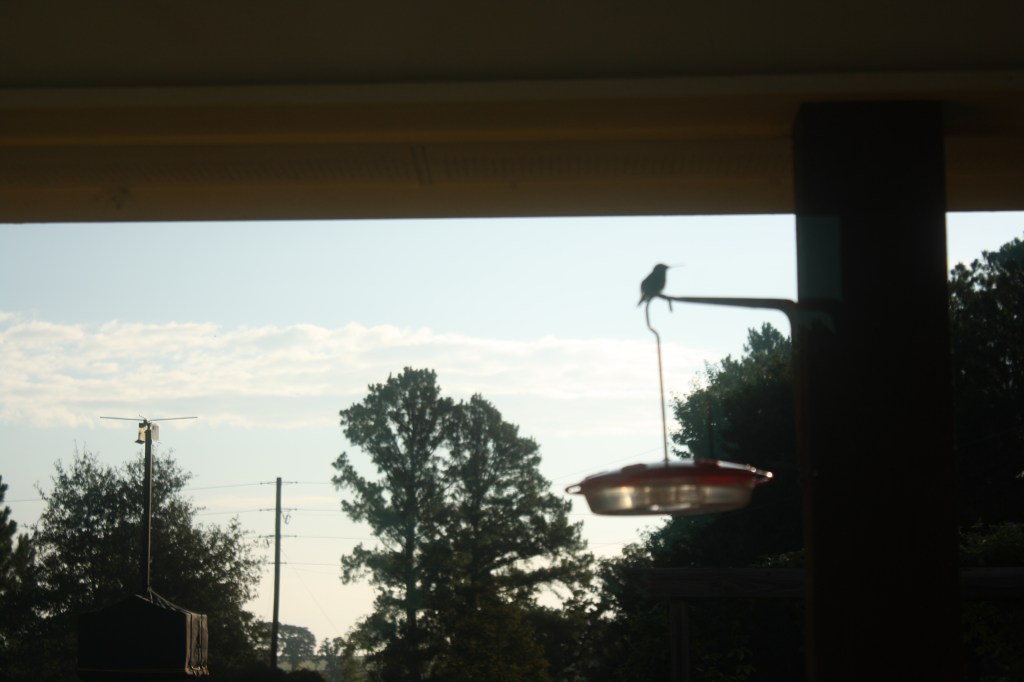
But when it comes to the feeder, one little guy will not let anyone else have a sip. He sits on top of the L bracket that holds the feeder on our front porch.  He sits there all day until dusk. I’m sure he spends more calories protecting the feeder than he would if he would just share. Somebody’s mother needs to have a talk with him.

I tried to get a good photo, but I am shooting through the glass window, so it’s not the best photo.

The butterflies in my garden also protect their flowers from the hummers. They try to run the hummers off.  And they do a pretty good job of it.

What happened to, “We are family, I got all my sisters with me?”

So funny. Who are we gardening for?