The Elusive Texas Star in Milam County

by Sue Ann Kendall

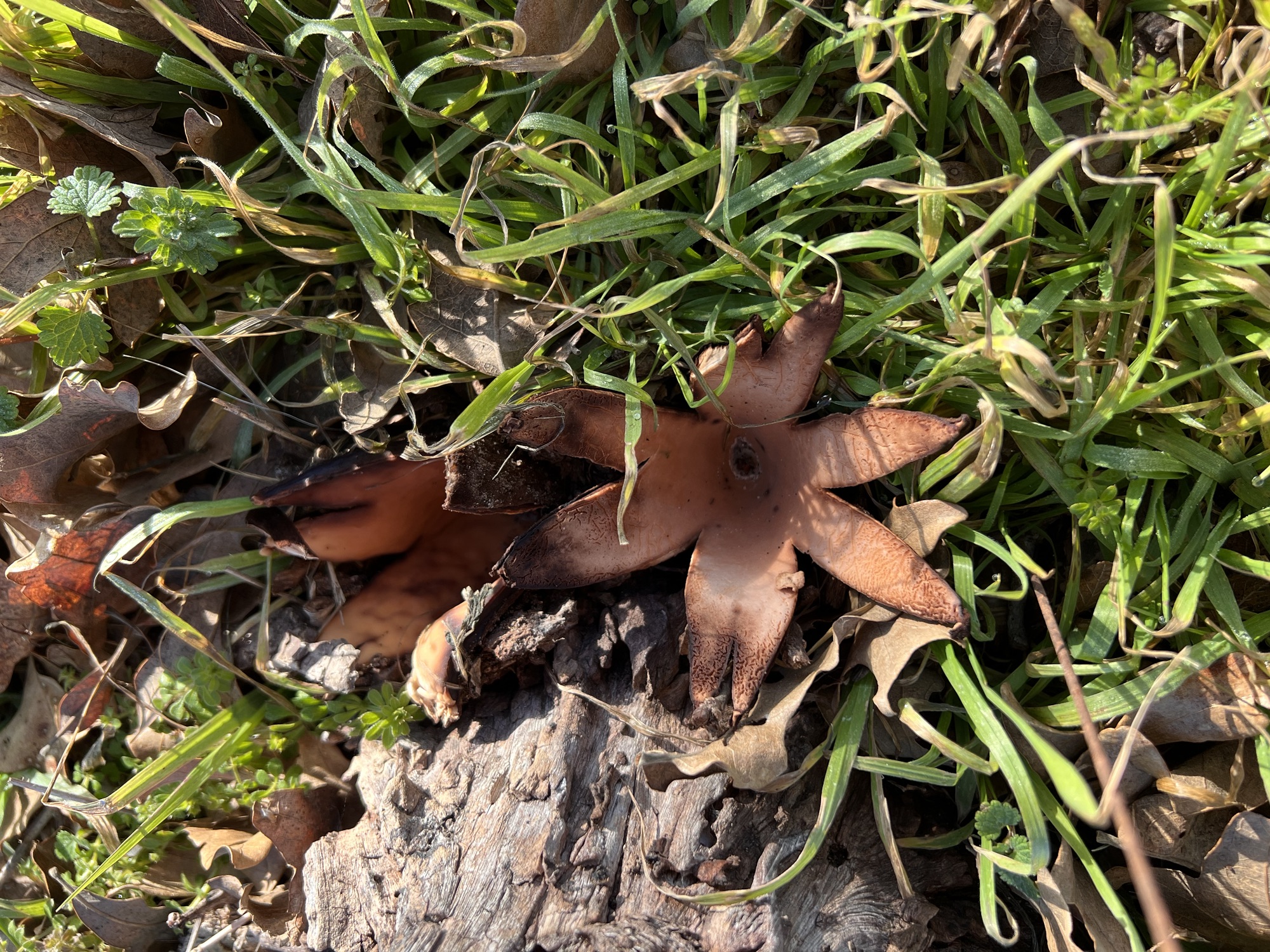
The State Fungus of Texas is the Texas Star (or Devil’s Cigar) (Chorioactis geaster). It’s not spotted often, so wheneever you see it, it’s newsworthy. When it was spotted for a second time at Inks Lake State Park last December, it made the news all over Texas. This is just one of the articles. There’s also an article on them in this month’s Texas Coop Power magazine. So, when my neighbor Vicki sent me a photo and asked me if I’d ever seen anything like this before, my heart skipped a beat.
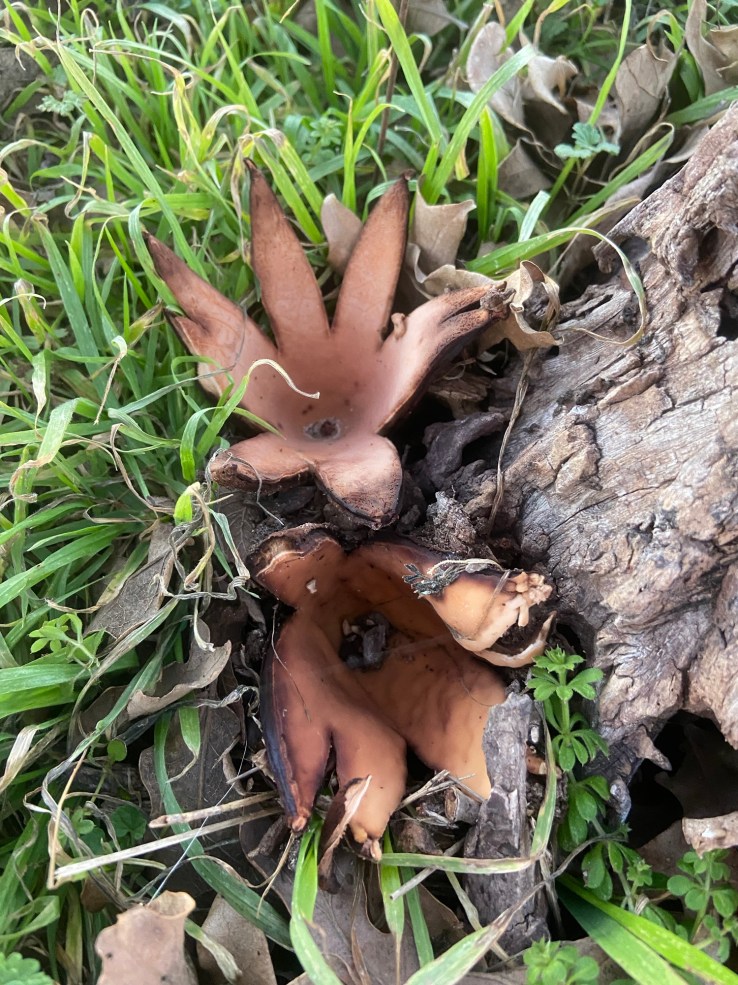
I knew exactly what it was!

I told her it was rare and exciting. She looked it up, and we both geeked out over it for a while. The next day I went over to her property to get a look (I’d also hoped to pet her minature horse, but she was in the next pasture.) The mushroom was in a field of post oak trees, which confused me.

However, when I got closer to the spot where the Texas Star was located, conveniently flagged by Vicki, I saw it was exactly where it should be. It was right next to the stump of a cedar elm tree (that’s basically all we have, the oaks and the elms). We’d recently had a lot of rain, so it was fruiting right when it was supposed to.
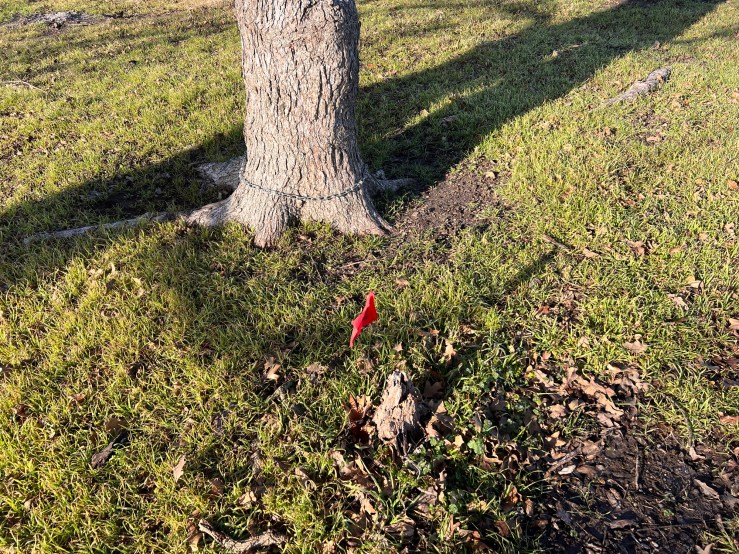
There it is!

As soon as I got my own photos, I uploaded the observation to iNaturalist, where it was quickly confirmed. It had already burst its spores out, so we missed the exciting hissing sound the Texas Star makes, but it was fun to feel its leathery “petals,” and see if it smelled funny (I couldn’t smell anything). I looked around but didn’t see any more on her property. I also looked at the dozens of cedar elm stumps in my woods, but no Texas Stars have turned up.

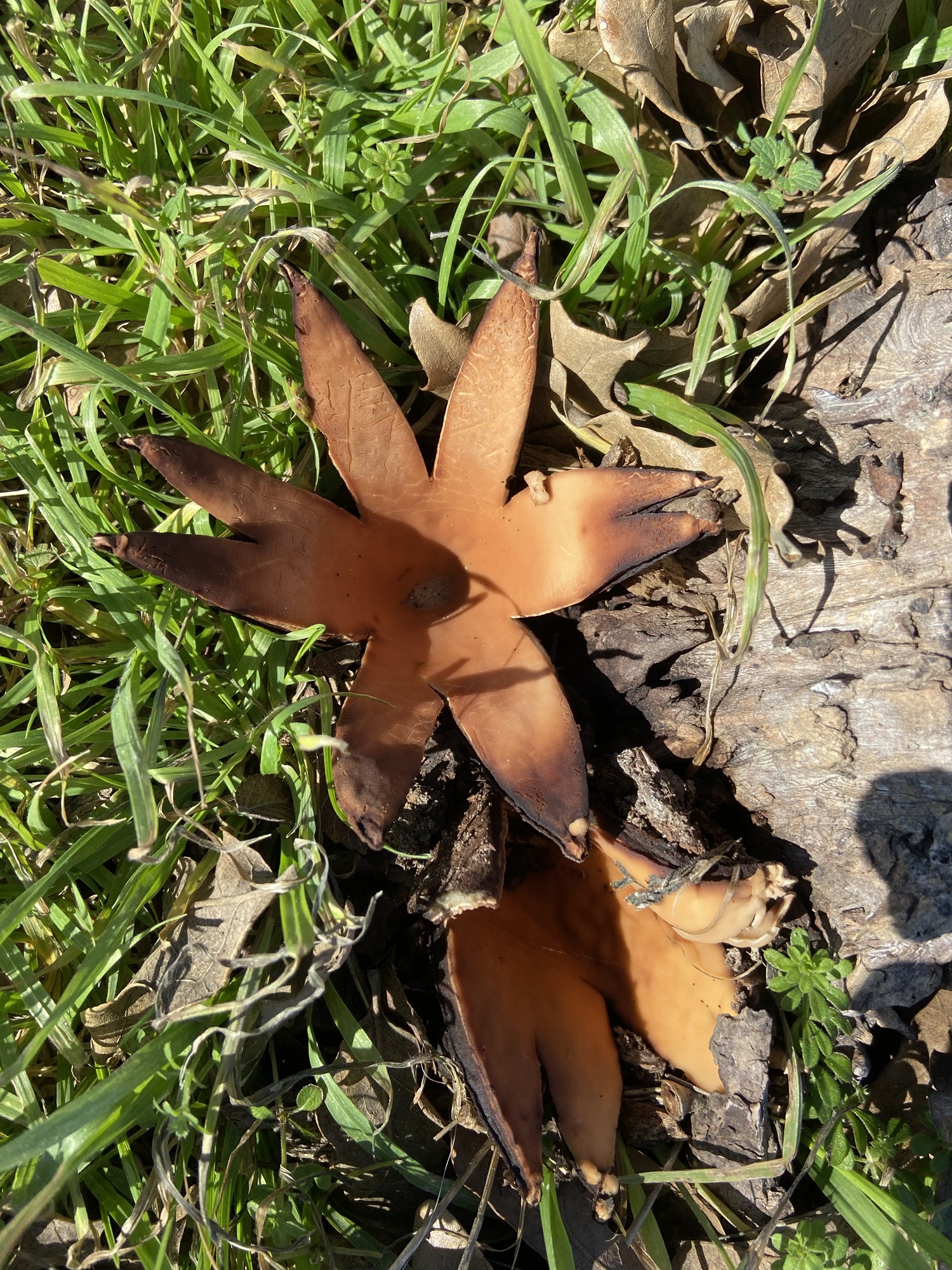
As I looked at the information on iNat and Wikipedia about the fungus, I learned a lot. First of all, I’m pretty lucky to live where it grows. It’s only found here in the middle of Texas and a small place in Japan. That makes me wonder if they are really the same fungus, but I’m sure professionals have looked into that.
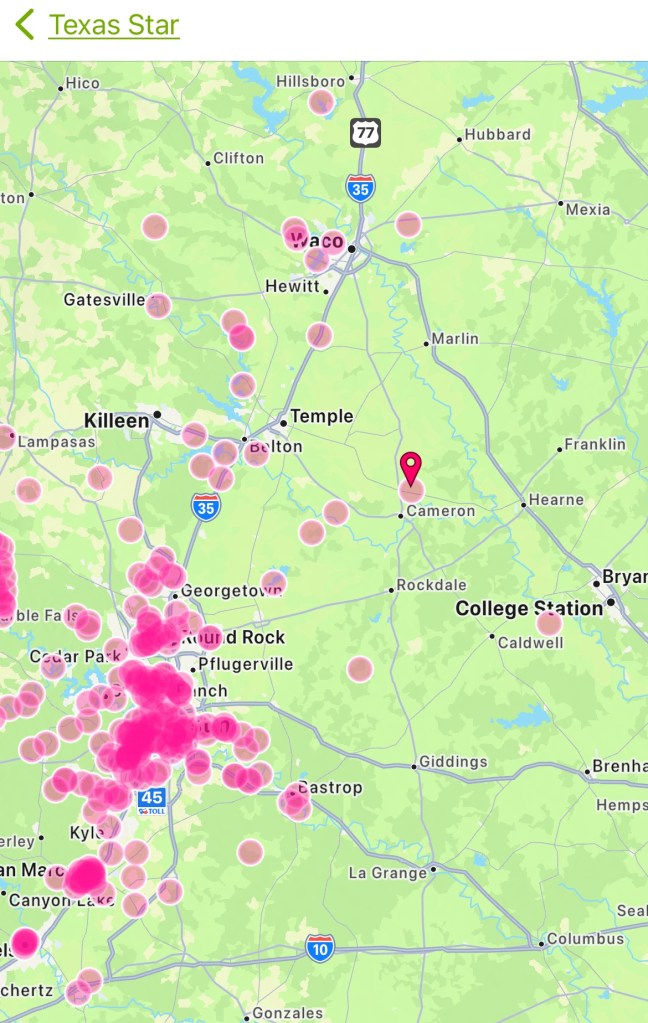
This iNat screenshot isn’t the whole Texas Star range, but it shows how few observations there are in this part of the world.

There were observations near Davilla and Buckholtz, but only the Davilla one was research grade, making my observation the second confirmed one in Milam County. And we are way to the east of its usual range. I was excited!
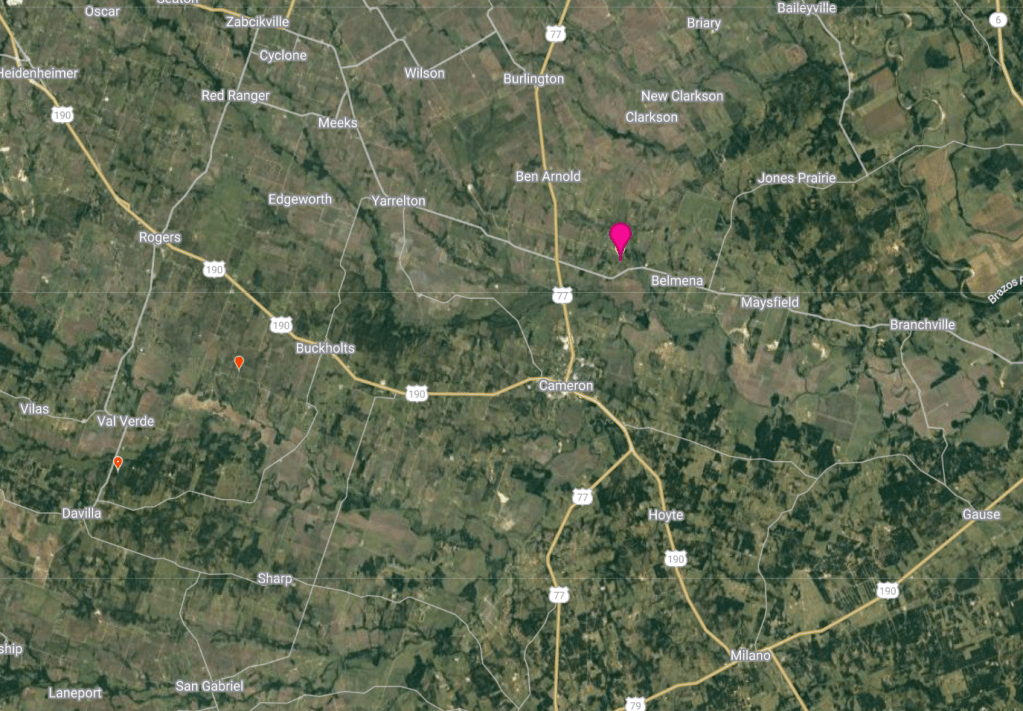
This map has most of Milam Couonty in it, and shows the three potential observations.

Keep on the lookout for these if you have decaying cedar elms (Ulmus crassifolia) and we have another nice rain (which I assume will happen soon). To learn more, read any of these articles:

The Rise and Fall of the Giant Earth Ball

by Sue Ann Kendall

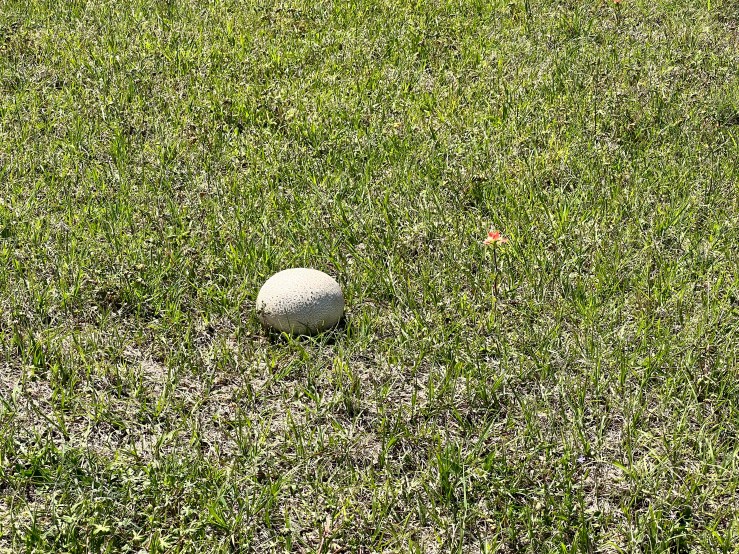
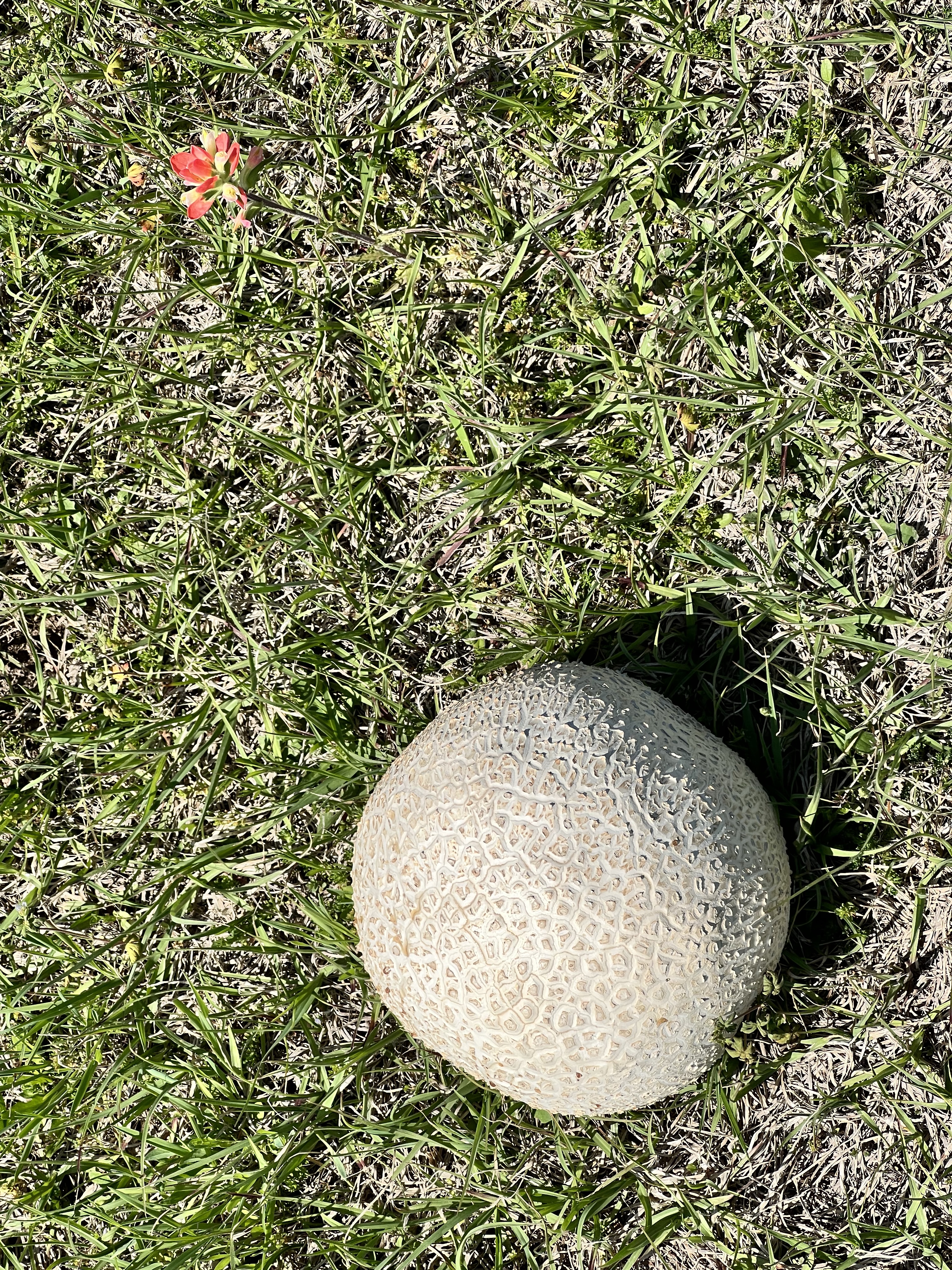
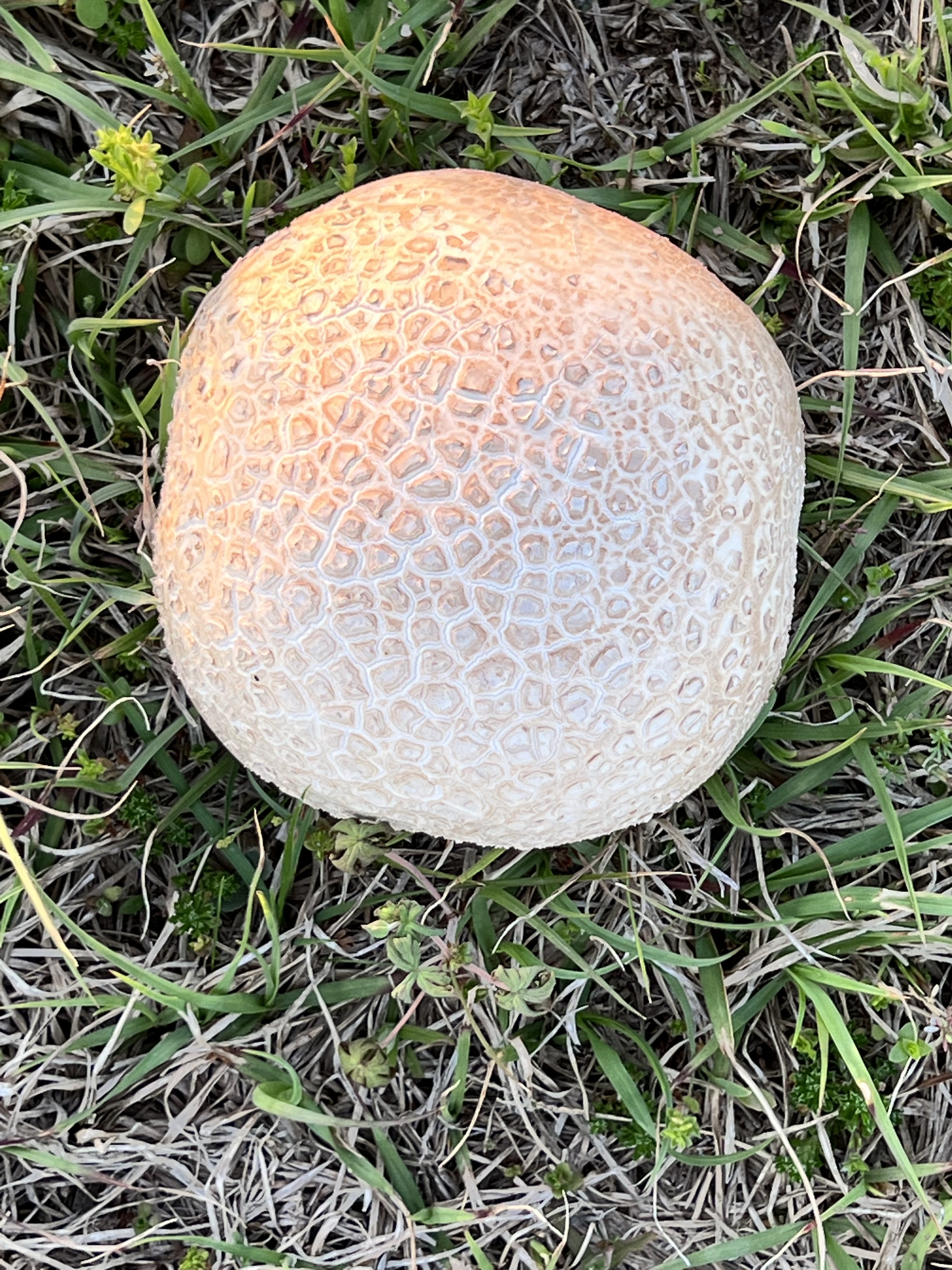
Sometimes it’s fun to observe a natural object over time. I tried this with a mushroom I found on my property, the Hermits’ Rest Ranch in northern Milam County. On March 29, I saw what appeared to be an egg in the field in front of our house. When I looked more closely, I realized it was a large mushroom. Of course, I photographed it. My whole family laughs at how I photograph everything.

The first day I saw it.

I dutifully went to iNaturalist and recorded my observation. I thought it might be a puffball, but it appeared to be a Common Earthball, Scleroderma citrinum. Sadly, no one has confirmed it.

Wikipedia tells us that it’s the most common of its ilk in both the US and the UK. I’d never seen one before, however. It sure was large. Here are some facts about the earthball:

Earthballs are superficially similar to, and considered look-alikes of, the edible puffball (particularly Apioperdon pyriforme), but whereas the puffball has a single opening on top through which the spores are dispersed, the earthball just breaks up to release the spores. Moreover, Scleroderma citrinum has much firmer flesh and a dark gleba (interior) much earlier in development than puffballs. Scleroderma citrinum has no stem but is attached to the soil by mycelial cords. The peridium, or outer wall, is thick and firm, usually ochre yellow externally with irregular warts.

Scleroderma citrinum can be mistaken with truffles by inexperienced mushroom hunters. Ingestion of Scleroderma citrinum can cause gastrointestinal distress in humans and animals, and some individuals may experience lacrimationrhinitis and rhinorrhea, and conjunctivitis from exposure to its spores.

Wikipedia https://en.wikipedia.org/wiki/Scleroderma_citrinum

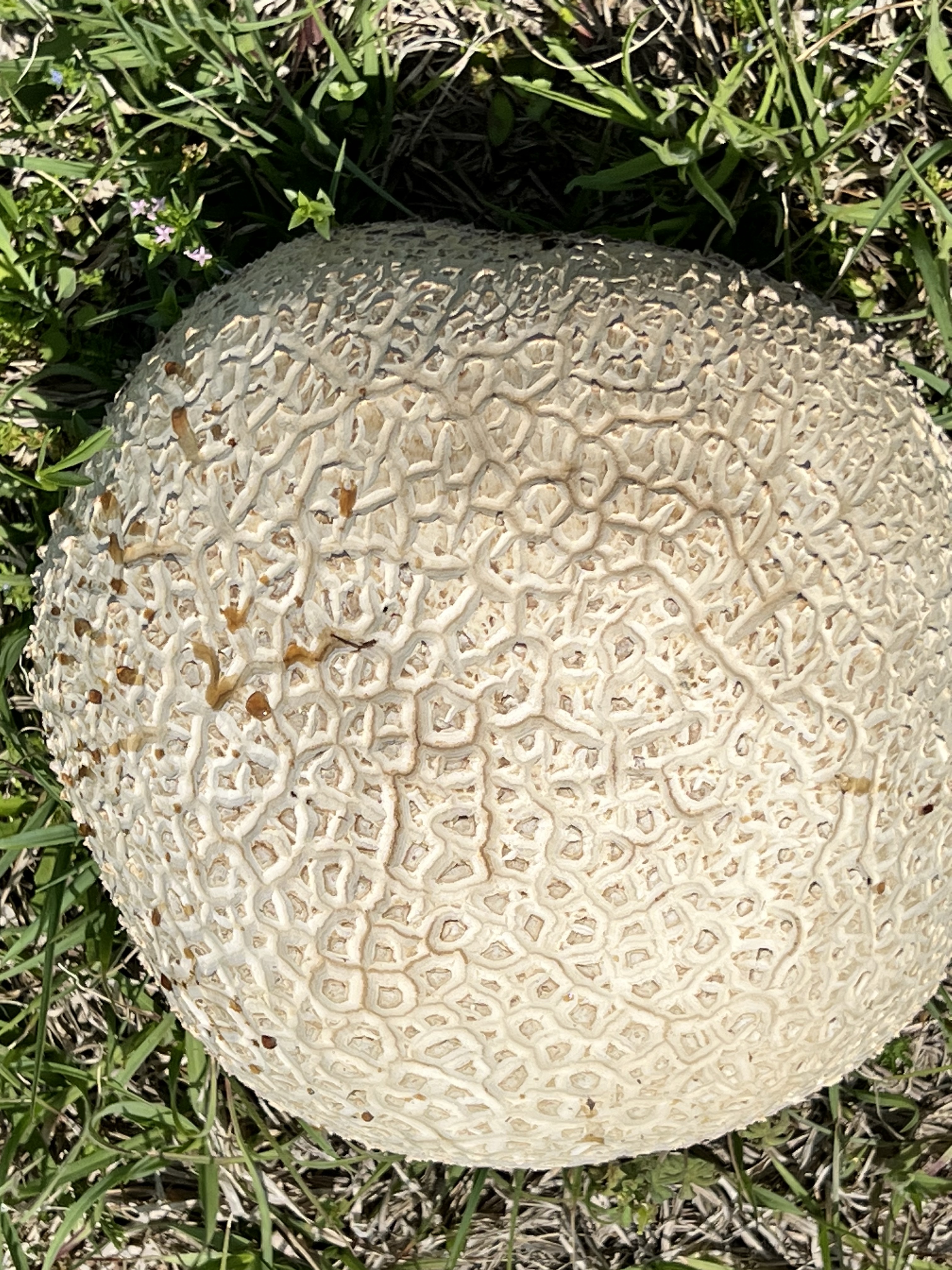
The next day, when I came back, the earthball had grown a lot. I used my ear bud as a comparison (I didn’t have a coin, which is traditional).

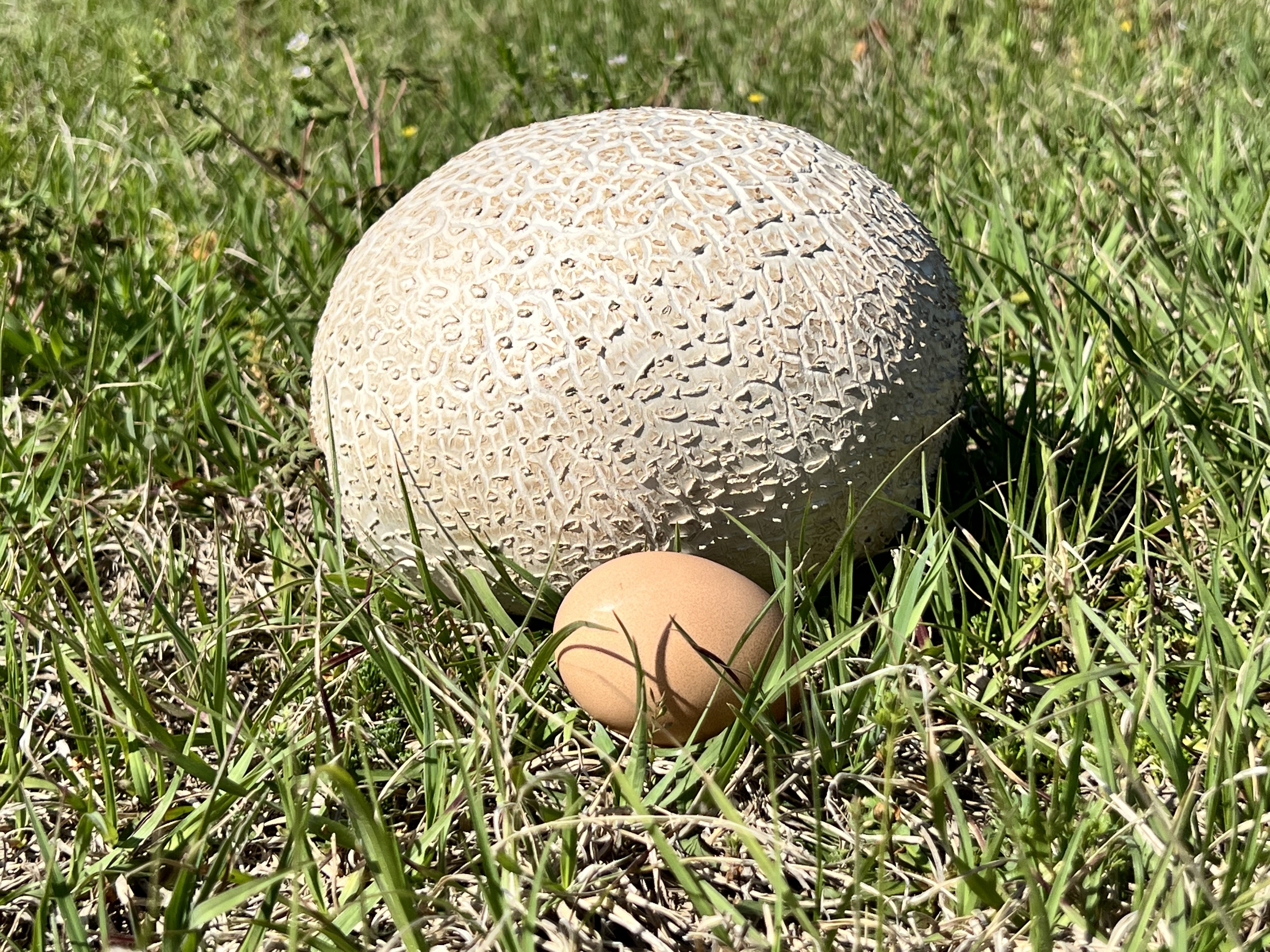
Next time, it had grown even more. Luckily I’d just been gathering eggs, so I got some nice shots. That’s the biggest mushroom I ever saw.

After that, I got curious about its lifecycle, so I decided to photograph it every day. Since it’s poisonous, I didn’t lick it. And, before you ask, the dogs are on the other side of a fence from it.

I was afraid I’d miss yesterday, since I was scheduled to go to a conference yesterday and today. “Luckily” the conference was canceled. Unluckily, I didn’t find out until I had already spent a night in Kerrville. (The TXPWD were kind and repaid my hotel bill, since it was their error that some attendees weren’t notified.) Anyway, I got home to find it had finally burst open.

This was in the late afternoon, so not great light, but look at all that spore material in there!

There sure were a LOT of spores in there. Since yesterday was so windy that there was a Red Flag warning in the county, I figure there may be future earthballs all over the place!

Sad earthball. You’ve been fun to watch!

This morning, my buddy looks pretty sad. But I’m impressed the mushroom hung around for over 11 days! I’ve learned something about the Common Earthball, and so have you!

Learn More