Have You Been Seeing Flocks of Small Purple Martins?

by Donna Lewis

I have been getting numerous calls from people about this phenomenon. 

There’s something on the fence, but what?

Most of our purple martins have left our area for Brazil now. There could be a few lost souls who just don’t want to fly fast, but most have gone south. So, what is it that everyone is seeing, including myself?
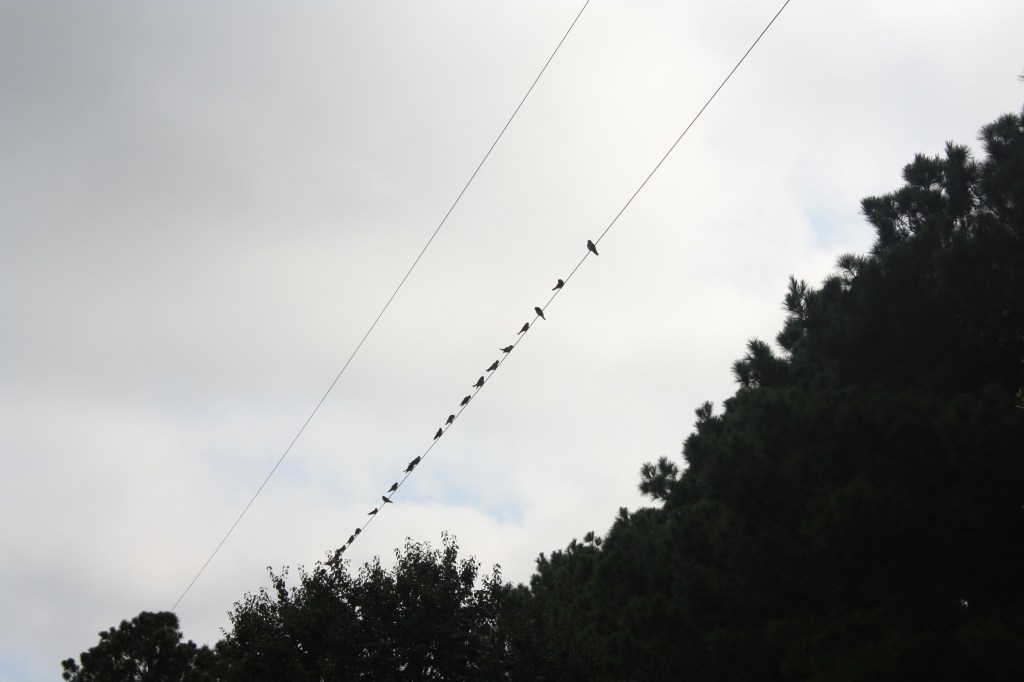
Mystery birds on a wire.

We are seeing northern rough-winged swallows.  They are in the same swallow family as the purple martins. Their Latin name is Stelgidopteryx serripennis. They are smaller and make much less noise.  Unlike the martins, they fly closer to the ground to catch live insects.  They also perch lower on fences.  Their breasts are white and they have smaller blunt-looking tails.   
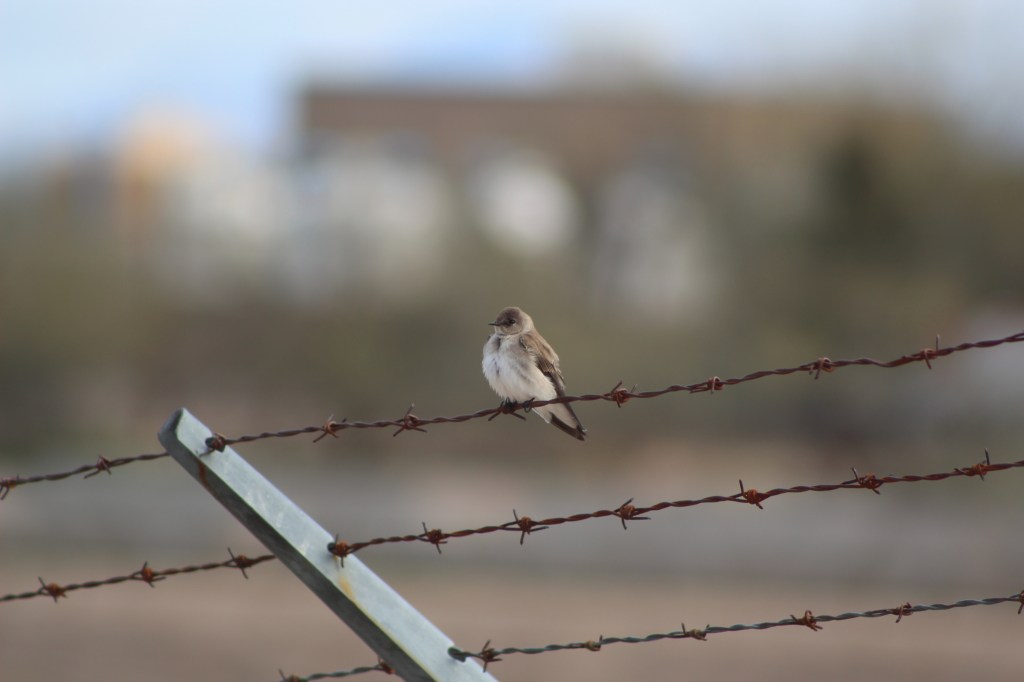
Northern rough-winged swallow in Arizona. Photo by heyitshelios on iNaturalist.

The rough-winged swallows are going south also, but stop around Mexico. They are solitary unless they are migrating.
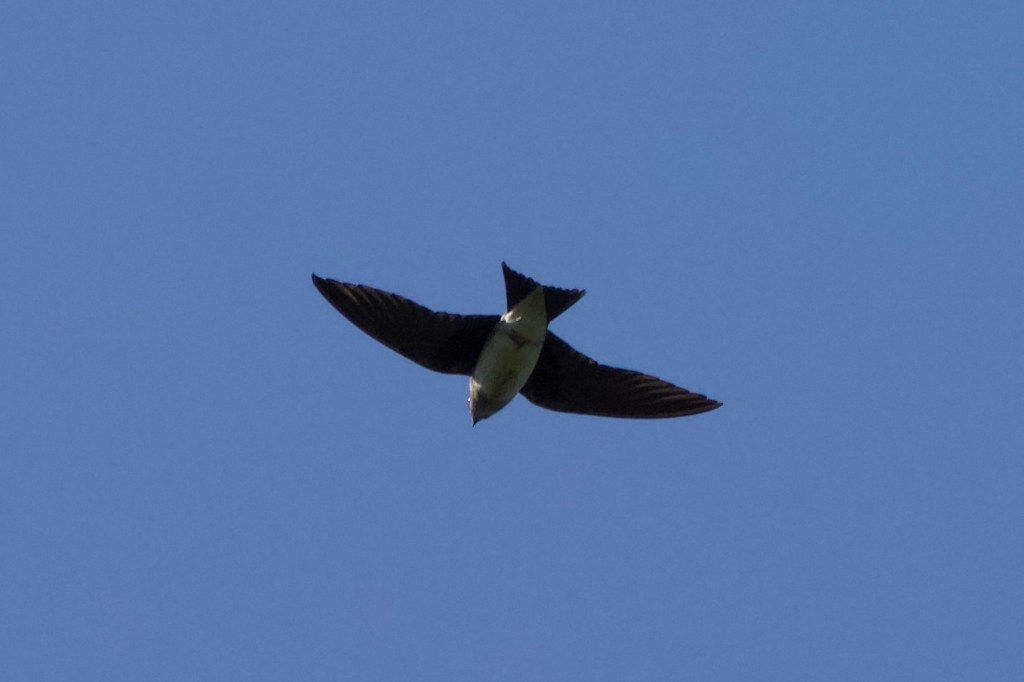
This will help you ID them in flight. Photo by davidpickett on iNaturalist.

For me the way I really know them is that they are much quieter than our martin friends. But for a moment I was reminded of the Martins and it brought a smile to my face.

Have a wonderful stay in your winter retreat little friends.

Butterflies Are Still Here

by Donna Lewis

Can you believe it is almost what us Texans would consider the end of summer? It is HOT!!! I would like to know when the humidity will go down and the temperatures lighten up just a tad.

Gulf Coast fritillary

For those of you who don’t know me, I hate cold weather. But now that I have matured (a nice way of saying I’m older),  I do like it to be in the middle somewhere, say 70 to 80 degrees with no humidity.

Today as I walked through my garden, there were so many butterflies everywhere trying to find the last flowers of summer that  were still blooming.  I have sulphurs, queens, pipe vines, Gulf Coast fritillaries, black swallowtails, tiger swallowtails and an assortment of small skippers.                             

Swallowtail
Common buckeye (by SA Kendall)

The zinnias are tired and ready to go back  to Mother.  The salvia are looking ragged. The cosmos, mist flowers, sunflowers, daisies , coneflowers and lots more are just pooped out.  Now, the vines are at their best.  Passion flowers, cypress vine, coral honeysuckle, and others like it hot. The milkweed also likes it hot and dry.  I still have some of it, just no monarchs right now. I guess my little beauties will be with me to the end.  I hope they are here a little longer, I love them so.

Drink a little nectar and carry on.

Closing Down the Martin Houses

by Donna Lewis

So, the sad day has finally arrived for purple martin landlords. Our friends have gone to their winter home in Brazil.  It is so quiet now without their beautiful song and chatter.

The martin houses must be cleaned, closed, and information about what was in the nest after they left recorded.

Normally, I just have poop and dead bugs in the houses. But, surprise, surprise, there was a little more this time (in the apartment house, not the gourds).

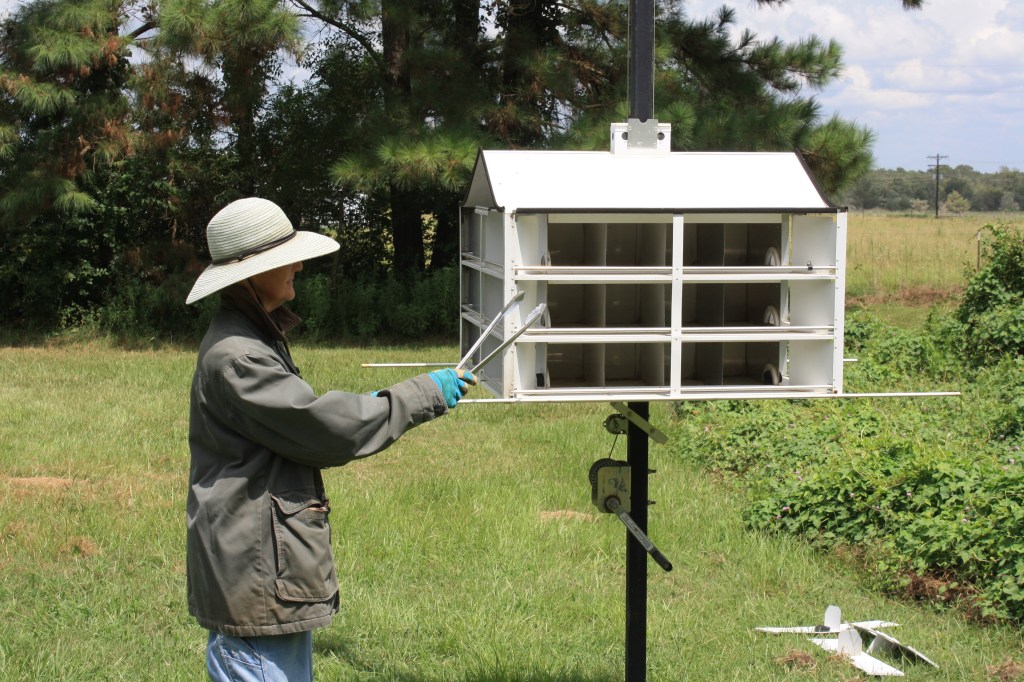
Ready for anything.

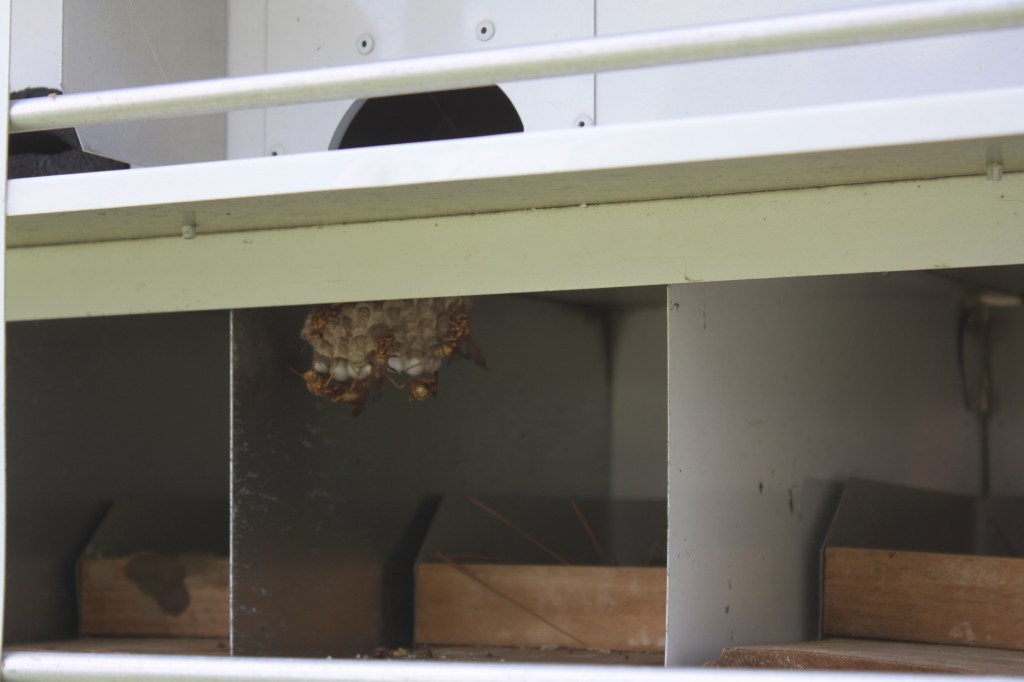
I opened the first slot that opened four compartments and yellowjackets came flying out at me.  Oh boy. I managed to only let one sting me on my hand, which got really swollen.

So, how do I get the little devils out? First of all, never use pesticides in a bird house of any kind. The residue could hurt newborn babies who have no feathers.  They are pink and blind like baby mice, very vulnerable. What I do is I take tongs and yank out the nest, then run like heck. Well, maybe not run anymore, just walk real fast. Then I wait for the adults to move on.

This year there were two red wasp and two yellowjacket nests in my apartment house. It took me six hours to get them all out.  I will close up the gourd house another day.

I left the apartment house open for now until I can safely clean it out with the wet vac, then wipe it with a wet cloth. I let it completely dry. Then, I put a cover over it till next February, when the martins return.

The main thing is to be careful when you look in the houses, and secondly not to use pesticides .I will miss my friends and hope they survive to visit me again.

What’s in the Hole?

by Donna Lewis

Early in the morning on Saturday, August 14, I was looking for my friend the Gulf Coast Toad that I say hi to on most mornings.  She is a big girl that lives under the faucet where I had put a flat rock for her to hollow out her house. It is always damp so she likes it there.

I like frogs and toads. They are gentle and sweet. I didn’t see her pop her head out to see me this morning. Instead another head with a yellow mouth outline looked up at me. Oh no, I think something got my friend, I thought. 

I could only see about an inch of its head. It looked like a lizard of some kind. Well, I am not afraid of lizards so I decided to take a photo of it.  You can see the first photo I took, before anyone poked their head out.

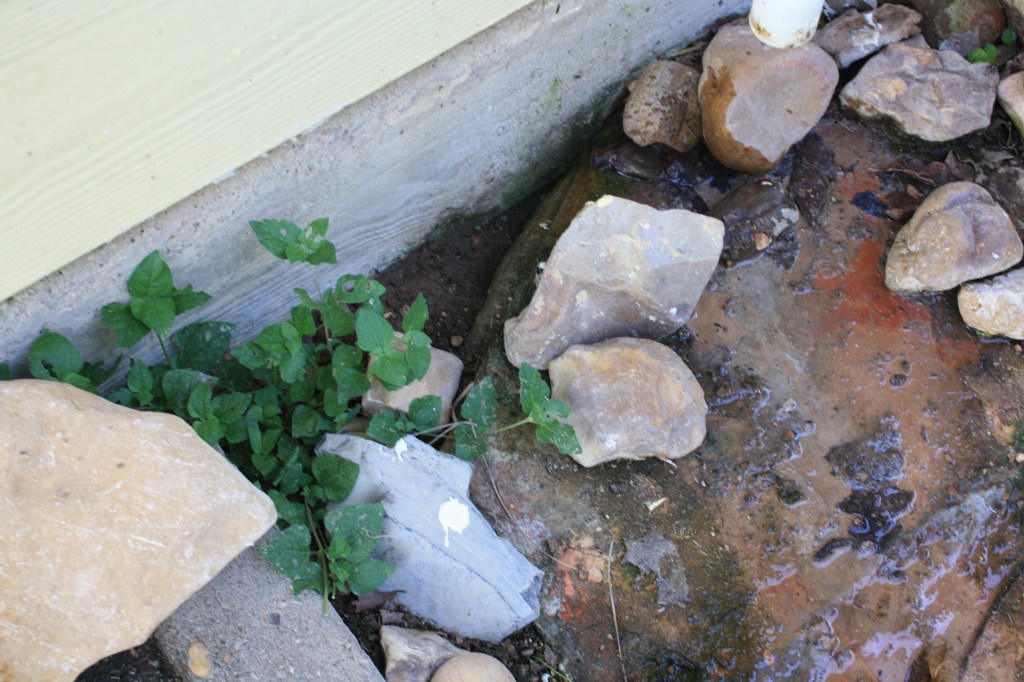
The hole under discussion

So I tossed a little rock in the hole to encourage it to come out for me so I could take a photo.  I leaned down pretty close to the hole. Woo boy!!! Something came out alright, but it wasn’t a lizard. 

You don’t see any second photo because I jumped back as fast as I could. It was a black snake with a yellow mouth and belly. It shot out that hole and came at me really fast!! 

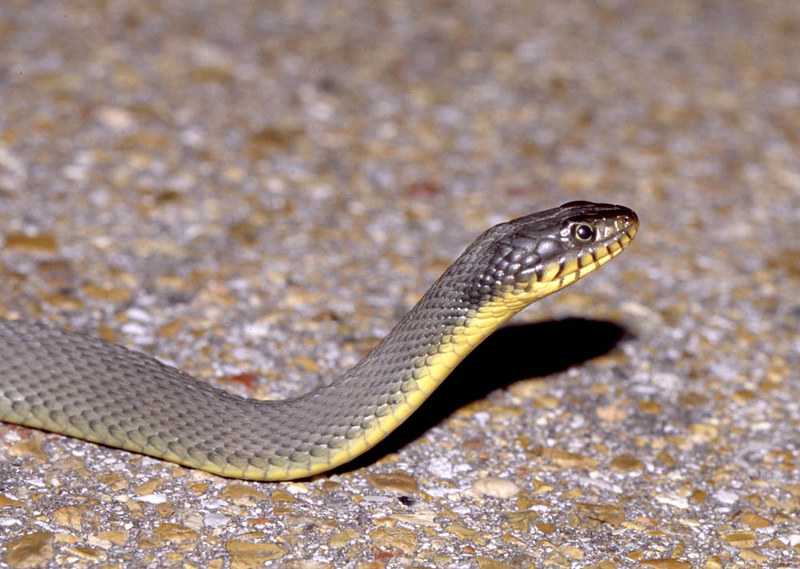
Donna asked Suna to find a picture for her, so here’s one from iNaturalist, © tom spinker, used with permission.

I must admit it scared me.  I am surprised I could move that fast. After looking through my snake guide I learned that it was a Yellowbelly (or plain belly), a non venomous water snake.  The guide also said it was a vigorous biter. I am glad I didn’t find out how vigorous.

So, I am sad about my toad friend…life outside.

Field Full of Flowers

by Donna Lewis

The pastures at our place did not get mowed during the time we normally do that this spring. I really hate to mow at all.  Too many little things live there.

The rain and strange weather threw our normal twice a year mowing off. So, we have very high grass with dewberries and other various stuff everywhere.  You cannot even walk through it. 

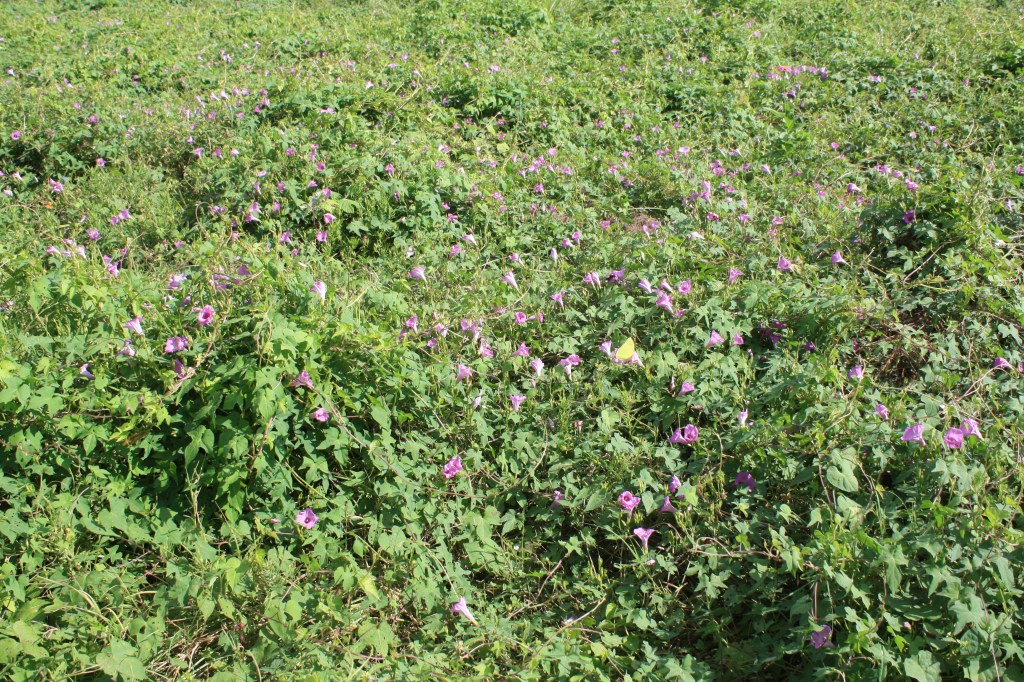
The wildflowers have stopped blooming. So, while we thought we should mow it. But, I looked out and there were morning glories on top of all the grass with hundreds of butterflies everywhere. What a beautiful sight.

So it is always good to consider who is using your pastures.  You might need to wait until they are finished and then mow. Mother Nature never mowed her fields…I like to learn from her.

So just to make my other half happy, I said she could mow just around the edges. So now the butterflies were happy, but something else was not. The toads starting hopping for their lives.  Oh boy!  Most of them were Gulf Coast Toads.

So I walked ahead , caught all I could see and carried them to safety elsewhere. I just couldn’t let them get run over. I rescued about 20 or so.

Another day in the life of a Master Naturalist.