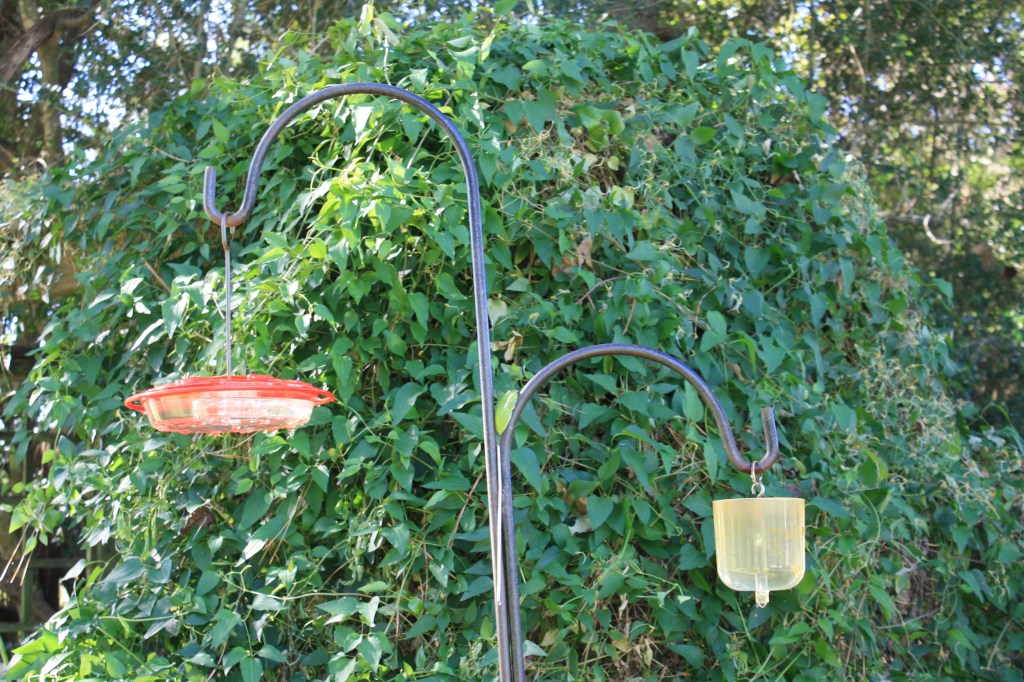
I was out this beautiful morning cleaning and filling my hummingbird feeders. I finished with that, then filled up the ant moat which the chickadees drink from.
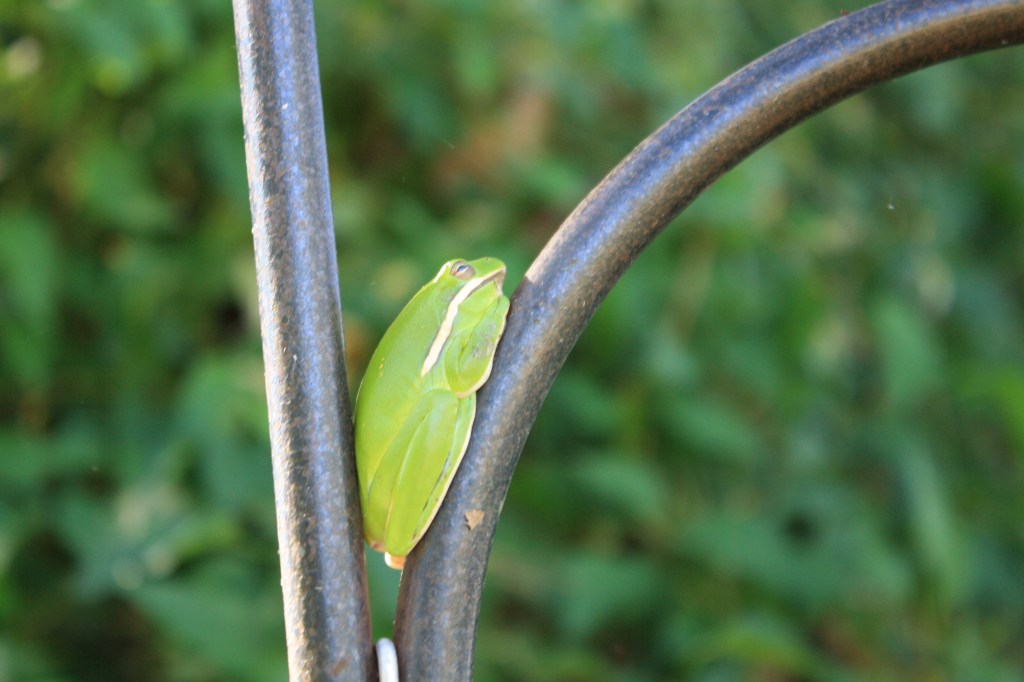
I was so shocked to see a very green tree frog not making a move in the crutch of the shepherd’s hook.
I had done all that work and sprayed with a water hose, and it never moved. Boy was I both shocked and happy at the same time.
While I was happy, I bet it was scared that I was a predator fixing to get him or her. It was a “Barking Treefrog”. So wonderful to see.
Today was your lucky day, little one. A planet Earth person who loves nature was the one who found you. You made me smile. I guess we were both lucky today…
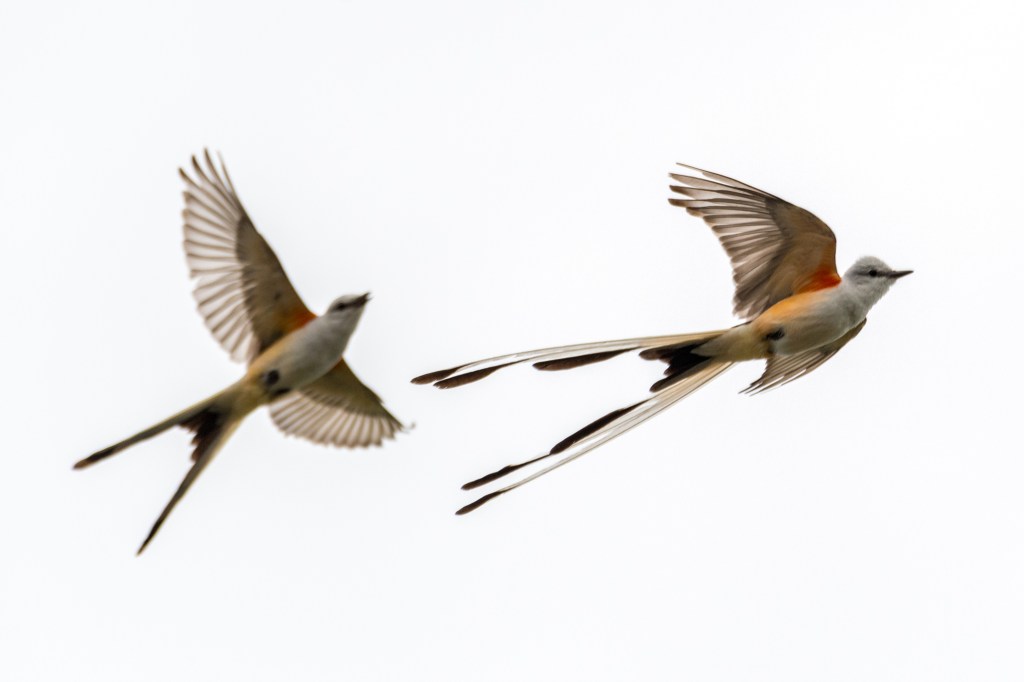
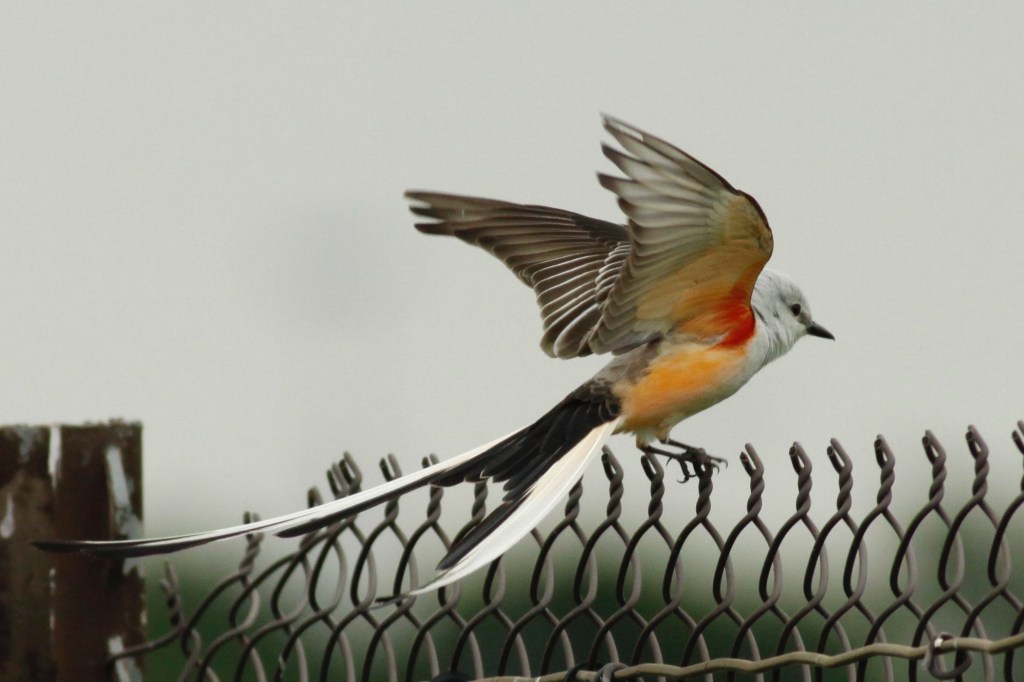
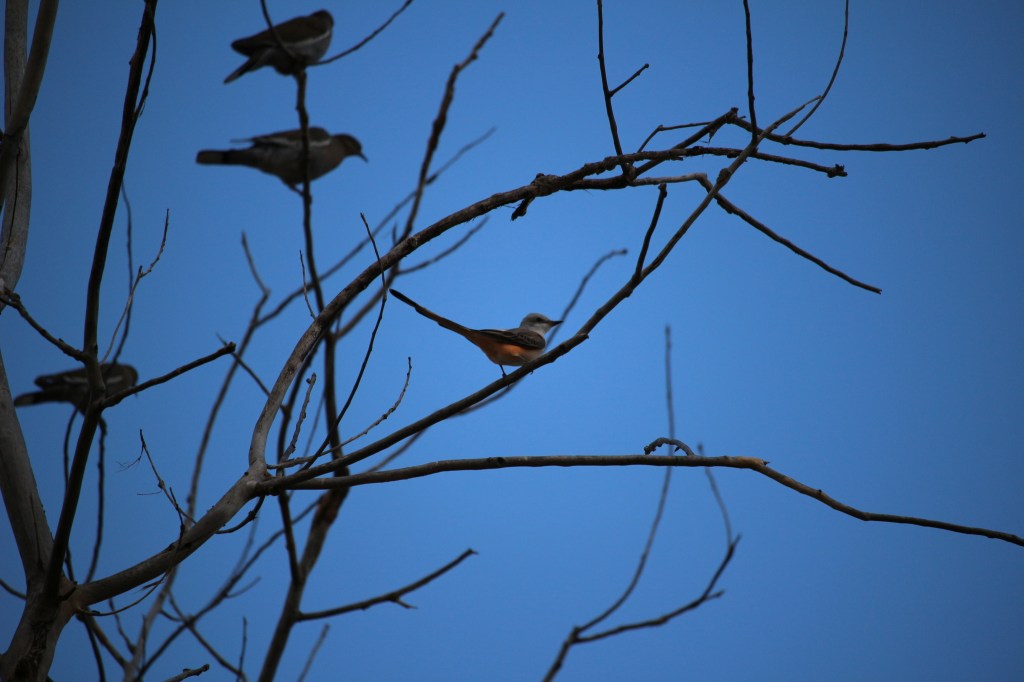
I am sure all of you have noticed the numerous little mini flocks of scissor-tails lately around the county. They are a bird even amateurs can identify.
Male and female. Photo by Martin Hall on iNaturalist.
We drive to our destination and everyone in the truck says look, look, a scissor-tail!
They have something to say! Photo by the late Greg Lasley on iNaturalist.
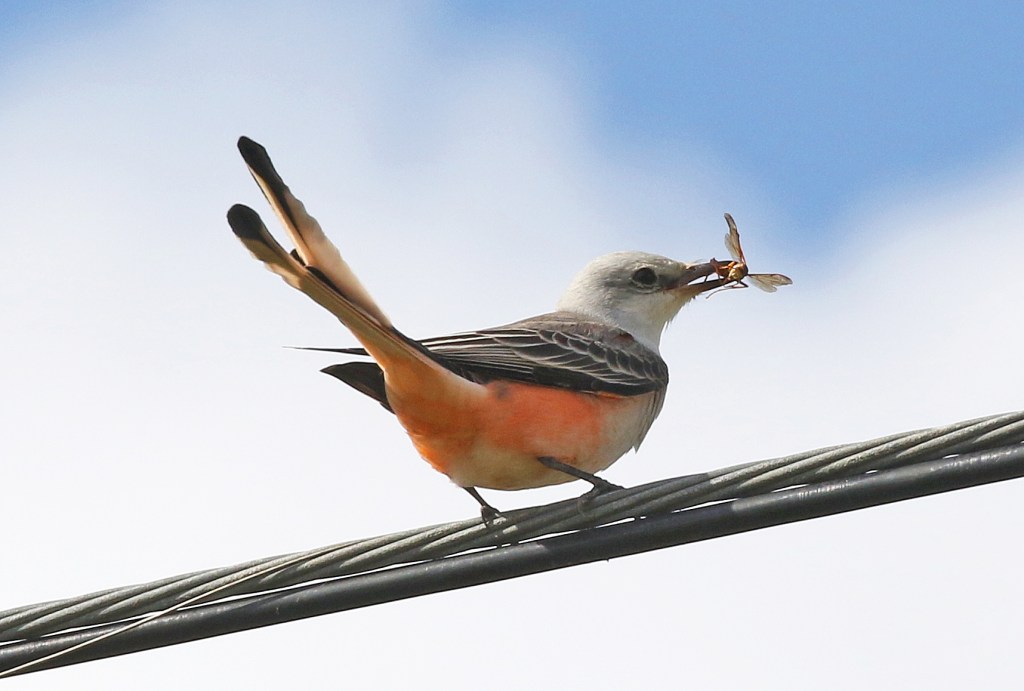
So, why do these birds have this tail? This bird is a flycatcher, so it needs to be agile and able to turn quickly on a dime and in mid-air. To catch an insect you have to be fast.
She caught a fly! Photo by Judy Gallagher on iNaturalist.
Its tail splits in two to redirect its flight. Pretty handy.
Scissor-tailed flycatchers (Tyrannus forficatus) are beautiful birds with a pearly gray head and chest, and dark wings and tail. They can be found all over Texas and Oklahoma.
Photo by HD Cooper on iNaturalist.
During the winter they will migrate south to Mexico and even South America. That is what they are doing now. Otherwise you would not see them in a flock. They like to be solitary, except at night when they may roost together as a community. A sleepover with your friends.
Photo by Lena Zappia on iNaturalist.
In some places they are known as the Texas bird of paradise.
Females (who don’t have as long of a tail as the males do) lay three to six eggs that are white or cream colored with some dark red on them. Lovely to see.
Keep your eyes up and you will see them now.
All photos are some rights reserved (CC BY-NC) and authorized for nonprofit use and were selected by Sue Ann Kendall to go with Donna’s narrative.
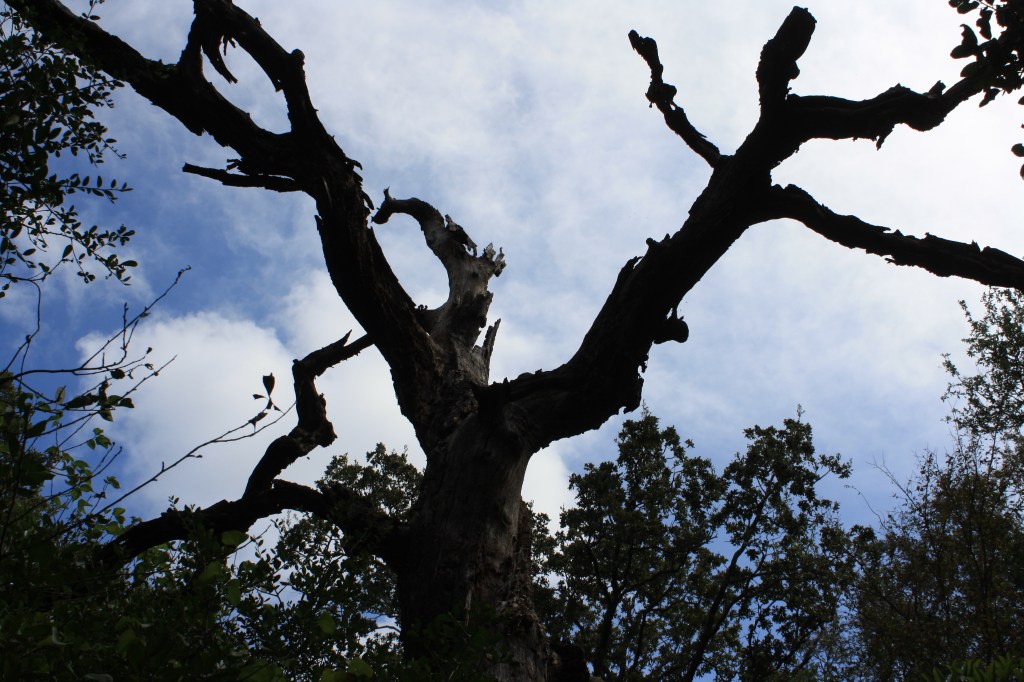
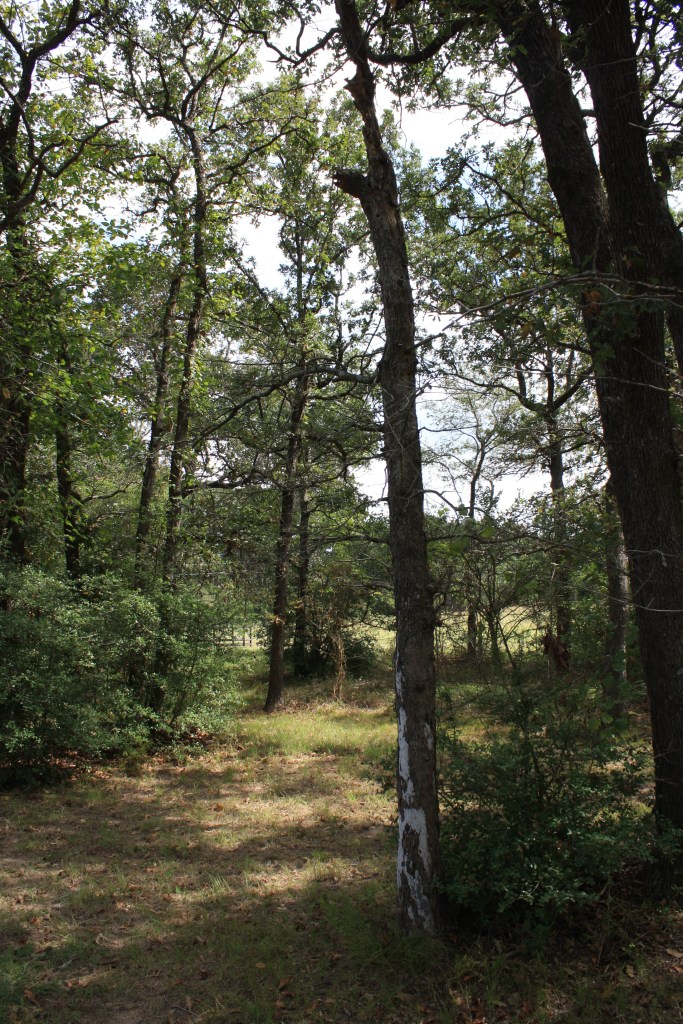
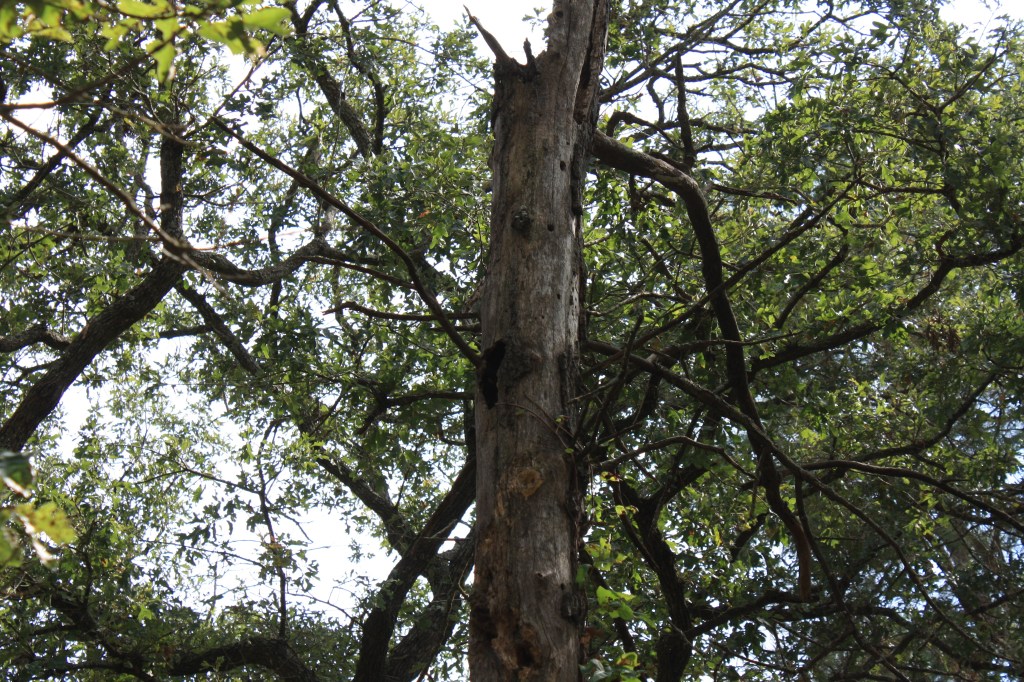
Trees that have died and are still standing (snags), and trees that have fallen provide many homes and food for wildlife. Here are some examples.
Excavated cavities provide homes for woodpeckers.
When they leave a cavity, secondary nesters move in. These include chickadees, titmice, wrens, and bluebirds.
The hollow part of limbs also house owls, raccoons, squirrels, and some bats.
Many invertebrates, reptiles, amphibians, and mammals live in or on fallen trees.
Fireflies use decaying logs to complete their life cycle.
The hollow trunks provide homes for skunks, foxes, mice, and weasels, to name a few.
That’s a ton of uses as a tree finishes its life. It helps coming and going….as a fallen tree decomposes it provides nutrients back to the forest floor.
So, you might think twice before cutting a grand old tree that has died down. Of course there are times when you have to remove one, like being too close to a structure or fence. But if it’s a safe distance, then save it for our wildlife.
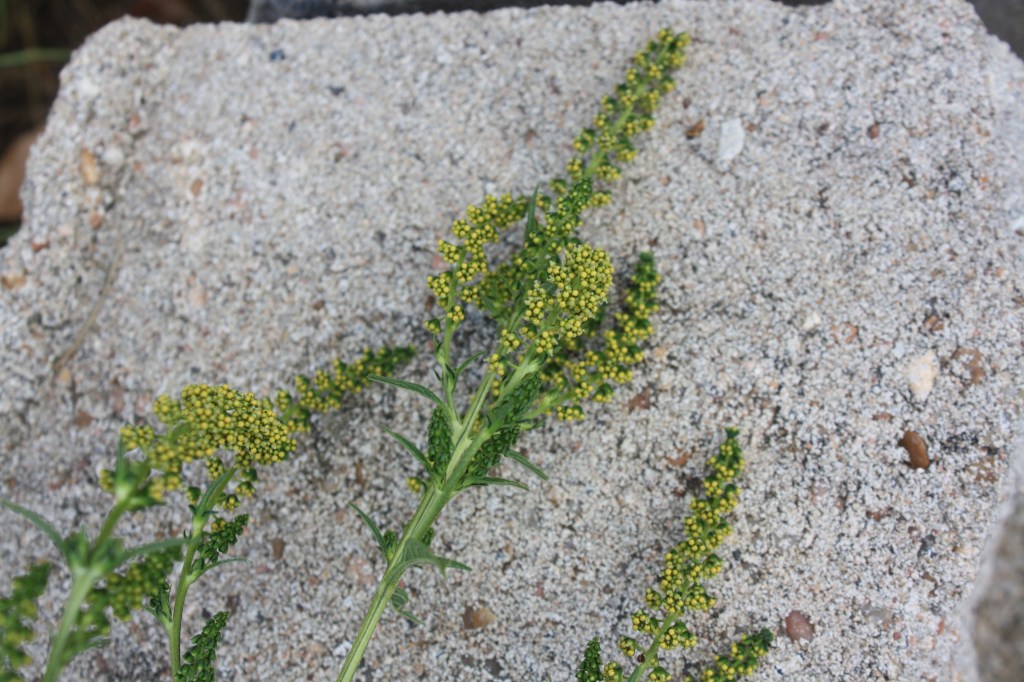
If you have some or all of these you probably have Giant Ragweed ( Ambrosia trifida). I certainly don’t think it’s ambrosia…it’s awful! I don’t see how you could make rags out of it. Where do these names come from?
Ragweed
So are they good for anything? As it turns out, I looked in my reference book, Medicinal Plants by Peterson and found out that the native Americans did use it for certain ailments. They used it as an astringent, to stop bleeding, dysentery, and insect bites to name a few. Today it is commercially harvested for the treatment of ragweed allergies.
It’s everywhere!
So, yes it has a few saving characteristics.
The flowers are pretty, though.
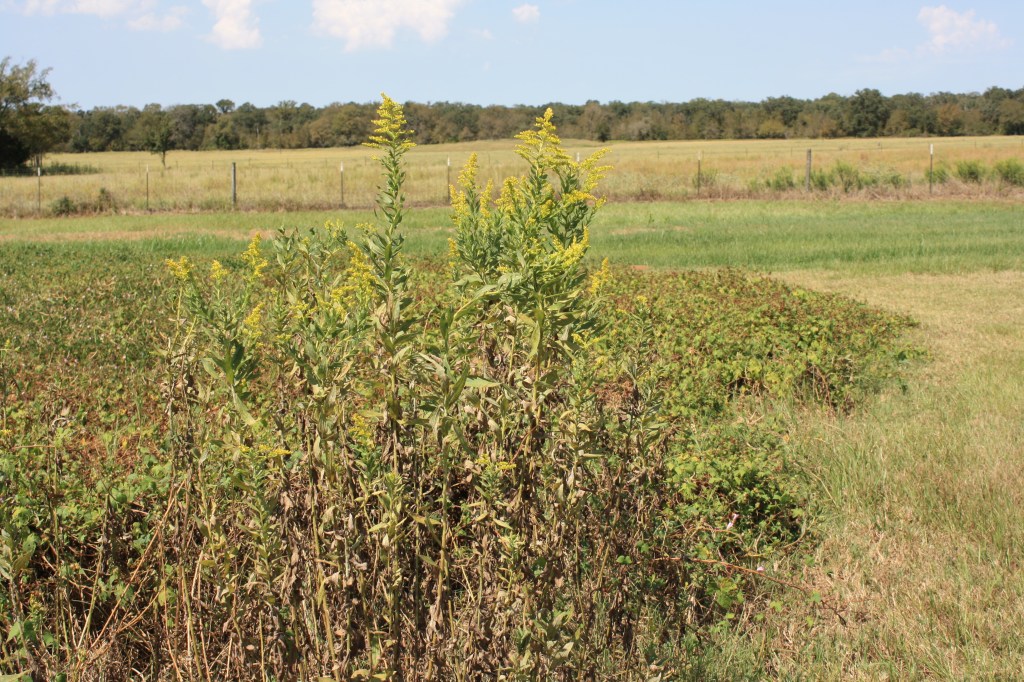
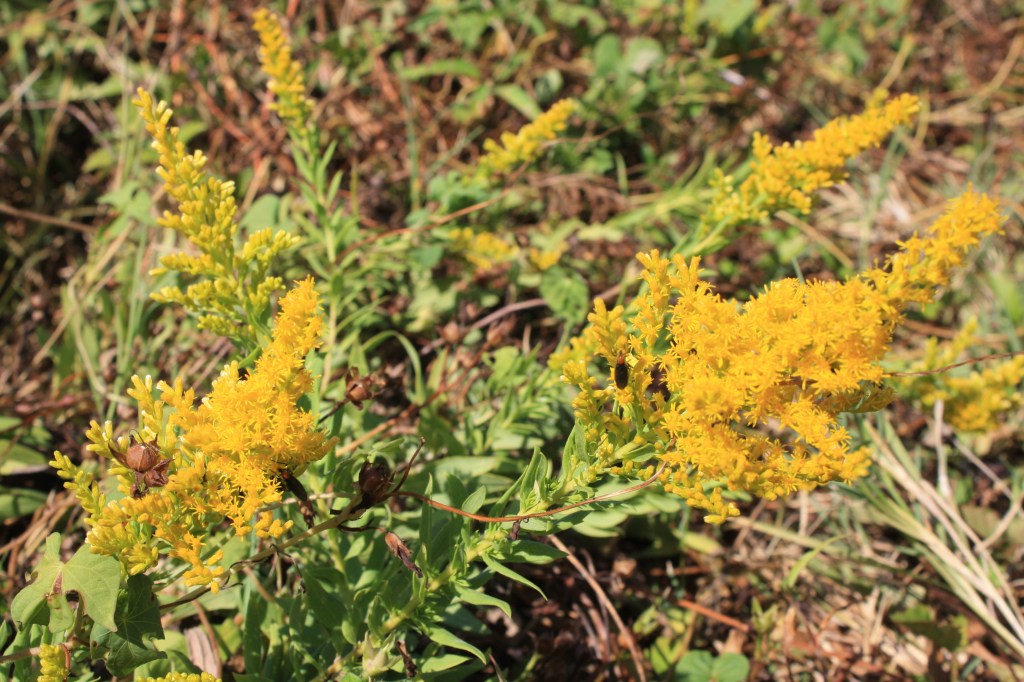
Also out in the pastures right now is a very valuable plant that our migrating monarchs use. It is in the Sunflower family: goldenrod.
Goldenrod
The native Americans used this for many medical issues: roots for burns, flower tea for fevers and snakebites, crushed flowers for sore throats, and some other ailments.
Both these plants can cause severe allergic reactions, so don’t try any for medical ailments unless you have asked your doctor first.





 Nature Along the El Camino Real