During this heat, I have been filling the bird baths once or twice a day while enjoying watching the birds drink, splash, and bathe. So far, the birds I mostly see are cardinals, blue jays, northern mockingbirds, finches, house sparrows, mourning doves, white-wing doves, European Starlings, ruby throated hummingbird. Even the fox squirrel, cottontail rabbit, and bees seem to appreciate the water left out for them. Here are just a few that I have been able to get pictures of so far.
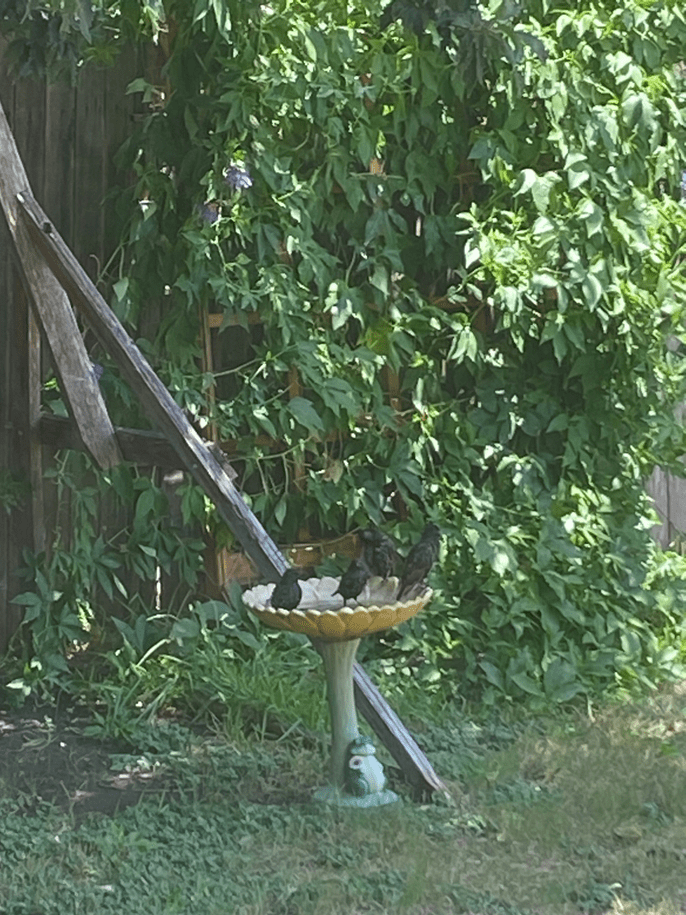
European Starlings
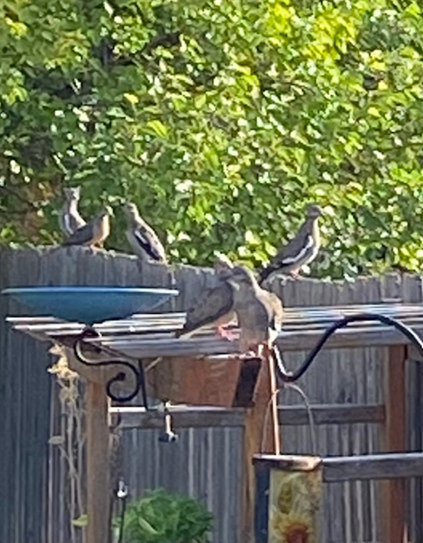
White wing doves wait in line to get a drink and enjoy water.
You don’t want to know my nickname for the doves. Let’s just say that I have to wash my driveway and car often.
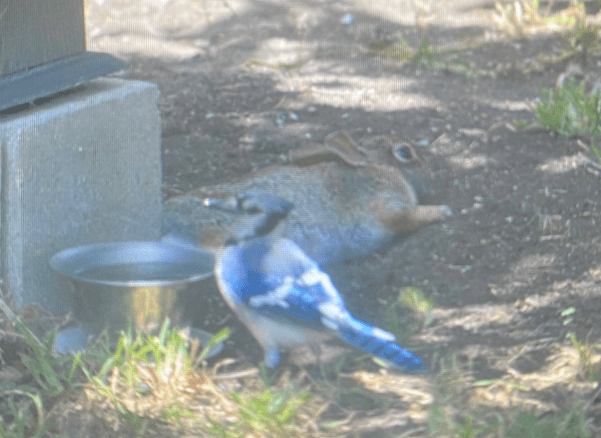
“Peter” the cottontail rabbit in his favorite spot sharing his water with “Jay” the blue jay
“Peter” getting a drink
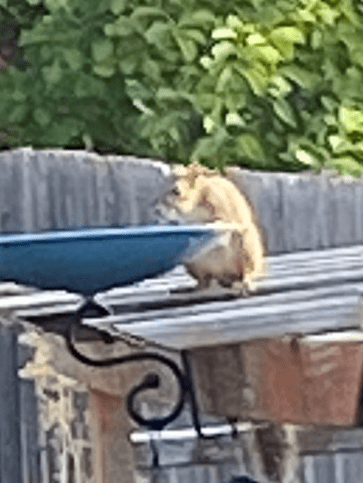
Here’s “Rocky” the fox squirrel getting a good drink
I found that with these larger bird baths, it’s easier to fill them with rocks and top with soil and then place smaller bowls in them. This makes it a lot easier to clean them out daily and refill.
And here’s my favorite, “Ruby” the ruby throated hummingbird drinking from the hummingbird feeder.
Remember to wash out the bird baths and change hummingbird feeders daily or every other day in this heat. We want to help our friends, not make them sick.
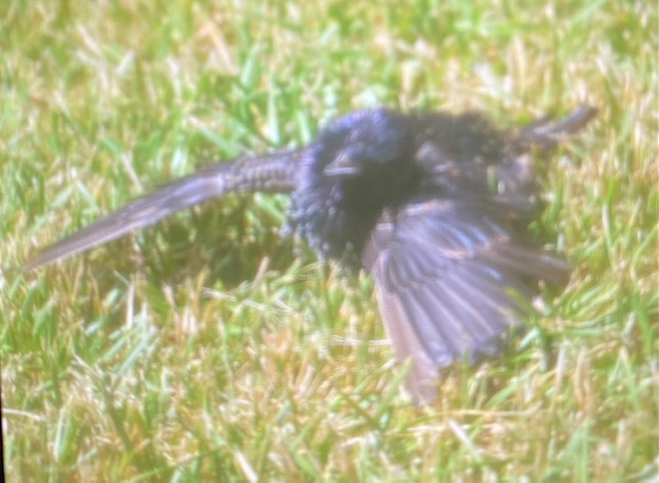
As I look out the window, as I often do to bird and butterfly watch, to my surprise, I see these European Starlings all laying on the ground with their wings spread out. At first, I thought they fell to the ground due to the extreme heat and were in trouble.
Photos were taken through a window, to not frighten the birds, so they are a little blurry.
I then looked up why the birds would do this and if intervention was needed and I found this:
According to an online Audubon Society article called “Hot, Bothered, and Parasite-free: Why Birds Sun Themselves,” when it is hot enough, they do this not only for warmth and dryness but to rid themselves of parasites living on their skin and feathers.
It’s not known exactly how sunlight might kill the parasites; however, scientists believe that short blasts of heat, UV radiation, or some combination of both from the sun’s rays is likely the cause. The researchers found that even in a relatively short time in the direct sunlight, around 10 minutes, heated the wings to 140 to 160 degrees Fahrenheit, which far exceeds the temperatures required to kill bedbugs, for example, which die at around 120 degrees. According to another study, 84% of other parasites, such as lice, died in direct sunlight at 140 degrees Fahrenheit in three minutes. At 158 degrees they all perished.
There are birds from more than 50 families that sunbathe, including birds of prey, rails, doves, larks, swallows, thrushes, finches, buntings, and more, though they may bathe for different reasons and different times.
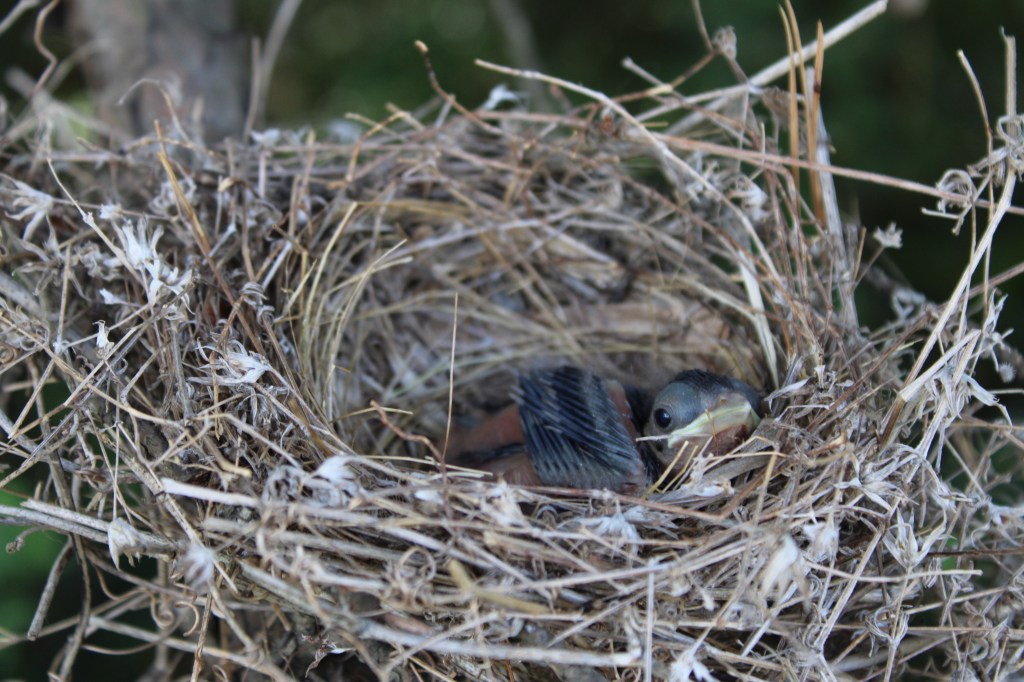
Yes, I thought most of our local birds had finished with having babies still in the nest. It is way too hot to tend to them. I was very surprised when my Linda cut a branch off that she kept heading her head on, to find a Cardinal nest about ten inches from the cut.
Now the nest is pretty much open to the elements. I cannot move it; it is too fragile.
There is one baby in it. I have been watching it with my binoculars for three days now, and thankfully the baby is still safe. The mother is still feeding it. I pray every night that a predator doesn’t find it.
So, keep in mind while you trim branches, there are still babies in their nests now in late July.
This past Monday, at 6:30 pm, a large bird landed on the shepherd’s crook with an open seed feeder. It is very close to the living room window. This disadvantage is that it is backlit.
I spotted a large bird, navigating an unfamiliar branch – the metal shepherd’s crook – and processing how to get to the seed. Finally, after attempting various angles, he jumped down. I was successful in moving around in the house without spooking the bird, but not near my bird book.
With the help of a couple of books, I identified it as a White Wing Dove. I’ve not seen one before and I didn’t know we had them here. Estimating the areas from the range maps, Milam is right on the edge of the range.
Ten minutes later he/she is back sitting on a branch, eying the seed, and fifteen minutes have passed! As White Wing Doves enjoy small colonies, and are monogamous, I’m expecting his/her friends.
We hear a lot about purple martins (Progne subis) in this blog, since our Chapter member Donna Lewis is a dedicated observer of their lives and activities as she supports them by providing structures to nest in.
There are other types of swallows in Milam County, though, as most residents have most certainly noticed. Barn swallows (Hirundo rustica) are commonly found around our homes and also depend on humans for a little help with their nests. I have some of each bird on my property, but my few purple martins nest in abandoned holes in dead trees that we have left standing. I didn’t know we had them until recently, when my handy Merlin Bird ID app noted their song, then I actually saw a pair. So, I guess purple martins do nest in the “wild” at least a little here.
Here’s a purple martin photo by ME, from a structure in Temple, Texas.
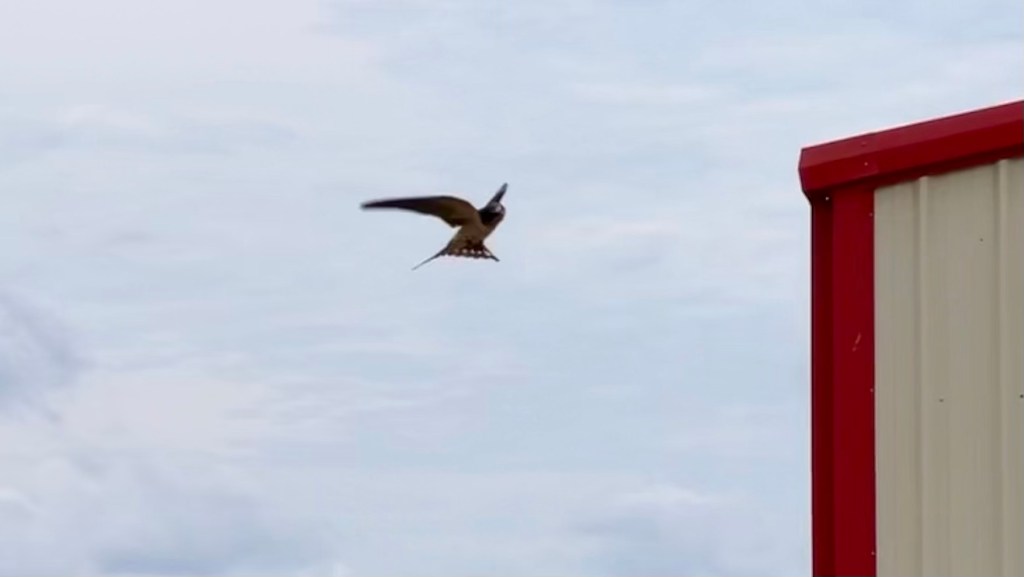
But what about the barn swallows? Why aren’t they beloved by all, like purple martins? After all, they are quite beautiful with their shiny navy-blue bodies and striking rust-colored breast markings. And they eat lots and lots of flying insects and provide lots of entertainment while they do so. It’s like a swirling circus act when they’re all out hunting around sunset.
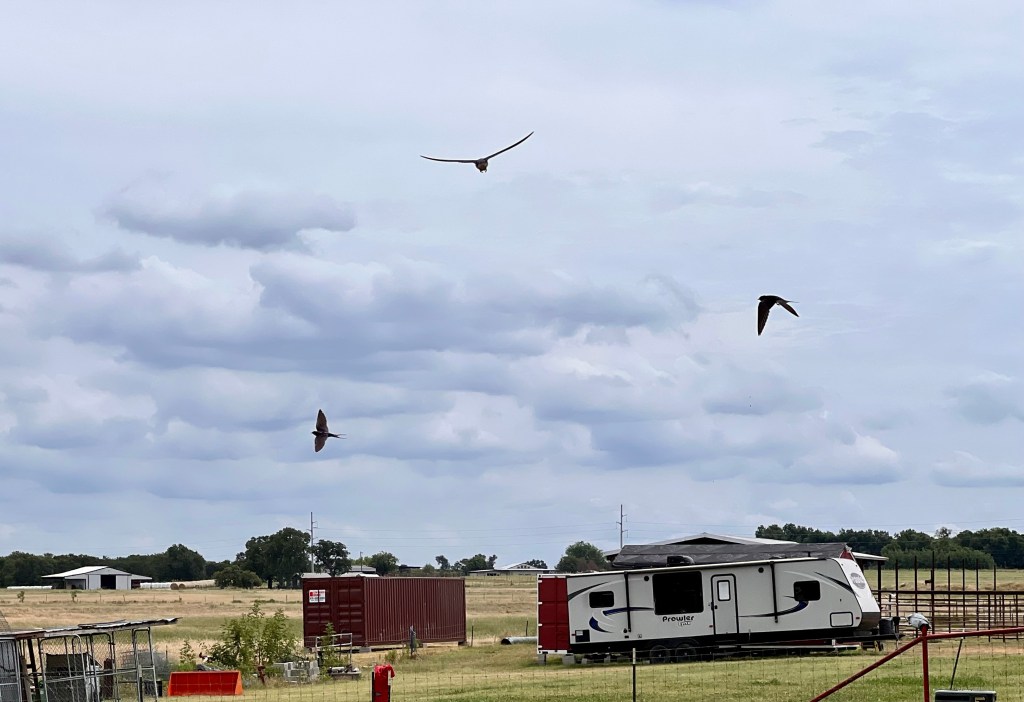
Barn swallows on my property
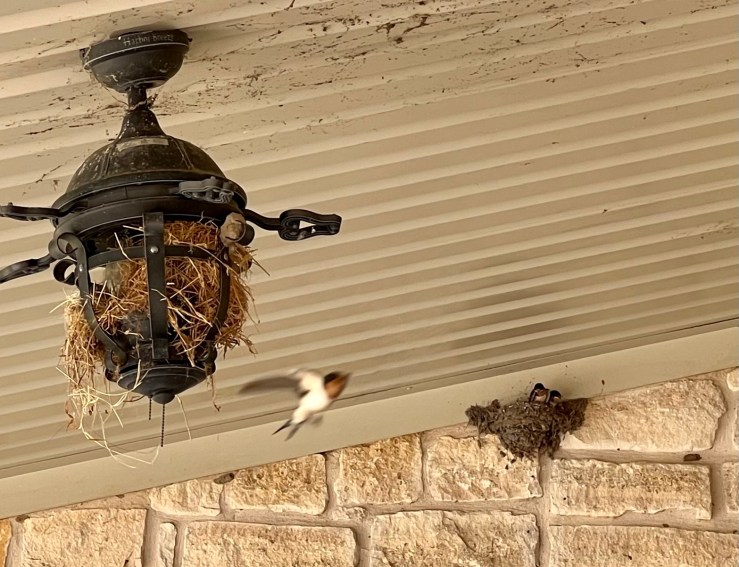
One reason people aren’t fond of them is that their nesting behavior doesn’t fit in with most suburban folks’ ideas of neat and tidy “curb appeal” for their homes. Barn swallows do nest in barns, when available, but they also nest under bridges (the same kind the Mexican freetail bats nest in), and, of course, people’s houses.
Swallow parent dodging hideous sparrow nest to go to her lovely mud nest.
When I lived in suburban Round Rock, many neighbors either invited people to come in through their garages or spent lots of time getting very messy trying to remove barn swallow nests. Many of the homes had two-story entrances, which swallows (cliff swallows, too) just loved to build their mud nests in. They also loved to shove baby bird poop out of those nests and onto people’s fancy potted plants or outdoor furniture. I will spare you a photo of swallow poop, since you have probably seen some.
Luckily, I don’t live in the Meadows of Brushy Creek on a crowded cul-de-sac anymore. And I am happy to let barn swallows build all the nests they want to around our house, which has many porch sites to choose from. After all, there is only one population of barn swallows left that still uses caves to nest in, and that’s in California, according to All About Birds.
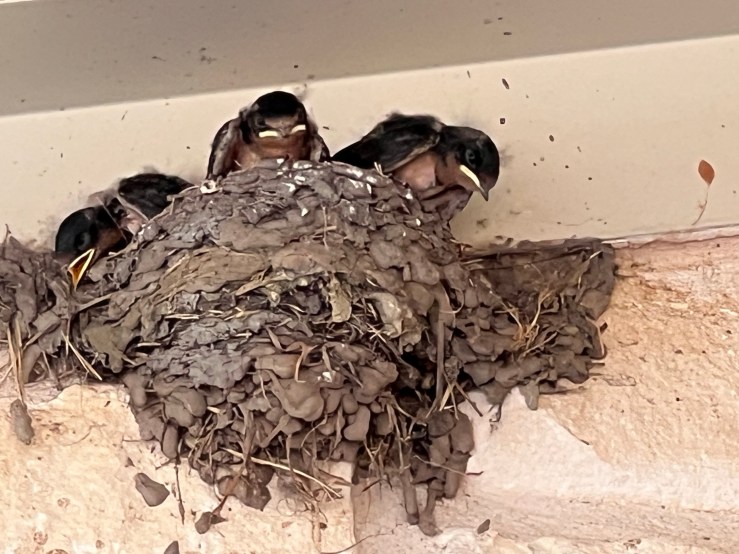
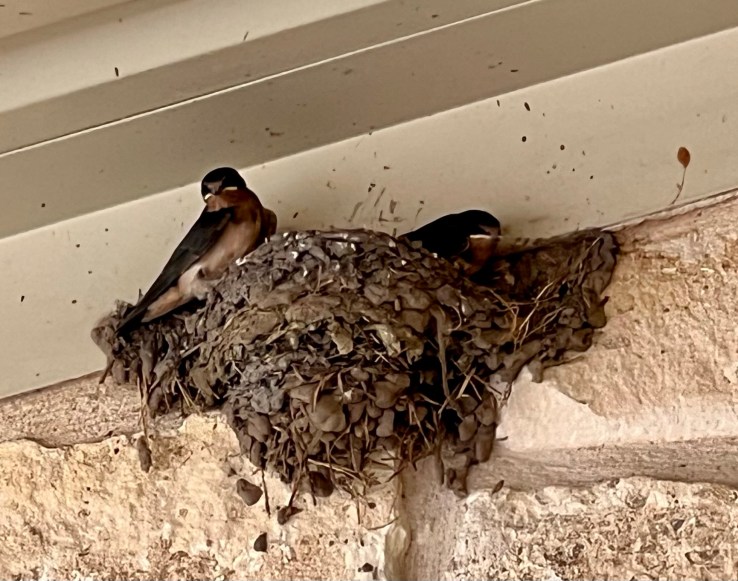
It’s getting crowded in here!
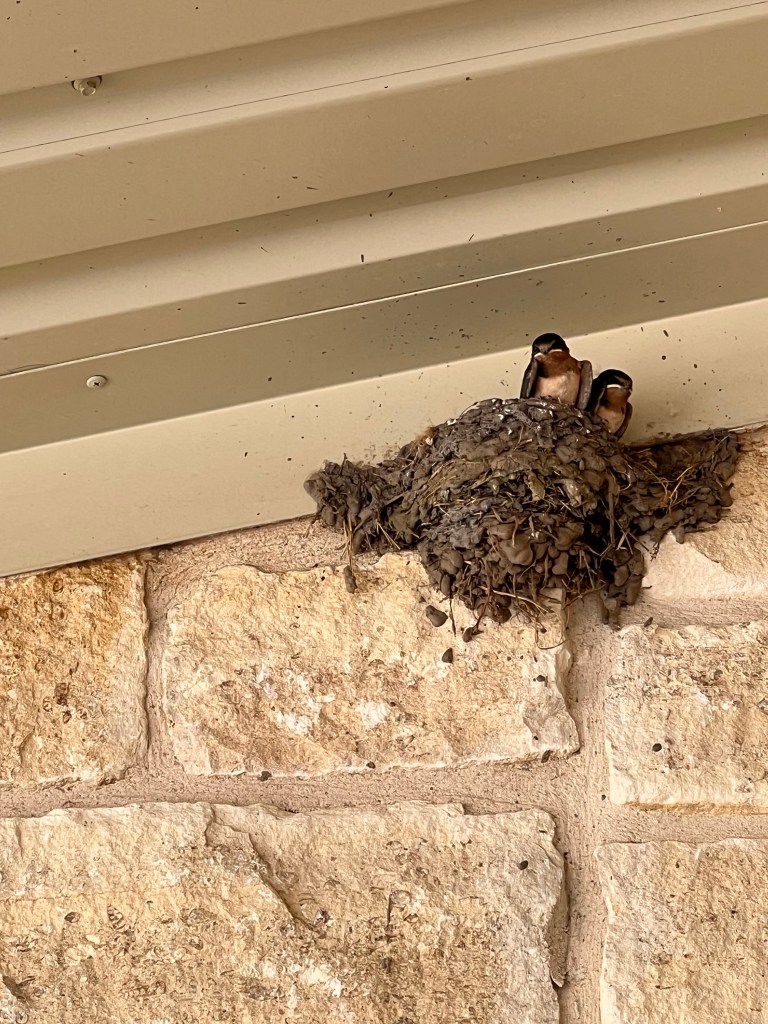
Our birds have just finished raising their second set of nestlings since they arrived from South America in the spring. I noticed a couple of the nests had three adults feeding babies, and that turns out to be a common practice. The helpers were probably babies from the first clutch.
I gotta get out of here.
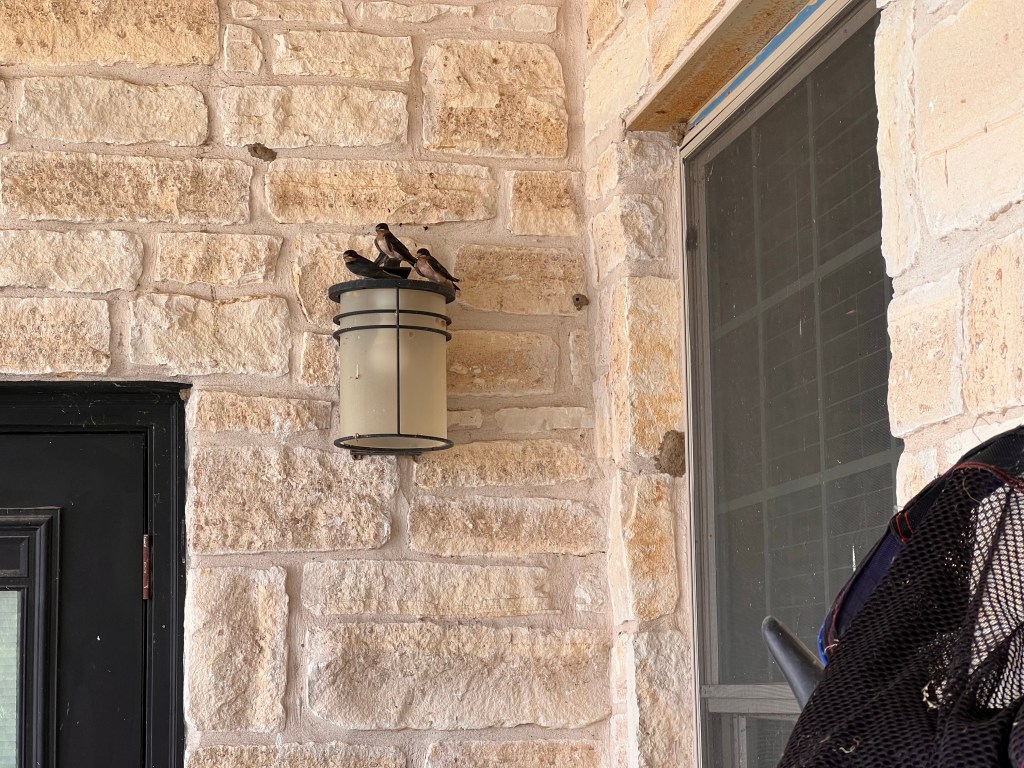
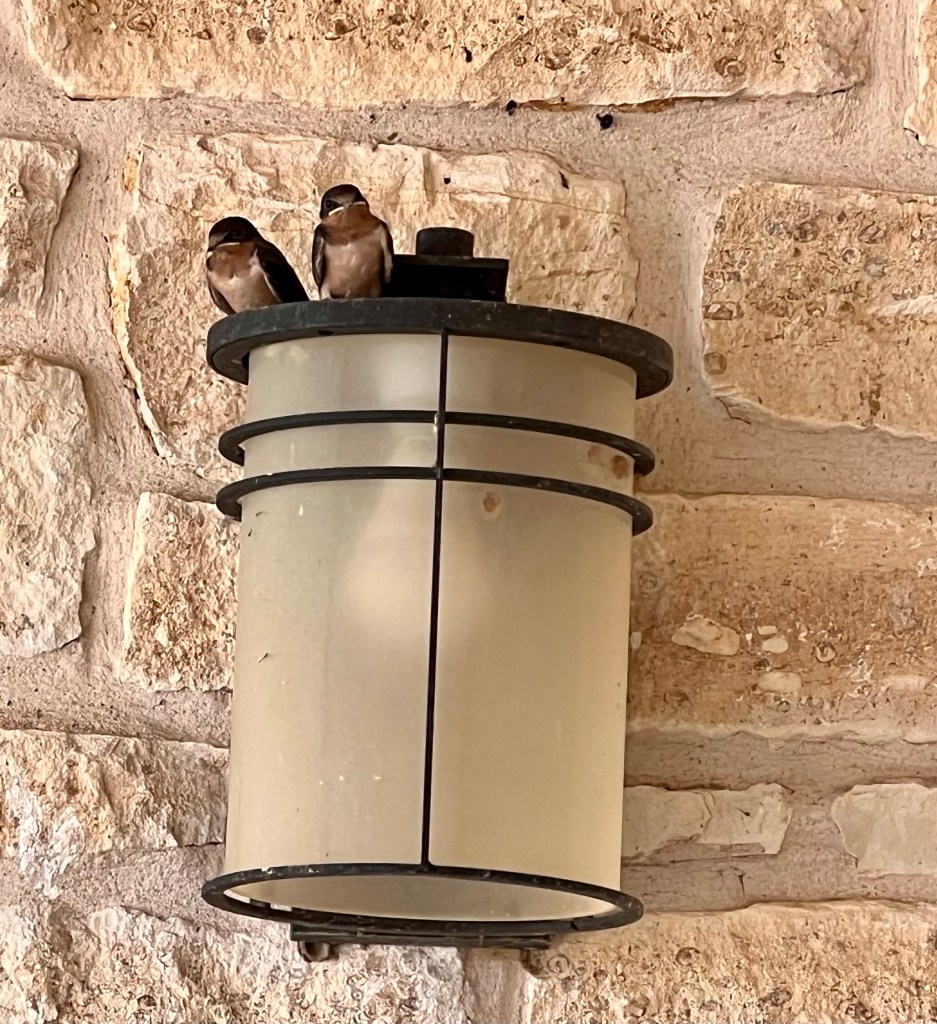
As the babies grew and grew (this is a very loud period on our porches), they began to have a hard time fitting in the nests. We always wondered which day would be the one when they’d fledge. Last week, I was happy to find two of them sitting on the light fixture where their dad usually hung out. Two others looked very un-ready to fly, but by the next day, everyone was swooping around with abandon.
Look Ma and Pa! We flew!It’s cool over here on the lamp post.We are NOT leaving
Here’s a funny thing about these birds. The whole time they have been nesting, they have completely ignored us humans and the dogs as we go in and out of the house, sit on the porch, or swim in the pool. But, after the birds had spread out and were practicing their skills, they started dive-bombing me when I went into the back yard or over to the horse pens. Each time they got to my head they’d make a sound, and I swear as they zoomed back up, there was a Doppler effect. It was really cool, but there was no way I could get a photo, since they always surprised me.
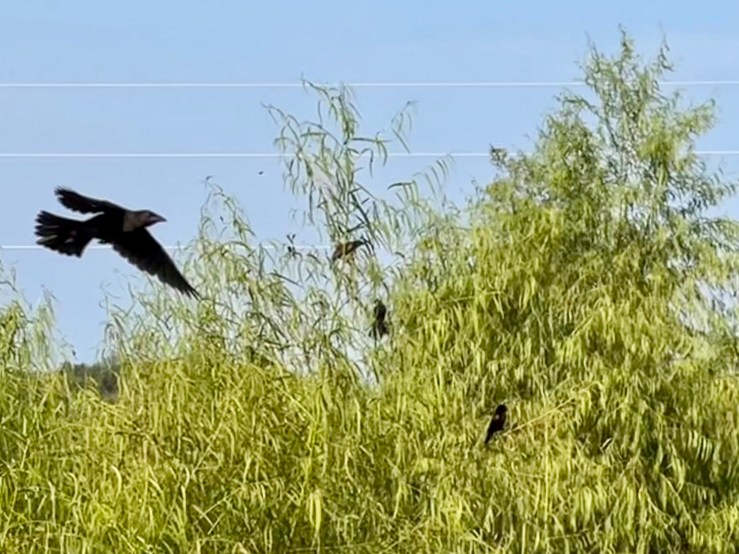
Another local resident that likes to dive bomb humans is the red-winged blackbird (Agelaius phoeniceus). Luckily, they hang out in the willows, far from me.
I am seeing fewer and fewer barn swallows this week. It’s time for them to head off to their non-breeding lands way to the south now that the young ones know how to fend for themselves. They will return in late January or early February. I’ll soon be able to power wash the porches and other poopy areas and enjoy the clean surfaces for six months. (It’s been recommended to put newspaper under nests, but that would not last long at the Hermits’ Rest, wind capital of Milam County.)
Another Nest or Two
I tell my family we are running an aviary, since house sparrows have been nesting away on the porch this year, too. I guess we were lucky they didn’t find us until this year. They are really chirpy and poopy and not native. But the nests are funny.
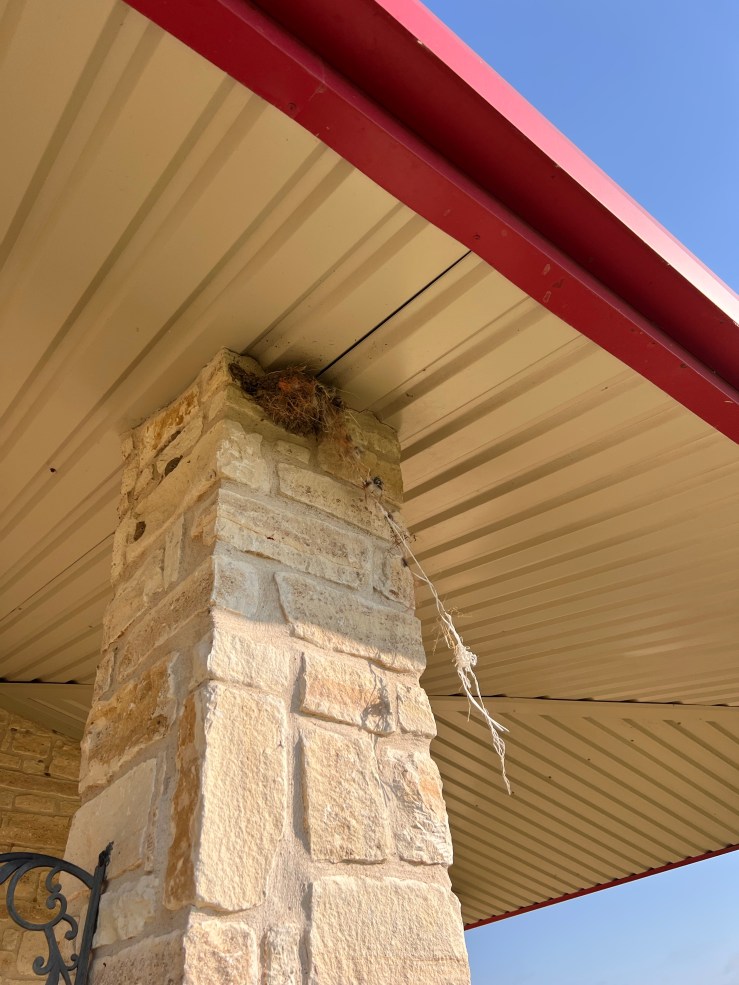
This mess is a sparrow nest converted from a swallow nest. The sparrows have to add their own special touches.
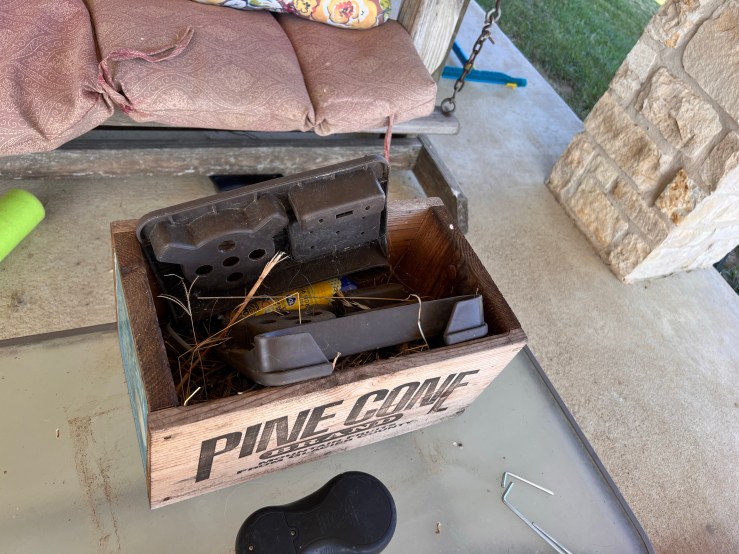
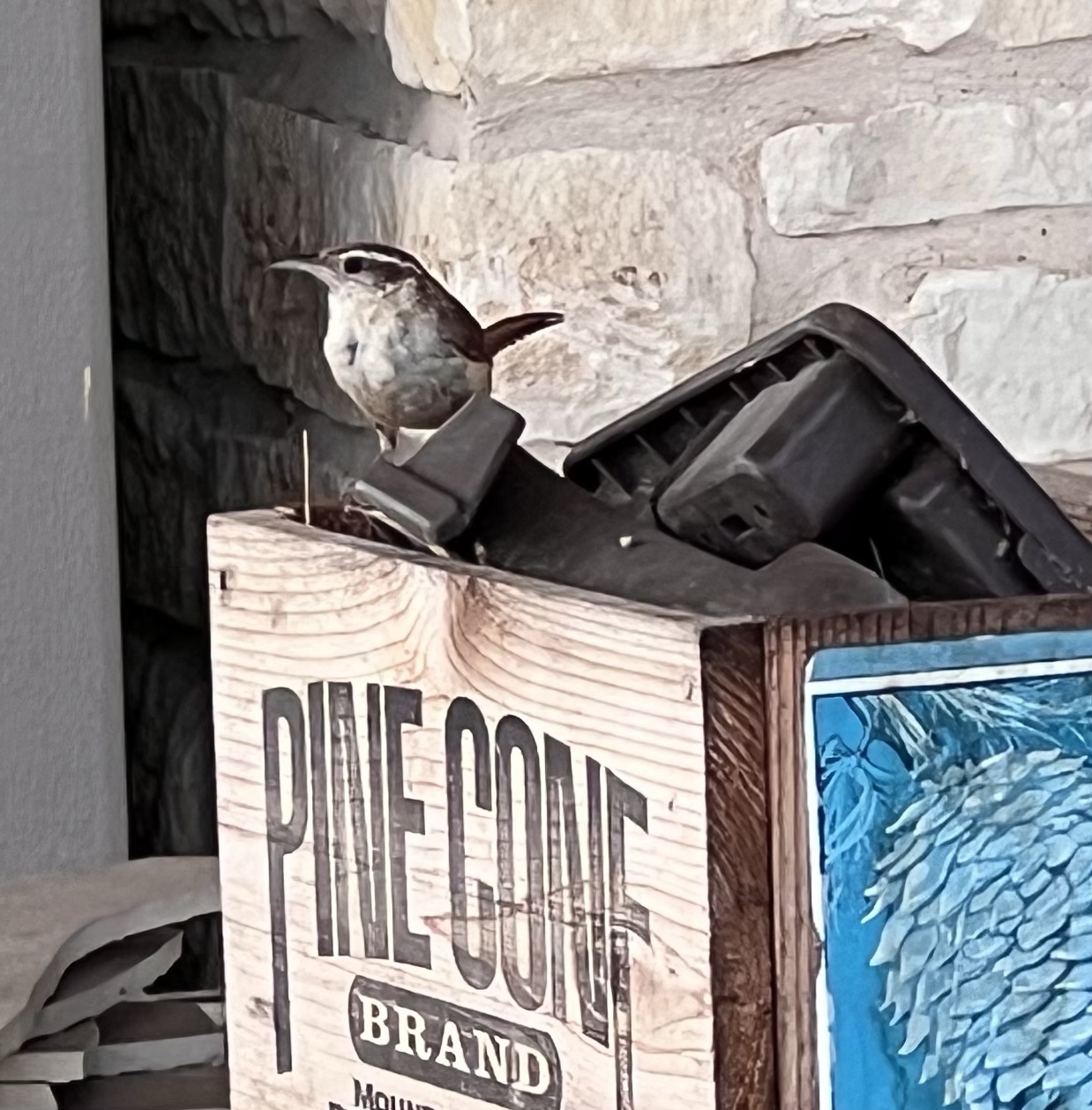
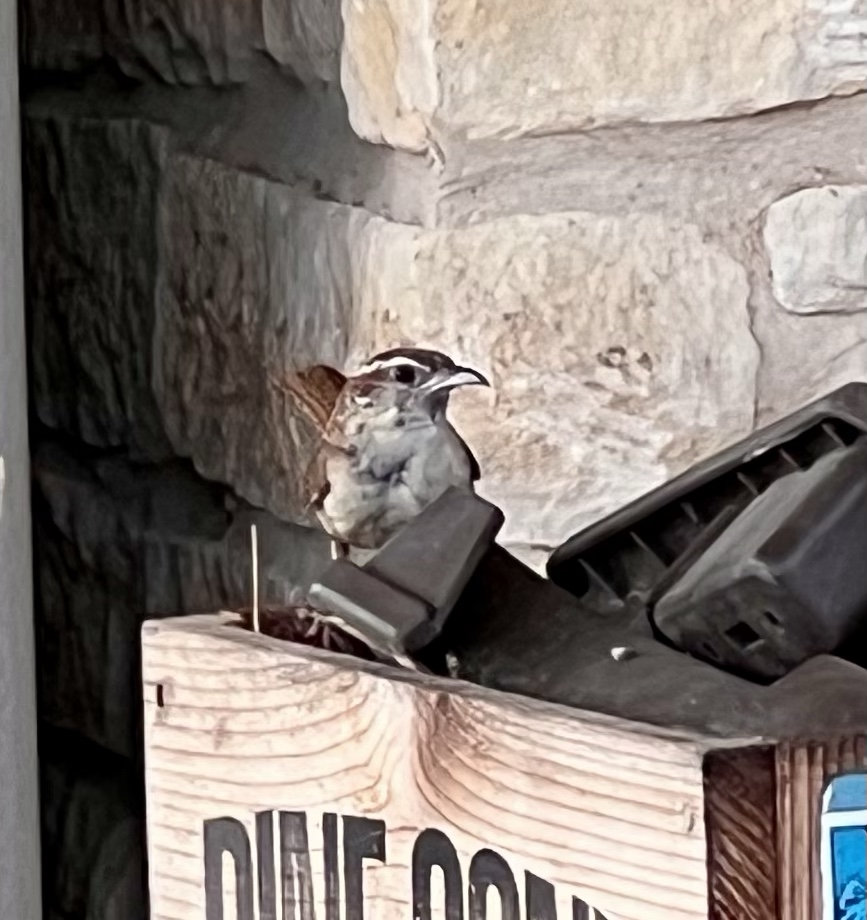
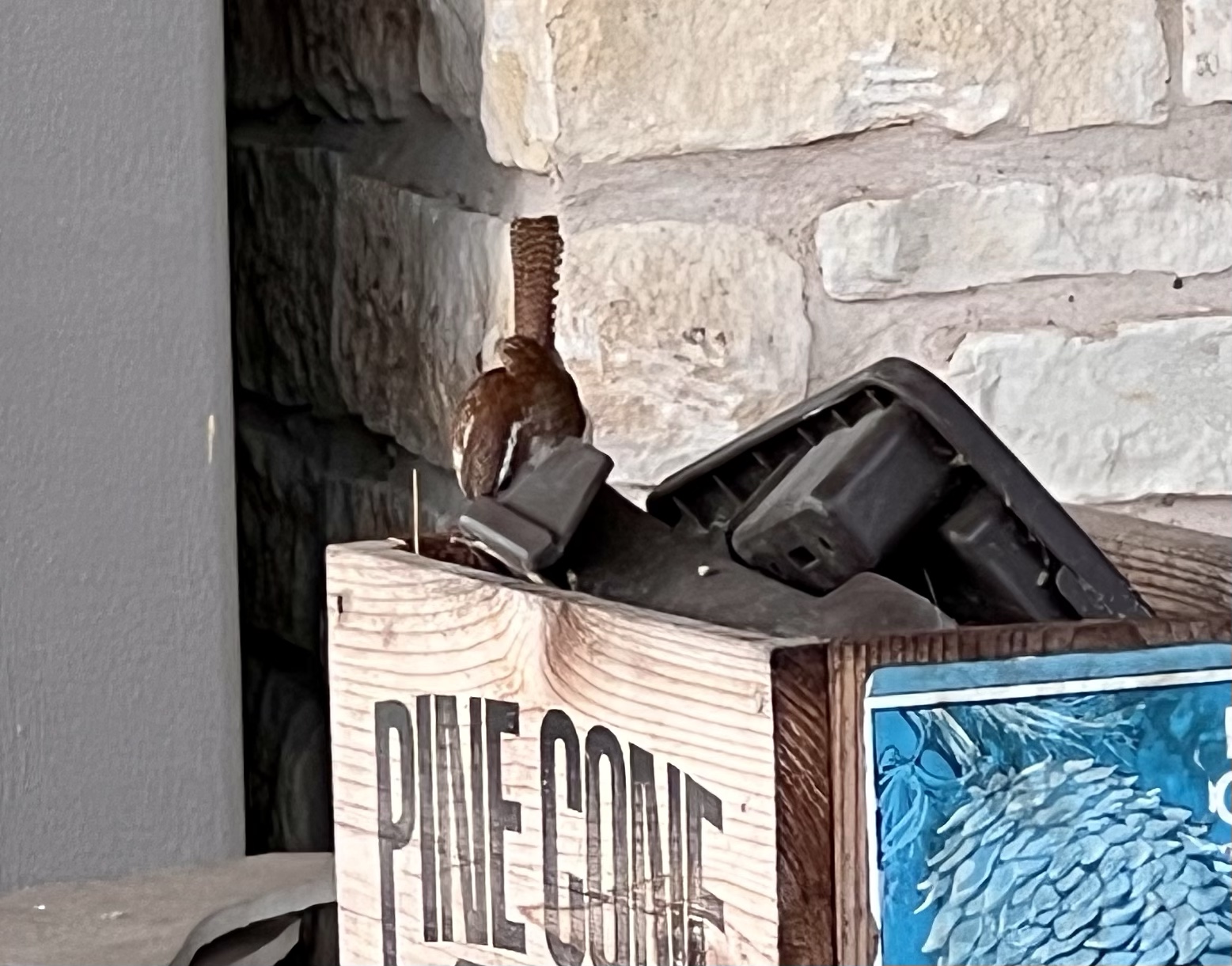
The nest of our third porch-dwelling species, the Carolina Wren (Thryothorus ludovicianus) – also known as my favorite small bird – is much cuter and more fun to watch. These wrens are well known for building nests near human habitations in odd places. We have had families in an old grill, in numerous hanging plants, and in a watering can, to name a few spots. Our current pair have taken up residence in the box that is supposed to hold the pool remote control. I had set a few other items in there to keep the wind from blowing them away, though, and this made the box irresistible to wrens.
The box, with remote control in front of it. Note lots of grass. That’s nest material.
I went to clean out the box and put the remote control back in and was faced by one of my most beloved sights, an angry wren. Oops. I backed off, and we are now giving the growing family their space. The eggs have hatched (I peeked and saw two), so now the parents are taking over from the swallows and putting on a show for us patio dwellers. The pace at which those guys catch bugs and take them to the nest is impressive. We are looking forward to more pretty, fun, and melodic wrens in the near future.
Honestly, I don’t know how anyone can get bored around here!










 Nature Along the El Camino Real