[Better late than never, we’re catching up with contributions!]
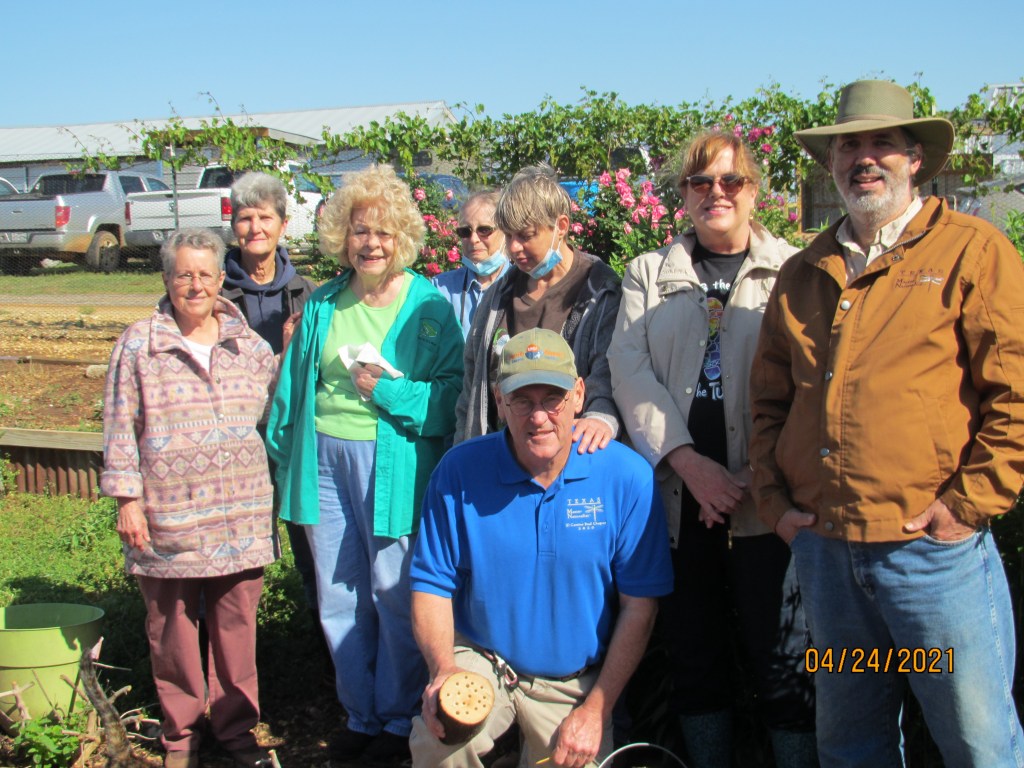
Earth Day at the Birds and Bees Wildscape proved to be a banner attendance day for both members and visitors. There were 15 members of the El Camino Real Chapter of the Texas Master Naturalist present to visit with the 80+ visitors that came to the site Saturday, April 24.
Some of our group! Catherine Johnson, Donna Lewis, Donna Dworaczyk, Joyce Connor, Kim Summers, Carolyn Henderson, Scott Berger, Alan Rudd
Members visited with visitors and handed out bags full of goodies. There were pamphlets, booklets, posters, wildflower seeds, vegetable seeds, bird feeders, painted rocks, and snacks to be had. They also got to stroll through the wildscape and the bird farm.
Catherine Johnson, event organizer, shares educational material and seeds with a visitor.
The wildscape has quite a few blooming plants. I found Zizotes Milkweed and Butterfly Milkweed that are just starting to bud out. Verbena and Blue Sage were big draws for butterflies and bumblebees. The rose bush was in bloom, and the Malabar Spinach is making a strong comeback.
American Lady on verbena.
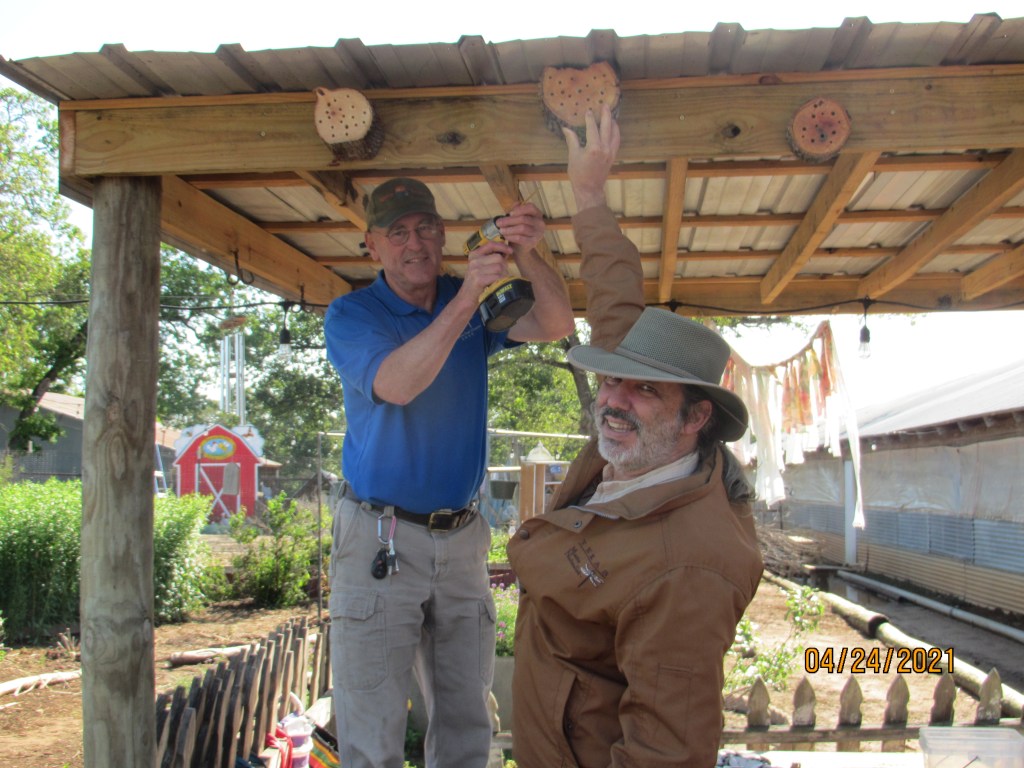
Alan Rudd and Scott Berger hung Mason Bee nests, and Alan gave several to members. He’s tracking where the most of them get nested in the area to decide the best places to put them. Alan, I, and a cute little blonde-headed girl also discovered a stinging plant hanging out around the flowers. It really stings (see our recent stinging nettle post!). Ask the little blond-headed girl. Painted rocks and chocolate chip cookies couldn’t even stop her fussing.
Alan Rudd and Scott Berger hand Mason bee nests.
Members got Guinea eggs that had been laid in the wildscape under a plant, and some new native flowers to plant at home. Alan Rudd took many of the eggs to hatch. I hope we’ll get to see pictures here.
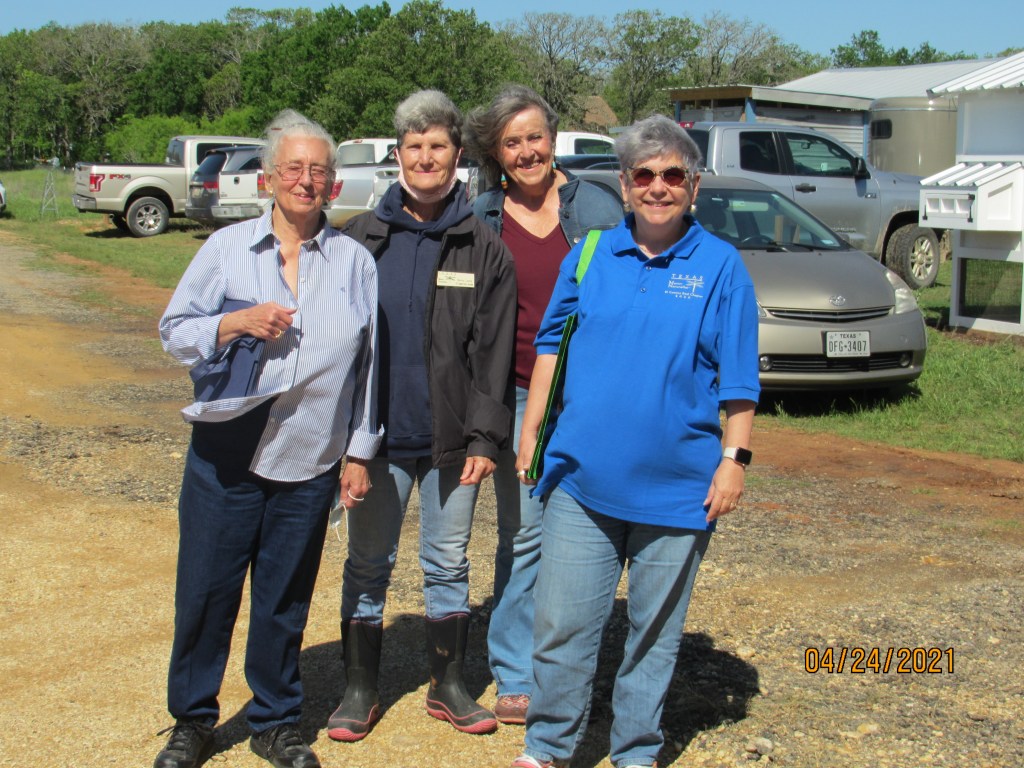
Darlene Rynolds, Donna Lewis, Jackie Thornton, Chapter President Sue Ann Kendall
And a word of caution, wear gloves when cleaning out around the flowers, and don’t leave your phone in your back pocket when you go to the outhouse (that happens to be plumbed).
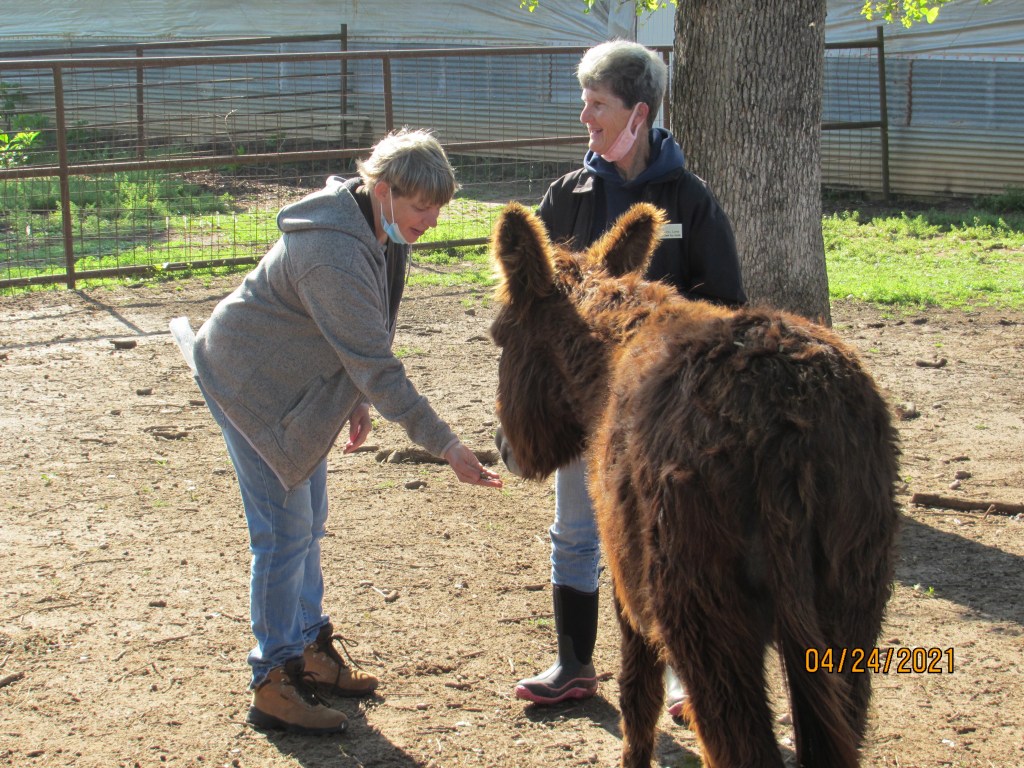
Scott Berger, Liz Lewis, Eric Neubauer, Pamela Neeley Kim and Donna giving the resident donkey some love.
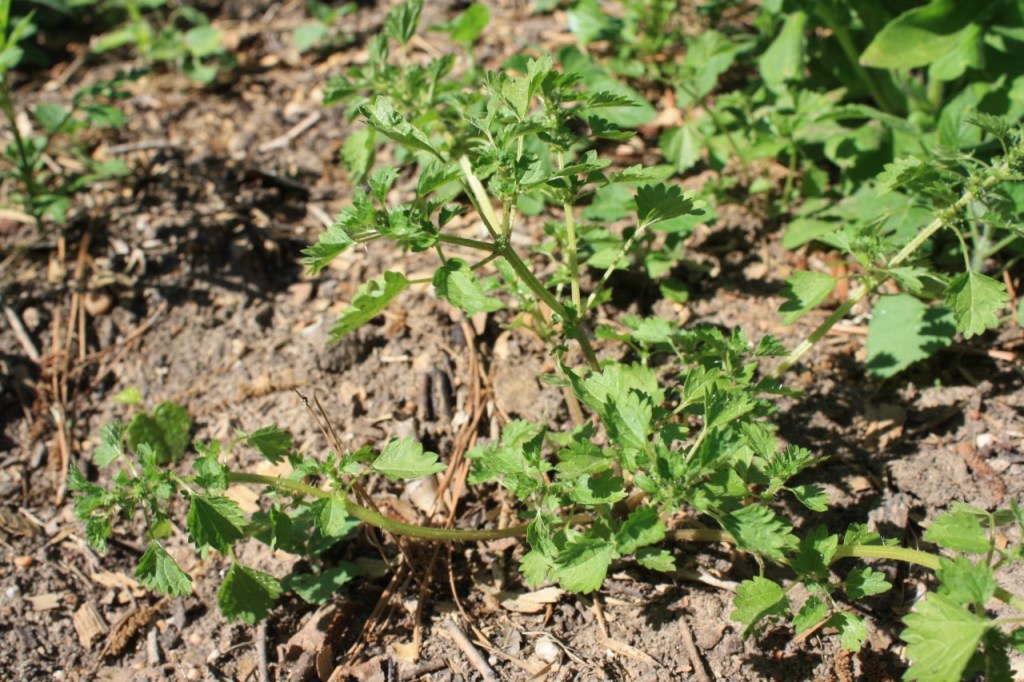
This week, I bare handedly pulled what I thought was a little weed in my garden. Hot Dog!!! The little beauty was a stinging nettle plant (Urtica dioica).
Stinging nettle. The owie plant.
Stinging doesn’t really describe it; it’s more like intense pain instantly!! The family and genus comes from the Latin uro which means “I burn”.
Being a Master Naturalist, I try not to label anything a “weed.” Everything has a purpose for someone. Nettle plants actually have a lot of good things nature and humans can use them for. Here are some examples:
This nettle is the host plant for the Red Admiral and Question Mark butterflies.
It makes a soothing tea.
Parts of it are edible when cooked properly.
The stinging nettle is not to be confused with the larger Bull Nettle, which also has redeeming qualities, like beautiful white flowers.
But, beware to handle it with care. Some leather gloves might help.
I bet, at least for a while, I will be more careful.
PS: This post was from the end of April, but your blogger has had some issues getting posts done. Time to catch up!
[We realize there has been a gap in blog entries. Don’t worry; next week there will be a lot of catch-up posts. Your blog poster has had some “issues” and been out of town, but they are resolving and she’s coming back to Texas soon.]
Today my head’s all full of learning, because I attended the Texas Master Naturalist program’s latest in the Be the Change series, which is a part of our diversity and inclusion initiative. The things I learned completely dovetailed with some of the things I’ve been observing and thinking about in my time in South Carolina, so I’m just processing away.
Where I am not.
I’m one of those “well-meaning white people” who want to help create a more diverse world and be good allies (or co-agitators, as someone said today). I know that some of our good intentions do not go over well, though, so I’m in the learning stage (which today I discovered to be a good thing).
The speaker I listened to today was Alex Bailey, of San Antonio, who founded the Black Outside organization.
Black Outside, Inc has one simple mission: Reconnect Black/ African-American youth to the outdoors through culturally relevant outdoor experiences
Bailey did a great job of coming across as friendly and funny, even when he was making points that could make listeners uncomfortable. One of my favorite things he reminded us was that, although many of today’s black youth have little camping or wilderness experience, that was not always the case. As he pointed out, Harriet Tubman just didn’t pile all those people into an SUV and drive them to safety. He also reminded us that rural black folks have a rich history of fishing, hunting, and living off the land.
While Bailey talked to us about the importance of observing, learning, and reflecting (see graphic below for his actual words) before trying to bring the outdoors to young people of color, he gave us a lot of insights, including some about swimming. He pointed out that well meaning event organizers often include water activities without letting the families of the black participants know they are coming up. Why is this a problem?
This great graphic comes from work by Barbara J Love, so I figure I can borrow it, too.
Hair. That’s the problem. In my day, that may have been an issue, too, because swimming, afros, and Afro-Sheen didn’t go together well, That’s nothing compared to some of the elaborate hair styles young black people have today. You know, those braids could be ruined under water. And if you do an activity that requires a helmet (in or outside water), well, some styles won’t fit, period. Young people might miss out on fun, just because they hadn’t prepared a water-friendly hair style. (And yes, a lot of black women where I am today are NOT dunking their heads.)
That’s just one example where pausing to learn about cultural differences can lead to better experiences. And that’s one reason why Bailey suggested that, rather than volunteer to teach black kids directly, allies can provide materials or training to black mentors who can then work with the kids, who really benefit from seeing people who look like them in positions of authority about nature and the outdoors. That makes a lot of sense to me!
For sure, this was a very helpful step in my journey toward being a good BIPOC (Black, Indigenous and People of Color) ally and a better Master Naturalist, and it reminded me how much I still have to learn. I’m quite glad for that!
I highly recommend that all of you, whether you’re a Master Naturalist or not, head over to the Be the Change page on the Texas Master Naturalist website and listen to this presentation. It’s a great way to get an hour of Advanced Training! You will also find a link to Bailey’s interesting TED Talk and other useful information.
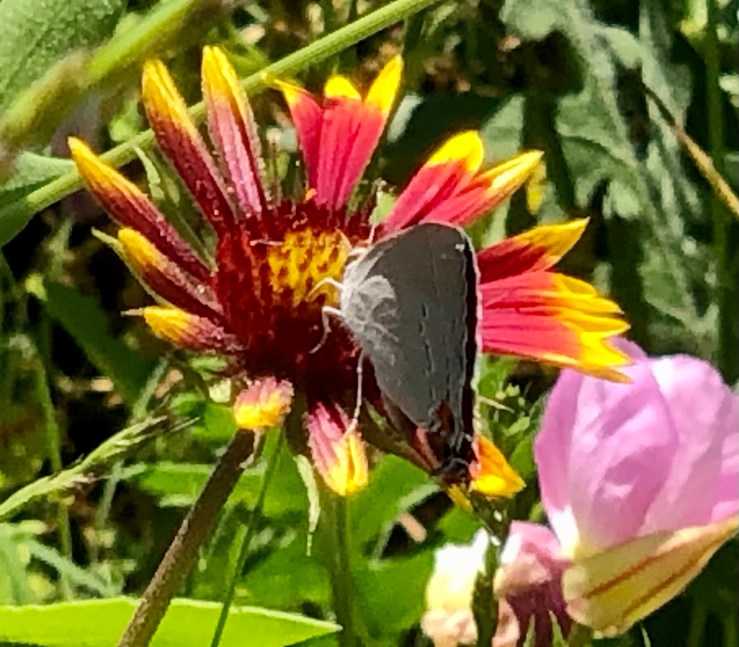
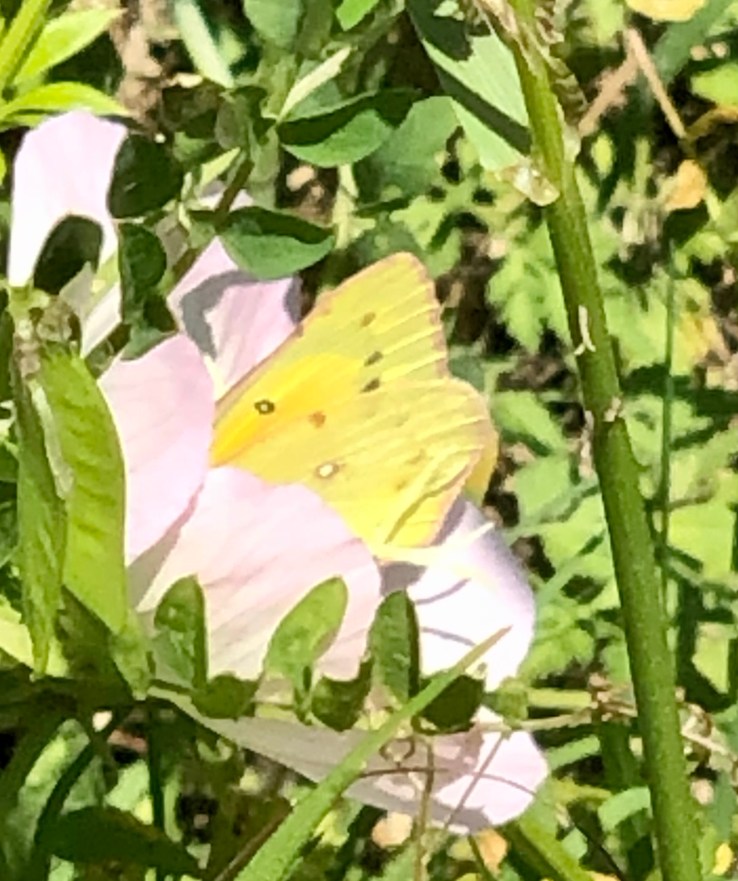
One of the things I like about being a Master Naturalist is that I have learned to be a more careful observer, wherever I go. I’m happiest that I’ve been entering what I see on our ranch into iNaturalist, because I can see when flowers bloom or go to seed every year, when butterflies arrive, etc. Today’s butterflies included these:
American lady
Gray hairstreak
Orange sulphur
Even though our observations on our own property no longer are approved by the state office, I still observe for my own study and analysis. I have a project where all observations here are stored.
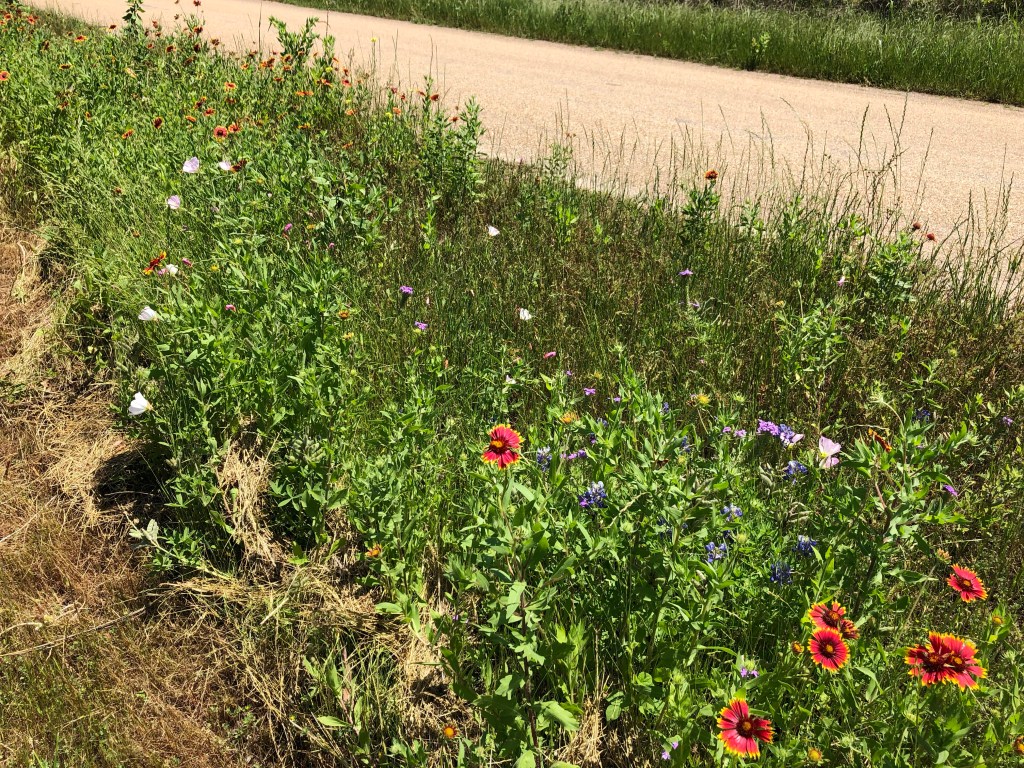
But the public right of way counts!
This year’s been pretty interesting, which shouldn’t be surprising after the weird weather. I’ve been quite surprised to see common plants, like Indian paintbrush, not as prominent, with some new plants popping up.
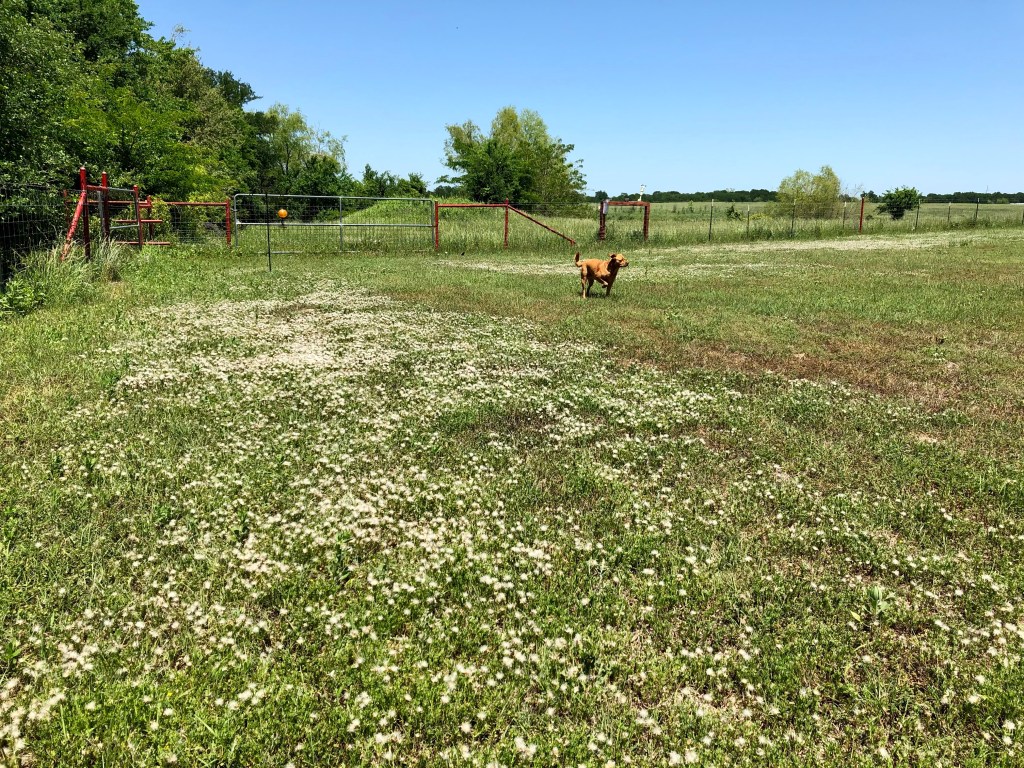
What’s this white stuff?
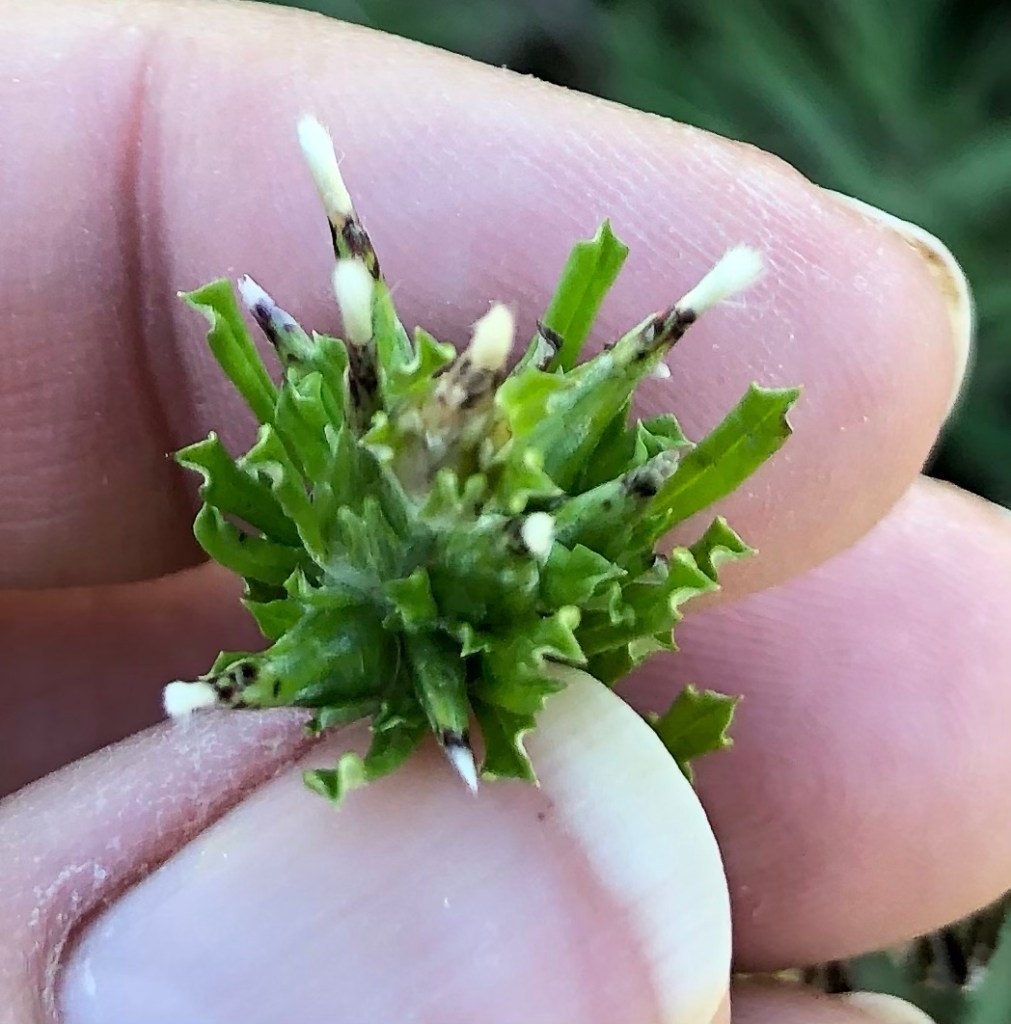
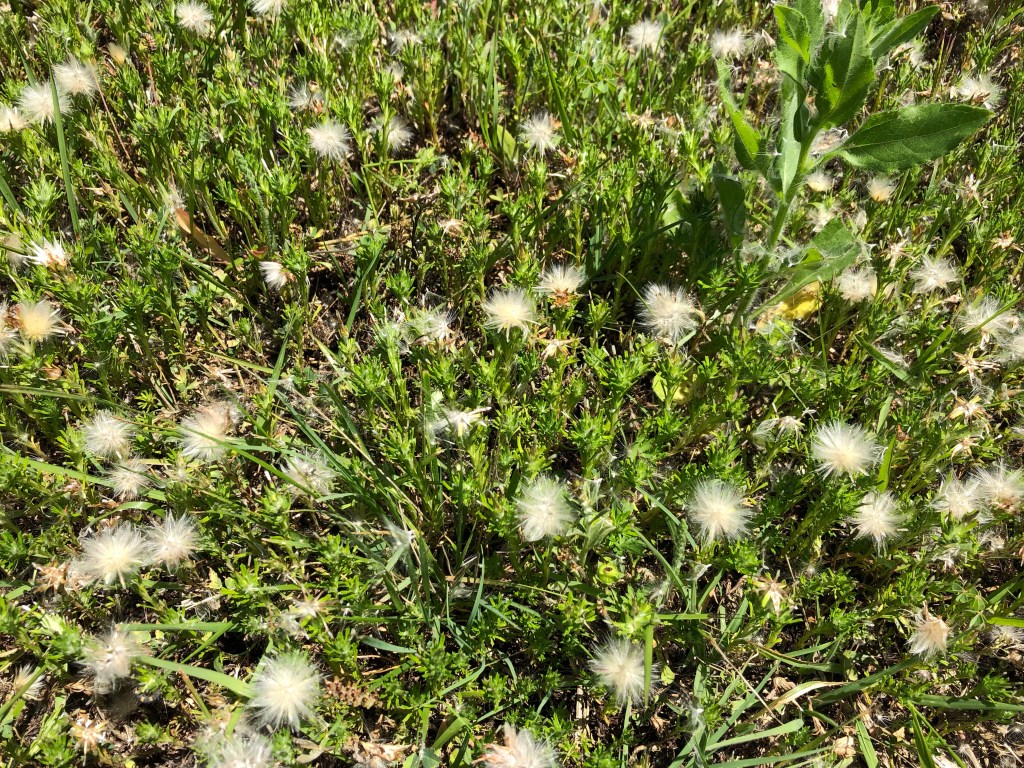
One plant we have in super abundance is this annual trampweed (Facelisretusa). It’s really pretty in early spring. Then, when it blossoms, you don’t really see the flowers, just white buds, followed by exuberant star-shaped seed heads.
The little seed fluff sticks out and looks like a flower bud.
Here’s what the plant looks like, with leaves circling up a stem.
I’d never noticed this plant before, and it’s everywhere this year. Now it’s one of my favorites.
They look so cheerful!
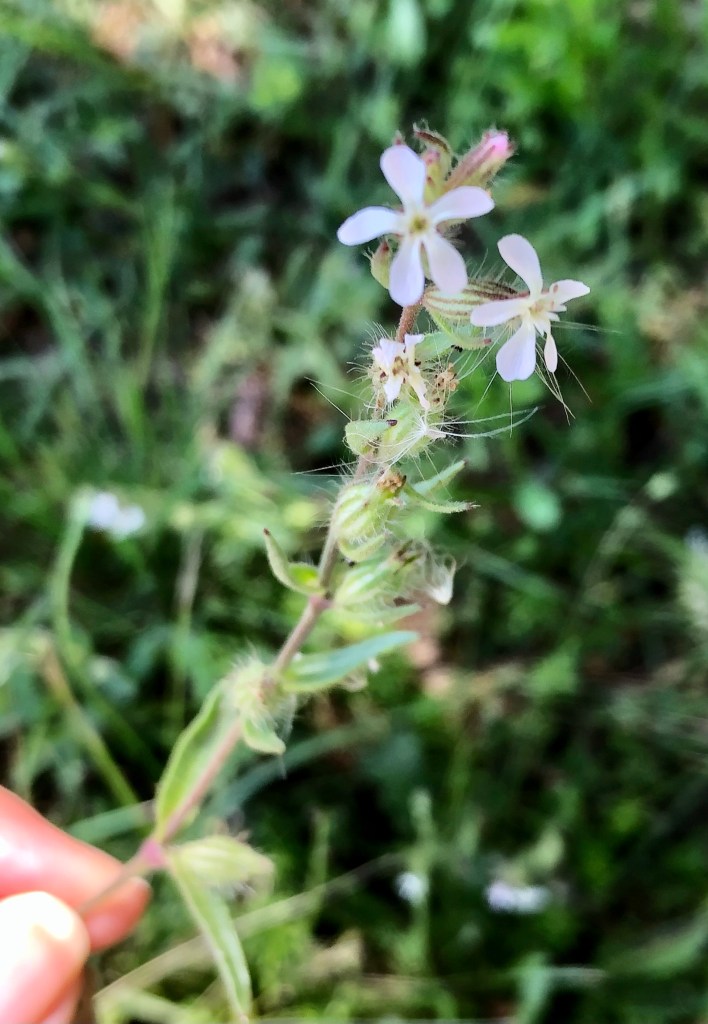
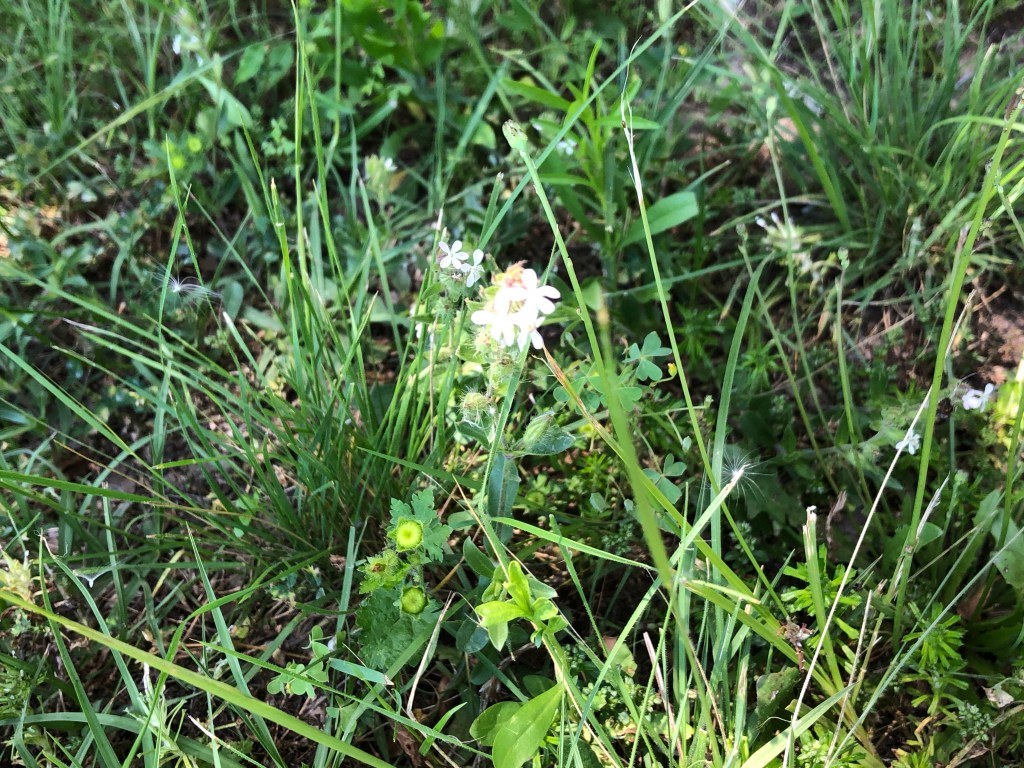
Another plant I’d never noticed around here is small-flowered catchfly (Silene gallica). It’s another one of those tiny flowers from up high. At first I thought it was that chickweed or something.
Small-flowered catchfly.
Once you touch it, though, you know it’s different. You also know how it got its name. It’s sticky! It could certainly catch a fly. You can see all the hairs in the photos.
Here it is growing with some Carolina bristle marrow, trampweed
The little flowers range from pink to white. I had honestly never seen it before. Did I not notice it or did it come in with floods? Is it something that grows better after a hard freeze or two? I’m sure I just didn’t notice it, even though I’ve been trying so hard to identify everything here!
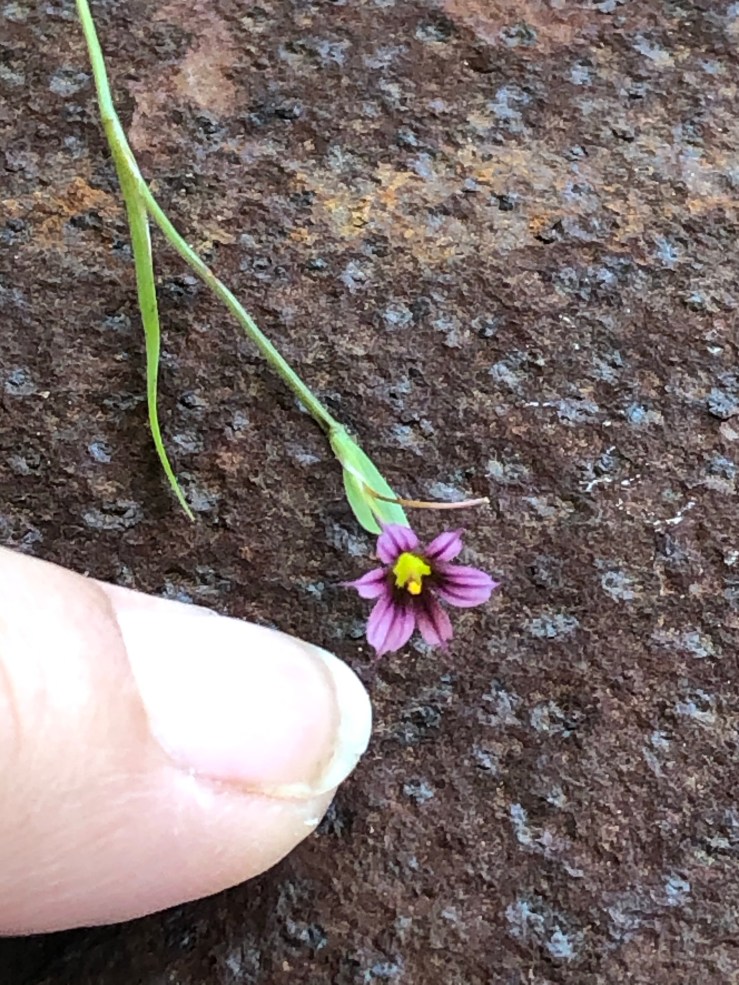
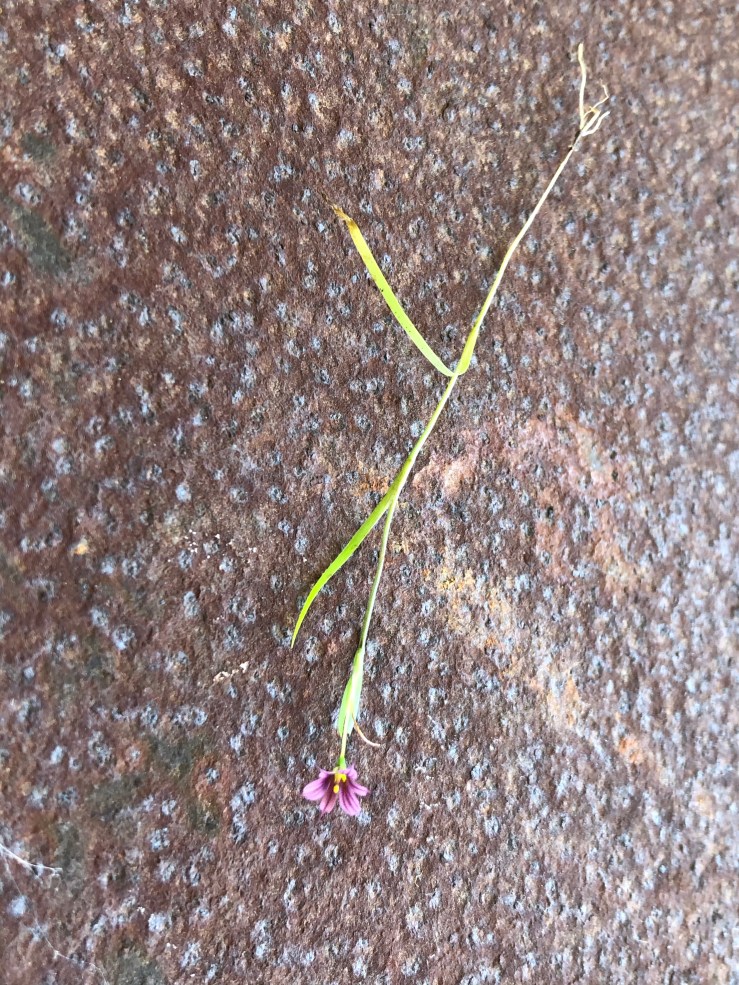
The third “new” plant I wasn’t even sure of its ID. None of the things that are suggested on iNaturalist really match the way it looks, but since I know plants can differ in color from place to place, labeled it dwarf blue-eyed grass (Sisyrinchium minus), and hooray, I was right! Linda Jo identified it for me. It’s another tiny little fellow, but it’s really pretty.
Dwarf blue-eyed grass with finger to show its size, a specimen to show how few leaves it has, and in its habitat.
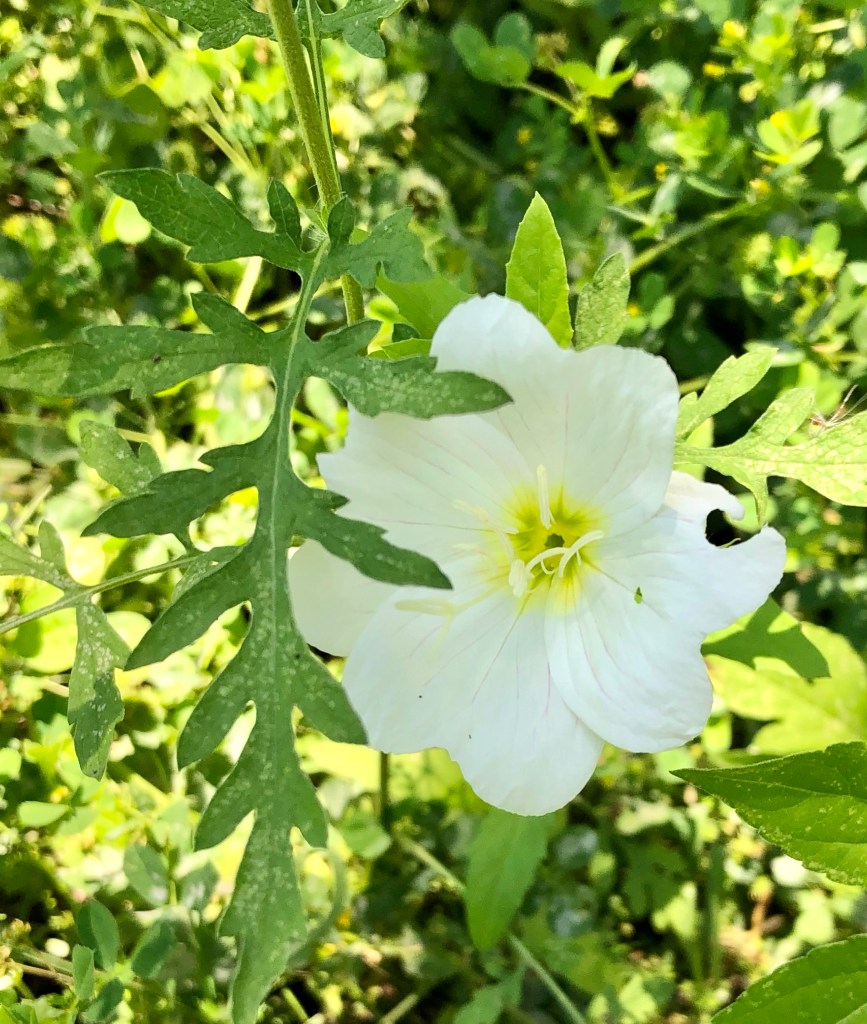
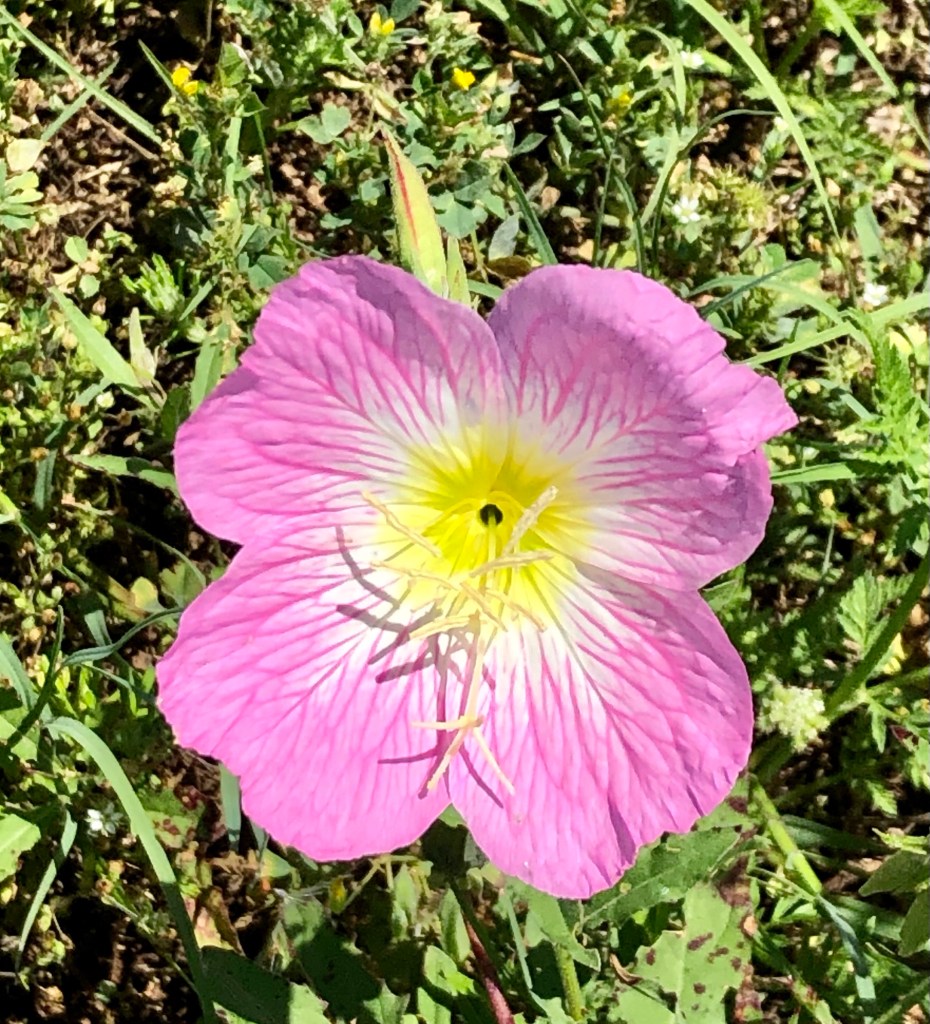
Another “new” plant really isn’t new. It’s a pink evening primrose. But I never saw one so white. I thought it was a petunia from a distance.
That’s quite a contrast to the usual ones, though they do come in many shades of pink.
One of the really pink ones. I know we’ve seen them a lot, but still, they’re gorgeous.
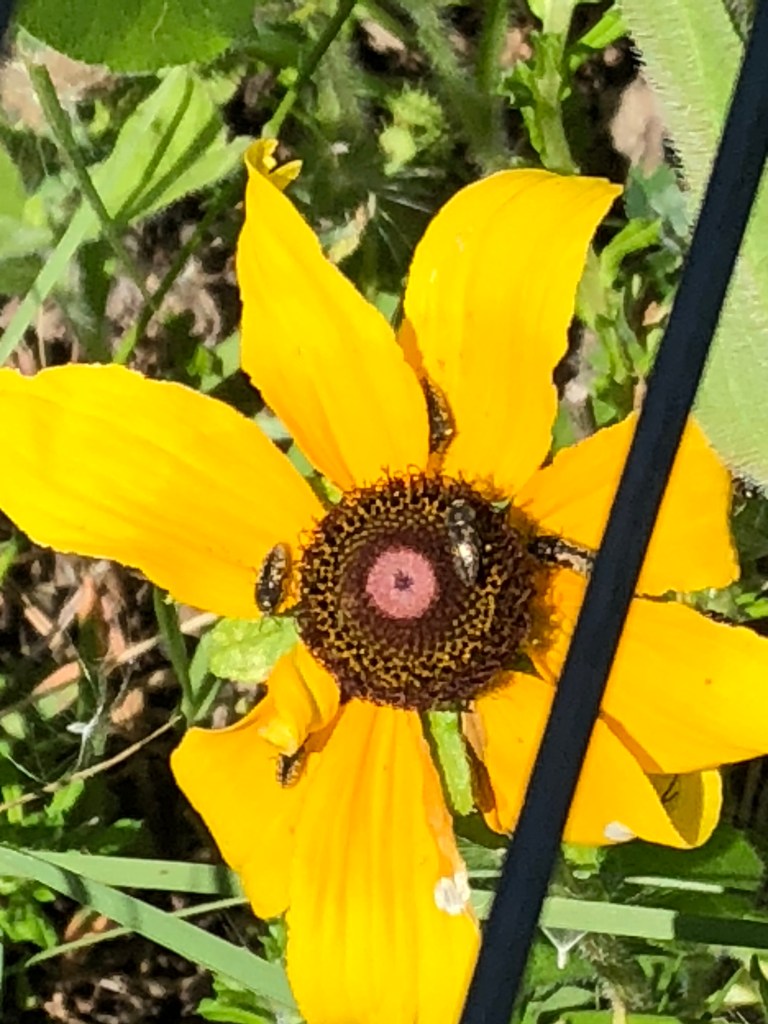
Look at all the bugs on this Black-eyed Susans!
There, I hope you’ve enjoyed a small selection of the fun discoveries I make right on the Hermits’ Rest Ranch. I’m so glad I’ve learned so much about nature in this one special place, thanks to joining the Texas Master Naturalist program.
Please join me, Donna, Pamela, Carolyn, and the others who have shared the nature where they live! Send me your pictures and some words, and let’s share the beauty in our part of the state.
Although some wolf spiders are active year round, this is the time of year when they start to become more noticeable. Except for a few species that are relatively easy to identify on sight, these can be very difficult to get down to species level. There are two main reasons. First, there a lot of genera and a lot more species. You are most likely to see are Rabidosa, Schizocosa, Pardosa, Hogna, and Tigrosa in our area which isn’t too overwhelming. However, the second and third of these include over two dozen species locally. The second reason is that most keys rely on microscopic details. There are macroscopic differences, but these haven’t been compiled in any comprehensive way. It may be some time before wolf spiders become as easy to identify as birds or butterflies, but I believe it will happen.
Unidentified juvenile Hogna. More on this one below.
Where to find them: wolf spiders live in diverse habitats. Margins of mowed areas, shorelines, road edges, and leaf litter are good places to look. They are noticeable because they run around in the open looking for prey. They they like to be where there is a way to escape whether it’s into tall grass, under leaves or onto the water’s surface. Many live in colonies, so if you find one, you can probably find more. I find the best time to look is when the temperature is above 70 and humidity is high. On sunny calm days, you can find them active at lower temperatures because the ground warms before the air. And, they aren’t always large. There are some species that have a body length of 0.15” or 4 mm when mature. Males tend to be smaller and a bit more lively than females, and they are harder to catch. As far as I know, none of the local wolf spiders have a dangerous bite, and they won’t bite without a lot of provocation.
How to photograph them: good photos are important if you hope to make a species ID. Wolf spiders can usually be encouraged to run into an open container. Wolf spiders can jump, but do so more in a horizontal than vertical direction. They can climb, but not as well as other spiders. They will remain in the container until you get some good photos. Size is important, so if the bottom of the container has markings, you use them to scale the body length. Ventral views are important too. Looking up though the bottom of a clear container works. Others put the spider in a plastic bag so it can be flipped over. I try to release spiders close to where I found them when I’m finished with them. If you do all this, you might just have the clue that points to the species.
Unidentified Hogna, from the bottom (Hogna incognita)
Study populations, not individuals: Once you find a colony of spiders, visit it often and make a full collection of photos including males, females, females with egg sacs, females covered with spiderlings, and juveniles. Most experts wouldn’t dare identify a juvenile from a photograph at present. They do look a little different than the adults. However, from my experience working with two species, the juveniles are not only distinctive, but are more consistently patterned than the adults which will have developed some individual “character” in their appearance. In the future, the juveniles may provide the necessary clue for the species of an entire colony.
Thin legged wolf spider, genus Pardosa, with egg sac
Legs: I’ve noticed wolf spiders missing legs. Usually it’s one or two, but I have seen as many as four missing. Males are more likely to be missing legs than females. Legs can regrow, so you may notice a leg that doesn’t look like the others.
Pardosa male missing two legs, with a third that doesn’t look too good.
Recent Observation Notes from Bird and Bee Farm Trip
I continue to be surprised how finely placed the populations of wolf spiders are. At the pond dam, I found a couple of juveniles near the highest point. The first was one of my Hogna incognita (undescribed species). The other was Rabidosa rabida which seems to be species that appears everywhere in small numbers rather than being clustered in populations except perhaps around buildings. I found no more spiders until I got to the boat ramp at the far end of the dam. That’s where all the Pardosa were. The Pardosa may be all one species which would be good since most places I see them there appear to be multiple species that I haven’t been able to sort out.
Pardosa seen at Bird and Bee Farm.
I stopped at the Little River bridge north of Gause and found no spiders there. Then, I checked out the San Gabriel bridge on CR 487 east of Crossroads, which has an inspection road around and under the bridge. A bunch of spiders were in a pile of leaves that someone had dumped. I’d thought they were Pardosa at the time, but a closer look at the photos suggest Schizocosa juveniles. So, I found all four of the most prevalent genera in Milam County on my tour.
The H. incognita find was of interest. Although it seems to be mostly a Blackland species, this personally confirms it is present elsewhere, which I already figured would be true from other people’s observations. Nevertheless, its range may stop abruptly at the Brazos River. I’ll be testing that out in the next few months when they are active.
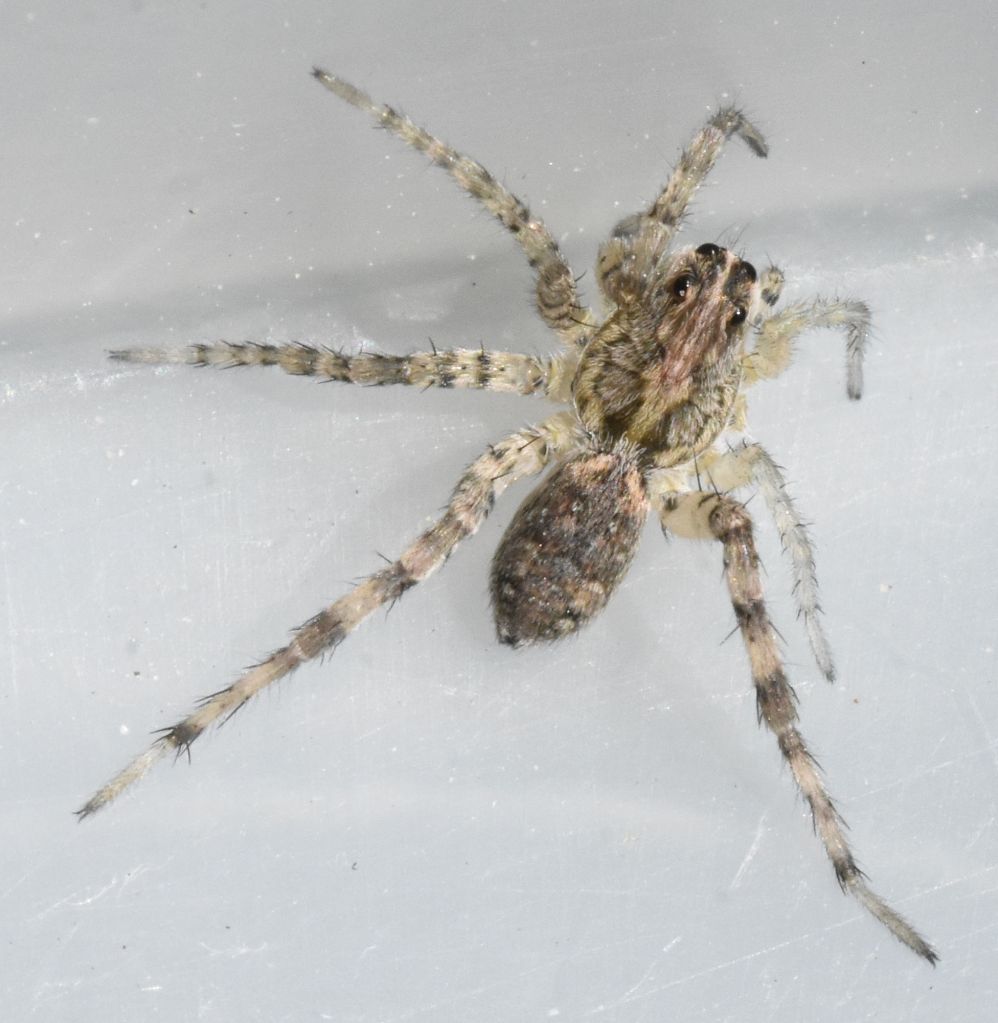
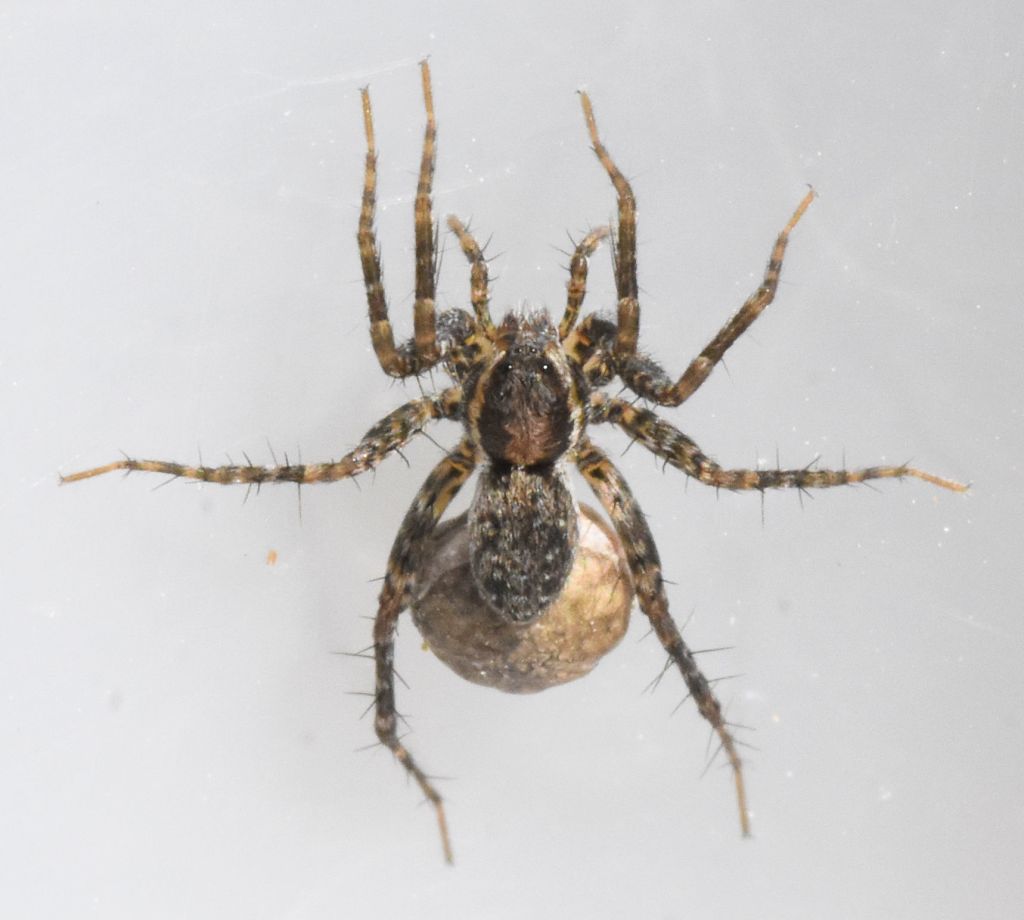
Here are some more wolf spiders to practice on. All photos by Eric Neubauer.












 Nature Along the El Camino Real