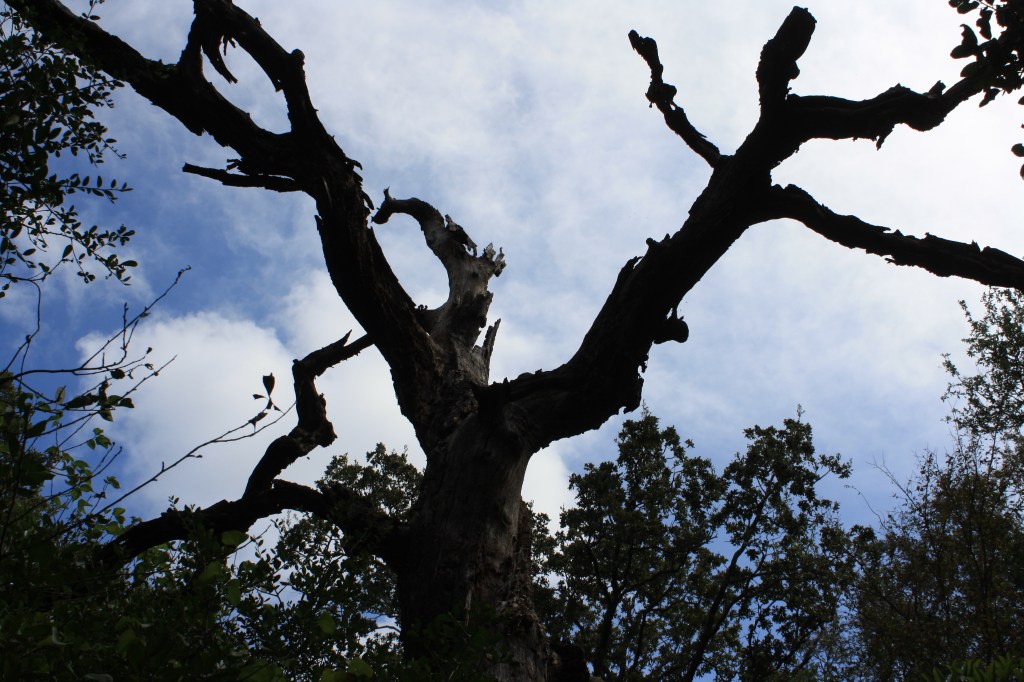
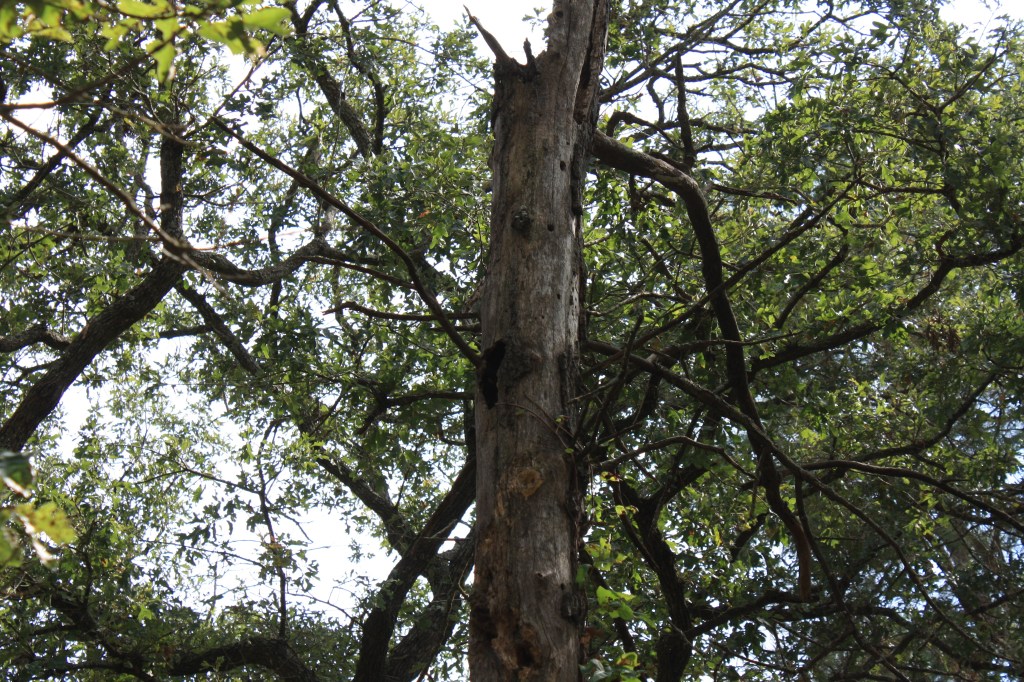
Trees that have died and are still standing (snags), and trees that have fallen provide many homes and food for wildlife. Here are some examples.
Excavated cavities provide homes for woodpeckers.
When they leave a cavity, secondary nesters move in. These include chickadees, titmice, wrens, and bluebirds.
The hollow part of limbs also house owls, raccoons, squirrels, and some bats.
Many invertebrates, reptiles, amphibians, and mammals live in or on fallen trees.
Fireflies use decaying logs to complete their life cycle.
The hollow trunks provide homes for skunks, foxes, mice, and weasels, to name a few.
That’s a ton of uses as a tree finishes its life. It helps coming and going….as a fallen tree decomposes it provides nutrients back to the forest floor.
So, you might think twice before cutting a grand old tree that has died down. Of course there are times when you have to remove one, like being too close to a structure or fence. But if it’s a safe distance, then save it for our wildlife.
In 2018, wheat was planted here at my property, where there was once blackland prairie. Since then, nature has taken over. A mix of native and non-native grasses and forbs quickly came up by themselves. Each year the mix changed, but by 2021 it was obvious Johnson Grass was a huge threat and would eventually outcompete and overwhelm everything else. I was reluctant to use herbicides, because they might affect the plants and animals that I wanted to keep. For example, it’s unlikely anyone tested the effect on wolf spiders. So, I was left with only mechanical means of control.
I decided to focus only on the Johnson Grass to keep it simple. I came up with several plans depending on how thick the Johnson Grass was and whether an area would be mowed. One image shows an area where I pulled the Johnson Grass and ragweed starting early in the year. It looks pretty nice now and only a few unwanted seedlings have come up since. I’ll mow this area in early spring before the bluestem comes up and after it goes to seed. You can see some Johnson Grass I haven’t gotten to lurking in the background on the right.
The other image shows where the mowed area meets the unmown area. Johnson Grass doesn’t like regular mowing. There are numerous small plants in the foreground, but these have limited root systems and will die or are easy to pull. King Ranch Bluestem tolerates regular mowing. I mowed around the plant in the foreground and now it’s going to seed. I mowed around other plants, primarily legumes, and hand pulled any Johnson Grass that didn’t get cut. In the background is a mass of Johnson Grass. I’m hand pulling this. You can see little of anything is left except leaf litter where I have pulled it to the right. Some will regrows, and I’ll have pull it again, but subsequent pulling goes much quicker than the first. In the meantime, other plants, such as asters, now have enough light to spout and grow. By the way, if you hand pull Johnson Grass, wear good gloves. Otherwise it can give you a nasty cut if your hand slips.
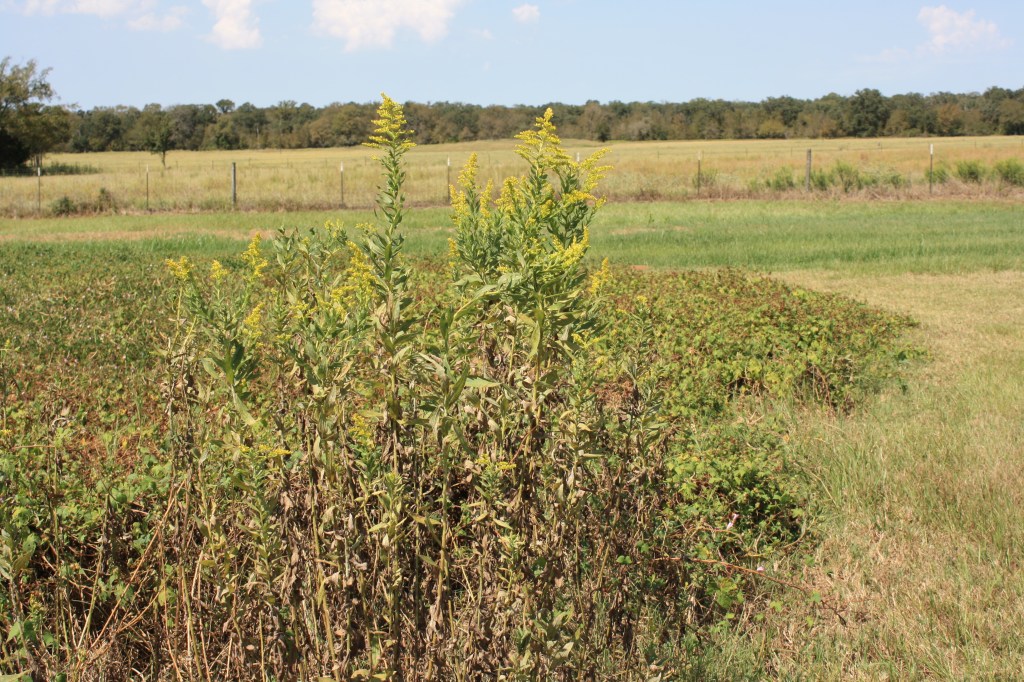
Other areas I’ve promoted with selective weeding are stands of goldenrod and a large patch of frogfruit where water collects sometimes.
It’s possible another threat will rise out of the several species of non-native grasses present, but for now I have a plan.
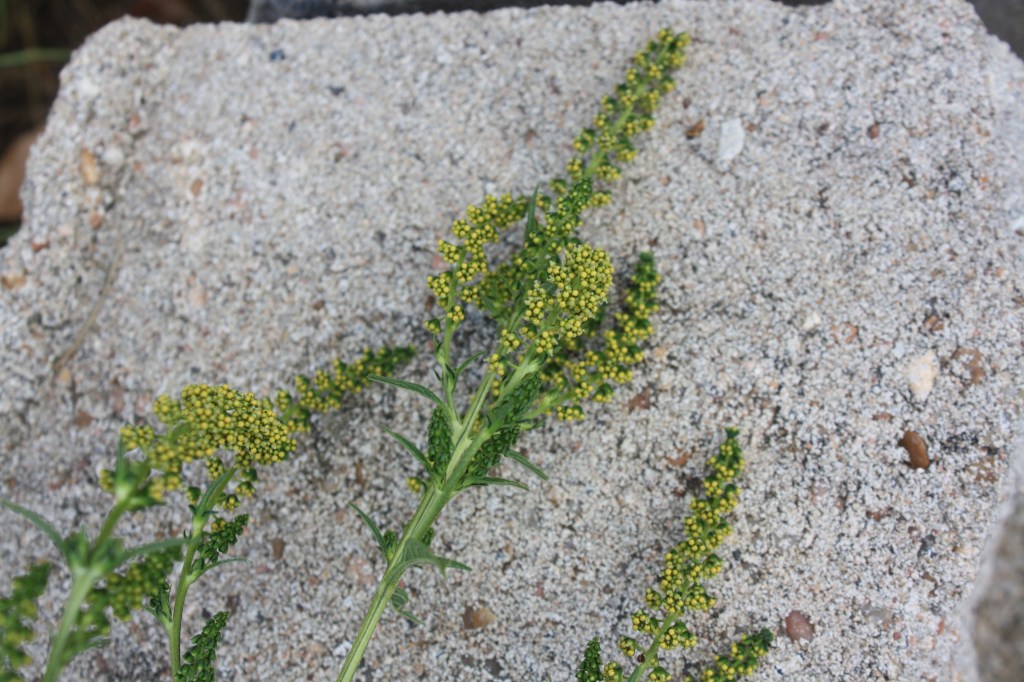
If you have some or all of these you probably have Giant Ragweed ( Ambrosia trifida). I certainly don’t think it’s ambrosia…it’s awful! I don’t see how you could make rags out of it. Where do these names come from?
Ragweed
So are they good for anything? As it turns out, I looked in my reference book, Medicinal Plants by Peterson and found out that the native Americans did use it for certain ailments. They used it as an astringent, to stop bleeding, dysentery, and insect bites to name a few. Today it is commercially harvested for the treatment of ragweed allergies.
It’s everywhere!
So, yes it has a few saving characteristics.
The flowers are pretty, though.
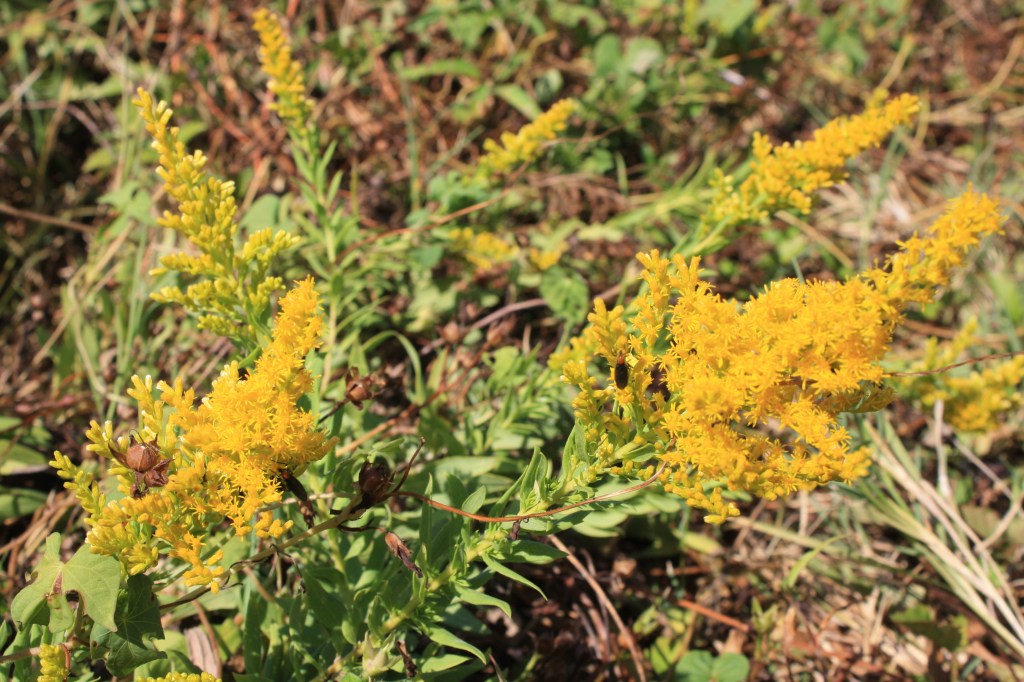
Also out in the pastures right now is a very valuable plant that our migrating monarchs use. It is in the Sunflower family: goldenrod.
Goldenrod
The native Americans used this for many medical issues: roots for burns, flower tea for fevers and snakebites, crushed flowers for sore throats, and some other ailments.
Both these plants can cause severe allergic reactions, so don’t try any for medical ailments unless you have asked your doctor first.
Birds where everywhere Sunday at Wilson-Ledbetter Park. I came upon a few out of the ordinary species while walking the park to contribute to the GTWT Adopt-A-Loop project with the Texas Nature Trackers/Texas Parks and Wildlife Department and iNaturalist.
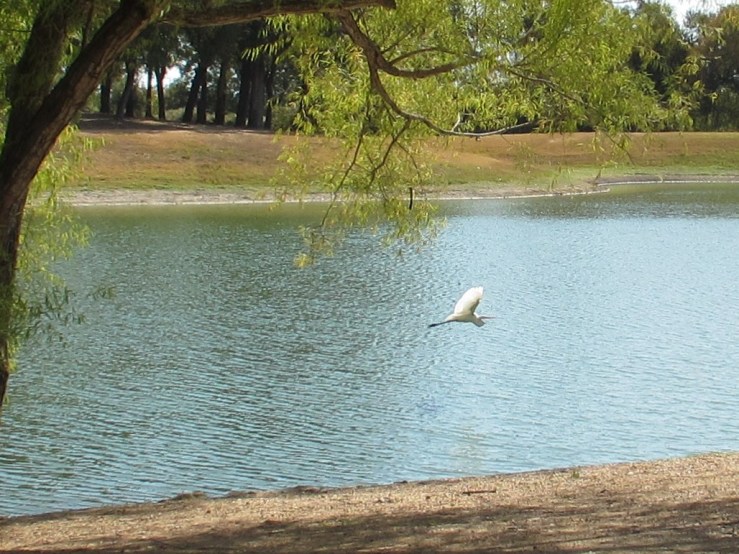
Great Egret
Normally, flora is abundant in that park, but most things were wilted, or dried up and gone, which is primarily due to the lack of rain in August and September and mowing. I heard on the local weather report that September has been a record dry month here in Central Texas. There were a few butterflies, but they were sparse, too, probably because there are very few nectar-producing plants right now. But the birds showed up.
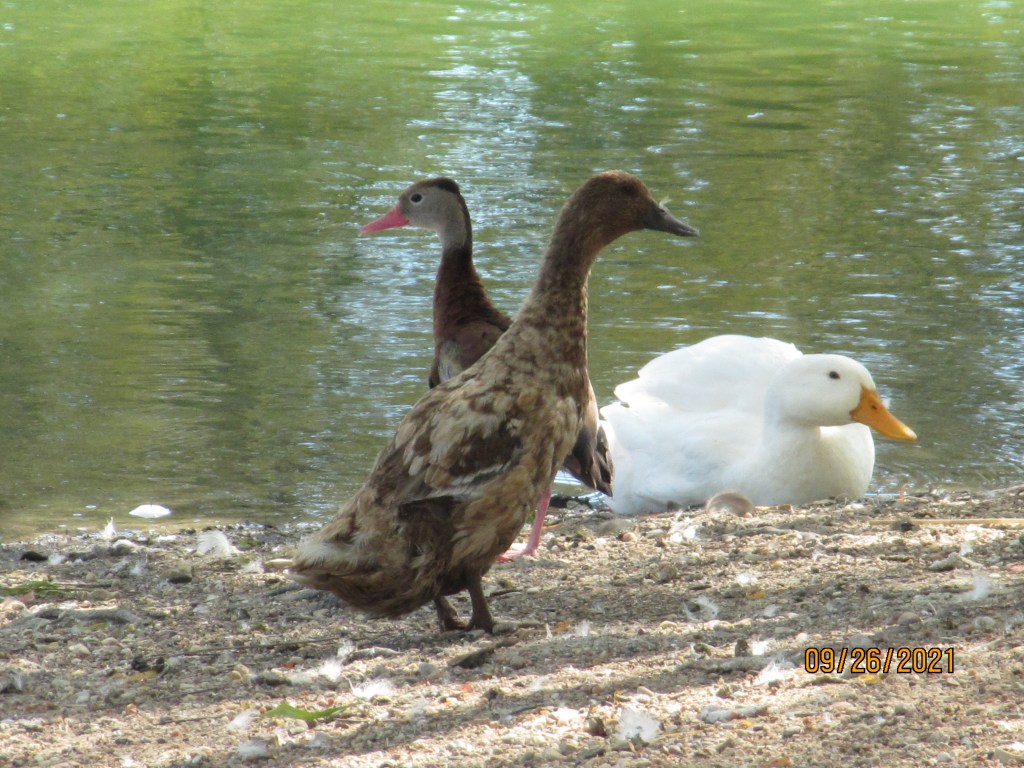
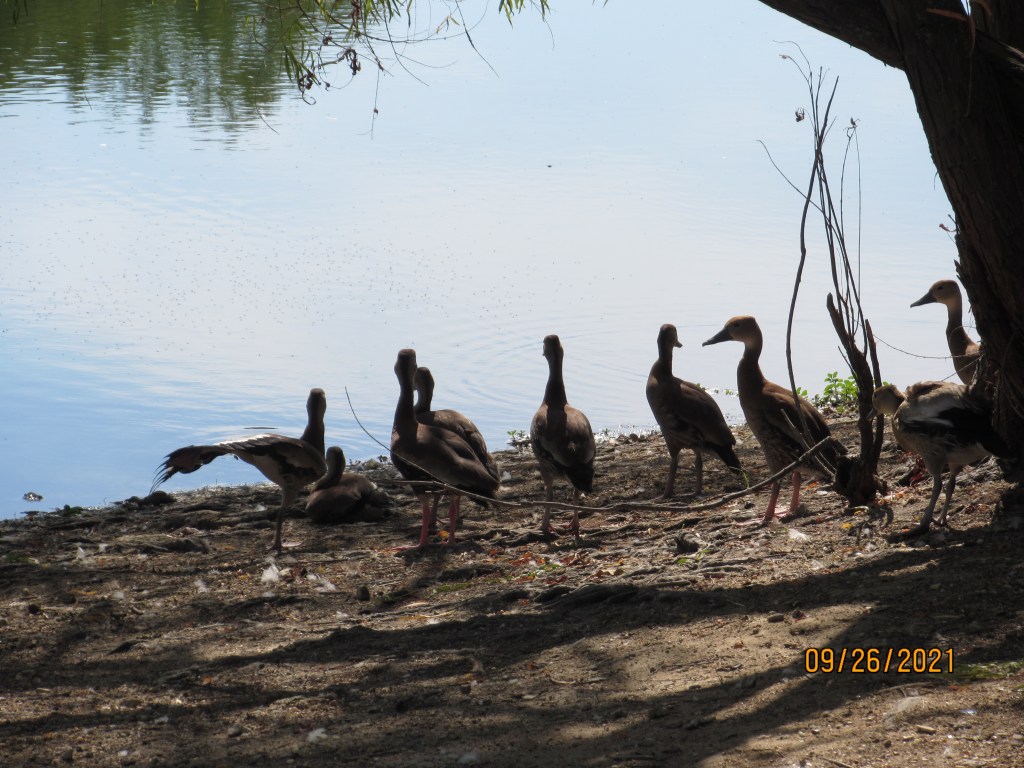
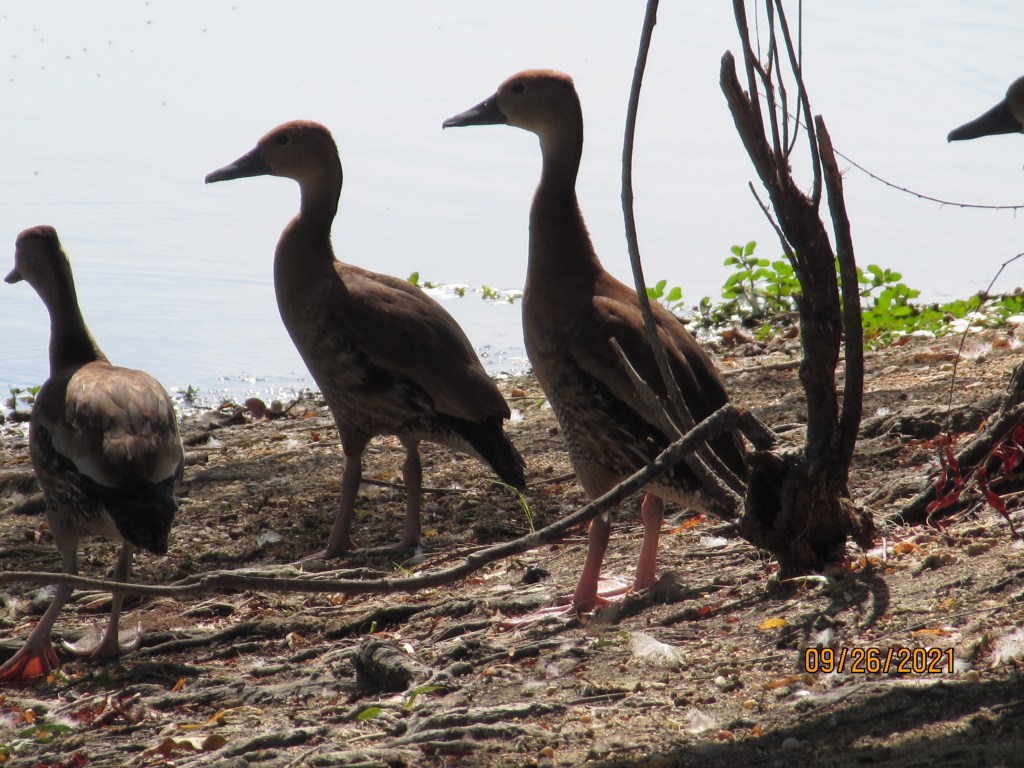
There were domestic mallards that I would called mottled, mallards, mallards x muscovy cross, black-bellied Whistling Ducks (juvenile), and pekin ducks. The ducks appear to be intermingling.
Mallards
Mix of ducks, including mallard X muscovy
Black-bellied whistling ducks
Black-bellied whistling ducks
Ducks and more ducks
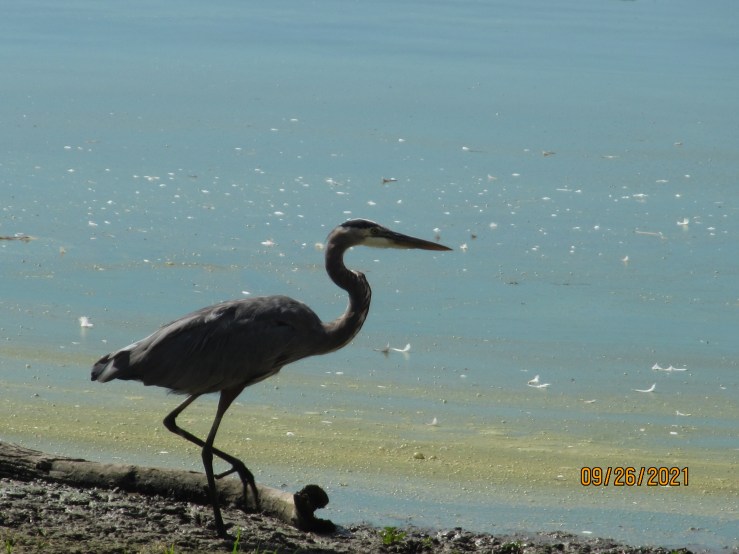
There were green herons, great blue herons (which kept stealing fish from the green heron), and a great egret. Watching the Great Egret fly over the pond was beautiful – until it landed (see top photos). It was comically ungraceful when it landed in a large patch of floating primrose-willow.
Green heron
Blue heron
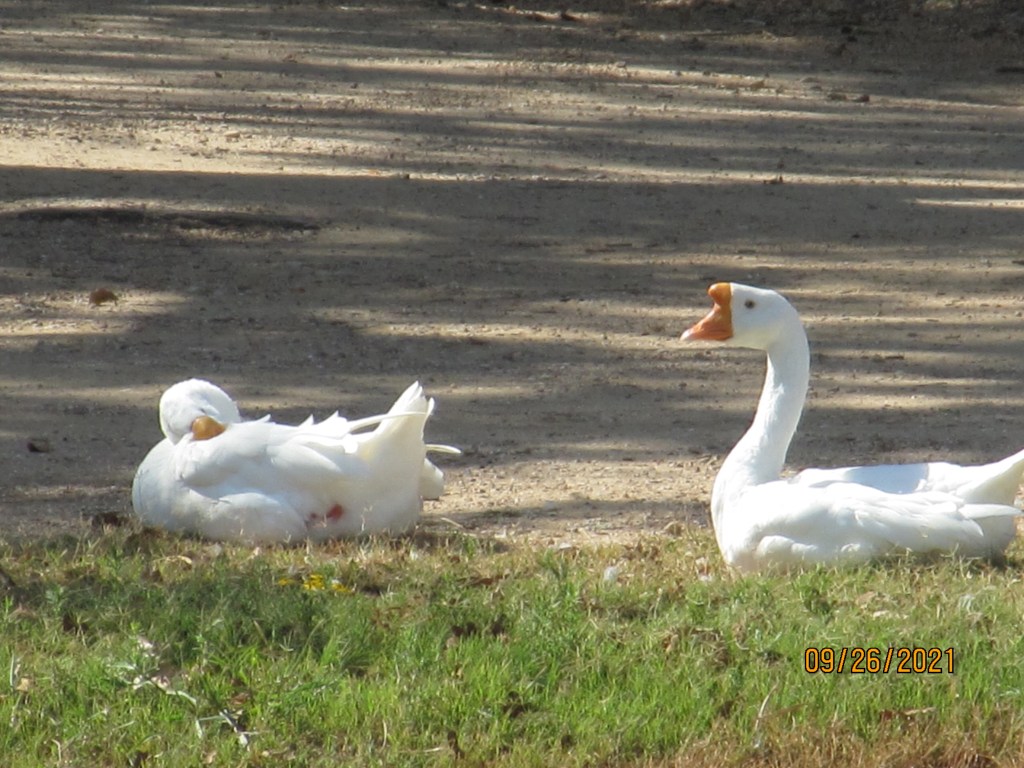
There were also domestic geese that have been living in the wild there for a very long time. The geese and most ducks were amazingly indifferent to humans standing amid them. All of the pictured birds have been verified for research grade on iNat except the Geese and Mallard x Muscovy, the latter of which was the suggestion by iNat.
Geese
Mallard and Pekin
Usually sparrows, mockingbirds, and grackles are there, but I did not see them Sunday.
If you’re a bird watcher or just want to earn some volunteer hours, it’s an interesting place to spend a little time. If you don’t yet use iNat and want to, they are having at least three programs on the use of the program at the annual meeting next month. You can attend virtually if you aren’t going in person.









 Nature Along the El Camino Real