Frozen Birdbaths in Winter

by Donna Lewis

Sooner or later you know this warm weather will turn to cold and icy conditions.

I will hate that. Probably our wild friends will hate it too. Last year, you may have had the horrible thing I had in my garden, frozen bird baths for days. I was very upset that I could not do anything to fix it.

photo by @ssc via Twenty20

Every living thing needs water even in the wintertime. Sometimes people forget about the wild things outside and I hear them say, “They will be OK.” Not so when the weather breaks records.

I decided this winter I would try to be more prepared if and when it happened. I read everything I could find on how to fix the ice issue for the birds and creatures that live here with me on our property. I have not tried any of these suggestions, so it will be a learning experience for me also.

The first thing I learned is that some bird baths are made of materials that crack more easily during freezing temperatures. Sadly, they are also the most common things used to make bird baths with. 

Concrete
Porcelain
Ceramic
Stone
Glass

The less likely materials to crack are made of

Metal
Resin
Reinforced Plastic

Some locations are better for cold weather.  Protected areas like porches, areas that the sun can get to during the daytime, and areas protected from cats.

Photo by @defrosters via Twenty20

There are also many products especially made to go in bird baths that heat the water.  They will require extension cords, so that makes it hard for many reasons. These products are also not cheap.  But they do work. You have to be careful and follow all the safety rules when using them.

I also read where people have put items in the water that move if the wind blows. Some of these were ping pong balls, tennis balls, and wine corks. I have my doubts that these work, but who knows?  They would be easy to do. I will probably try them out.

Solar would be great, except that in the winter you may not have enough sunlight to keep them powered.

You can get this heater on Amazon.

Last but not least, is that you should NEVER put chemicals in the water that prevent freezing. These include antifreeze, salt, sugar, alcohol, or glycerin/glycol. This could kill the birds.  Certainly, would defeat the purpose!

Also remember that if the water is deeper than two inches, put a brick or rock in the middle, so small birds do not drown.

I hope these at least get you to thinking about our outdoor friends when it gets cold. Now is the time to get ready.

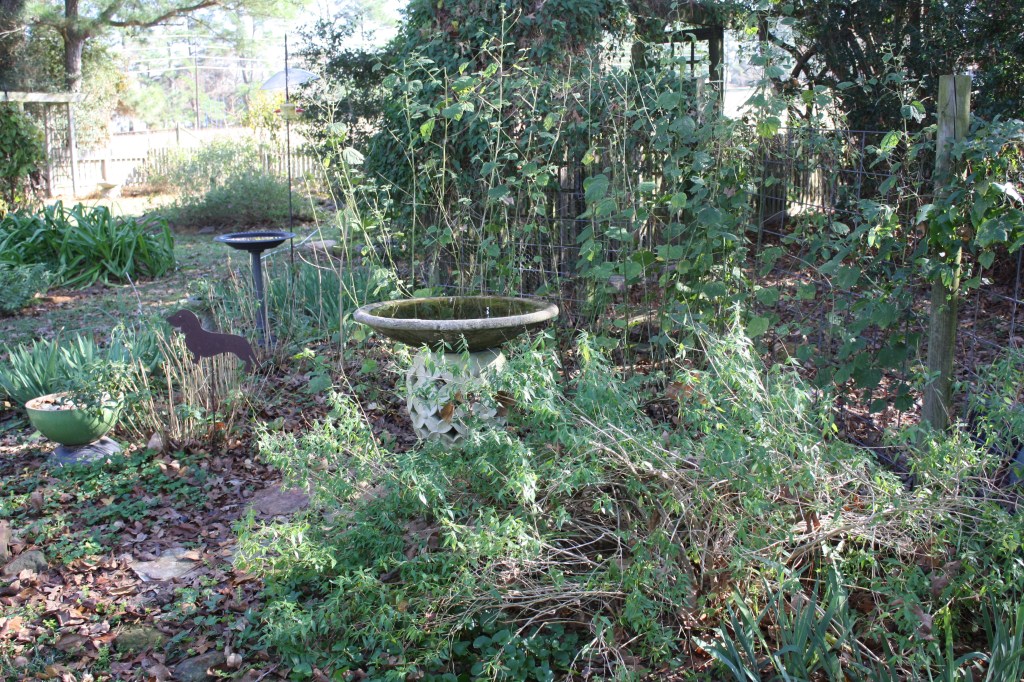
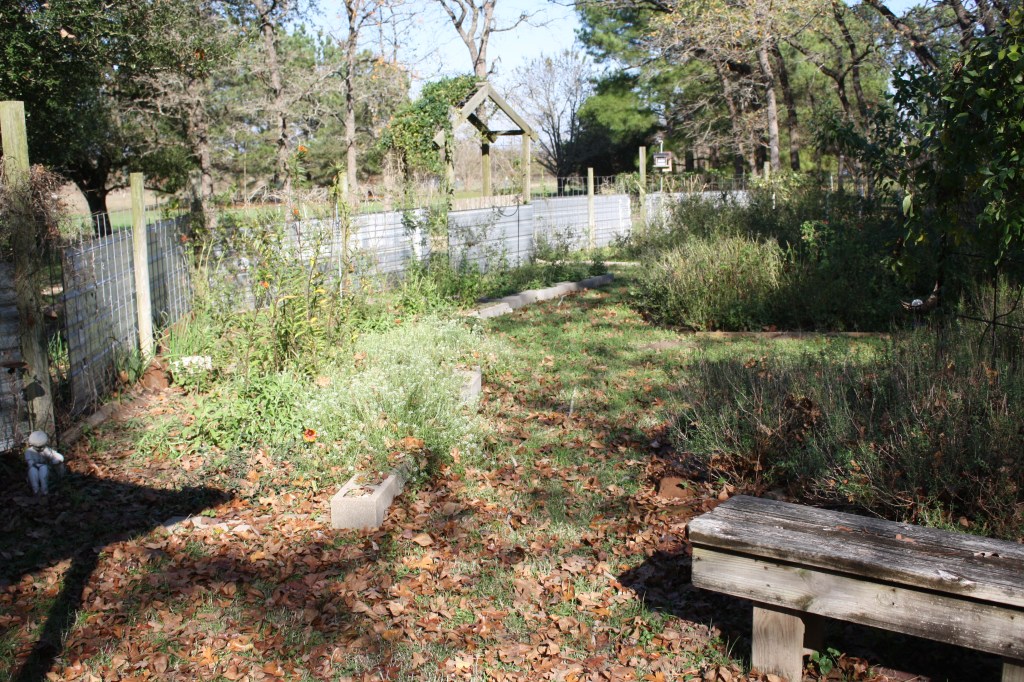
Donna’s Garden in December

by Donna Lewis

Hi everyone, this is the last photo essay of the year for my pollinator garden here in Milam County.

As you may know, we have had one overnight freeze to date. That’s pretty unusual, but we all know there is no normal for the climate lately. We just go with what happens today.  Always a surprise.

As you can see, the blanket of leaves is starting to cover my friend over. The winter blanket that Mother Earth provides her plant and animal creatures. Last year it looked sparser than it does this year. It was about 58 degrees today when I took these photos. That’s crispy for me.

I do not do cold well.

My garden is a living friend of mine.  She looks different every year, an amazing feat by any standard.  I have planted almost all native plants here in the 14 years or so before she was born. I am always anxious to see what she will look like in the next year.

Sometimes she has more yellow and orange highlights, or some years there is more purple and red. It depends on her mood.

The colors call to the butterflies and birds that come to it for everything they want: water, shelter, food, and nectar depending on their individual needs.

I do my best to learn as much as I can so I can provide what they come for. They also provide me with what I need.  Peace and beauty.

By the way, “Sly,” one of my neighbors’ horses, is always waiting near the corner of the garden on his side for his daily apple or carrots. He likes peace also.

What’s That Sound?

by Donna Lewis

You know that sound without looking. It’s the Snow Geese returning from the arctic tundra and northern parts of Canada to stay in the Southern parts of the U.S. and along the coastlines.

They make a sound that people from around here remember from childhood, and it’s one of the few good things I remember that are still here. I hope it will always be here for me and those who come after.  It’s comforting in a primal way.

Photo by Andy Wilson on iNturalist.

I saw a flock of about thirty-five geese this morning around 10:00 am. I was so happy I just wanted to share the moment with someone. 

Lucky for me, Rusty was by my side, and I pointed them out to him. Rusty is one of our dogs.  He seemed to understand. Well maybe?

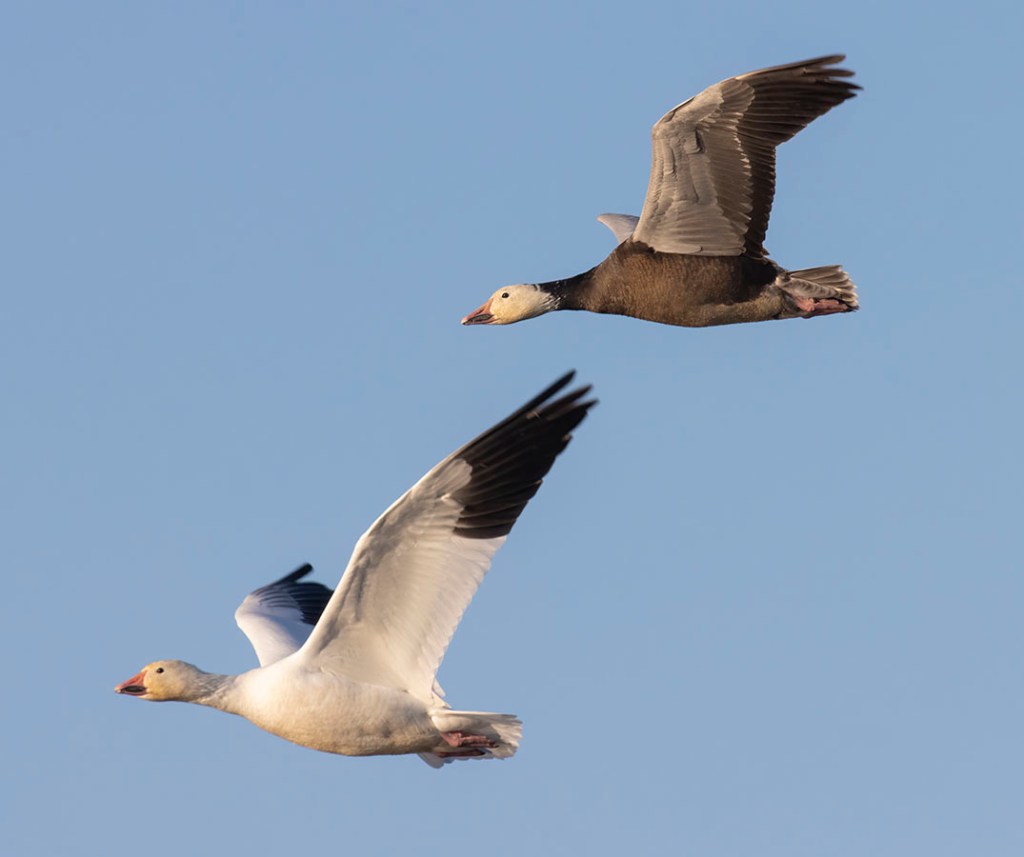
The Snow Goose actually comes in two colors.  The experts call that a morph. There is the traditional white morph and a second dark morph, sometimes called the blue morph. The blue Snow Goose is gaining in numbers, because the white goose is an easier target for both predators and hunters.

Both morphs. Photo by Paul Donohue on iNaturalist.

The geese flock to marshes, farm fields and edges of coastal wetlands. Many of these marshes are being drained for housing projects now. So sad. If you look up at them passing over in their V grouping you can see the long necks, mostly white bodies, and black wing edges.  The dark morphs are harder to identify, at least by me.

The geese make more of a honking call, while the Sandhill Cranes make more of a trilling sound.  They came through a few weeks ago. I hope you go outside while the weather is still warm and clear and look to the skies. The geese are here.  Winter is on our doorsteps.

Lady Bugs are Here

by Donna Lewis

The Lady Bugs are HERE!!!  How wonderful.

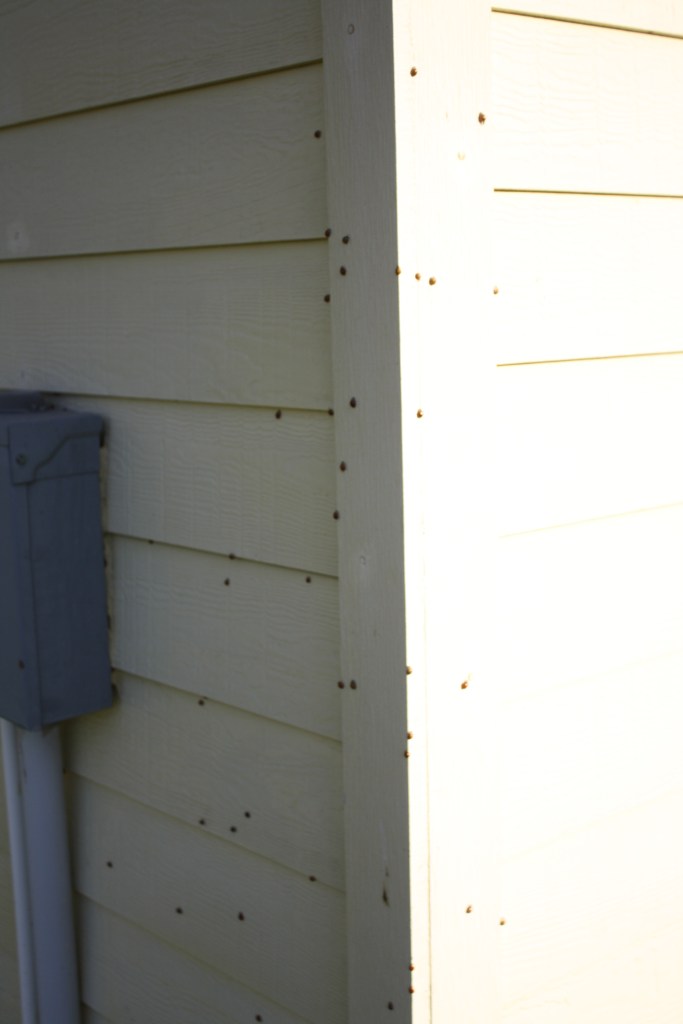
I tried to stay outside today for a while, but the annoying little darlings we call Ladybugs were everywhere.  In my hair , down my coveralls, and on my precious little dogs.

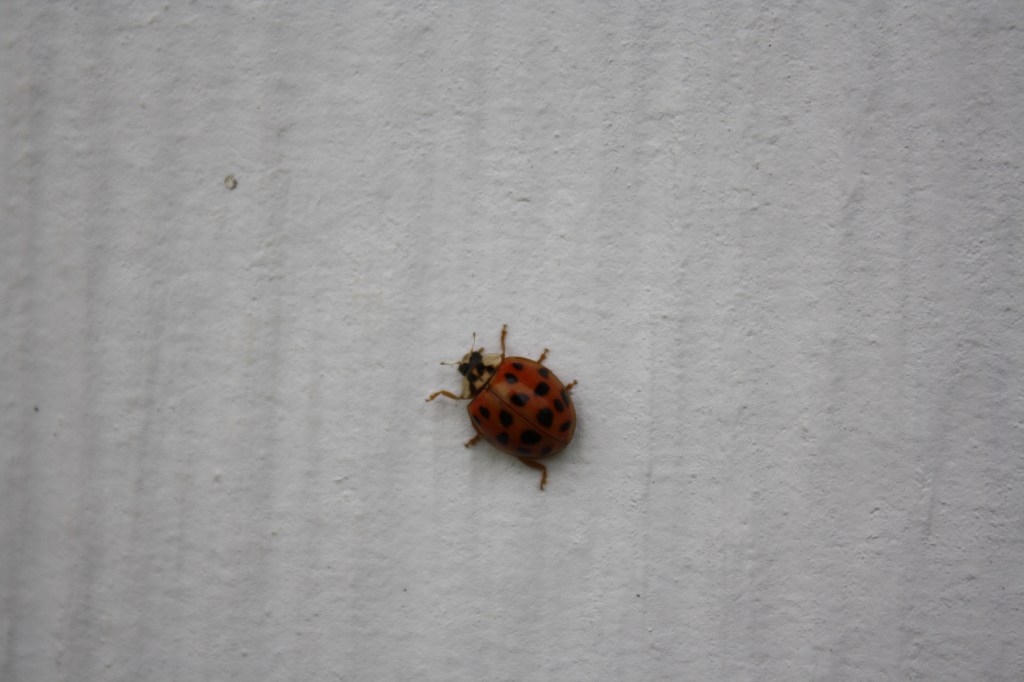
I am sure all of you are having fun with them also. They are actually Asian beetles that originated in China, Japan , Korea, and Russia. They come in many colors and have different numbers of dots on them.

The yellow house and its bugs.

To make it even more interesting the U.S. Department of Agriculture brought them to the US to aid the farmers control of aphids and scale insects. This was done mostly to help out the pecan and apple farmers. I hope they are happy.

The rest of us have to deal with them in our houses and everywhere. They apparently really like light colors, white and yellow. Guess what color my house is??

Right now, I cannot go outside without a dozen coming into the house. Their only defense is a yellow foul-smelling fluid that shoots off their legs. Colorful, tricky, and icky.

The best way to collect them from your house or porch is to use the wet/dry vacuum. Then you take them elsewhere and let them go. I am sure most of you will do something else.  Don’t tell me.

Cold weather will settle them down. Help is coming. Just go outside.

When Purple Martin Babies Fall Out of the Nest

by Donna Lewis

So, we have a little time until our Purple Martins return, February 2022 to be exact.

If you prepare now, you won’t have to go out when it’s cold to build something. As my friends know, I do not like cold weather. That means that now is good time to brush up on things we might encounter when the Martins are here.

The series of photos show the temporary house for the stranded young bird.

A question I get often is, what do I do when a baby is on the ground? First of all, it’s not a good thing for sure.  But it happens.

I am only going to address this situation if the nestling is in good health but is not old enough to fly on its own. Sometimes they fall out, and sometimes they are knocked out by first-year Martins (teenagers) who like to get into mischief.

This happened to me last year and I was successful in helping the baby fledge (fly on its own).

I put together a makeshift emergency house for it, so the parents could feed it. It just needed a few more days until it could fly. I was not sure it would work, but I gave it a try, since staying on the ground is bad.

I had a feeder a friend made for me, and I added some cedar scraps I had to keep the wind out and protect it. I added some pine needles and a little nest in the corner and put it near the Gourd Rack up on a shepherd’s hook.

I watched for several hours, and nothing happened. Just as I was getting depressed thinking the baby was doomed, one of the parents brought it a bug. YES!!! Some success.

The parents only came once a day, but it was enough to save the baby. It was hungry and after the third day it jumped out and flew.   

The temporary home

I was so happy. So, you see that sometimes you can help a little bit and life goes on.