This past Monday, at 6:30 pm, a large bird landed on the shepherd’s crook with an open seed feeder. It is very close to the living room window. This disadvantage is that it is backlit.
I spotted a large bird, navigating an unfamiliar branch – the metal shepherd’s crook – and processing how to get to the seed. Finally, after attempting various angles, he jumped down. I was successful in moving around in the house without spooking the bird, but not near my bird book.
With the help of a couple of books, I identified it as a White Wing Dove. I’ve not seen one before and I didn’t know we had them here. Estimating the areas from the range maps, Milam is right on the edge of the range.
Ten minutes later he/she is back sitting on a branch, eying the seed, and fifteen minutes have passed! As White Wing Doves enjoy small colonies, and are monogamous, I’m expecting his/her friends.
By Carolyn Henderson, with additional photos from Catherine Johnson
Sweltering heat couldn’t stop the nine Texas Master Naturalist El Camino Real chapter members from sprucing up the El Camino Real Wildscape at the Bird and Bee Farm and finding a few “treasures” in the process on Saturday, July 15.
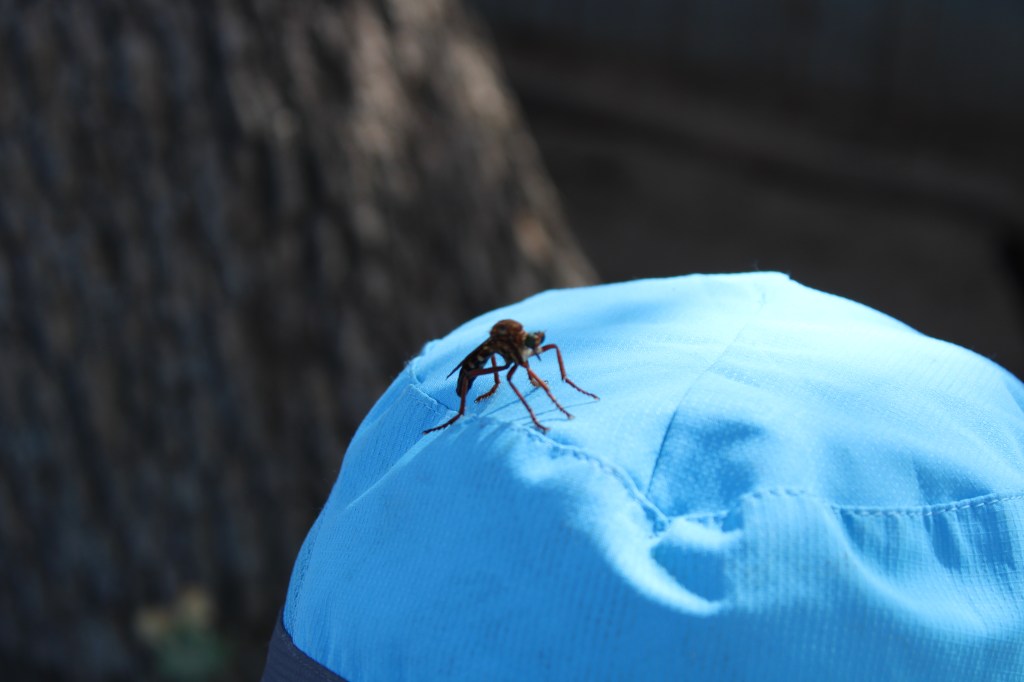
Most of us wouldn’t consider a horsefly a treasure, but one did visit Debi Sorenson’s hat.Tropical milkweed
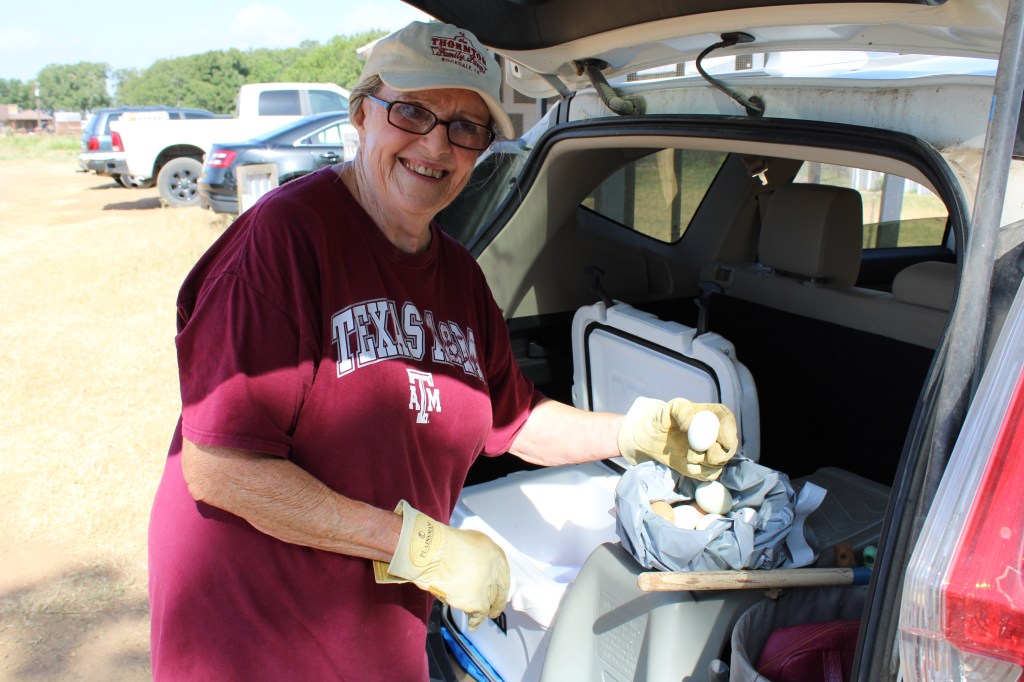
A lot of work was done to clean up the area where meetings are held at the site when large groups come for events. It was hot, but the area is shaded by trees and a nice breeze helped. In the midst of the cleanup, Jackie Thornton found a nice nest of chicken eggs. She took them home (and we didn’t get photos).
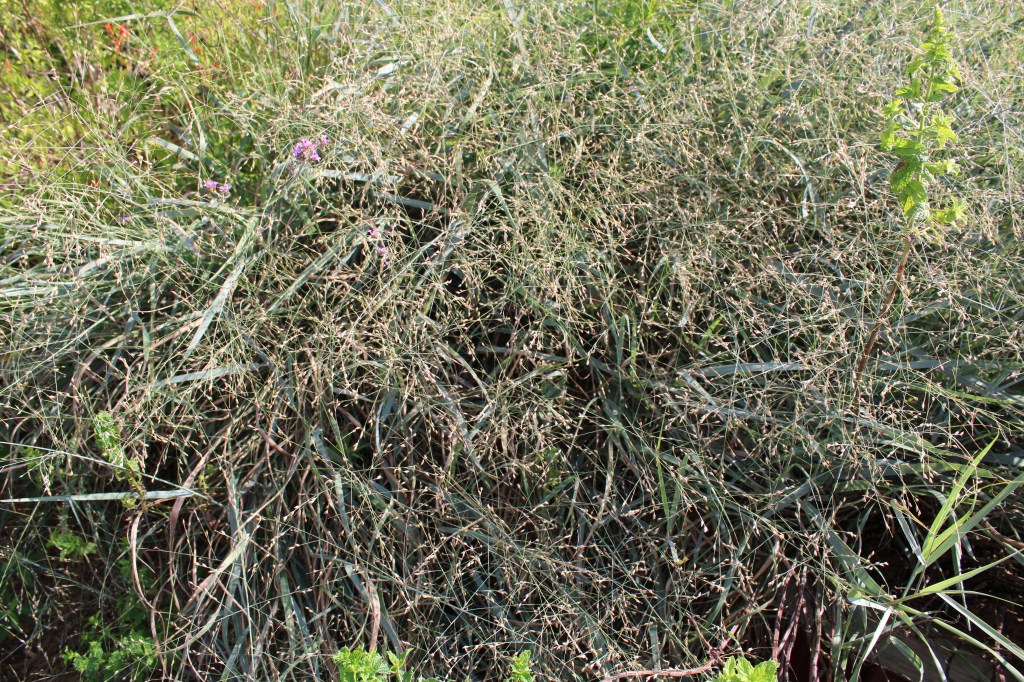
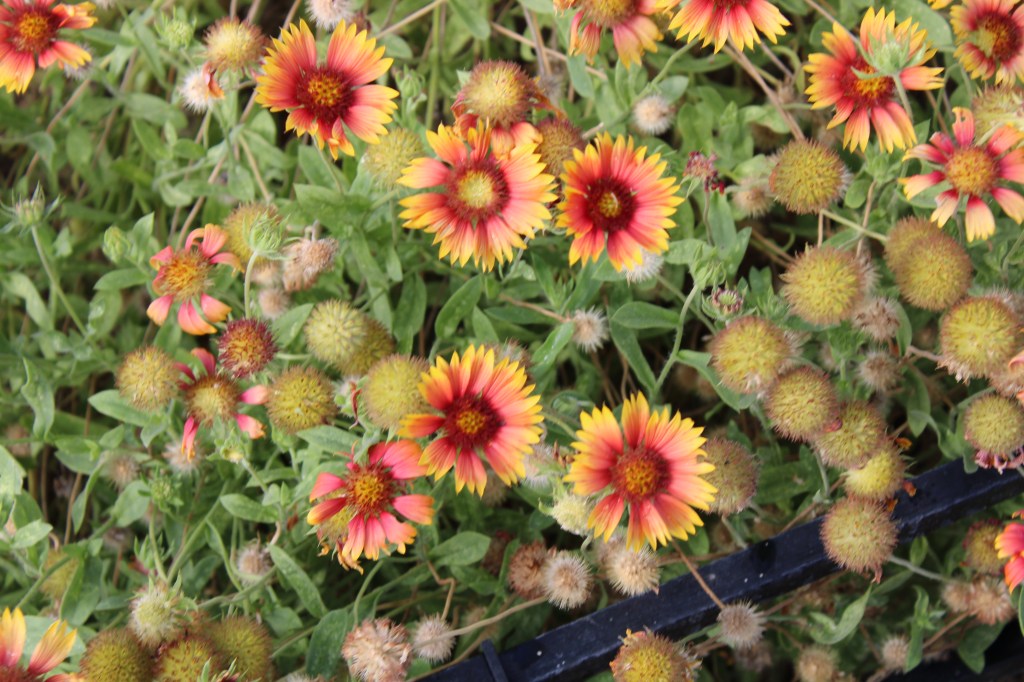
SwitchgrassIndian blanket
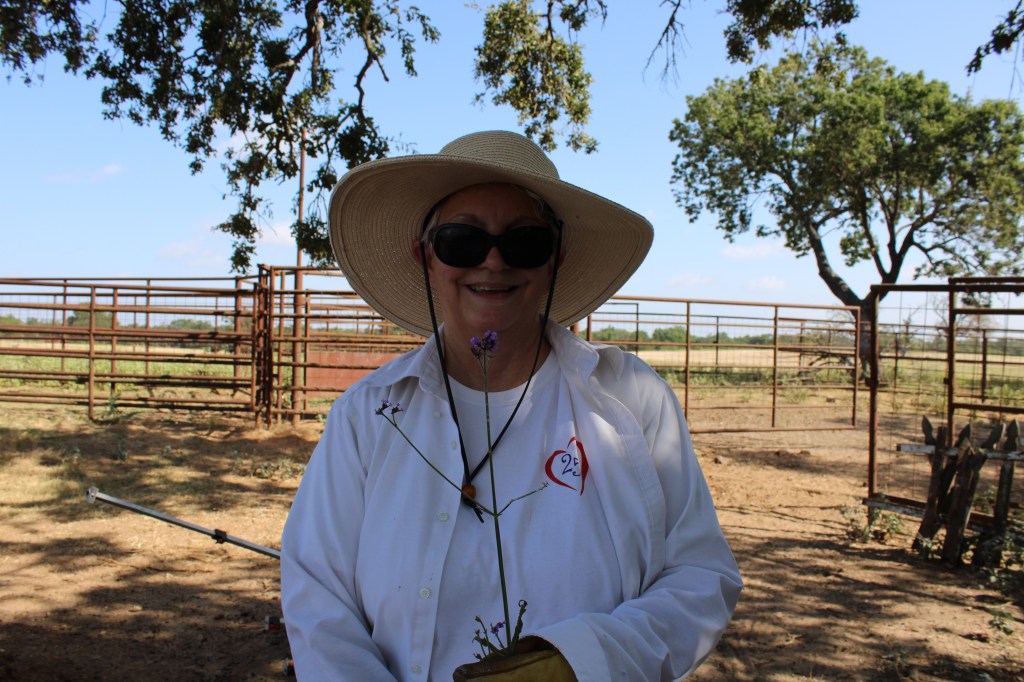
Phyllis Shuffield found the invasive scourge Vervain growing in a few places in the wildscape. It was not put there intentionally. Phyllis proceeded to remove them all. The wildscape acquired several non-native plants this year. An early one was a red poppy. Maximillian Sunflowers were rampant this year and will require some control measures. Other plants also showed up either by birds, wind or hitching a ride in a plant intentionally purchased and planted.
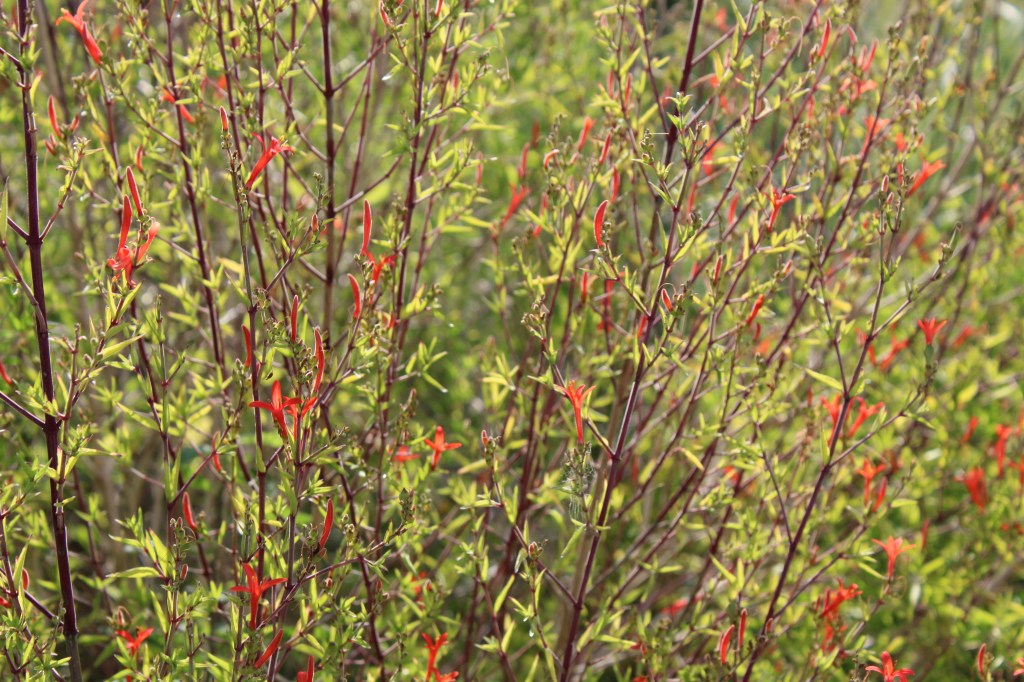
Flame acanthus
Carolyn Henderson found the Cypress Vine with pretty red flowers over-growing and choking everything in its vicinity. It completely took over the arch which had Malabar Spinach growing all over it. It literally choked that out. It was starting to overtake the Coral Vine growing around the covered picnic table and it was wrapping around the storage building. The local mouse hunter did try to help pull it up or at least push it out of the way.
Turk’s cap, not an invasive plant
It was decided that this vine, a Texas native that is seriously invasive, will require serious efforts to stop. It may overtake everything if not removed.
The invasive cypress vine
The color palette has also changed. The purples had mostly gone to seed, and oranges, yellows and reds have taken over. Three to four types of bees and Gulf Fritillaries were enjoying the blooms.
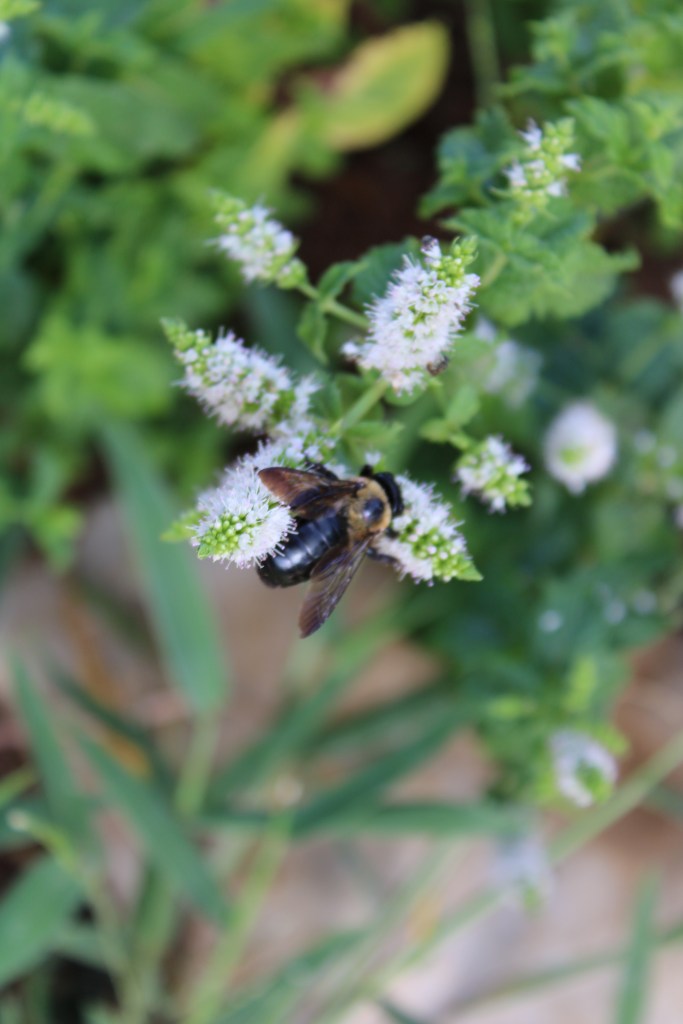
A carpenter bee on a mint plant
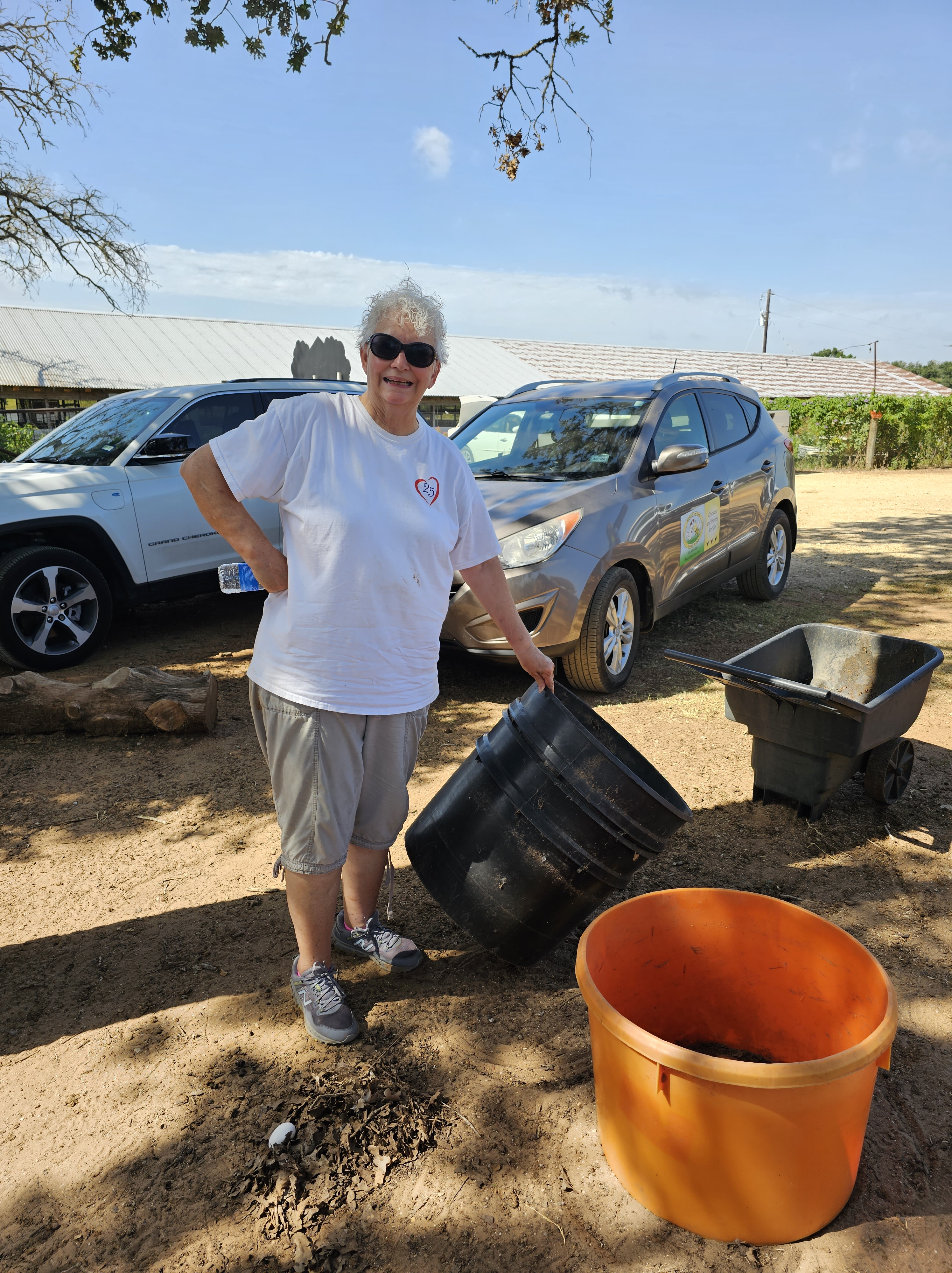
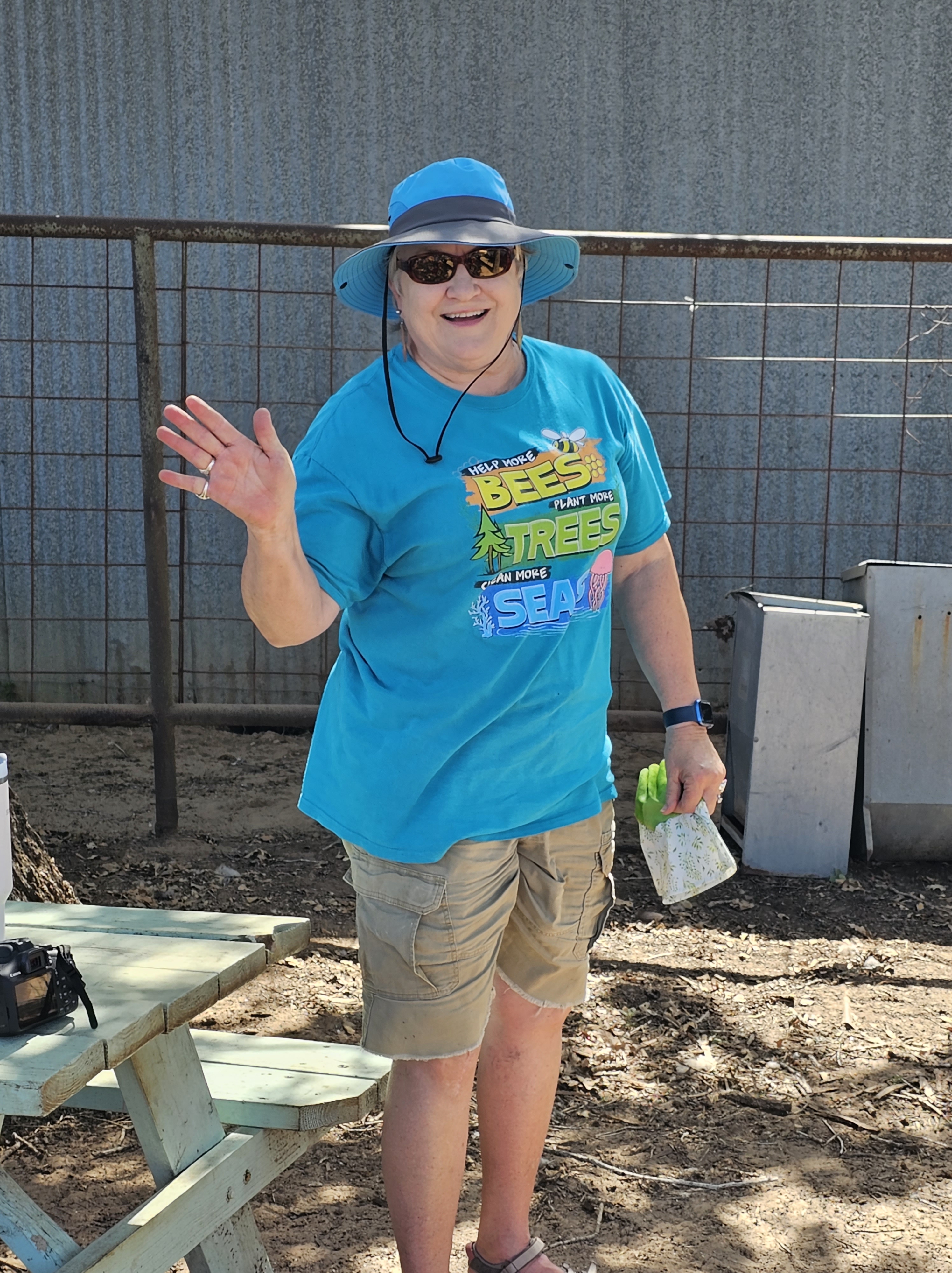
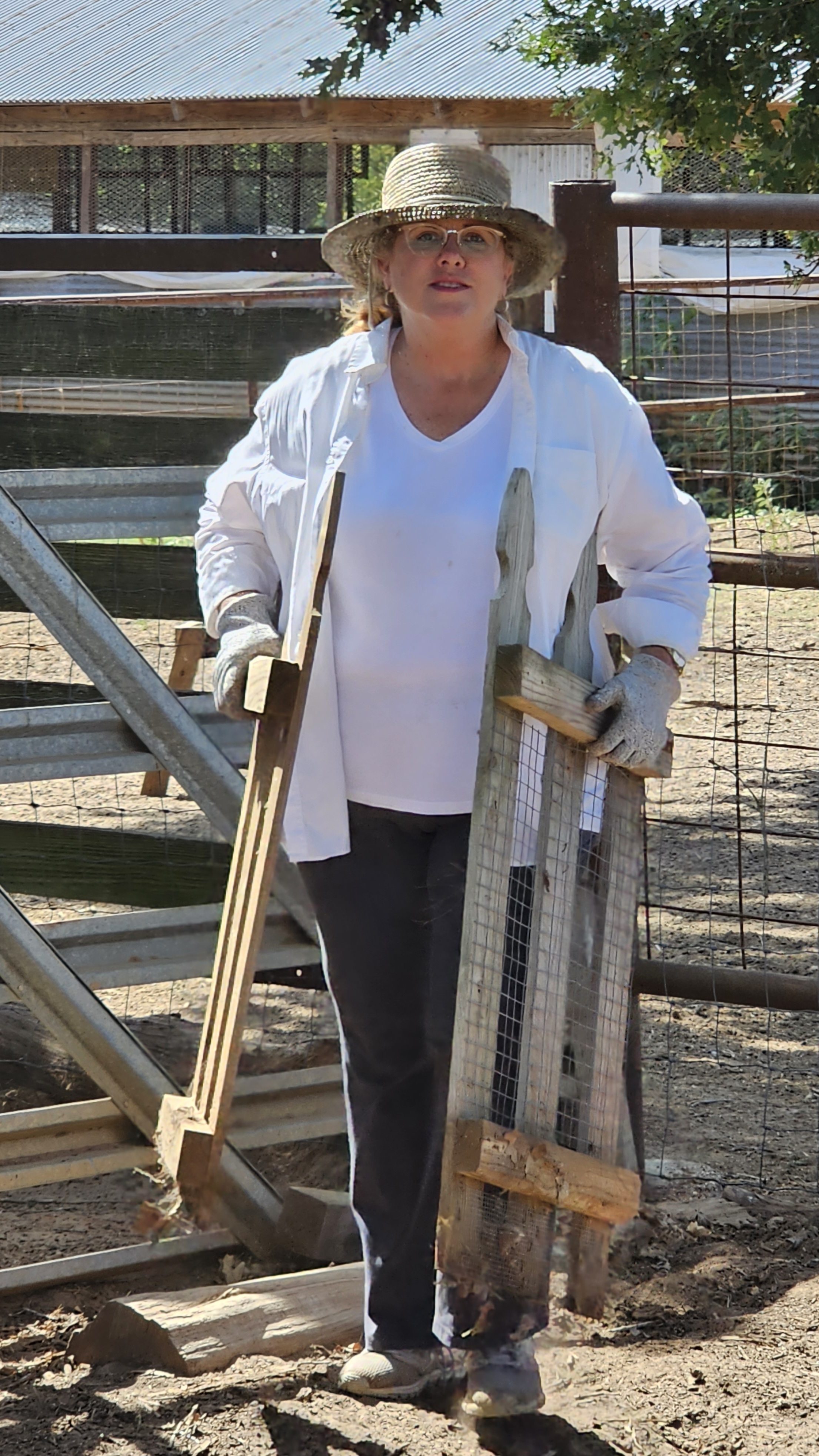
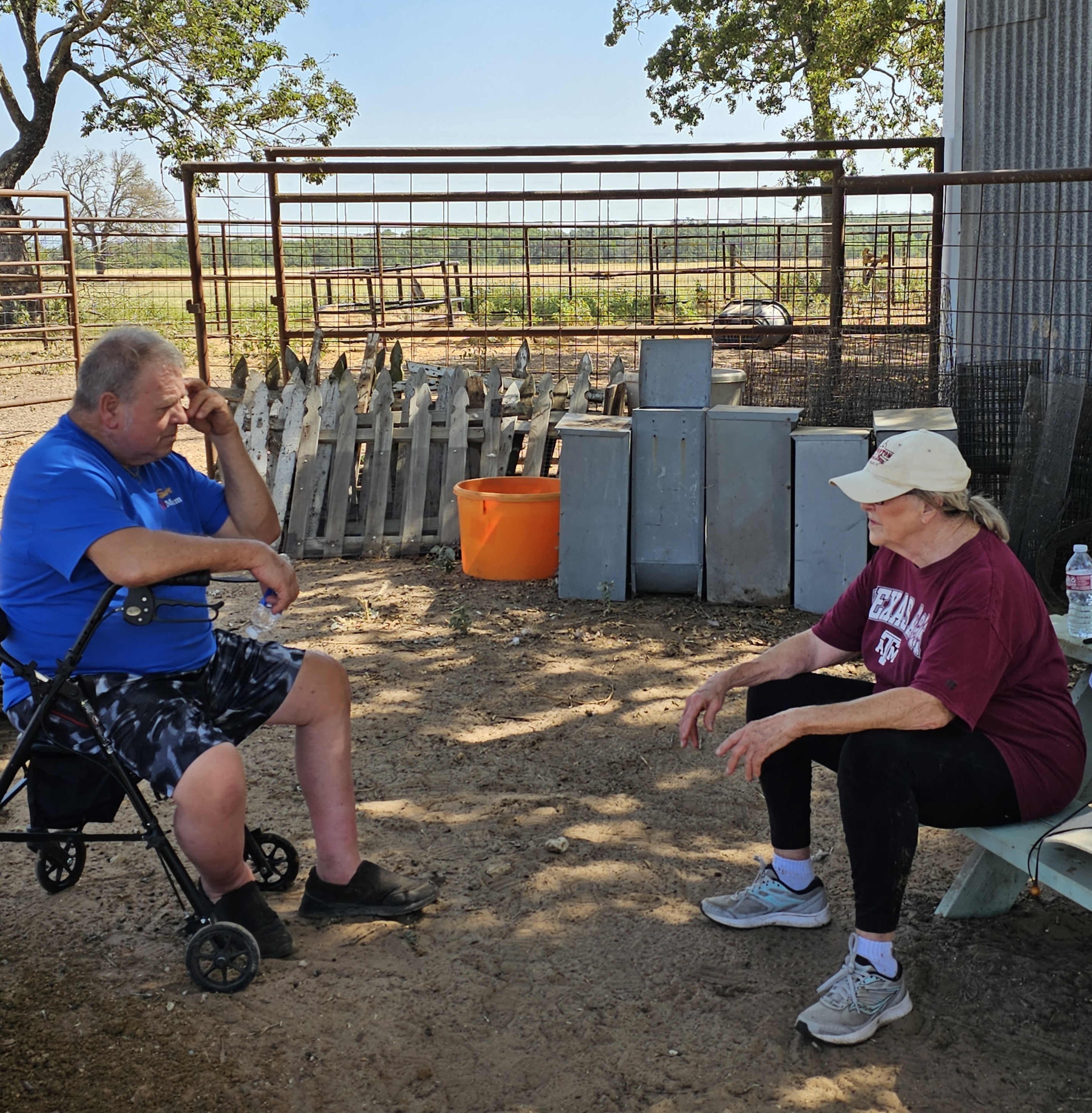
More plans were made for August beautification. Afterward, Catherine Johnson, Patsy Coombs, Neil Wettstein, Debra Sorenson, Pamela Neeley, Sandra Dworaczyk, Jackie and Carolyn recovered from the heat at Corona’s in Rockdale. Here are some photos of the crew.
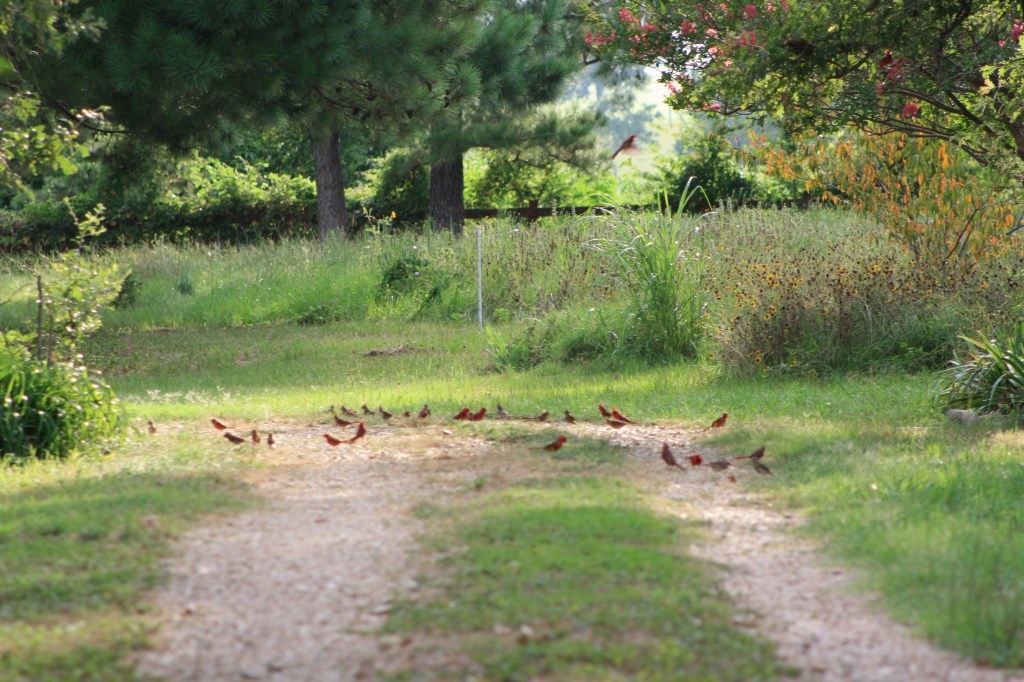
Yes, it is hot and dry. Remember to keep water in the shade if you can and plenty of it for the wild things. I have over 50 Cardinals that wait for me every day now. I bet my electricity bill is going to be a whopper from running our well to get water for them.
That is a LOT of cardinals
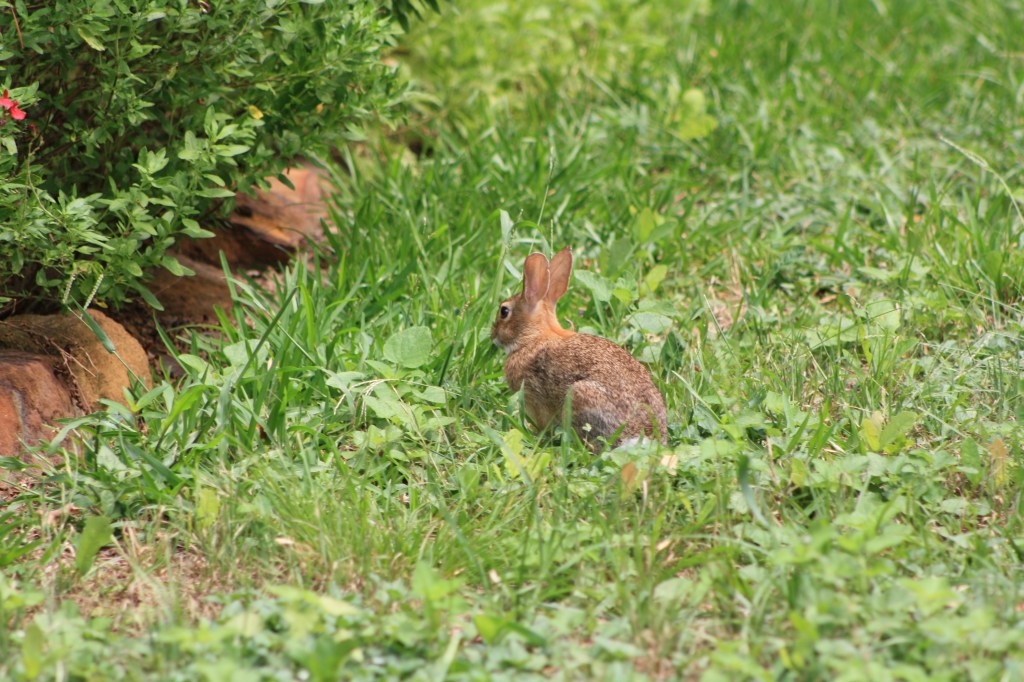
The bunnies are drinking along with all our other wild friends also.
Cottontails appreciate our help.
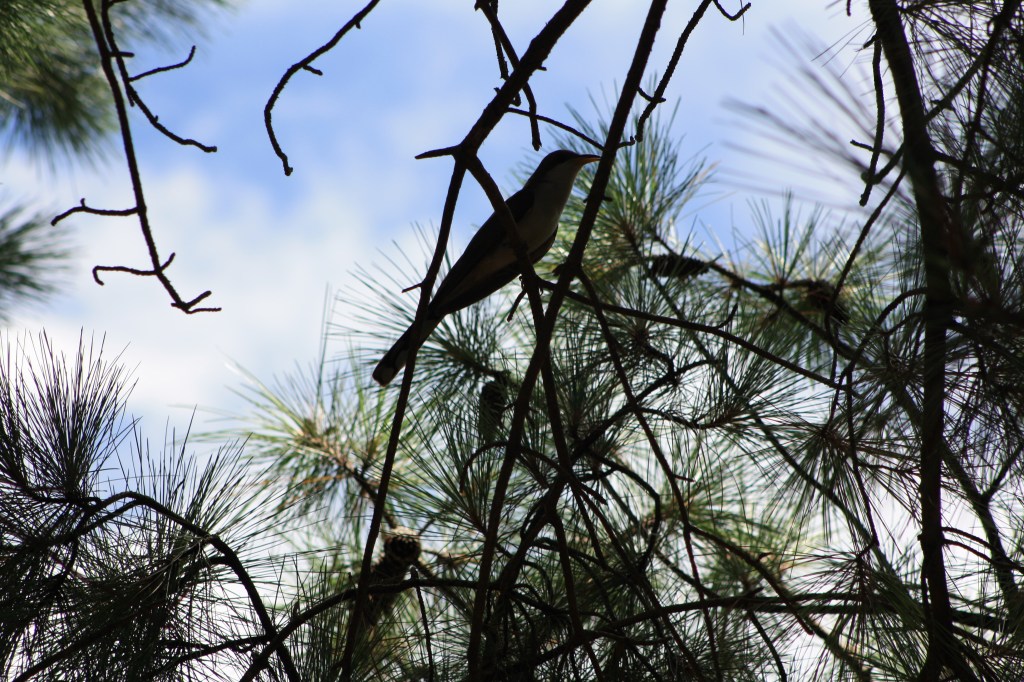
A few days ago, I heard some strange clicking noises way up in a pine tree, I waited a long time to see what it was. It was some kind of bird I had never seen before.
Yellow-billed cuckoos are elusive and often easiest to identify by their sound.
After several days of trying to ID it, I finally found it in a field guide. It was a pair of Yellow Billed Cuckoos! I had never seen them before. It’s interesting to add them to my bird list.
Most of the wildflowers are going to seed now and the pastures look awful.
In the garden I fight to keep anything alive for the butterflies and hummingbirds.
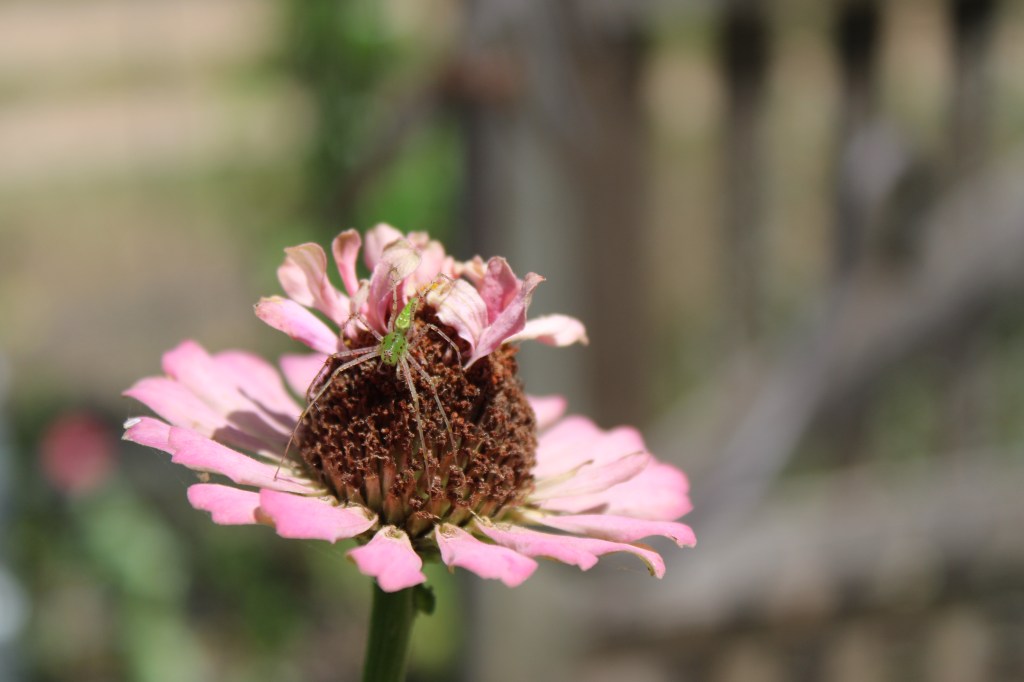
And lynx spiders, too.
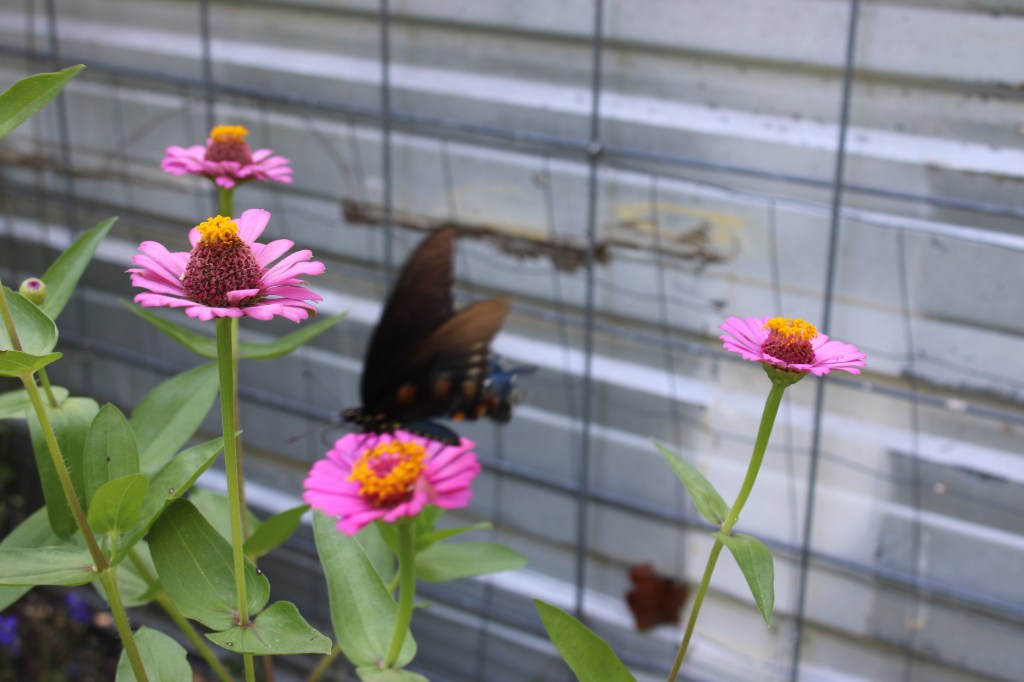
I do have a lot of Gulf Coast Fritillaries, Swallowtails, and Sulfurs still flying around.
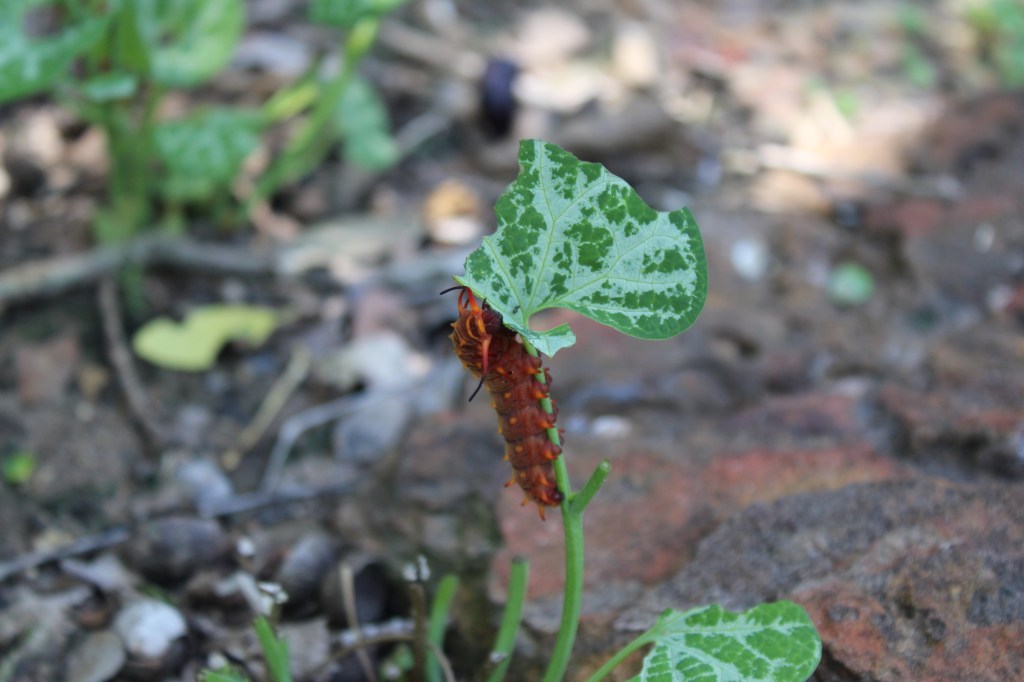
There is also a new batch of the red version of the Pipevine Swallowtail caterpillars.
So, enjoy what nature is around you now because the heat is hard on them too.
Last night’s Chapter Meeting was very informative and a lot of fun. We even had a couple of visitors, and that prompts me to remind you that anyone who happens to be in Cameron, Texas on the second Thursday of any month is welcome to join us at All Saints Episcopal Church. Potluck at 5:30, followed by our program. The monthly meeting follows the presentation. At this month’s meeting, we were privileged to learn from a presentation on land trusts and conservation easements and how they work, from Melanie Pavlas and Lauri Mason, Executive Director and Outreach Manager for Pines and Prairies Land Trusts. This was especially relevant, since Milam County is now a part of the area served by Pines and Prairies.
Melanie shared her passion for land trusts with us.
As we were listening to how land trusts can preserve land from being over-developed, yet let the owners live on the land and farm/ranch just as they always had, many ears perked up. I think they’ll be getting a few phone calls from Master Naturalist landowners! Melanie and Lauri both said they love to talk to folks about what they do, and promise they aren’t trying to sell anything. But, honestly, if one’s heirs aren’t interested in preserving land for use by native plants and animals, this sounds like a great idea.
Please visit their website to learn more about how you can enjoy your land and ensure its preservation in the future.
As usual, we had some milestones to mark, and this month we honored Neil Wettstein for achieving his initial certification, as well as Ellen Luckey from our most recent class for also getting in her first year’s certification in addition to the initial one. Whew.
Members Pamela Neeley, Cindy Rek, and Gene Rek were recertified for 2023. Congratulations to all.
Ellen Luckey, Pamela Neeley, Carolyn Henderson (Chapter President), Neil Wettstein, Cindy Rek, and Gene Rek
There was also some fun, as our cheerleader and iNat superhero, Linda Jo Conn, presented Eric Neubauer with a “Big Spider Badge” in honor of his contributions and of the fact that he’s presenting a talk at the upcoming 2023 Texas Master Naturalist meeting.
Eric self designated it, the badge says. That was fun.
After the meeting, we were joined by Dale Kruse, plant expert extraordinaire (especially mosses and bryophytes, he will tell you), held an orientation meeting for the group of folks who are going to take a class on grass identification with him. Having done this twice myself, I know they will learn so much they’ll feel like their heads will explode, but it will be fantastic. We’re lucky to have people so willing to share their time and expertise with us.
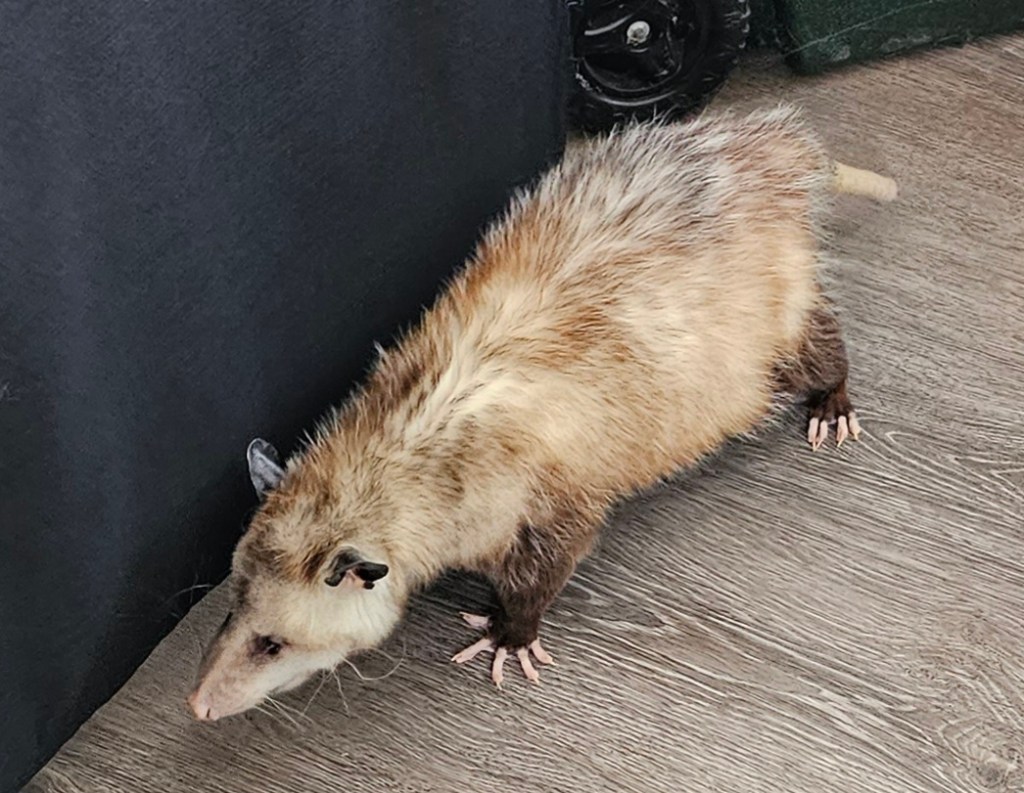
Master Naturalists Patricia and Catherine attended an All Things Wild program on opossums. Sign up early for these programs, as they fill up fast.
Opossums are beneficial to have around for many reasons. For example, each one eats about 5,000 ticks a year, and they eat all venomous snakes except for coral snakes.
Here are some more opossum facts:
They are unlikely to carry rabies because their body temperature is too low.
If you relocate them, make sure it is in a safe place near water.
A dead opossum may have babies in its pouch. If you can get them, keep them warm and take them to a rehabilitation facility.
A mom can have delayed conception; she decides the best time to mix sperm with her eggs.
So much to learn!
We were able to interact with Beteljeuce and others, as well as ask questions. We were also offered refreshments.










 Nature Along the El Camino Real