Wildscape Renovation in Progress

By Sue Ann Kendall

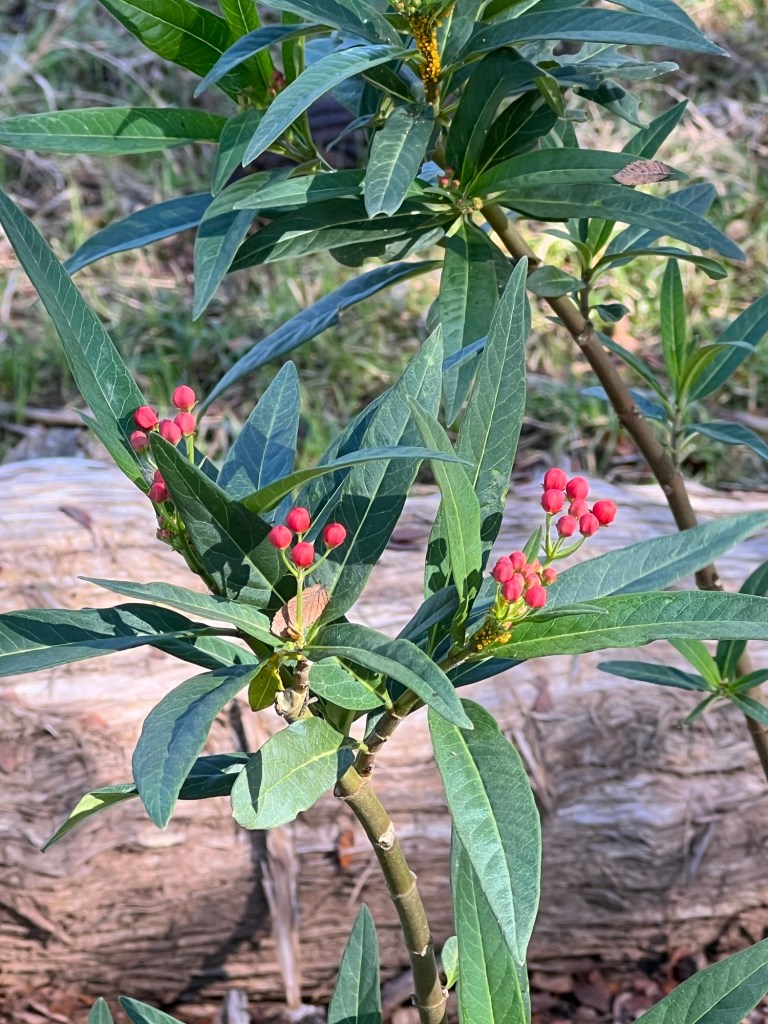
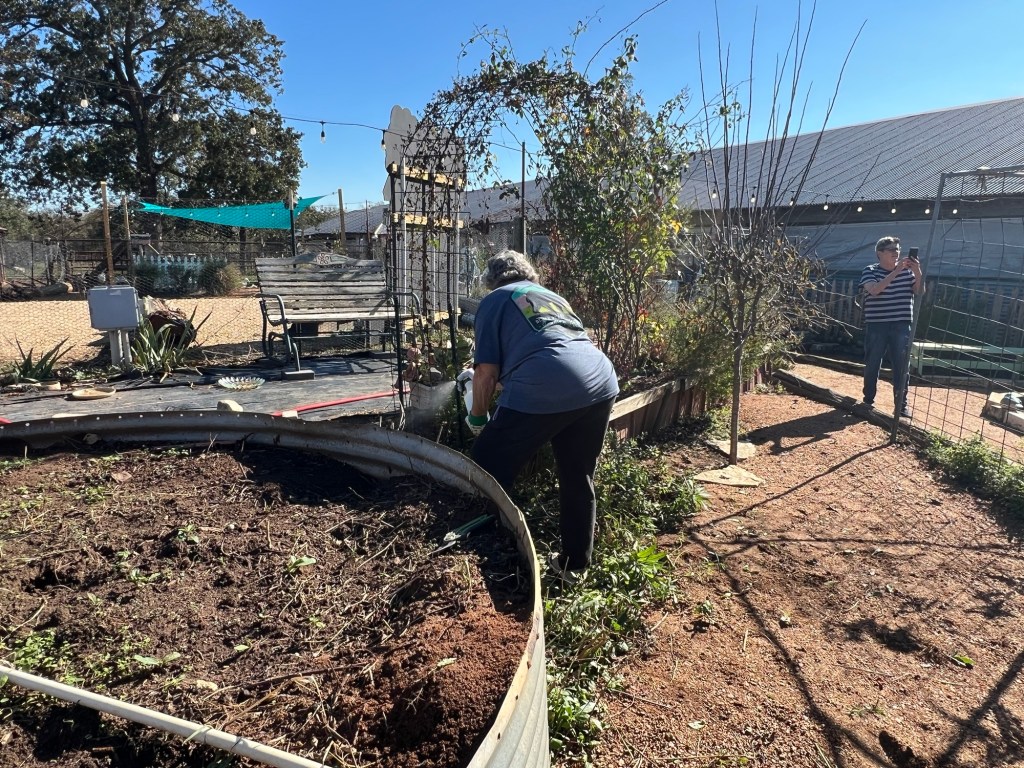
Our chapter is putting our H-E-B Pollinators for Texas grant to good use. Many hours of hard work, along with materials purchased from the grant have transformed the former jumble of natives and volunteers into a fairly orderly setting for the new native plants that will go in soon. It’s a Wildscape, so it has to be a little wild, right?

There are still lots of fun accessories!
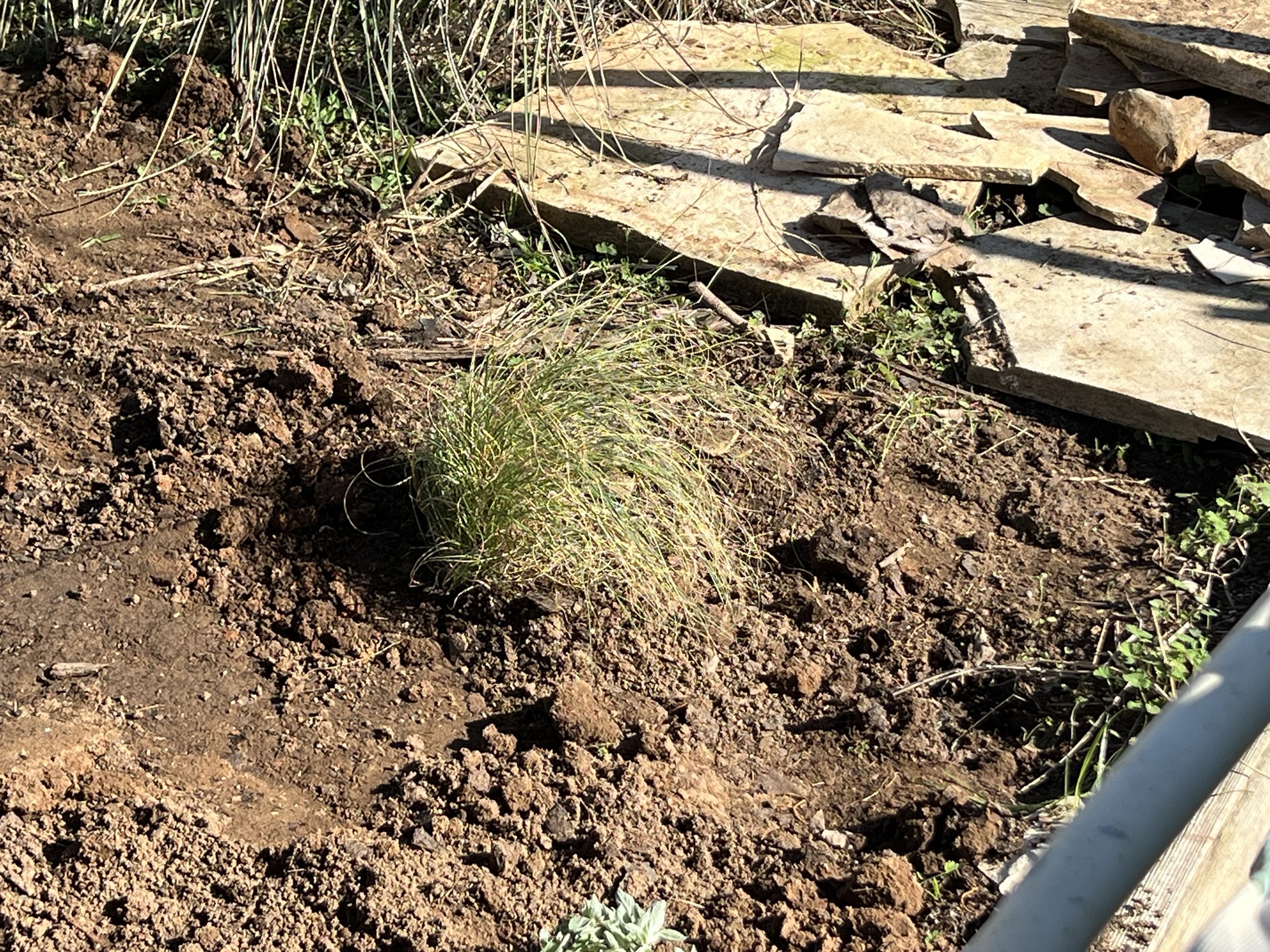
In the past couple of weeks, much plastic has been laid down to discourage some of the more vigorous volunteers from taking over before the new plantings get established. All the paths have new crushed gravel to make the area easier for visitors of all ages and abilities.

There’s still a lot to do—there always seems to be another batch of plants to thin or remove. I wish I’d gotten a photo of all the Turk’s cap getting thinned. That was some effort!
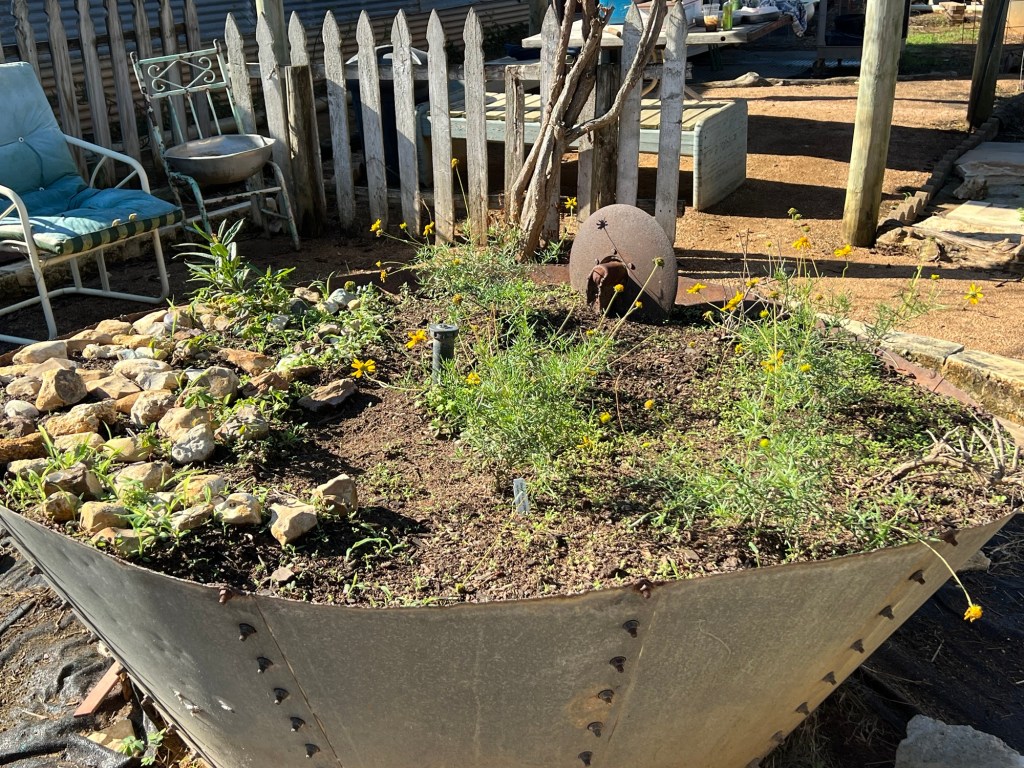
There were a few bees and butterflies around last Saturday, but I think they’re also waiting on the new sources of sustenance. But not all the flowers are gone!

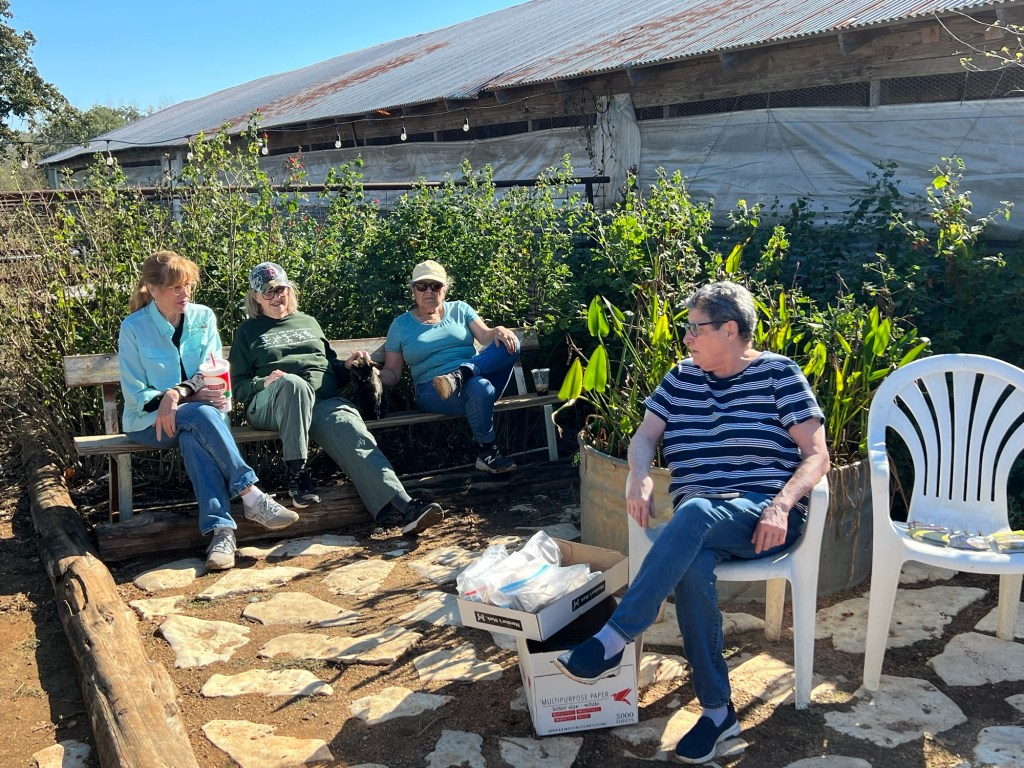
Hard work is much more fun with cheerful volunteers. Come join our merry band some Saturday! The Milam Wildscape is adjacent to Bird and Bee farm—look us up!

The Pollinators for Texas project is a collaborative effort with H-E-B and the Texas Master Naturalist (TMN) Program focused on enhancing native pollinator conservation across the state by promoting awareness, conservation efforts and creating sustainable pollinator environments. The initiative aims to engage communities in supporting pollinator-friendly practices through funding TMN chapter-led projects and programs.

Preparing to Add Pollinators

by Sue Ann Kendall and Carolyn Henderson

As part of our grant from the H-E-B Pollinators Across Texas Project, members of our chapter spent the morning at the Milam Wildscape making sure invasives have been removed and preparing for planting the native plants we hope will attract the set of pollinators we want to document over the coming months.

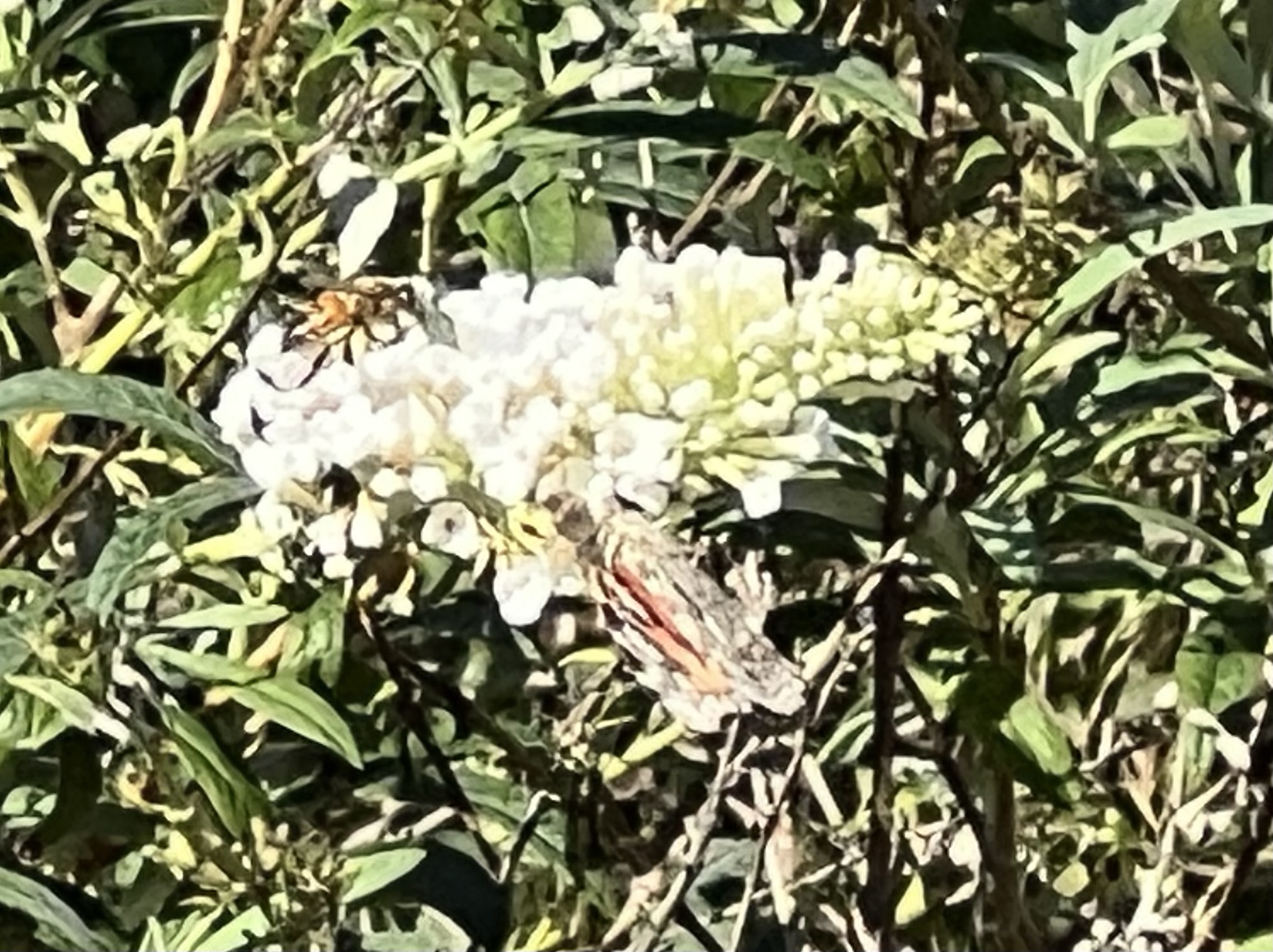
Common Buckeye on trailing lantana

Chad, Scott, Bill, Liz, and Kit shoveled and moved a whole lot of crushed granite. Luckily, we had multiple shovels and wheelbarrows to get the work done.

Meanwhile, Tina, Catherine, and Carolyn spread the gravel and stomped on it. It was quite satisfying to stomp, and the rose bush did not permanently injure any volunteers. The end result is beautiful and will make the area safer for visitors.

Don’t worry, we need more gravel spread- for our chapter members who missed the opportunity!

Patsy and Sue Ann recorded the whole event for reporting purposes. They even found a few pollinators lurking around the Wildscape.

Donna, Ann, and Kim greeted visitors who wondered just what we were doing. The visitors got free wildflower seeds and pollinator brochures to answer all their questions.

The most impressive achievement of the morning was that the excessively aggressive (though native) Cypress vine that took over the awning was removed – again. Kit, Tina, Liz, Scott, Chad and Carolyn slayed it – for the moment. This will probably need to be repeated. The vine is beautiful but very aggressive.

We look forward to sharing the progress of this project and are grateful to H-E-B for the Pollinators across Texas grant.

One more carpenter bee

New and Unusual Wolf Spider Observations

by Eric Neubauer

Here are two spiders I’ve recently observed in my quest to identify all Texas wolf spiders

Do wolf spiders intentionally lie on their backs?

Yes! Here a juvenile Hogna baltimorina does just that while subduing a moth it captured a
second earlier and just seconds after I finished photographing it. It has all legs free to hang on to the moth. After the struggle ended, the spider quickly flipped over, prey and all.

The spider was released later and took its dinner with it.

A few years back I saw a wolf spider pounce on a grasshopper about the same size. The grasshopper jumped a couple of feet into the air, taking the spider with it. The grasshopper immediately made a much smaller second jump with the spider still hanging on. Then it was all over.

Moral of the story: If you meet a really big wolf spider, don’t try wrestling with it. You won’t win.

New Hogna Species Spotted

For years I’ve been trying to sort out the various Pardosa species in Texas. There are over a dozen of them and many are very difficult to tell apart by either appearance or genitalia. One common species in Texas appears to be a more southern species (Mexico and Central America), and the species it’s supposed to be is actually many miles east Texas. Others have sketchy ranges or none at all. It would be easy for an unnamed species to be hiding in Texas but I’ve been avoiding this possibility, which could seriously complicate an already messy situation.

Well apparently here’s one that is fortunately different enough from others to not be confused with them. It also has the most shocking appearance of any. There are at least 5 details besides pattern boldness that set it apart from others. Ostensibly it’s in the lapidicina species group which is known for its evenly banded legs, at least as juveniles and females. They also love rocks of all sizes and often sun on them. Steep clay slopes will do in a pinch.

 I’ll be working with a professor at UT on this. I was visiting his ranch surveying wolf spiders and these just popped up out of nowhere. I’ve been working on that genus for years with only middling success but instantly knew this was something that was different than anything I’d seen in Texas in person or on iNat. Funding for domestic taxnomic research is scarce, so being able to interest professors in that area is important. 

A First for Me

by Carolyn Henderson

I went home for lunch on Monday and was nicely surprised by a first sighting for me. A Northern Flicker was drinking out of my birdbath. I did not know what it was, so I worked on some photos to put on iNaturalist. I had to take them from inside my house through a window, so they aren’t perfect, but they’re clear. 

It’s considered a woodpecker, but it has dappled brown feathers with a red spot on neck and black markings. An it’s unique from other woodpeckers because it hunts its prey on the ground. Flickers prefer ants! This explains why it’s in my backyard. Fifty percent of its diet is ants. It also lets the ants crawl on it to rid it of parasites. I have an ant problem. Plenty for it to eat. Another difference from most woodpeckers is that it migrates. It can’t find ants in frozen ground.

I looked to see if anyone else in Milam County had reported one, and I saw the only other one was Michelle Lopez in 2024. She first heard it with her Merlin then she got some photos. 

I really enjoy finding new sightings. When I tried to get to a better window to take photos it flew away. I hope it comes back and eats lots of ants. 

Nighttime Photobombers

by Eric Neubauer

Since I do photography in the dark with artificial lighting, I’m often get photobombing visitors. On the last trip, my experience at Monahans Sandhills State Park was especially hideous with a multitude of some kind of wasp which even stung me three times, once when I sat on one. By the time I got to Oasis State Park I had learned to keep my headlamp set to red lightand only turn on the lighting for photography as briefly as possible.

Some of the photobombing insects become meals for my subject spiders, which is a good thing. I like sending them away with something to show for it. I also got a couple of nice adult antlion observations this trip.

Brachynemurus hubbardii

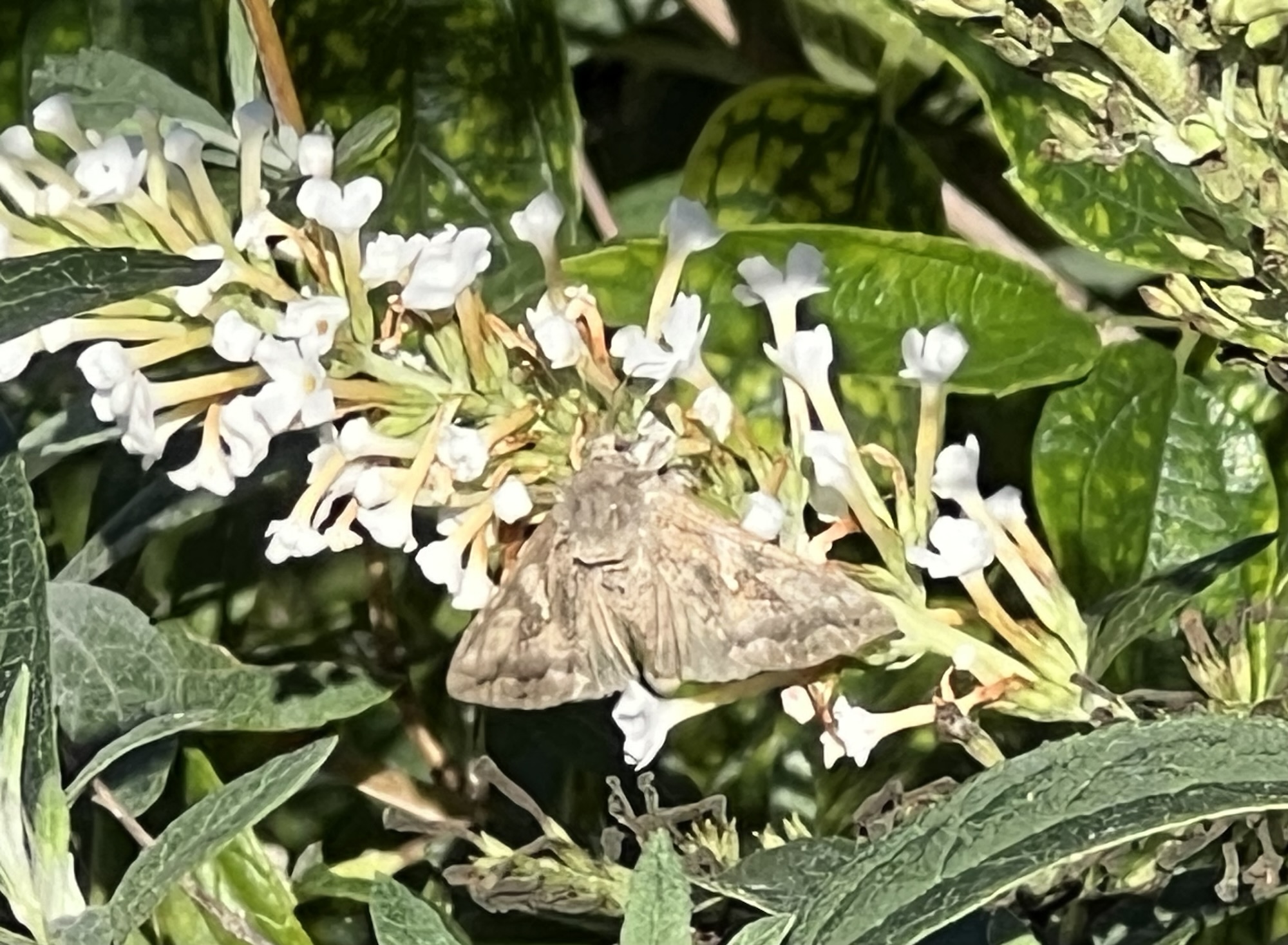
Then there was this moth from Oasis State Park just across the border near Portales, NM. I put a species ID on it, then someone put a different ID on it, and then we agreed both were wrong. After a search of observations around the entire country, I finally found a pretty good match. Lacinipolia vicina is primarily found in the Northeast although there are several observations scattered around the country. The closest two are in California.

So, you never know what might drop in. The 55 observations on iNaturalist peak in September so that checks out OK.