Kim and I were at the Wildscape from 7:0O PM- 8:00 PM to water plants and tidy up for the upcoming full moon event, Monday, August 19, at 6:30 PM.
Sideoats Grama, the State Grass of Texas.
For the most part Texas natives have held up amazingly well with minimal attention. In cooler weather, the garden will be groomed and new plantings put in. We noticed it felt cooler with a breeze blowing and decided to do no more weeding until the Dog Days of Summer are over.
Blackfoot Daisy
Pictured are some of the toughest Texas Natives – Sideoats Grama, Blackfoot Daisy, Gaillardia, Salvia, Kidneywood, and the garden mascots.
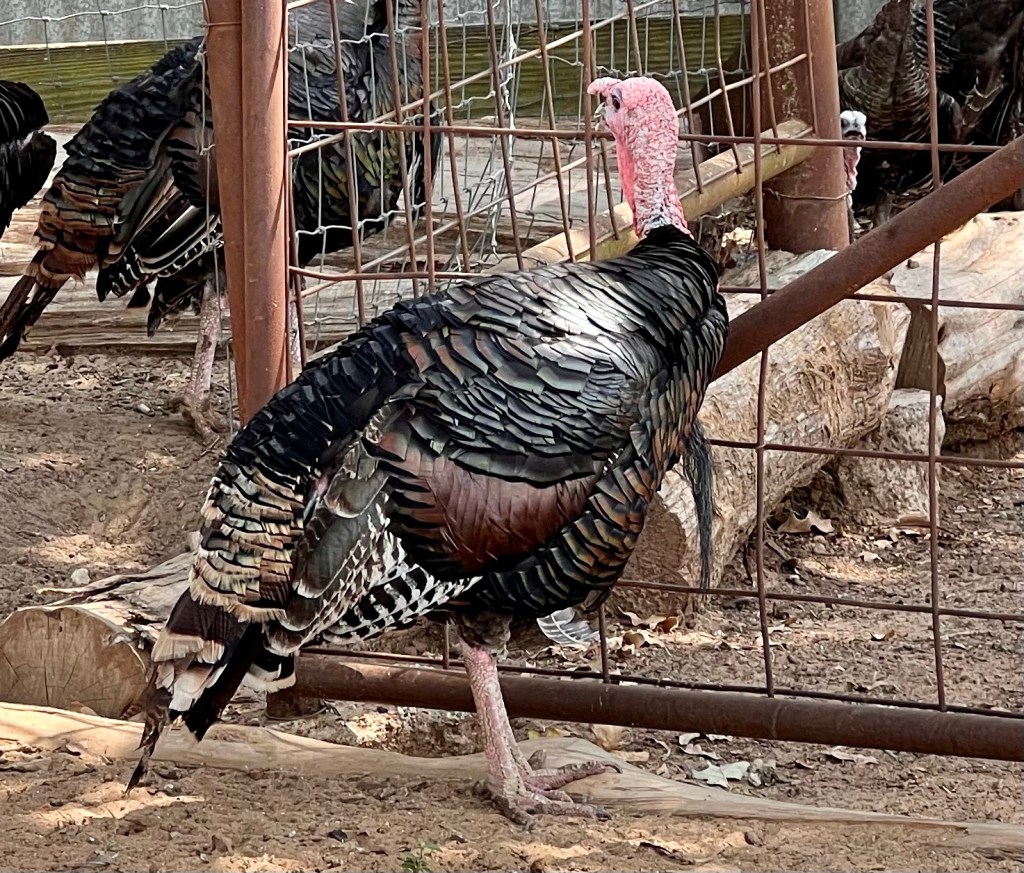
I’d promised myself that I’d make another visit to the bird station our chapter is working on to see what birds are there this time of year. Even though I wasn’t feeling too well, I figured I could sit in the shade for an hour, so off I went to the special area behind Bird and Bee Farm near Milano, home of our Wildscape project (and chickens and turkeys!)
Rio Grande Turkeys and the Wildscape entrance.
There have been some improvements to the site, as Cathy Johnson posted earlier this week. I enjoyed checking out the new raised beds, charming seating, and a beautiful birdbath watered by a tinkling rain chain.
EntranceRaised bedRaised bedBirdbath before Gene fixed it (cows knocked it down)The donated furniture from Ann Collins
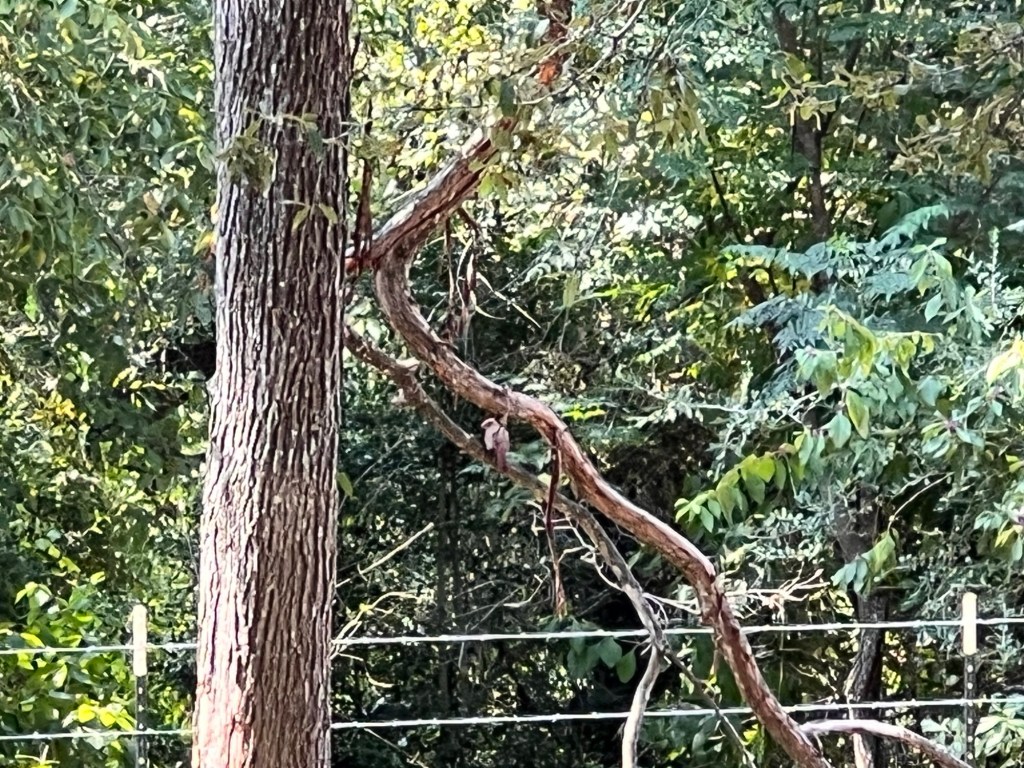
Last time I visited was three weeks ago, when I identified eleven birds. This week I found seventeen! When you sit quietly, the birds forget about you and go about their business catching bugs and picking delicious morsels off the cedar elms.
Bird action headquarters
I got to see Northern Cardinals, Carolina Chickadees, Tufted Titmice, Eastern Bluebirds, and precious Blue-gray gnatcatchers feeding themselves. Not seen, but very well heard were a Swainson’s and Red-tailed Hawk. Other hidden friends were Red-bellied Woodpecker, Yellow-billed Cuckoo, and Blue Jay.
Female Cardinal is in there.
Two juveniles surprised me. One was a young Cardinal who landed very. Eat me and proceeded to find multiple morsels to eat.
Watch it chow down.
You can tell it’s a juvenile by its black beak. It’s growing in adult feathers, so doesn’t look too great.
Young Northern Cardinal
The other juvenile was a real puzzle. It was enjoying the water chain and easy to photograph, but I couldn’t ID it. It had pretty eyes but not many markings. I ran my photos through Merlin Bird ID and it got no results. But when I tried iNaturalist, the result came up Painted Bunting. It didn’t look like the female, who is rather green, but as I paged through the pictures, I saw the juvenile. Bingo! It has the wing and beak markings I saw, and the same eye ring. So, there we go. I didn’t see or hear any adults
The young bunting
Here are today’s birds:
American Crow
Blue-gray Gnatcatcher
Blue Jay
Carolina Chickadee
Carolina Wren
Eastern Bluebird
Mourning Dove
Northern Cardinal
Northern Mockingbird
Painted Bunting
Red-bellied Woodpecker
Red-tailed Hawk
Rock Pigeon
Swainson’s Hawk
Tufted Titmouse
Turkey Vulture
Yellow-billed Cuckoo
Of course I checked out the plants, so that if I get the area declared an official spot on iNaturalist, the observations can go there. A few were really pretty, especially the berries.
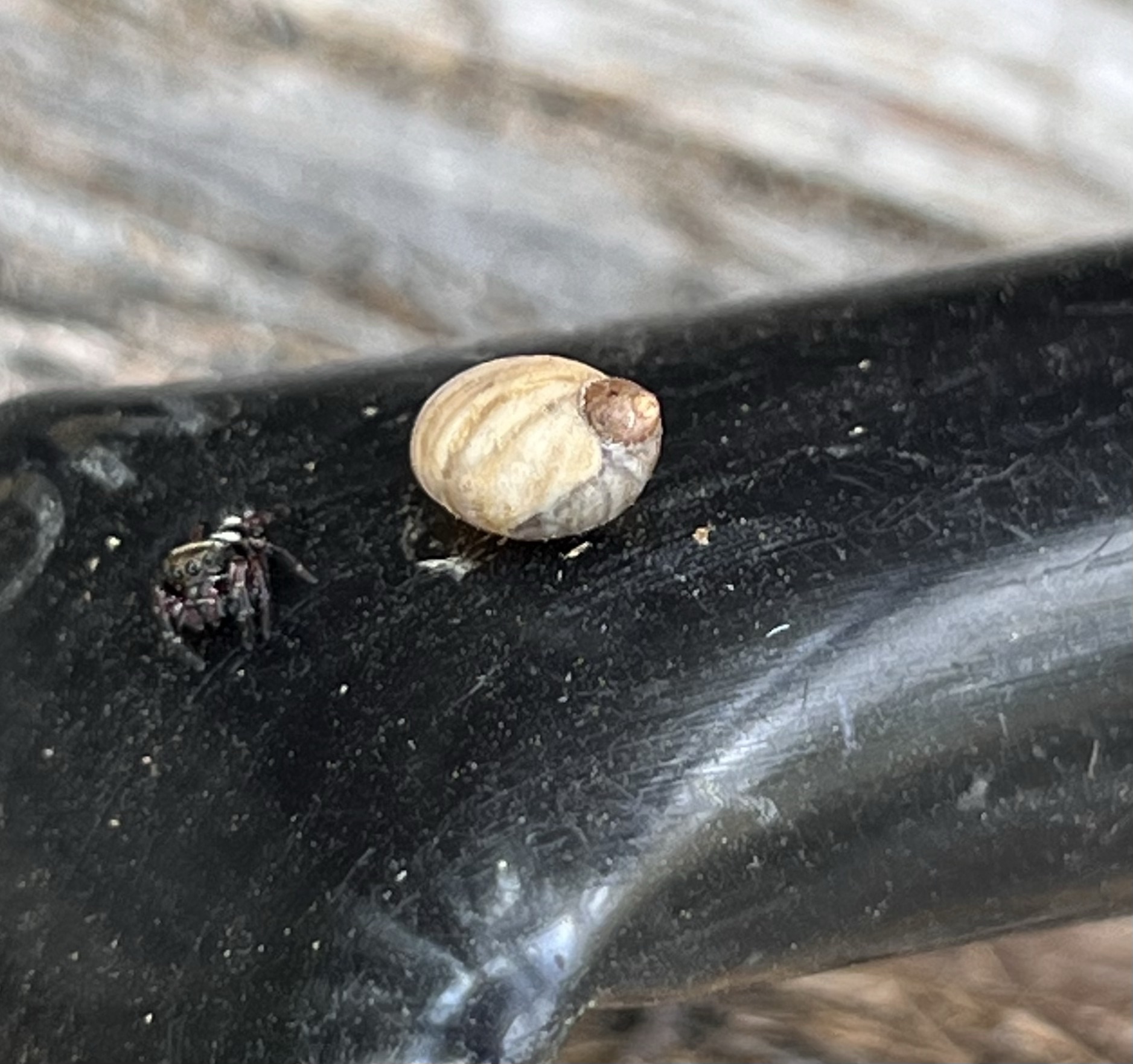
Eastern Amberwing on Western RagweedDove weed, beloved of butterflies PokeweedAmerican BeautyberryTievineCuban JuteBeautiful live oak on the adjacent property. Oval Ambersnail
I’m going to miss the dedication, but I’ll be back to see what’s here at the beginning of September!
We acquired several benches and chairs from Marketplace for the Wildscape and delivered them at noon, which is not as hot as later in the day. Many pollinators were flying around, including hummers.
Kim Summers and I went back late evening to water and stayed until 8:00 pm, resting by the big fountain in the shade, while Cindy Rek told us about the Rio Grande Turkeys being delivered to Bird and Bee Farm, where our projects are located.
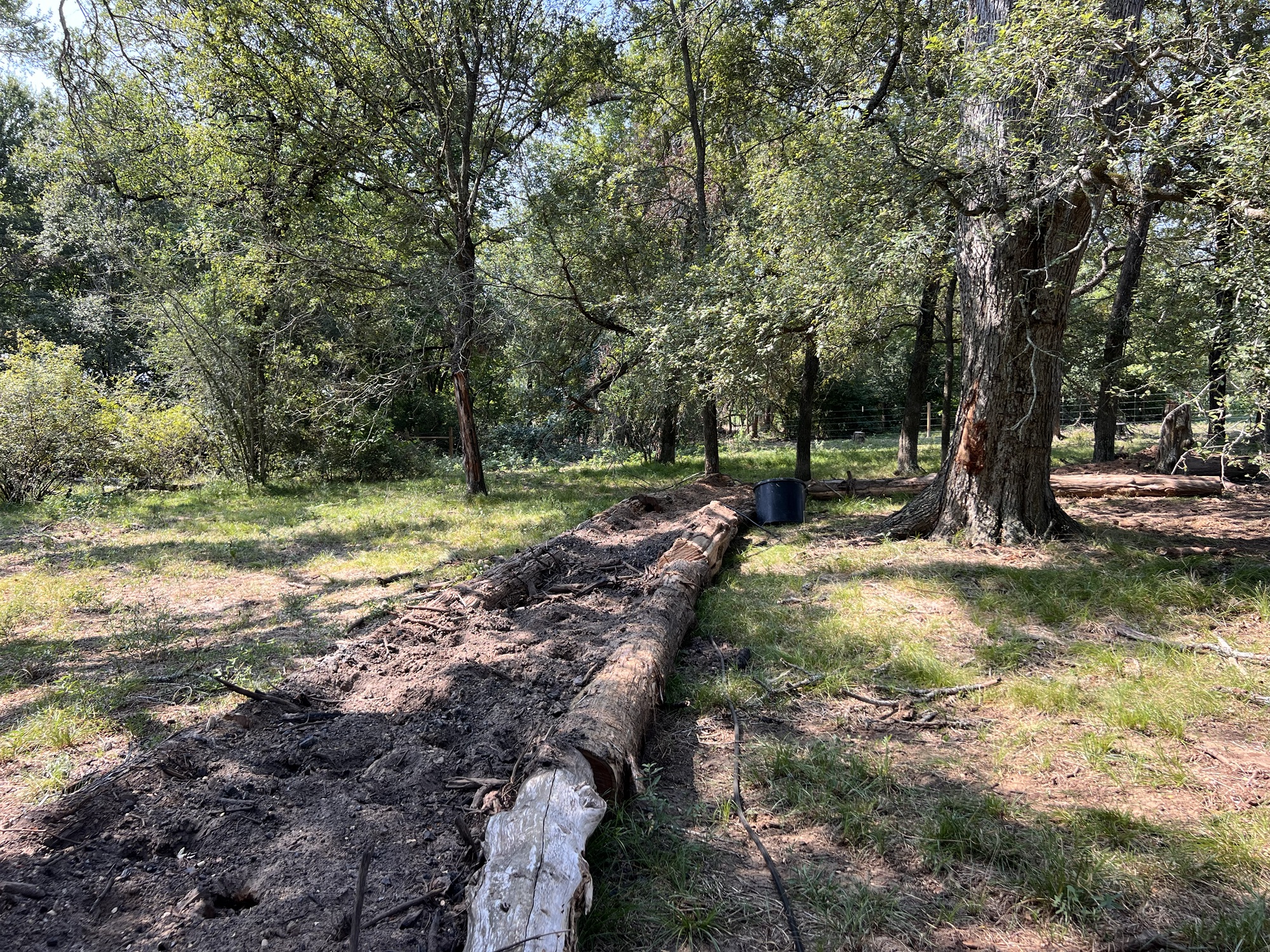
Pictured are the new pathways in the birding station that Gene Rek has been working on. We also placed 100-year-old furniture in the Bird Station, which Ann Collins chose.
Pictures also show new beds, which will allow native birds to enjoy plants that are watered by a drip system.
We are excited to be viewing all at our full moon Wildscape Celebration later this month: Monday, August 19, 6:30 pm – 9:30 pm. Guests are welcome.
So many times, I have heard someone say, “I just killed the most ugly caterpillar I have ever seen.”
My face turns to horror in my barely contained reaction. After a brief pause to gather my thoughts, I swiftly turn this into an opportunity to educate others.
Remember, this was once a caterpillar! Photo by Donna Lewis.
I ask two questions. One, to describe the caterpillar, and two, what plant or vegetable was it on. Based on those two things, I am usually able to identify the caterpillar. I then proceed to let them know that the ugly caterpillar was going to turn into a beautiful butterfly which in turn is a pollinator that will actually benefit your plant or vegetable. They had no idea!
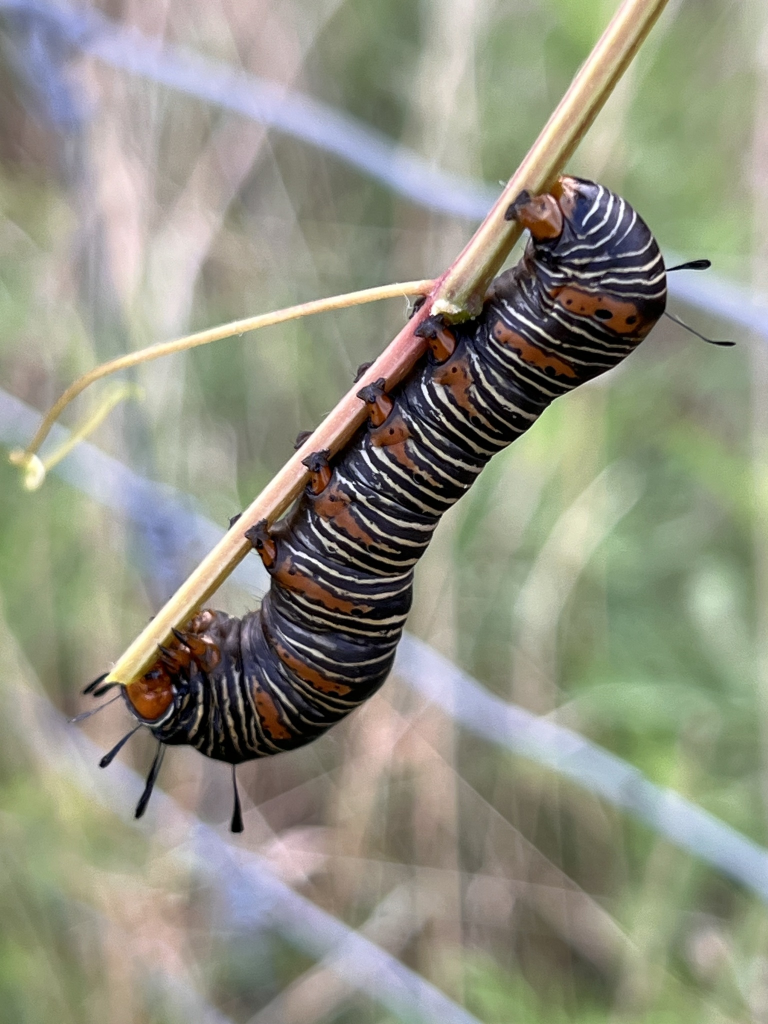
Wilson’s Wood-nymph Moth. Photo by Sue Ann Kendall.
Sometimes the reaction is, “but they were eating up the leaves.” I then ask if it was a miniscule number of leaves or is it completely devoured. If it’s miniscule and it is a mature plant or vegetable or fruit tree, I say let it be since it won’t be long until it turns into a beautiful butterfly and that mature plant will quickly recover. If it is an immature, young, plant or vegetable, I suggest protecting it with crop covers until it matures and can handle the occasional munching from those caterpillars.
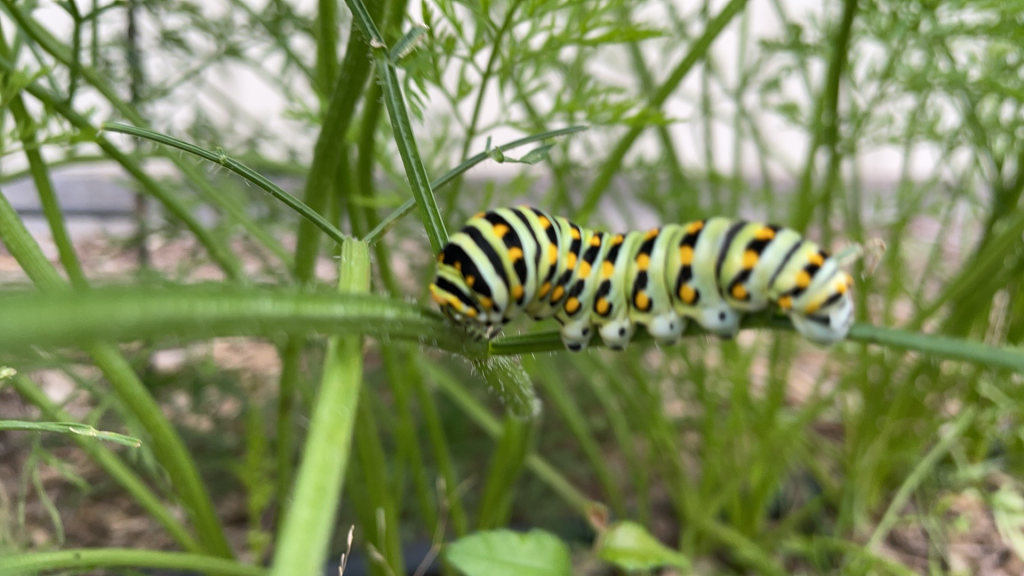
Black Swallowtail. Photo by Sara Faivre.
At this point, I remind them of the many benefits the pollinators provide to include bees, wasps, hummingbirds, etc., and how it actually benefits their plants, vegetables or fruit trees by pollination. For most (not all), it is critical that the pollen gets transferred from the male plants to the female plants in order to reproduce. Although some plants, like cedar trees, reproduce by the wind that spreads their pollen, most others rely on pollinators.
Checkered White. Photo by Sue Ann Kendall.
The next time you think about killing that “ugly” caterpillar, bee or insect, please look it up to identify whether or not it is a friend or foe. If it a beneficial pollinator, we can always find a way to co-exist.
Since I knew the Hogna ‘incognita’ females were on the verge of adulthood, I went out spotlighting on my property at 5 AM this morning. Recent rains had sealed up all the cracks in the soil, and a heavy dew made picking out spider eyes harder than usual. Although I saw several promising spiders, they easily eluded me under the new vegetation caused by the rain. I was disappointed and rather wet from the knees down.
The only option left was to go down the gravel driveway and check out the margins of the gravel county road. On the way down the driveway, I found one which turned out to be my first adult female this season! Walking a quarter mile of county road in front of my and other properties filled out the eight containers I carry with me in a tub. These included an adult male and four more adult female ‘incognita‘ as well as two adult female Hogna antelucana. Oddly enough several were along the edge of the neighbor’s mowed lawn where there was little cover. The others were found bordering hay and row crop fields.
The largest was this female ‘incognita’, and she was a feisty one. Wolf spiders, especially the larger ones, may stand their ground when approached. They may raise one or even two pairs of forelegs in a threatening position. They may lay the tip of one foreleg on what has approached them to gain more information about it. Less often they’ll launch a mock attack which likely would turn lethal for edible prey. In the past they’ve attacked the toe of my boot and a finger. During the latter I felt some pressure.
A while ago I ended up with some toilet paper rolls with a center that could be pushed out. The centers became useful to have around for other purposes. I have one I’ve reduced to about a half inch in diameter and find useful to get larger spiders to go through the bottom of a funnel into an observation chamber for ventral views. The large female wasn’t happy about the process and attacked the end of the small roll. She was lightning fast of course, and I could feel a substantial blow from the other end of the roll. Best analogy would be a cat boxing the ears of a larger dog. Calling this family wolf spiders is a bit of a stretch in my opinion. They don’t hunt in packs and many other behaviors are much more like house cats. Should they be called Felicosa or kitty spiders?












 Nature Along the El Camino Real