Our first chapter meeting presentation for 2020 was really interesting to many of us. I think at least I thought I knew a lot about dragonflies, but it turned out that I did not! Thanks to Cindy Travis’s presentation, I ended up wanting to learn more.
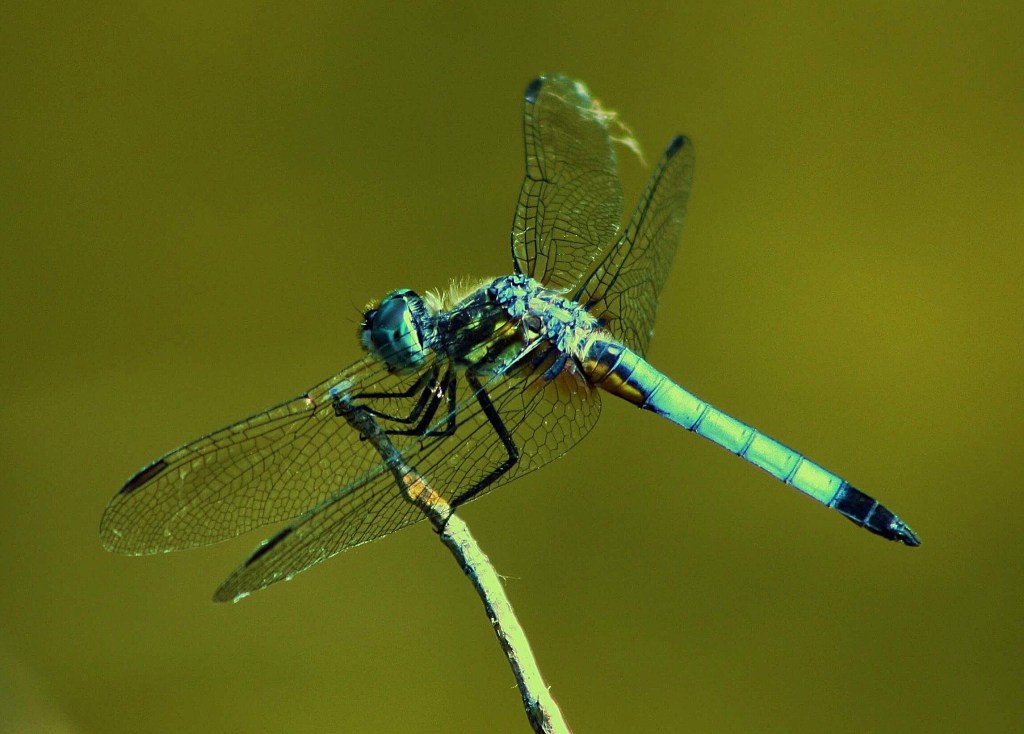
My royalty-free image company labeled this a dragonfly, but it’s a damselfly.
The first thing we learned was how to tell a dragonfly from a damselfly (they are both Odonata). The damselflies are usually much thinner and hold their wings upright, while dragonflies hold their wings out. Their eyes are oriented differently, too.
Yes! a dragonfly!
Cindy also shared the lifecycle of these interesting insects, and showed a film about their mating practices. Wow, it’s amazing they breed at all; it’s pretty complicated.
The nymphs are very interesting, too. They eat pretty much anything and go through many changes while they live underwater. They moult a LOT.
Damselflies getting ready to breed. They make a “heart” shape.
Finally, Cindy told us about a project we can participate in to track the presence of five types of dragonflies around Texas. It’s a part of the Migratory Dragonfly Partnership, and you can read more about it under Migration Monitoring Project.
Other Chapter News
Don Travis presents the certificate of appreciation to Phyllis Shuffield.
We thanked Phyllis Shuffield for her service as Chapter President for the past two years. She received a lovely certificate and a gift certificate as well (for all that hummingbird food!).
I have my warbler!
We also presented many of our members with their 2019 re-certification or initial certification pins. Those golden-cheeked warblers will be gracing many people’s lanyards and shirts now.
Let’s start getting hours for this year by attending some of the 2020 training class presentations!
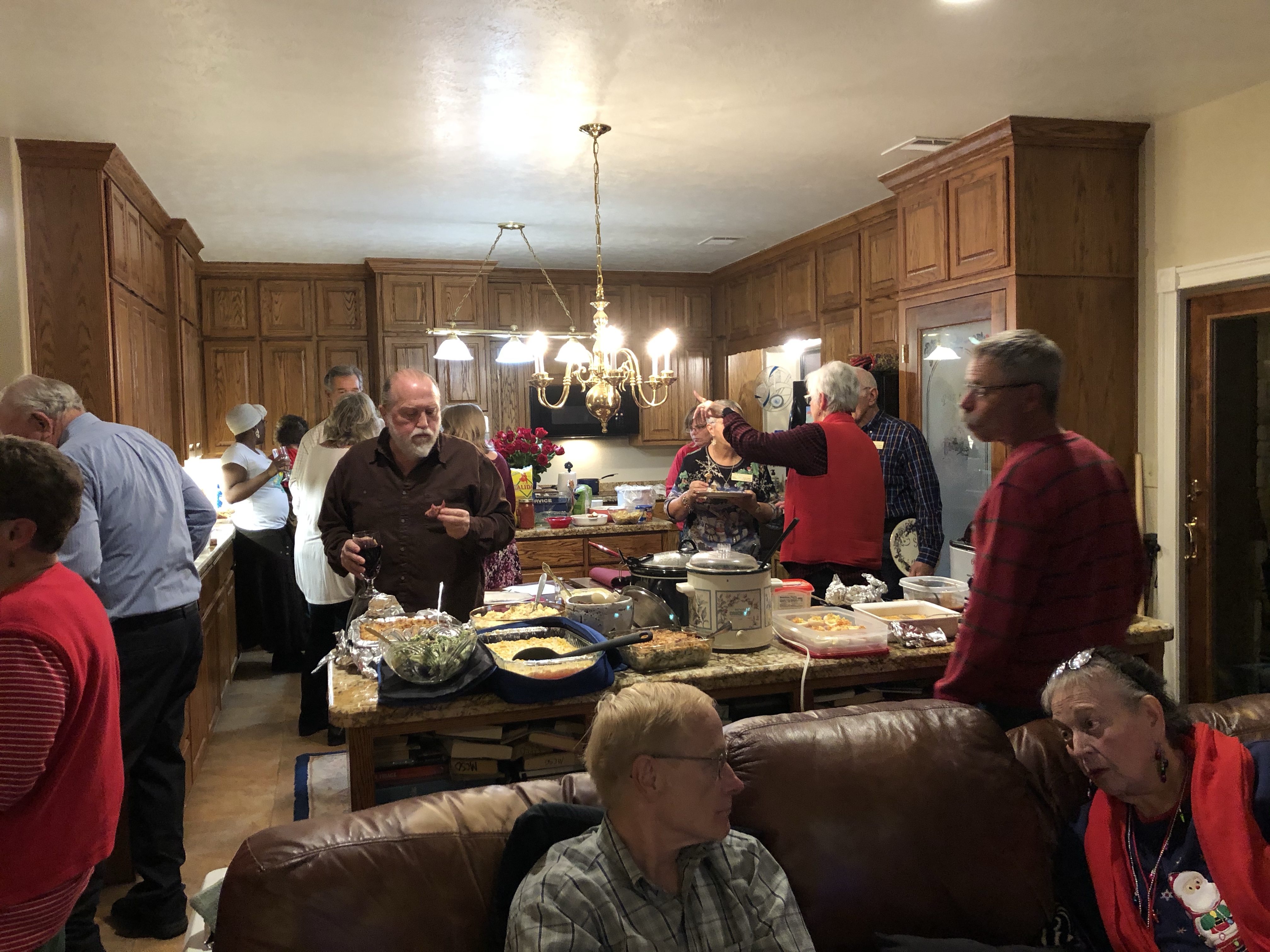
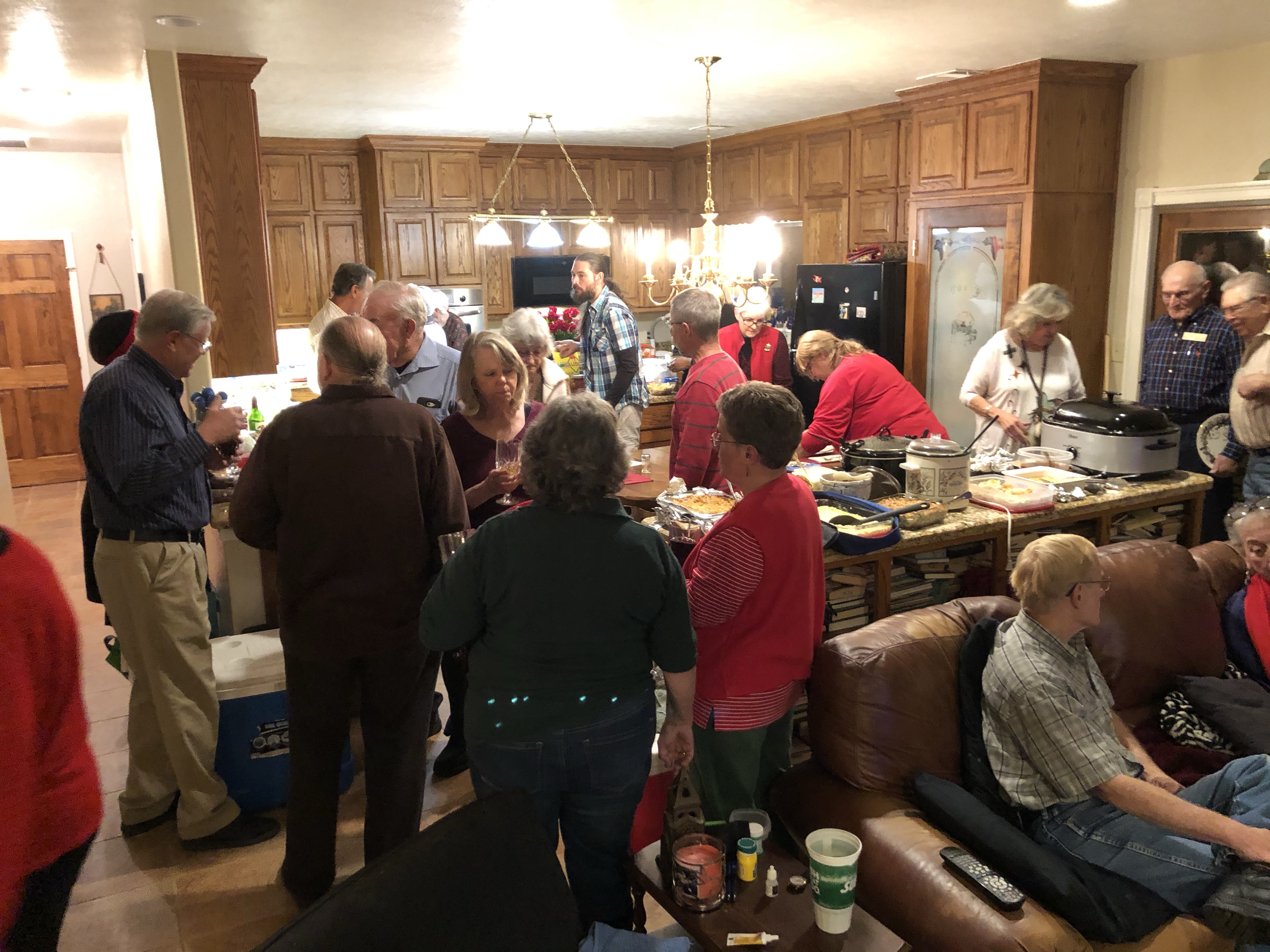
Jackie Fields and Patrick Still enjoy the potluck food at our new meeting facility in Cameron.
More Resources
Want to learn more about Odonata? Here are some great links.
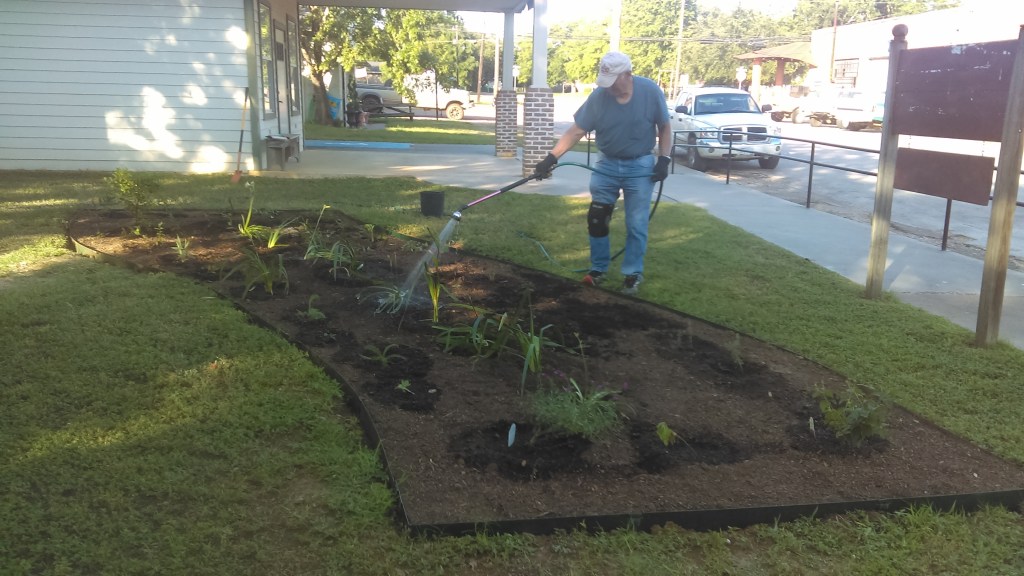
We’ve received a report from Sharon Sweet, sharing the work she and her husband Wesley have been doing on the beautiful butterfly garden they have been building and maintaining in Lexington. It’s at the log cabin area near the Lexington Senior Center. (See their initial post from April 2019 for more.)
How to Find the Garden
Maybe you’d like to check out the gardens in person! Sheri sends these directions:
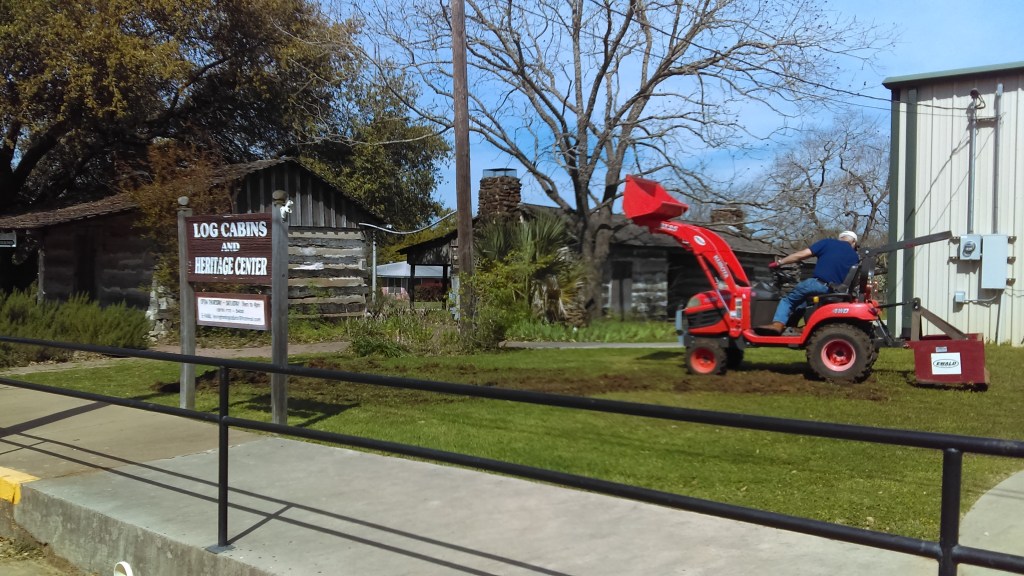
The Lexington Log Cabin Garden is located on 4th Street, 1/2 block west of Rockdale Street (Loop 123). It is directly north across 4th Street from the town square. There is a large sign titling the Log Cabins in front of the garden. I’m hoping to get this sign moved elsewhere so the garden is more visible.
The Lexington Senior Center Garden is located across from the south-west corner of the town square on Main Street. It is right around the corner of the Lexington Senior Citizens Center.
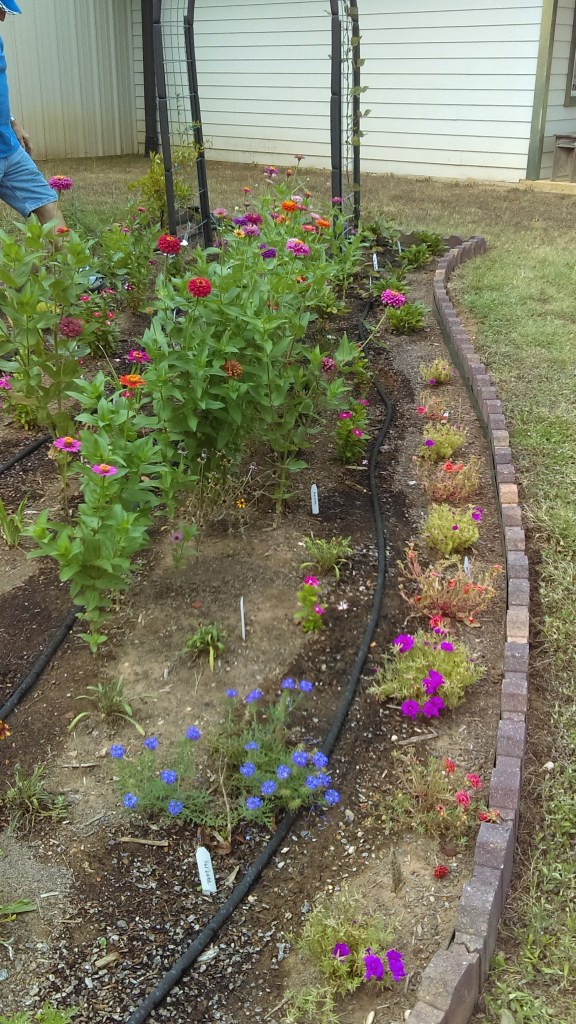
This gallery of photos will take you through their work over 2019. Be sure to click on the photos to see them full size. It’s really beautiful.
Starting the digging
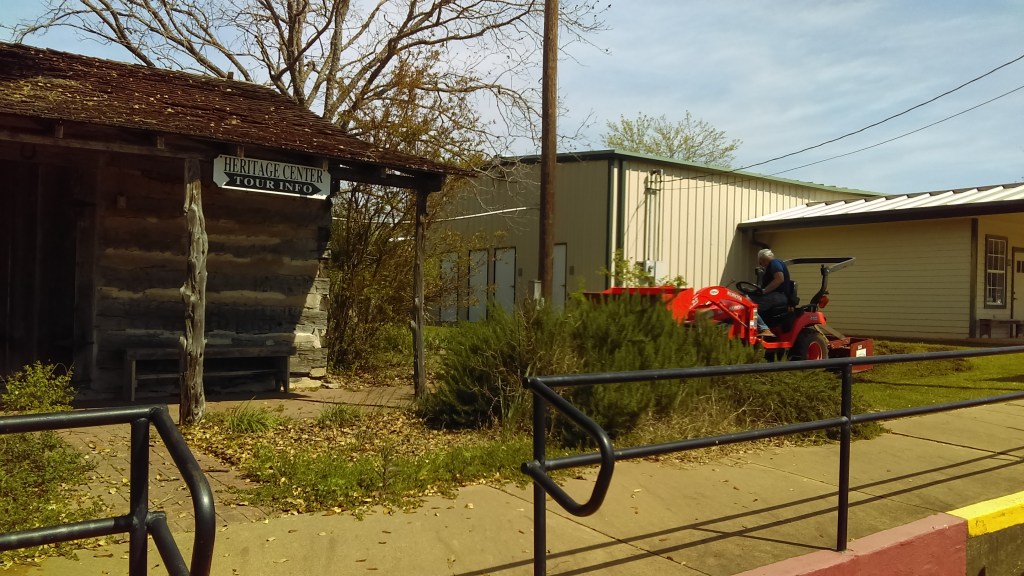
Marking the site with a box blade
Breaking ground
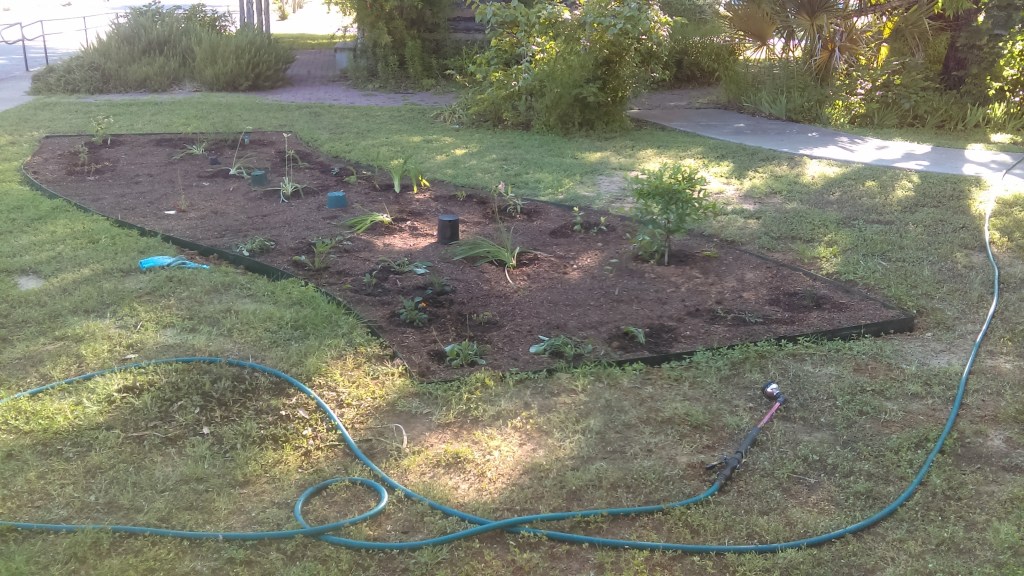
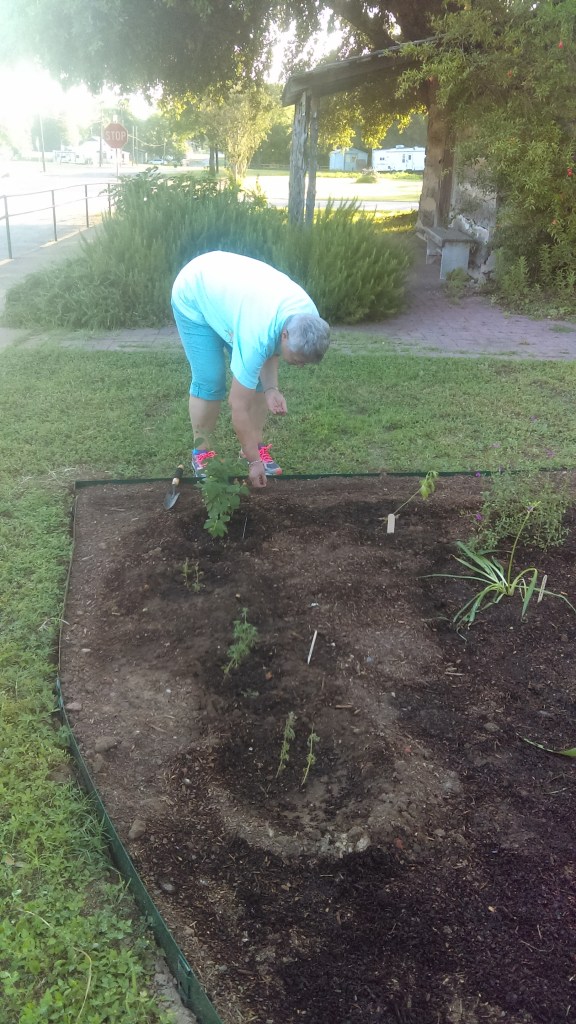
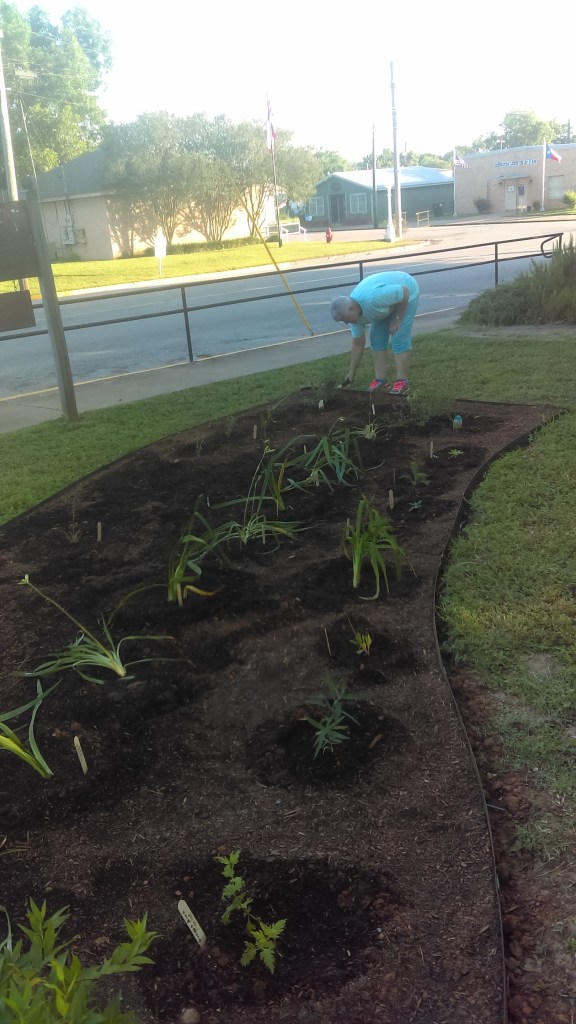
Initial planting
Watering everything in
Planting petunias so Wes can see some color!
Planting Louisiana swamp iris and peach day lilies
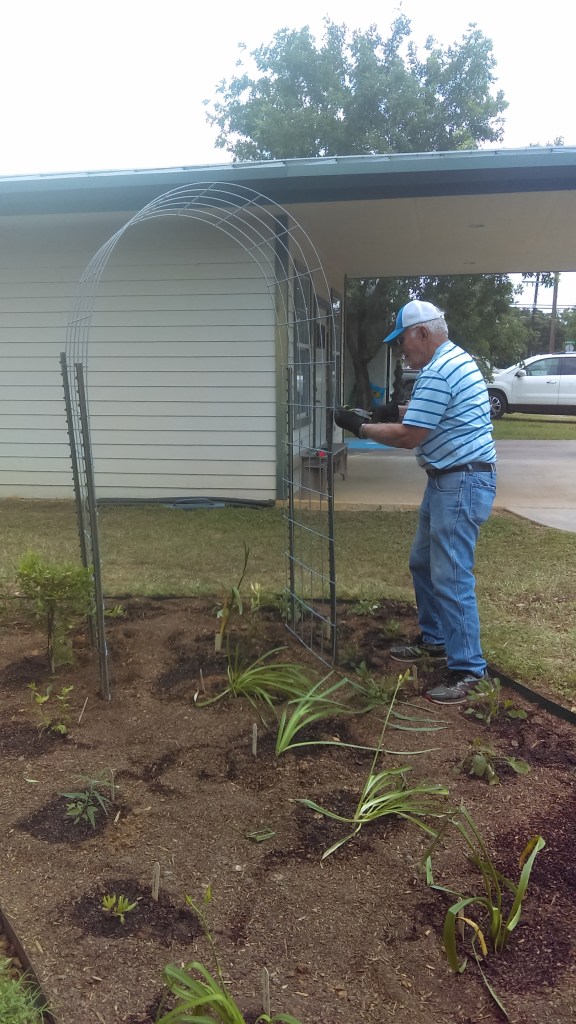
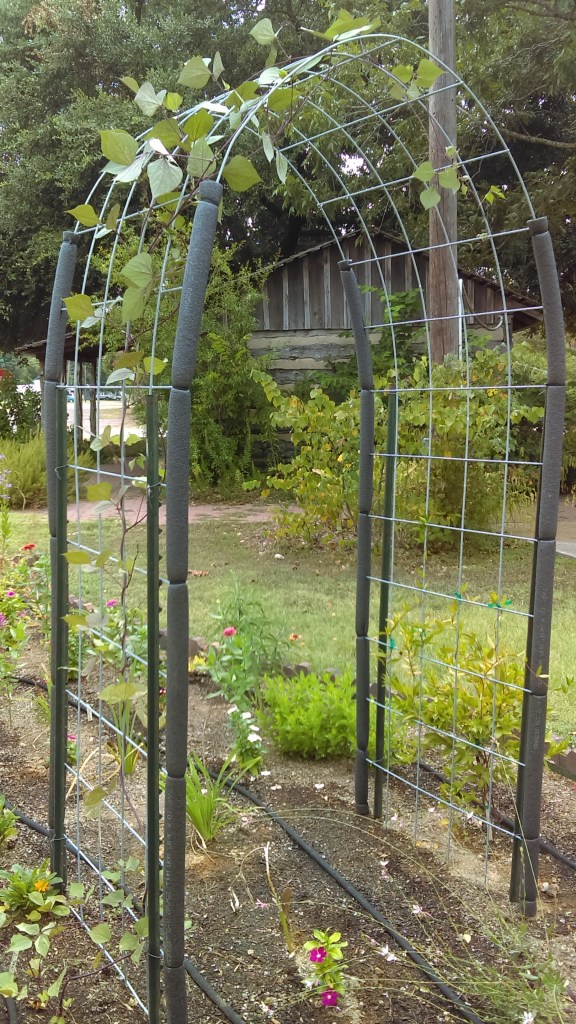
Installing the protective arbor
Wes was sidetracked by some knee surgery!
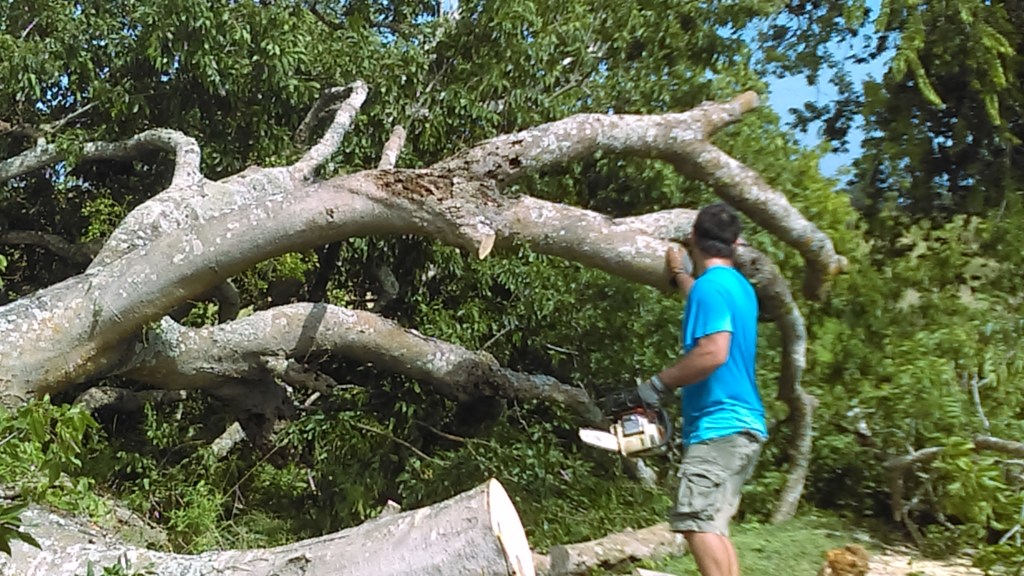
This huge downed tree required help from their son
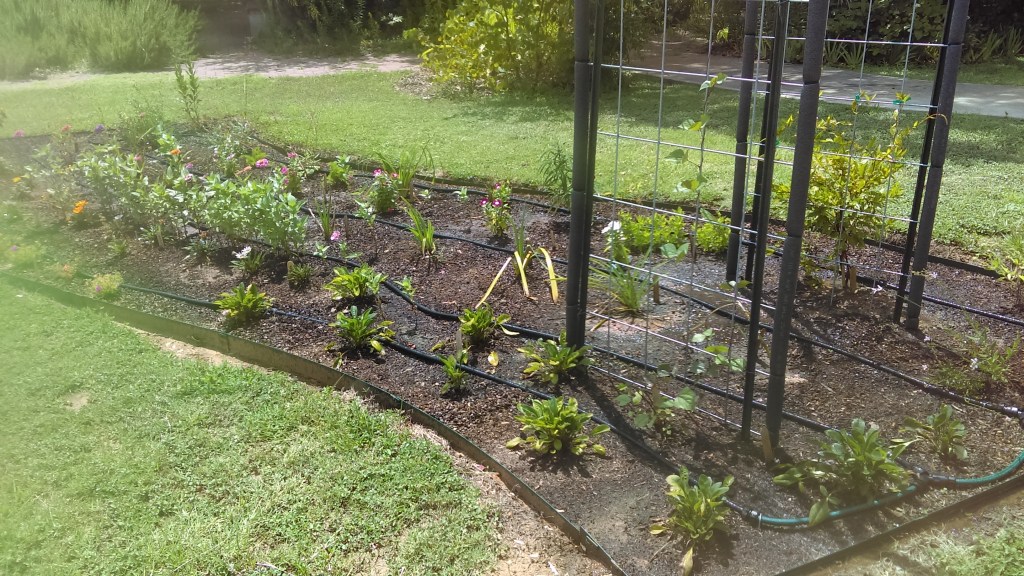
Growing in
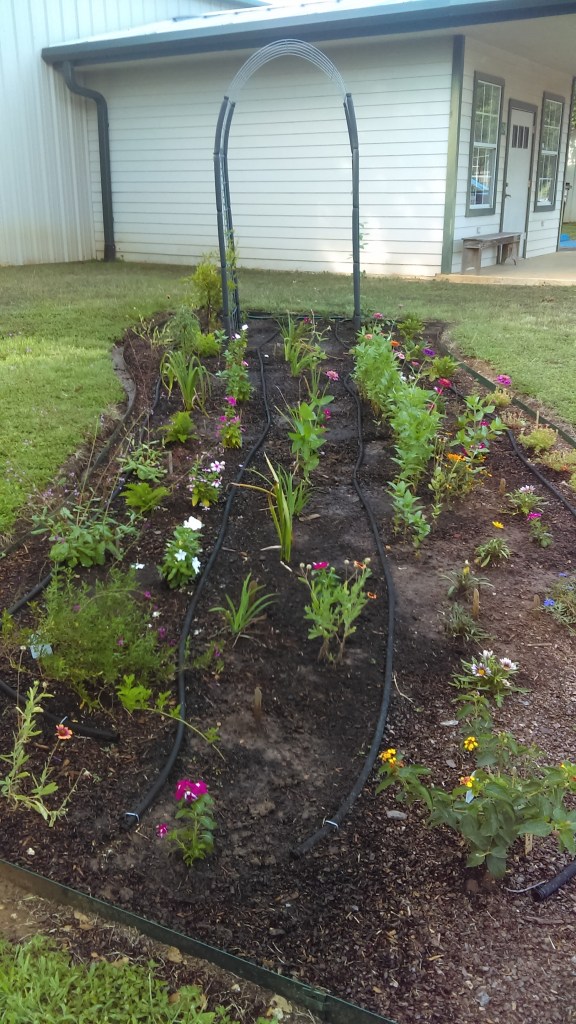
Already showing lots of color
Growing more as they waited for Wes to heal up
Concrete edging that fits together nicely
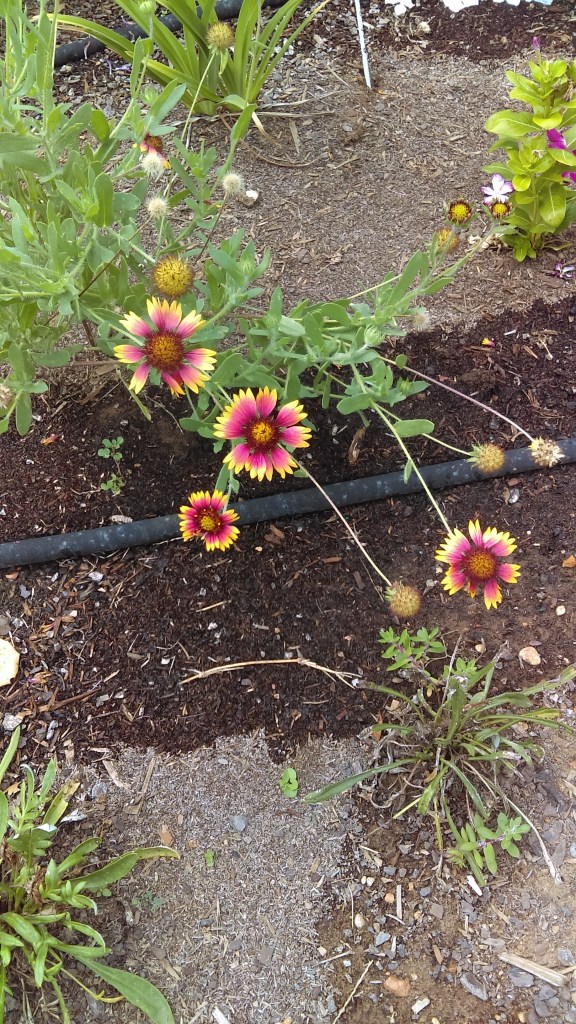
Sharon was able to transplant these Indian blanket flowers from her garden!
Another view of the edging
Flowers and the drip irrigation system
More of the edging and flowers
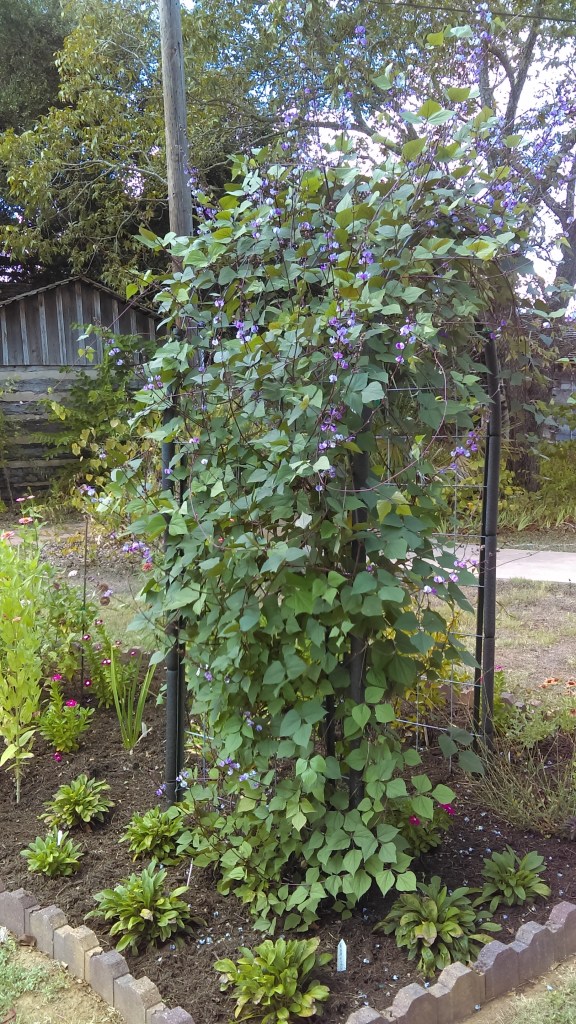
Hyacinth vines growing up the gazebo
Striking blossom
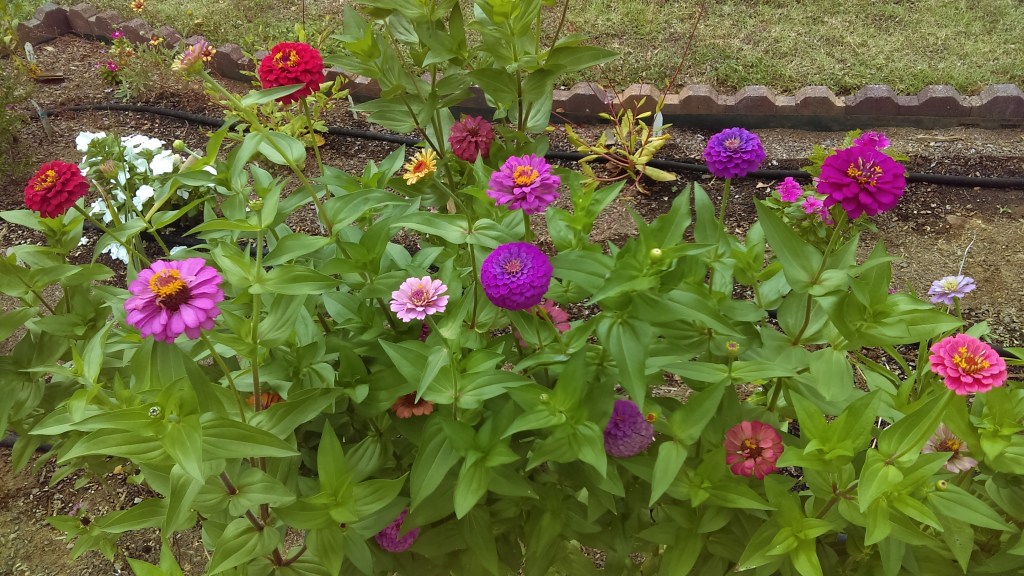
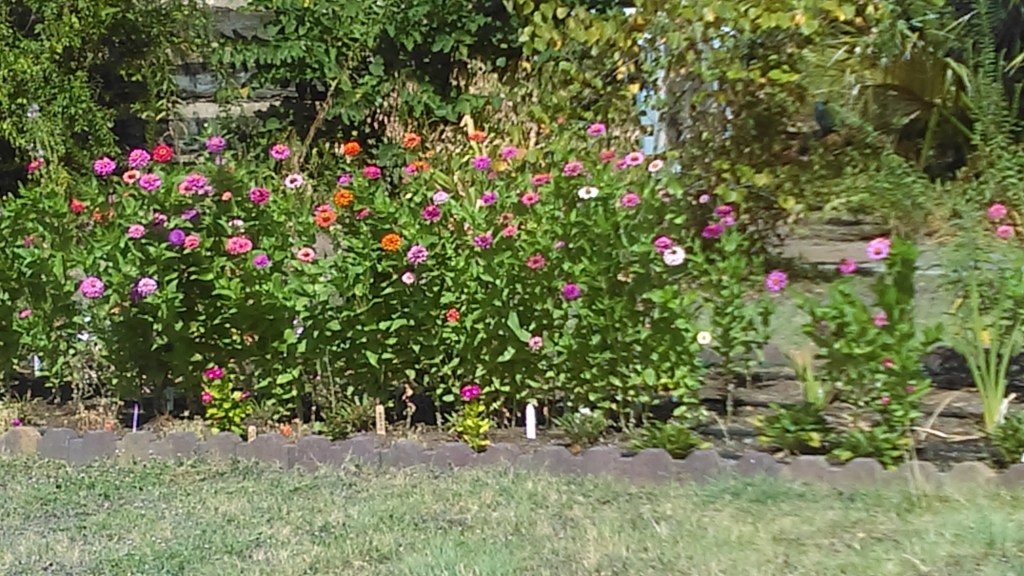
Zinnias
Butterflies love the zinnias
Painted lady on a zinnia – these are Sharon’s favorites
Skipper on a zinnia
Hyacinth bean vine in full glory!
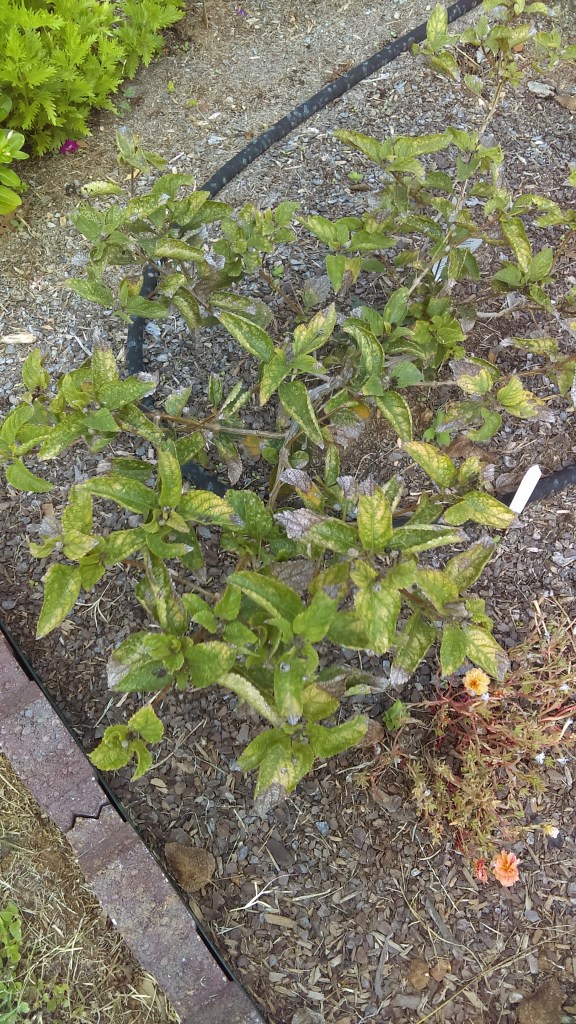
Lantana not doing too well due to over-watering
Amazing progress on the log cabins butterfly gardens.
Once a year we set aside the seriousness of being citizen scientists and just get together to appreciate each other. The December Chapter Meeting does include some business, such as voting on the slate of officers for the next year and discussing our upcoming class, but most of the night is for food and fun: the Christmas Party!
The beautiful tree at the Dworaczyk home.
As in past years, the Dworaczyk family hosted our party in their beautiful home. Sandra has so many beautiful decorations that it’s like a winter wonderland in there! She even has enough Christmas dishes for all attendees to eat off a beautiful plate with beautiful flatware, too.
The Master Naturalists outdid themselves with the food this year, and no one went away hungry. Anyone avoiding sweets was in big trouble, too! I hardly had any room after eating all the brisket and side dishes.
And the Fun!
After dinner and the chapter meeting, where the slate of officers was unanimously approved, the white elephant (or Yankee swap, or whatever) gift exchange began. As always, Don Travis made sure the rules were scrupulously followed to ensure maximum hilarity.
The red barn gets stolen…for the first time.
A lot of stealing went on, since there were a couple of very popular gifts (a barn bird feeder was very popular). Two poor participants had multiple gifts stolen from them. I hope they ended up with something they liked!
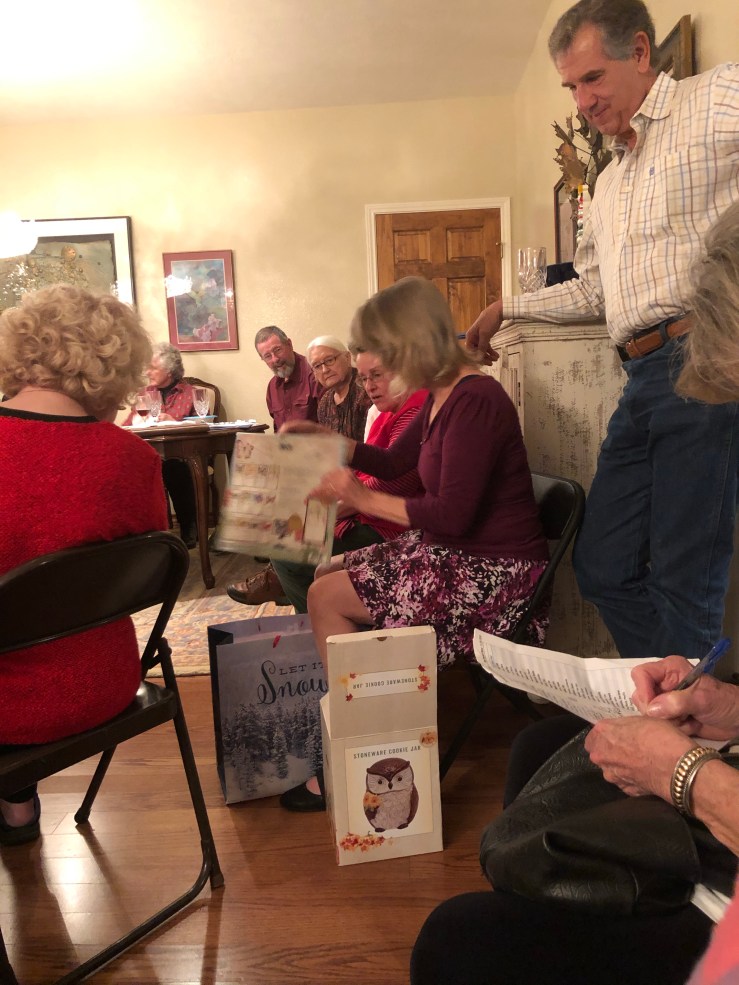
So many cute gifts!
I got a boot-shaped wine carrier/vase holder made by Cindy Travis, so I was okay with losing the bluebird house and mosaic church bird house. Some people got what they wanted by colluding with their spouses, though, which makes me want to bring a spouse next time!
The final gift was this fashionable turkey-leg hat, here modeled by Don Travis. As you can see, it went over well!
It’s amazing how hard the group works on coming up with wonderful gifts that their fellow Master Naturalists will treasure. We all are so thoughtful and really know what will appeal to our colleagues.
Sending warm holiday wishes to all of you reading this. I look forward to being part of the Board next year and to many interesting activities and learning experiences!
Last weekend, three members of our Texas Master Naturalist chapter traveled to Williamson County to attend the holiday fundraiser hosted by All Things Wild Rehabilitation organization.
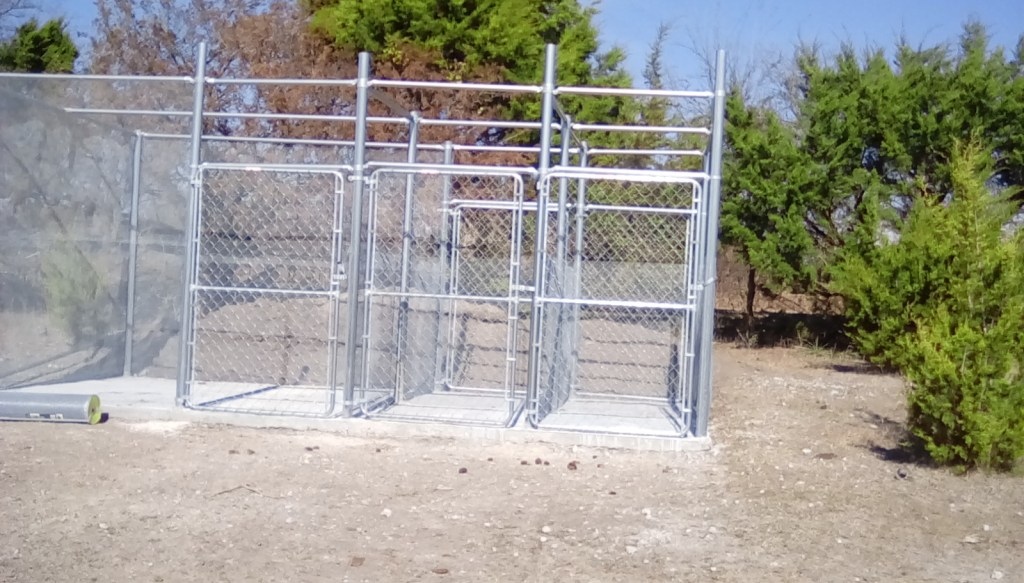
Beautiful new facilities for rehabilitating animals.
We saw beautiful wildlife gifts and sampled baked goods.
A great horned owl with a broken wing.
Since our last visit, many outdoor shelters have been built, including a huge raptor complex. A zoologist provided owl programs and tours to view raptors. It was fascinating!
A shelter with one of its residents happily perched.
It’s easy to help out at this valuable organization, which helps so many injured and otherwise needy wild animals. From their website you can sign up for newsletters, get hours of operation, and see lists of needed supplies. They also provide useful information about what to do if you find a wild animal that may be in need.
Watching a raptor demonstration.
Consider volunteering with All Things Wild. Master Naturalists can earn volunteer hours under the opportunity – Natural Resource Conservation.
Every year, the Audubon Society sponsors the Christmas Bird Count. This year counts will be held from December 14, 2019-January 5, 2020. It’s very important for keeping up with rising and falling bird populations in the US. You can participate in many ways.
One nearby project came to us via Kyle Watter, a park ranger with the US Army Corps of Engineers at Proctor Lake in Comanche, Texas. He wrote:
January 4th, we are hosting our second annual Christmas Bird Count. Last year, we recorded 99 species at our lake. The count incorporates six driving routes, each of which includes a portion of federal property. Some of the properties are off-limits to the general public or are quite remote.
email, November 25, 2019
If you’d like to head to Proctor Lake, contact Kyle at Kyle.J.Watter@usace.army.mil or call the lake office at 254-879-2424.
While we may not live very close to Proctor Lake, we do have other opportunities to participate. The Bird Count project requires registration with a coordinator within one of the specified circles in this map. The circles are 15 mile radius. If one lives within one of the circles, they can register and sit in a lawn chair in their yard to count birds on the specified days. That is not our luck here in Milam County.
Here are the observation locations nearest to Cameron.
As you can see from the close-up above, there are several circles in easier driving distance for us, such as Granger Lake WMA, Buescher/Bastrop State Park in Bastrop County, and McKinney Roughs Nature Park in Bastrop County aren’t too bad. Linda Jo points out that she knows that in the past, ECR members have traveled to all these locations for training or volunteer events.
Linda Jo would like to especially recommend the McKinney Roughs location, because it is being led by Nicolaus Cowey, a very knowledgeable bird person. The count led by Sheila Hargis of the Lost Pines TMN chapter at Buescher/Bastrop would also be a worthwhile experience. Sue Ann really likes Granger Lake for its variety of shore birds.
Here is contact information on each of these locations. Contact the compiler to register and get more information:
Granger Date: Saturday, December 29 Compiler: Byron Stone Email: drbirdie@aol.com Granger Lake, in Williamson County, is 35 miles northwest of Austin. The area is significant due to its reputation for harboring threatened prairie species like MOUNTAIN PLOVER and SHORT-EARED OWL. Other specialties and expected species include a variety of duck and geese, BURROWING OWL, HORNED LARK, SPRAGUE’S PIPIT, LAPLAND LONGSPUR, MCCOWN’S LONGSPUR, and as many as 18 sparrow species, including HARRIS’S and LECONTE’S SPARROW. The area offers diverse habitat, and participants will have the opportunity to count open farmland, fresh water, riparian woodland, and Blackland Prairie habitat.
Lost Pines/McKinney Roughs Date: Friday, December 28 Compiler: Nicholas Cowey Email: nicholas.cowey@lcra.org This CBC is located in Bastrop County between the Bastrop CBC and Austin CBC circles and just a bit to the north. This count is a community collaboration between the Lower Colorado River Authority, Bastrop Audubon Society and the Lost Pines Master Naturalists. This year the count will take place Saturday, Dec. 29, 2018 and will include the properties of McKinney Roughs, Hyatt Lost Pines, Webberville, Utley, numerous rural areas around Elgin, many area county roads and neighborhoods including Crystal Lake, Bluebonnet Acres, Wilbarger Bend, Union Chapel and Young’s Prairie Road. The count also encompasses miles of the lower Colorado River. Count starts on Saturday, Dec. 30 at 6 am at McKinney Roughs Visitor Center. Plan to arrive by 5:30 am to meet up with your count group. Countdown will take place at 6:00 pm at the McKinney Roughs Visitors Center. Register online at https://goo.gl/fxDmvU.
Buescher – Bastrop State Parks Date: To Be Announced Compiler: Shelia Hargis Email: bastroptxcbc@gmail.com We need many birders to adequately survey the birds in the circle area to find all of the expected species and the rare species visiting the area. We would especially like to have some feeder watchers, so if you live within the circle and have bird feeders including hummingbird feeders, please consider participating in that way. All groups will begin their day from a location of their choosing. We will meet at the end of the day for the countdown. Email bastroptxcbc@gmail.com to register or visit our website at www.bastropcbc.com for more information as well as maps of the areas to be covered.
Perhaps there is a date and location you will be able to participate. This is a great opportunity to earn some end of the year volunteer hours. Please let Linda Jo know if you plan to participate, in case we want to coordinate rides.
Report hours as Cit. Sci. – Cornell / Audubon TMN Field Research Hours.




















 Nature Along the El Camino Real