Check Out the New iNaturalist

by Sue Ann Kendall

Last Thursday, I headed out to observe wildlife at the Nails Creek Unit of Lake Somerville State Park. My usual method of observing is to take pictures of what I find, then upload the photos to iNaturalist for identification and to document what’s out there. (I also have Merlin Bird ID going most of the time, to catch the birds flying around.) I had a nice walk out by the lake, where I saw many ducks, hundreds of White Pelicans, and some plants I hadn’t seen before. What a lovely afternoon!

Pelicans in flight

Of course, I fired up iNaturalist on my iPhone when I got back to my campsite. To my surprise, there was a notice saying that I should download the new iNaturalist right now, because it has all sorts of wonderful new features (not available on Android yet).

This is the notice on the computer app.

I downloaded iNaturalist Next, as it’s called now, like a good user, but I went ahead and identified my photos on the old app, which still works just fine. I then read all about the new version, which you can, too, by going to their blog. It’s a good idea to do that before starting to use the new one.

Beautiful Prairie Nymph (Herbertia lahue) I saw at the park.

The next day I tried out the new version. I was especially intrigued by the new feature that lets you point to a plant or other living thing and get suggested identifications. So, if you just want to check on something or resolve an argument with your friends about what something is, you can do it without uploading to the database. This is like the Seek app many people use.

After some trial and error, I was happy to figure out that you can take a photo from within the app, get a suggested ID, confirm it (or select another option if you know better), then upload it right then. Off you go to the next intriguing plant. This really saves a lot of time going back in and uploading later.

The top option is the one that gives suggestions.

I have to say it’s not the most intuitive interface ever created (I’m qualified to judge, because I supported users of an application with a horrible UI from 2011-2025, so I know one when I see one). However, once I figured out how to do what I wanted to do, it was just fine. I was also happy to see a pop-up with instructions on how to make the new version work a bit more like the old one, for us creatures of habit, and a reasonable tutorial on the blog post. Here are a few tips I’ve come up with so far:

Here’s the user interface.
  • Take your pictures carefully. You’ll see possible IDs coming up as you aim the camera at something, if you move slightly or annoy the app in some magical way I don’t understand yet, it might go back to identifying by family or worse. So be sure to snap at the right time to get the ID you want; otherwise you have to go back in and edit the observation, which works like the old iNat.
  • Note that the photos the app takes are an odd rectangular shape. If you are going to use photos taken with the app for other purposes, you’ll want to go in and crop them to a more useful aspect ratio.
  • I also find that it’s harder to focus on your organism from within the app than using the phone camera app. I frequently got frustrated trying to get a good image, especially of insects. A couple of times I just took a phone photo and identified the insect or plant later. If you are careful to only upload nice, sharp pictures to iNat, you might just want to get the suggestions in the app, but take pictures separately.
  • One of the good new features is being able to upload a lot of photos at once (up to 20) for identification. You can group photos of the same organism to go in one observation, but read the instructions first, because I found it to be challenging when I started out. Once you get it, it’s fun.
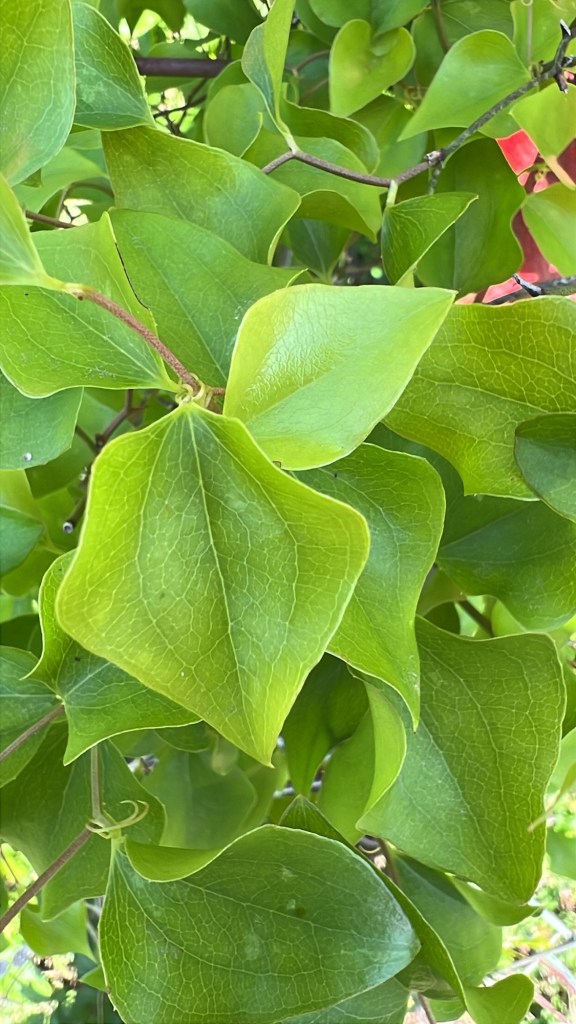
Example of the shape of photos. It was the closest plant to me, Smilax bona nox.

Overall, I think I’ll like this new app just fine. The only thing I really miss is that I liked the more compact list of your observations on the Me tab in the old one. And I think there are some issues with traditional projects that need to be resolved, for those of us who use a lot of projects. New features, like viewing other users’ profiles on the phone, make up for any issues I have. I loved that their example was Sam K.

It’s spring, though, and plants are blooming, so get out there and identify some of what you see on this new app. I’ll be waiting for reviews from some of our Super Users.

Hummers Have Arrived

by Donna Lewis

At last, our tiny hummingbird friends have returned from down South ole Mexico way. It is hard to believe these little jewels are real living beings. A miracle for sure.

Tiny, but mighty. The two main species that visit Central Texas are the Black-Chinned and the Ruby-Throated. Both only weigh 0.1 ounce each. There are several other species that can be in our area also, but these are the most prevalent and easy to identify. They can beat their wings approximately 75 times per second! Yes, I said second, not a minute. WOW!!! I can’t move anything that fast.

Black-chinned Hummingbird. Photo by Mike Kit on Pexels.com

The males usually arrive first and get ready for the ladies to arrive soon after.

These birds drink nectar and eat insects. The plant they like the most for me is the Coral Honeysuckle. Turk’s Cap is another favorite bush.

Ruby-throated Hummingbird. Photo by Skyler Ewing on Pexels.com

Let’s talk about the human feeders we love to put up so we can watch them and assist in times of stressful weather events. There are some rules to follow so the nectar is safe.

Use regular white cane sugar. One part sugar to four parts water. I use our well water because I am in the country. No need for me to boil anything. If you are in the city, you probably should boil it. The feeders are usually red; do not use dye.  You can tie a red piece of cloth or ribbon if you need to. Year to year in the same place, the hummers will remember where they are.

Here is the MOST important thing of all.  Always change out the sugar water every three or four days in hot weather, or simply every time. The sugar water will ferment, and the bird will become drunk, and many will fly into a window or door and break their neck.  Very sad.

If you can place the feeder under some cover to shade it, that helps.

Cats and snakes like to get our friends, so try to keep them where they cannot be reached. Everybody has to eat.

So get your feeders up, clean them with soap and water every few times and watch a little amazing bird show off its flying skills for you.

Remember who you garden for.

Cedar Waxwing Visitors

by Donna Lewis

Recently I had several large flocks of these very sleek looking birds in my oak trees.

These beautiful migratory birds, Cedar Waxwings, like to stay in flocks and will go all the way to Canada during the warmer months.

A sleek crest with a black mask and red wax-looking tips on their secondary wings make these birds easy to identify. The feathers on their chests are short and look slicked down.

Photo by Skyler Ewing on Pexels.com

They mostly eat fruit, berries, flower petals, some insects, and occasionally sap.

I love the fact that when they are courting male and females will sit side by side and pass flower petals back and forth, share a meal and rub beaks. How romantic!  The babies are even fed by both parents.

They will drink from bird baths and sometimes eat raisins from bird feeders. But more often Cedar Waxwings keep to the wild things for food.

Photo by AE Rudd

If you see some birds with a crest and look like Zorro, then they’re probably Cedar Waxwings.

Remember who you garden for.

Water Moccasin Alert

by Pamela Neeley

As usual, I was walking around the outside of the house checking flower bed for upcoming Spring cleaning, and I was wearing capris, flip-flops and no gloves. My friend pulled me back while saying, “Snake!”

Big, fat, black water Moccasin was right in front of me, but heading away from us. (Solid color usually indicates mature snake. Patterns refer to young or juveniles. ID can be confusing because of the patterns.)

A cottonmouth adult

 It’s been awhile since I’d spotted a viper. I used my single-shot shotgun and missed at less than 6 feet (?) and I couldn’t remember how to release the safety on the other.  So, I called my neighbor, who was at home, and asked him to dispatch this cottonmouth.  

A juvenile cottonmoutn

One shot from his pistol. He says he keeps snake shot handy just for me! I believe this.

I hung it on the fence, to alert other snakes. Legend has it that snakes will continue moving until sundown.I don’t know. It wasn’t on the fence when I looked. I didn’t go search for a moving, dead snake, either.

AI made this pretty version.

Cautionary tale: It is Spring and suddenly moist. The frogs are back. Cottonmouths, or water moccasins, are very nasty-tempered poisonous vipers. It will stand its ground, and possibly move toward you if you disturb it. They will try to stare you down, and possibly chase you – not a myth.  Both on land and in the water.

The frogs have returned and are a favorite food. Flowerbeds often have mulch.  Texas is famous for drought. The cement slab houses have to be kept moist around the base, about 18″ from base of house, and create a perfect environment for meal-seeking snakes.

Wear protective clothing.  Review use of firearms. Although poisonous, infection is common because their mouths are nasty and full of exotic bacteria, etc.

There is a viper antivenom,  CroFab antivenom (Wikipedia). I do not know if local medical facilities have this in stock.

Monarchs Passing through Milam County

by Donna Lewis

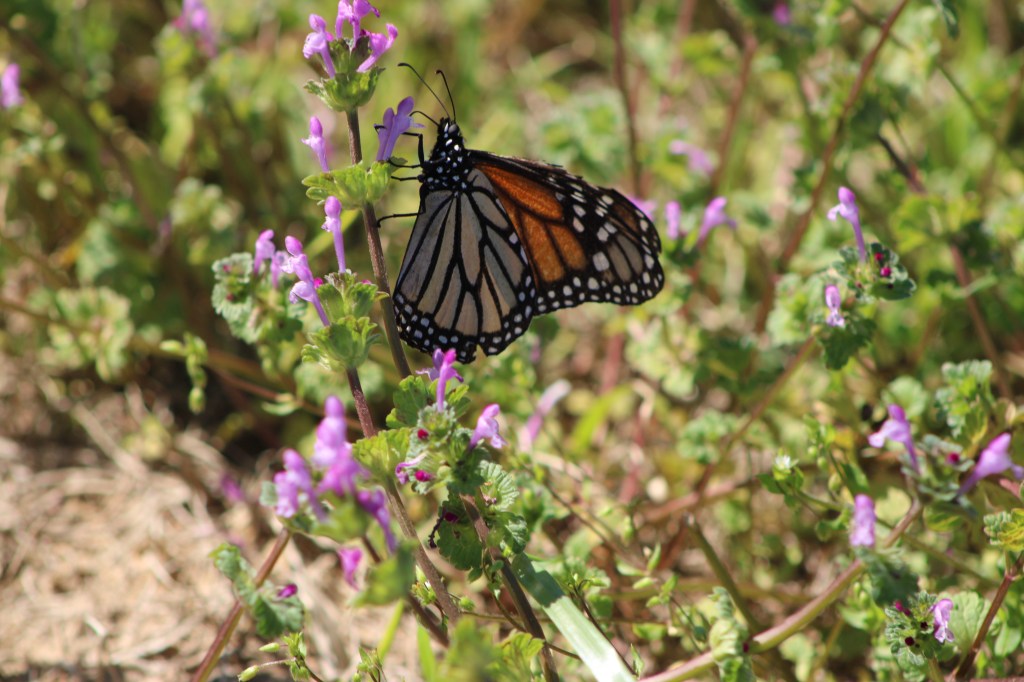
A few weeks ago I had the few Monarchs that I was able to see on our property here in Central Texas.  I have only counted about one dozen in all. That is a sad number considering there used to be hundreds crossing our pastures. I have been counting them for years and reporting this information to Journey North and several other organizations.

This serious decline is happening to most butterfly species. The Monarch is just an iconic species that we all recognize.

There needs to be more citizens who try to help them. Probably all who read our Master Naturalists blog will do something. But most people will not. This could be that they don’t know what to do, or they think their small actions won’t matter. Everything matters.   Remember that.

So, action means leaving natural area’s unmowed till after all the milkweed has gone to seed. It means learning about all of our pollinators and planting appropriate native plants for where you live. There are lists online about these plants. Yes, these plants can be hard to find. It means looking to volunteer groups like Texas Master Naturalists for advice.

These are the things we love and work hard to educate ourselves about them.

As humans we like to neaten up our yards and pastures. That is not what butterflies, birds and mammals like. A mower means death to them. So just taking a little more time to be aware of what is living near you. If you loved moving to the country, then do not change it.

The Beatles have a song by John Lennon that talks about this. The song is, “Let it be, let it be, speaking words of wisdom, let it be…”

Remember what something beautiful means to you…and work to save it.