Note from Suna: Pamela Neeley from the El Camino Real chapter has been working with water features on her property for the past few months (years), creating not only areas of beauty (sight and sound), but places for aquatic plants to flourish, and wildlife to sustain themselves on. I toured her property a couple of weeks ago and encouraged her to share some of her ideas and techniques with fellow Master Naturalists. Maybe you can borrow of her creative thoughts some in your own gardens and wild areas!
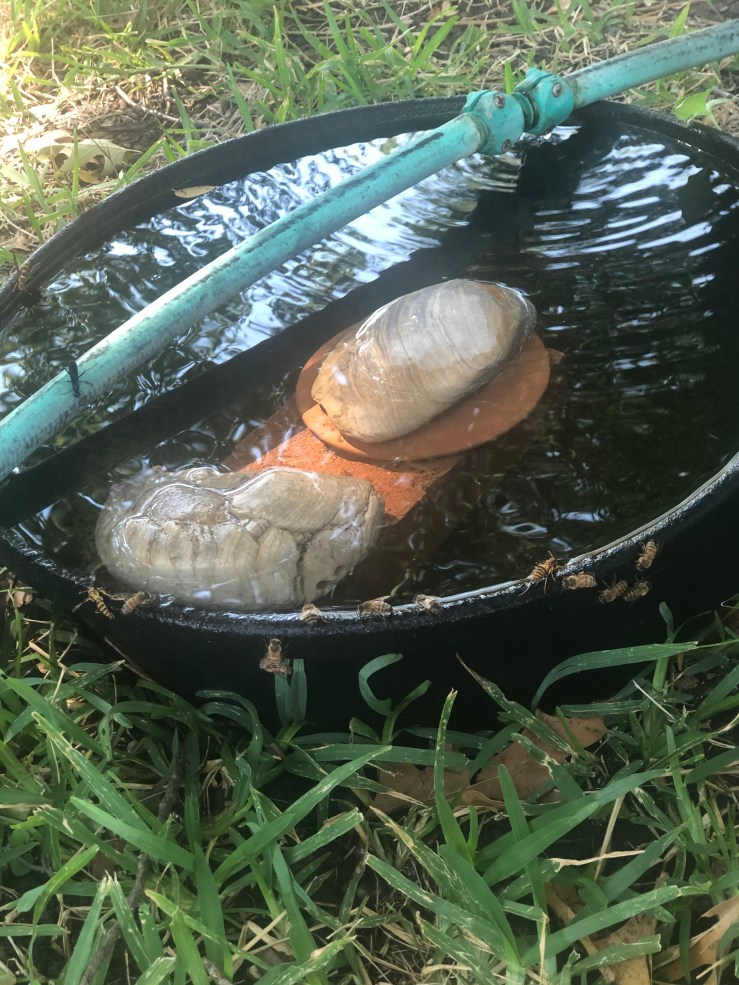
The rock is for butterflies and others to perch on
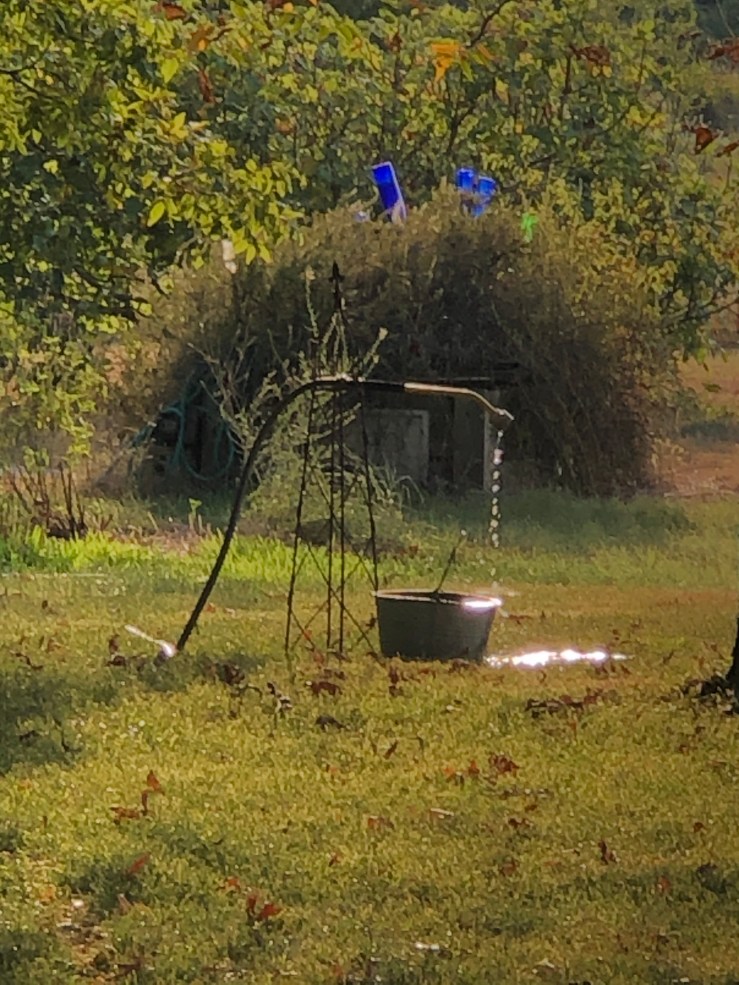
A leaky hose fills the container
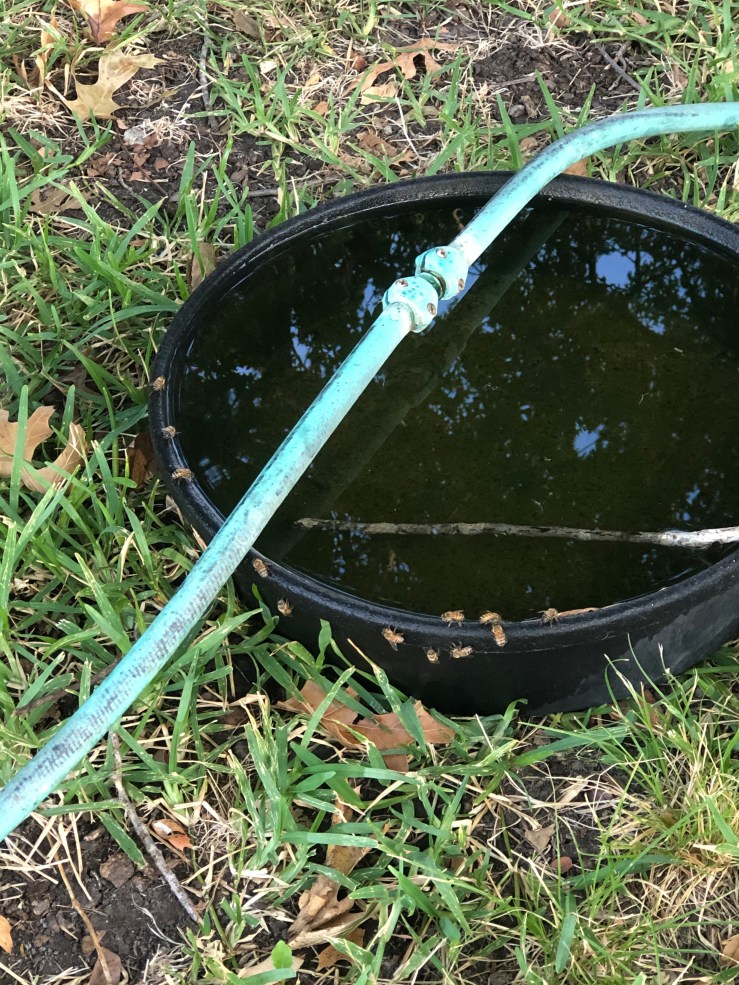
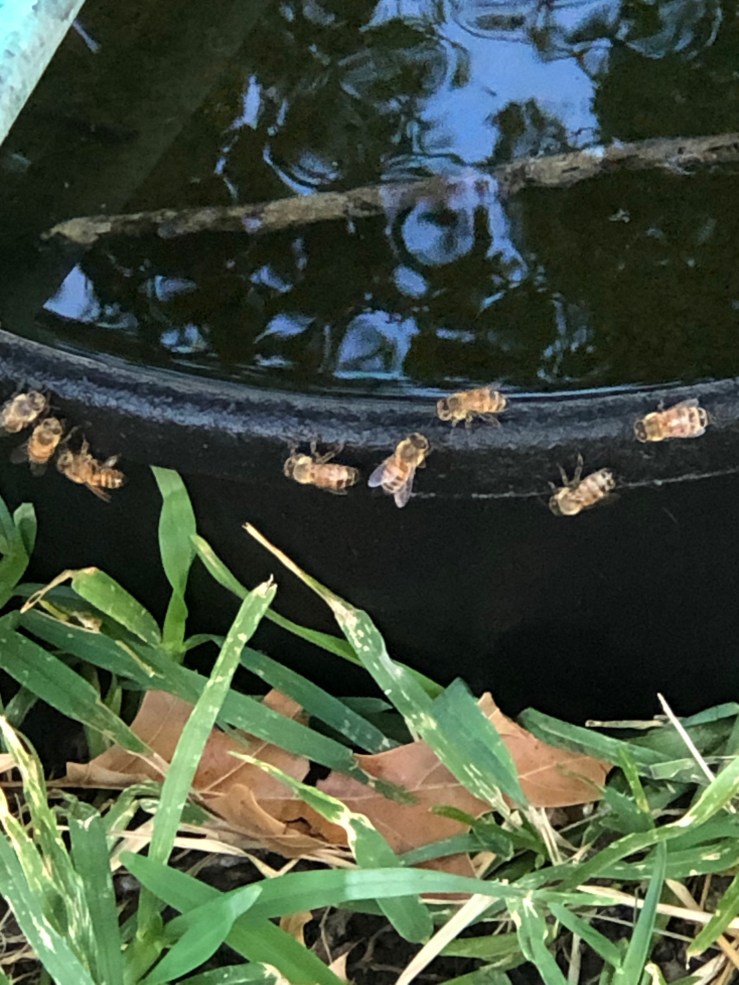
thirsty bees
This water feature is made from a hose repair that leaks. The container spills out on one edge, and the bees and wasps congregate. So far, the stones haven’t attracted many customers; bees like the edge.
See the fish?
Stunning skink
Lots of vegetation to hide in
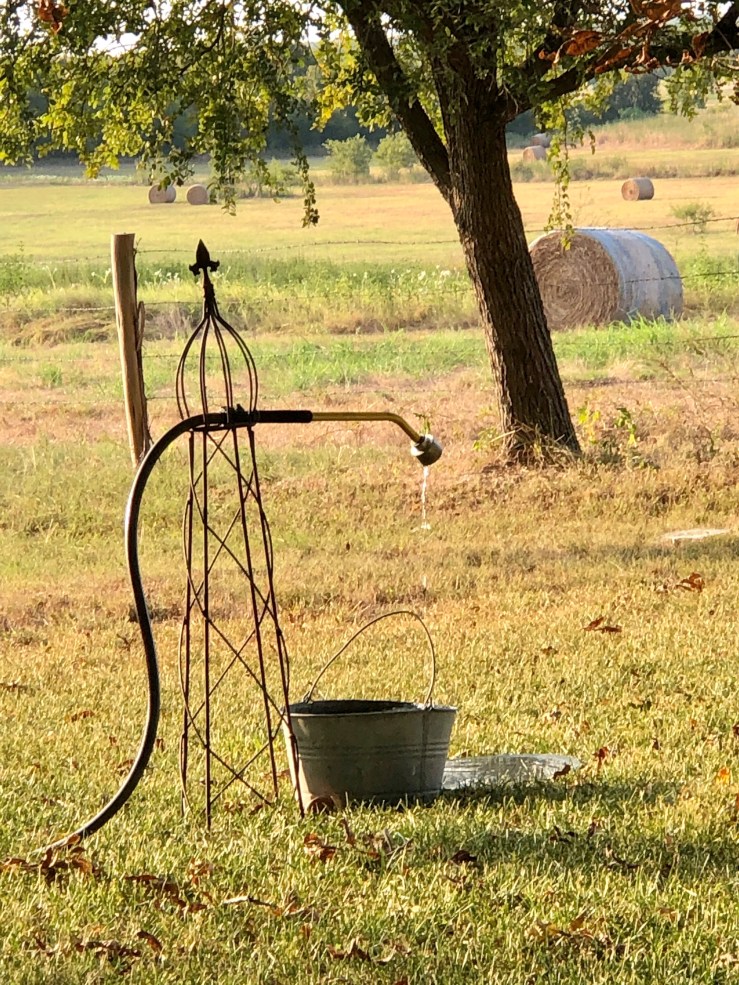
Here’s a simple water feature using a dripping hose connection. It feeds this container that’s used by my dogs and cats. There’s also a goldfish, goldfish housing (clay pot shards), and something green: a length of crow’s foot. A new visitor was This toothy skink, with beautiful turquoise tail stripes.Here’s another example of a dripping faucet connection caught into a container. Cats and dogs like this one, too.
This large, formal water feature has an electric pump, a ceramic fountain, goldfish, and terra-cotta shards. I didn’t think the wildlife cared for it until I saw the toad contemplating the water music.
This one is movable. I was very proud of my engineering and water movement. The birds were curious, but didn’t descend on it, so I’m not very bird clever. The fountain developed from a need to either water trees or the cement slab of the house. So, I added hope for bird visits. I do like the flexibility of being able to move this around.
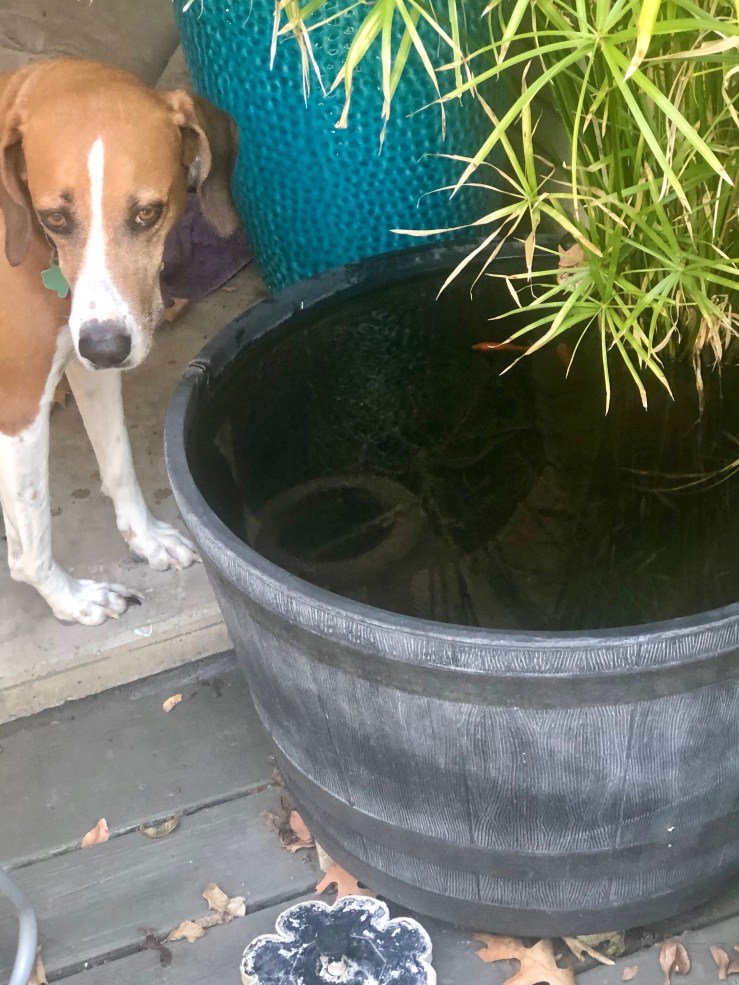
This is Ruby
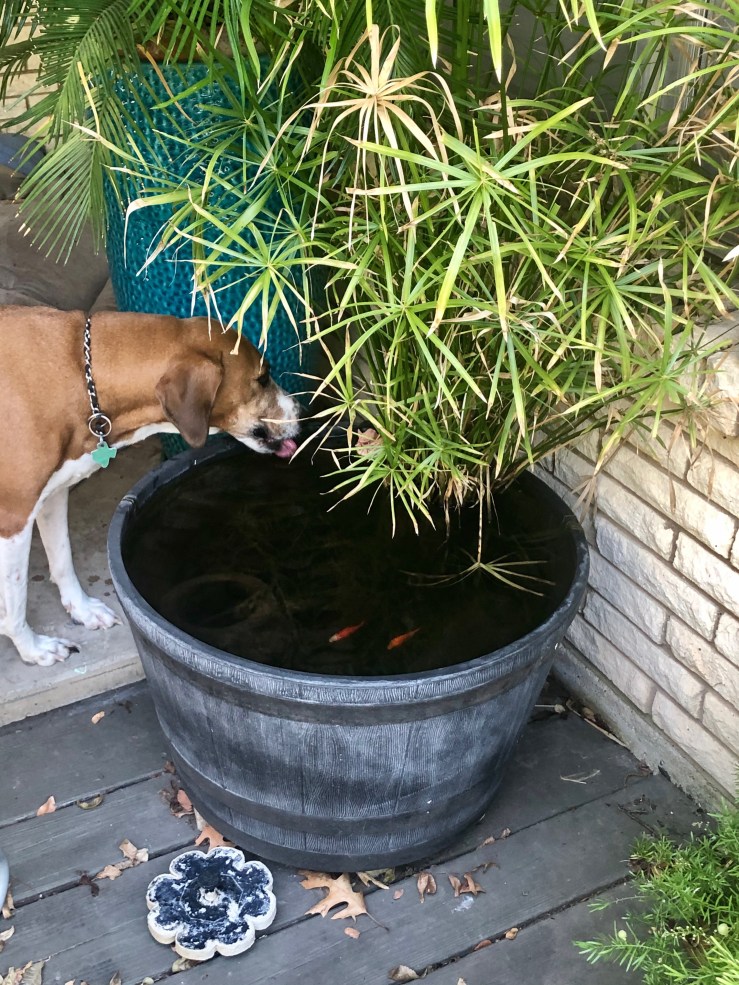
Ruby likes the water.
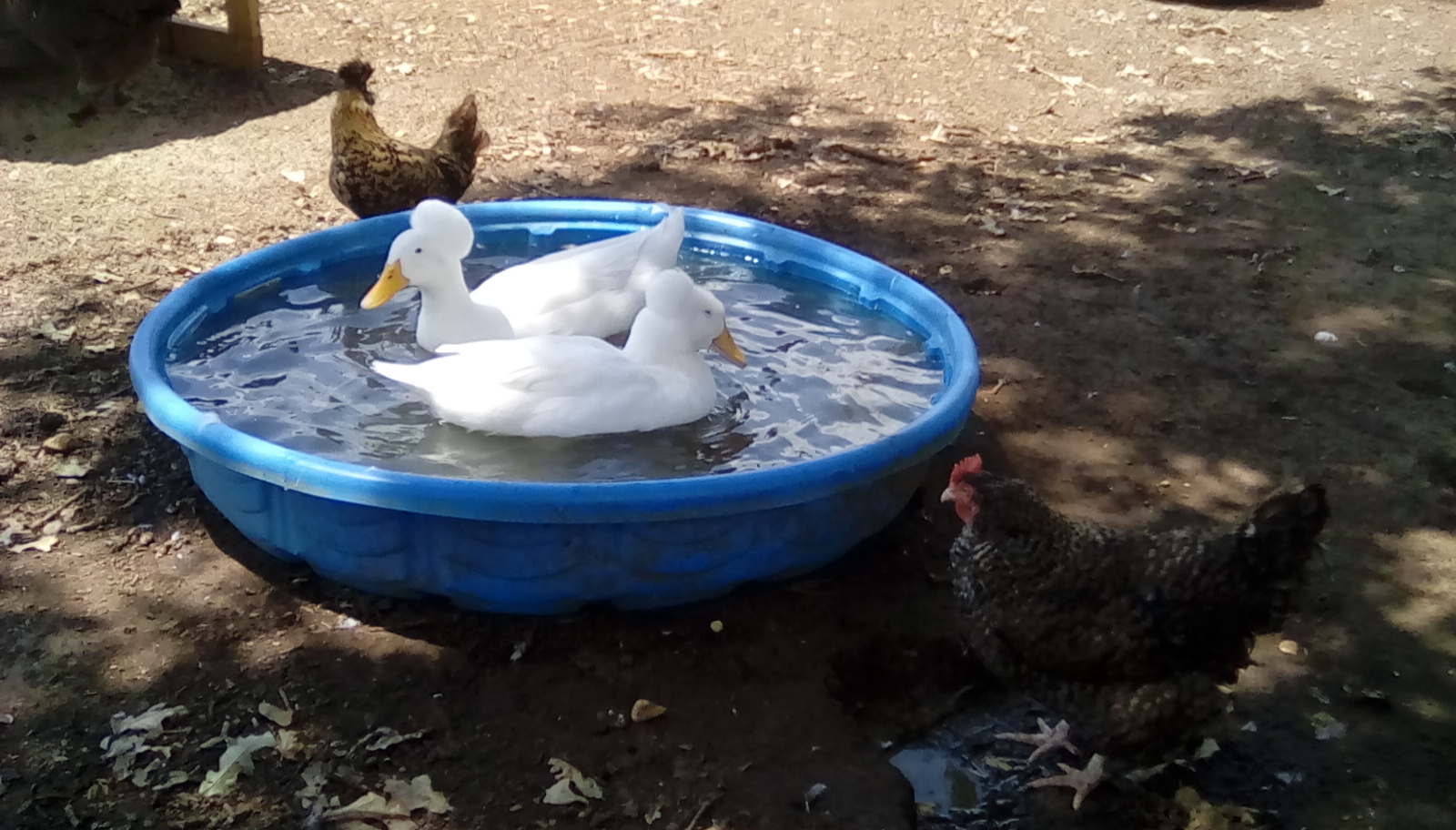
This one’s a simple water feature with dwarf papyrus. The roots have created an underwater jungle. The two goldfish have a strawberry pot and a terra-cotta pot with side pockets to swim in and around.
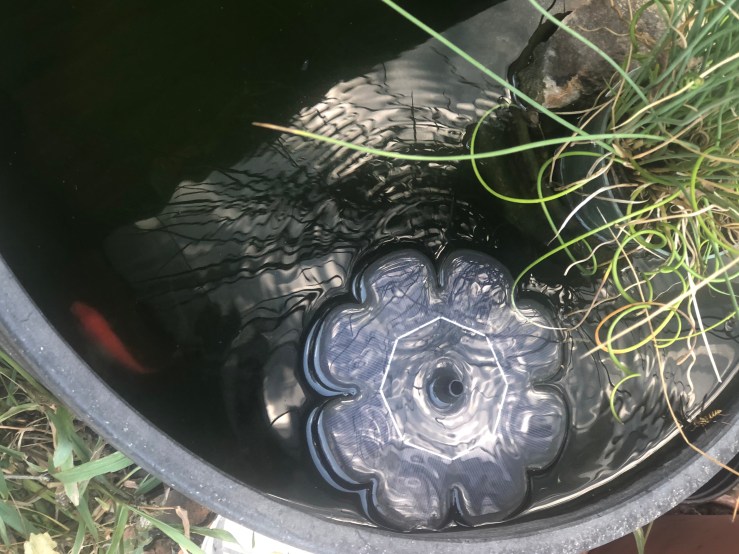
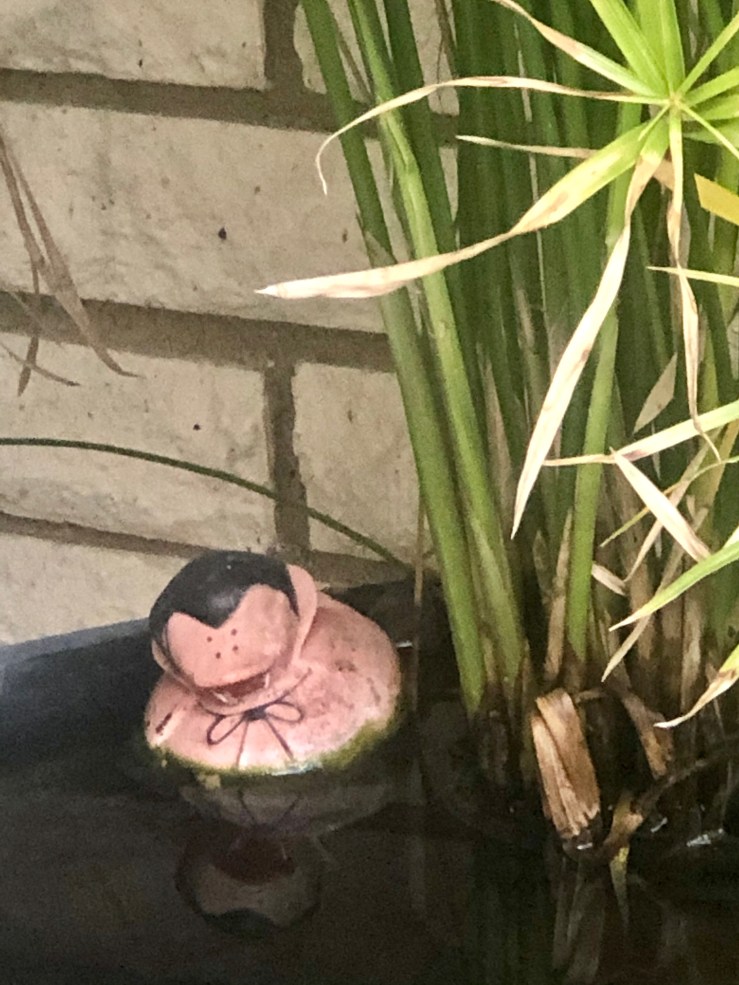
I’ve seen wasps and bees here, along with an occasional dog or cat. The water is very clean. It’s a straightforward container with a solar fountain that works, terra-cotta shards housing, a goldfish (previously two goldfish), a juncus, twisted arrow, and a fairy god duck. There are enough nutrients in this water to experiment with growing lettuce or other edible in a Styrofoam float.
A few of my water features have rubber duckies. Here are Count Duckula and Ghost duck. Some color fading has occurred.
It’s been one and a half years since the Milam Wildscspe began. My, how it’s grown!
Last year at this time, the Wildscspe was beautiful and neat, and this year it is a beautiful jungle. Three natives have made it so: Coreopsis, red salvia, and purslane.
A LOT of salvia.
Master Naturalists and their families/friends have been pulling these over-enthusiastic residents out.
Richard Johnson is one of my favorite helpers.
Many creatures thrive in the garden, and there are many free plants still available.
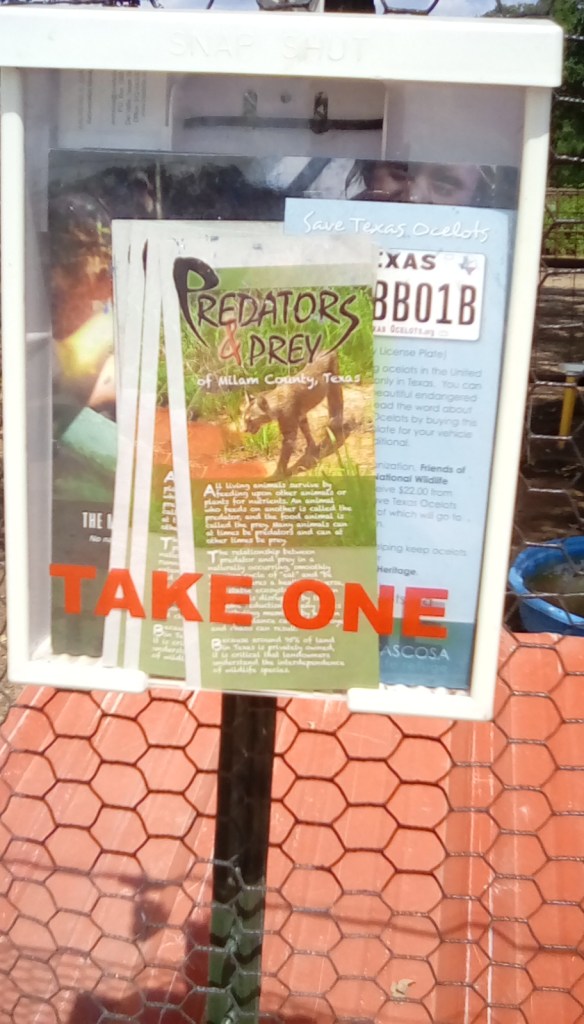
Customers at Bird and Bee Farm continue to take home brochures, including the recent Predators and Prey of Milam County brochure.
Visitors taking free plants
Brochures to give out (a few at a time)
So much to give!
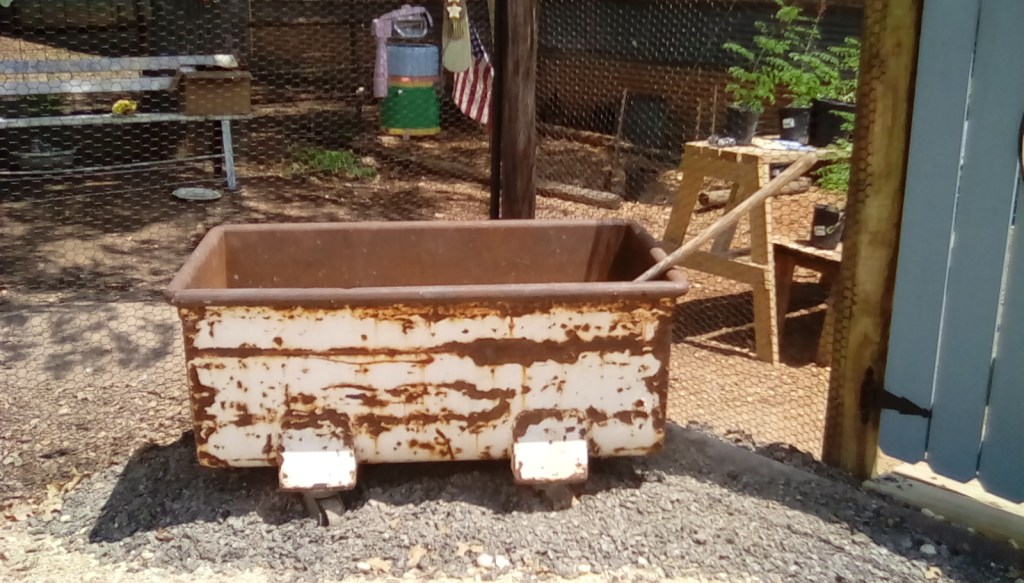
We are propagating native plants right now, and we’re excited that a huge water fountain and coal car has been donated.
Coal car
Three-tier fountain
New additions to the wildscape!
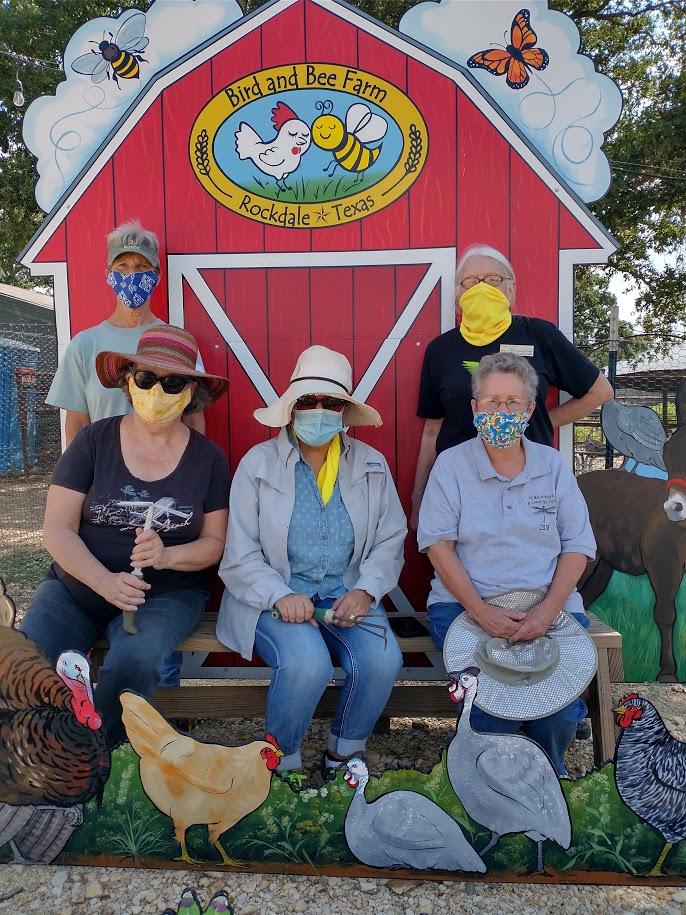
Thanks go to our volunteers: Donna Lewis, Janice and Richard Johnson, Pamela Neeley, Liz Lewis, Linda Jo Conn, Kim Summers, Gene and Cindy Rek, Rosie, Gary, and Mitch.
We love our chapter members!
Email me if you would like to volunteer for hours.
Hi. I know we haven’t posted much. Blame the blogmaster, Suna, who has been doing a huge work project and hasn’t had extra energy. However, over this weekend you’ll hear from more of our chapter!
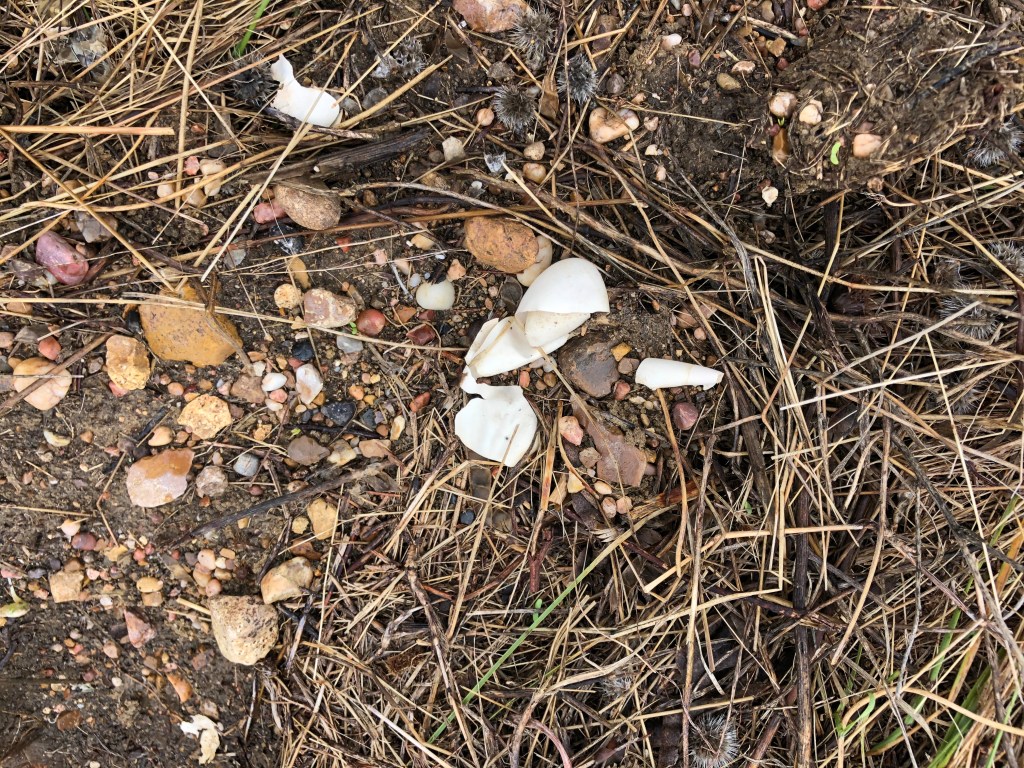
I (Suna) just wanted to quickly share what I found on my walk today, where I was checking out flooding. I saw what looked like trash on the roadside in front of my ranch, on County Road 140. I looked closer, and I realized it was eggshells!
Eggshells next to a depression.
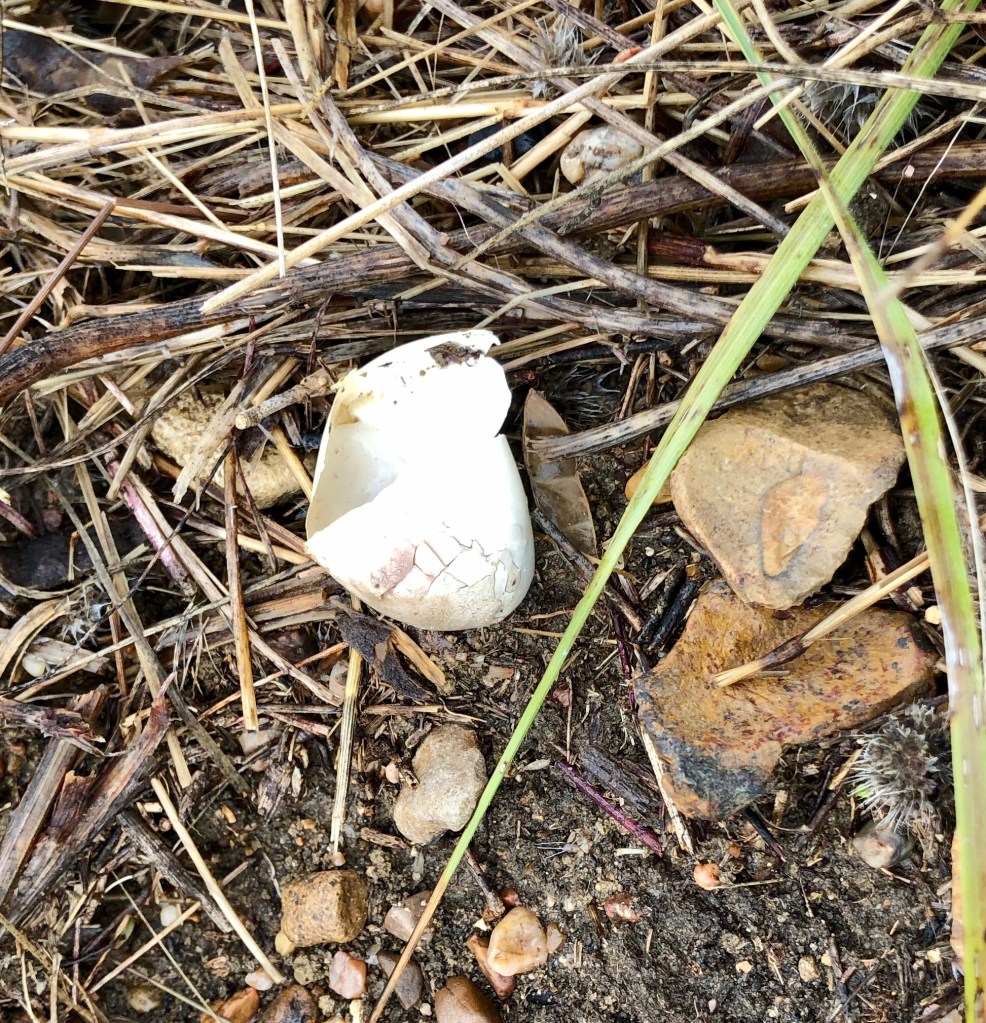
They were not hard. They were rubbery and soft. Judging from the nest, I figure they were turtle eggs. That made me happy, because I’d never seen a nest in my nine years of exploring this area.
Egg up close. Turtle?
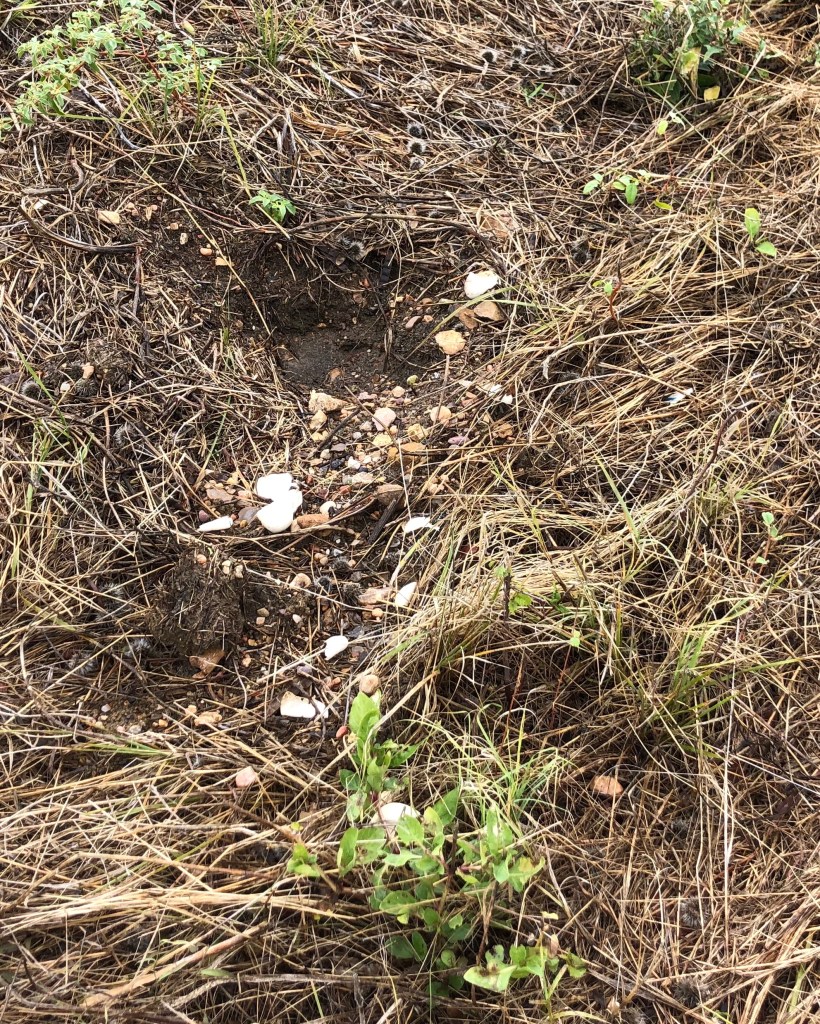
I’m not 100% sure what it is. Maybe snakes? But it appears the rain encouraged a lot of them to head on out. I found a second nest with shells.
another nest.
Now, maybe a skunk or raccoon found them and had a snack, but I didn’t see any carcasses. I did see what appear to be another couple of nests in the area, so my plants is to go back and check them in a couple of weeks.
I’m heading back to the pond!
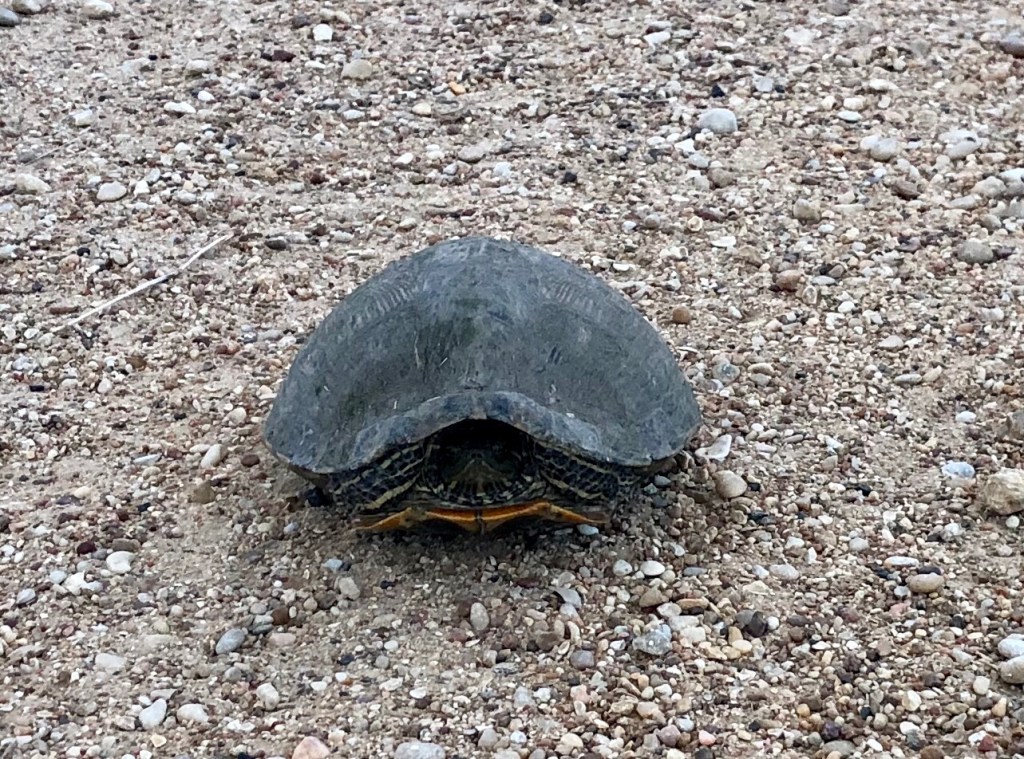
I’ve seen a lot of turtles in the road lately. Maybe they were laying. I think we have red eared sliders and pond sliders, both native, though the red eared ones are considered invasive.
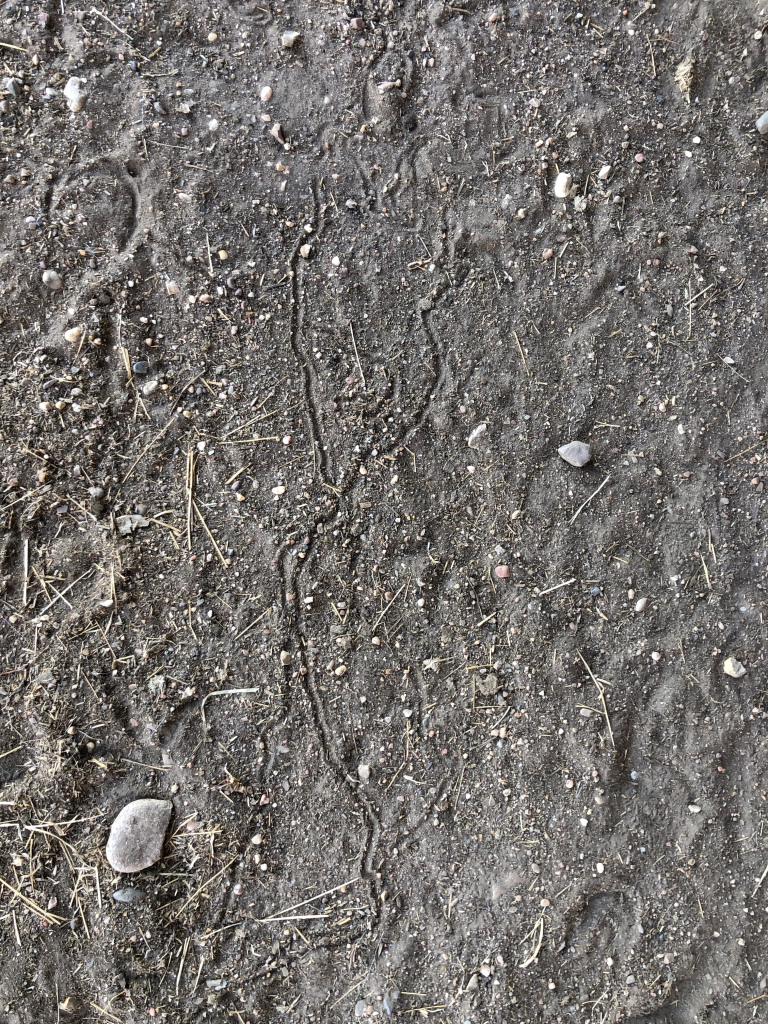
A set of fortuitous circumstances have led me to have something more in the naturalist vein to write about. I’ve been missing those things! It all started when I was in the horse pen, and noticed all these cool paths in the dirt.
In addition to the trails, there are a couple of donkey hoof prints, to liven things up.
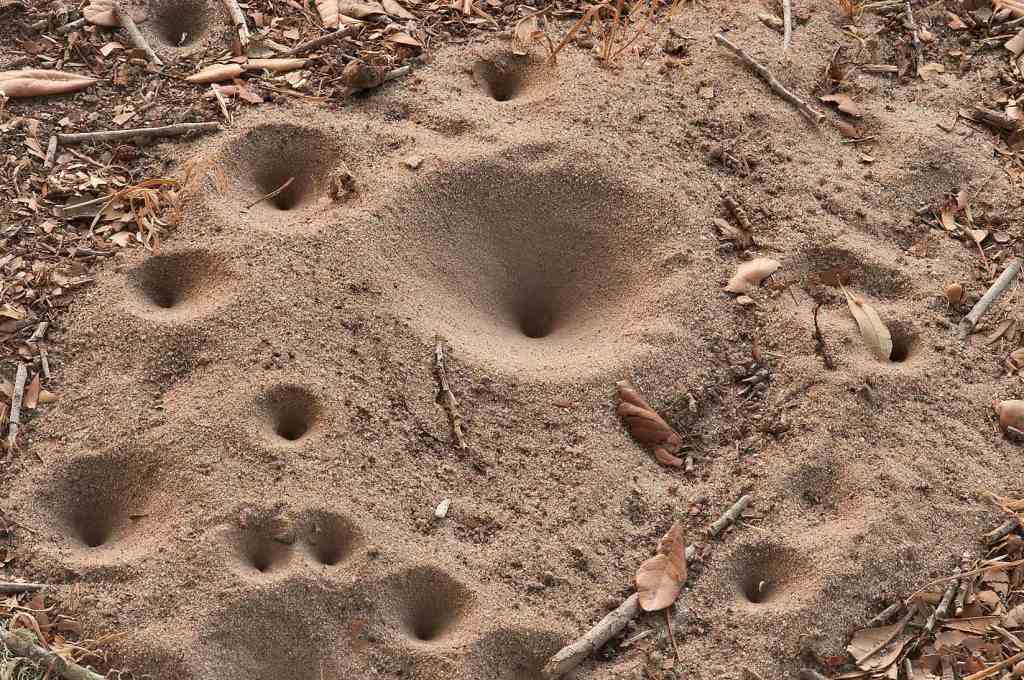
I couldn’t remember what made those trails, though I was sure I used to know, so I posted about it on Facebook. I got some cute and silly guesses, then, as I’d hoped, someone from around Cameron reminded me of the answer. Burton, who’d been in my Master Naturalist class, identified them as ant lion, or doodlebug, trails. These Myrmeleontidae (it means ant lion!) are commonly called “doodlebugs,” because their trails make them look like they’re doodling around.
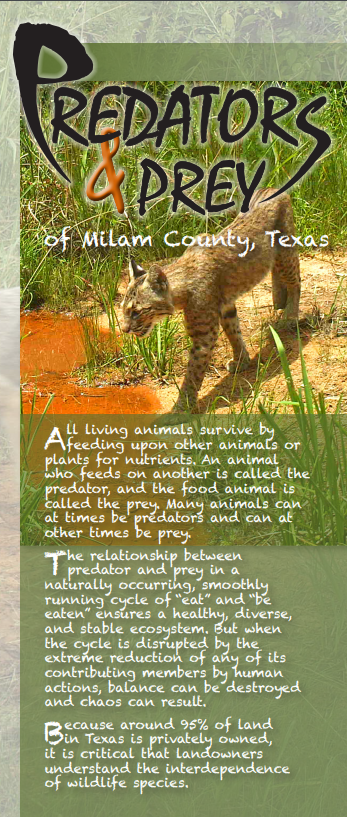
Predator and Prey Brochure: A Collaboration Between Texas Master Naturalists in the El Camino Real Chapter and All Things Wild Rehabilitation, Inc.
(Primary Contributors: Donna Lewis, Cindy Bolch, Joyce Conner, Helen Laughlin, and Carla Conner)
The Texas Master Naturalist mission is to develop a corps of well-educated “Master Volunteers” to provide education, outreach, and service dedicated toward the beneficial management of natural resources and natural areas within their communities. All members receive training and learn strategies to restore and conserve our local and state indigenous species and habitats.
One of the missions of All Things Wild Rehabilitation, Inc. is to promote respect and compassion for all wildlife through public education and awareness.
Because their missions align, four Texas Master Naturalist members in the El Camino Real Chapter (Milam County) attended a 3-hour training session at All Things Wild (ATW) in 2019. Thereafter, a relationship formed between the two organizations that included the chapter providing supplies and providing release locations for rehabilitated animals.
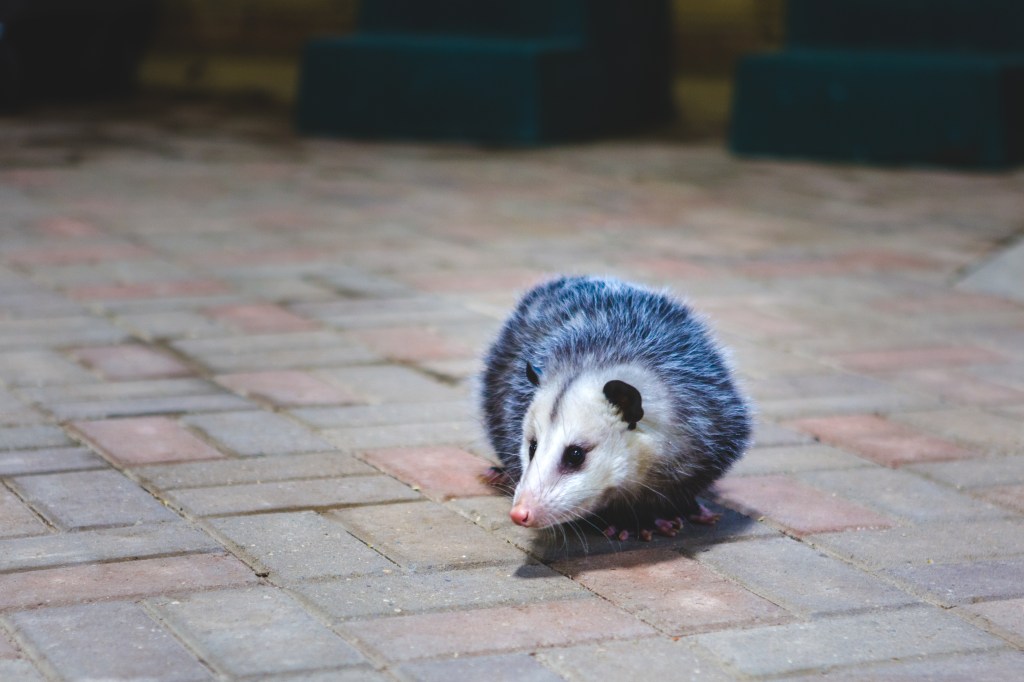
Learn more about me in the new brochure! Photo by @jenni.heller via Twenty20.
In 2020 the El Camino Real Chapter and All Things Wild partnered to create a brochure titled “Predator and Prey,” which is geared towards educating the public about some interesting things regarding wildlife, specifically in Milam County. Many of our wildlife creatures are sometimes mistakenly considered pests when actually these animals are quite beneficial to humans and the environment.
You can download the whole brochure at the end of this article.
This brochure illustrates the interdependence of some of Milam County’s most common mammals through individual descriptions and through a food web. It was designed by graphic artist Carla Conner, an ATW volunteer.
During our research for the brochure we learned new things and gained an even greater appreciation about the included wildlife. For example, we learned that both opossums and skunks are immune to snake venom and that both will eat venomous snakes. We also learned that raccoons do not wash their food, as many people believe. Instead, they will wet their food in their paws to gather sensory information about what they are about to eat. We hope you learn new information from the brochure too.
An online copy of the brochure is included at the end of this article. Look for the hard copy in the fall at your community library and Chamber of Commerce. You will also be able to get copies at the All Things Wild Rehabilitation center. Brochures for members of the chapter will also be available at the Hermit Haus; just let Sue Ann know you want to come get some. You are also welcome to print out a personal copy from this blog.
We hope that knowing more about these amazing wildlife neighbors will lead to more respect and protection of them. Learn and explore the wonderous world of wild animals so that you too can hear “The Call of the Wild.”












 Nature Along the El Camino Real