We’ll Be Staying Home for a While

by Sue Ann Kendall, Chapter President

As you’re no doubt aware, the COVID-19 pandemic is still raging in Texas. The Texas Master Naturalist program’s advisors and administrators are concerned for the safety of the members of our program, so they have had to come to some difficult decisions this month.

I attended the monthly meeting for Chapter Presidents yesterday, and it was a hard one. Mary Pearl Meuth and Michelle Haggerty patiently shared with us the data they have put together about COVID risks in the counties where there are Master Naturalist chapters. It didn’t look good. They divided the counties into red, yellow, and green, by relative risk, and there were only two counties with chapters that were green, and four yellow as of last Friday.

The yellow and red counties as of December 12, 2020. Map from the TMN COVID Response page.

Milam County was yellow as of then, but it’s predicted to be red by next Friday, when they will update the map again. What does that mean? Here’s what Texas Parks and Wildlife says for red counties:

Counties with two of three factors pertaining to positivity rate of greater than 8% or more, OR a rapid rise in cases OR a hot spot:
• No face to face Extension-hosted or Extension-sponsored events.
• No guest speaking or presenting at other entities’ events.
• No overnight events.

TMN COVID Response page follow the link to read more about the guidelines

Many attendees at the meeting asked about whether drive-by events, outdoor activities, or solo activities would be okay. The answer was a reluctant, “No.”

No one was happy about this turn of events, but the current guidelines are set until the end of the year. It sounded doubtful that anything would change after that, but we will keep checking.

Implications for Our Chapter

Last night we held a meeting with some of the El Camino Real board who have worked directly with our recently graduated training class, to figure out how to do the graduation event we’d planned for this Saturday (December 12). After I explained what I’d learned earlier in the day, we had no choice but to conclude that we have to cancel the event, even though it was going to be as safe as we could make it.

Even if Milam County stayed in the yellow, we’d have more than ten attendees, and that’s all allowed in yellow counties. Plus, since we would have Board members living in Bell and Williamson Counties at the meeting, we’d have to abide by red county rules, anyway. Well, that was no fun.

Plan for Graduates

Of course, we want to celebrate our new members! Here’s what we will be doing right now:

I will send certificates out as soon as I can get Floyd Ingram’s signature on the graduation certificates. These go to our fine new members:

  • 1) Connie Anderle
  • 2) Marian Buegeler
  • 3) Carolyn Henderson
  • 4) Samuel Jolly
  • 5) John Montgomery
  • 6) Kaitlyn Montgomery
  • 7) Eric Neubauer
  • 8) Alan Rudd
  • 9) Debra Sorenson

I’ll also sign the certificates for those who have passed their initial certification, which include:

  • 1) Connie Anderle
  • 2) Carolyn Henderson
  • 3) Debra Sorenson

Kathy Lester will send everyone their Chapter t-shirts.

Lisa Milewski will send pins to the new graduates and nametags to those who get them, as well.

We will wait to give new members their gift made by Pamela Neeley later, since the are delicate and expensive to mail.

Plan for Chapter Meetings and Activities

Since we don’t have any idea when we can resume in-person meetings, we will continue with our Zoom Chapter Meetings. Don Travis will send all our members the registration link, which will work for all 2021 meetings. They’ll still be the second Thursday of the month!

We will be sending links to TMN activities that can get us our Advanced Training and volunteer hours virtually, such as TMN Tuesdays and the upcoming Virtual Volunteer Fair. Keep your eyes open for the weekly email!

I just want to thank all of you for sticking with us this year. I know some of us are unable to do virtual meetings, and that means we miss being together. Let’s hope things will turn around with the new year and slowly but surely we will be able to get outdoors and do some community science work together again!

Nature Will Find a Way

by Catherine Johnson

While others are away in the cool mountains,* a group of us decided to check on the condition of the El Camino Real Master Naturalist Butterfly Garden in Milano, which we started a number of years ago. 

The Butterfly Garden

It is  in complete disarray but still with butterflies and other insects trying to hold on to smothered natives.  A memorial on the site is also in complete disarray. We are considering possible solutions to make the area respectful.

Sulphur butterfly.

Eric Neubauer and Linda Jo Conn did some BioBlitzing, and Eric was later given a tour of  the Milam Wildscape, which he hadn’t visited before.

iNaturalist volunteers at work.

Unexpected Adventure

As we worked on the Butterfly Garden, I gained Master Naturalist volunteer hours for Nature Improvement in Public Areas, learned what false garlic and Carolina Snail vine look like, learned what a pipevine swallowtail butterfly looks like, and got to know new member Eric.

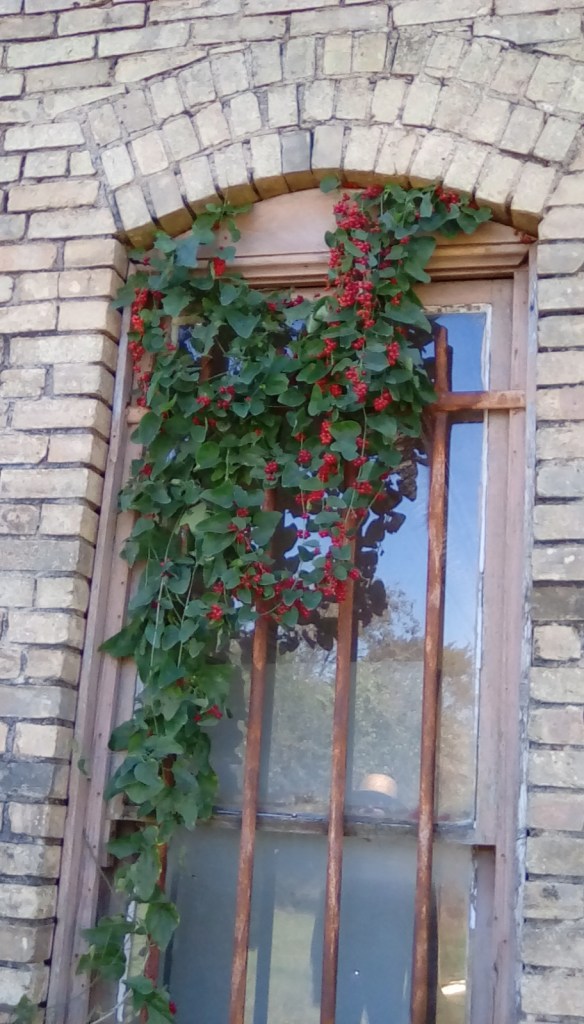
Carolina snail vine (the seeds look just like a snail!)

While in Milano I also got to hear lots of trains and watch the lowering of the flag at the post office. It was a balmy day balmy day and a good one for exercise! 

Oh, and we found odd gourds near the train tracks. That was unexpected.


*She is referring to the Chapter President, Suna, who has escaped to Utah. She will post!

Native Fall bloomers and Catatonic Carpenter Bees

(or another day at the Bees and Birds Wildscape)

By Carolyn Henderson

A sea of color is in bloom at the Milam Wildscape project at Bird and Bee Farm outside of Milano. Most of the blooms are courtesy of native Texas plants. On a follow-up trip on Saturday, October 24, to check on the Malabar Spinach vine I am trying to keep trimmed, I was met with a surprise of different colors and some catatonic bees.

There were many shades of purple, pink, orange, yellow, red and white from a variety of plants still thriving.

The most surprising was a Cypress Vine (below) that had sprung up, wrapped itself around the awning with the spinach, climbed about four feet and proceeded to bloom since I was last at the site. 

Cypress Vine, growing like crazy

There were also Lavender Leaf Sage, American asters, Southwestern Cosmos and some pink flowering vines full of catatonic carpenter bees.

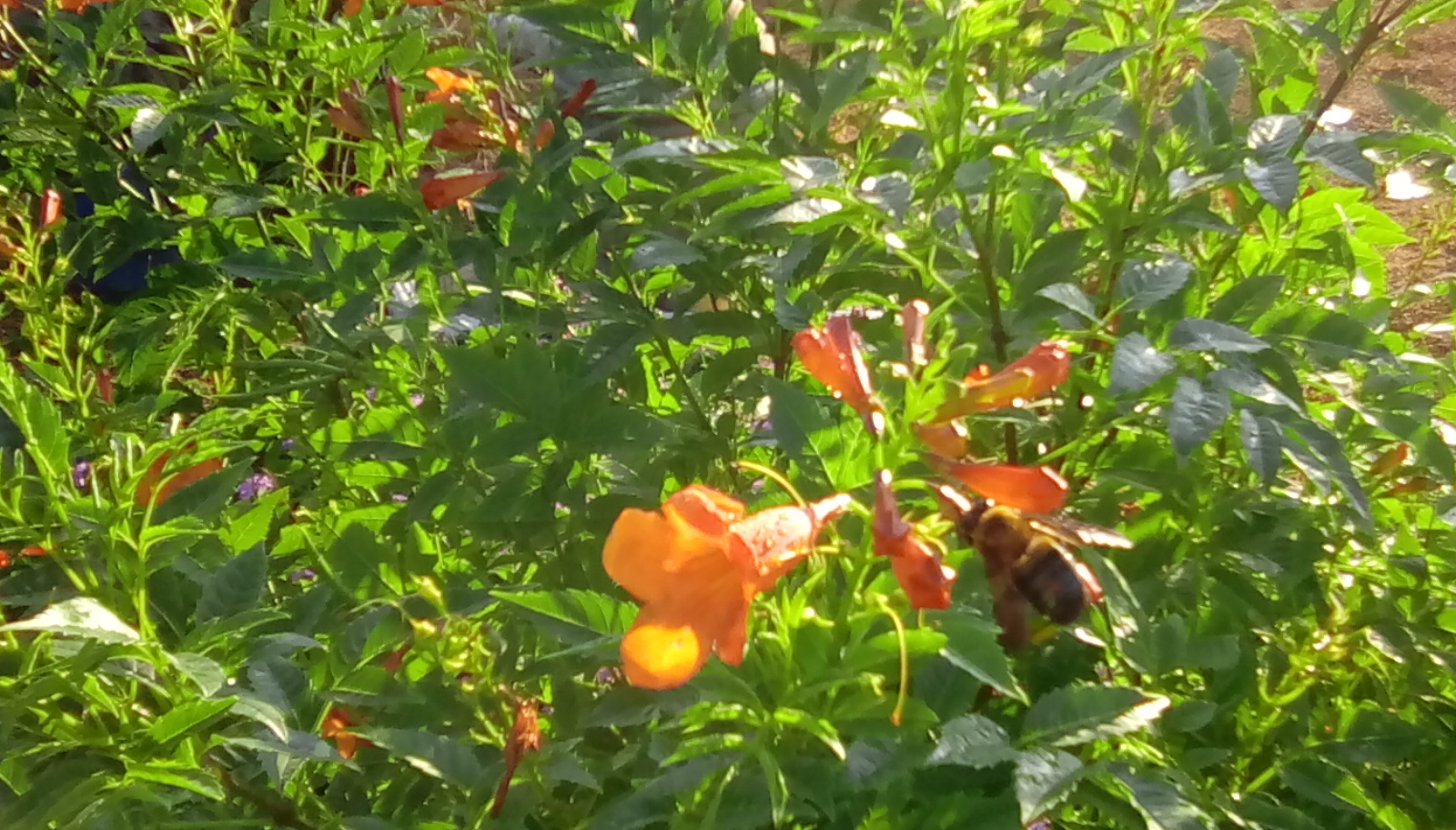
The carpenter bees had attached themselves to a few different flowers but mostly to this plentiful pink flowered vine (Suna says: coral bells Antighonon letopus). They seemed to be in a state of hibernation – probably temporary. They could be touched with almost indiscernible movement from them. (I thought they were bumble bees until I put them on iNaturalist.)

Also in bloom and growing were goldshower, cut-leaf crane’s-bill, Indian blanket, white and pink roses, and a frilly, white shrub-like flower. A pair of Gulf Fritillary were also weathering the cold front on a tropical sage.

If that’s not enough, a great group of volunteers were planting more including a couple of trees.  (Pictured l to r : Carolyn Henderson, Pamela Neeley, Scott Berger, Liz Lewis, Catherine Johnson, and Donna Lewis (kneeling). Most of the foliage is putting out “babies”, and the “babies” are available for adoption to be planted at your place. For information on that, contact Catherine. You also can volunteer to help grow the wildscape by contacting her.

Volunteers, plus that good kitty.

Kim Gets Dirty at the Wildscape

by Catherine Johnson

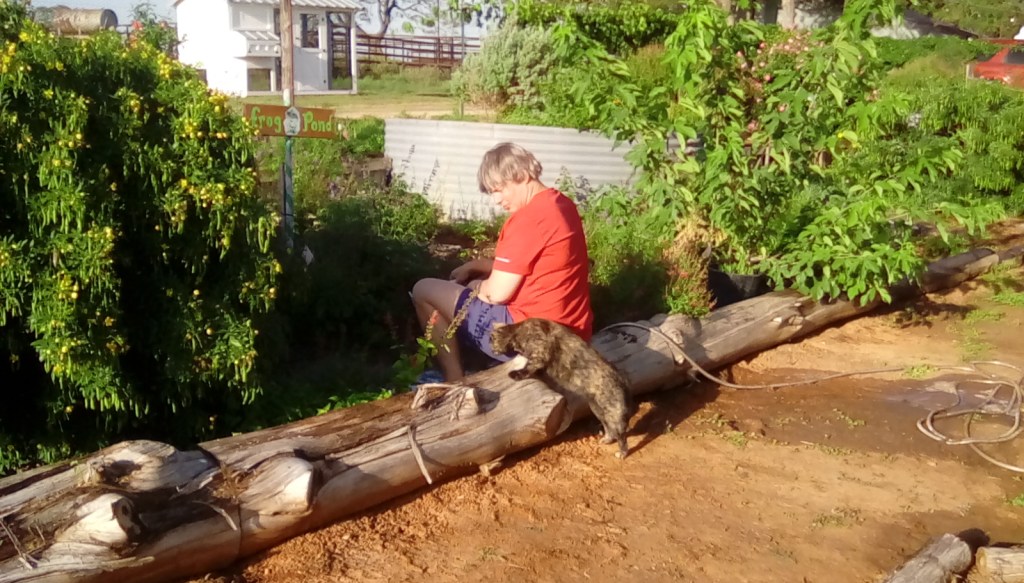
I went to the Wildscape to care for an ill and loyal garden cat.

Kitty not feeling well

Master Naturalist Kim went too. After caring for the cat, I found Kim at the frog pond which was very dirty and dry and snakey.

Fixing up the frog pond

She got it back in shape.

Kitty inspects Kim’s work!

A lot of plants are blooming.

Email me for hours, plants, or go visit Friday or Saturday morning!

Why I Love the Wildscape (Plus Acorns)

by Carolyn Henderson

If you like to work amid a plethora of flowering native plants while guineas, turkeys, chickens, and kitties hang out with you, the Bird and Bee Farm Milam Wildscape is the place to get some volunteer hours for Texas Master Naturalists. Several members of El Camino Real Master Naturalist started the place, with the help of the property owners. They have planted mostly Texas native flowering plants, and with the help of donations from the birds, it has bloomed galore in the one and half years it’s been going. It has grown so fast (bird poop is effective) that it requires tending and controlling. 

At the invitation of Donna Lewis, I went out a few weeks ago to be introduced to it with a few other chapter members. It was an amazing thing to see. Cathy Johnson is the primary contact person, and she and other chapter members have held some teaching events for kids over the last year. They also staff it some Saturday mornings for anyone from the public who’d like to stroll through it. 

Malabar spinach before

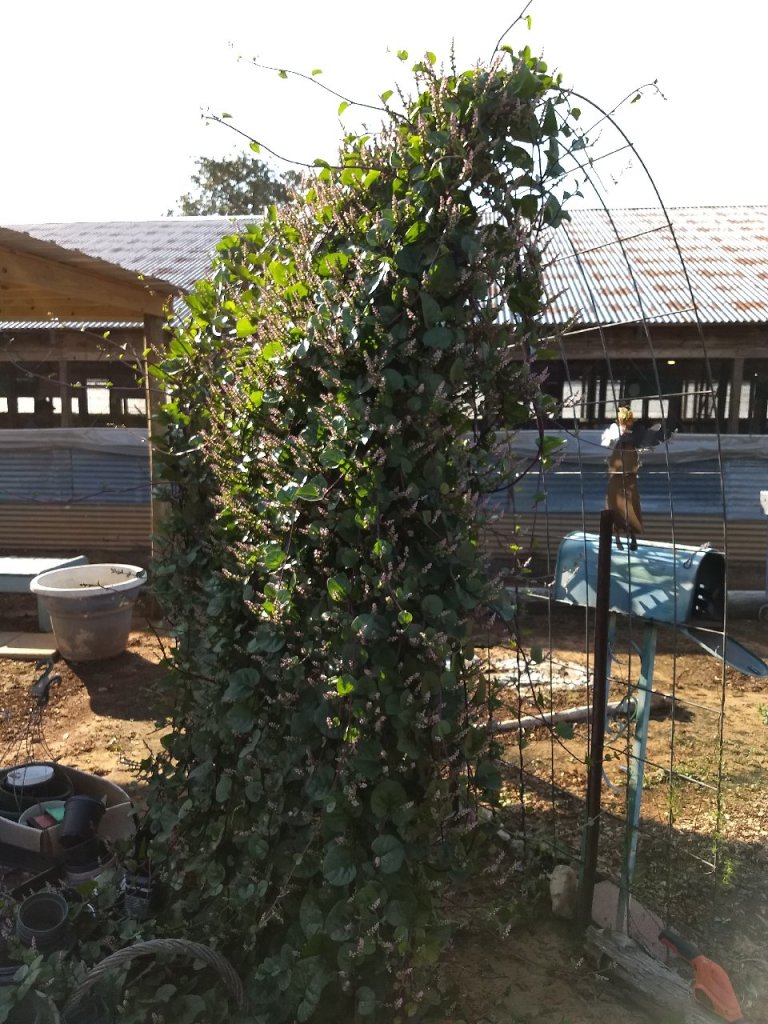
It does need care. I took on an attempted control of a Malabar Spinach vine that is taking over a metal archway. The arch is meant to be walked through, so some pruning is called for regularly. It’s a beautiful plant with dark green leaves and pink flowers. It’s also edible. I haven’t tried it yet. I’ve included some before and after pictures. Other jobs include turning on the sprinklers and turning them off while you get some pictures, or dead heading plants among other jobs.

That plant is way more in control now.

It also is an excellent place to repurpose things. For example, many of the borders around the different beds are old rain gutters. I used an old wicker basket for decorative purposes on the pruning of the spinach vine. The bottom of it was rotted and no longer usable for its original purpose. It’s also a great place to get photos of butterflies and bees.

Doesn’t the basket look nice?

Contact Cathy or Donna if you’re interested in lending a hand and earning volunteer hours. It is located on CR 334, Rockdale, 76567. 

As for Acorns

Holey acorns

On an unrelated topic, I have attached a picture of some acorns with holes. The students and members who attended our last class Thursday, October 1 may appreciate the find after hearing the video by Dr. Doug Tallamy and his love of caterpillars and moths.

I found them in my flower bed. They have been there a year. Every single one had the holes in them that indicate nesting, as Dr. Tallamy explained.