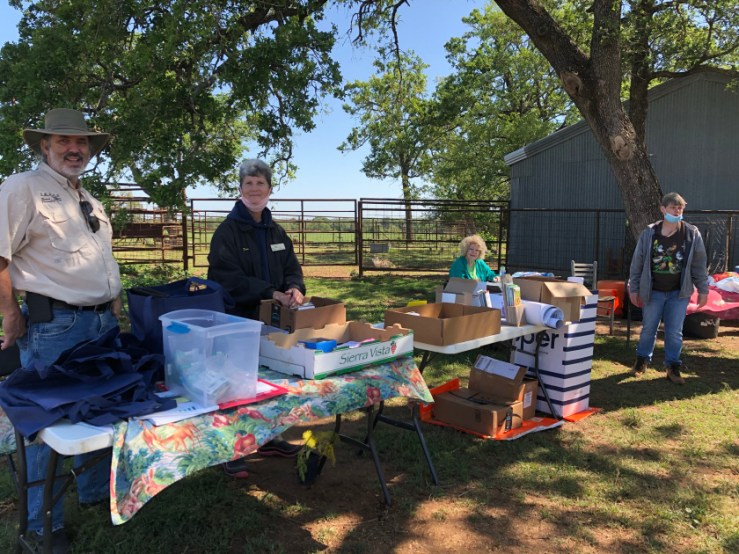
Our Master Naturalist chapter is slowly and carefully starting to do some activities that fall under our guidelines for safety. We really wanted to do something for Earth Day, so a few members got all organized and set up some tables over at Bird and Bee Farm, where our Wildscape project is located. I headed over there, since I had some little pins to give out, and since I hadn’t seen most of them since last year.
By the way, check out my hair. It’s SILVER, from Overtone. No more 1-inch roots!
Our members had put together all sorts of stuff to give away for adults and kids, and by the time I left, they’d had nearly 80 visitors! Luckily, they were spread out over 4 hours, so we didn’t have any scary germy crowds. We were all very glad to see each other, which was a nice feeling.
Due to recent storms, we were able to see which native plants were toughest. We have exchanged some for sumacs, elbow and Mexican honeysuckle bushes, Gulf coast muhly and brake lights yucca.
The ducks!
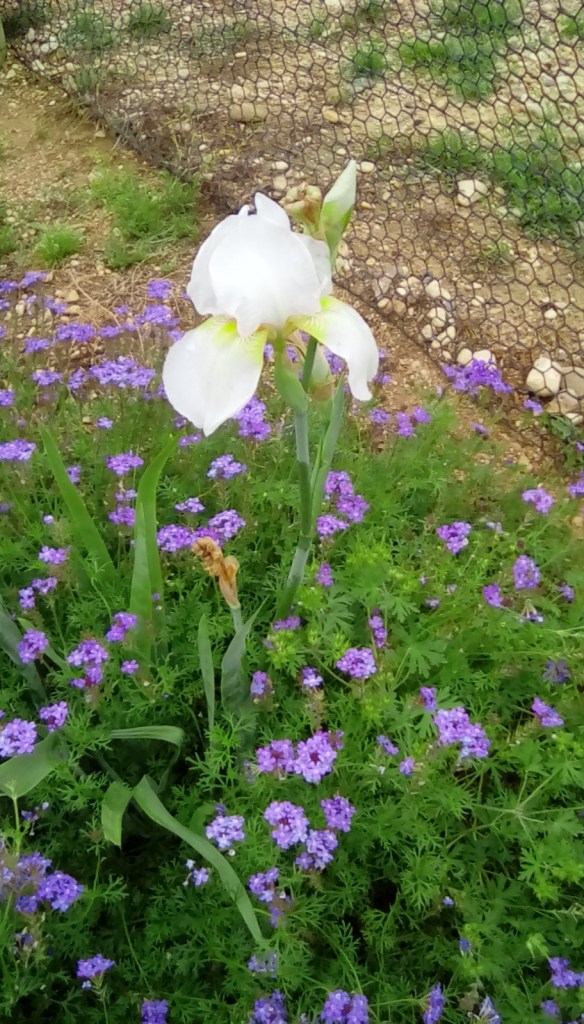
Iris and verbena
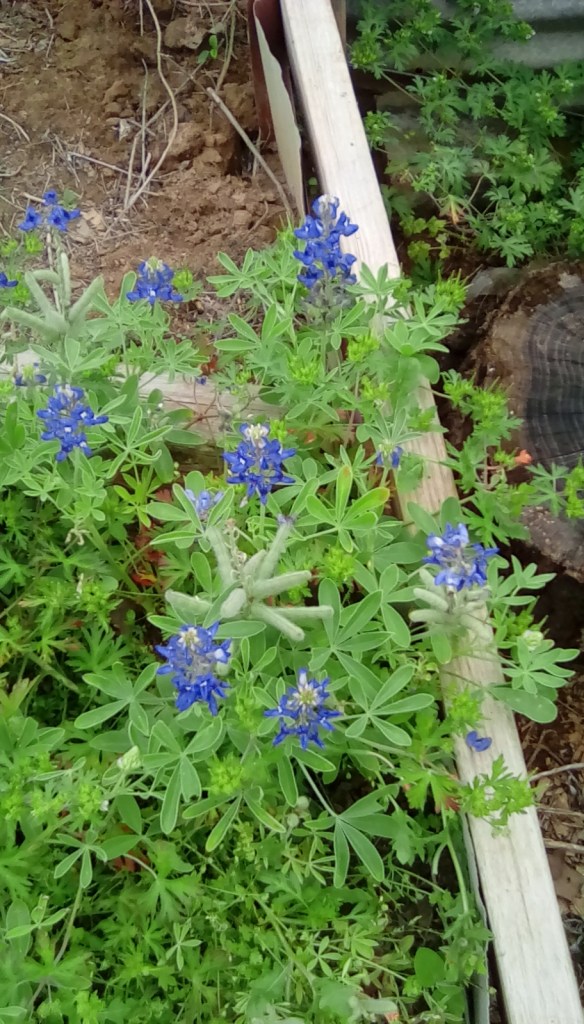
Bluebonnets
Apache plume
Wisteria
Indian blanket
Rose
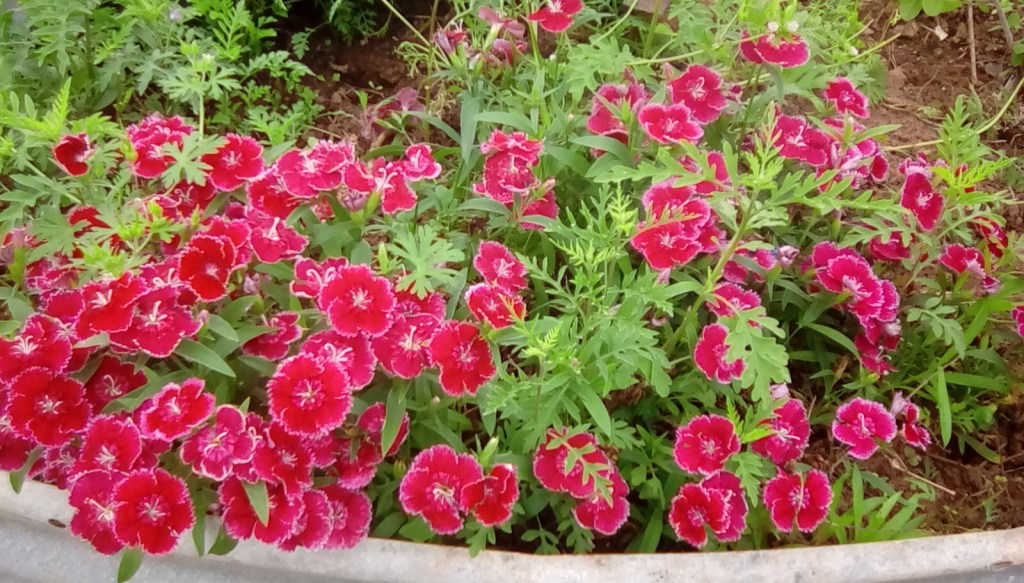
Dianthus
Milkweed
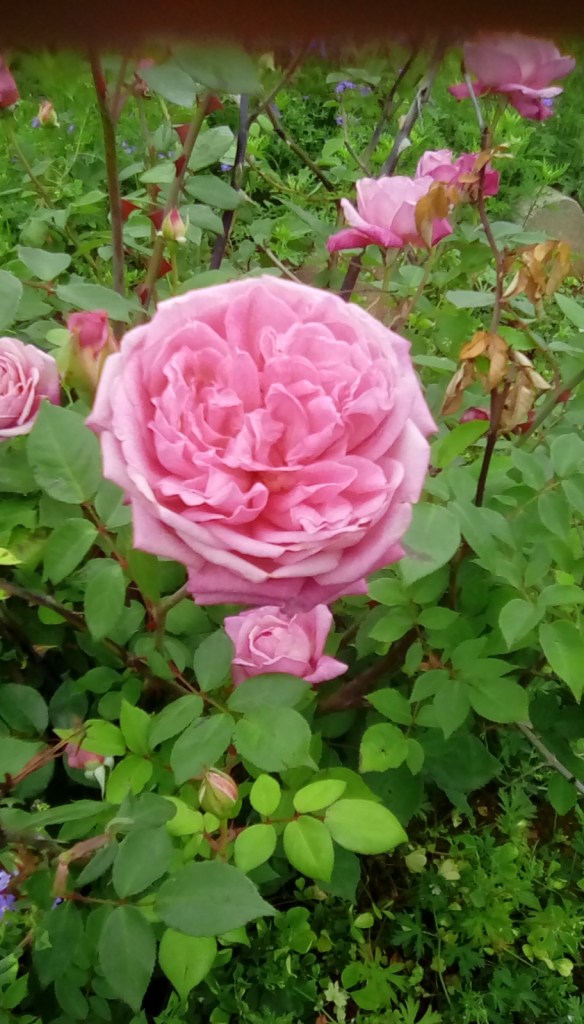
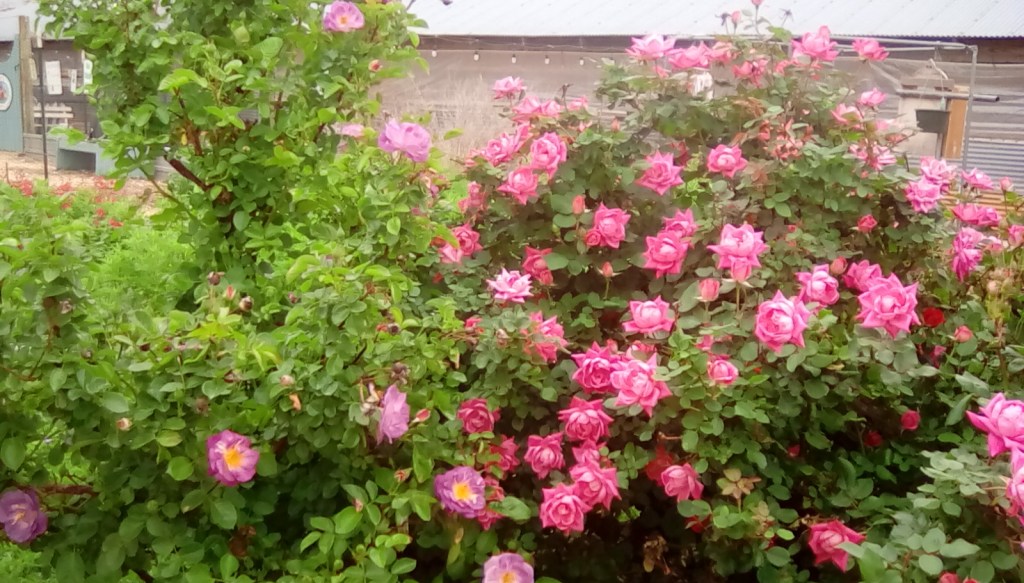
Beautiful roses
Grapes
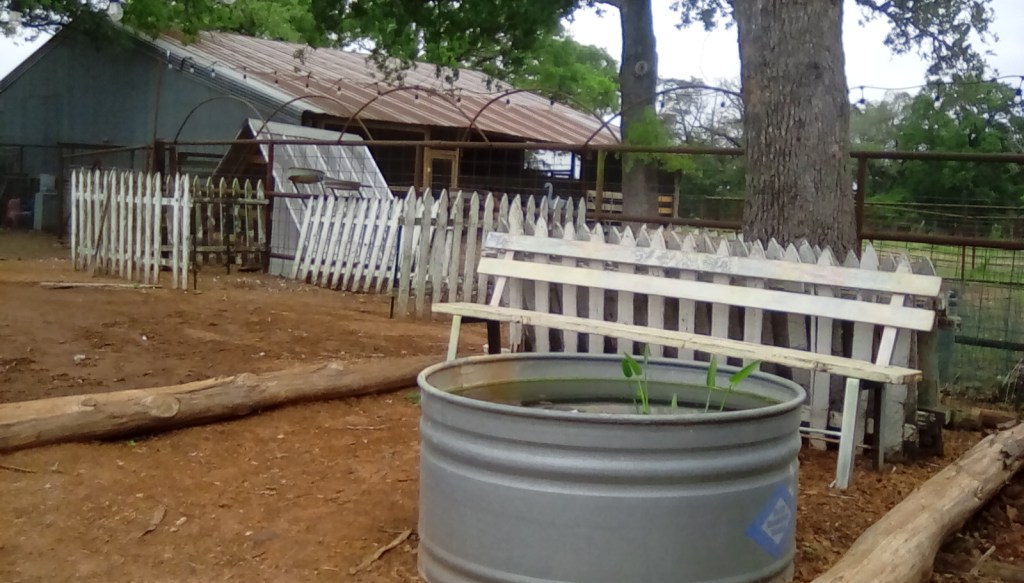
New water feature and fencing for shade garden
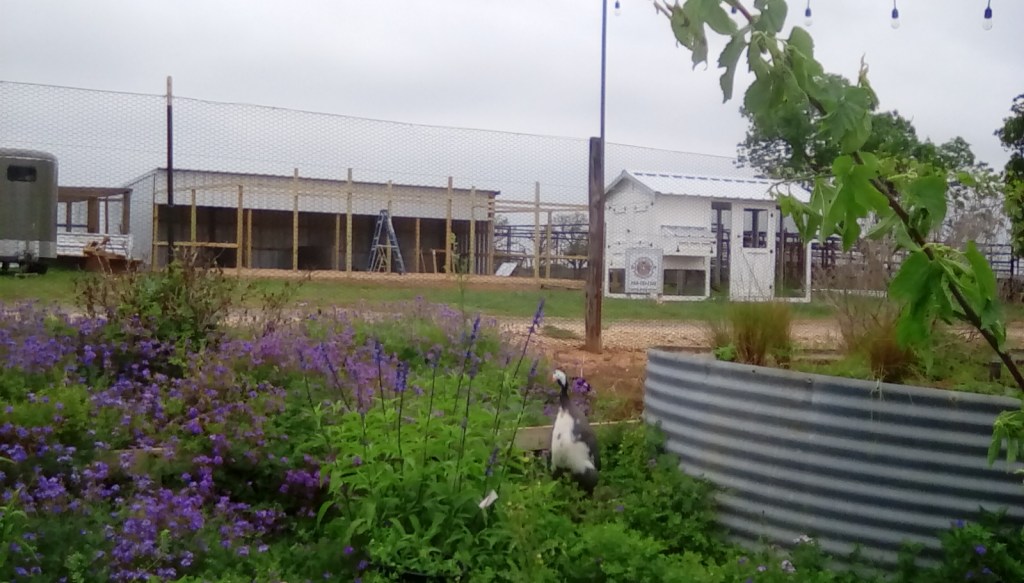
New building for baby Rio Grande turkeys
Lots of pictures! Click on any of them to see them larger.
Come see what’s blooming at our Earth Day celebration on Saturday April 24, at Bird and Bee Farm from 8 am-12 pm.
“Belly Hunting” for teeny, tiny flowers is hard on the leg muscles. On Sunday, I went to Wilson Ledbetter Park to take pictures to post to the Great Texas Wildlife Trails (GTWT) Adopt-a-Loop project in iNaturalist. It was a follow-up to pictures posted in February before the Great Freeze of 2021. I discovered that the park is covered in teeny, tiny flowers, and plenty of larger one, too.
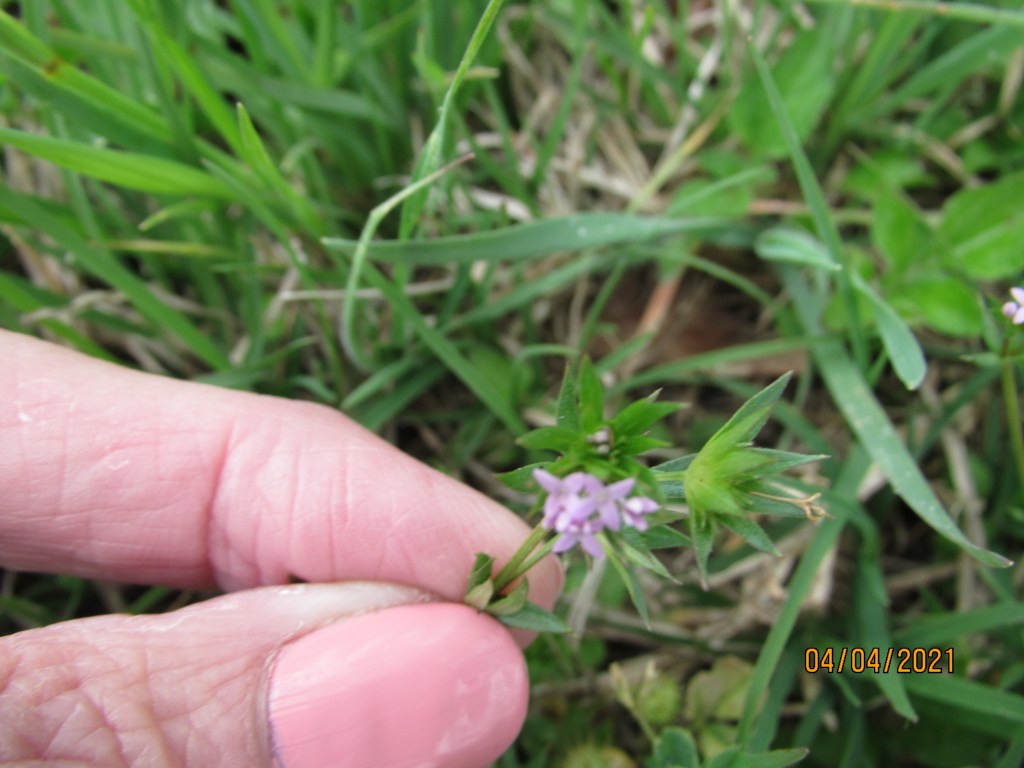
Field madder
If you attended the March meeting of ECRMN, you remember that Monique Reed, retired Botanist for the state, called it belly hunting because it requires getting down on their level which is really low. I opted for a lot of squatting trying to stay out of the way of the ants.
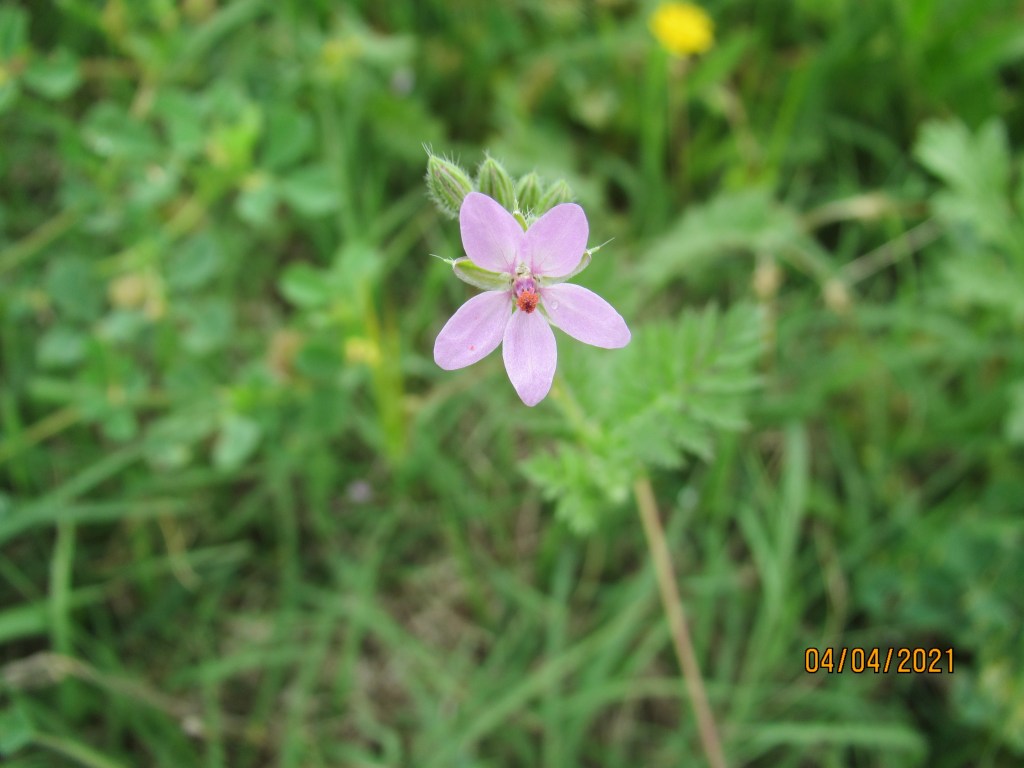
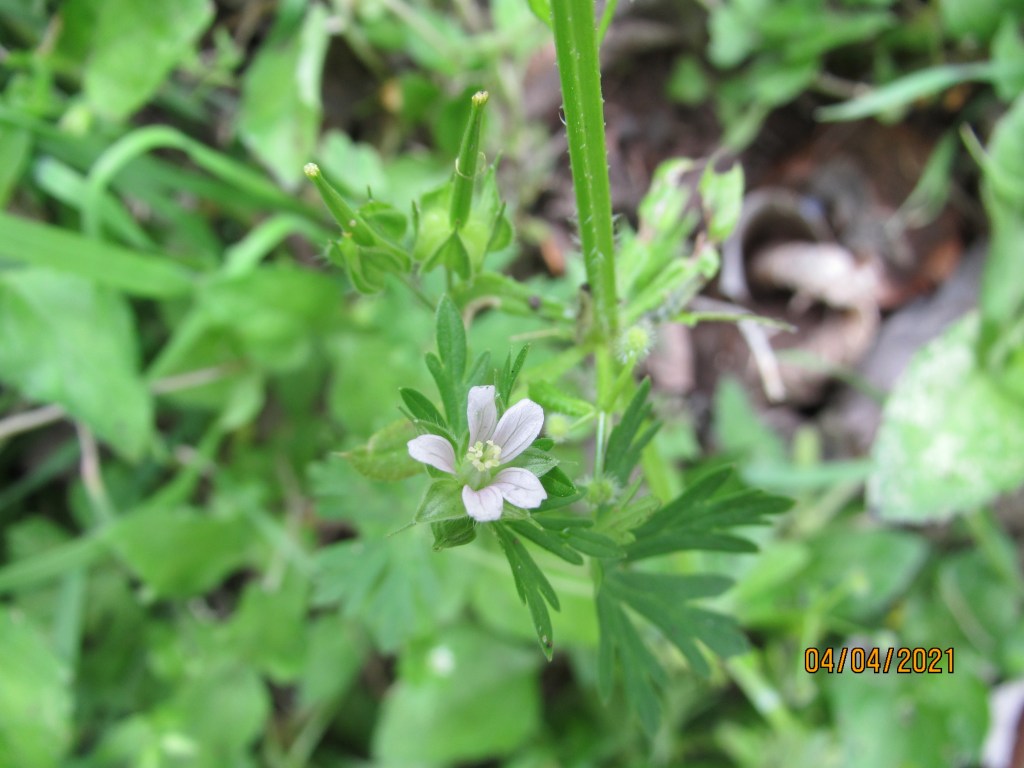
Common stork’s bill
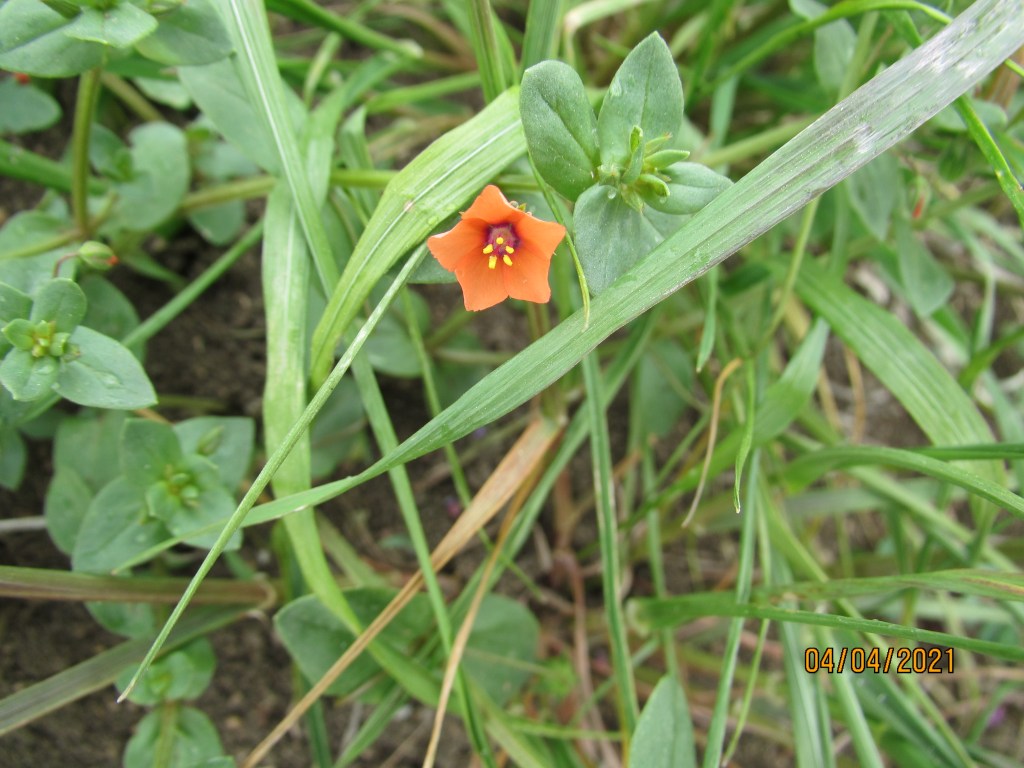
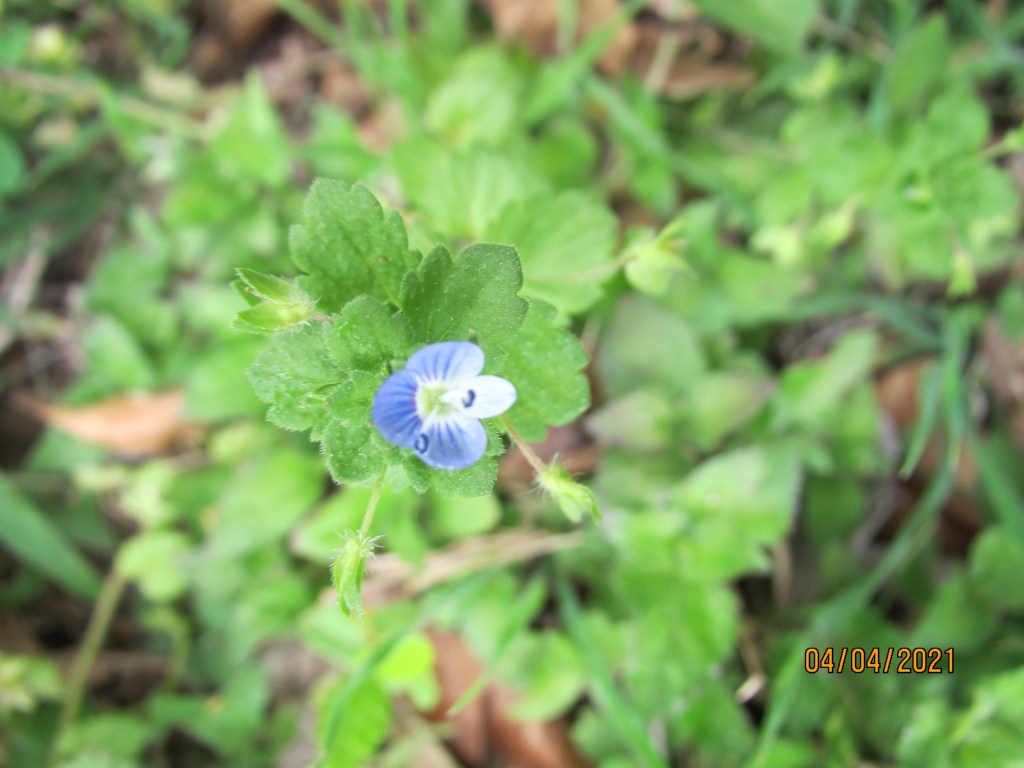
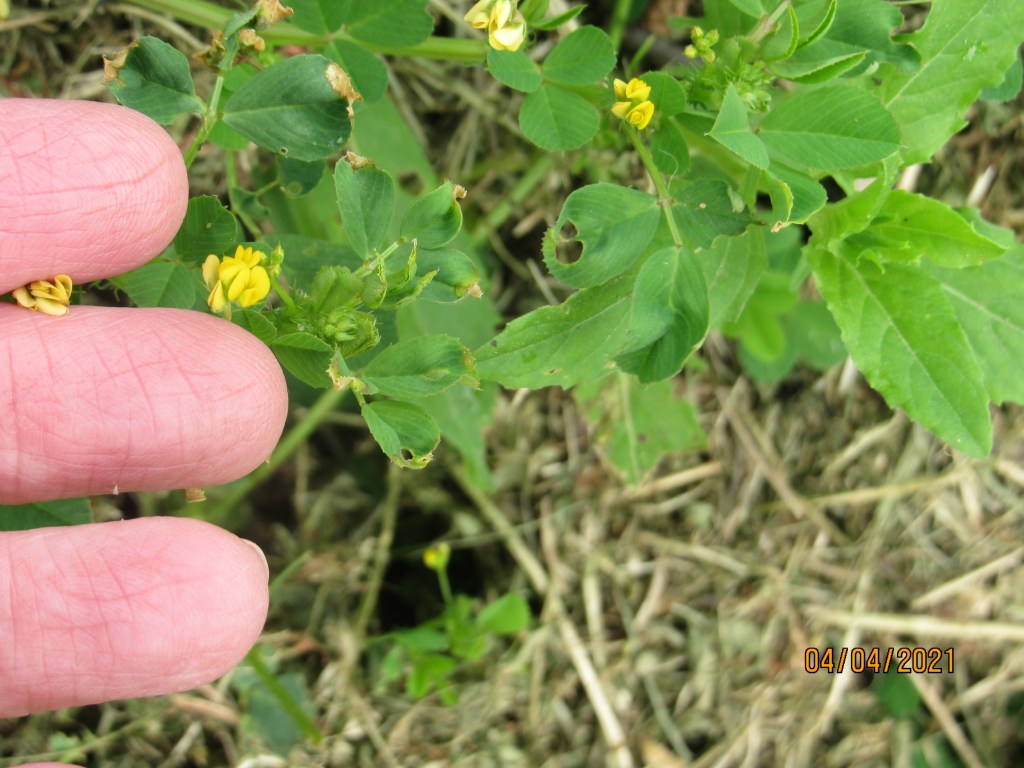
Some of the teeny flowers I encountered were Field Madder, Common Stork’s-bill (very pretty flower), Bird’s-eye Speedwell in abundance, Black Medick, Scarlet Pimpernel, and Carolina Crane’s-bill. It isn’t difficult to find them because they are currently abundant in Wilson Ledbetter Park. I have included pictures of these flowers. Often, I came across patches with five or six of these in a space about the size of a square yard. I didn’t see any bees out there, which is a little worrisome, but there were several types of butterflies, flies and ants.
Scarlet pimpernel
I also recorded the larger flowers – which don’t require frequent squatting. I challenge you to locate Grape Hyacinth, Texas Baby Blue Eyes (some of these are twice the normal size that I’ve always found), Poppy “Winecup” Mallow, Cretanweed (they have darkened lines at the edges of the petals but look similar to dandelions), two different types of Blue-eyed Grass, Fine-leaf Fournerved Daisy, Floating Primrose Willow, and Canadian Meadow Garlic. Here’s a hint: the last two are located near/in the lake/pond. Some are on the fence by the cemetery.
Bird’s-eye speedwell
If you’re active in iNaturalist, they’re easy to get identified. If you’re not, you can sign up. It’s free. Enjoy a walk in the park surrounded by many types of flowers, birds and butterflies. I will buy lunch for the first person to find all those flowers at Wilson Ledbetter who posts the pictures in a blog here. I am not liable for any bee stings – in case they show up.
Carolina crane’s bill
Happy belly hunting.
Black meddick, not to be confused with bur clover. But it’s easy to do so.
I’d really hoped something good would come out of those horrible winter storms we had last month. When I read the extent of the damage, as reported by Dr. Chip Taylor of Monarch Watch, my heart sank.
The 11-day cold spell (10-20 February) in Texas was a disaster. Freezing temperatures covered the state and extended well into Northern Mexico. While many of the immediate effects of the freeze are clear, season long and multiple year effects may linger. The damage to the flora was extraordinary, and it is likely that nearly all above ground insects died over a wide area. Plants already in flower may have been so damaged as to not flower this year.
I immediately went out to look for the kinds of plants that the iNaturalist project that’s tracking the damage is looking for. It’s a work day, so I only had a half hour, but still I managed to find bees, butterflies, and some relevant plants. I’ll look for more this week and this weekend.
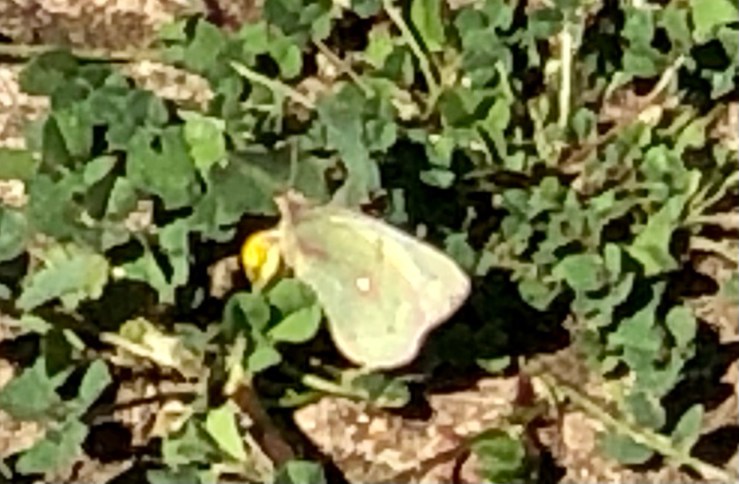
Sulphur butterfly
Hairstreak
Honey bee
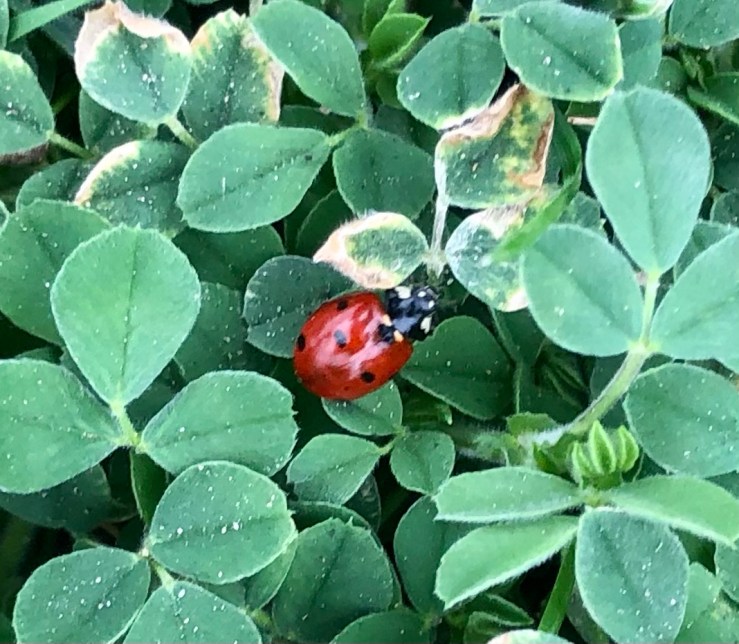
And a lady bug
Pollinators that weathered the storm!
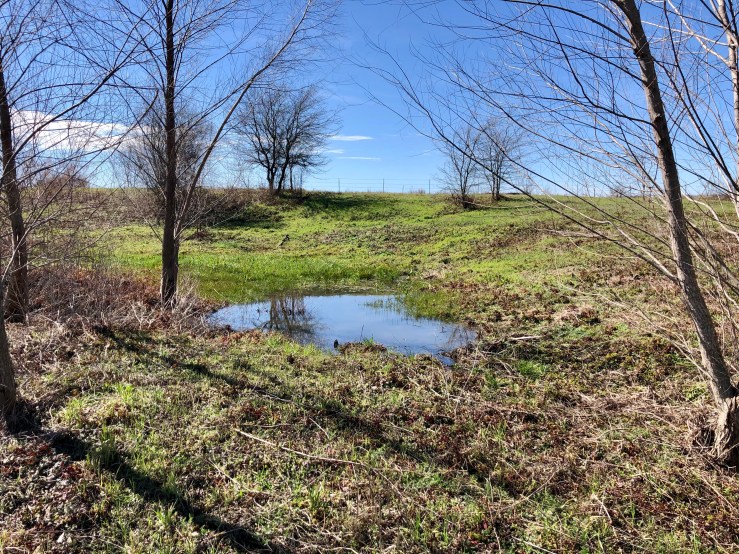
My husband and I had noticed a wet spot that we hadn’t seen before. It remained wet when the snow fell, which seemed odd. So, we went to check it out. It is near our arroyo, which has a number of springy areas (more this year than since we moved here) and a stream that runs into Walker’s Creek. We’ve never been able to spot the source of any of the springs other than one in our woods, which we can see coming from between two soil layers on a slope.
The spring that made this little pond is up that slope somewhere.
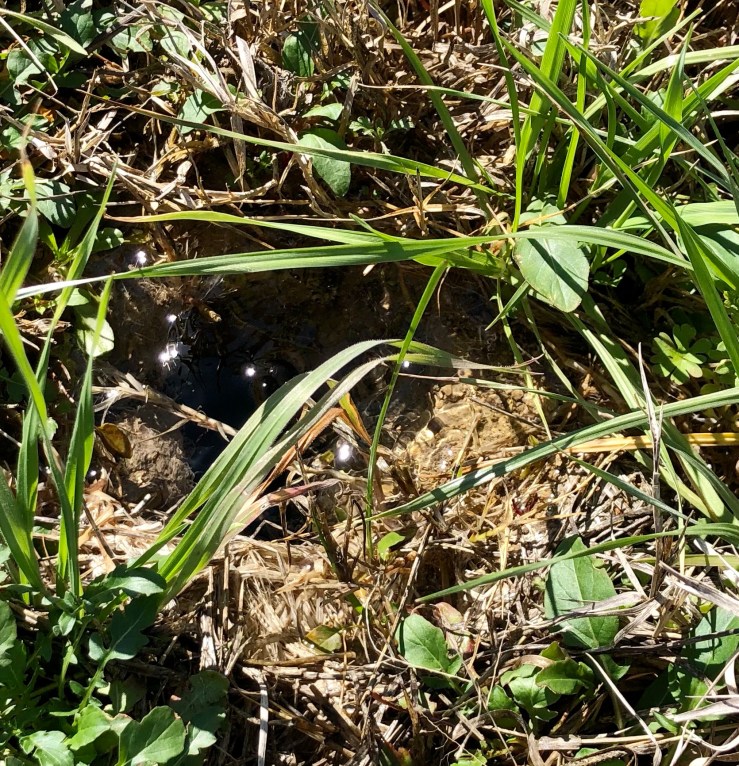
I have to say I made a bit of a fool of myself as I walked over there and heard bubbling sounds. I was ecstatic to find a hole about five inches wide, from which clear water was emerging, along with some bubbles. It wasn’t seeping, either, it was flowing pretty briskly. I’d finally found the source of a spring!
That shiny stuff is water!
Brief Aside
(Why was I so ecstatic, you ask? I have just loved springs my whole life. I was born and raised in north Florida, a place just chock full of springs, artesian wells, sinkholes, rivers, and lakes. The water level at my childhood home in Gainesville was so high that my dad had to be careful digging holes for trees, or he’d lose a shovel.
My happiest memories are of swimming in cold, spring-fed lakes or the springs in rivers, such as Fanning Springs, on the Suwannee River, on the way to where mom spent much of her childhood.
This photo of Fanning Springs, from Florida Spring Life, looks exactly like this spring did when I was young. You can see straight to the bottom of the spring area. In the distance is the river.
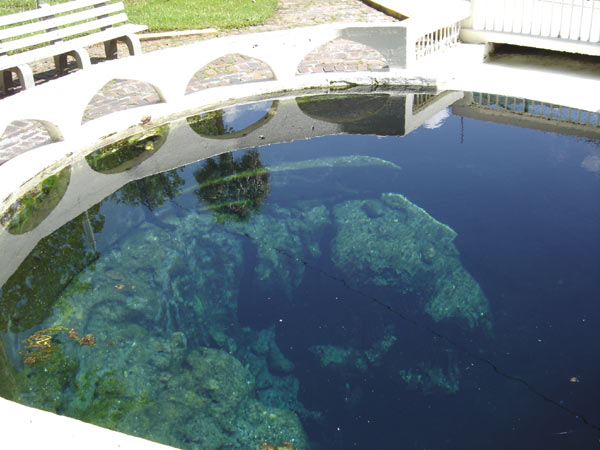
My mother’s family came from Green Cove Springs, Florida, a place that started out as a resort where people came to bathe in water from a deep, deep sulphur spring. My relatives lived right down the street from the spring (411 Spring Street!), so we often went to marvel at how deep the spring was, and to look at the little fish that lived in the short waterway that took the spring water to the St. Johns River. Once a naturalist, always a naturalist.)
The spring in the 1880. Behind it is the pool house where people went to get cured of whatever.
This looks exactly like it did in the 1960s, minus the gazebo.
I have tried to see to the bottom of this hole SO many times.
Green Cove Springs, Florida
Back to the Hermits’ Rest Ranch Spring
My semi-educated guess is that the reasonable amounts of rainfall for the past 2-3 years got at least three of the old springs on our property back up and running. And the water sinking in after the three winter storms, with all the ice and snow, allowed a new one to pop up. Maybe it was started in a mouse or rabbit hole, or maybe the extremely busy armadillos on our property helped.
Here you can watch it bubble, and see where the spring leads.
I get to dreaming that I can put some rocks over there and make a small dam to capture some spring water before it heads off to the stream in our arroyo. I don’t want to obstruct it, just briefly delay it.
My attempt at showing where the spring starts, where the water goes, and where it ends up.
But, who knows how long we will have a little spring to enjoy? My dogs love it, the red-wing blackbirds are playing in the wet area it’s made, and I even saw a merlin watching the meadowlarks and other birds. It’s like a buffet for that little guy!
Carlton says spring water is tasty. This is just before it falls into a depression and into the stream that goes to Walker’s Creek.
I wish I could have gotten a photo when the geese were closer! They were easily identified by their black wing tips and all the honking.
By the way, I’ve been hearing sandhill cranes all week, and some landed at Pamela’s place. And more surprisingly, a flock of snow geese flew right over me earlier in the week, honking away. I am in such awe that I forget to take pictures at such times.
Oh, and it looks like some frogs and turtles are still in our ponds, and I’ve seen signs of living crawfish (plus a dead one). Nature will persevere!
Thursday, February 4, marks the day! Our El Camino Real Seasonal Winter 2021 iNaturalist BioBlitz begins at 12:00 am that morning and continues until Wednesday midnight, February 10, the following week. For some time, our chapter has not been able to gather as a group for a nature survey, so the week will be an opportunity to figuratively join forces to document the fauna and flora of the areas where we reside. Yes, this does include our personal property as well as our neighborhood and the places we go as we physically distance during the COVID restrictions. So get that camera ready!
The BioBlitz is an iNaturalist project. See: https://www.inaturalist.org/projects/ecr-seasonal-winter-bioblitz. Yes, you must be a member of iNaturalist to participate. And yes, to get volunteer hour credit for participating, you must email connlindajo@gmail.com and state that you want to join the project. OK, I can hear the groans from miles away. Must I again emphasize that iNat is a valuable tool that documents nature and is used not only by TPWD but other organizations and university researchers as well?
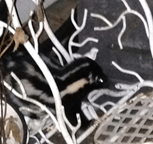
A prime example is the rare sighting of a live Spotted Skunk (Spilogale putorius) by Ann Collins on her porch in the suburbs of Milano. It is the only Milam County observation on iNat and one of the few documented observations in Texas. (https://www.inaturalist.org/observations/2710384) Ann’s observation caused a lot of excitement and interest at TPWD. Clint Perkins, a graduate student at Texas Tech, did field research on Ann’s private property and continues to review all mammal observations on iNaturalist.
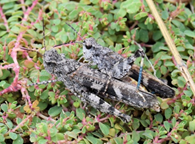
Eric Neubauer has the only observations of the Southwestern Dusky Grasshopper (Nebulatettix subgracilis in Milam County. (https://www.inaturalist.org/observations/34920111) Again, there are few documented sightings in Texas and those were probably not made at a state or city park.
Countless unique observations added to iNat have been documented on personal property by a Texas Master Naturalist, but those species we may consider common or mundane also have a definite need for documentation. I have personally noticed the apparent change in bloom times for wildflowers, the species of migrant birds I see, along with the disturbing spread of invasive species, and so I document even the ubiquitous species. Each and every legitimate observation has value.
So what is the point of all this? Some Texas Master Naturalists have been disgruntled by the exclusion of the time spent on iNaturalist observations on one’s private property as valid volunteer hours. As a result, many have lost interest in using iNaturalist as a personal tool for sharing and learning about nature.
Well, I have two points to make:
Number One: Since approximately 95% of the land in the state of Texas is privately owned, neglecting to enter observations from our personal properties skews the data. I urge you to continue your contributions as citizen scientists by observing and documenting on iNat what you see around you every day.
Number Two: This is an approved project where El Camino Real Master Naturalist members have an opportunity to observe at leisure on their private property and earn volunteer hours without having to travel to participate in a BioBlitz.
So join iNaturalist and the ECR project. Take photos. Share them on iNaturalist. Report your volunteer hours. It is that simple.













 Nature Along the El Camino Real