Caterpillar Season

Cindy Travis and Sue Ann Kendall

From Cindy:

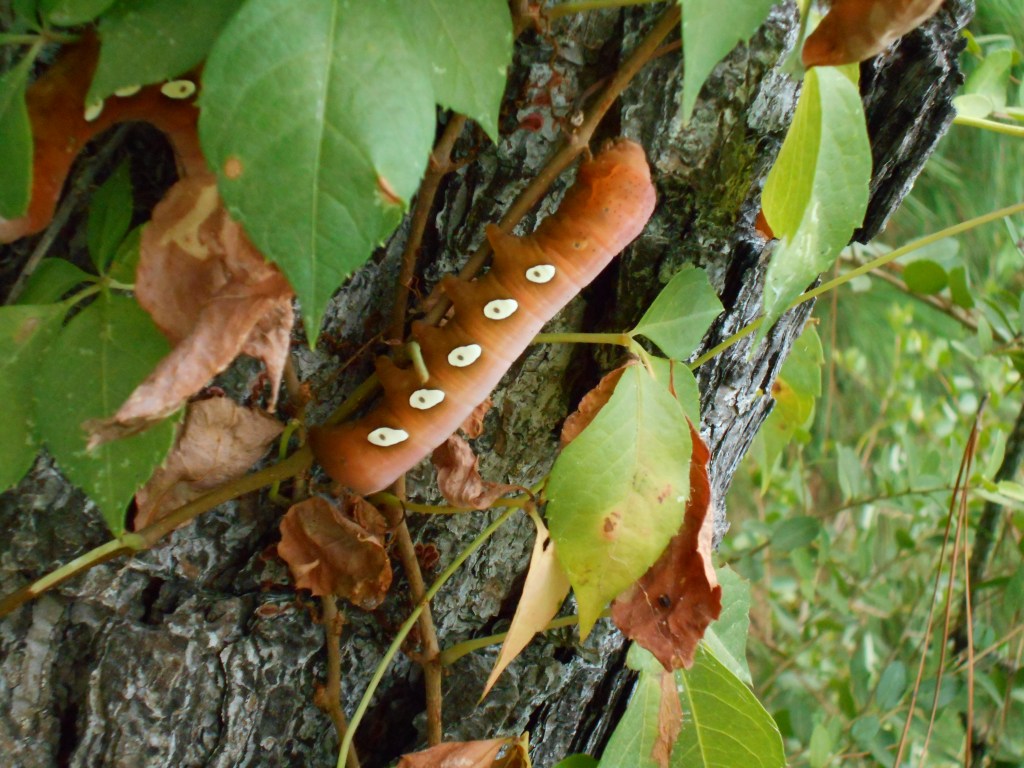
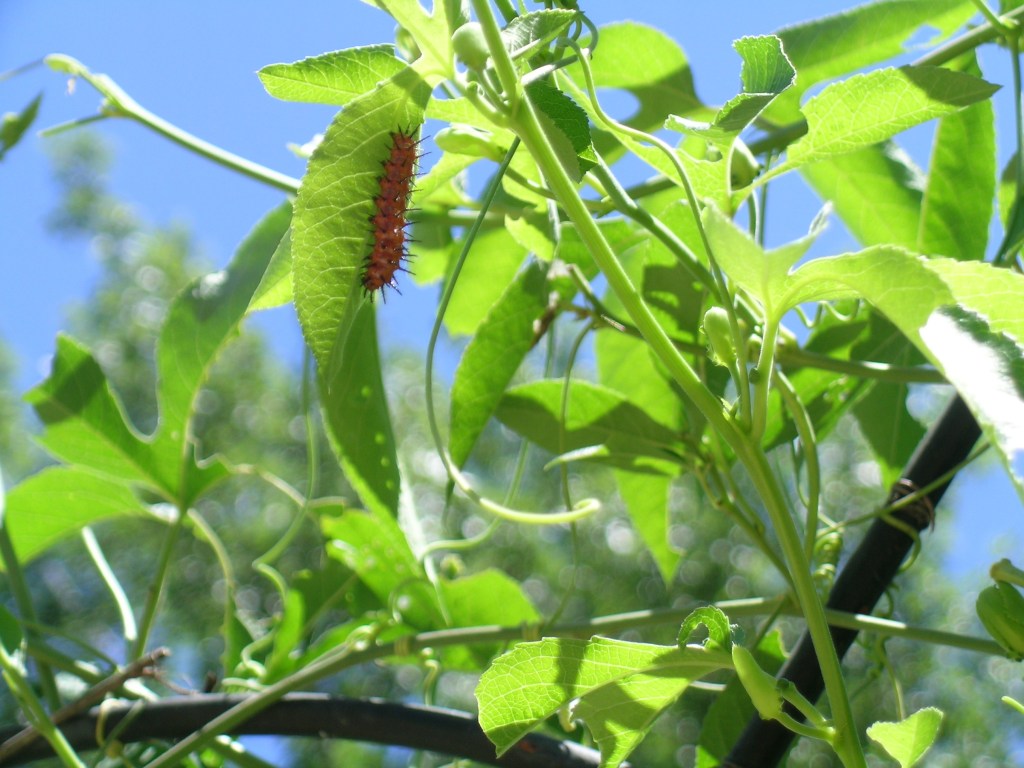
I found a dozen of these caterpillars devouring my dill. When there was nothing but a stem left, they crawled up the side of my planter and crawled away. I thought they might find the nearby parsley and ingest it too, but no sign of that and no sign if them.

I suppose they are somewhere nearby spinning their cocoons.  Maybe I’ll see some pretty black swallowtails around soon if my nesting phoebes and barn swallows or bluebirds don’t get them first!

From Sue Ann:

I have had many of these in my bronze fennel plant, and I hope they have gone off to pupate, too! The fennel also hosted the caterpillar of the cabbage looper moth. I’ll plant dill next year, for sure. The more black swallowtails, the better!

More about the Black Swallowtail, from Cindy

Papilio polyxenes, the black swallowtail, American swallowtail or parsnip swallowtail, is a butterfly found throughout much of North America. It is the state butterfly of Oklahoma and New Jersey. Wikipedia

Eastern black swallowtail. Photo by @AngelsLight via Twenty20. Licensed use.

Black Swallowtail Life Cycle: Overview and Timings

StageTypical Duration
Egg stageGenerally 4 to 10 days, depending on temperature and host plant
Caterpillar (larval) stage3 to 4 weeks
Chrysalis (pupal) stage10 to 20 days (except for overwintering pupae)
Adult butterfly stage6 to 14 days
Facts about the Black Swallowtail

And More from Sue Ann

I had to add this observation from last night, as I was dining outdoors at the Central Avenue Bistro in Cameron (with safe distancing and all that). I felt something prickling my ankle and looked down to find this fellow. It must be on the last instar, because it’s big! I believe it’s a live oak metria moth (Metria amelia) given that it and many friends were falling from the live oak tree we were sitting under, though iNaturalist has yet to confirm me.

Hard to tell the front from the back of this one!

The moth looks like this, which really would blend right in with an oak tree!

Live oak metria moth. iNaturalist photo by xylochic627 (CC-NY-NC)

Big Toad Little Toad

By Sue Ann Kendall

Ever since learning all about Houston toads last week, I’ve been wanting to find the toad currently hanging around our house in the Walker’s Creek community outside of Cameron. I was especially curious, because that toad has some BIG poop.

Yesterday, my niece sent me five pictures. It was a toad! I was already on my way home, so I got all excited. Must be a Master Naturalist thing.

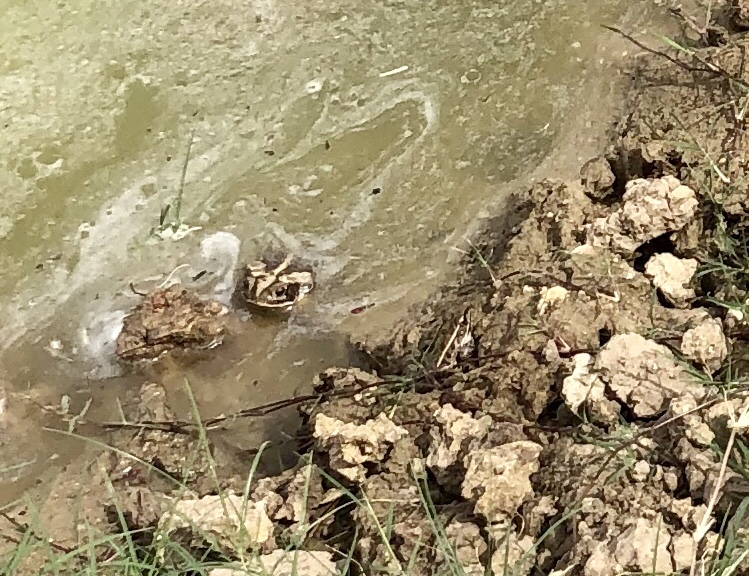
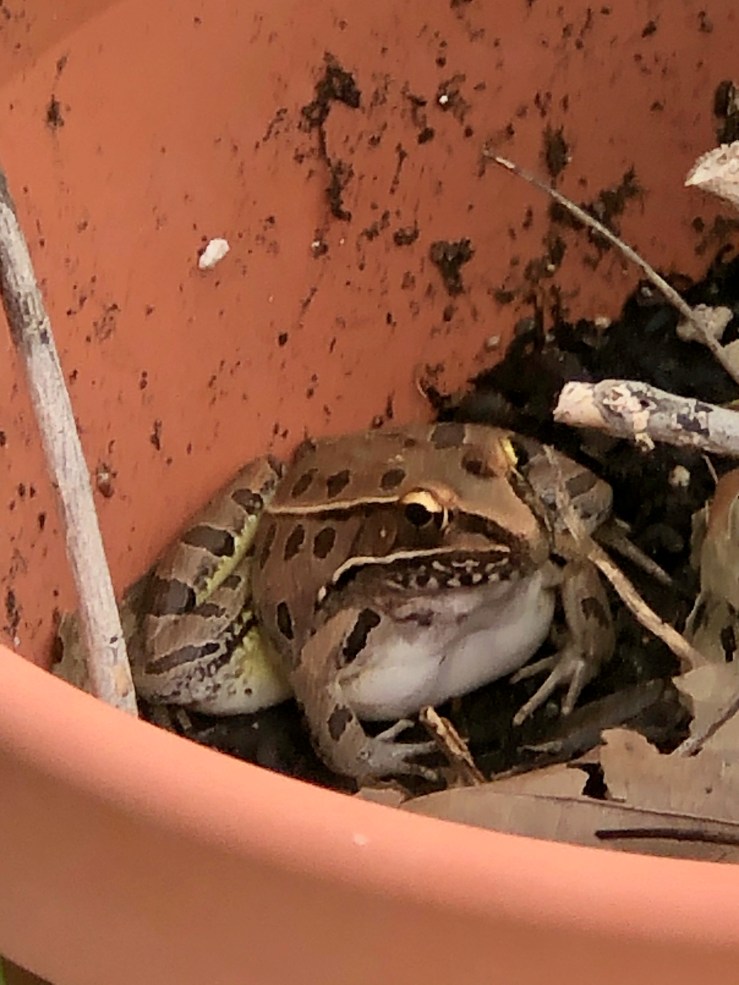
When I got to the house, Kathleen showed me our new neighbor. She is one big mama Gulf Coast toad. She can’t be a dude toad, too big. She just hung around in the grass, and no dog was dumb enough to mess with her. (I have a feeling there are more toads by the house, judging by the nightly croaking.)

Very large toad. I didn’t pick her up for more ID, because I wanted her to continue to feel safe.

Later that evening, I was walking by the garage, which is near a little pond, when I saw something move. It was a fresh young toadlet!

Tiny toad up close.

This little fella is the opposite of Big Mama! As you can see, it’s smaller than a June bug.

Toad versus bug

I’m happy some of the pond tadpoles made it out and are heading for the big-filled world around our house and woods.

A Fly Named Anthrax pluto

by Eric Neubauer

When I review my photos and decide what to upload to iNaturalist, the first thing I do is separate them into broad categories such as flies aka Diptera, and today was the day to work on that group. One was this shaggy, spotted fly found in a wooded area near Alligator Creek.

Sue Ann now declares this her SECOND favorite fly.

I don’t know my flies very well, and trying to identify one I’ve never seen before is like going down Alice’s rabbit hole.

There are so many different kinds of flies. A fair number don’t even have a single observation at iNaturalist, but I thought this one was distinctive enough and I might get lucky. Way down in the low double digit observation totals of Texas flies, I finally found one with similar spots. It was in the Anthrax genus which I’ve never encountered before.

The word “similar” is a dangerous one and it has burned me before, so the next logical step was to search the genus Anthrax in Texas. And what do you know, there was another nearly identical species down in the single digits! Now, how am I going to tell them apart?

The only consistent difference I could see was that the leading edge of the wing of one was solid black and alternated between black and clear on the other. Mine was the one with 7 observations, now increased to 8. The only other observations for this species in North America are four in eastern Canada, oddly enough.

Making the Best Out of the Materials You Have Available

… the essence of engineering

by Eric Neubauer

I was hardly a fan of spiders, but circumstances have determined otherwise. The pandemic has kept me almost exclusively at home, and the Texas Blacklands appear to be excellent habitat for wolf spiders (Lycosidae).

In the past, getting identifications down to the species level almost always ended up in frustration, except for Rabidosa rabida. I have identified at least three other genera on my property, and there are likely to be more.

Rabid Wolf Spider Rabidosa rabida. Photo by the author.

This year, I decided to make observations of them as they grew up. My goal was to upload at least a hundred observations to iNaturalist before trying to identify them down to species level. I passed my goal by getting 23 in 43 minutes a few days ago.

This Thin-legged Wolf Spider (Genus Pardosa) is a young one. Photo by the author.

Lycosidae are generally considered nocturnal, but this isn’t entirely true. Daytime hunting is hit or miss, but a combination of high humidity after a rain, temperatures in the high 70s, and cloudy skies apparently combined to bring them out in the middle of the day.

This one is not identified yet. Photo by the author.

There is also a matter of technique. I’ve found that closely cut grass next to high grass is the best place to look and photograph them. You can just walk around slowly and watch for movement, but many will escape into the high grass. If you lead with one foot along the edge of the high grass, this flushes more of them into the low grass where they can be photographed.

There is one particular species that is so well camouflaged it’s impossible to see unless it moves. Right now, they are mostly a half to an inch long including the legs, and they are old enough to identify the genus.

Brush-legged Split Wolf Spider Schizocosa ocreata. Photo by the author.

You may also see holes of various sizes in the ground. At present, many are probably Lycosidae burrows. They can be enticed out with a blade of grass, but I’ve found they disappear back down their burrows too quickly to photograph, making it a two person job whenever that becomes an option again.

My habitat is returning prairie on blackland with paths mown through the high grass. Confirmed genera: Hogna, Pardosa, Rabidosa, and Schizocosa. Other non-Lycosidae genera including Dolomedes are encountered.

Babies Everywhere

by Donna Lewis
(with additional photos by Sue Ann Kendall)

This is Suna’s Phoebe mom, eating sunflower seeds and amaranth, or waiting on a fly.

Anywhere I look I have baby birds right now, which is a wonderful thing for a naturalist. Who could be bored right now with so many little creatures to look at?

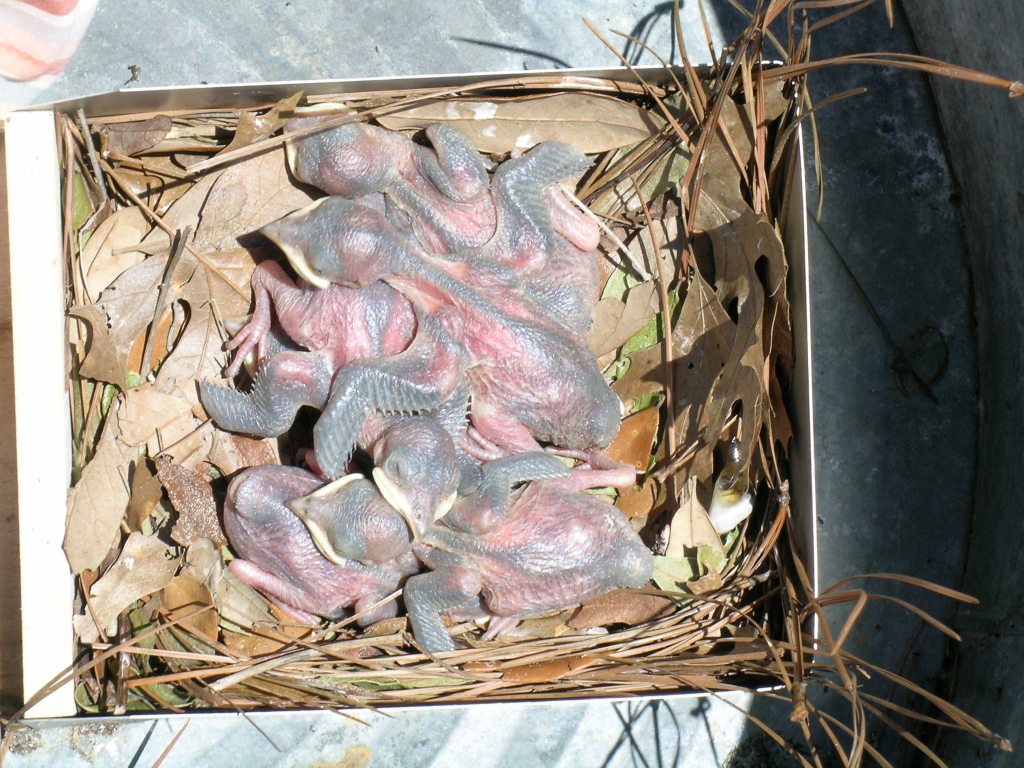
On our front porch we have a nest with five tiny Eastern Phoebes. They are fly-catchers and love things with wings.

This morning mama tried to force a giant beetle down her youngest daughter and I thought for awhile I might have to preform the Hine-lick procedure…

Donna’s Phoebe babies taking a nap
Suna has a phoebe nest atop an old swallow nest.

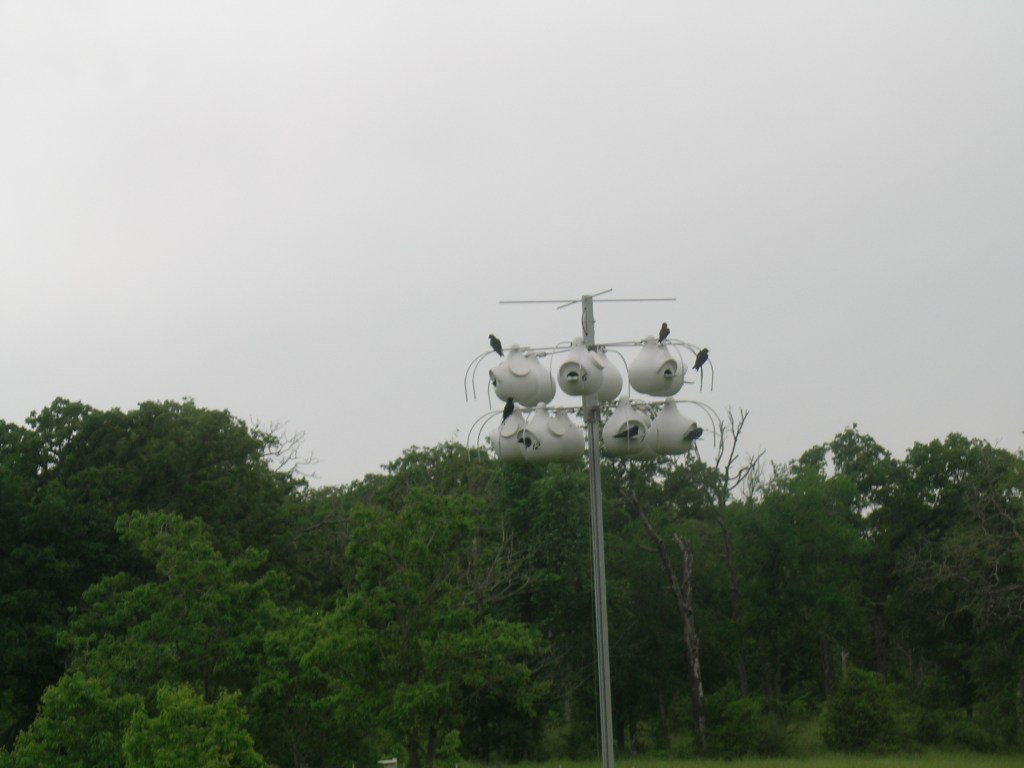
Then in my Blue-bird houses I have five babies in one house and six babies in another. Again, bugs are on the menu.  This year the Blue-birds decided to run off the Purple Martins so they could use their perch to look for predators near their houses.

Over in our barn I have a nest of baby Carolina Wrens in a bucket that was hanging on the wall. If you have never seen a wren baby you would not believe how tiny they are. They are the cutest little things ever. There are only three babies.

Up in the oak trees about 18 feet high we have some Ruby-throated Hummingbirds. Now talk about a tiny house. You can barely see it. It is wrapped in moss and is very concealed.

I love this quote.

There are ton’s of Cardinal nests everywhere. They eat bugs and from my feeders. I have them year round.  They are regulars here.

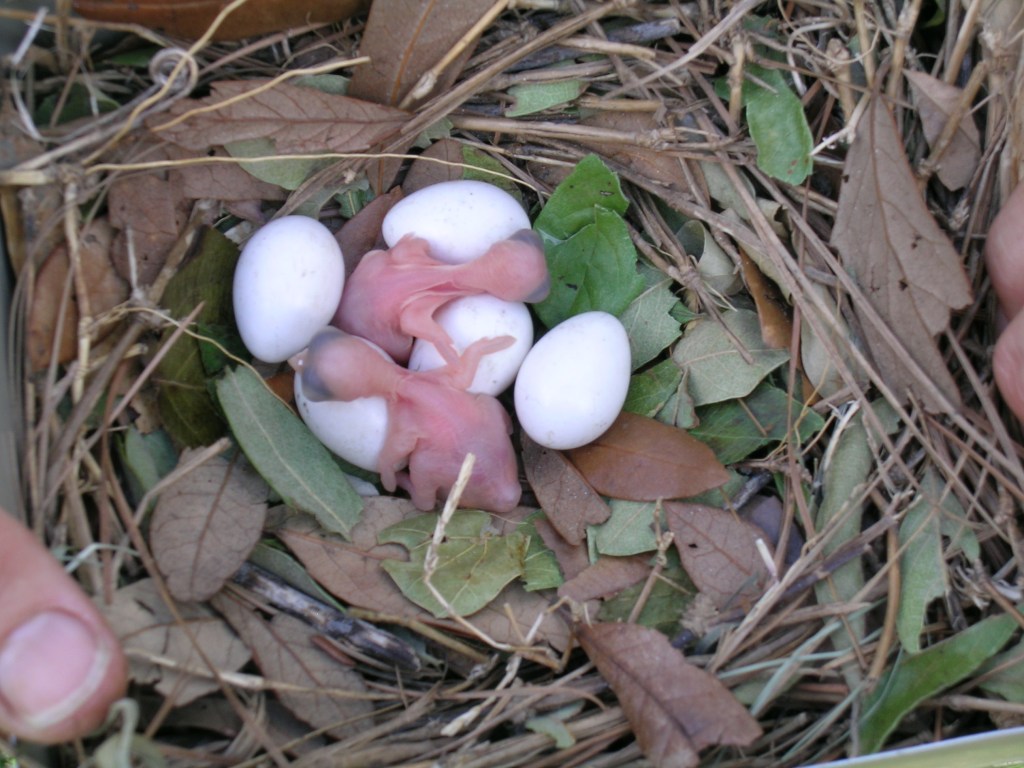
Then at last my beautiful Purple Martins, who came very late this year, are starting to lay their eggs finally. That unfortunately will cause the babies to mature during the hottest time of the year. 

I have seven nests with eggs and more that have not started yet.  I have the fewest Martins than ever at this site.  There are many potential reasons for this, and it’s hard to determine for sure.

But the ones I do have sing to me, and it’s all worth the trouble.

Nature is everywhere you are.  All you have to do is look.

Heaven on earth.