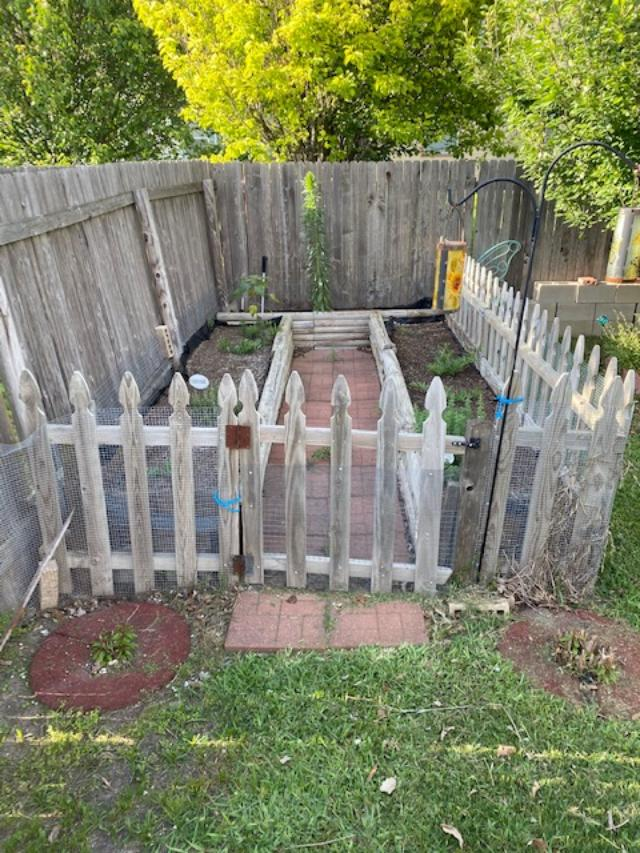
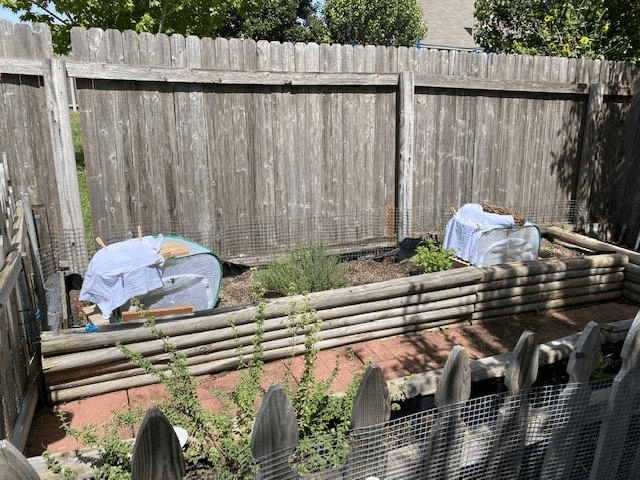
Next year we will continue our Milkweed/Monarch project and create a network for sharing milkweed, info and habitats. A recent Monarch seminar taught us how to raise milkweed from seed. We’ll create here a walk-in enclosure in the Milam Wildscape for the project.
To follow up on Lisa’s post yesterday, it turns out that 10% of caterpillars make it to butterflies and 10% of those survive full adulthood. Two of my butterflies were born with wrinkled wings, so I fed them sugar water, took them for outside trips, and after a couple of weeks they passed peacefully. Other options were to euthanize or leave outside. This way they had a good life.
Gulf fritilary chrysalis
We are watching Gulf Fritillary chrysalises now. They look like leaves to fool predators.
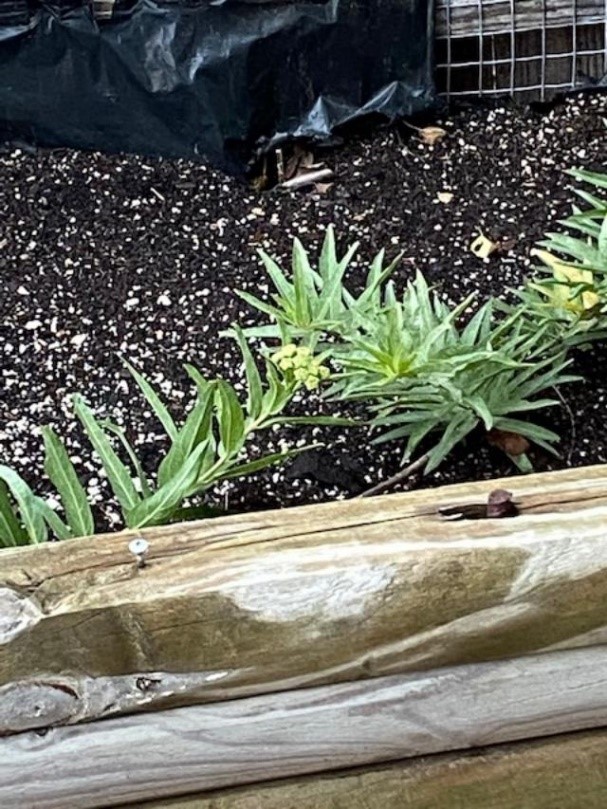
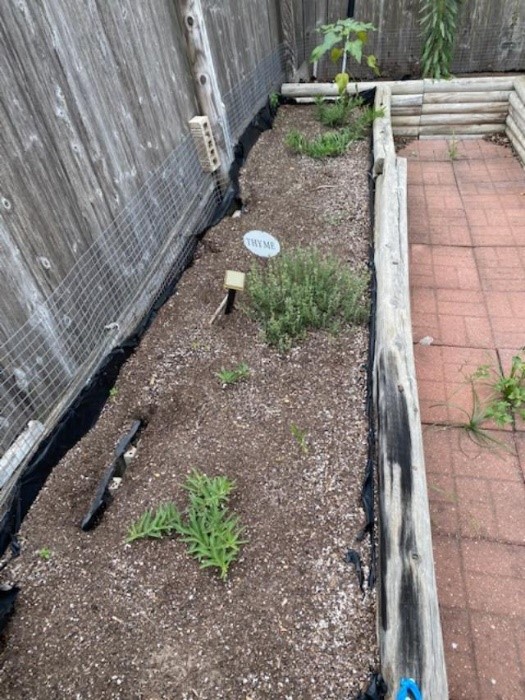
On May 2, 2020 as part of the Milkweed Monarch Watch Project, I met Cathy Johnson in Rockdale to pick up some coveted antelope horn milkweed that I divided with my sister (eight for me and seven for her). There was excitement as I planted and watched these babies grow over the next year, as well as the tribulations in caring for them through rain, drought, aphids, and the freeze/snow.
February 14, 2021 – The Freeze! Everything including my precious milkweed covered in snow.
Spring 2021 – Making a comeback.
April 2021- The milkweed not only survived the freeze, they thrived! Looking good!
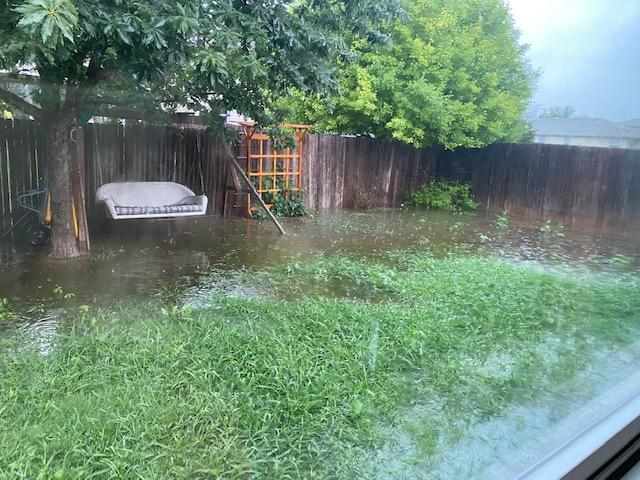
May 2, 2021 – 2.81” of rain according to my rain gauge and reporting to CoCoRAHS and on May 3, 2021 another 1.13”.
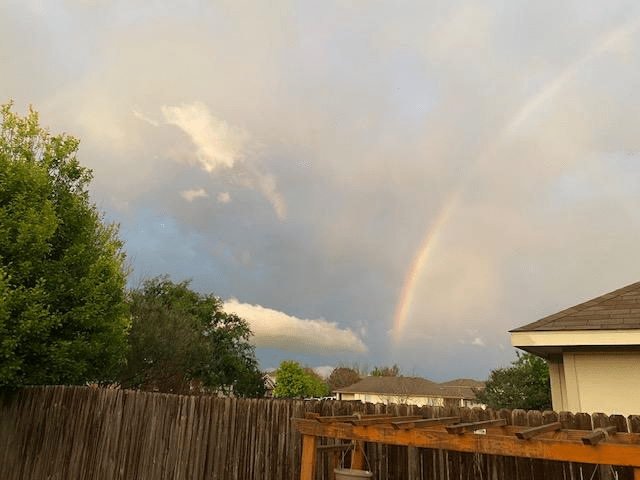
And then a double rainbow end to end.
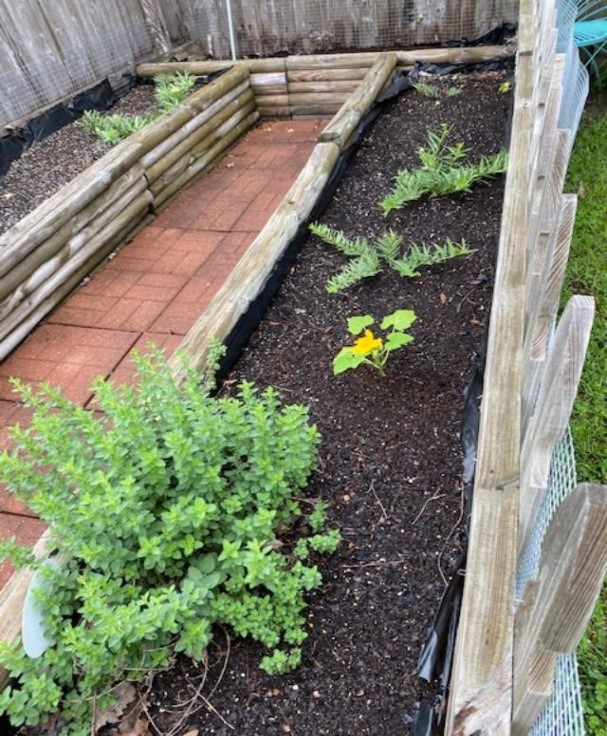
May 17, 2021 – Great recovery from rain
Even my two flame acanthus bushes are coming back which the hummingbirds love. Don’t worry, I pulled all those invasives in the back of the garden out. Especially that tall monster in the center.
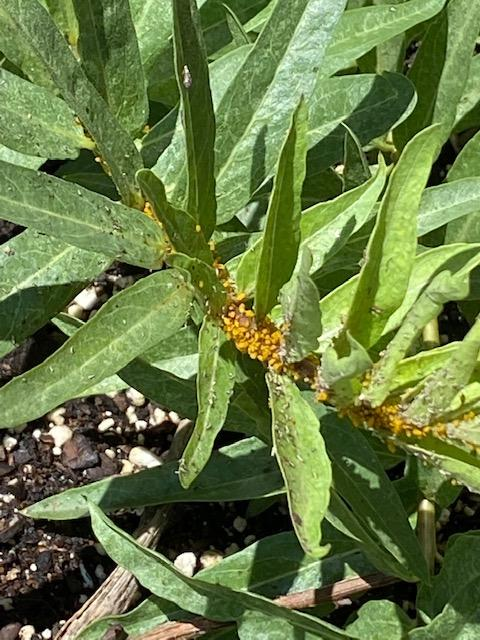
June 7, 2021 – Aphids on the milkweeds – Oh no you don’t! I made a soap/water concoction to spray on the aphids and although it took care of them, it also just about did my milkweeds in. They all shriveled up and dried out but amazingly they all came back. Cathy Johnson had suggested putting flour on them the next time.
Assassin bug on the milkweed doing its job. Unfortunately, too many aphids.
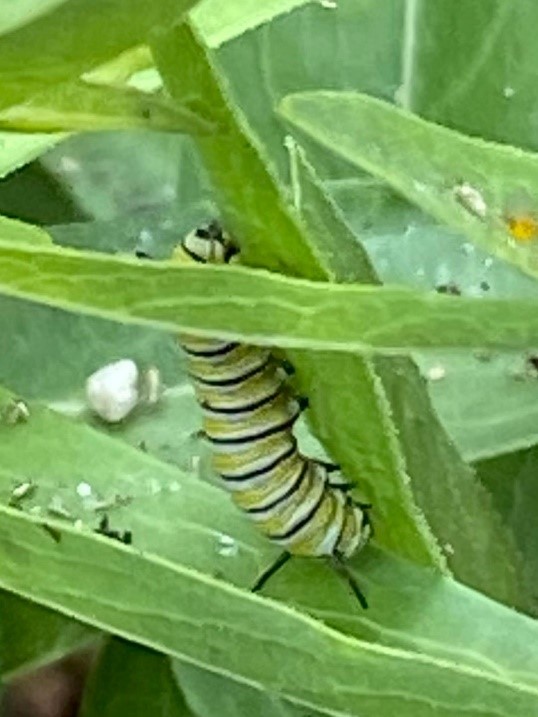
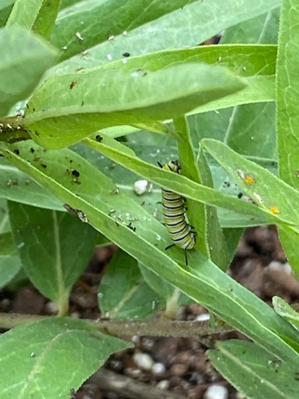
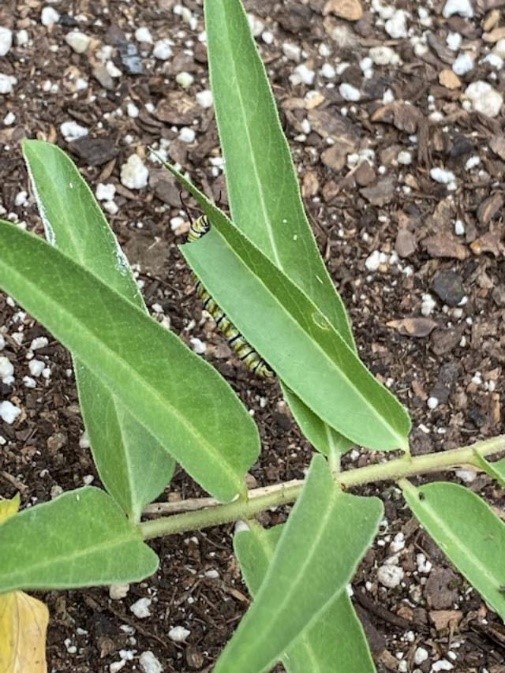
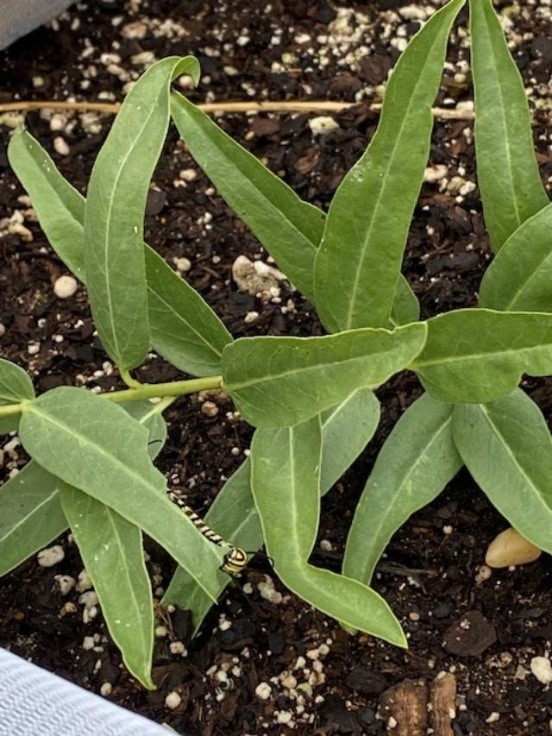
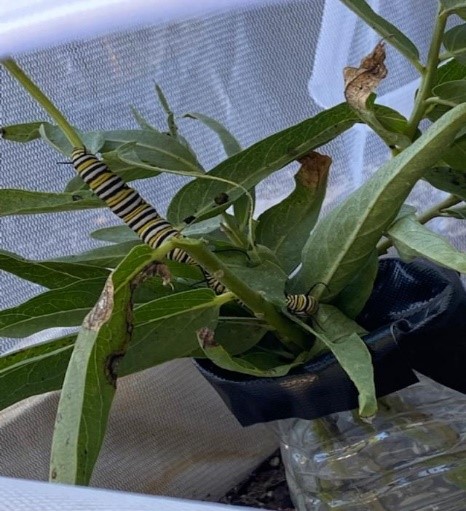
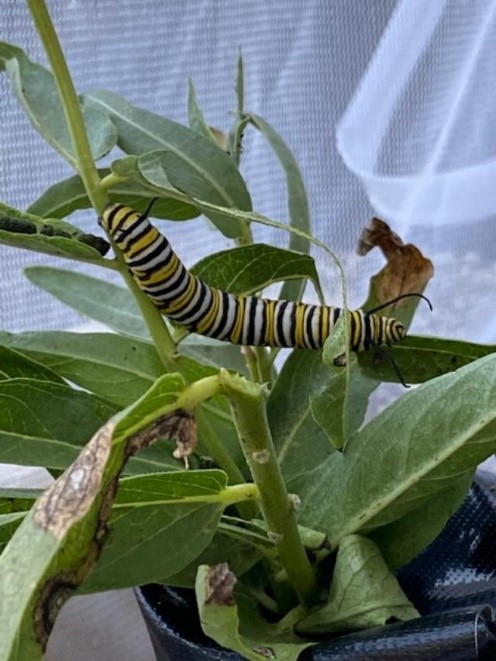
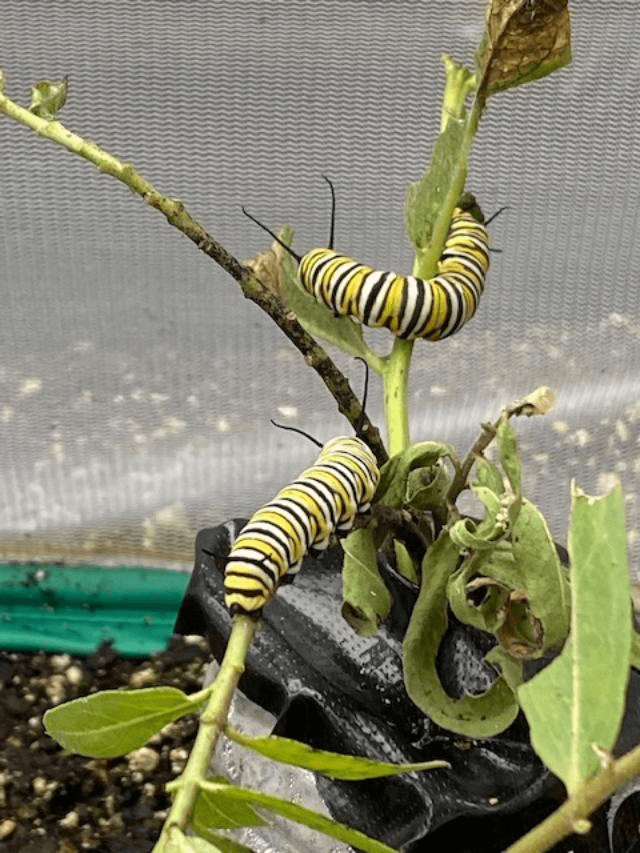
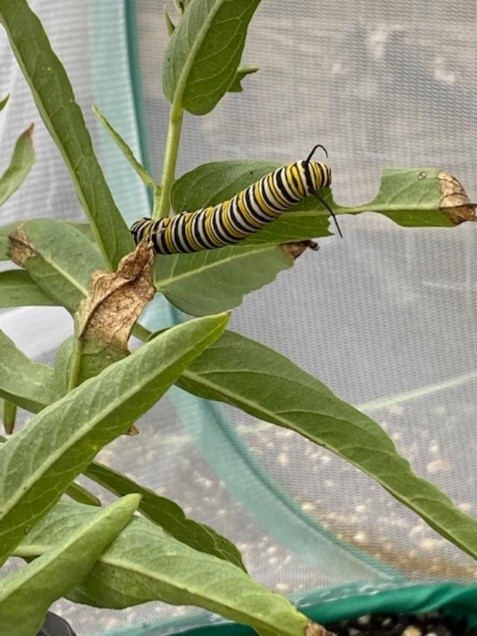
July 19, 2021 – I was beside myself to see the first monarch caterpillar on one of the milkweeds. The excitement and adrenaline overwhelmed me.
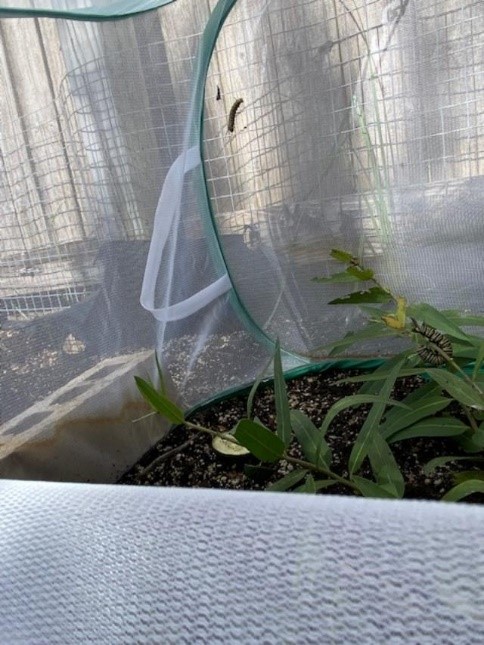
After seeing white wing doves among other birds hanging around my garden, I covered it with an enclosure I already had from when I was protecting some black swallowtail caterpillars on my dill last year.
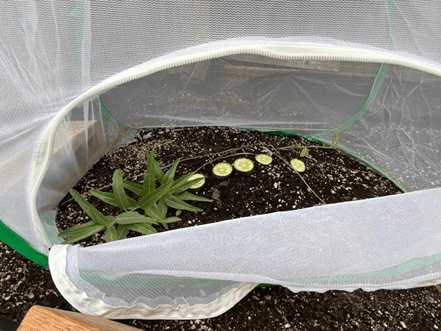
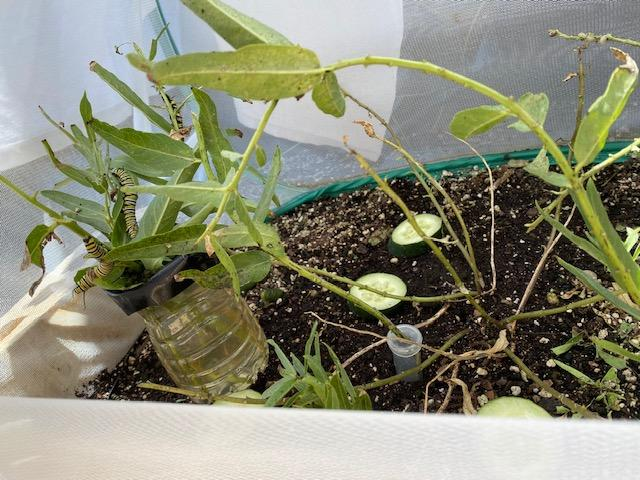
July 20, 2021 – The last couple of days I have been obsessed with checking on the caterpillar several times a day and found two more on the other milkweeds and placed another enclosure over those. Unfortunately, that side didn’t have as many milkweed leaves so again I sought advisement from Cathy and she said I could try sliced organic cucumbers.
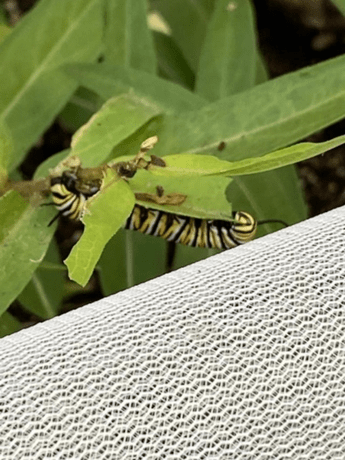
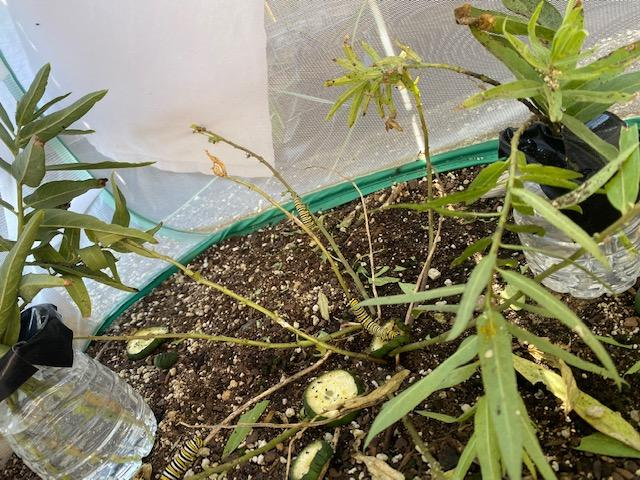
July 22, 2021 – They are major munchers! I am beginning to worry if there is enough milkweed so I added more sliced organic cuccumbers.
July 22, 2021 – Found more caterpillars for a total of six. Two on the other side and four in the first enclosure where I spotted the first one.
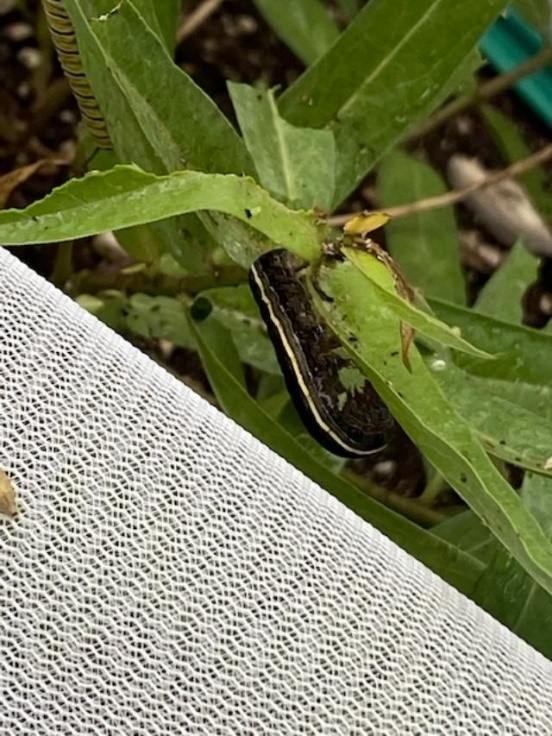
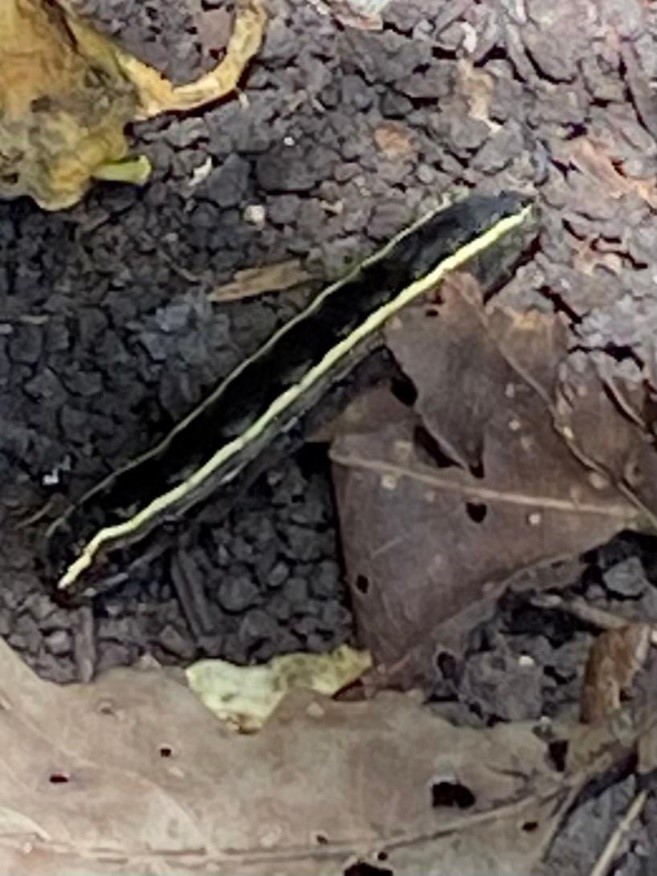
July 23, 2021 – Armyworm eating the caterpillars’ milkweed. I relocated it before it was ID’d.
July 24, 2021 – Cathy suggested providing some shade so I cut out old cotton t-shirts and used clothes pins to attach to enclosures.
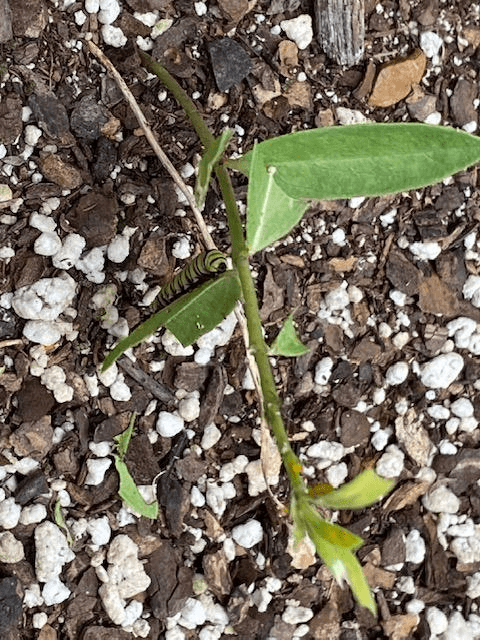
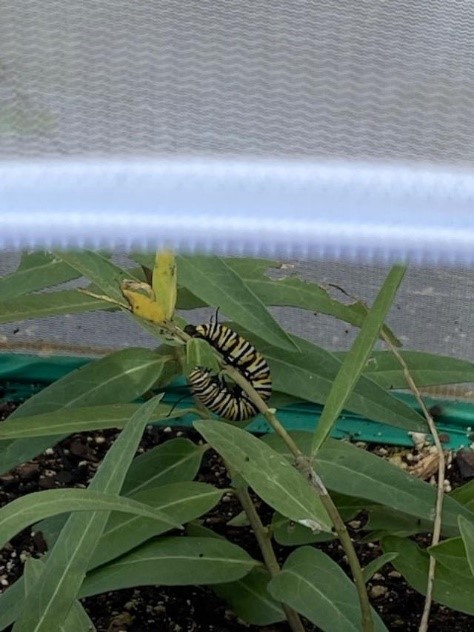
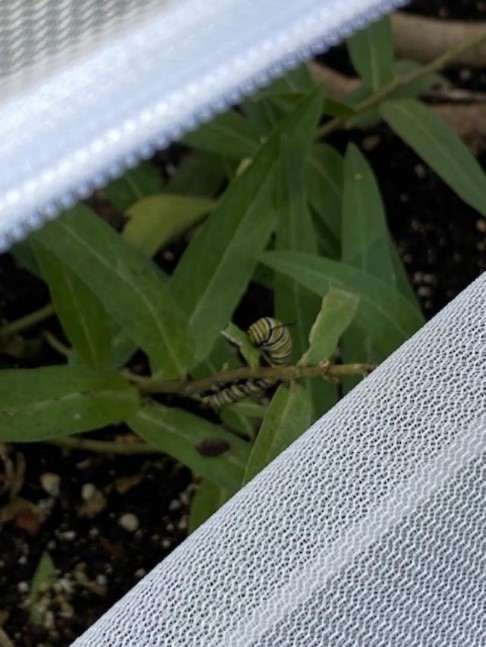
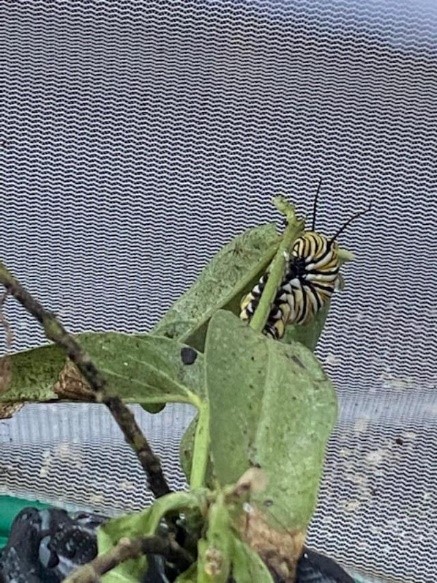
July 24, 2021 – Looks like it is looking for the perfect spot to begin the transformation.
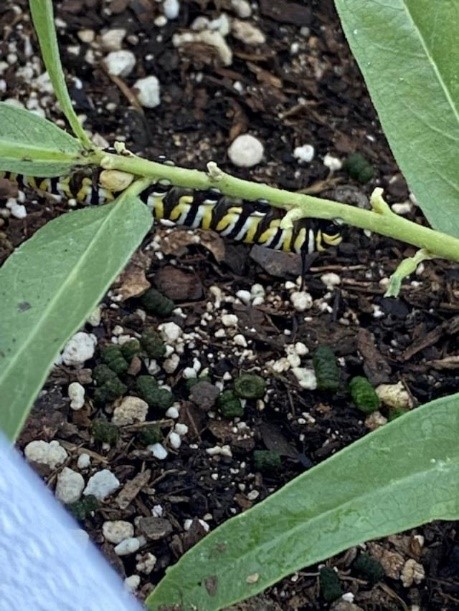
July 24, 2021- These beauties are getting bigger by the day.
By the next day the milkweeds were completely devoured. Now I’m panicking.
I decided to take cuttings from the milkweeds on the opposite side of the garden and place in cut water bottles with tape along the top with a hole only big enough for the stem to fit so that the caterpillars wouldn’t be able to fall or get inside the water filled bottles.
Now this one is looking for the perfect spot to transform.
July 25, 2021 – The floral vials I ordered came in so I took more cuttings of the milkweeds from the opposite side of garden.
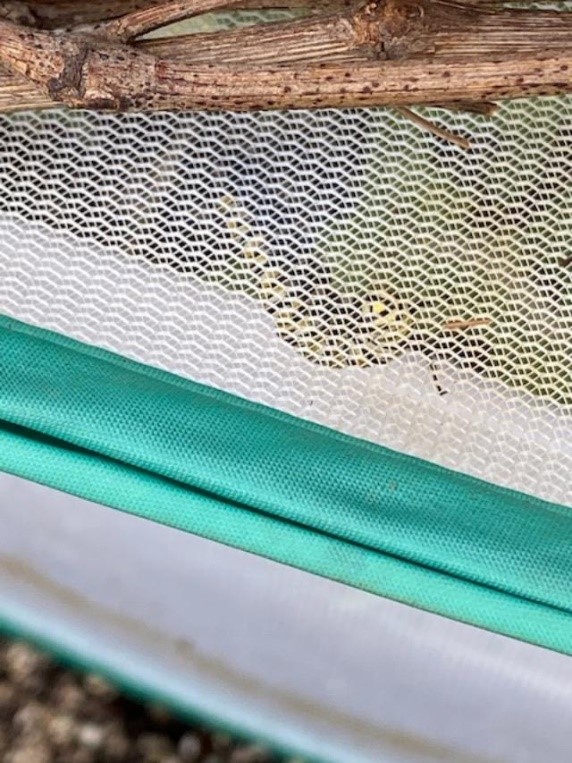
By the next day, all but one of the caterpillars got out of the enclosures. I looked all over to see where they may have gone to begin their transformations but I could not locate any of them. This is the last of the six.
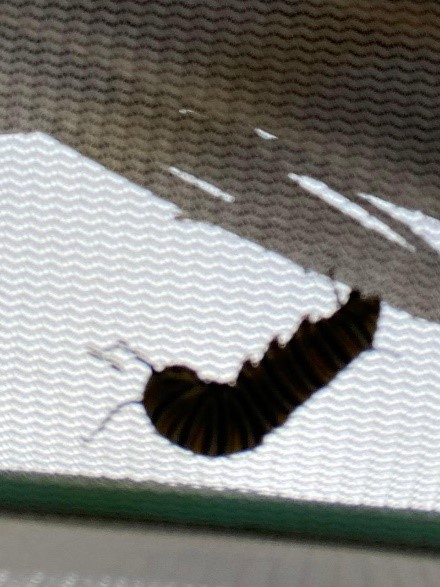
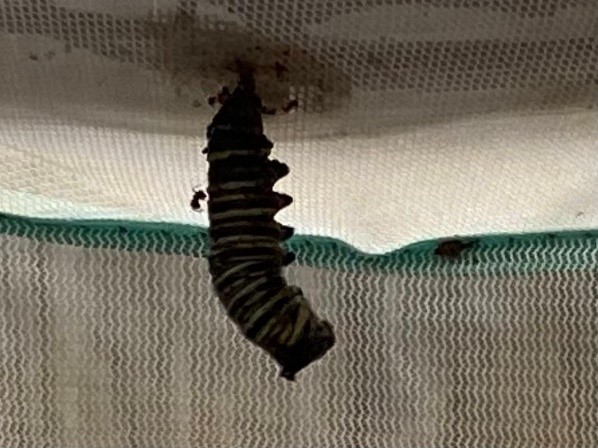
July 26, 2021- The last one that stayed inside the enclosure has begun to form the “J” which is the beginning of the transformation to a chrysalis.
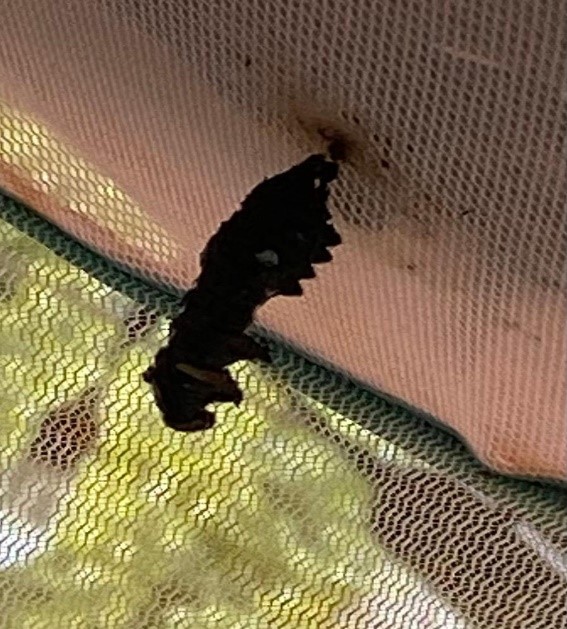
As I take a closer look, I notice a trail of ants that ended on the caterpillar. I’m frantically trying to figure out how to get rid of them without harming the caterpillar which is beginning to transform. I did not see one ant this whole time until now. I laid out ant bait traps in their path and notice they are all over the caterpillar. Cathy suggested gently drizzling water over the caterpillar to try and get them off, which I did, but in a manner of minutes the poor thing was devoured, resembling a dry shell and ultimately did not survive. I was heartbroken and devastated.
Lessons learned:
Have plenty of milkweed so I won’t be scrambling to make sure there is enough.
Transplant the milkweed I currently have into pots, so that I can move the whole pot into the enclosures and move them to a safe location free from birds, armyworms, ants, etc.
Learn more about how to keep the habitat clean to prevent any bacteria or diseases.
Learn more about what to do if they do survive to form a chrysalis, as well as when they become a butterfly: caring for it and when and where to release it.
It took me a couple of months to even talk about this, let alone write a blog about it. What started as complete utter excitement and joy turned to such disappointment and sadness. However, I will not let all this be for nothing. I learned a great deal on this short-lived journey, and it truly amazes me that any caterpillars survive against all the odds. Now, every time I see a monarch butterfly I get that glimmer of hope, knowing how strong they are and that they will prevail!
So we have tons of hummingbirds here in Milam County right now. I have predominantly Ruby-throated hummers, Archilochus colubris. They love many of our native flowers, which you should provide if you want a lot of them to visit you.
The nectar feeders are great, but should not be their only source of food. Some of our native Texas plants that they like are; Flame Acanthus, Coral Honeysuckle, Red Yucca, Turk’s Cap, Zinnias, Autumn Sage, Morning Glory, and many other nectar plants.
I took these photos of the hummingbirds through the window on my front porch. If they see motion they take off, so I have to be slow. I have two more feeders in my garden. I like the flat feeder you see in the first photo the best. It is easy to clean.
Hummingbirds also need protein, so they eat caterpillars, spiders and other insects. A big hunk of watermelon set out can sometimes lure them to its nectar. That’s, of course, if I can give it up.
Water is another important resource they need. Put out a sprinkler near a fence or perching area in late afternoon and everybody’s up for a bath!
The other species that are here in Central Texas is the Black-chin Hummingbird. It’s hard to tell them apart, especially if you do not have the sun shining on the male’s throat. Beautiful and fiesty little birds, gotta love them.
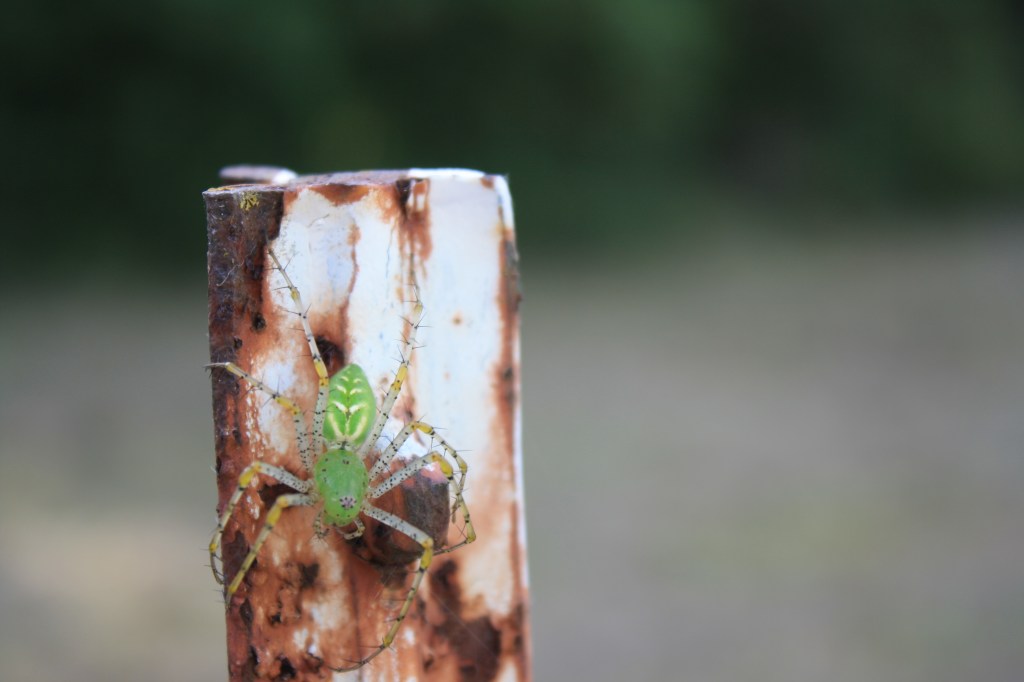
So, while walking along our back fence, I see this brilliant green spider on a fence post.
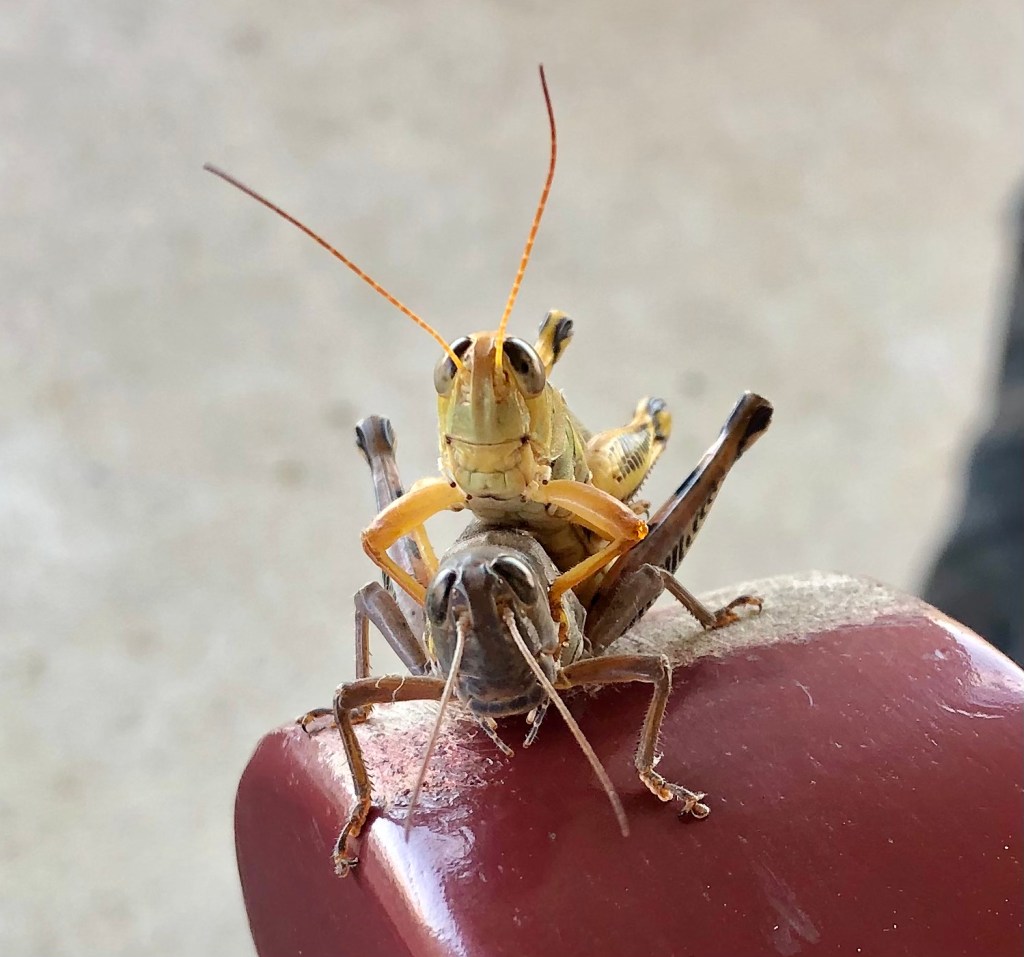
All the other posts were taken by pairs of grasshoppers. Love is in the air.
Suna got to watch these differential grasshoppers show their love on her rocking chair.
I did not know what the spider was, which is why I got really close with my camera to take this photo. After I sent the photo to my go-to specialists, Eric Neubauer and Linda Jo Conn, I learned that it was a Green Lynx Spider, common in our area.
I also learned that when a female is guarding her 600 green eggs, she can squirt some venom about one foot away! Wow I won’t get so close again. It was beginner’s luck that I didn’t get venom in my face!
This spider is a hunter. It goes after prey, while some spiders weave their webs to catch their prey. It loves moths and bees and most insects.
Lately we have seen more spiders in our house, just not one of this kind. I know what you are thinking, does she kill them? I actually do try to catch and release. Sometimes I can’t, but I try. Everything has a purpose.
On the morning of September 4, 2021, I got to witness a miracle.
On our front porch, a new Gulf Coast Fritillary butterfly hatched. After a few hours it had pumped its wings up and was waiting to dry enough so it could take its place among the other pollinators that are here in Milam County. What a neat way to start the day.
New life!
We will need many more of these and other pollinators to help feed the world, and provide beauty for all of us.
Passion flower
The Gulf Fritillary uses the passion vine for its host plant. The female will lay her tiny eggs in the tendrils of the vine. When they hatch, they will eat the leaves and buds until they are ready to go to sleep in a chrysalis and awaken to become the beautiful butterfly we know.
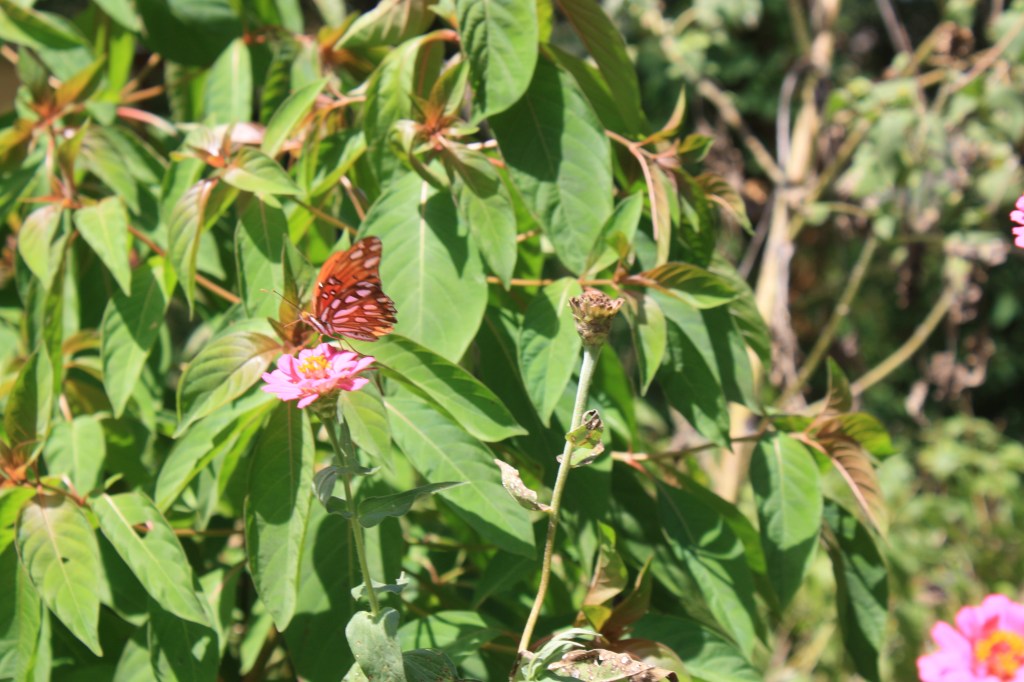
Orange and silver, they are easily recognized. The new butterfly will spend its winters in the most Southern states and in Mexico. It can not survive freezing weather.
While the passion vine is its host plant many of our common summer plants are its nectar choices: butterfly bush, coneflowers, lantana, zinnias, and salvia to name a few.