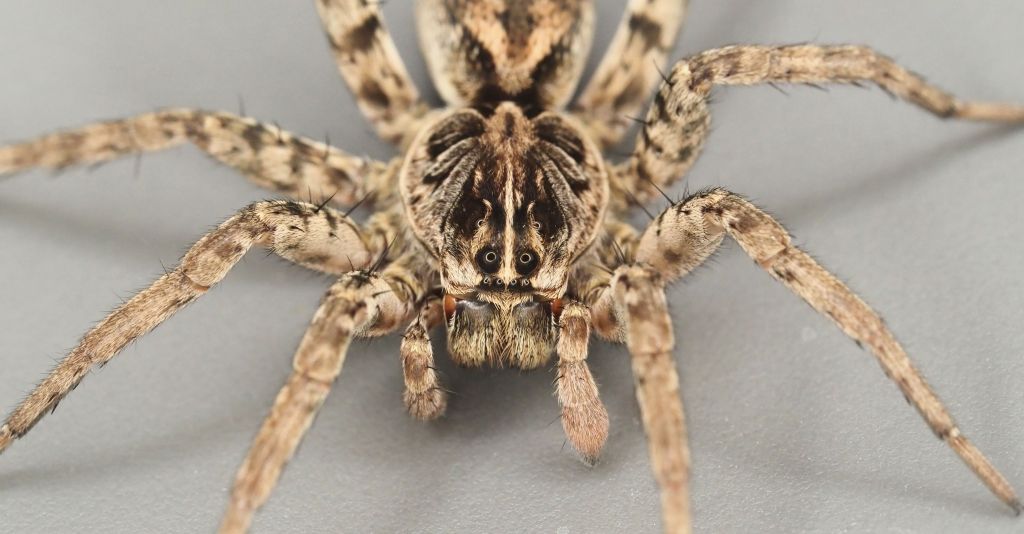
I’ve been checking my local Hogna ‘incognita‘ spiders since late last year and looking forward to the time when I can get some good photographs of adults. They’ve already started to grow rapidly, and at 5:15 AM on June 15 I found my first sub-adult male. A few more molts and they’ll be adults!
More good stuff outside. Grab your camera and go look.
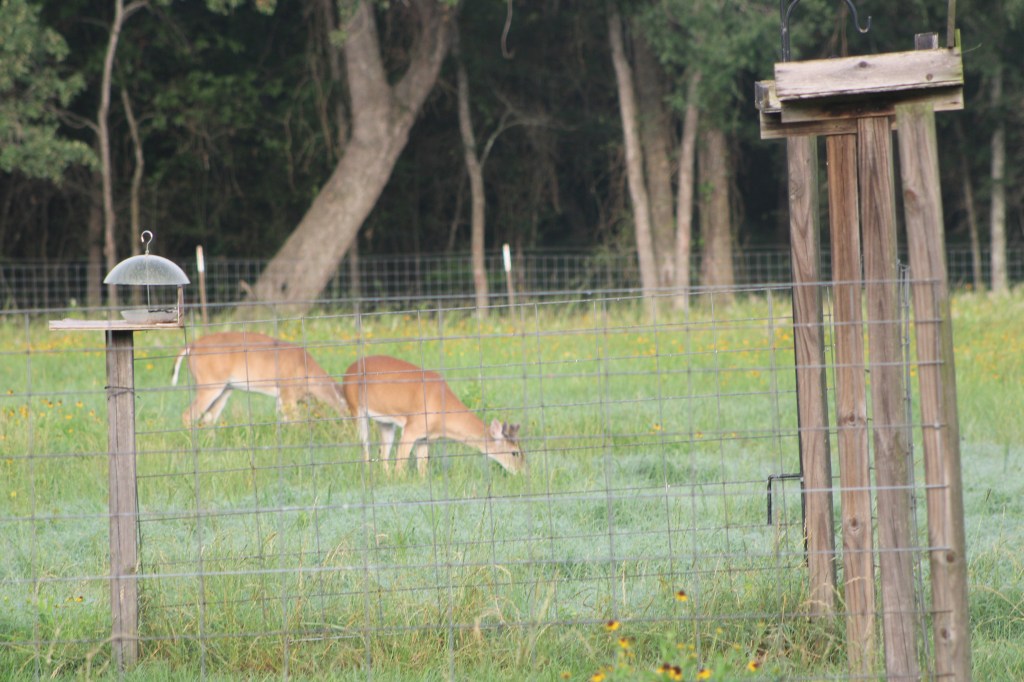
I had just put out some bird seeds for the squirrels and the Doves. I put some for them on the ground to keep them from crowding the bird feeders.
I don’t know if you are aware of it, but White-tail bunnies (cottontails) like bird seed! I was surprised also. But they do. They come every day now. I had a hard time getting a photo though, because they wanted to run if I got too close. Sometimes there is a fight between everyone wanting the seeds, including Doves, Cardinals, Blue Jays, squirrels, and many others.
Also, on our front porch is a nest full of baby Phoebes just about ready to leave the nest.
Here’s one of their parents watching them dutifully from our doggie yard.
Then while on my walk, I found a Red-eared Slider laying eggs down by our front gate.
What a Spring and Summer we are having. The rains have produced abundant field grass and insects. Eat up my friends. And please, eat all the mosquitoes you can!
I found this beautiful moth (Antheraea polyphemus), on our kitchen window. I took two photos outside and one from inside the house. It was 5 inches across.
A beauty for sure. It didn’t like me taking its photo, so it took off right after the last shot.
It’s host plants are ash, birch, grape, pine, maple and other woody plants.
It has two broods per year but it is rarely seen, because it is on trees and hidden from birds.
You just need to always be looking out for Mother Nature’s gifts.
You just never know what might pop up, do you? I’ve seen some strange things on my little slice of Heaven, right here in Milam County.
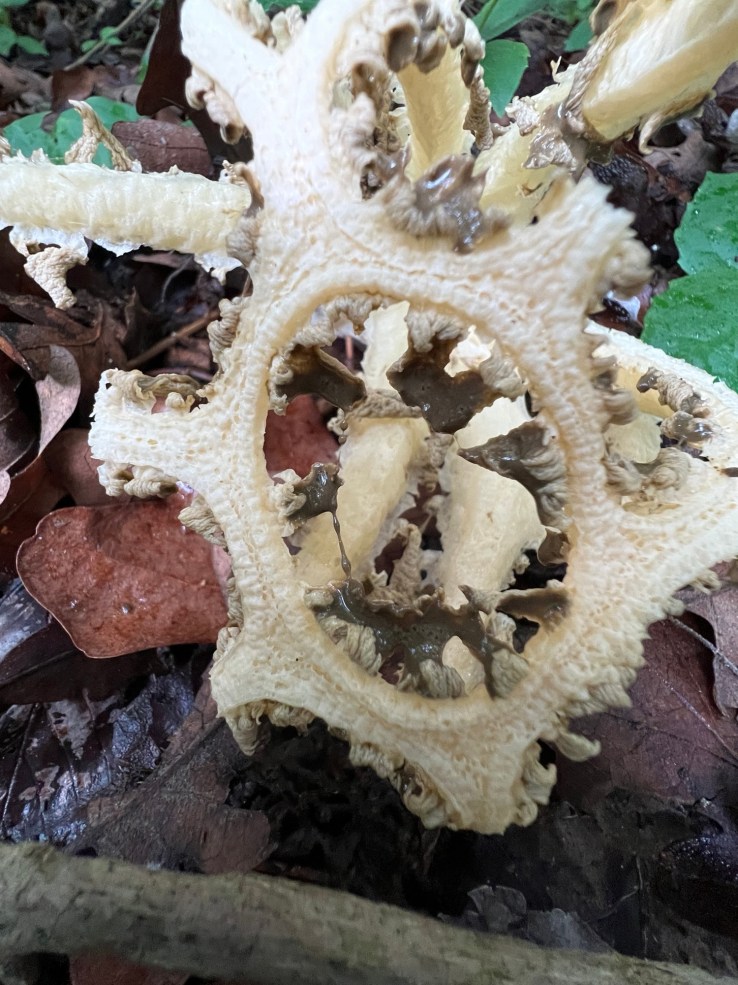
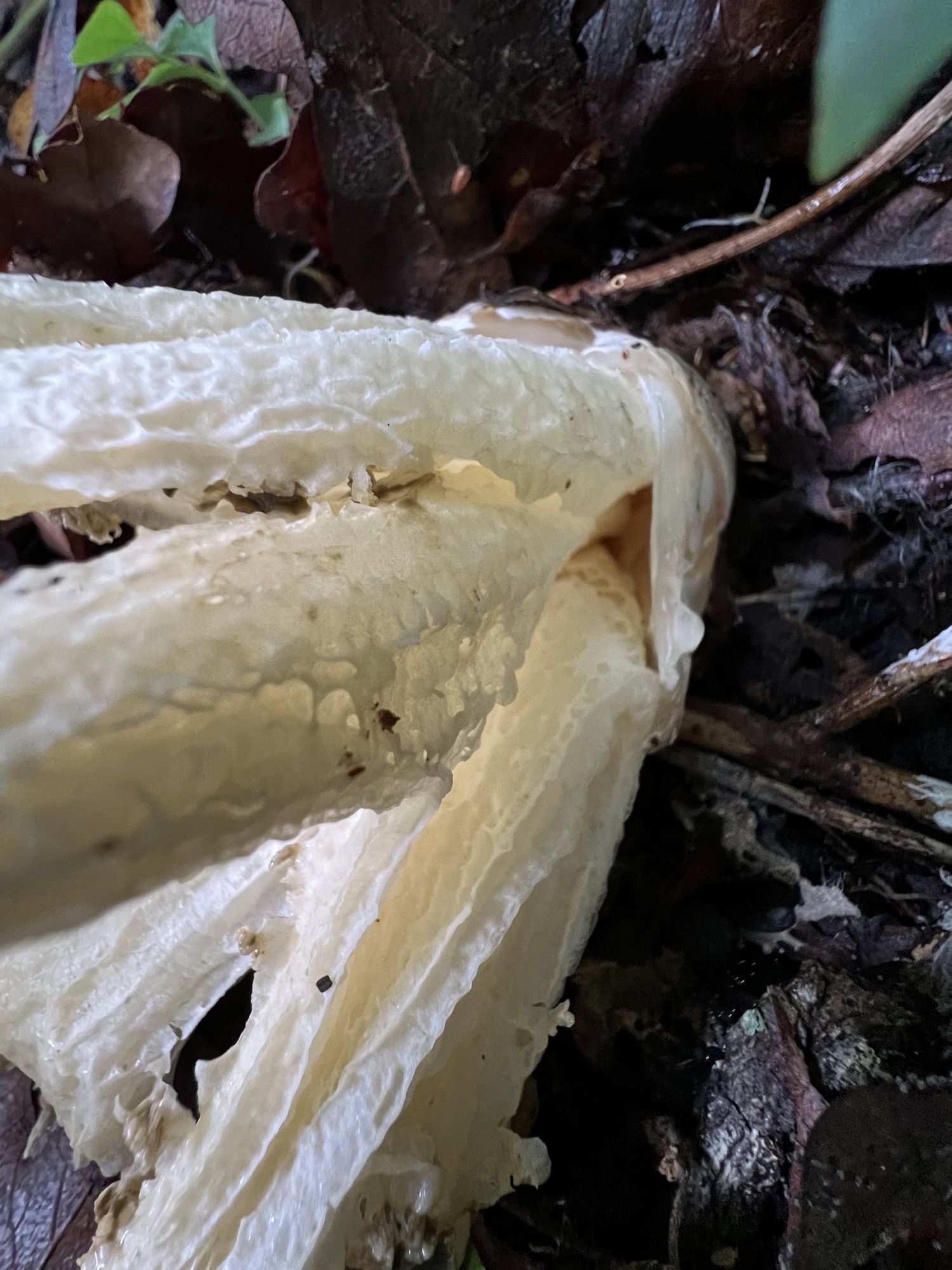
After a whole lot of rain, the oak leaves are coughing up quite a few interesting mushroom/fungus spores. I was cleaning one of my bird baths and spotted something in the tangle of yaupon, Japanese honeysuckle (no, I did not plant it!), mock orange, and who knows what else. It looked like a bunch of decaying celery to me. On closer inspection it looked more like the embryo of a space alien from a dark planet.
Of course, I couldn’t ignore it, just not in my nature. So, pushing and pulling the tangled limbs away, I crawled through the low tunnel with my trusty camera phone cocked and ready in case this little monster tried to attack. Fortunately, it didn’t. In actual fact, it was “rooted” to the ground. Had I known what it was I would have tried to dig it up.
Not nearly enough camera snaps and some pretty wet knees later, I edited my pictures and immediately posted them; only four are allowed on the iNaturalist phone app. In less than five minutes, a guy in Sweden identified it for me. I had entered it under the genus Blumenavia but @nSchwab took me a step further with Blumenavia rhacodes.
Not too much later, @masaki_hamaguchi from Hokkaido in Japan confirmed the identity for me. At 10:29 am Texas time, Masaki much have been burning the midnight oil like my friend LJC. I’m too lazy and really don’t care to figure out what time it was there. You techy types can figure it out if you want to. Thrilled to have my baby alien identified I quickly agreed with them.
More pictures of Blumy
Enough of the excitement of discovery. I proceded to dig deeper and found out that @loganwiedenfeld is at the top of the leaderboard as the top observer of “Blumy” with the massive number of three! Yes! 3! Three! The total observations on iNat is 37! Yes! Thirty-seven! This little old lady from south Milam, Texas has joined a pretty eite group with nothing more than a keen eye for spotting stuff! No months of observation, no collecting data, just plain dumb luck!
Just 37!
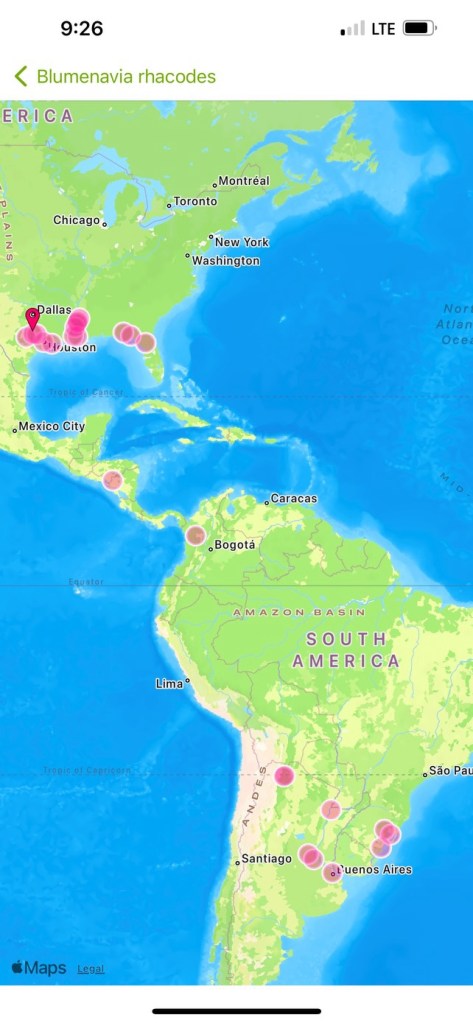
There’s not much information about Blumenavia online. Wikipedia simply says it’s “a genus of fungi in the family of Phallaceae.” The genus contains three species in South America and Africa. iNaturalist has a map locating sightings along the Gulf Coast of North America. A. Moller apparently named it in 1895.









 Nature Along the El Camino Real