Hummingbirds: Feeders Aren’t Necessary to Attract Them

by Carolyn Henderson

The only time that I find being outside tolerable during this long heat wave/drought is early morning or late evening. I think Hummingbirds agree with me. And I don’t feed them intentionally. 

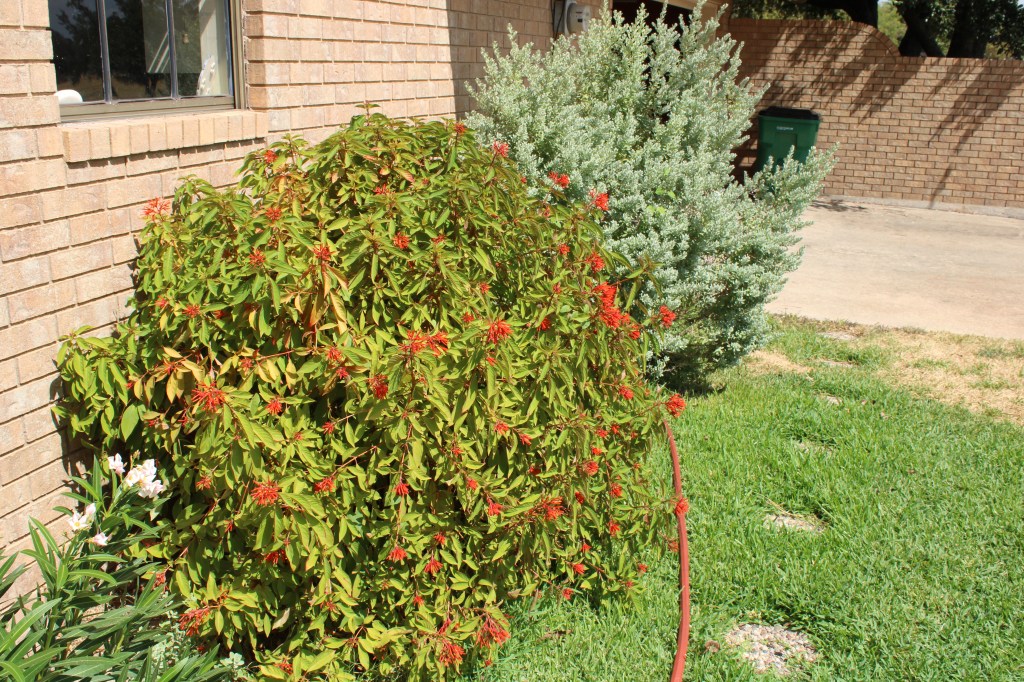
I stopped putting out bird food of any sort several years ago after I saw my sometimes-outside cat, with a Hummingbird then a Yellow Rumped Warbler in his mouth. I decided to limit his pickings as much as possible. However, I did plant a Mexican Honeysuckle bush from the El Camino Real Texas Master Naturalist Wildscape, and I also have a Fiery Hummingbird Bush (also called a Fire Bush) that was here when I bought the house. They both are in full bloom now, and Hummingbirds and several types of butterflies are very fond of feeding on them. The multitude of wasps that I have nesting at my house like them, too. 

These two bushes, my Crape Myrtle and a couple of Mexican Hats are all in bloom now. These plants are heat wave tolerant, feeding birds, butterflies, Western Honeybees, and three types of wasps. I only see the Hummingbirds in the very early morning and evening. They come in groups of three to four. I believe they are the Ruby Throated version. Three of them have white undersides and one, that I finally got a photo of this morning, looks to be Ruby Throated (according to iNaturalist). I’ve been trying to get photos of them for a few weeks, but I never have my camera ready at the right time. It seems that if they see that I have seen them, they head for the tallest trees. 

Hummingbird zooming in on Fiery Hummingbird Bush

The Crape Myrtle, which bloomed late this year, attracts mostly wasps and honeybees. I normally have a Texas Purple Sage in bloom that the bees really like, but it has not put out more than 5 or 6 blooms a few times. The Mexican Hats are just about done for the year. Luckily for the feeders, the Mexican Honeysuckle Bush and Fiery Hummingbird Bush bloom until it freezes – which may not occur this year. 

I must say, being able to watch the birds and butterflies eat without having to frequently clean out the feeder is nice. They really like my new bird bath, too. They, along with Robins, Blue Jays, Doves, Cardinals, and Mockingbirds have become very fond of it. They drink it and cool themselves off in it. 

Mosquitoes in the Birdbaths

by Donna Lewis

Lately, I keep hearing on the news about West Nile Disease and that you should dump out any standing water. While there is some merit to this statement, it also makes people think they should not have bird baths out. Wrong…

Bird baths also add beauty to the garden

Many items that hold standing water like old tires or things laying around in junk yards that can hold water probably should be addressed.

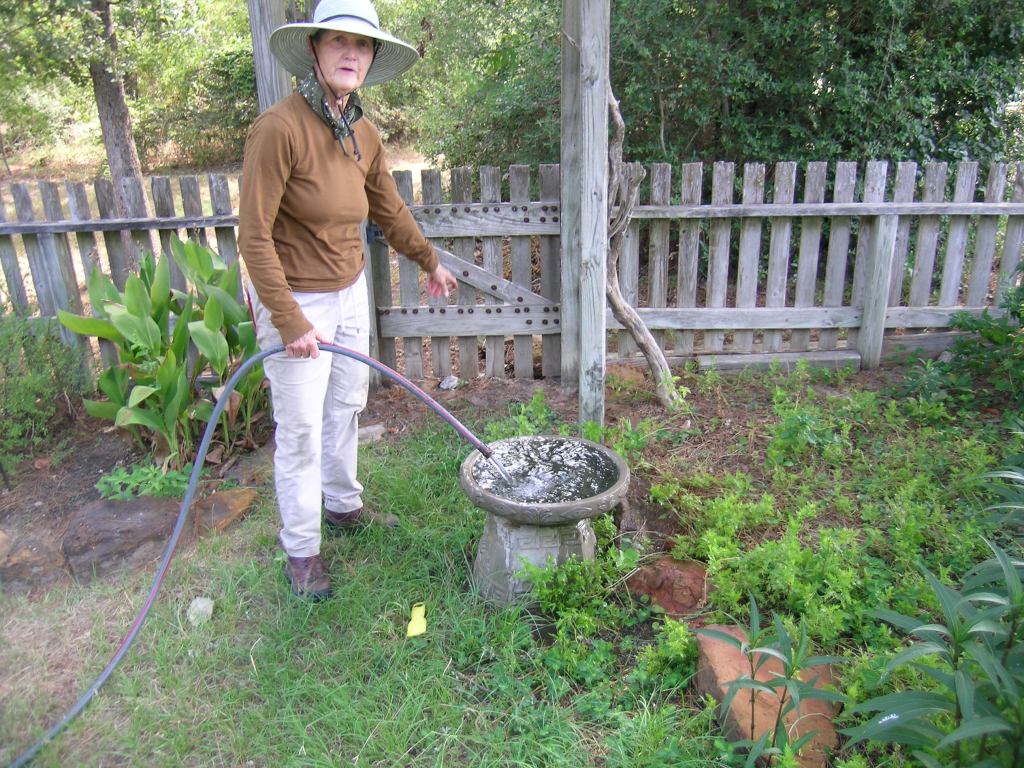
Please do not include bird baths in this category! We are in a severe hot weather event and birds could use our help. Putting out as many containers that hold water as possible could save the life of a bird, a bunny, or any living creature. I am also including your pets if they must be outside.

I have many different types of bird baths on our property.  Some sit directly on the ground for bunnies and the birds.

Different kinds of bird baths

It is simple to keep the water safe for humans and the wild things. Note that it takes about 10 days or so for mosquitoes to hatch from a standing water source. Running water does not generally pose a threat, because the larvae or eggs are washed away if the water is running.

Of course, bird baths, which don’t have running water, CAN be a target for mosquitoes. BUT it is so easy to keep that from happening.

First, in this heat, shallow water will evaporate long before 10 days is up. But we probably don’t want to let our water for our friends dry up.

The easiest thing to do to stop mosquitoes is to just dump the water out every day and fill it with fresh water. Problem solved. How hard can that be? Fresh water is good for the birds and animals, anyway.

Rinsing

You also buy mosquito dunks at the hardware store. These work well but can cost a lot.

Other Birdbath Maintenance Recommendations

If you have a lot of algae, you can easily clean it with a plastic putty knife. No cleaners are needed. Or you can just rinse it out, the animals don’t care. if there’s algae in their water. Think of it from their perspective.   

Scraping excess algae

The water is safer for the smaller birds when it is no deeper than four inches.

If you can put the water container under a tree or have some shade over it, that will be better, and the water won’t get as hot.

A shady bird bath

Yes, cats can be a problem for the birds if the container is near a tree or bush. They love to hide and then pounce. It’s their nature.  Cats need water also, and love to get a drink and a snack at the same time. So be cautious where you put your containers.

A bird bath with plenty of space around it

With just a small effort on your part, our wild things can be helped during this extreme weather. All things need water.

My National Moth Week 2023

by Linda Jo Conn

During the week of July 22-31 hundreds of Texas Master Naturalists visited parks, prairies and preserves or stayed at their private homes to observe and report moths (and other species of insects) attracted by light in the nighttime.

While many used the preferred black or mercury vapor lights powered by electric plugs or batteries, special gridded cloth sheets, and specially constructed PVC frames to set up a viewing stage, my personal mothing setup is quite simple and is ready year-round with the simple flip of a light switch. 

Although an LED light is not a preferred light source for moths, it is what is screwed into my porch light fixture, and it does draw insects. Beneath it I have taped a couple of sheets of ¼” graph paper. The graph paper stays there year-round, with replacement as needed. I am surprised that no one has yet asked me why I have graph paper stuck on the side of my house.

The early night temperatures above 90° and extremely dry local conditions were worrisome, but I was able to report several moth species to National Moth Week 2023.

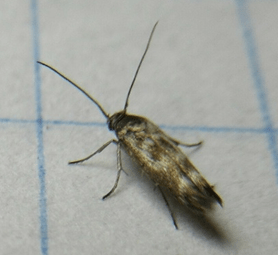
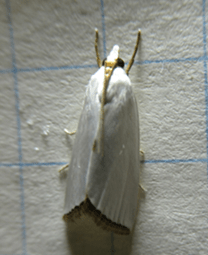
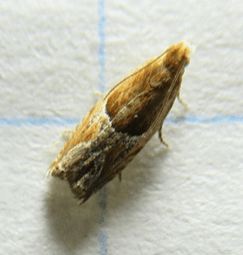
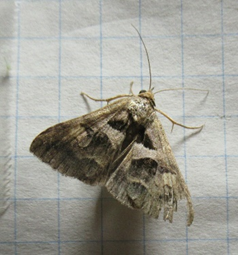
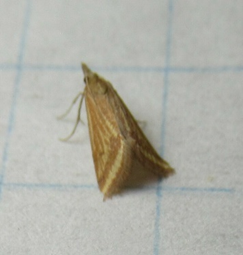
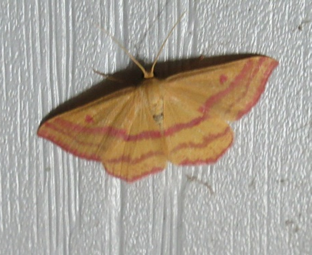
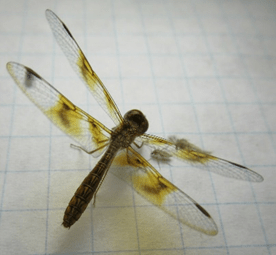
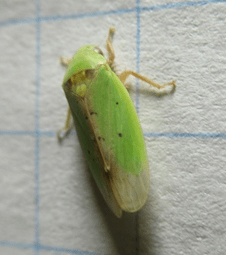
Among the moth species I observed were these: 

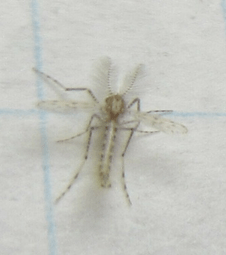
Of course, along with moths, other insects, including hundreds of non-biting midges, were drawn to the bright light.

You may view my moth observations made during the week at: https://www.inaturalist.org/observations?project_id=163019&ttl=900&place_id=any&verifiable=any&subview=grid&user_id=26296.

Oh the Sounds of Summer – Cicadas

by Lisa Milewski

Growing up, my siblings and I would hear the infamous sounds of summer. Yes, the Cicadas. We would always hear them but never see them.  We would see their shells once they emerged, usually on trees but not a live one. 

Cicada shell

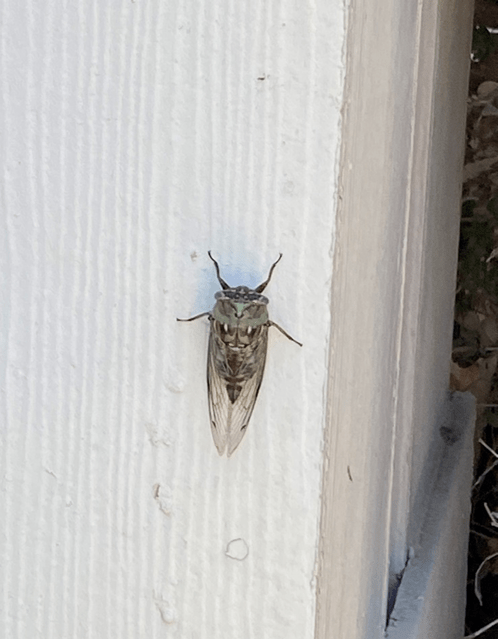
To my delight, my son was playing basketball in the front yard and rushed in to tell me I might want to see this big bug. My eye for birds, insects, lizards, etc. has rubbed off on my children annd husband; I love it! They know how excited I get. Low and behold, it was a cicada. I slowly move in for a close-up picture to not scare it away. Yay, I got it! 

I posted it in iNaturalist and identified it as a Resh Cicada.  Per iNaturalist, the Megatibicen resh, the resh cicada or western dusk singing cicada, is a species of cicada in the family Cicadidae, found in North America.

An internet article on Cicada Mania stated it’s known as the Resh Cicada because of the markings on its back resemble the Hebrew symbol Resh “x” (Hebrew letter that looks like an upside down “L”). The Resh Cicada has been documented to be found in Arkansas, Kansas, Louisiana, Mississippi, Nebraska, Oklahoma, South Carolina, Tennessee, and Texas. During the molting process, up until the cicada’s body sclerotizes (hardens), the cicada’s body is leaf-green (camouflaged like a hanging leaf).

Lisa’s Watering Hole

by Lisa Milewski

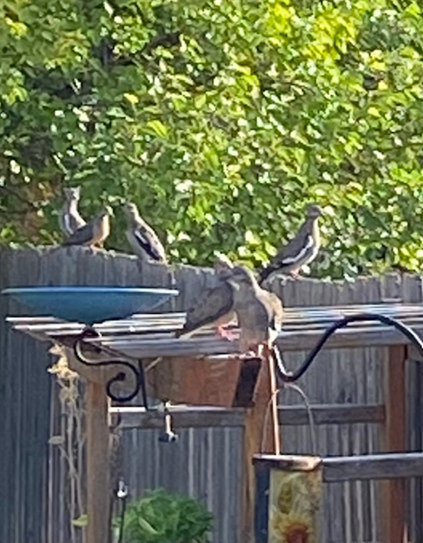
During this heat, I have been filling the bird baths once or twice a day while enjoying watching the birds drink, splash, and bathe. So far, the birds I mostly see are cardinals, blue jays, northern mockingbirds, finches, house sparrows, mourning doves, white-wing doves, European Starlings, ruby throated hummingbird. Even the fox squirrel, cottontail rabbit, and bees seem to appreciate the water left out for them. Here are just a few that I have been able to get pictures of so far.

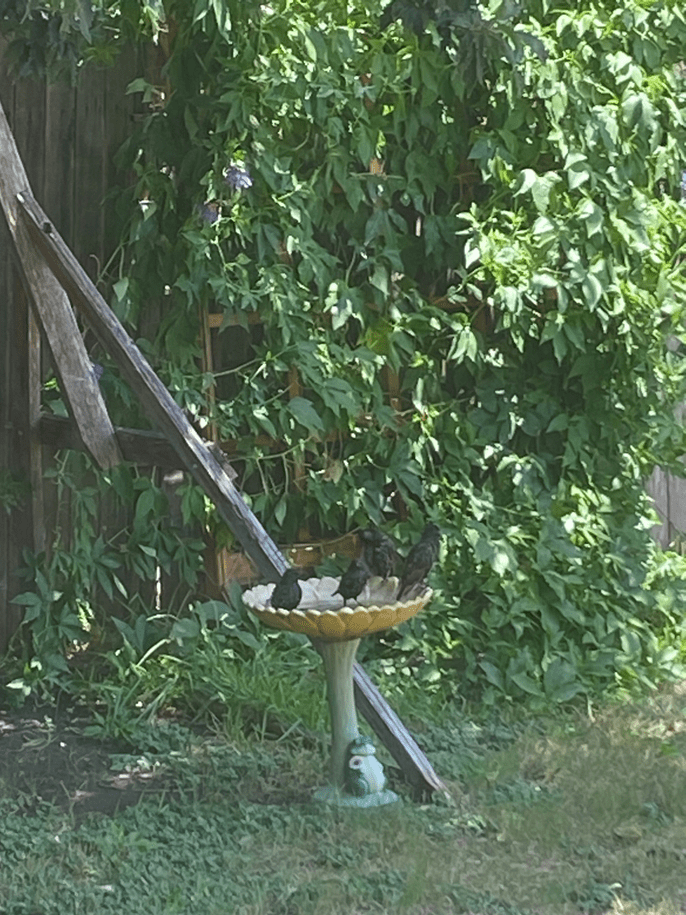
European Starlings

You don’t want to know my nickname for the doves. Let’s just say that I have to wash my driveway and car often.

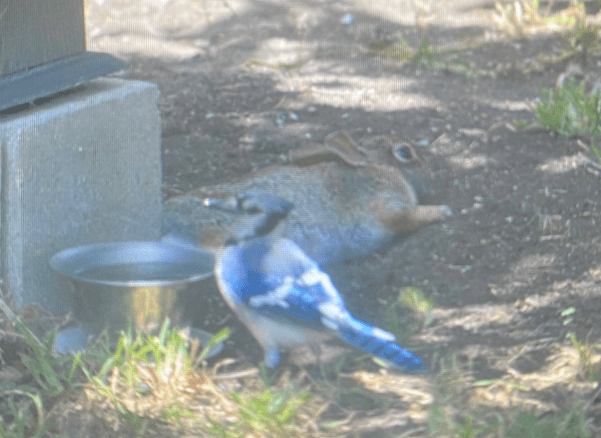
“Peter” the cottontail rabbit in his favorite spot sharing his water with “Jay” the blue jay
“Peter” getting a drink

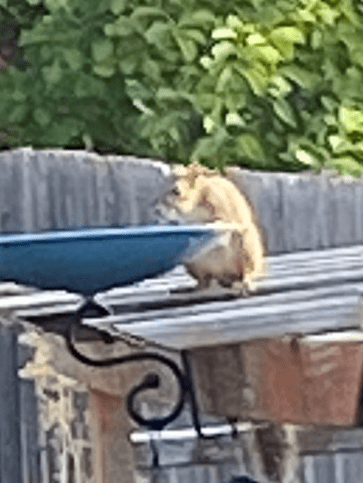
Here’s “Rocky” the fox squirrel getting a good drink

I found that with these larger bird baths, it’s easier to fill them with rocks and top with soil and then place smaller bowls in them. This makes it a lot easier to clean them out daily and refill.

And here’s my favorite, “Ruby” the ruby throated hummingbird drinking from the hummingbird feeder.

Remember to wash out the bird baths and change hummingbird feeders daily or every other day in this heat. We want to help our friends, not make them sick.