Wolf spiders can be a winter activity; just use a headlamp at night when it’s relatively warm and humid.
Last Wednesday, I went out there to see what I could find, and came up with five species. Most were juveniles of course, and now is a good time to photograph them as they grow.
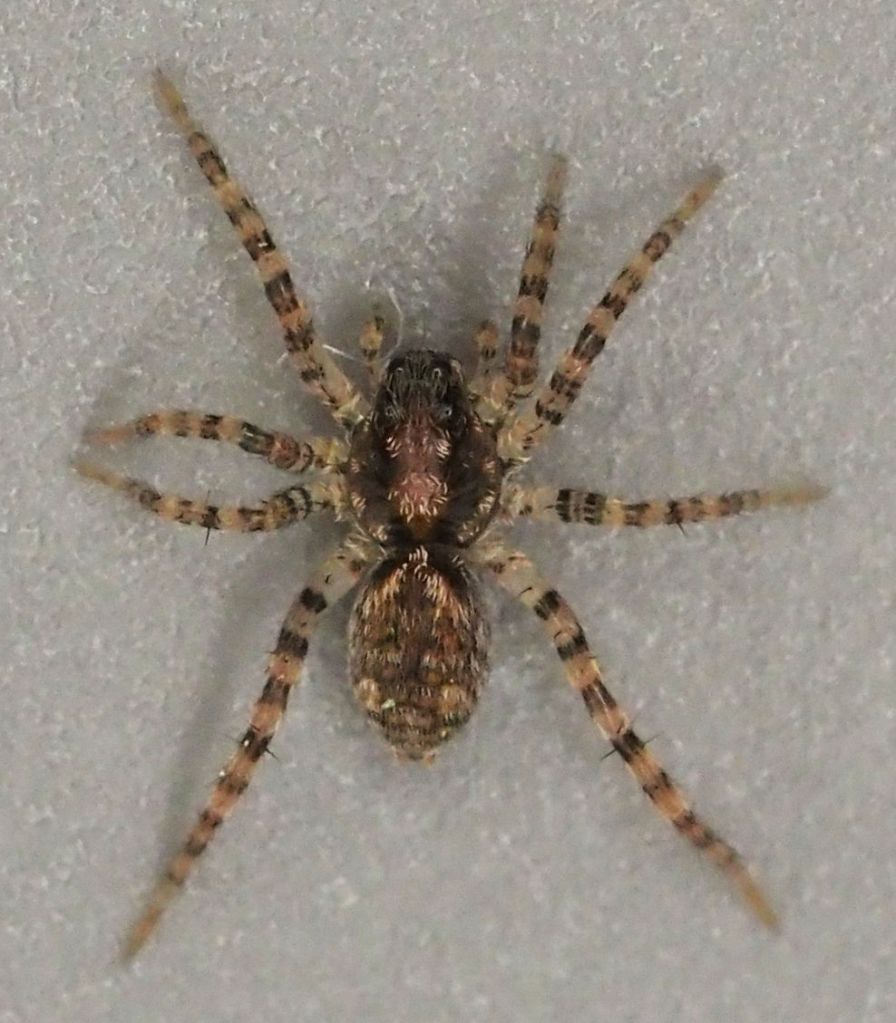
The ones I saw covered most of the possible size range. The smallest had a body length of 0.11″/2.8 mm. At this size it could still be with its mother. The legs are short (fully stretched out in the photo) and they don’t run very fast. Their best defense is to pull their legs in close, stay still, and pretend they’re a wee lump of nothing worth notice.
Juvenile
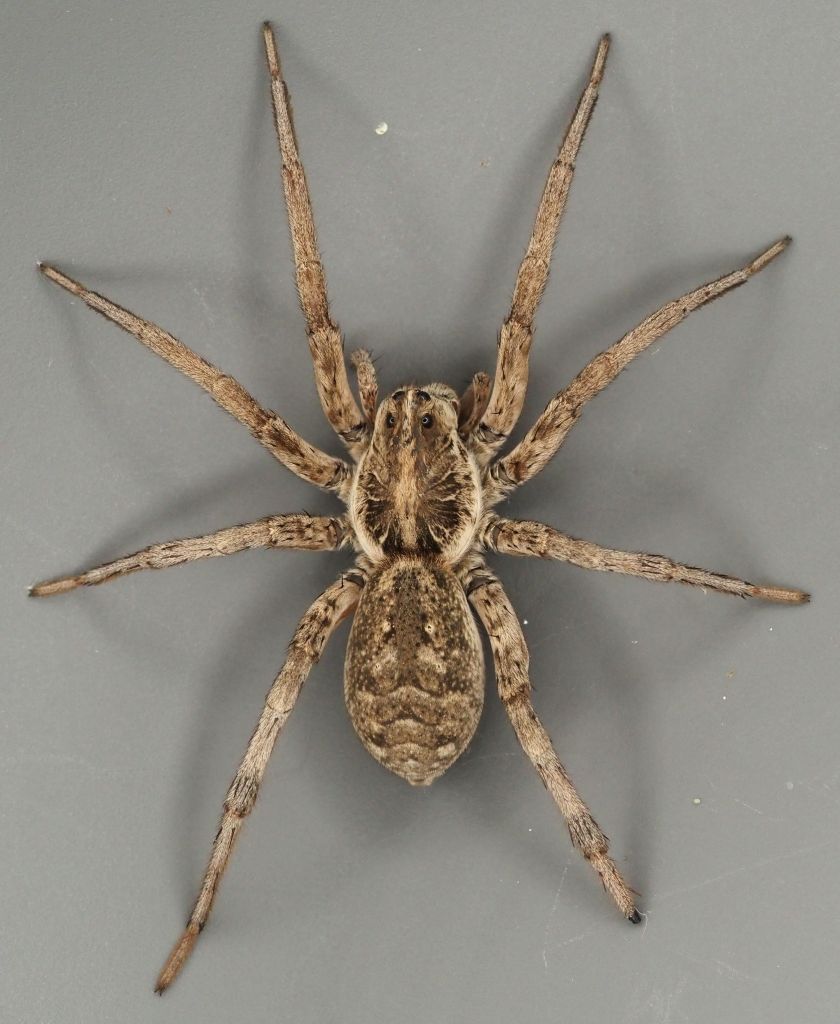
The largest had a body length of 1.1″/27 mm. I’m still not certain which of two species it is and should have used a larger container for photos so she could stretch out her legs and show me another clue of her identity.
Adult
Doing the math suggests that the weight of 1,000 of the little ones would equal the weight of the large one.
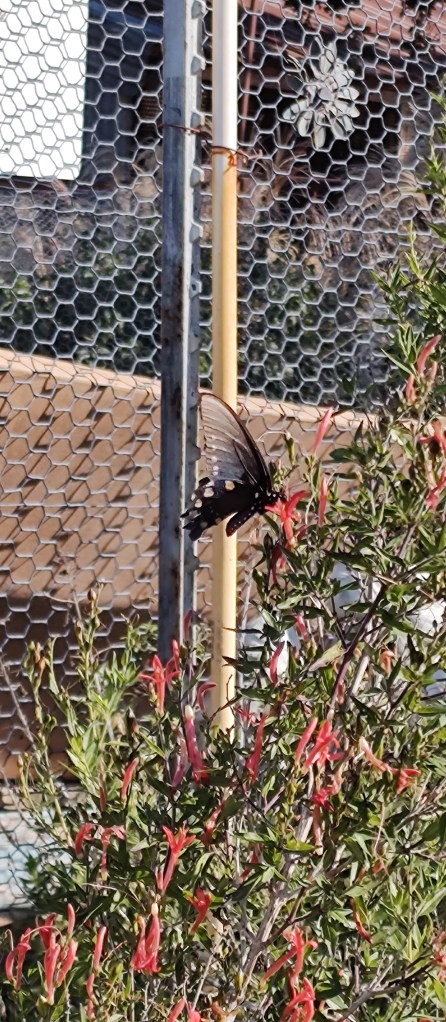
Butterflies were feasting on the abundance of blooming plants Saturday during the annual El Camino Real chapter Texas Master Naturalist Nature Days.
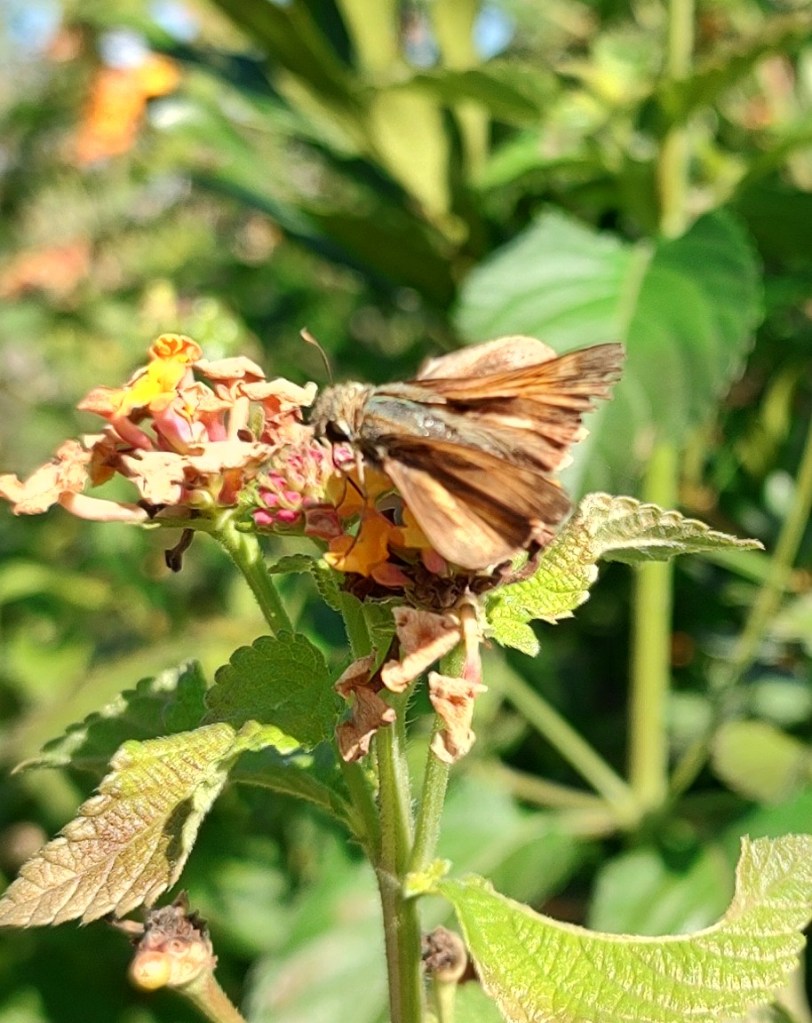
We did have a nice number of people, but we were overwhelmed by butterflies and bees. I got photos of nine different butterflies and a few more types were seen by members. We saw one emerging from its chrysalis, but most were gorging on the many, many different blooms.
I wasn’t the only photographer. A teenage girl was also taking many photographs. Her younger sister was collecting blooms.
If you’d like to see the many butterflies, bees, grasshoppers and blooms, Nature Days continues Saturday, November 11, from 10 am to noon. It’s located at the Bird and Bee Farm at 1369 County Road 334, Rockdale, TX 76567.
By coincidence, two different groups of El Camino Real Texas Master Naturalist members got to witness the lifecycle of the Gulf Fritillary butterfly (Dione vanillae) up close and in person on Saturday, November 4. Here are our stories.
From Carolyn Henderson
Six members of our chapter got to see a Gulf Fritilary emerge from its chrysalis Saturday at the El Camino Real Texas Master Naturalist Nature Day aththe Wildscape project.
The chrysalis was on the gate entrance to the Wildscape. Donna Lewis noticed it and Carolyn Henderson took the photos.
Traffic through the gate was heavy, but the butterfly managed to hang on and make its debut. The first photo was right after it got out. It was still wet. The second photo was taken about an hour later. It was still getting its bearings.
From Sue Ann Kendall
Coincidentally, I was camping at Buescher State Park near Smithville/Bastrop this weekend. I had taken many long hikes, led a guided nature walk with a group of people from a church, and made many iNat observations. But my best observation was made less than ten feet from our RV, while relaxing and knitting. Go figure.
My campsite view was of a mixed deciduous forest with a lake behind it. There was a lot of yaupon holly, oaks, hackberries, beautyberries, and cypress. Just a mile or so west start the loblolly pines.
We’re in a very woodsy campsite with lots of birds (very loud pileated woodpeckers for example) and I also enjoyed many butterflies wandering around, like sulphurs and red admirals. But one Gulf Fritillary was extra fun to watch. It spent a LOT of time right in front of me, at first on some straggler daisies (that stuff is EVERYWHERE), but then on a vine that I somehow had overlooked when I was taking note of what plants were growing at the campsite.
I watched as the butterfly kept landing on different parts of the leaves of the vine. I was a little slow that morning and wondered why it was so interesting, since there were no flowers on the vine. It dawned on me that the plant resembled a passion vine.
There’s a clue to the butterfly’s mission in this photo.
After the butterfly left, I went in to get a photo of the plant to identify it on iNat. That’s the photo above. I quickly realized there was more going on. Two caterpillars were munching away at one of the leaves.
Hmmmm.
I rushed back to my chair to investigate. The plant turned out to be the yellow passionvine (Passiflora lutea) that Linda Jo is always looking for on hikes. Hooray! And the caterpillars were Gulf fritillary caterpillars. Suddenly, the butterfly’s mission was clear. She was laying eggs. See the tiny yellow dot in the photo of the passionvine?
So, between Carolyn’s group and me, we’ve pretty much seen the entire lifecycle of the Gulf Fritillary!
Here’s what I learned from Wikipedia, which confirms all the things we’ve sen:
The caterpillar food plants–also called the host plants–for gulf fritillaries are members of the genus Passiflora. The adult butterflies use nectar from many flowers, including Lantana plants. The Passiflora host plants are frequently called passion vines; in some Texan counties where this butterfly’s population is high, gulf fritillaries will feed on specific species such as Passiflora lutea and Passiflora affinis. These passion vine plants are suitable host plants as they provide a good structure for larval host habitats which enables young populations of gulf fritillaries to be sufficiently nurtured and protected. The role of host plants is also integral to the oviposition of gulf fritillaries, as the female butterflies lay their eggs on or near the host plant.[8][9]
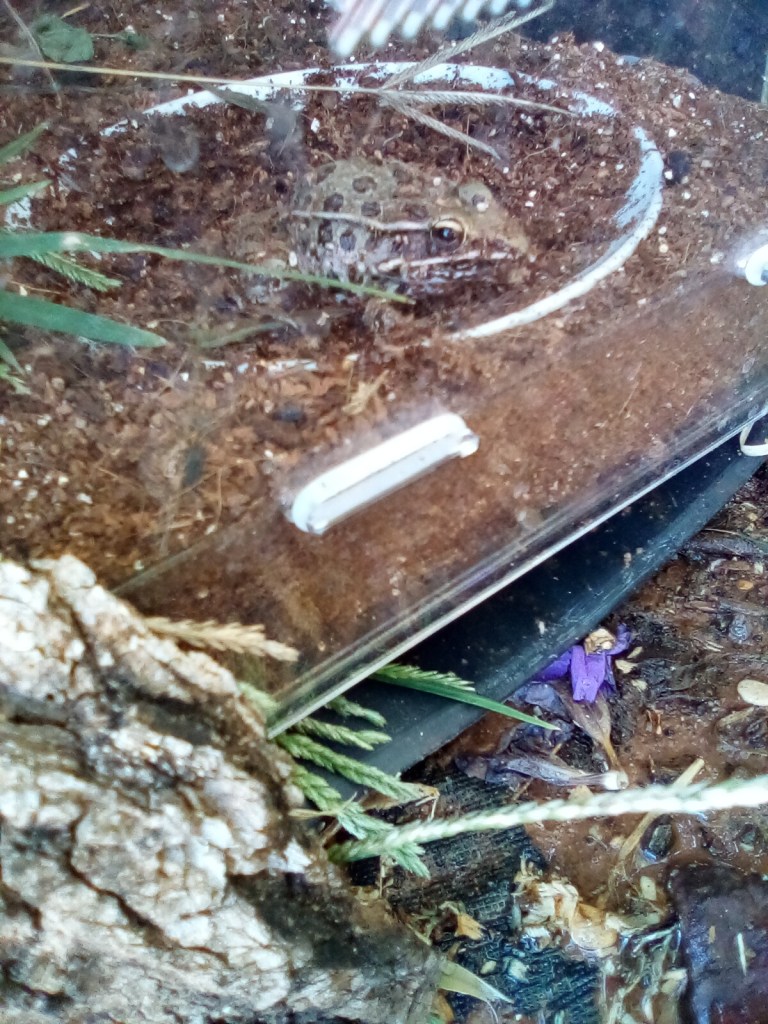
For several months I have been caring for a leopard frog that was hit by a weed eater and sprayed with roundup by accident. I rinsed him in water, but his leg was badly hurt. I put him in a small container with moist paper towels.
As he improved, I started letting him swim in a sink as I straightened his leg and foot.
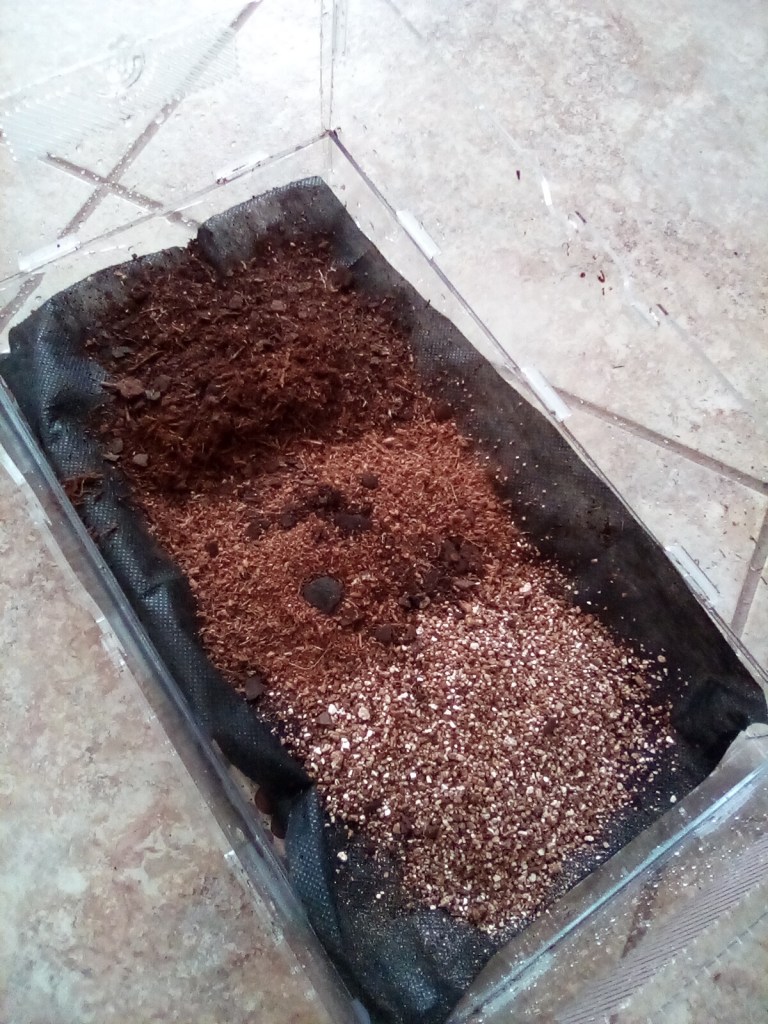
I bought and caught crickets for his food and purchased a frog habitat. He drank water through his skin from a dish.
I learned they are quite happy living like this, then I noticed he stopped eating. This is natural when they start to hibernate.
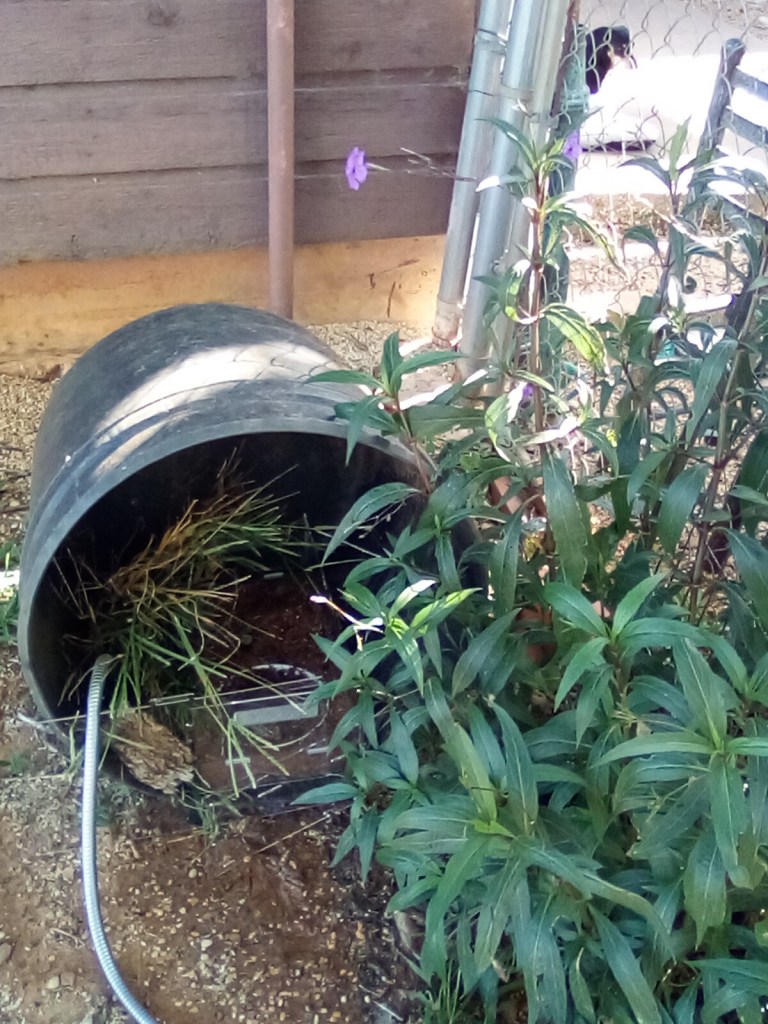
So, I made the decision to let him go, as it is cooler. I fixed a safe, wet outdoor habitat and still add crickets. I miss him – I would cover him up at night, open his window in the morning, watch him snatch the crickets, and enjoy when he would swim up to my hand.









 Nature Along the El Camino Real