Learning about Turkeys and Celebrating Our Members

by Sue Ann Kendall

For those of you who are not (yet) members of a Master Naturalist chapter, I just want to share how much you can learn and how amazing the people you meet can be. Last night was a great example. Our Chapter Meeting speaker was a young PhD candidate named Amanda Beckmann. She studies Rio Grande wild turkeys at Texas A&M. El Camino Real Chapter member and turkey enthusiast Cindy Rek introduced her and shared how she met Amanda thanks to her Master Naturalist connections. Here are my notes from the presentation.

Amanda shows us where her turkey feather samples came from.

Wild turkeys live here in the US and northern Mexico, while Ocellated turkeys live further south in Mexico and in Central America (they look like a mix between a turkey and a peacock). There are five subspecies of wild turkeys. Turkeys were domesticated in North America two separate times, and soon they were being moved outside their natural range.

In the 1920s turkeys were eliminated in most of their natural range and attempts to reintroduce them in the 1940s didn’t work. There was more success using translocation and introductions starting in the 1950s to today. Around 5 million in 2014.

There are now Rio Grande turkeys in the Western US and Hawaii. All kinds of turkeys are moving around, and hybrids are happening. Hunting all five subspecies of turkey is called a Grand Slam. Amanda’s research is to help map the subspecies using genetic data collected by hunters. She is interested in what we can learn about Rio Grande turkeys as opposed to the Eastern.

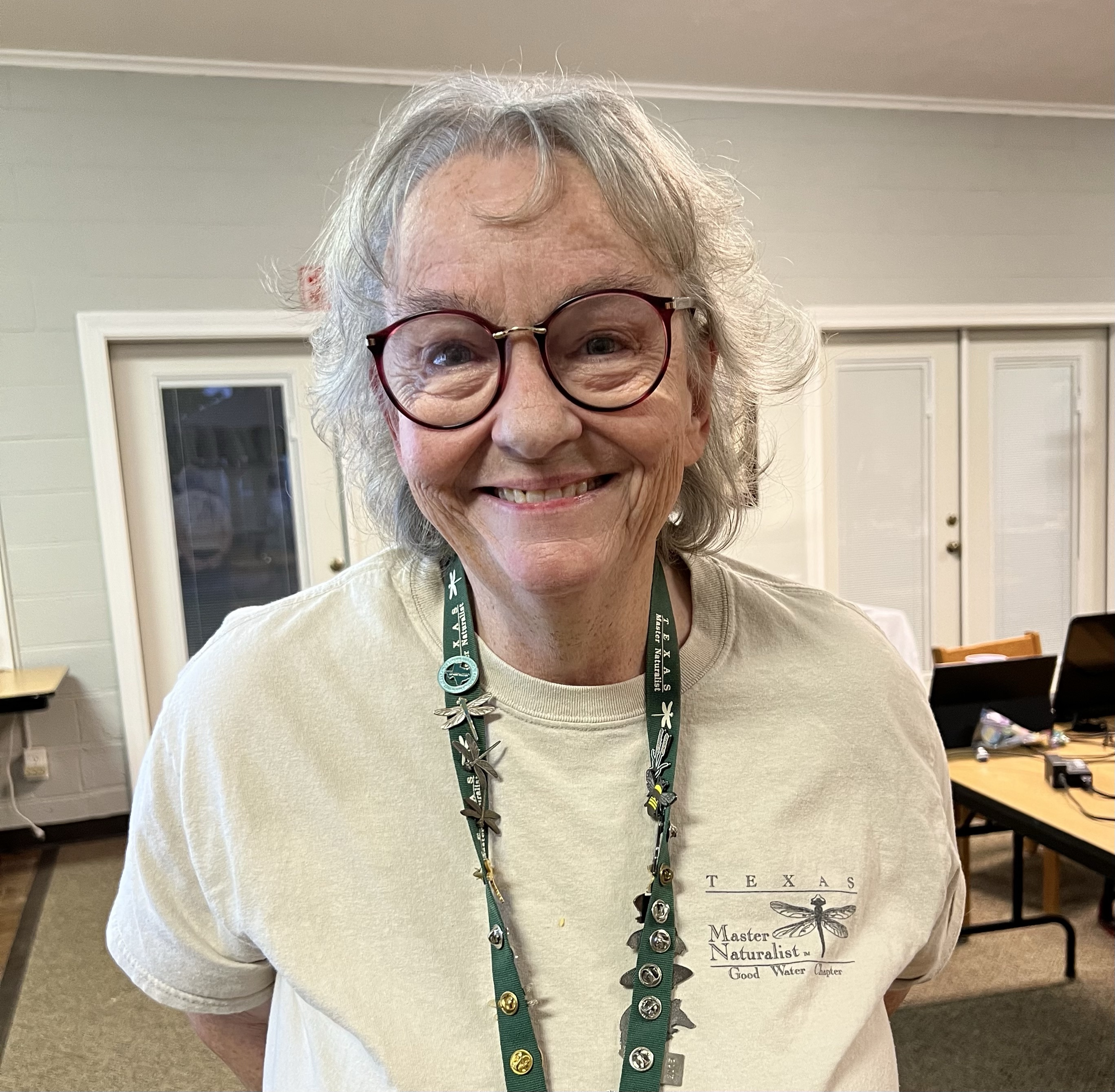
Notice that she has a cool turkey shirt on!

Baby turkeys are poults. They eat insects (older turkeys eat mostly vegetation). The breeding system of males involves gathering in large numbers called a lek. The Easterns don’t have as much of a lek, due to fewer open areas to group in.

Amanda’s research has looked into the effect of domestication and feral environments versus urban and wild turkeys, in different populations.

She also shared with us this resource for further reading: Illumination in the Flatwoods, which is a book and PBS documentary on poult behavior. The link is to Amazon.com.

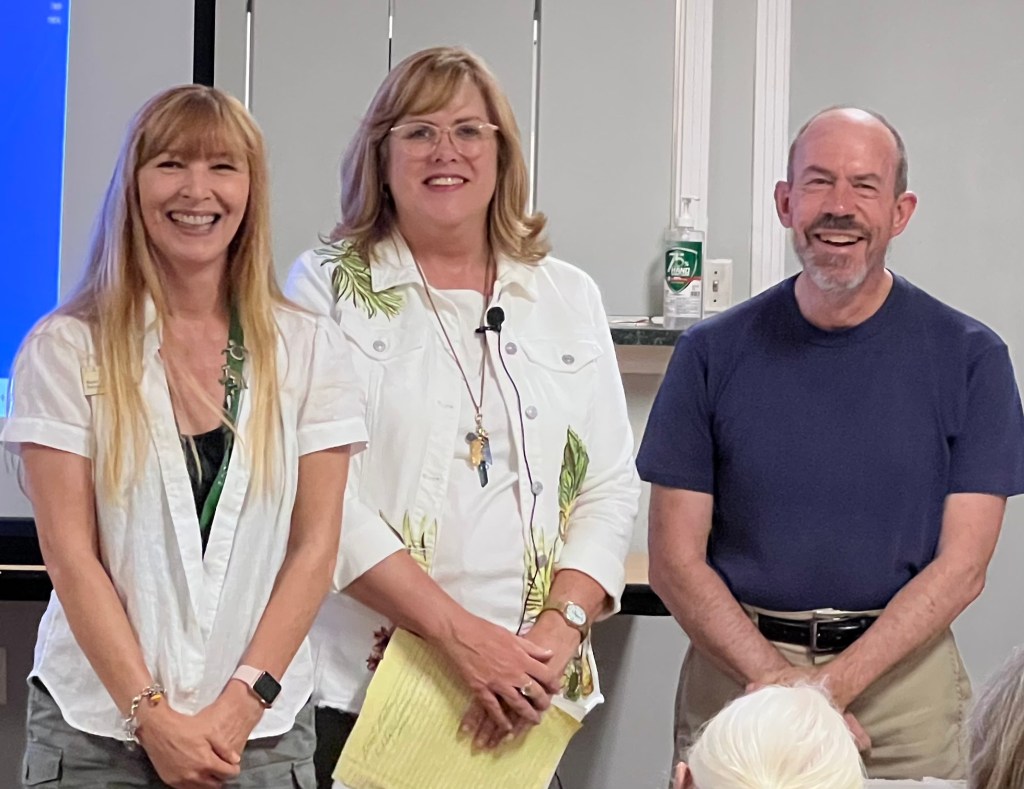
After the speaker, we held our usual meeting. I was struck by how much work goes into each meeting (I’m glad I was there to help our substitute sound man and A/V guy in his first solo outing!). The decorations our hospitality team sets out are always so pretty (this week was a beach theme). And it always impresses me how much hard work our members do to get their annual recertification pins! Plus, our hard-working record-keeper, Lisa Milewski manages to keep track of our hours, order pins, and make sure we have a clue as to what we are doing with our volunteer time. She’s always so cheerful, as is our President, Carolyn Henderson, which you can see in the photo. She can herd cats with the best of them!
While I’m gushing, I want to say that there were many kind things said about Donna Lewis, whose blog posts you all enjoy right here. She made the 10,000 volunteer hour milestone recently. That’s an incredible amount of finding monthly speakers, taking care of birds, speaking at events, writing blog posts, and much, much more. It’s great to have her as a friend and mentor in our chapter. We will get a photo of her NEXT month, I hope!
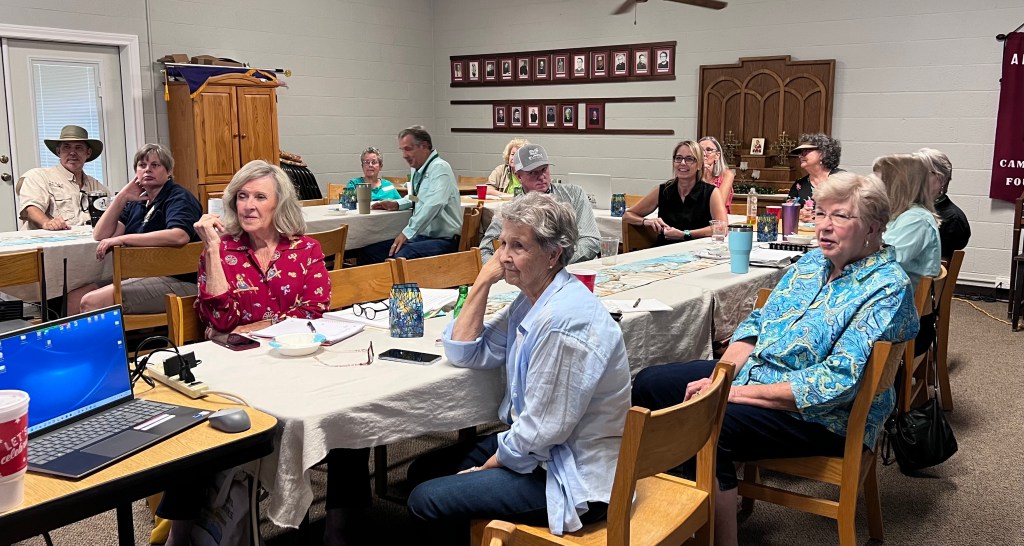
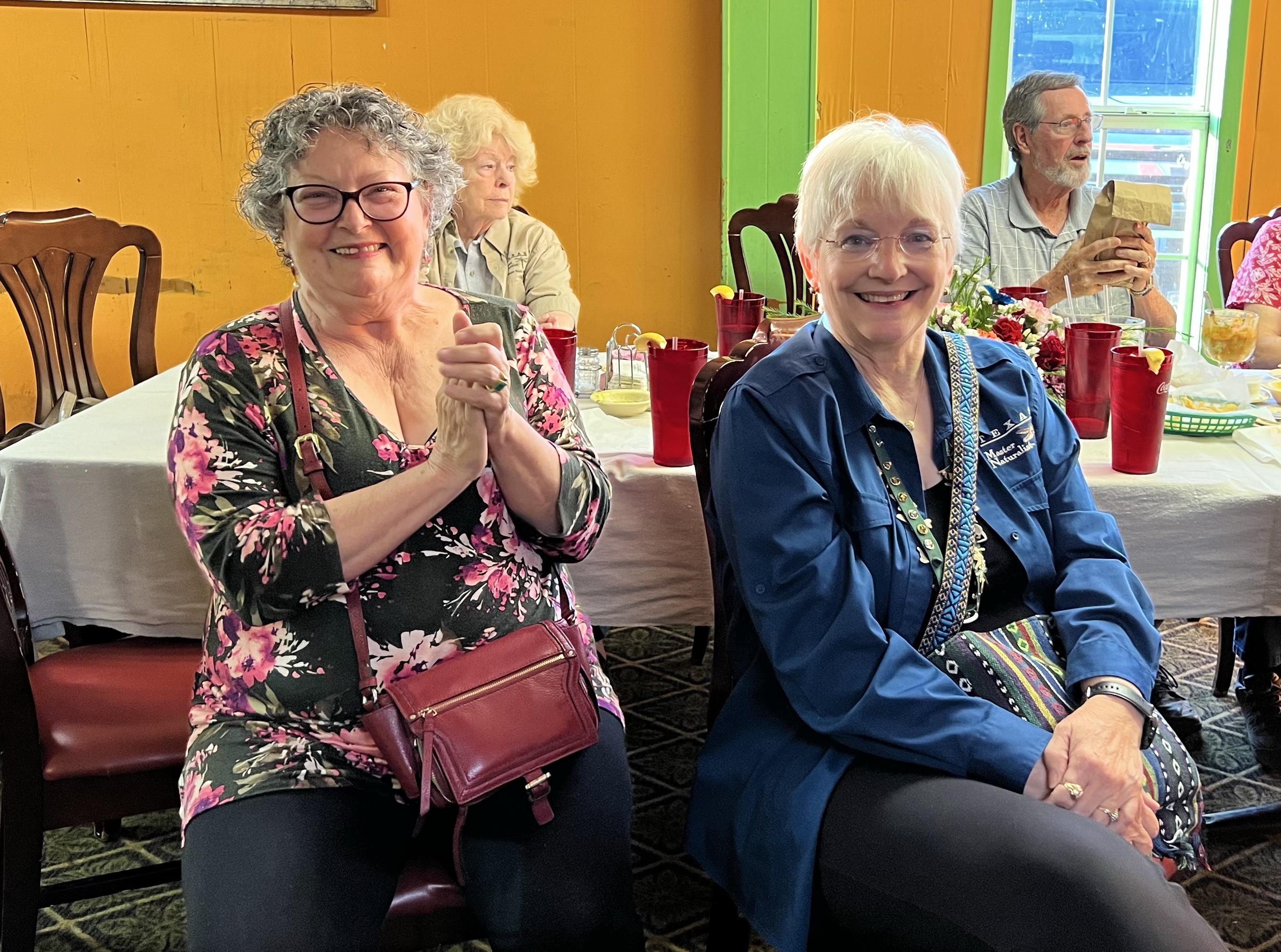
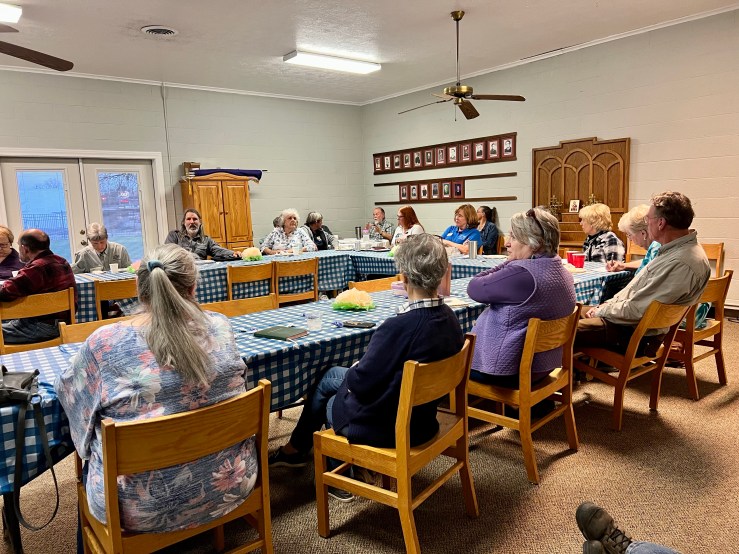
Members and visitors enjoy our meeting. We are lucky to have them all.

We had visitors at our meeting, too. You are welcome to come any time you’re in Cameron on the second Thursday of the month. We’re at the Episcopal Church meeting room with potluck starting at 5:30 and the speaker at 6. Come join us!
Congratulations to the Graduates!

by Sue Ann Kendall, chapter secretary

May 28 was a fun day for the El Camino Real chapter! We welcomed the new graduates from our ten-week training class that went on all spring. There was a LOT of hard work involved by the organizers, the support team from our chapter, the presenters at the classes, and of course, the students. We had a wonderful evening at Julio’s Restaurant in Rockdale to celebrate and have some fun.

group photo
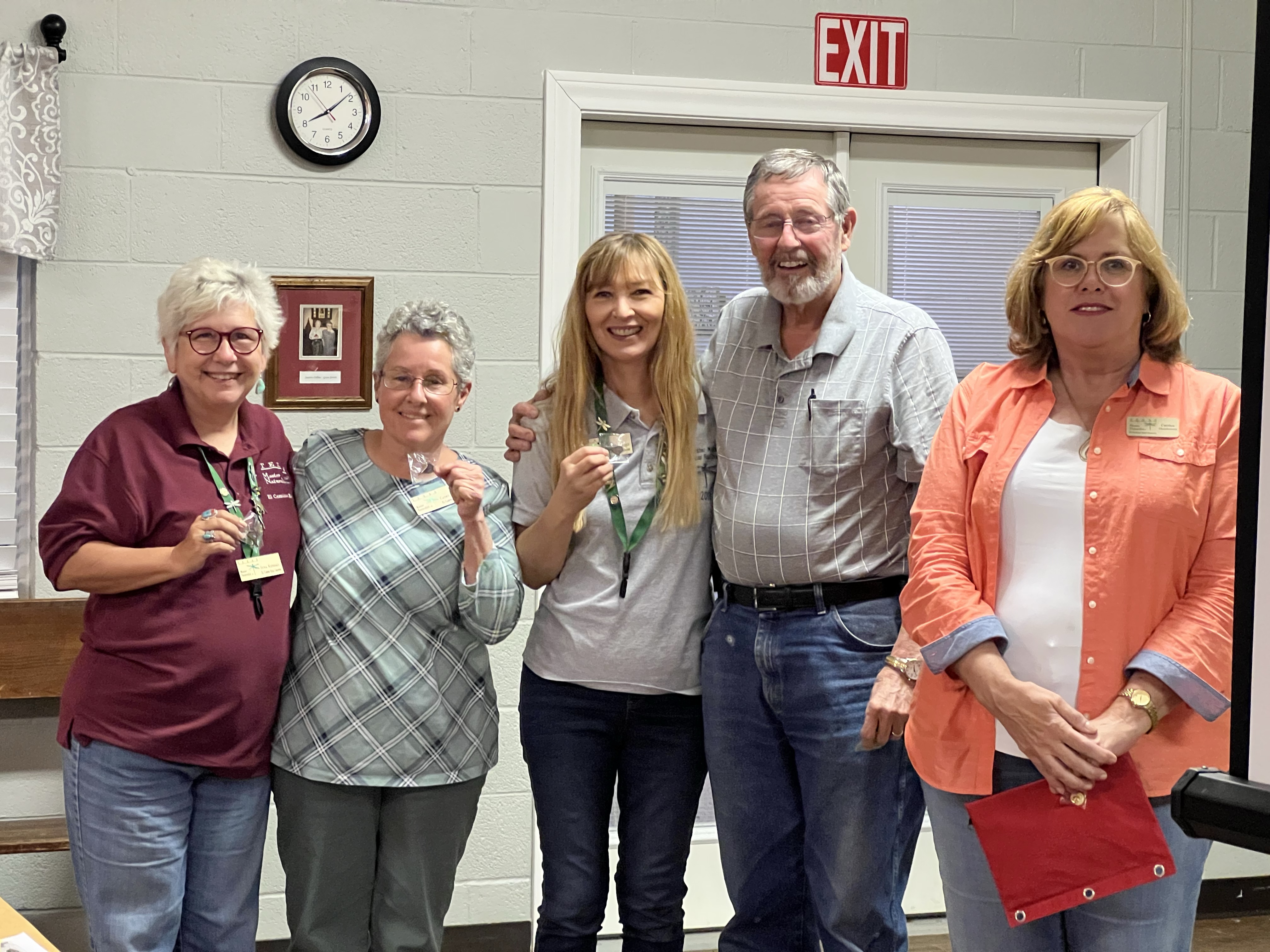
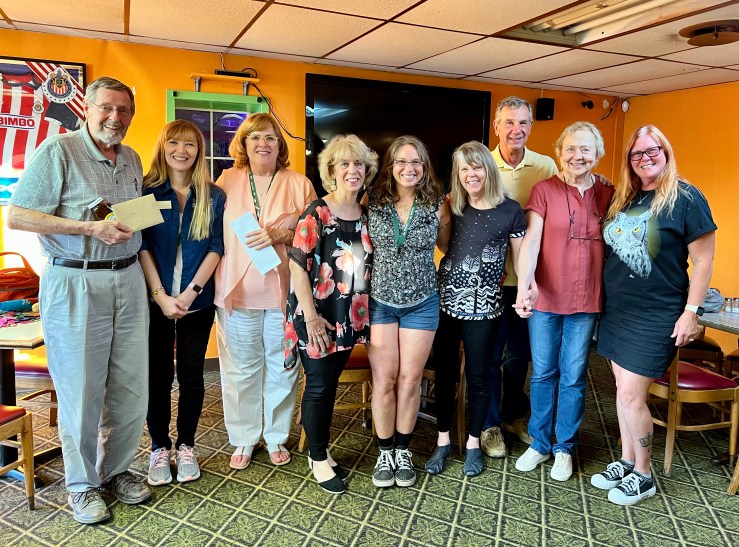
Our new members and the team who supported them on their journey.

First, I want to share the thanks that all us members extend to Kathy Lester, who organized the class, planned field trips, arranged for speakers, got shirts for the new members, and so much more. What would we do without her perseverance and hard work?

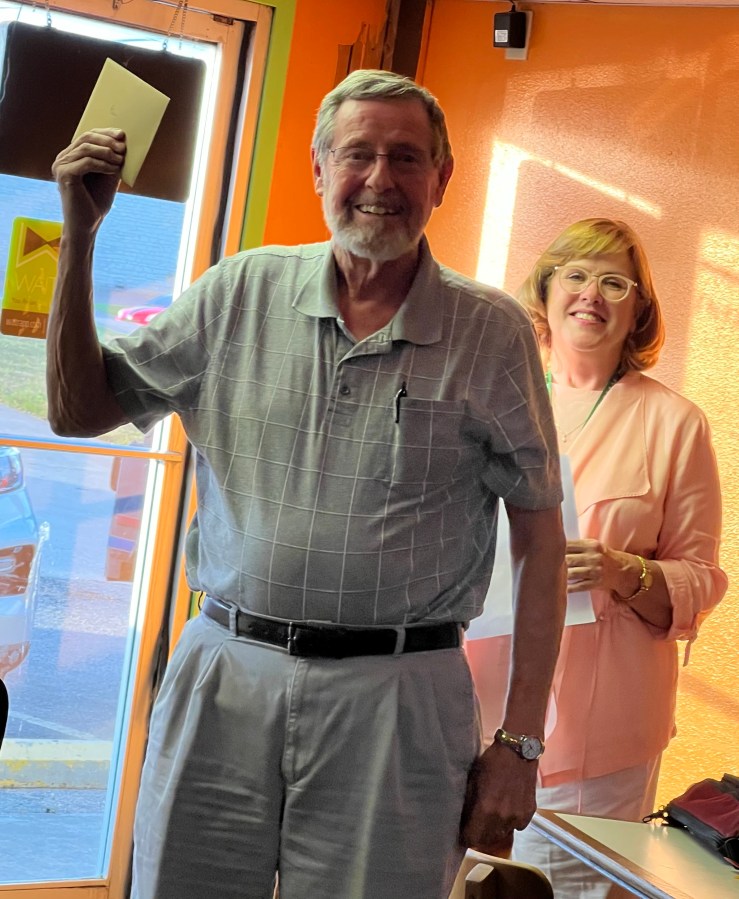
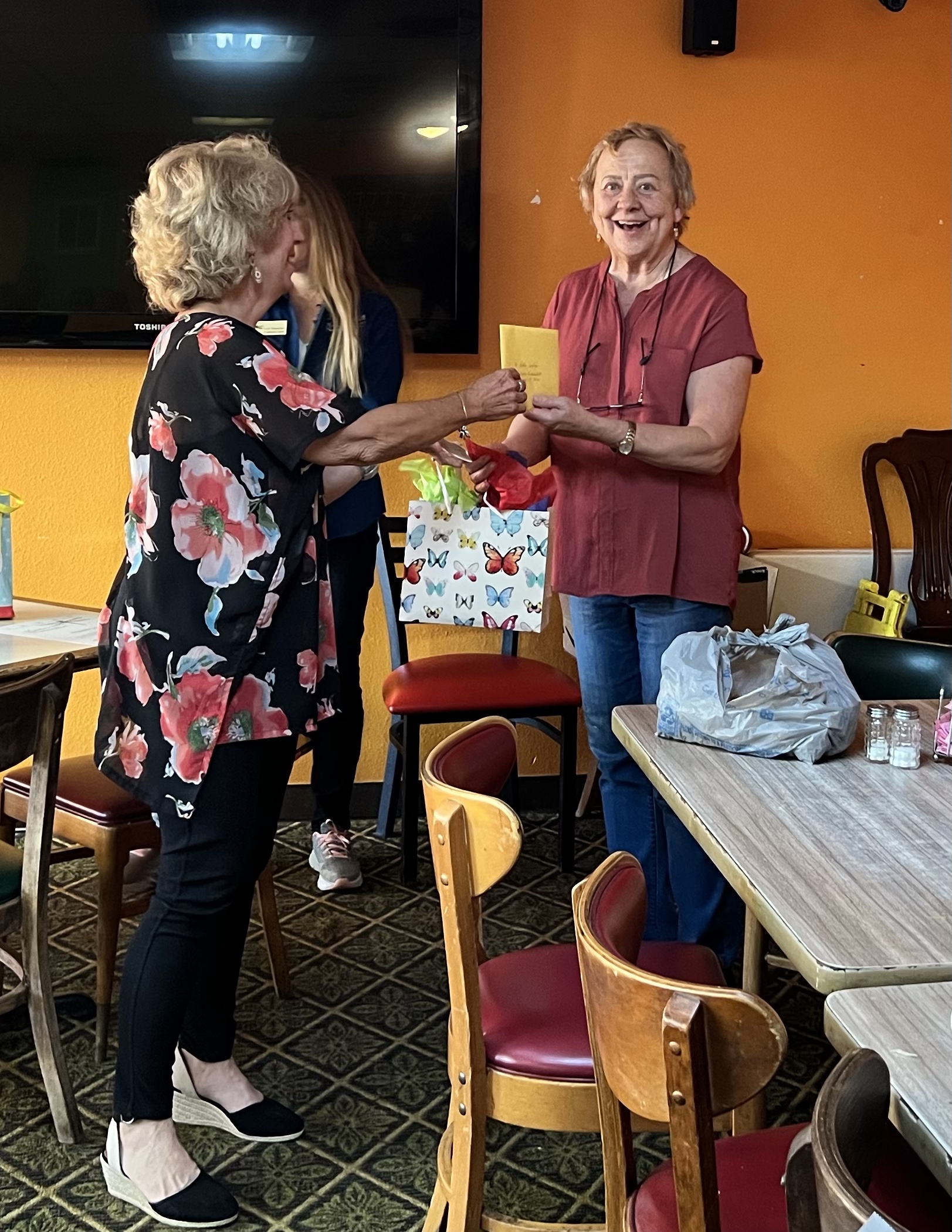
Kathy did such a great job! Here she’s getting ready to thank Don.

We also want to thank Don Travis, who came to all the meetings to provide media support. That is not an easy task, but he handled all the challenges with aplomb. He deserves so much credit for adding to the success of the class.

Well deserved, Don! Chapter President Carolyn Henderson agrees.

Another volunteer we want to thank is Lisa Milewski, who helped the students track their hours so they’d get credit where credit was due. What a happy accomplishment it is that all the students made it through the entire course!

So happy for Lisa’s help

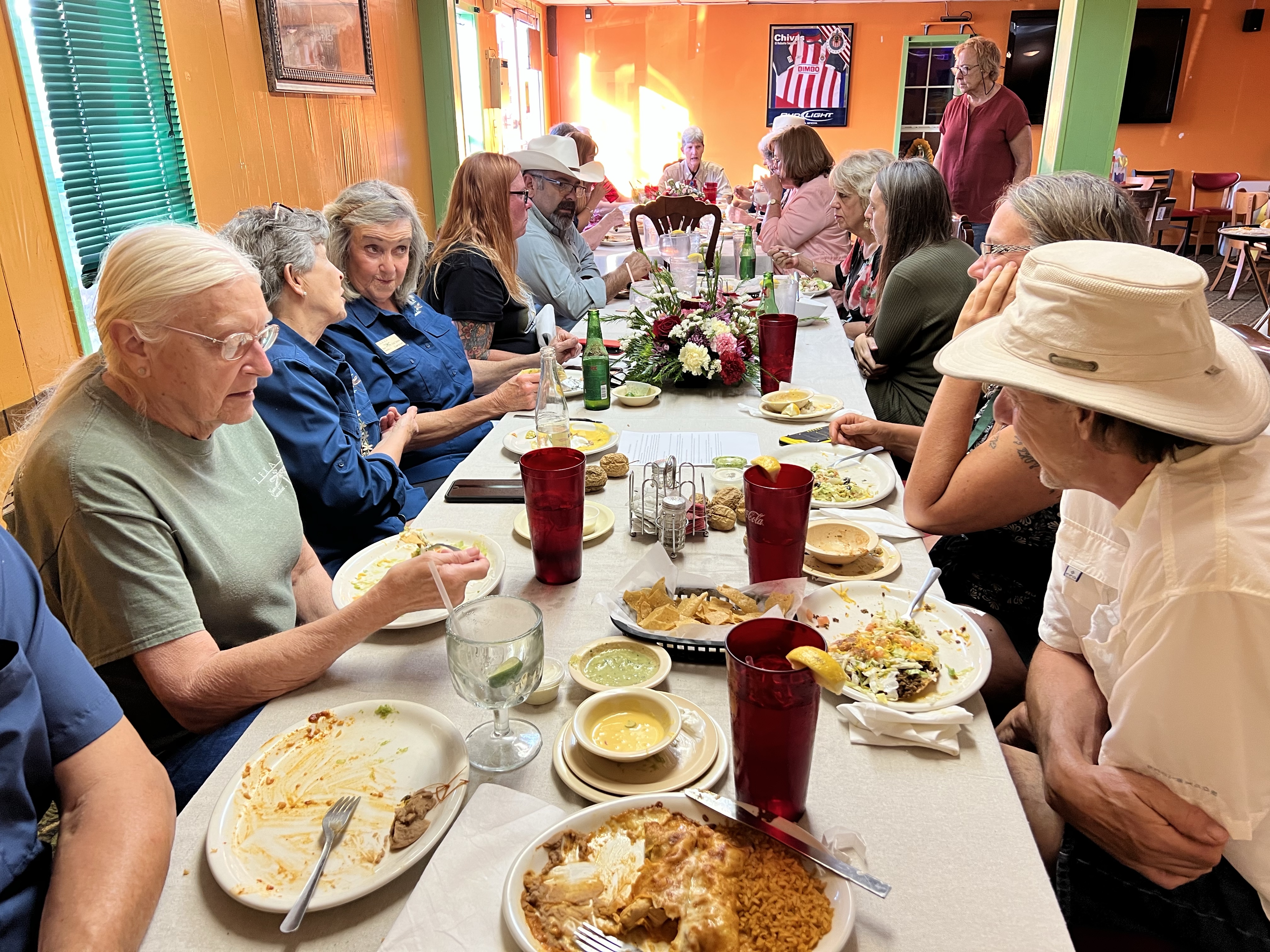
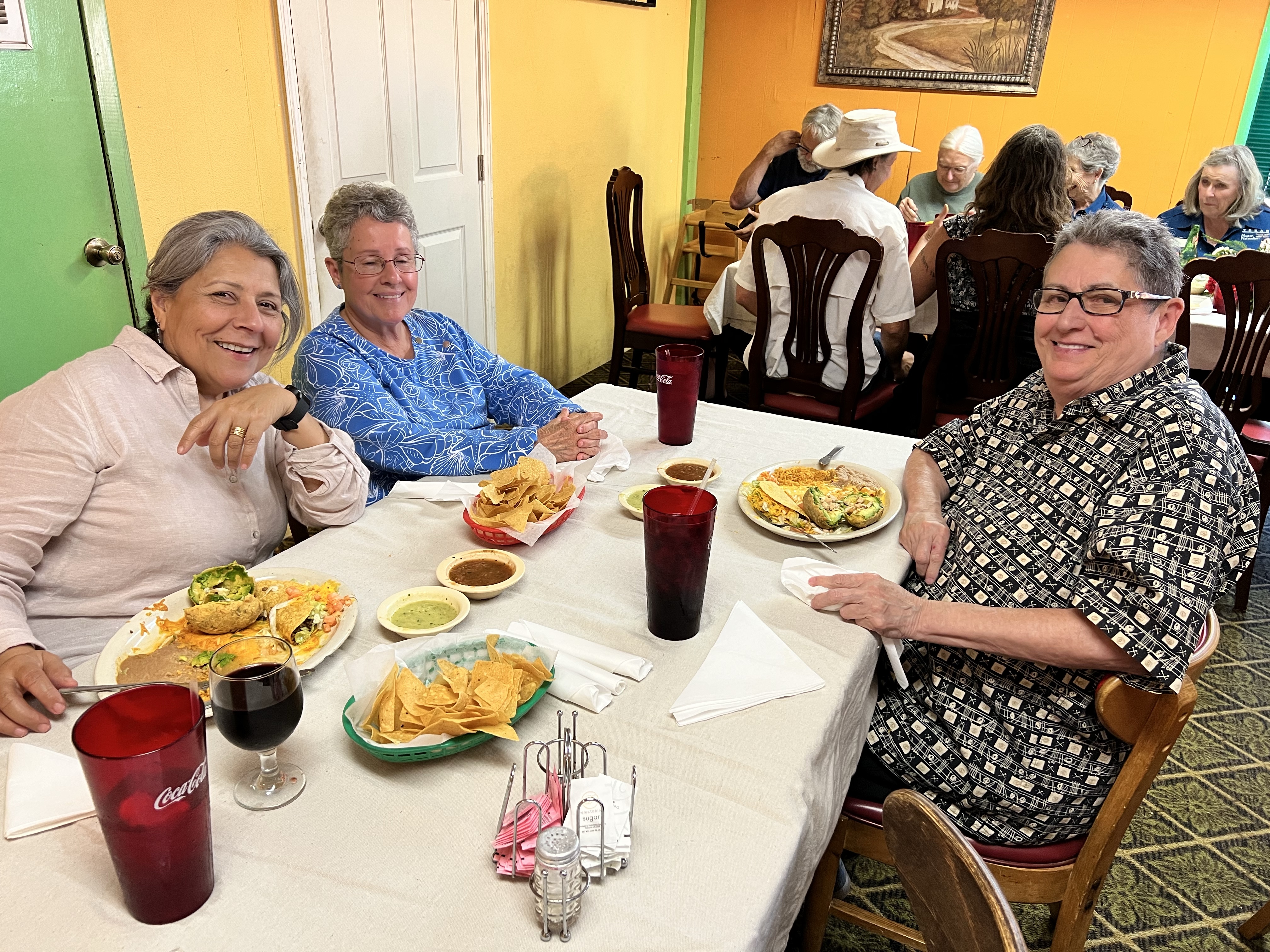
The party part of the event was a welcome relief after so many years of not being able to just hang out with each other and become better acquainted. Many thanks to Liz Lewis, Pamela Neeley, and Catherine Johnson for their hard work planning it. Everyone at my table remarked about how nice it was to learn more about each other (when we weren’t laughing and laughing at the great stories some of the long-time residents told us newer folks.

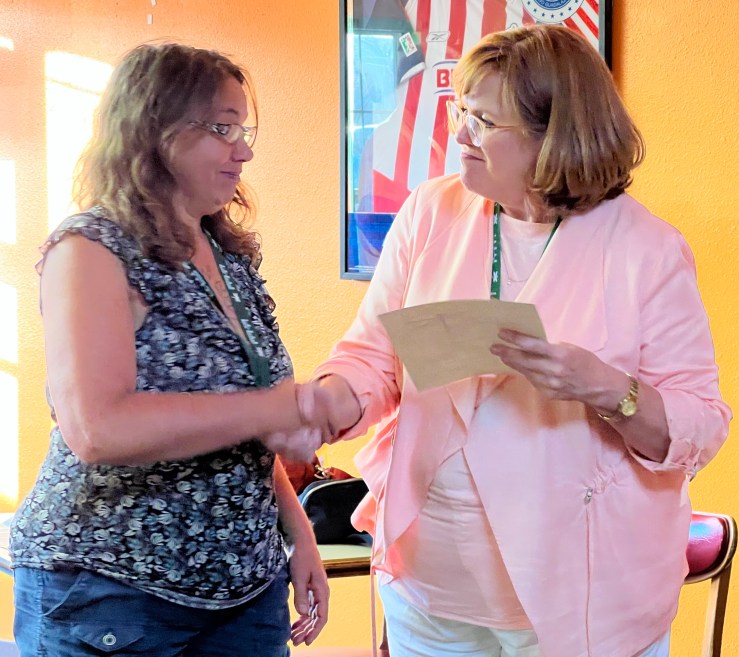
But the best part was seeing the smiles on the faces of the new Master Naturalists as they got their certificates. Each of them made new friends and learned a lot, as Linda Burgess pointed out. I agree with her that it’s a great way to meet folks in the community, since it worked out that way for me, too!

I enjoyed meeting spouses and children of our members, as well. I’d heard so much about Michelle Lopez’s husband that I felt like he was already an old friend. And it’s so cool that one of our members, Victoria Everitt, is related to another member by marriage.

Two of the students also achieved their initial certification as well. Gene and Cindy Rek did so much work at the wildscape getting ready for that video filming that they got in all their volunteer hours!

One student was unable to make the party, but he’ll get his certificate soon. We are so proud of all our new members. I can’t wait to see their contributions and blog posts in the future!

A Long Overdue Chapter Event

by Sue Ann Kendall

Our Texas Master Naturalist chapter is finally getting back into the swing of things since the pandemic has given our county a bit of a break. We have held a class with in-person meetings and have enjoyed hybrid Chapter Meetings all this year as well.

One thing we’ve really missed for the past few years is celebrating our milestones. At our Chapter Meeting on April 14, however, we remedied that, and it sure felt good. Those of us who persevered for the past year got a second pin like we got last year for sticking with our volunteer duties and getting things done, in spite of COVID. Those in attendance all got to stand near each other and pose. It was good.

Chapter members grateful to be together and to have contributed our time and effort in service to the nature of Milam County.

We also celebrated milestones in our work. Eric Neubauer reached 500 volunteer hours (that’s a lot of spider observations!) and our current President, Carolyn Henderson, reached 250 hours. In addition, a number of us have re-certified as Texas Master Naturalists for the year 2022 by completing ten hours of advanced training and 40 hours of volunteer time. All we applauded and lauded, as well they should have been.

It’s been nice hearing speakers like Dr. Frank Summers speak to us in person, but it’s also great that those of us unable to attend for whatever reason can attend via Zoom as well. What great things technology has brought us!

We’ve also been able to have visitors again and getting to meet new people has been a highlight for this year, too. At our meeting we got to visit with Patricia Coombs, sister to one of our meeting hosts, Catherine Johnson. We also got to hang around with a fellow Master Naturalist, Mary Ann Melton, of the Goodwater Chapter in Williamson County. Many of us have seen or spoken with her before at conferences. Ah, conferences. Master Naturalists around the state and country are hoping to be able to attend our annual meetings this year.

Greetings to all of you out there enjoying your own volunteering, meeting, Zooming, and interacting with each other. It’s wonderful how nature and our love of learning brings us all together.

Chapter Meeting Presentation on Sustainable Agriculture

by Carolyn Henderson and Sue Ann Kendall

Dr. Jim Richardson, DVM and Milam County regenerative farmer and rancher, explained to the El Camino Real chapter of Texas Master Naturalist about the process he has developed to farm and ranch without chemicals or plowing. The procedure restores overworked dirt into a fertile, moisture-retaining soil that he uses to grow crops that he uses to both sell and feed his animals.

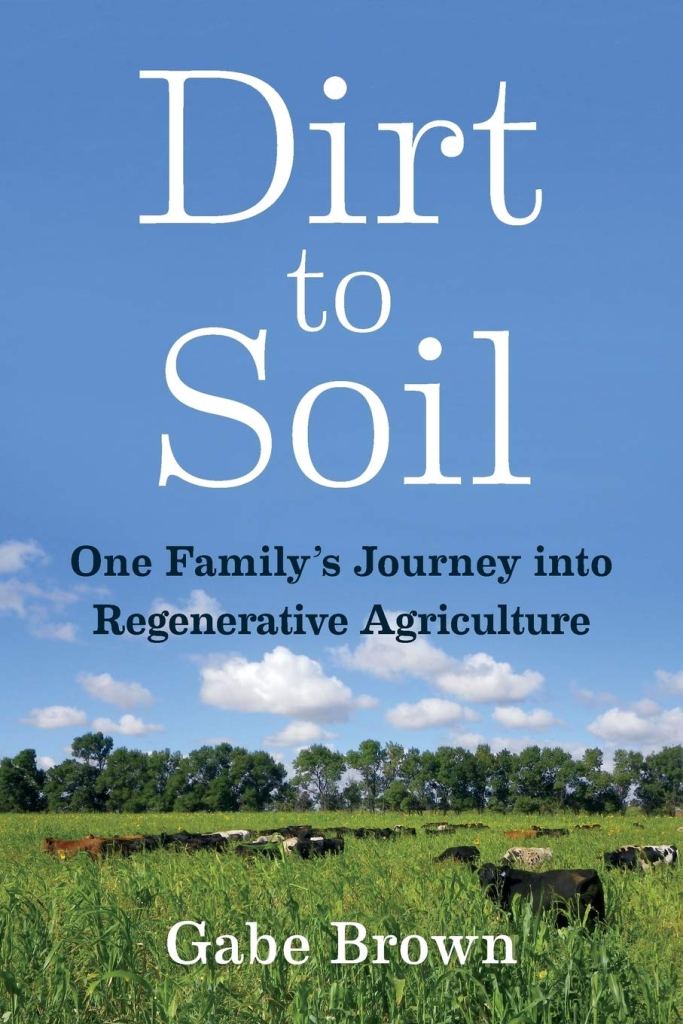
Soil restoration is a growing farming format across the nation. For any members interested in the process, Dr. Richardson recommends the book Dirt to Soil, by Gabe Brown. It is believed that if the process were used across the country, it would reduce the drought problem for farmers significantly. 

Dr. Richardson explained that using a no-till disturbs soil much less, which allows water to soak in and not run off. Running heavy equipment across soil to till and fertilize makes the soil compacted. It turns out that the less you disturb soil the more it can soak up, because the spaces between particles of soil can remain (caused by earthworms and other living creatures in the soil).

He pointed out that mulch is another thing that helps—this can be achieved by allowing leftovers from the previous crop to remain, as well as some native vegetation, which can get incorporated into the soil via animal impact. Animal impact also kills off some plant material and incorporates it into the soil to provide additional nutrients. That’s a big reason to allow cattle or other animals to graze harvested fields.

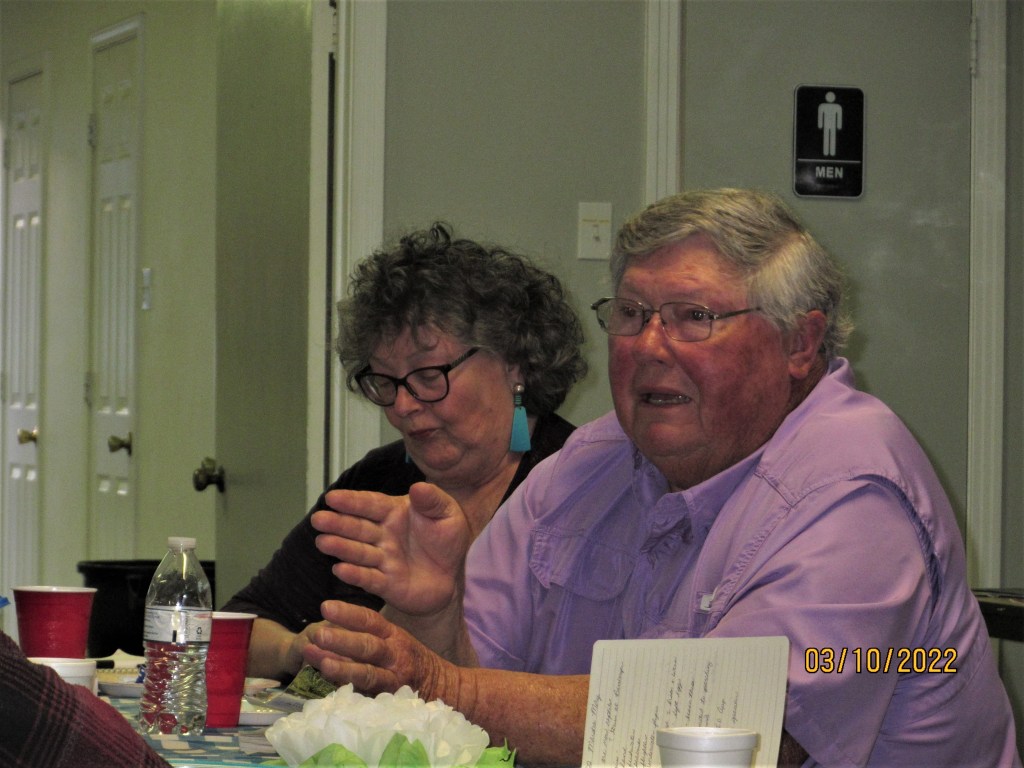
Chapter members enjoy the question-and-answer part of the presentation.

Another practice Richardson recommended is that after you harvest one crop, get another one in there as soon as possible, so it can capture the benefits of sunlight and take them into the soil.

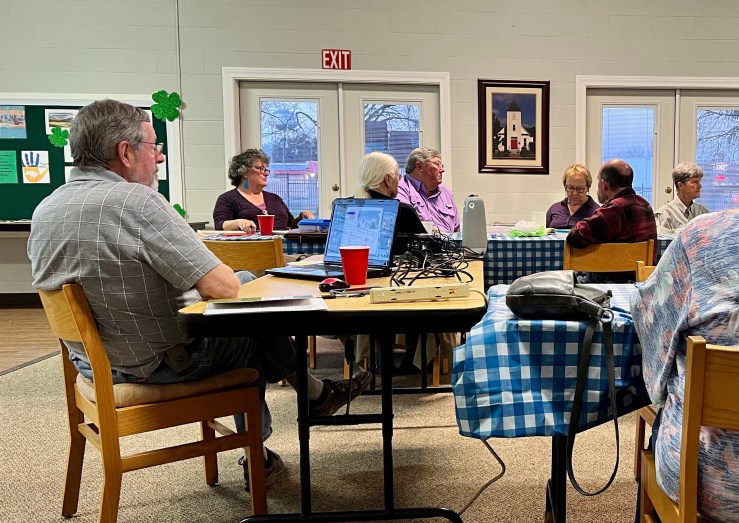
It was good to be meeting in person. Our hospitality team did a great job with tablecloths and paper flower decorations.

By carefully managing the land to regenerate its nutrients and remain uncompacted, effective rainfall will be able to stores water for use during the drought periods. Mulch is what helps the water stay until it is needed.

The more diverse population on the land the better equipped it will be to deal with whatever comes its way and stay productive, he added.

At the end of his presentation, he shared his philosophy:

If you want to make small changes, change the way you do things. If you want to make big changes, change the way you see things.

Jim Richardson, DVM

Time for 2020 Blog Statistics

By Sue Ann Kendall

The start of a new year always seems to inspire folks to look back and analyze things. I got to thinking that last year was a hard year for our Chapter, since we had to stop meeting in person, couldn’t do a lot of the activities we’d planned, and only had a virtual conference to attend (nice as it was, it wasn’t full of hugs and chats). We certainly got more visitors in 2020 than in 2019 (granted, we didn’t start until February 2019).

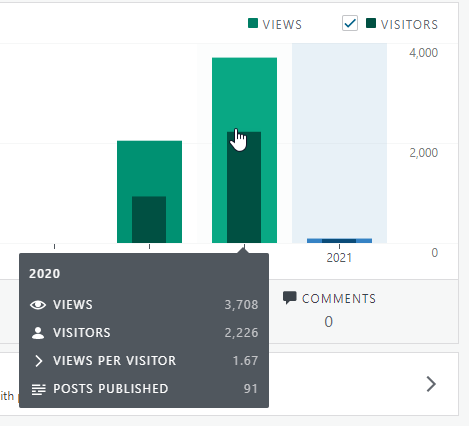
We had 3700 visitors last year, not bad for a little chapter!

Our blog, though, provided us with a way to communicate with each other and to share what was going on in our own little slices of the natural world. I was really grateful to see how our contributions grew and grew, as the blog transitioned from reports on our chapter meetings to contributions from our members. We have a nice group of regular contributors now, as well as some Chapter members who contribute whenever they can.

In fact, there were 12 different Chapter members who contributed last year: me, Donna Lewis (winner of the “most contributions” award), Catherine Johnson, Eric Neubauer, Linda Jo Conn, Carolyn Henderson, Debra Sorensen, Joyce Conner, Cindy Travis, Larry Kocian, Ann Collins, and Sherri Sweet. What? Don’t see your name on the list? You can fix it by sending me some words and/or pictures (my email address is in the member area of our website).

Blog hits by month.

You can see from the previous graphic that our hits went up and down. There were two big months. Last February, someone went through and read every single article, twice, which explains the jump. But, last month, December 2020, really spiked. Did we suddenly become fascinating?

Hmm, December 23 was a bonanza of visits.

When I look at a month’s stats, I can always tell when a blog post came out, because we get a spike in visitors. But, that was a BIG spike! The next day was pretty big, too. I was very curious to find out what the heck got published on December 23 that was so darned fascinating. A look at the most popular posts of the year gave me the answer to “what” but not to “why.”

All Time Blog Post Stats. Hmm. Two of those got a LOT more hits.

I only figured out yesterday why Donna’s sweet post about being nice to a snake was so popular. Because of all those flags people are flying these days, the phrase, “Don’t Tread on Me” has become popular. Donna’s post must have come up in searches!

The other really popular post, Let the Tours Begin, by Lisa Milewski, was from October 2019, and was about the big event we held with the Rancheria Grande Chapter of the El Camino Real de los Tejas National Historic Trail Association. That link got sent out to a lot of places and shared often, so no wonder people looked at it. (Sharing posts is how you get people to look at them; you could do that, too).

How You Can Help Our Blog Grow

We’d like for more people to be able to find and enjoy the writing and beautiful photos from our chapter members. It’s great that we are getting more posts from a variety of members, but it would be good for them to be seen! People clicking on our blog links and sharing them are what gets our blog promoted more by search engines and WordPress (blog site). So, here are some things YOU can do:

  • Contribute. Send me (Sue Ann/Suna) your nature observations, research, fun projects, or reports of activities. You can type them in an email, put them in Word, write them on a piece of paper…whatever works! I can make them into fun blog posts, even if you aren’t a professional writer.
  • Read. When you see a blog post announcement on our Facebook page (or in email if you are one of our 37 subscribers), click on it. See what fellow Chapter members have to say! You might learn something. Or laugh.
  • Comment. Do you have something to add to a post? What about a question for the author? You can comment on our blog posts. Just put your name in there and start commenting! That’s how blog readers converse and build communities.
We’ve only had 79 “real” comments. Help us out!
  • Share. Did you find a post interesting? Copy the URL (the web link, at the top of the page) and paste it in an email, Facebook post, or message to a friend. Or, click the Share button on a Facebook post. Maybe someone you know will enjoy reading what you or another member wrote.
  • Talk. Mention reading the blog in conversations, when you’re explaining to a potential new class member what fun it is to be a Texas Master Naturalist, or if you’re asked what exactly we do. The blog is a good record of that!

This can help you, too! Writing a blog post gets you precious volunteer hours. Taking the photos and doing the research for an article also counts. It’s under Chapter Administration > Website and Social Media. This is something fun, interesting, and helpful that we can do while maintaining our pandemic protocols.

Oh yes, thanks for reading! Y’all are all the best!