While others are away in the cool mountains,* a group of us decided to check on the condition of the El Camino Real Master Naturalist Butterfly Garden in Milano, which we started a number of years ago.
The Butterfly Garden
It is in complete disarray but still with butterflies and other insects trying to hold on to smothered natives. A memorial on the site is also in complete disarray. We are considering possible solutions to make the area respectful.
Sulphur butterfly.
Eric Neubauer and Linda Jo Conn did some BioBlitzing, and Eric was later given a tour of the Milam Wildscape, which he hadn’t visited before.
iNaturalist volunteers at work.
Unexpected Adventure
As we worked on the Butterfly Garden, I gained Master Naturalist volunteer hours for Nature Improvement in Public Areas, learned what false garlic and Carolina Snail vine look like, learned what a pipevine swallowtail butterfly looks like, and got to know new member Eric.
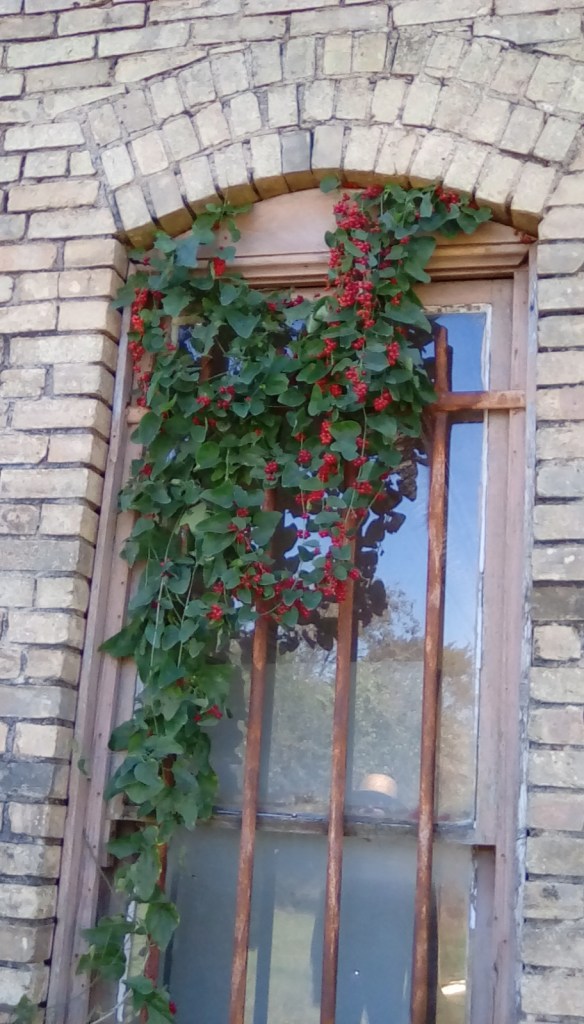
Carolina snail vine (the seeds look just like a snail!)
While in Milano I also got to hear lots of trains and watch the lowering of the flag at the post office. It was a balmy day balmy day and a good one for exercise!
Oh, and we found odd gourds near the train tracks. That was unexpected.
*She is referring to the Chapter President, Suna, who has escaped to Utah. She will post!
My little company held its Board retreat near Wimberley last weekend. I was pretty excited when I found out we’d been booked into a ranch with over 100 acres. I was even more excited when I arrived and realized I knew the area pretty well from having been on retreats nearby in a previous life stage. I immediately formulated a plan to get as much Master Naturalist activity in as I possibly could. That’s my idea of fun, I guess.
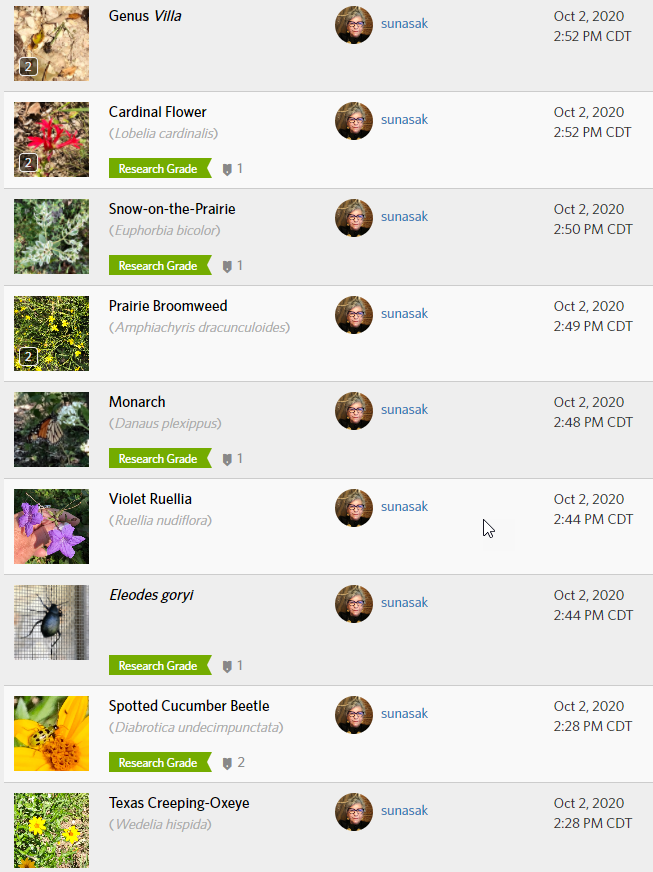
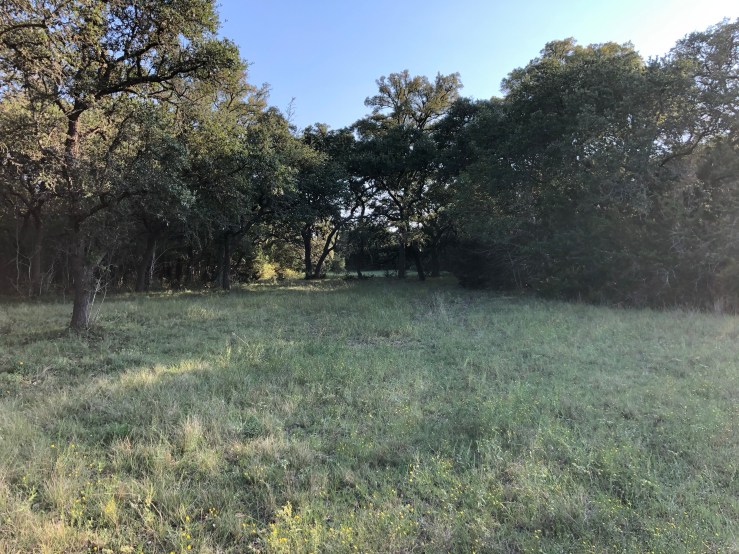
As soon as I put down my suitcase and got oriented by the property owner, I set off. I didn’t set off very fast, though, because I was doing a BioBlitz! My goal was to see how many different plants, insects, etc., I could identify from Friday through Sunday. The layout of the land was very helpful in this pursuit, because there were huge meadows full of prairie broomweed and friends, deep oak and cedar elm woods, a creek, hills, valleys, and lots of limestone formations. I made over 50 iNaturalist observations that afternoon.
Some of the things I saw the first day.
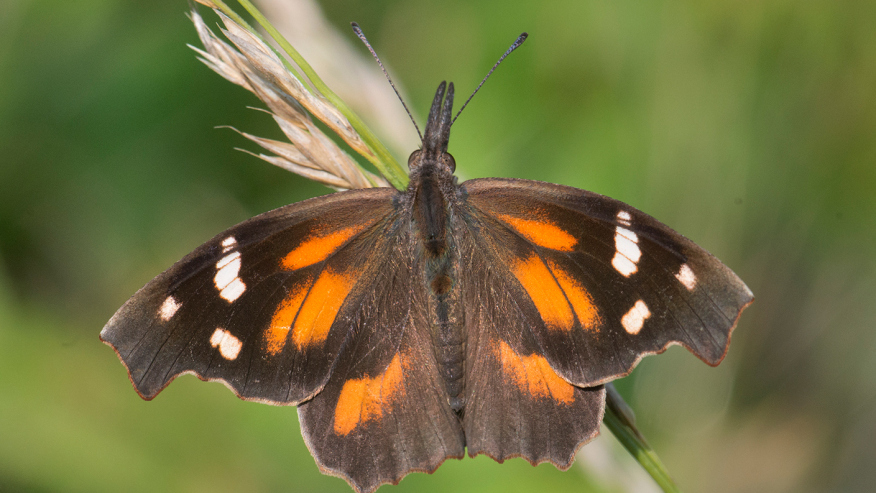
When I got back, we sat on the screened porch and watched hundreds of butterflies floating by. They were small, so I knew they weren’t monarchs (I did see three of them during the weekend). I looked on Facebook and saw that my Chapter member friend, Dorothy Mayer, had suggested I join the TX-Butterfly Facebook group. So, I did, thinking I’d at least learn something about SOME butterfly. Imagine my surprise when the first post I saw was describing the migration of the American Snout butterfly! There was my answer!
American snout butterfly, sitting still for once. Photo from news article linked below.
I later came across an article on it in the news, so you can read more here.
The rest of my weekend was a blast. I hiked all over the property, which used to be a ranch, then a resort, then part of it was a disc golf course, etc. There was a sunset tower to climb, hidden meeting areas, lighted paths, and really pretty cattle. Quite a place. It would be a fun Master Naturalist retreat area.
A few of the sites on the ranch
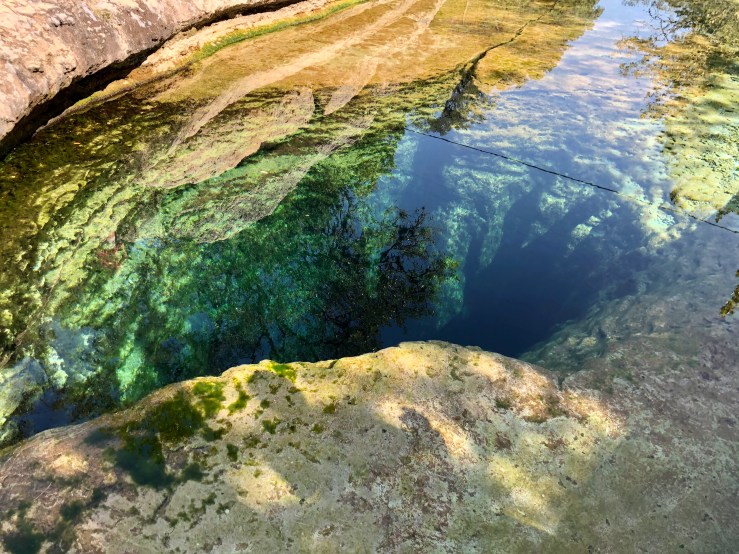
On Saturday, we avoided the incredibly crowded Wimberly Market Day (not many plants to observe there, anyway), and instead we visited the Jabob’s Well park. Jacob’s Well is the second-deepest artesial well in Texas, and it’s really beautiful. Apparently people keep drowning when they try to explore its caves, so I stayed on the shore. I was glad to be there AFTER swimming season, too.
Jacob’s Well
I met some young Park Service staff who were just keeping an eye on things, and they were fun to talk to. They told me to be sure and go find the sign saying how much work Master Naturalists had donated to the visitor center and gardens.
Way to go, Hays County TMN!
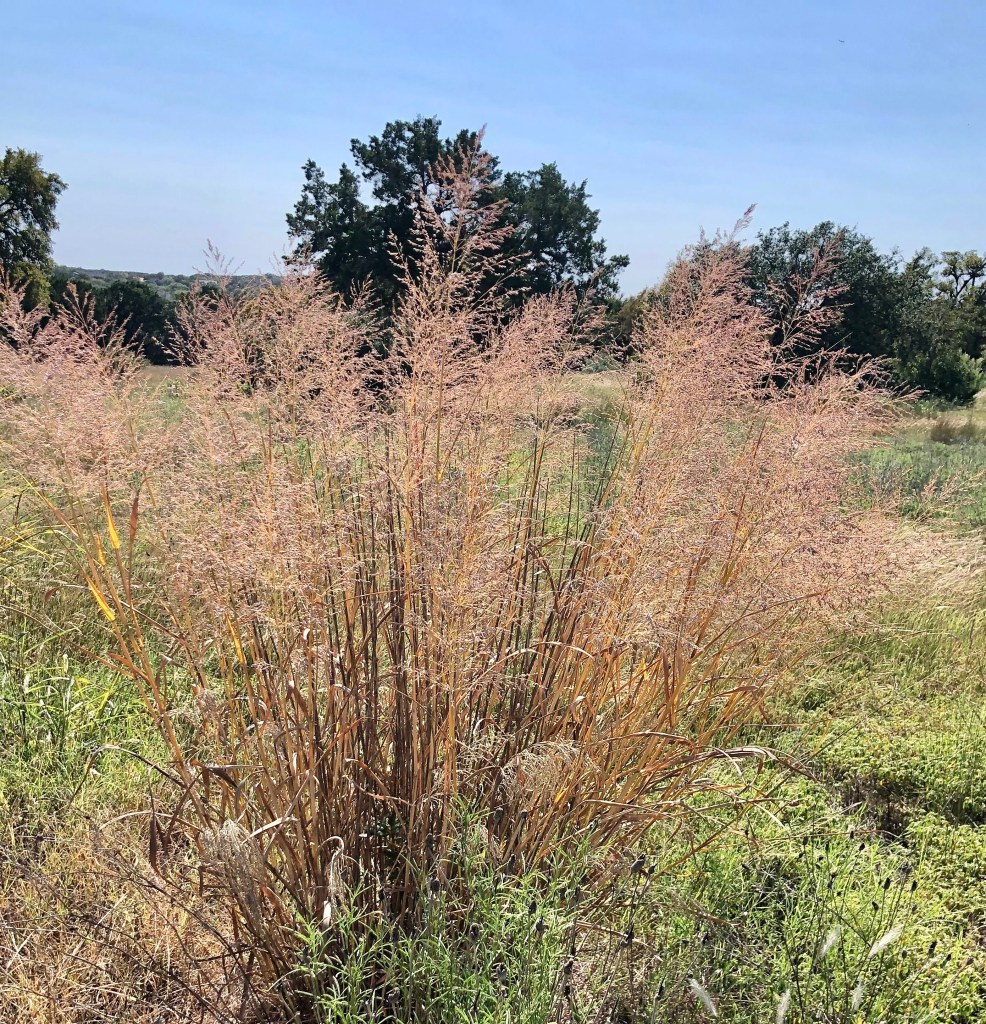
Of course, I made some more observations there, especially in the prairie restoration area. There were so many beautiful native grasses to see.
This must be last year’s grass, but it was so pretty (switchgrass).
I enjoyed finding plants that were new to me or seemed rare, as well as old friends (one dandelion, just one). What made me happy, too, was discovering that of all the iNaturalist sightings in the area, only three were by someone other than me, so I did good work documenting what I saw. Maybe it will help someone, sometime!
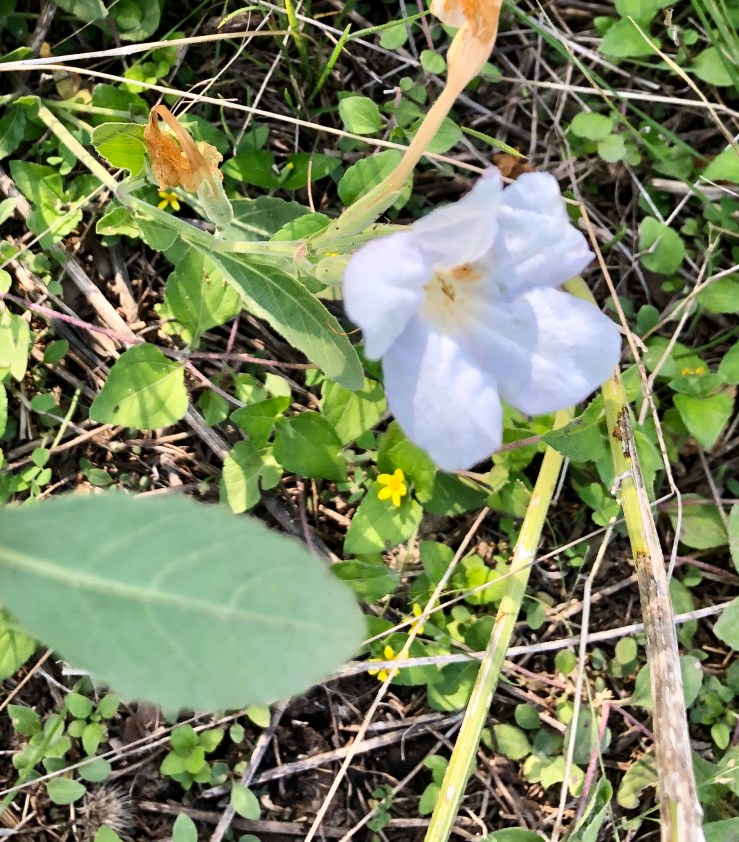
Metz’s Ruellia, totally white.
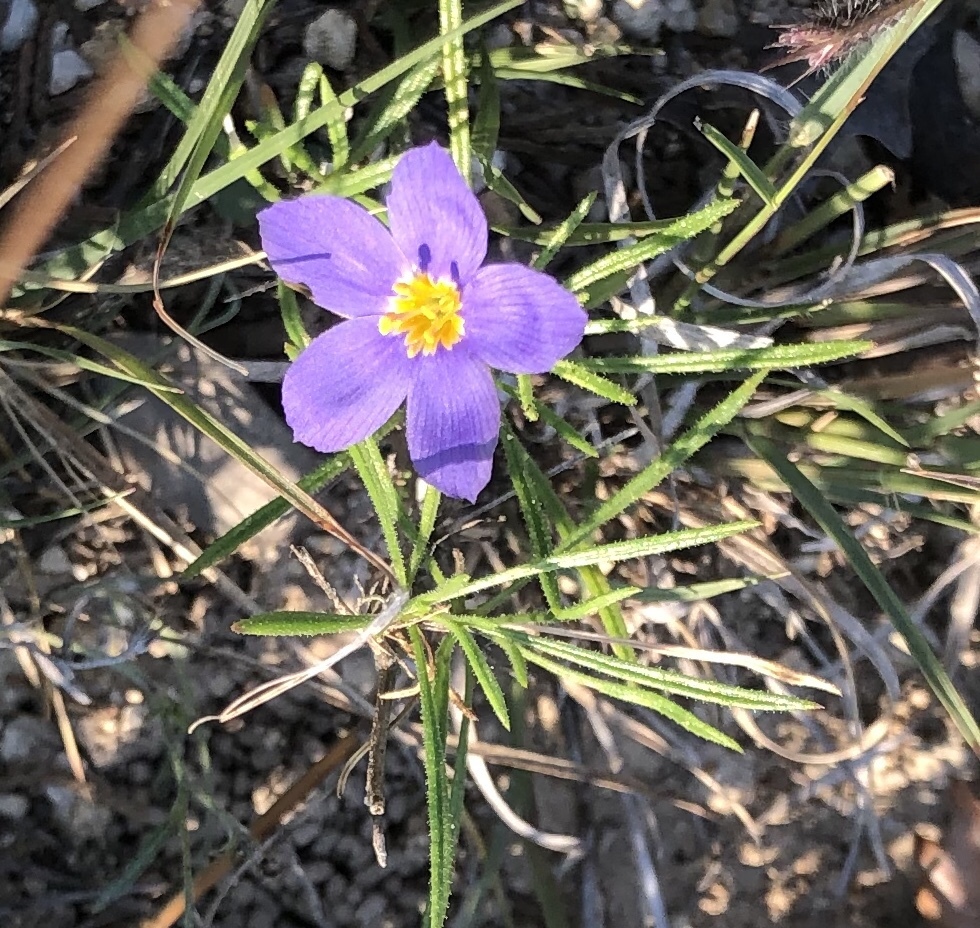
Edwards Plateau Five-eyes (a rare one)
Hairy ruellia, Ruellia humilis, perhaps the prettiest flower ever, to me.
Cool wildflowers I saw. Sorry about the links that don’t show up. The good news is they take you to my observations. And, if any of them are wrong, you can correct me!
In the end, I added well over 100 observations to iNaturalist, saw the work of fellow Master Naturalists, met some people at a distance, avoided crowds, and had some fun. That’s a perfect vacation in these times of social distancing!
This morning, a semi-hardy group of Master Naturalists met at Wilson-Ledbetter Park in Cameron to see if we can actually DO a bioblitz. What’s a bioblitz? It’s when people get together and see how many observations they can make on the iNaturalist citizen science platform in a defined area during a specific time.
Do we look chilly? We are!
Our goal is to have as many observations as possible today, February 22, at the park. That means anyone who observes after our group blitz will also count.
Goofy selfie in which I could not fit everyone in.
Twelve of us came to the event, which is a great turnout! We gave some handouts to the people who were new to iNaturalist, showed folks how to join the project I’d set up the day before, and set off in groups, where experienced and inexperienced people were together. Our instructions were to take as many pictures as possible of the flora and fauna you encountered.
Different groups did their observations differently, with some people uploading photos as they took them and others choosing to take the pictures on their phones then upload them later. We also had a couple of people using cameras, and a couple of spotters/observers. Below are some action shots and a couple of the photos we took. Thanks to Meghan Land and Dorothy Mayer for sharing their photos.
Getting ready to observe
A natural bird bath!
John is not proposing to Ann. He’s asking for expert advice.
Donna was our intrepid and cold spotter.
Meghan crosses the dam
Ann and I look at cedar waxwings
There were many interesting lichen specimens
The beautiful Chickasaw plums in bloom
One thing I discovered is that we have some great nature observers in our new class. One found a domestic cat carcass (no photo available, thankfully) and another found some beautiful eggs in a nest by an oak tree (perhaps from the nearby ducks).
Eggs found under a tree. Sparkly finger to show size.
Long-time members shared stories about previous projects our group has done in the park and helped identify some of those pesky forbs that were everywhere. It’s quite a challenge when so little is blooming, and many woody plants have no leaves yet.
We were much warmer in the conference room, with coffee.
After about an hour of photographing, we went back to the warmth of the Hermit Haus and practiced using the iNaturalist app to upload photos. It’s a bit of a learning curve, especially if you have an android phone and all your “experts” have iPhones. But, folks are already adding their observations to the project, and people are out there identifying them.
Here is what we have as of mid afternoon. We will certainly have more later!
Here are all the observations from our bioblitz, as of 3 pm today. The key to the colors is in the image above.
Just a few hours after the bioblitz started, we have over a hundred observations, and half the team has uploaded content. Not bad at all! Check the project page to see how many more observations have been uploaded. They will be trickling in over the next few days.
Where shall we go for our next bioblitz? Will you join us? Our goal is to visit all the parks in the county, so suggestions are welcome! Remember, Tania Homayoun of Nature Trackers, and our state iNaturalist expert, will be joining us April 18 for a special training with both an indoor and an outdoor component. We will let you know which park we’ll be holding that one at!
Want to Learn More?
Read more on using iNaturalist for bioblitzes at this link.










 Nature Along the El Camino Real