By Sue Ann Kendall

The Common Mestra (Mestra amymone) is a butterfly I’ve been seeing very often this autumn. I went on and on about it the first time I saw one. Since …
Why Is Common Mestra So Common This Year?

Nature Along the El Camino Real
Blog of the El Camino Real Chapter, Texas Master Naturalists, Milam County, Texas
By Sue Ann Kendall
The Common Mestra (Mestra amymone) is a butterfly I’ve been seeing very often this autumn. I went on and on about it the first time I saw one. Since …
Why Is Common Mestra So Common This Year?
by Linda Jo Conn
During the week of July 22-31 hundreds of Texas Master Naturalists visited parks, prairies and preserves or stayed at their private homes to observe and report moths (and other species of insects) attracted by light in the nighttime.
While many used the preferred black or mercury vapor lights powered by electric plugs or batteries, special gridded cloth sheets, and specially constructed PVC frames to set up a viewing stage, my personal mothing setup is quite simple and is ready year-round with the simple flip of a light switch.
Although an LED light is not a preferred light source for moths, it is what is screwed into my porch light fixture, and it does draw insects. Beneath it I have taped a couple of sheets of ¼” graph paper. The graph paper stays there year-round, with replacement as needed. I am surprised that no one has yet asked me why I have graph paper stuck on the side of my house.
The early night temperatures above 90° and extremely dry local conditions were worrisome, but I was able to report several moth species to National Moth Week 2023.
Among the moth species I observed were these:
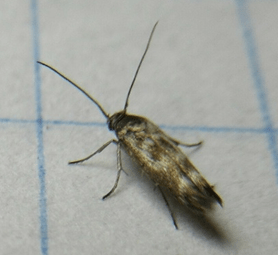
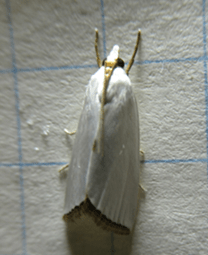
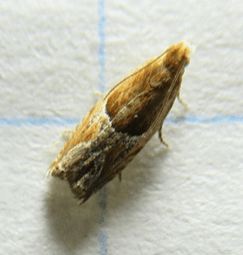
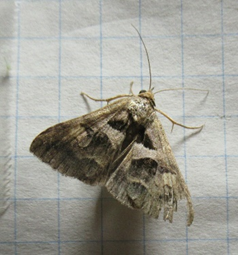
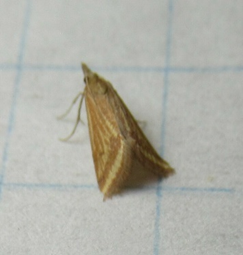
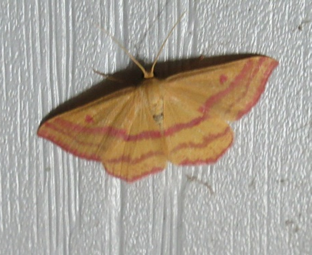
Of course, along with moths, other insects, including hundreds of non-biting midges, were drawn to the bright light.
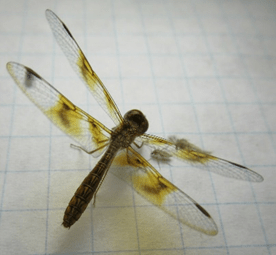
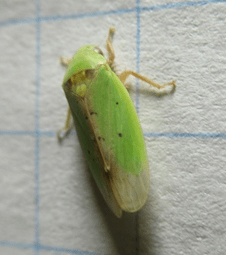
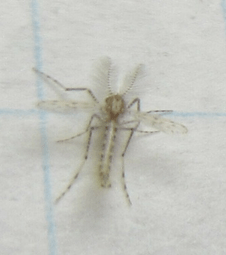
You may view my moth observations made during the week at: https://www.inaturalist.org/observations?project_id=163019&ttl=900&place_id=any&verifiable=any&subview=grid&user_id=26296.
By Carolyn Henderson
The annual Texas Pollinator BioBlitz is on! Participants search for, photograph and post photos of all pollinators and what they pollinate during the month of October. There are a few places to post the photos, but the primary location is iNaturalist – my media of choice. Texas Parks and Wildlife Biologist and other studiers of pollinators and their source of food use the data to assess the viability of the insects.
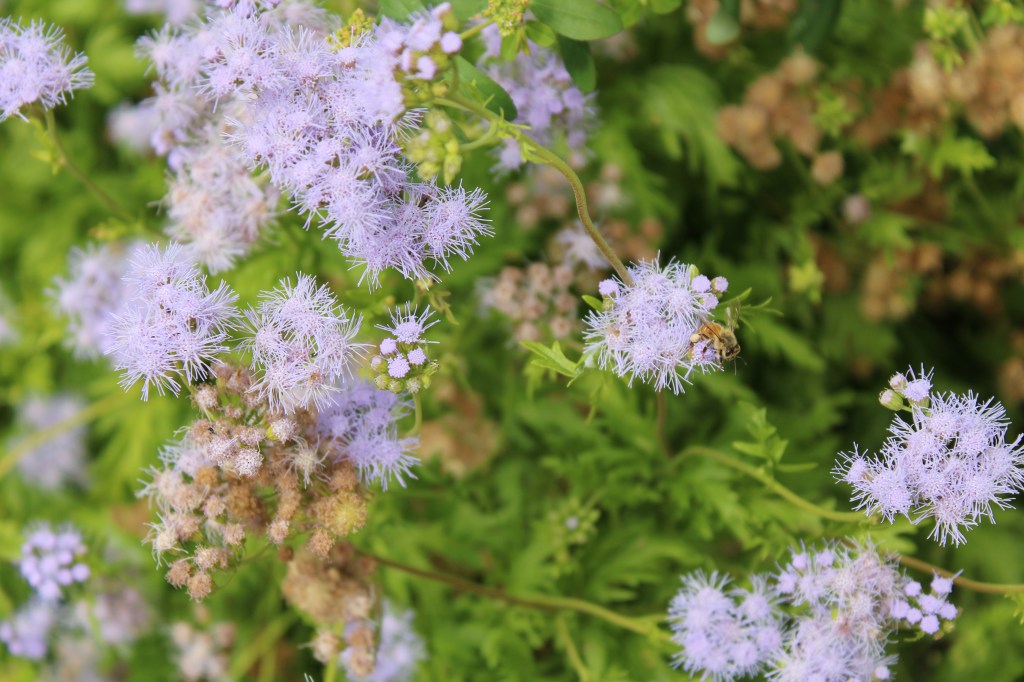
I started my quest on Sunday. I was headed out to some friends’ place to check the Green Antelopehorn Milkweed which was abundant in May. I stopped at the Triangle Garden in front of Cameron Elementary School because it was full of a variety of blooms. The garden was started and is maintained by the Little River Basin chapter of Texas Master Gardeners. Because it is cultivated, I can’t use the flowers as post of pollinator food, but I can use what lands on them. I felt like I had hit the motherload of butterflies.
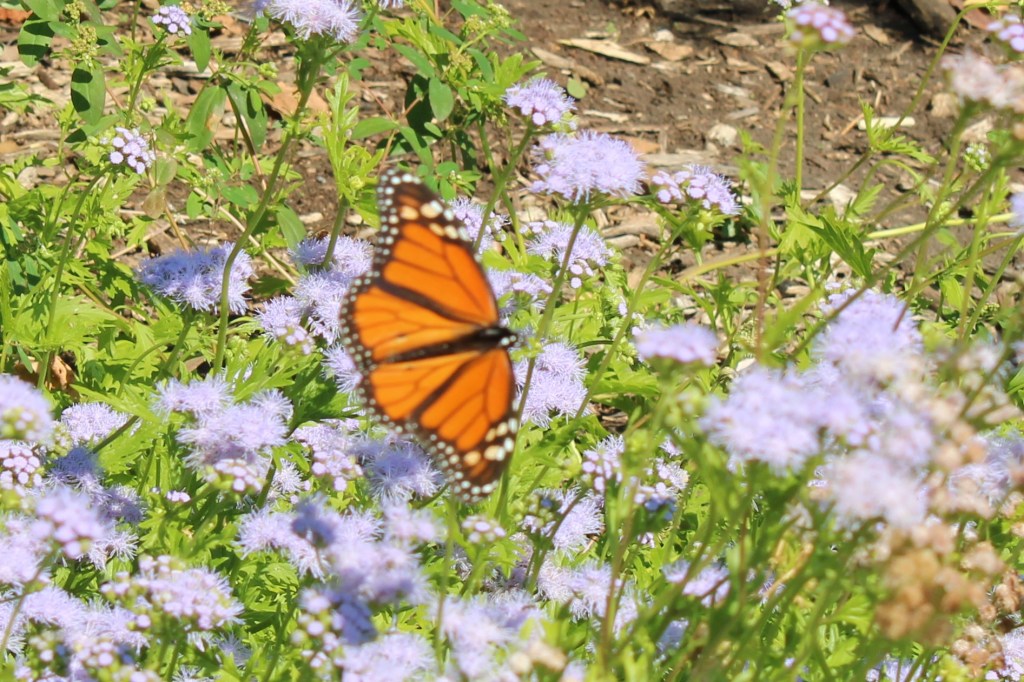
I was surrounded by Monarchs (at least 10), Queens, Gulf Fritillary, Pipevine Swallowtail, Fiery Skipper (or Southern Broken Dash – I’m still not sure), Painted Lady, and even a few Giant Tiger Swallowtail. Add in Eastern Carpenter Bees, plenty of honeybees, a few Bumble Bees, and something I think is a Snowberry Clearwing. I’m also pretty sure a saw a couple of Hummingbirds, but they moved too fast to identify. I took many, many photos. And none of them worked. I was upset. It was my fault. I’d done something wrong with my new fancy camera. They were all washed out. Of course, I didn’t know this until I got home.
To make it worse, when I arrived at my friends’ place, the Antelope horn Milkweed was gone. The total lack of rain and excessive heat had done them in this summer. I did get photos of Great White Egrets, Greater Yellowlegs, and thousands of American Bullfrogs. The Bullfrogs are hanging out in mass around the edges of a rapidly shrinking small lake. They look like little balls of mud from a distance but move in mass when startled. One verifier on iNat even gave them a “Wow!” for the sheer number of them. I did get a photo of “Swamp Smartweed” which was covered by honeybees. It’s a source of pollen on my quest.


Not to be deterred, at lunch on Monday, I went back to the Triangle Garden, and all the butterflies had waited for me to come back and take photos of them. I got most of them, but not all. On Tuesday, most of them were still there, and the Pipevine Swallowtails were getting full, I think, because they actually sat still for a few seconds at a time, so I could get clear pictures of them.

If you want all these butterflies to stop at your place next fall on their southern migration, I advise planting Gregg’s Mist and maybe a little Tropical Sage. The Queens, Gulf Fritillary and Skippers stayed only on the Gregg’s Mist. The Monarchs also stayed there mostly. One was interested in a lantana. The Pipevine Swallowtails like the Tropical Sage and Gregg’s Mist. The bees were less picky. Of course, if you want Monarchs to lay eggs at your place, you’ll need milkweed. That’s the only thing their caterpillars eat (according to current general consensus).



by Carolyn Henderson
Last Saturday morning was a busy one for a small group of El Camino Real Texas Master Naturalists. The intrepid seven started out attending some previously girdled trees and finished by photographing everything they could find for the “Hotter than Hell BioBlitz” at Wilson-Ledbetter Park in Cameron.

Original girdlers of the invasive Glossy Privet Liz Lewis, Marian Buegeler, and I did some follow-up work on the trees we originally performed girdling on back in March. Marian was armed with a hatchet and I had a tree trimmer device to remove any new growth below the girdles. Liz directed.

I was surprised to find the trees dying because an inspection a month ago didn’t really show any significant dying off. They are showing plentiful evidence of their demise now. In case you’re new to this subject, tree girdling is a method to kill trees without herbicides or chain saws. You can find directions on how to do it from the March blog if interested.

The drought and excessive heat may be hastening the death, but it’s all occurring above the girdle line, so the process works. We are now a little excited to see where they stand in late fall.

We then proceeded to photograph what was still alive in the drought/heat wave at Wilson-Ledbetter. We managed to get 208 photos of nature surviving the weather. “Birdladymilam” Ann Collins posted the most photos on the project page on iNaturalist. Eric Neubuer found the most of one species (Wolf spiders in case you weren’t sure). Organizer Linda Jo Conn, Marian, Victoria St John, Liz and I also contributed. Blooming flowers were sparse, but there were a lot of trees, vines and grasses along with spiders, and birds.

And it wasn’t hot that early in the morning.

by Linda Jo Conn
As I reported at the monthly chapter meeting, I was pleased with the participation and results of our first seasonal BioBlitz. We had 10 participants who have submitted 492 observations to date, which included 248 species. To view the observations, go to: https://www.inaturalist.org/projects/ecr-seasonal-winter-bioblitz.
This was a low-key BioBlitz, promoting observations made at one’s place of residence to avoid travel and promote physical distancing during this time of COVID precautions. We enjoyed pleasant weather that encouraged outdoor time during the first part of the designated week, but it did get a bit disagreeable during the last days. Still, worthwhile observations were made.
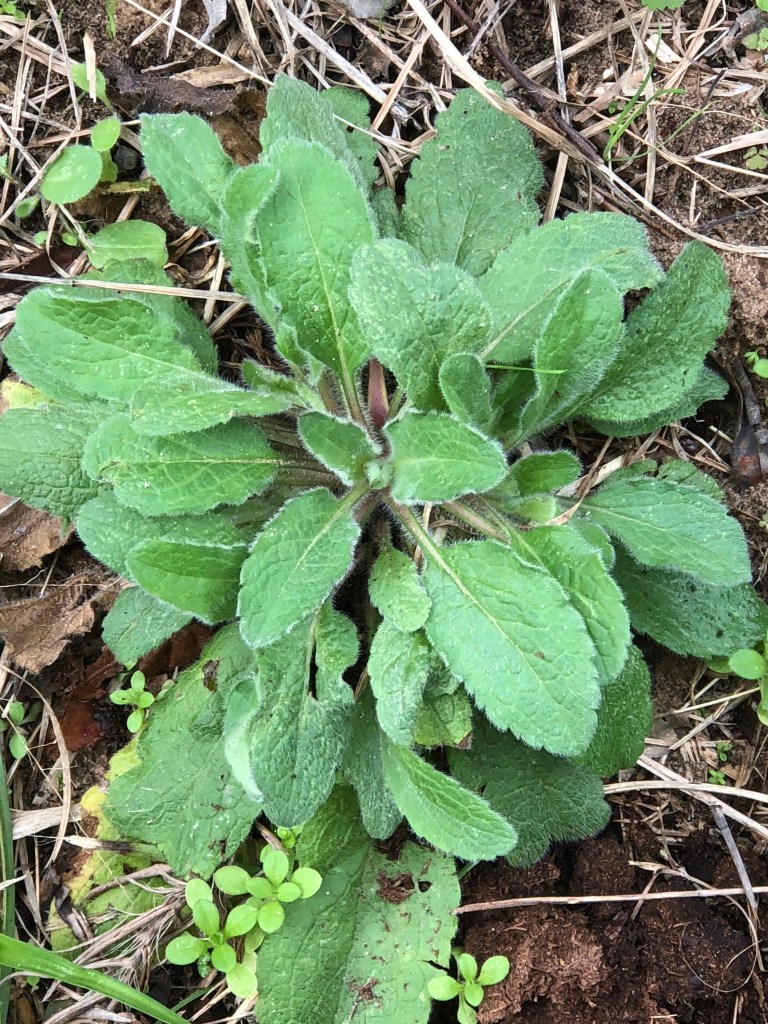
Perhaps one of the first things noticed by plant observers was the lack of blooms. Yes, there were the typical cool-weather blossoms of henbit deadnettle, catchweed bedstraw, shepherd’s purse, and common chickweed, but also a lot of unidentifiable leafy green rosettes.
Lichens, particularly the orange colored hair lichens, were definite eye-catchers in the drab landscape.

Some plants such as the American Trumpet Vine were identified by last season’s seed pods

Other plants were given a general tentative ID and hopefully will be revisited when blooms appear later in the year.
We observed birds. A Red-Shouldered Hawk is perhaps checking out the nearby martin house.

We observed reptiles. Well, one reptile observation was made.

We saw mollusks,

And spiders,

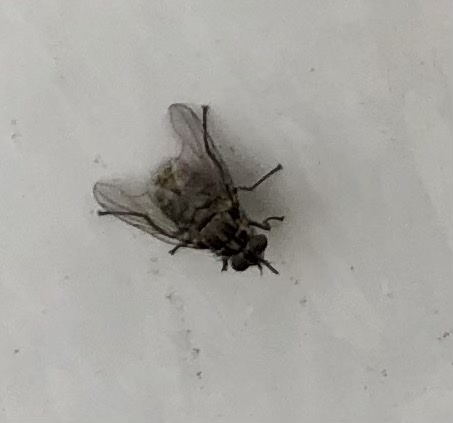
and insects,
And other arthropods, such as this intact exoskeleton of a white river crayfish.

So, I thank you, sunasak, birdladymilam, marianmarie, eaneubauer, chenderson, dsorenson, potterswasp, jfcthornton, and debbi9, for participating in the BioBlitz.
I look forward to joining you at the spring iNaturalist seasonal BioBlitz, scheduled for May 20-26.
Happy iNat-ing!
 Nature Along the El Camino Real