Blog of the El Camino Real Chapter, Texas Master Naturalists, Milam County, Texas
Author: Sue Ann (Suna) Kendall
The person behind The Hermits' Rest blog and many others. I'm a certified Texas Master Naturalist and love the nature of Milam County. I manage technical writers in Austin, help with Hearts Homes and Hands, a personal assistance service, in Cameron, and serve on three nonprofit boards. You may know me from La Leche League, knitting, iNaturalist, or Facebook. I'm interested in ALL of you!
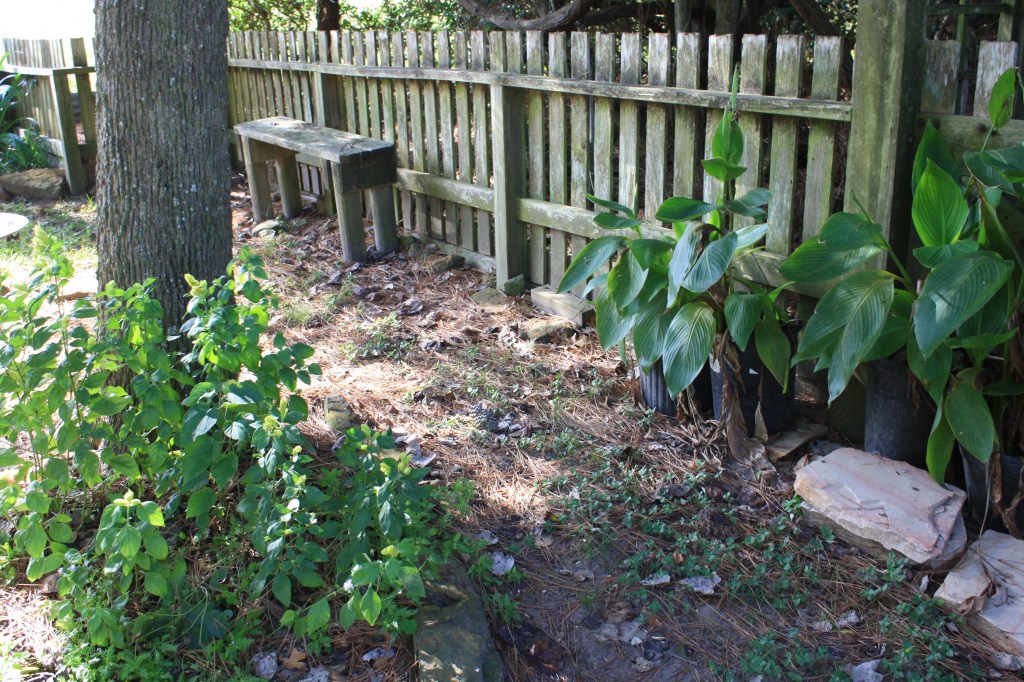
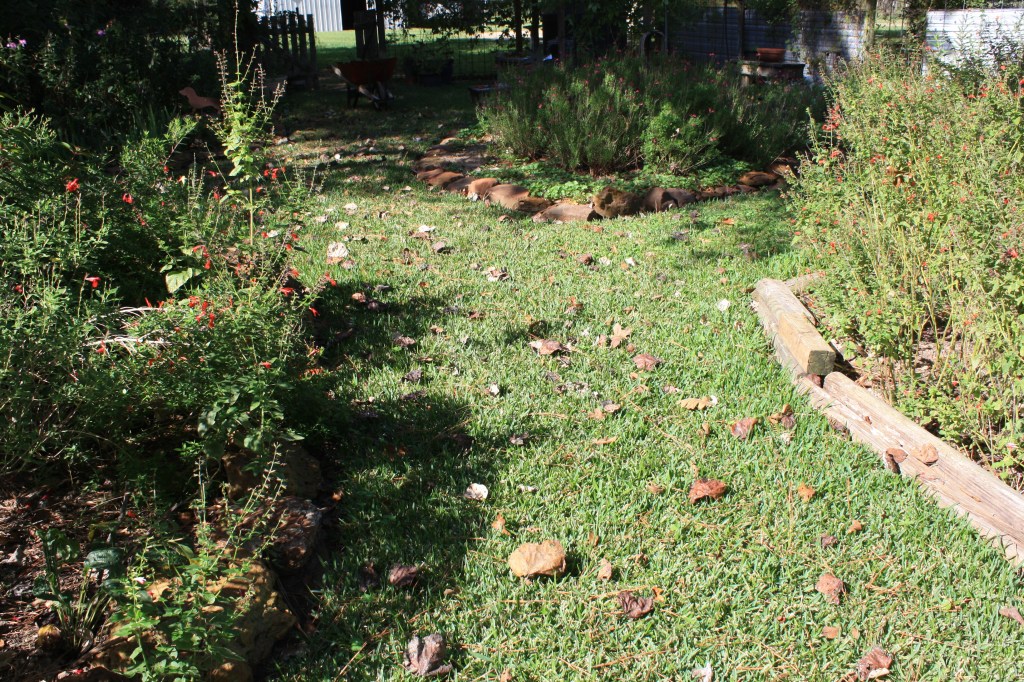
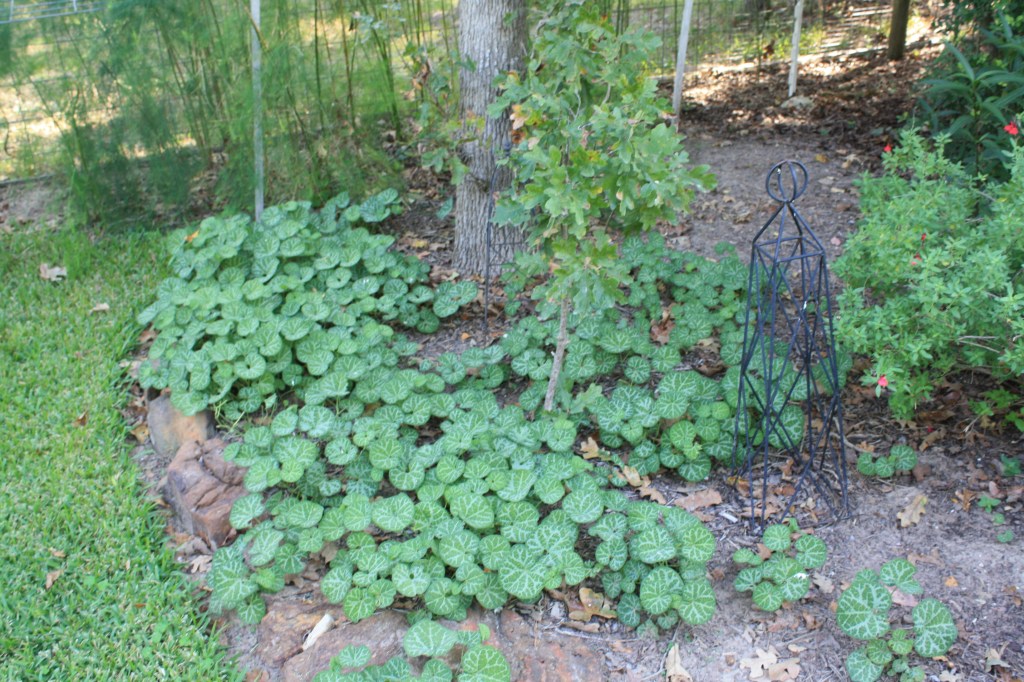
Fall is slowly arriving, and the leaves are starting to fall into our gardens.
Some of you are thinking, “How messy! I’ll need to rake or mow them up.”
I used to think like that, too, especially when I lived in the city. Now that I live in the country, I have learned better. My bad back has also learned to take it easier.
Mother Nature also has made those leaves fall for a purpose, to protect the new plants that will emerge in the spring and to protect little critters that live and sleep away the winter among the fallen leaves. Those are two good reasons to just let them lie.
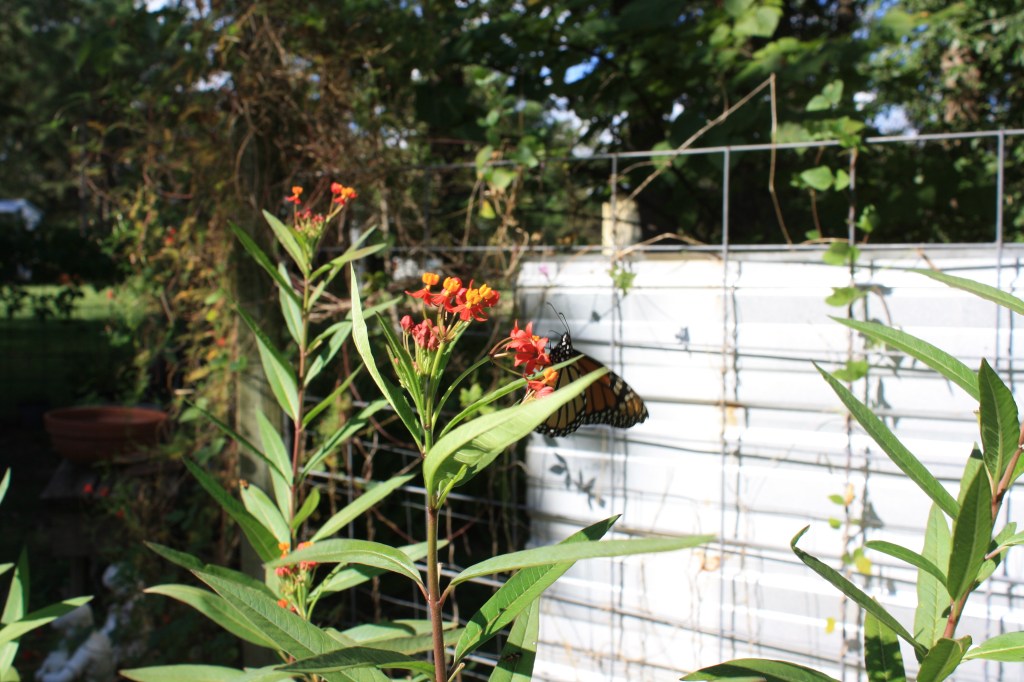
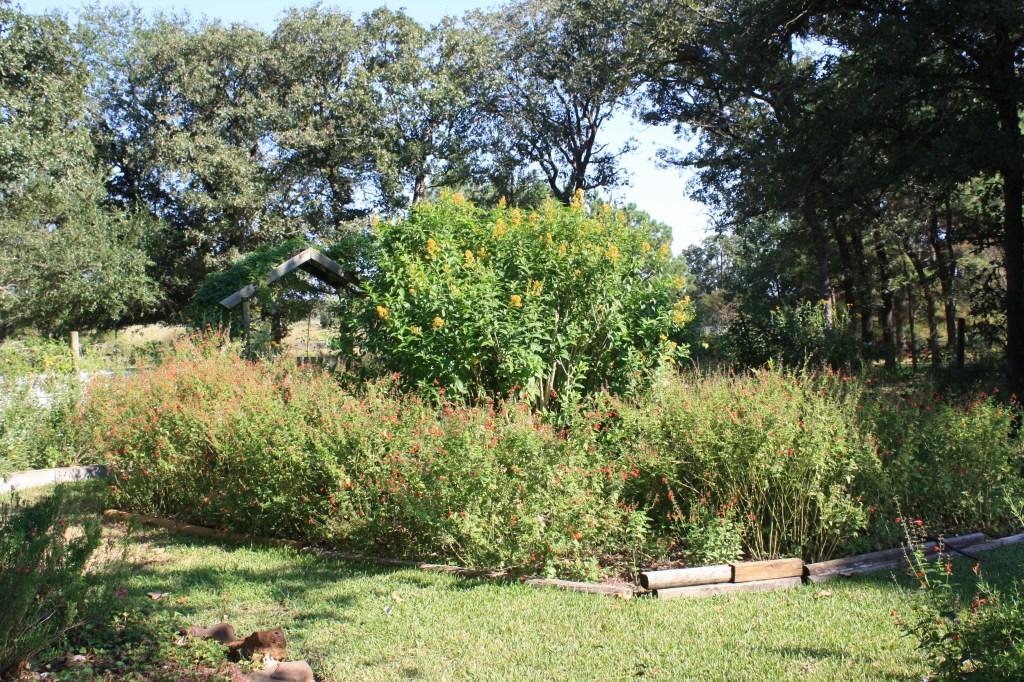
Today (October 24, 2021), I walked through my garden to catch one of the last monarchs heading south, lovely and gentle as she had a little sip from a milkweed in my garden.
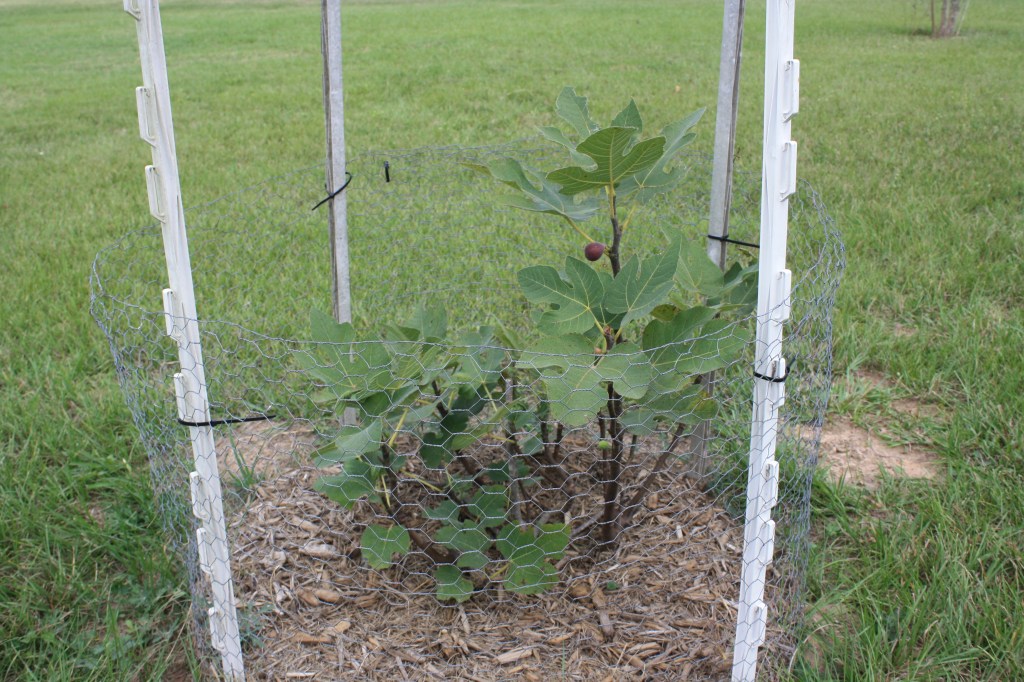
After I left the garden, I went over to the Celeste fig tree that has frozen back every winter, and has just put out the first edible figs ever! I was so happy. A little snack for me.
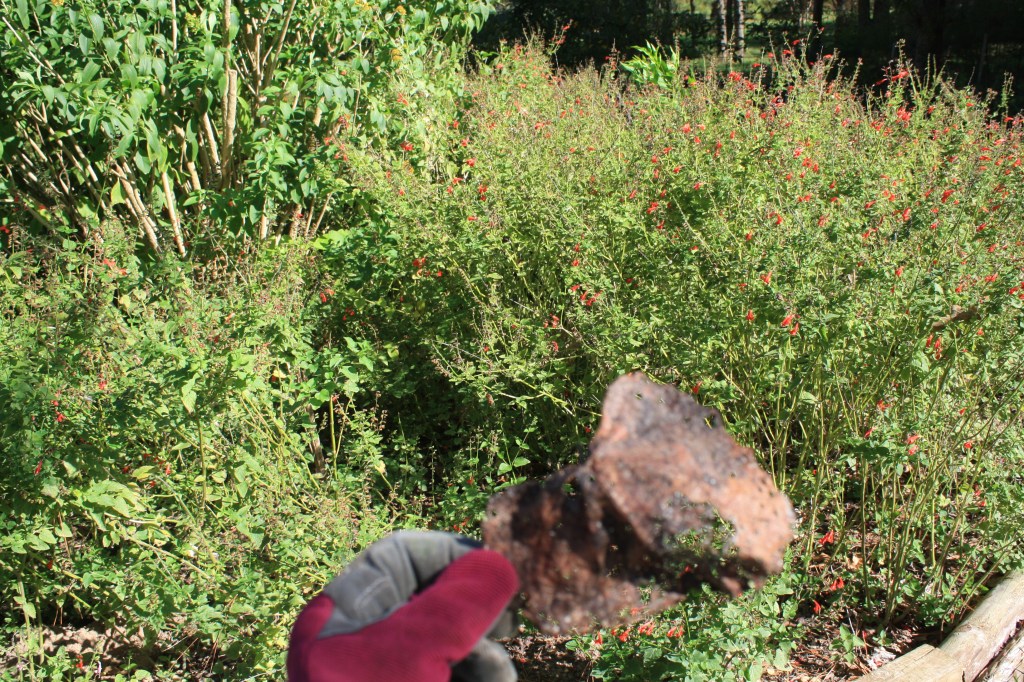
Remember, leaves are the baby blankets for next year’s new plants. So leave them….
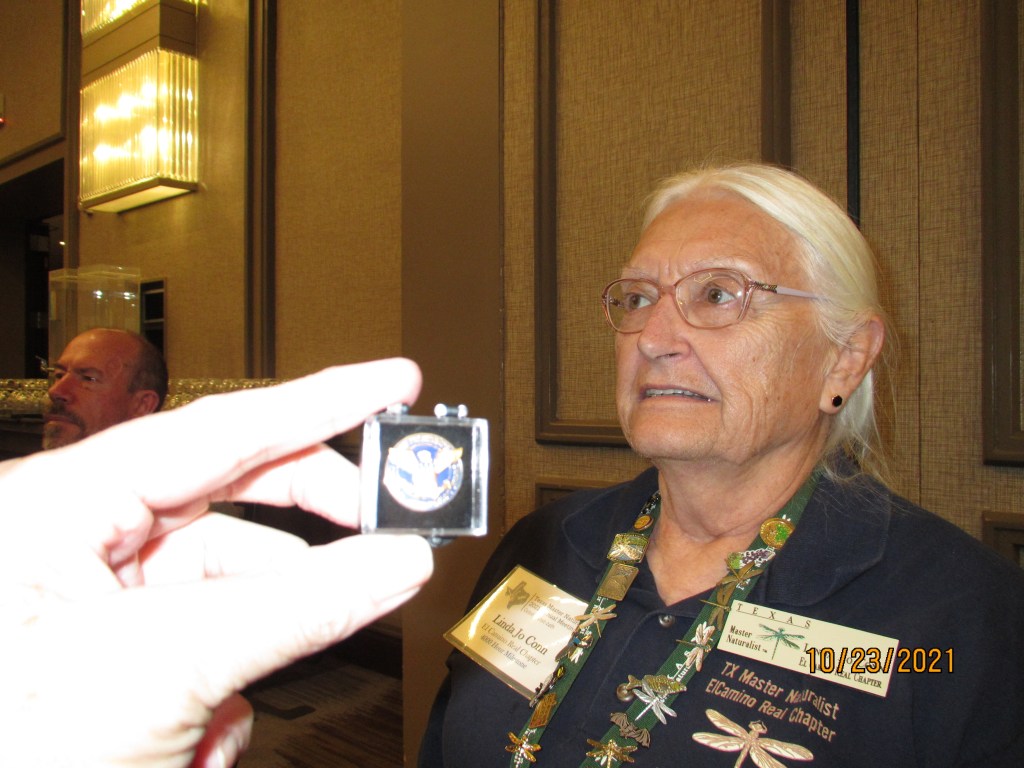
Linda Jo Conn received special recognition Saturday night at the annual meeting of Texas Master Naturalists in Dallas/Ft Worth. She has reached a milestone of 4,000 service hours. She was in very tight company. Only one other statewide member qualified.
Congratulations to Linda Jo
The award included a dragonfly pin of brushed gold with a ruby in the center and a special pin and certificate from the office of the President of the United States.
The Presidential pin
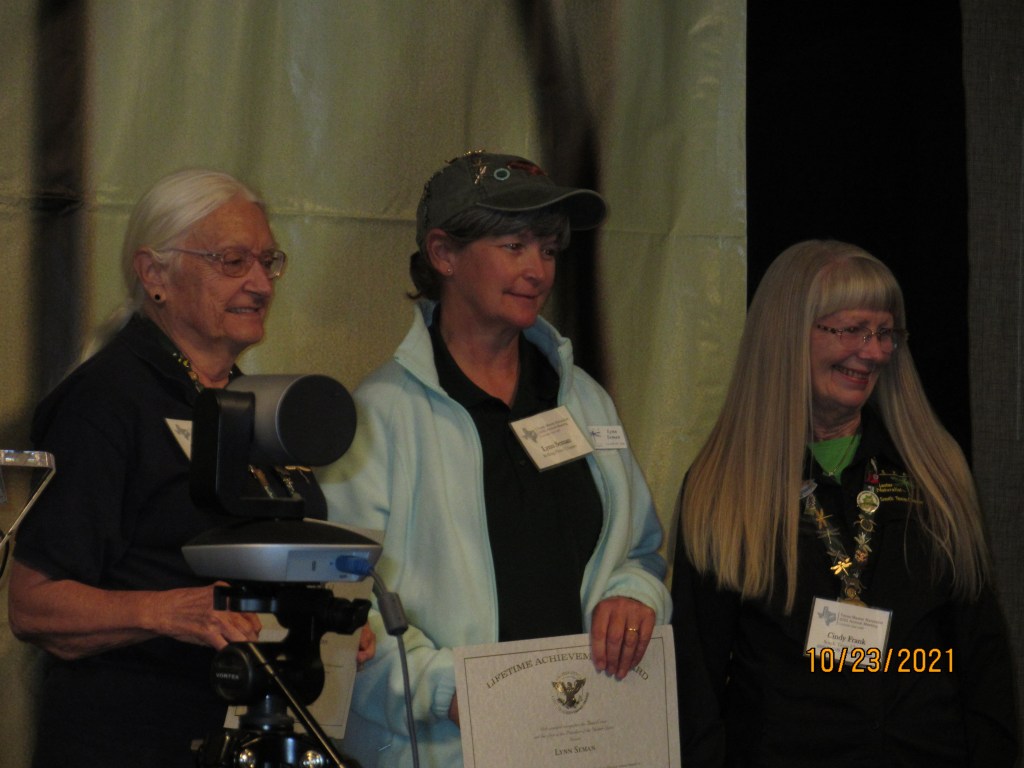
In other categories, Eric Neubauer received recognition for reaching 250 service hours. All who received initial certification from the class of 2020 were also recognized (there were many statewide).
Eric stands as his name is called.
Larry Kocian was recognized for “109!” hours of service in the Texas Water Specialist program with TPWD. Kocian and Sandra Dworaczyk were both given recertification this year.
Good job!
I attended a 3-hour session on this program, and it looks particularly interesting. If we can get a group of three interested, they can take the class and gain certification. I have a connection to it if anyone is interested. If you’d like to find out more information, contact Melissa Felty, conservation education manager for TPWD, at Conservation Edu@tpwd.gov or go to the web site. The class counts as advanced training hours (8) and the service, which can be education, water testing, CoCoRaHs precipitation measuring, and other things, count as service hours for Texas Master Naturalist.
Yay for our folks!
The meeting had some very educational sessions. I went from water conservation, to wildscaping in the shade, to Chronic Wasting Disease, to iNaturalist advanced training, to Tarantula sex with live tarantulas in one day. That last one was particularly amusing to me, Eric, and the rest of the packed class. A few members gave play-by-play commentary. My favorite occurred on Saturday. It was an excellent program given by a fellow iNaturalist from the Blackland Prairie chapter on identifying trees. I now have a brochure to carry with me.
Award recipients
The meeting was educational, entertaining, and a great place to meet other TMNs. I came away with some good ideas for our chapter.
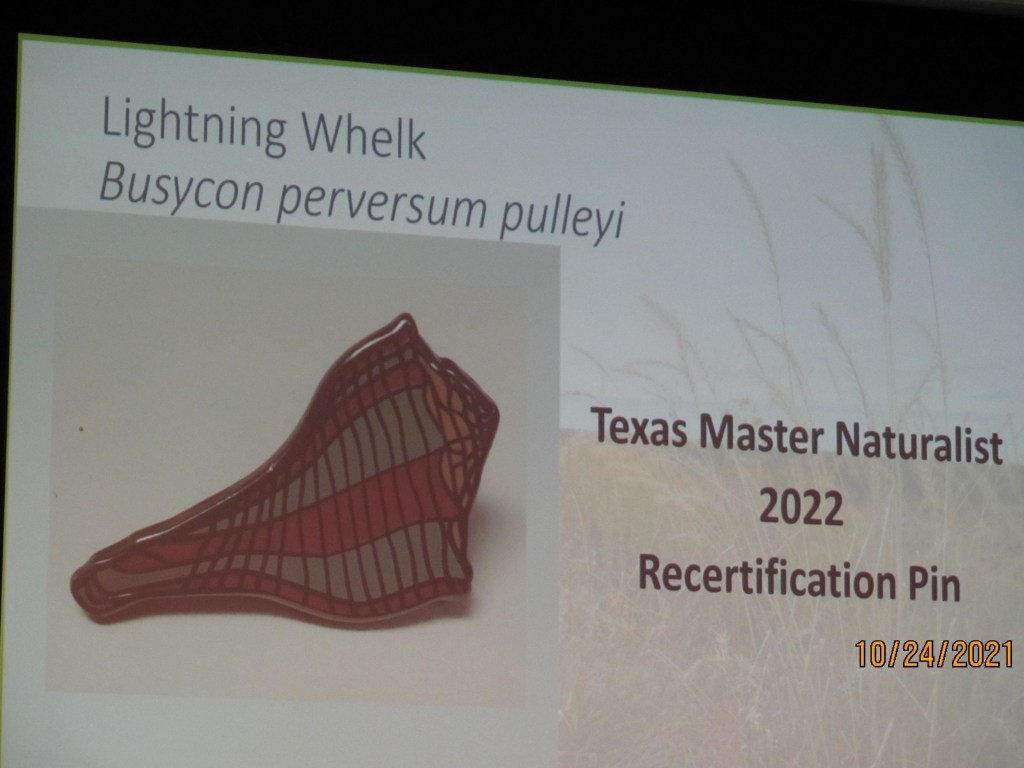
Oh, and by the way, the new TMN pin for recertification in 2022 is the Lightning Whelk.
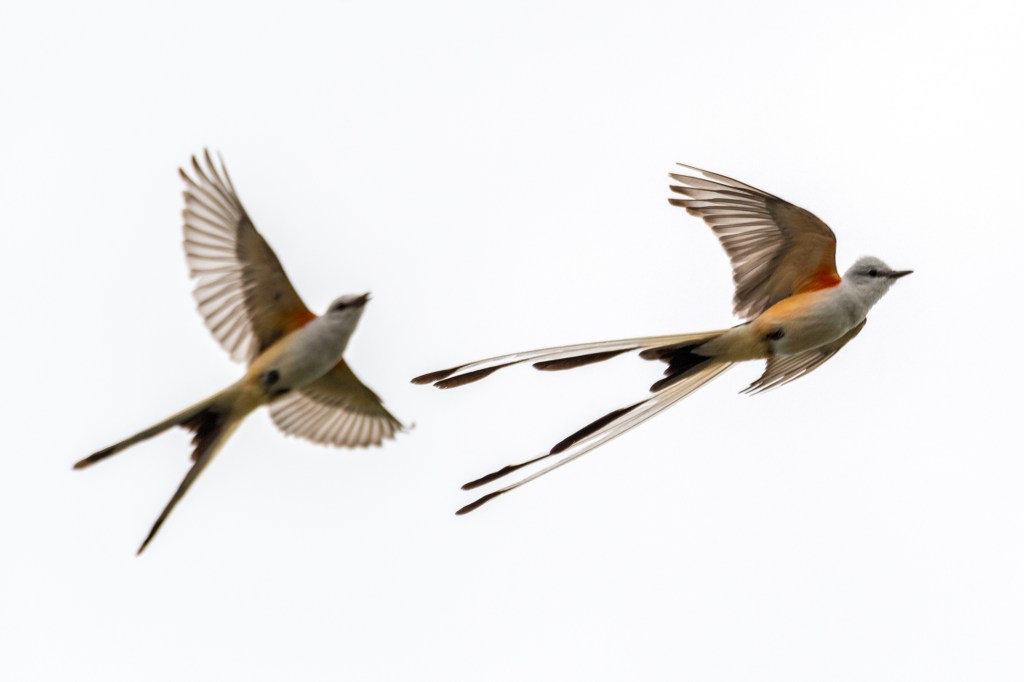
I am sure all of you have noticed the numerous little mini flocks of scissor-tails lately around the county. They are a bird even amateurs can identify.
Male and female. Photo by Martin Hall on iNaturalist.
We drive to our destination and everyone in the truck says look, look, a scissor-tail!
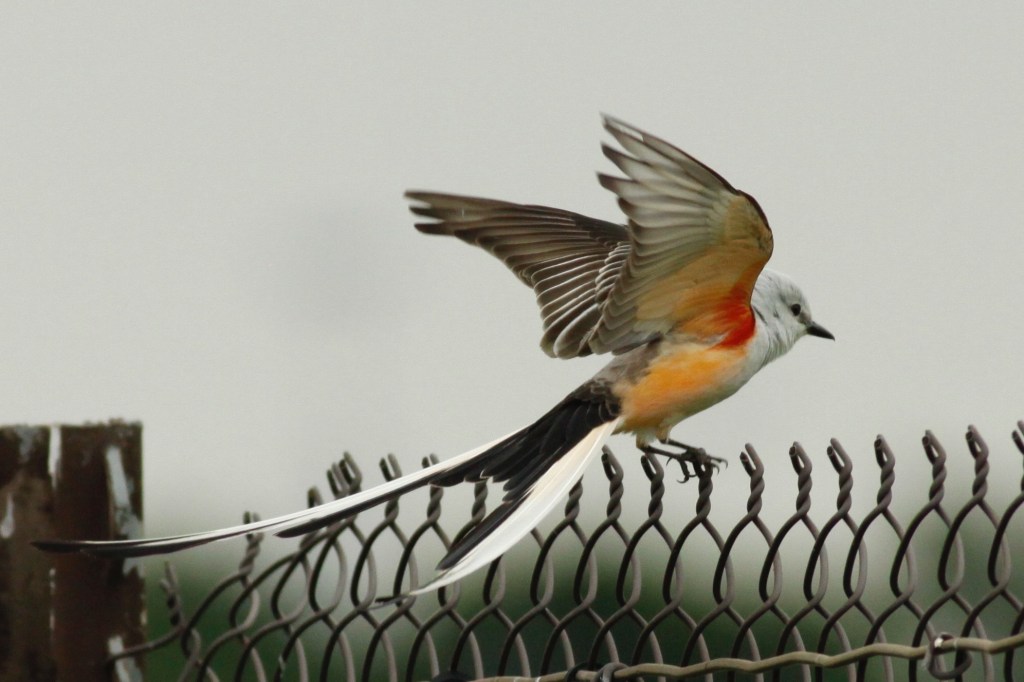
They have something to say! Photo by the late Greg Lasley on iNaturalist.
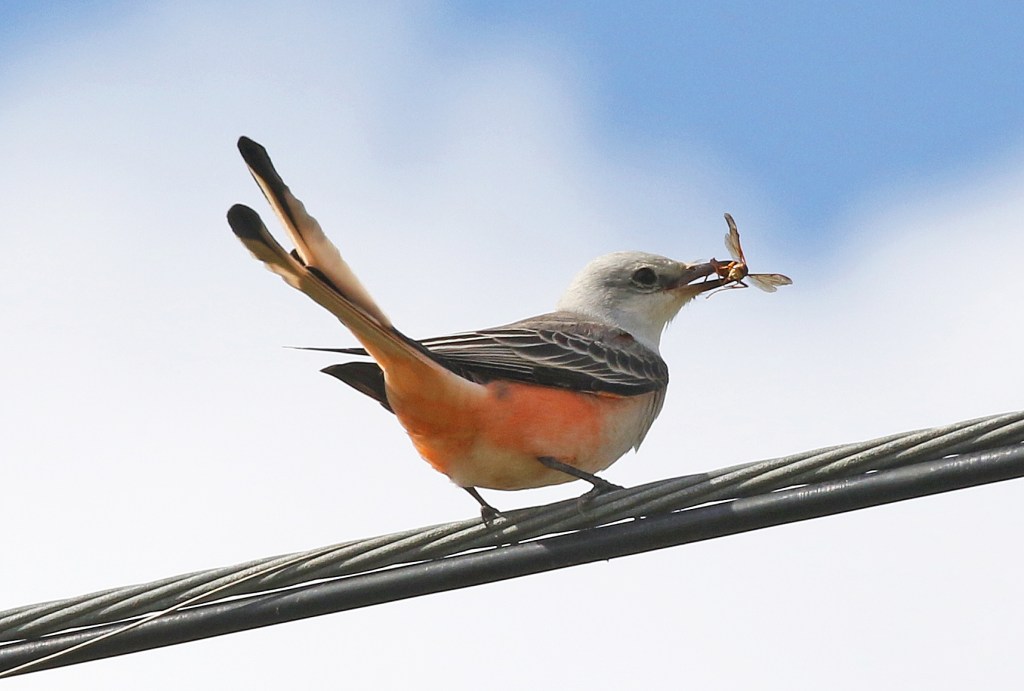
So, why do these birds have this tail? This bird is a flycatcher, so it needs to be agile and able to turn quickly on a dime and in mid-air. To catch an insect you have to be fast.
She caught a fly! Photo by Judy Gallagher on iNaturalist.
Its tail splits in two to redirect its flight. Pretty handy.
Scissor-tailed flycatchers (Tyrannus forficatus) are beautiful birds with a pearly gray head and chest, and dark wings and tail. They can be found all over Texas and Oklahoma.
Photo by HD Cooper on iNaturalist.
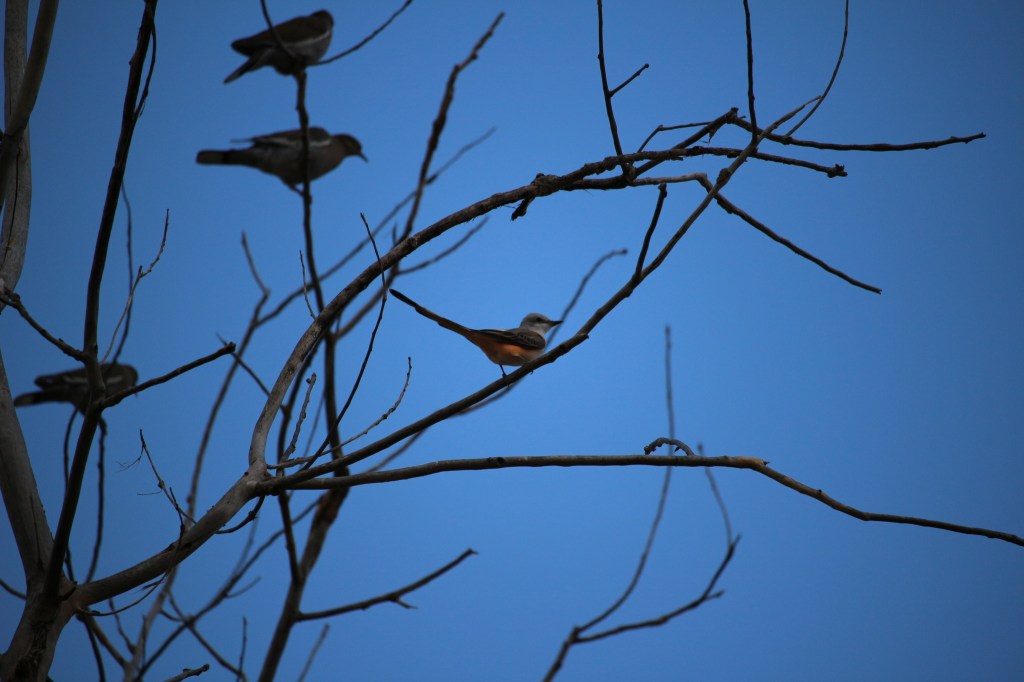
During the winter they will migrate south to Mexico and even South America. That is what they are doing now. Otherwise you would not see them in a flock. They like to be solitary, except at night when they may roost together as a community. A sleepover with your friends.
Photo by Lena Zappia on iNaturalist.
In some places they are known as the Texas bird of paradise.
Females (who don’t have as long of a tail as the males do) lay three to six eggs that are white or cream colored with some dark red on them. Lovely to see.
Keep your eyes up and you will see them now.
All photos are some rights reserved (CC BY-NC) and authorized for nonprofit use and were selected by Sue Ann Kendall to go with Donna’s narrative.
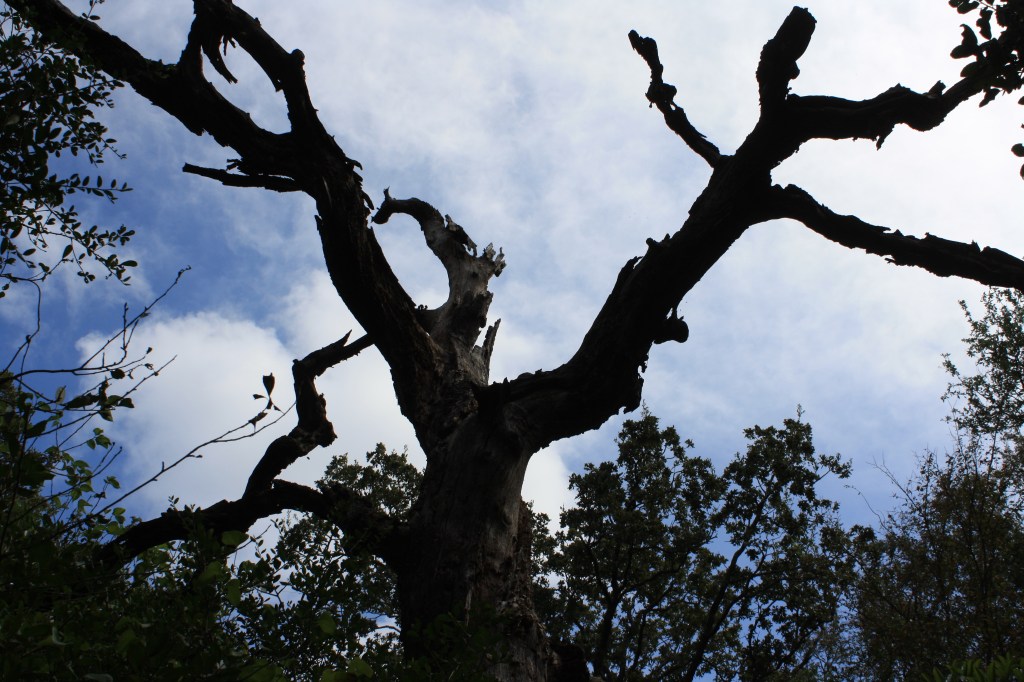
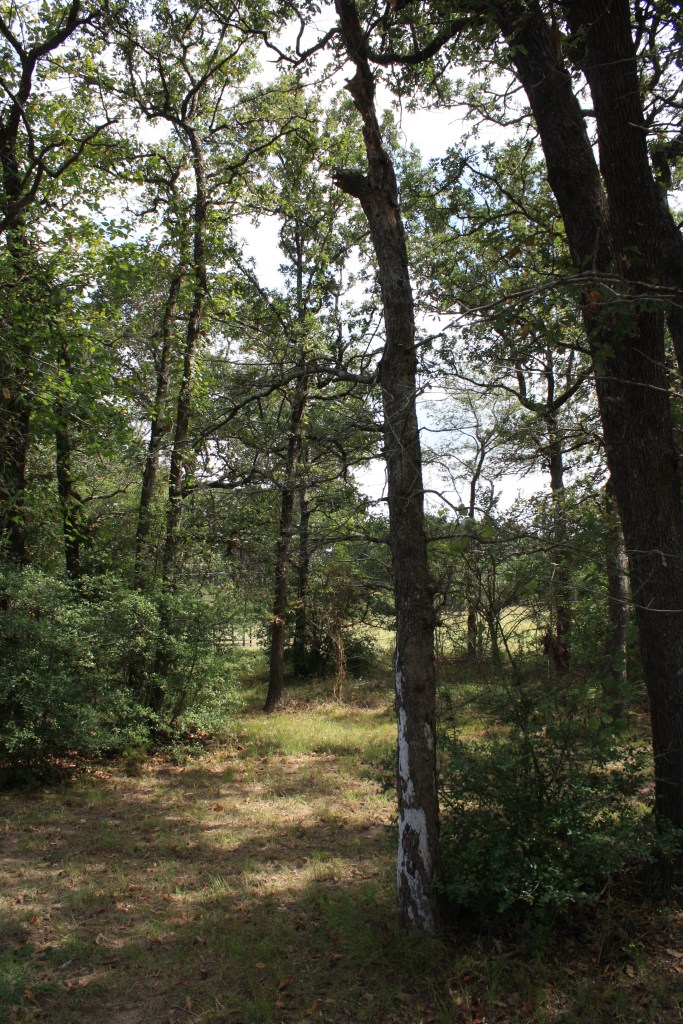
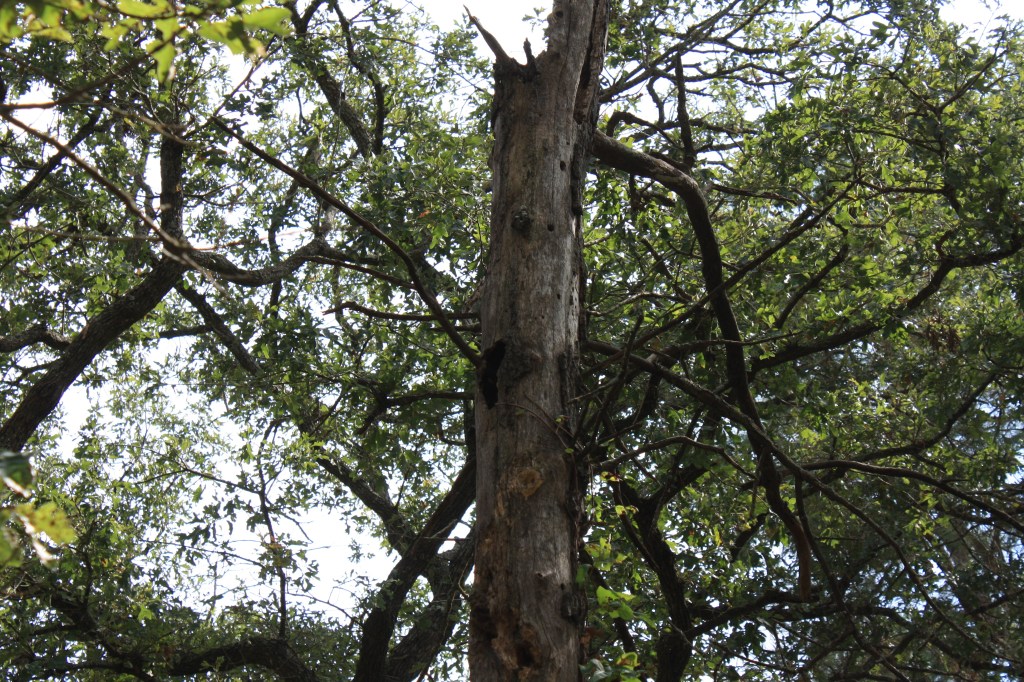
Trees that have died and are still standing (snags), and trees that have fallen provide many homes and food for wildlife. Here are some examples.
Excavated cavities provide homes for woodpeckers.
When they leave a cavity, secondary nesters move in. These include chickadees, titmice, wrens, and bluebirds.
The hollow part of limbs also house owls, raccoons, squirrels, and some bats.
Many invertebrates, reptiles, amphibians, and mammals live in or on fallen trees.
Fireflies use decaying logs to complete their life cycle.
The hollow trunks provide homes for skunks, foxes, mice, and weasels, to name a few.
That’s a ton of uses as a tree finishes its life. It helps coming and going….as a fallen tree decomposes it provides nutrients back to the forest floor.
So, you might think twice before cutting a grand old tree that has died down. Of course there are times when you have to remove one, like being too close to a structure or fence. But if it’s a safe distance, then save it for our wildlife.