Blog of the El Camino Real Chapter, Texas Master Naturalists, Milam County, Texas
Author: Sue Ann (Suna) Kendall
The person behind The Hermits' Rest blog and many others. I'm a certified Texas Master Naturalist and love the nature of Milam County. I manage technical writers in Austin, help with Hearts Homes and Hands, a personal assistance service, in Cameron, and serve on three nonprofit boards. You may know me from La Leche League, knitting, iNaturalist, or Facebook. I'm interested in ALL of you!
I just wanted to share the attached picture of what I believe is an American Lady butterfly that I took in the evening of January 13 in Buckholts. It was the only one I saw, and I thought it was unusual to spot one this time of year. It actually landed on my hand and remained there for a good while when I was checking my trail cameras.
Note: Donnie sent us this article after his first meeting. It’s great to have new folks jumping in and contributing! Welcome, Donnie!
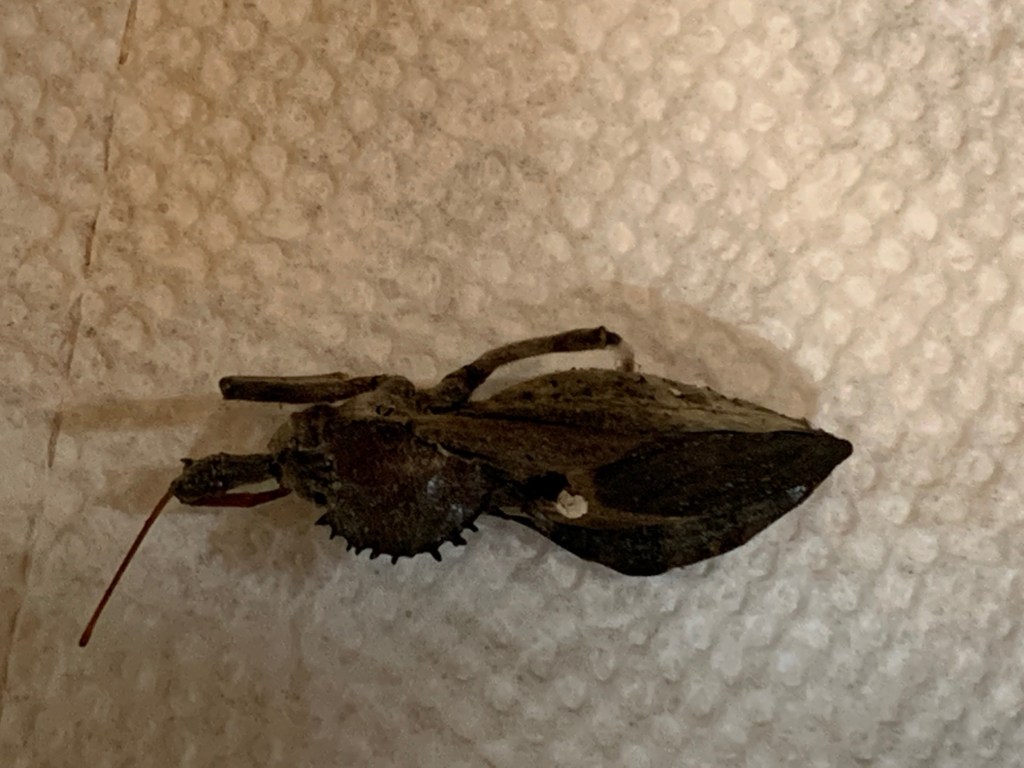
One day last October I stepped out onto our porch and noticed a dead bug. As I swung back to kick it off, I remembered our grandson was collecting bugs for fourth grade science. So, I got a piece of paper and scooped up the bug. Then I took a GOOD look at it. It looked like some prehistoric creature! I put it in a plastic bag for Eli and set it aside. Then I got curious about what it was as I’d never seen this thing before. I hauled out my bug books and hunted through two of them with no luck! Hmmm. Sounds like something rare! So, I went to the trusty internet. Uhh – how do I search for it if I don’t know what it is?? I thought about it, and feeling rather foolish, I searched for “bug with cog wheel on back”. Imagine my shock when all this information started pouring out at me!! A WHEEL BUG!!! How unique!
A Wheel Bug is in a group called Assassin Bugs. Order – Hemiptera; scientific name – Arilus cristatus; family – Reduviidae. They are about one inch long and range from blackish brown to orange or a mixture. These bugs have a cog-wheel type of crest on the back of the head and body. The female is larger than the male. This is a good bug/bad bug. They are considered beneficial insects in gardens and wooded areas. They eat cabbage worms, caterpillars, Japanese beetles, etc. And they are also considered pollinators. They like to be in or around homes because of the carbon dioxide we emit when we breathe. They can be found on the underside of leaves on garden plants. They can be found under rocks, under cool, dark areas, beneath mulch.
Most varieties won’t bite humans; however, species in the SW United States are most likely to bite. AND their bite is described as ten times worse than a wasp or hornet sting with the pain lasting for several weeks up to several months.
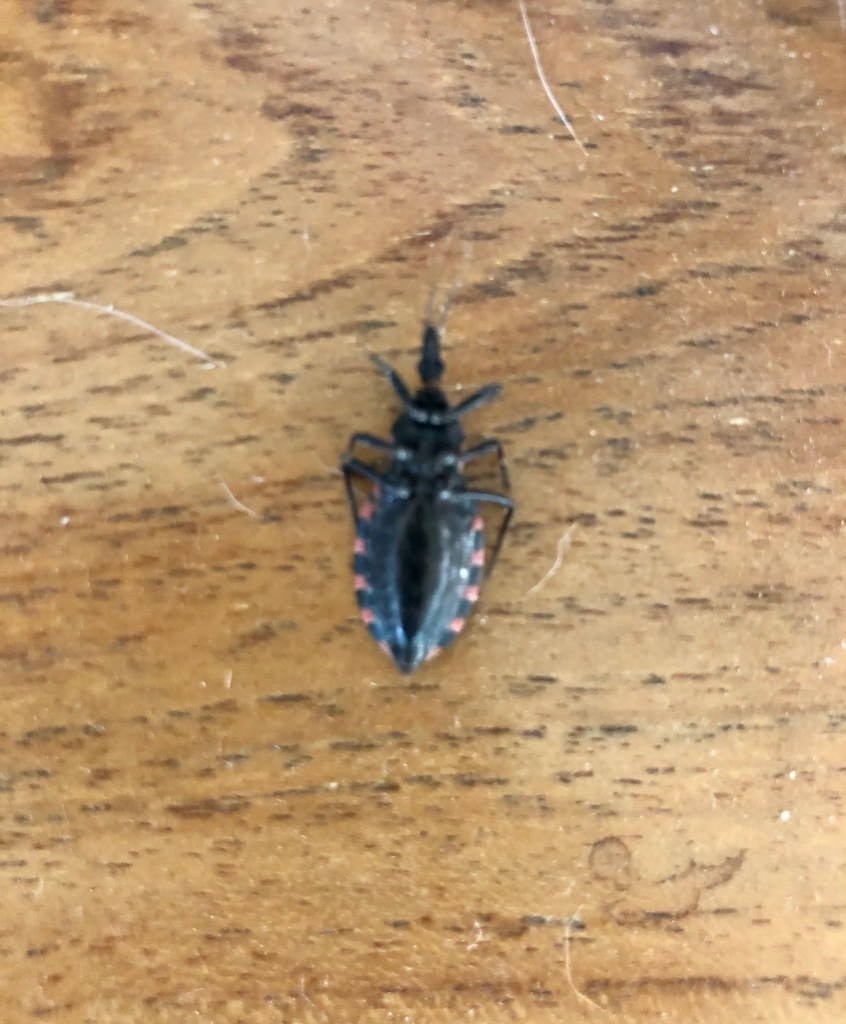
NOTE! We have discovered since this blog originally posted that wheel bugs don’t transmit Chaga’s Disease, just kissing bugs (Eastern Bloodsucking ConenoseTriatoma sanguisuga). However, in case you run into a kissing bug, here’s the information on the disease:
Kissing bug, photo by Sue Ann Kendall
Along with the very painful bites, they can also transmit Chaga’s Disease and or Trypanosoma Cruzi. This is rare in the southern states but will probably become more common. If untreated, it can later cause serious heart and digestive problems. The ACUTE phase includes fever, fatigue, rash, body aches, eyelid swelling, headaches, loss of appetite, nausea, diarrhea or vomiting, swollen glands, enlargement of liver or spleen. The CHRONIC phase causes irregular heartbeat, heart failure, sudden cardiac arrest, difficulty swallowing from enlarged esophagus, stomach pain or constipation due to enlarged colon. The acute phase may have no symptoms until it becomes chronic OR there may never be symptoms!!
These bugs are considered uncommon in the US. Hence the reason I didn’t find them in my bug books. I asked the TPW biologist if she knew what a Wheel Bug was. She gave me a funny look and said yes. I told her my story about finding one. And her reply was “you mean they are already up here?” These bugs are common in South and Central America and Mexico. You can draw your own conclusions about this. I recently presented a little program about this bug to the Lexington Garden Club. A man there who lives out west from Lexington said they are all over their property.
Don’t be fooled by our nice weather… just around the corner could be lurking a cold winter blast. Hopefully not a blast from the past (I am talking about the 10 days of freezing temperatures we had. So, there are some pretty simple things you can do to help our feathered friends right now. Better to do these things while it’s nice for us to go outside.
We built and installed a platform under our front porch for the Phoebe’s to build their Spring nest on. This is to hopefully keep them from putting 10,000 pounds of mud everywhere on our porch trying to build their own platform for their nest. Boy is that messy. I have never done this before, so we will see if they use it.
Phoebe house
Many species of birds like open platforms. Here are a few: Chickadees, Wrens, Phoebes, and Nuthatches. Ducks and other large raptors also use large platforms that are higher up.
Also new is a Bluebird feeder. This is an attempt to keep the dried mealworms from blowing off the platform dishes onto the ground and getting them wet and icky in winter weather. It’s hard for any insect-eating bird to find food in the winter.
Bluebird feeder
I have also stuffed the Bluebird nest boxes with dry pine needles for extra protection from the weather. I have shown here the area behind my house where I feed the Bluebirds and put out eggshells for the Purple Martins. The cow panels make perfect perches for the birds. Perches are very important if you want to draw any birds to you.
Bluebird house
I have placed these feeders away from the regular feeders so we don’t have conflict between the birds, and I can see it easily from inside the house.
These are my regular feeders. The open hopper is a favorite of most all my regulars, Cardinals, Chickadees, Titmice, and just about every bird.
Other feeders
So, you can do a few things that will assist our wild friends. Do what you can.
The suggested “Let’s Get Outside!” ECRTMN chapter activity for the first week in January was to pick up litter at a roadside park or other public area. Granted, it is not that exciting a task but with the Covid numbers still a concern, it was an activity that could be performed in solitude at any convenient time.
Today was my day to “get outside”. It was cool and overcast but fortunately, there was not an icy wind gusting from the north.
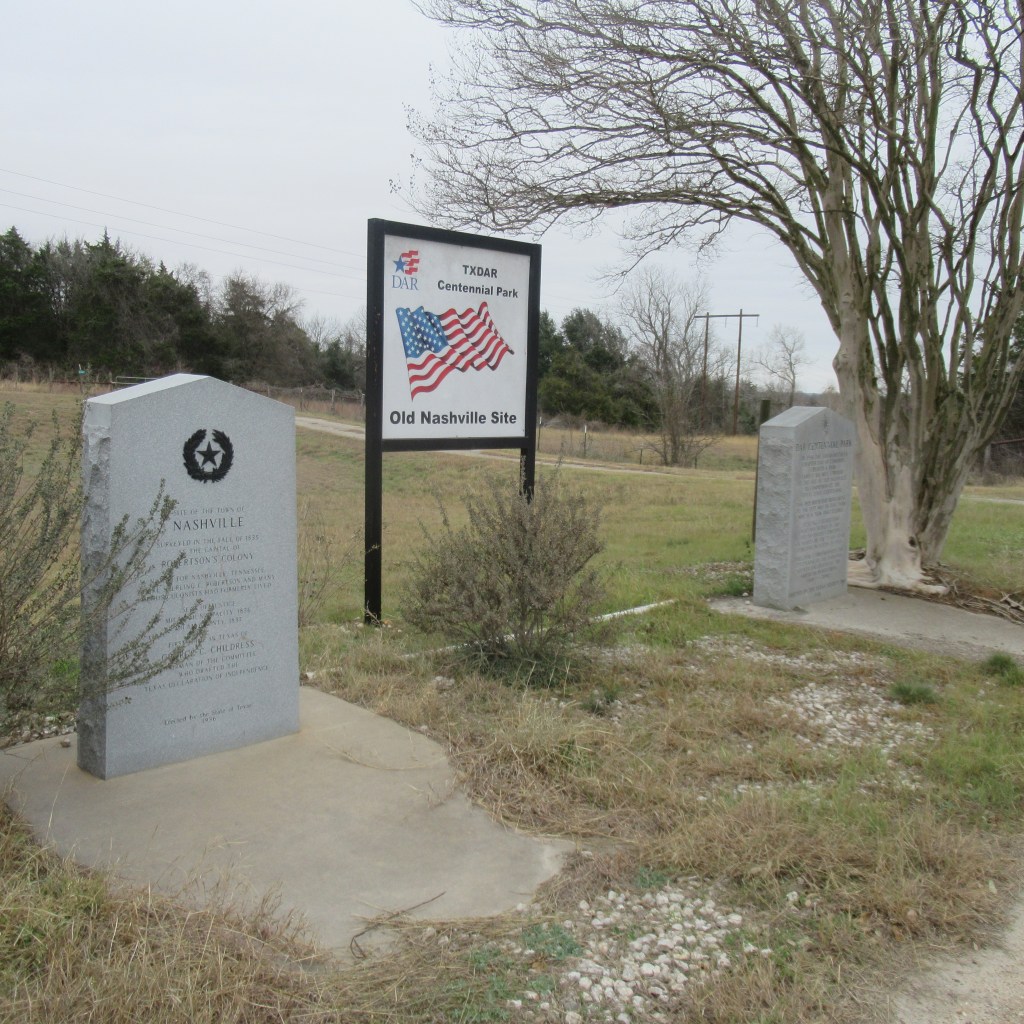
After attending the hybrid ECR chapter board meeting in Cameron, I drove down FM 2095 to Gause and turned east on Hwy 79 toward the Brazos River and the Milam and Robertson County line. Just before the river, there is a pullover with a couple of granite monuments and a row of large crepe myrtle trees.
One of the monuments commemorates the former site of the town of Nashville surveyed in the fall of 1835 as the capital of Sterling C. Robertson’s colony and named for Nashville, Tennessee, where Robertson and many of his colonists had formerly lived. The location also commemorates the first Texas home of George C. Childress, the chairman of the committee who drafted the Texas Declaration of Independence.
The monuments
The other monument was erected by the Texas Society of DAR in 1991 to commemorate the DAR Centennial Park. According to the inscription: “In 1936 the Sarah McCalla Chapter DAR of Cameron created a park (about ¾ mile upriver) at the site of old Nashville to commemorate the Texas State Centennial. The red rock DAR monument to the left was in that park which is now inaccessible.” The red rock monument referred to was vandalized and is no longer on the site. The inscription continues: “Sterling C. Robertson who is buried in the old Nashville Cemetery was moved to the Texas State Cemetery in Austin in 1935.” The monument commemorates the Centennial of the National Society Daughters of the American Revolution 1890-1990.
I do not travel this highway very often, but when I do, I usually stop to check the site out. Usually, there has been plenty of litter in the area, but today, there was not an inordinate amount so my workload was light. I found nothing exciting or valuable; just the usual beer bottles, aluminum cans, cigarette butts, and some miscellaneous paper items. My haul was a Walmart bag stuffed full and a few large pieces of metal. I am intrigued by the mention of the Nashville cemetery and the former park. I plan to do some research and will return to visit the cemetery in the spring.
The haul of trash.
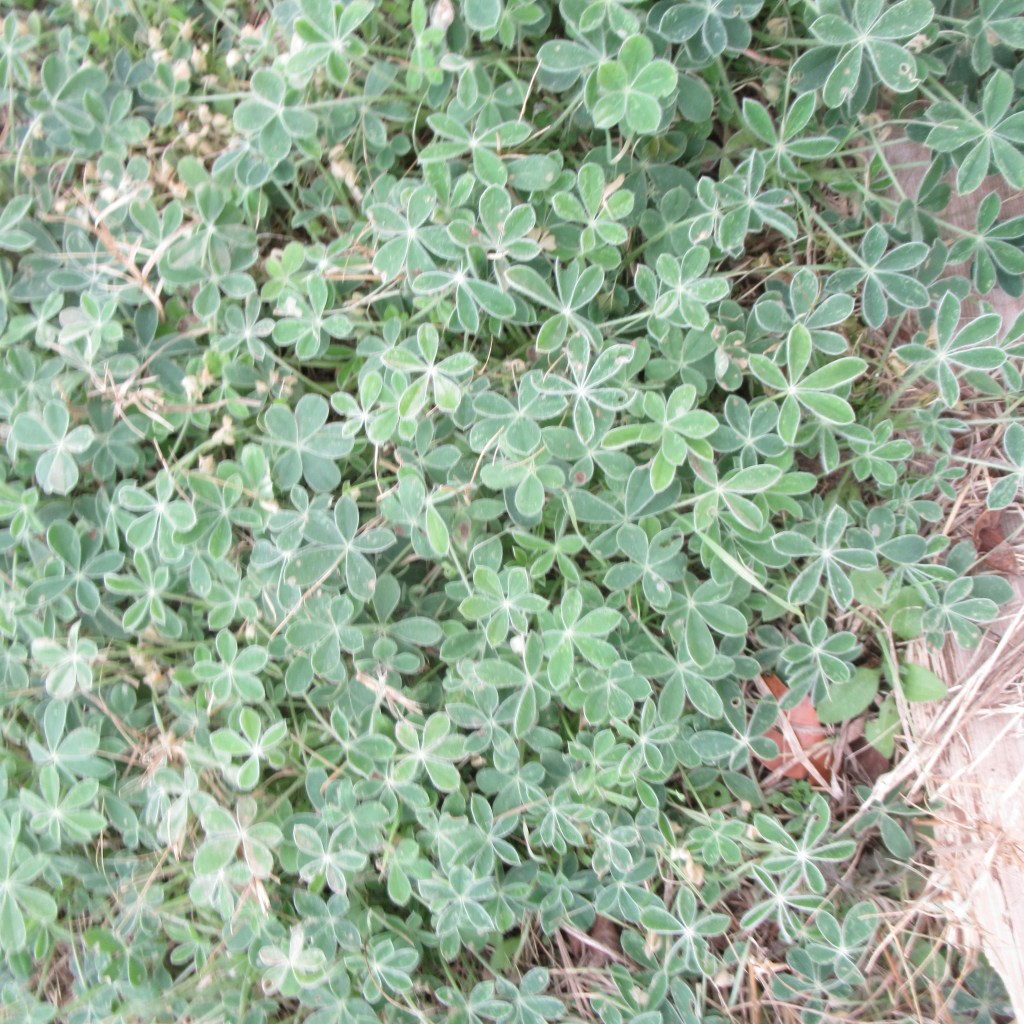
The area behind the monuments is now covered with rosettes of Texas Bluebonnets (Lupinus texensis) and it will certainly be worth the trip.
A good day was spent at the Wildscape at the Bird and Bee Farm between Rockdale and Milano, on the last day of 2021.
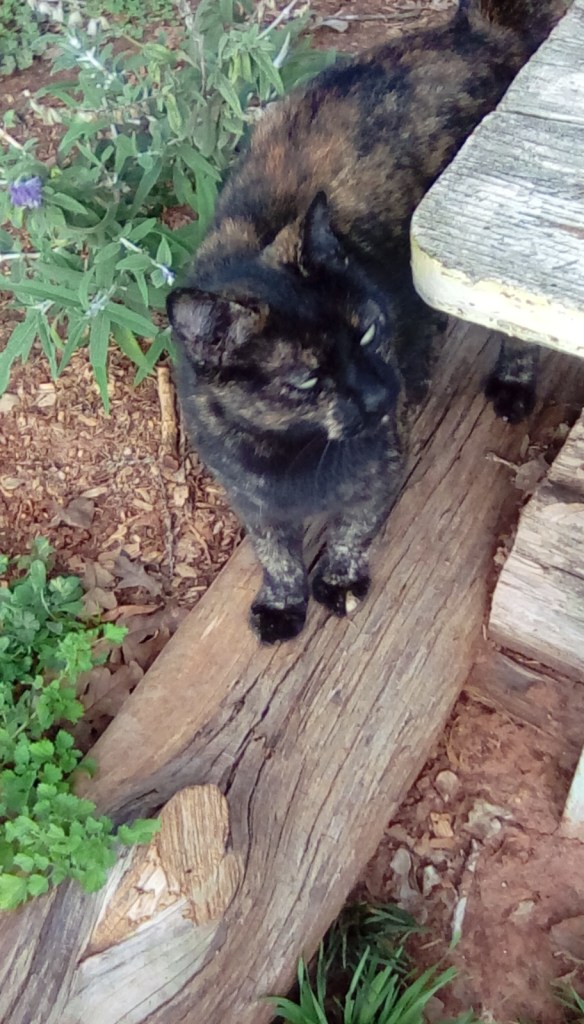
There are many cats!
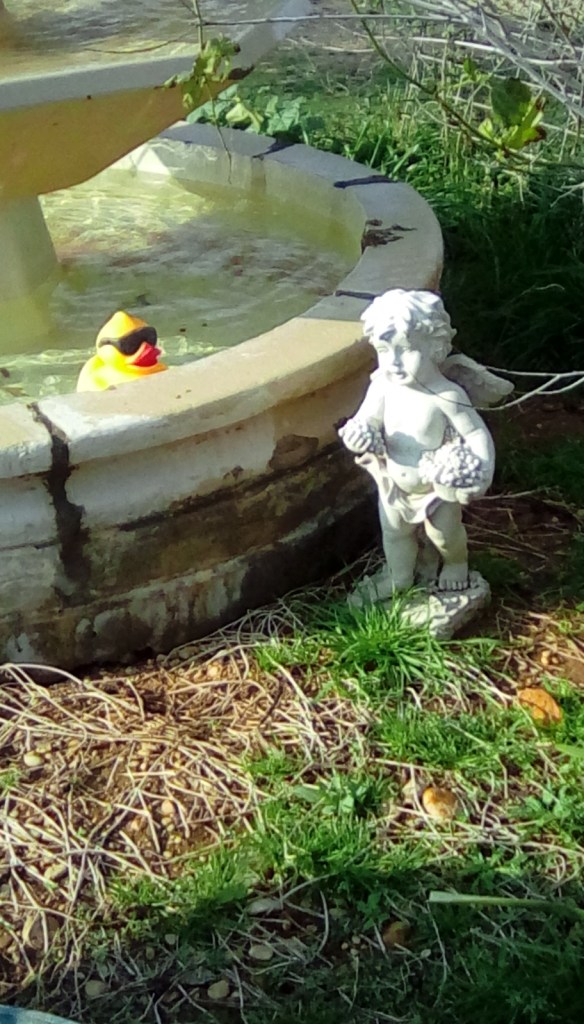
In March, the Wildscape will be three years old, and no one knew what it would become. It has been a place of happy times, learning, sharing, and surprises.
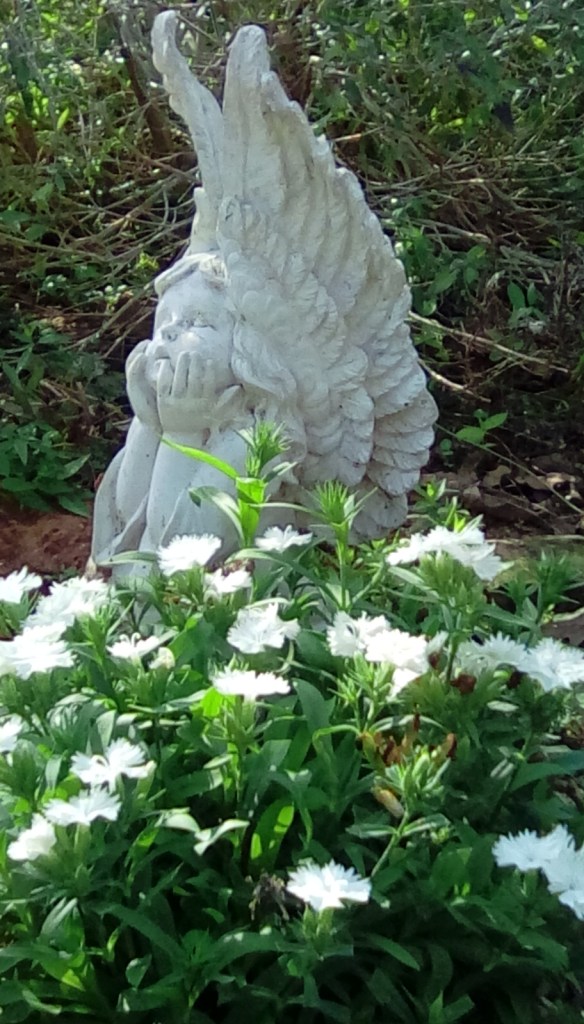
Angels are everywhere!
There were also some losses, including the favorite Garden cat Macaroni.
Farewell, friend.
Much is planned for the new year. Already, another big building has been built for expanding the Rio Grande Turkeys.
These are chickens, not turkeys, of course.
This last day of the year was spent with friends and relatives, including Master Naturalist Alan and son Adam building a great garden shed.
Working on the shed.
Enjoy what is holding on.
Still blooming just before the first hard freeze hit.