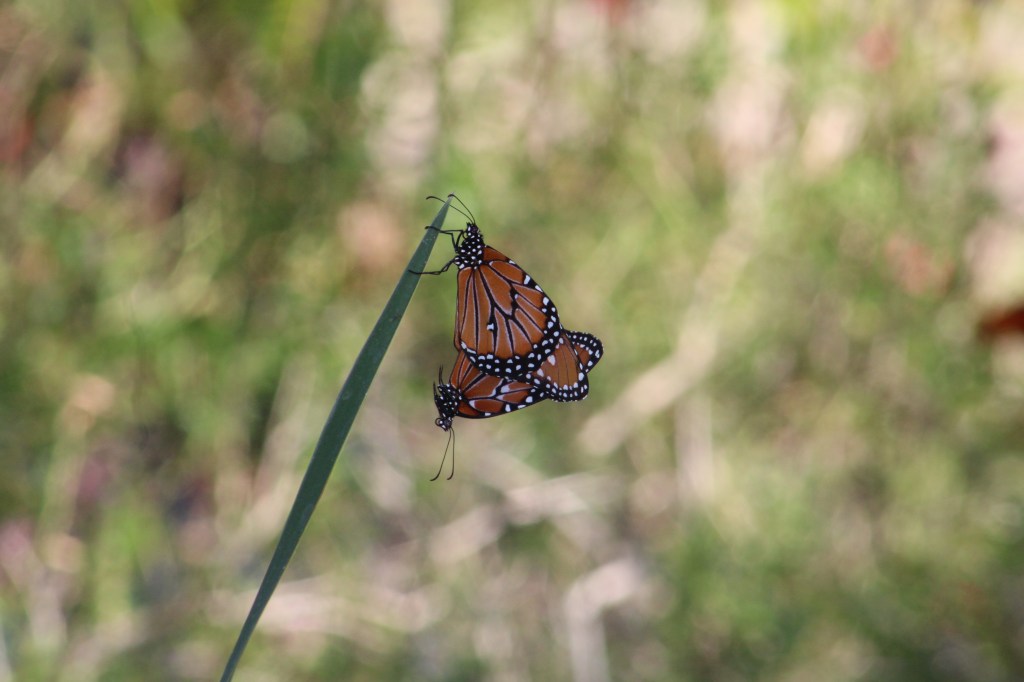
The Ugly Caterpillar’s Demise

by Lisa Milewski

So many times, I have heard someone say, “I just killed the most ugly caterpillar I have ever seen.” 

My face turns to horror in my barely contained reaction. After a brief pause to gather my thoughts, I swiftly turn this into an opportunity to educate others.

Remember, this was once a caterpillar! Photo by Donna Lewis.

I ask two questions. One, to describe the caterpillar, and two, what plant or vegetable was it on.  Based on those two things, I am usually able to identify the caterpillar. I then proceed to let them know that the ugly caterpillar was going to turn into a beautiful butterfly which in turn is a pollinator that will actually benefit your plant or vegetable. They had no idea! 

Wilson’s Wood-nymph Moth. Photo by Sue Ann Kendall.

Sometimes the reaction is, “but they were eating up the leaves.”  I then ask if it was a miniscule number of leaves or is it completely devoured. If it’s miniscule and it is a mature plant or vegetable or fruit tree, I say let it be since it won’t be long until it turns into a beautiful butterfly and that mature plant will quickly recover. If it is an immature, young, plant or vegetable, I suggest protecting it with crop covers until it matures and can handle the occasional munching from those caterpillars. 

Black Swallowtail. Photo by Sara Faivre.

At this point, I remind them of the many benefits the pollinators provide to include bees, wasps, hummingbirds, etc., and how it actually benefits their plants, vegetables or fruit trees by pollination.  For most (not all), it is critical that the pollen gets transferred from the male plants to the female plants in order to reproduce. Although some plants, like cedar trees, reproduce by the wind that spreads their pollen, most others rely on pollinators. 

Checkered White. Photo by Sue Ann Kendall.

The next time you think about killing that “ugly” caterpillar, bee or insect, please look it up to identify whether or not it is a friend or foe. If it a beneficial pollinator, we can always find a way to co-exist. 

The Female Hogna Appear

by Eric Neubauer

Since I knew the Hogna ‘incognita’ females were on the verge of adulthood, I went out spotlighting on my property at 5 AM this morning. Recent rains had sealed up all the cracks in the soil, and a heavy dew made picking out spider eyes harder than usual. Although I saw several promising spiders, they easily eluded me under the new vegetation caused by the rain. I was disappointed and rather wet from the knees down.

The only option left was to go down the gravel driveway and check out the margins of the gravel county road. On the way down the driveway, I found one which turned out to be my first adult female this season! Walking a quarter mile of county road in front of my and other properties filled out the eight containers I carry with me in a tub. These included an adult male and four more adult female ‘incognita‘ as well as two adult female Hogna antelucana. Oddly enough several were along the edge of the neighbor’s mowed lawn where there was little cover. The others were found bordering hay and row crop fields.

The largest was this female ‘incognita’, and she was a feisty one. Wolf spiders, especially the larger ones, may stand their ground when approached. They may raise one or even two pairs of forelegs in a threatening position. They may lay the tip of one foreleg on what has approached them to gain more information about it. Less often they’ll launch a mock attack which likely would turn lethal for edible prey. In the past they’ve attacked the toe of my boot and a finger. During the latter I felt some pressure.

A while ago I ended up with some toilet paper rolls with a center that could be pushed out. The centers became useful to have around for other purposes. I have one I’ve reduced to about a half inch in diameter and find useful to get larger spiders to go through the bottom of a funnel into an observation chamber for ventral views. The large female wasn’t happy about the process and attacked the end of the small roll. She was lightning fast of course, and I could feel a substantial blow from the other end of the roll. Best analogy would be a cat boxing the ears of a larger dog. Calling this family wolf spiders is a bit of a stretch in my opinion. They don’t hunt in packs and many other behaviors are much more like house cats. Should they be called Felicosa or kitty spiders?

Our Bird Station Is Under Construction

by Sue Ann Kendall

Members of the El Camino Real Texas Master Naturalist chapter, led by Ann Collins, our resident avian expert, are banding together to work on our latest project, which is an area created for the benefit of our Milam County birds that will allow for visitors to safely see and enjoy them. Ann will announce its name at an upcoming event, so stay tuned!

With much appreciated assistance from agencies such as Texas Parks and Wildlife and the Natural Resources Conservation Service, Gene Rek has been preparing the area that Ann selected for the station, which happens to be near the Wildscape we’ve created. Gene and his crew have built beautiful new fencing around the birding area, cleared brush and some trees to create open space, started a road that will lead to the area, with parking, too. Yaupon mulch will be used to protect new plants.

New fence and gate, and evidence of a removed tree.

There is already water running to the site as well, which will make the next stages of the project much easier.

Those future plans include planting many native plants that will provide food and shelter to birds and installing water features for both birds and people to enjoy. There will be different kinds of bird feeders in addition to natural sources of food like beauty berries, yaupon, pokeweed, and nuts. Benches will also be installed (and donations of benches with backs are welcome).

The pipe in the center will be made into a hanger for bird feeders

As of now, there are large logs created from trees that have been thinned outlining the main observation area and providing seating. I was there yesterday and observed a Downy Woodpecker busily hollowing out the remnants of a broken limb to create a house or somewhere to store food. I also watched dung beetles hard at work moving a ball of cow dung to wherever they wanted it to be. As this was happening, Carolina Chickadees were feeding in the oak trees and chirping merrily, as Painted Buntings, Carolina Wrens, and a Pileated Woodpecker contributed to the chorus.

Birds seen or heard yesterday:

  • Barn Owl
  • Barn Swallow
  • Carolina Chickadee
  • Carolina Wren
  • Downy Woodpecker
  • Northern Cardinal
  • Purple Martin
  • Painted Bunting
  • Pileated Woodpecker
  • Red-bellied Woodpecker
  • Yellow-billed Cuckoo

It’s already a beautiful and pleasant place to relax and observe our amazing world. I plan to help out with the project by documenting it here on the blog and keeping a count of birds I and others observe as time goes on.

Future residents await their time to shine (AI image; doesn’t look like real woodpeckers)

Spiffing Up the Wildscape

by Sue Ann Kendall

There’s going to be a big visitor event at the Wildscape our chapter sponsors, and it’s coming up fast, so the garden needed a lot of pruning, weeding, and encouraging. Members got out early this morning and got to work pulling up what shouldn’t be there (overly enthusiastic grasses for the most part) and directing what should be there to their proper spots. A lot of the roses needed encouraging!

This smells so good.

There were enough people to help out that only a little dizziness or other heat issues developed, and as always there was plenty of camaraderie.

I admit that I may have spent more time taking pictures of bees, butterflies, and other insects than pulling weeds, but I did contribute! Besides, everyone likes pictures of flowers and pollinators, right?

After we were finished, we headed to Rockdale for lunch, where we ran into Linda Jo Conn and her family. The people in the restaurant must have thought it very weird that everyone in both large groups seemed to know each other. Volunteering can be fun.

The fairy garden is being reconstructed, so here’s a totally fake one you can imagine replacing the one at the Wildscape.

Groundwater Summit in Caldwell

photos by Debbi Harris

Members of our chapterset up a publicity table at the Post Oak Savannah Ground Water District’s Ground Water Summit on Thursday in Caldwell.

Debra Sorenson, Ellen Luckey, Scott Berger, and Phyllis Shuffield at our booth. Photo by Debbi Harris.

Both Debbi Harris and Phyllis Shuffield said around ten people expressed an interest in the chapter. 

Materials from the Summit.