Native Texas Flower Bed Improving

By Carolyn Henderson

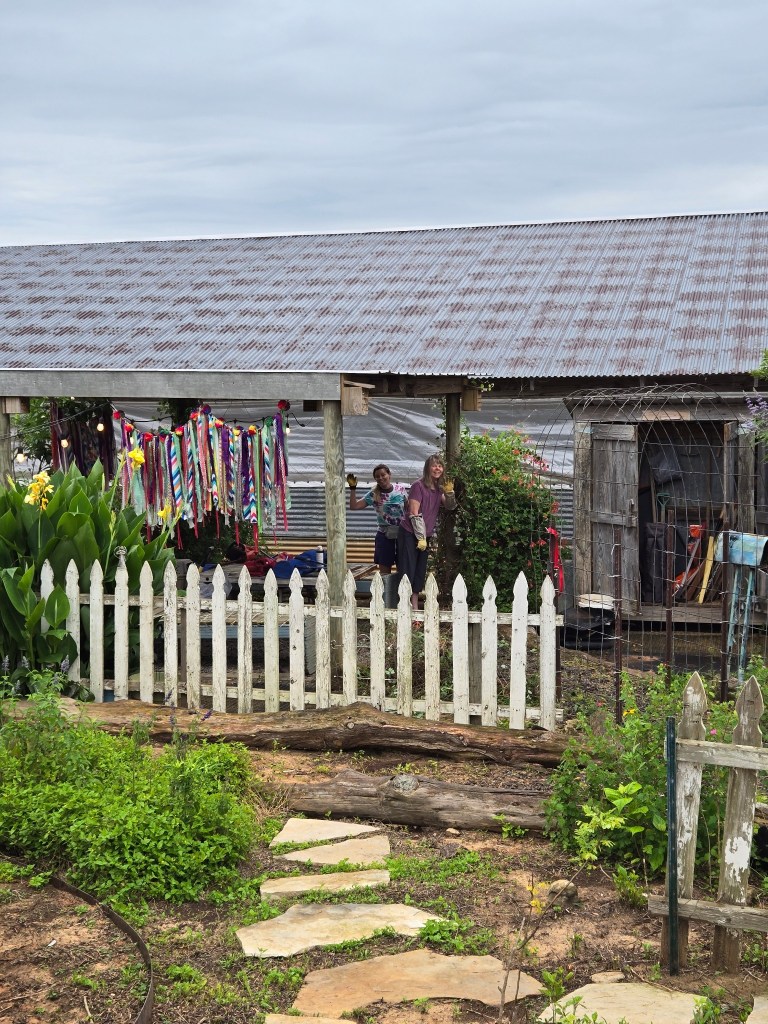
Progress is being made on the flower bed the chapter voted to develop into a native Texas plot. If faces Travis Street, so those of us who are in downtown Cameron regularly have paid attention to the ongoing battle with the non-planted plants running rampant in it. 

The bed after weeding

Some might call them weeds. But, some of them are native wild flowers that tend to be invasive – in that they overrun everything else around them. For example, Persimmons are coming up repetitively all over that bed, and they are very hard to get up.

Luckily, almost everything we planted has survived and is growing. We plan to plant more things in the  fall with the hopes of all of ours overrunning all he uninvited plants. We could put poison on the interlopers, but we don’t want to risk what we did plant. Mulch is on order to be put down this week.

The photos are from work done today. Jackie Thornton and Liz Lewis, both regulars at the plot, as well as Connie Anderle and Linda Jo Conn did a lot of work on the bed today. We also had an unexpected volunteer – Ed Guerrero – who is a master weed puller. I’m pretty sure we would not have gotten the whole thing done without him.
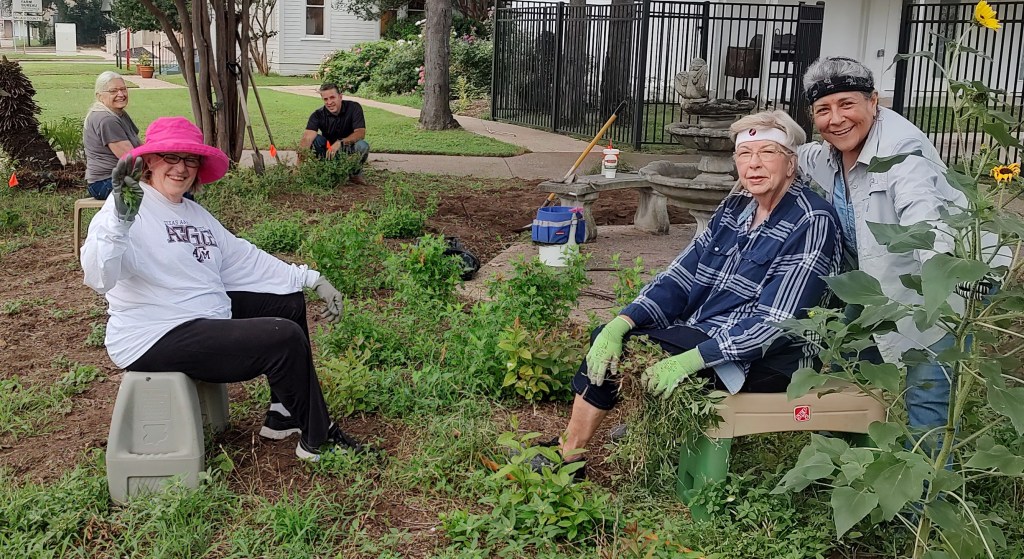
The weed pullers

Past contributors to the project have been Catherine Johnson, Phyllis Shuffield, and Pamela Neeley. If you can pull a weed, you can volunteer. When we are done, we all go have lunch to celebrate winning this battle against those unwanted invaders.
Wildscape Facelift

by Catherine Johnson

The Wildscape had a major facelift thanks to the Reks and employee Brandon. 

Upcoming events include a full moon gathering to observe moths and nature at night.  The improved space will be easier for people to walk thru each month learning about the Master Naturalist program. 

Birds have built nests in the mailboxes and the Mason bees are active. 

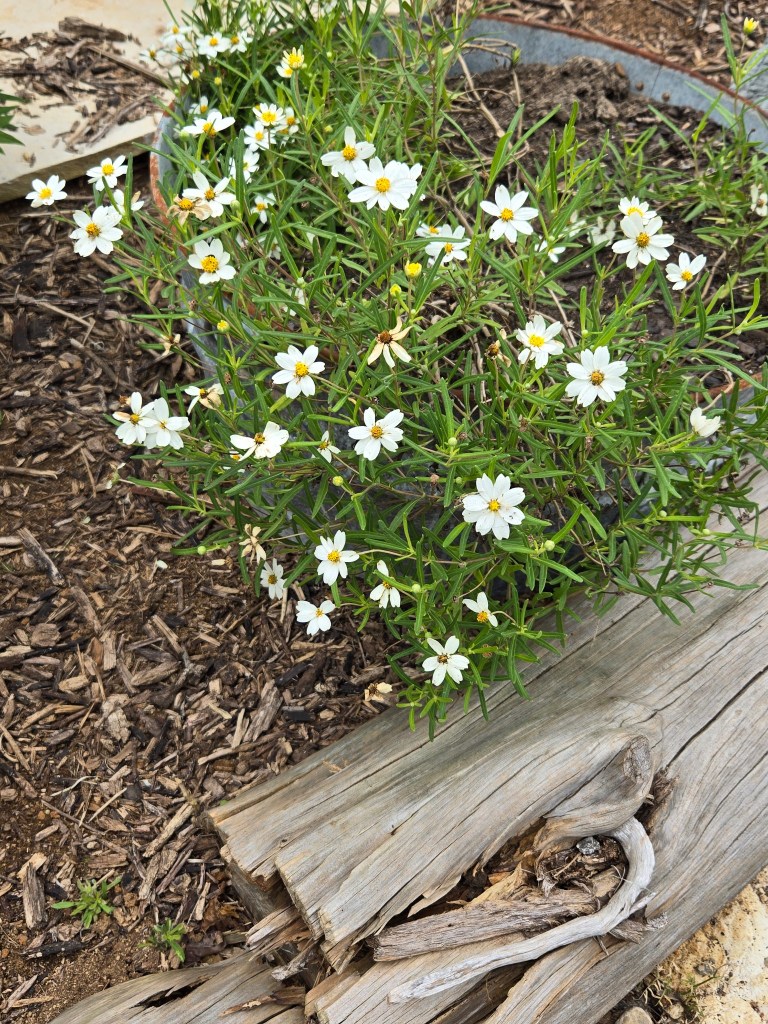
The pictures include our State grass, Sideoats Grama. It is a short clump grass that provides nutrition for wildlife and erosion control. It is drought tolerant, with oat-like seeds and orange and purple flowers.

May 6, 2024 – Day of Discovery

by Ann Collins

You just never know what might pop up, do you? I’ve seen some strange things on my little slice of Heaven, right here in Milam County.

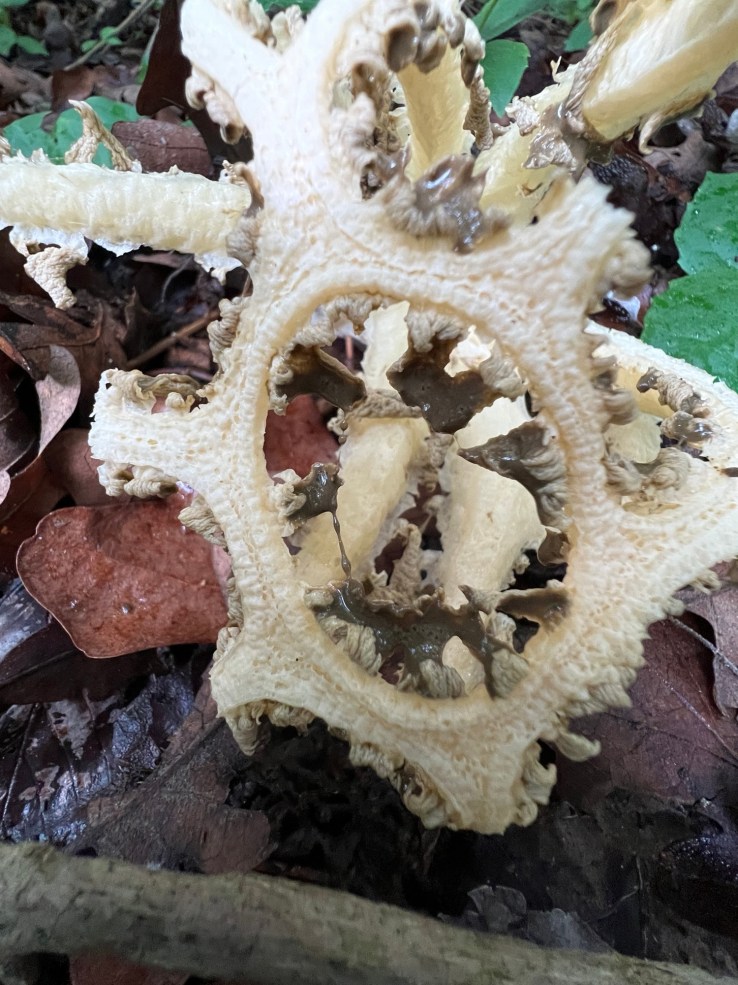
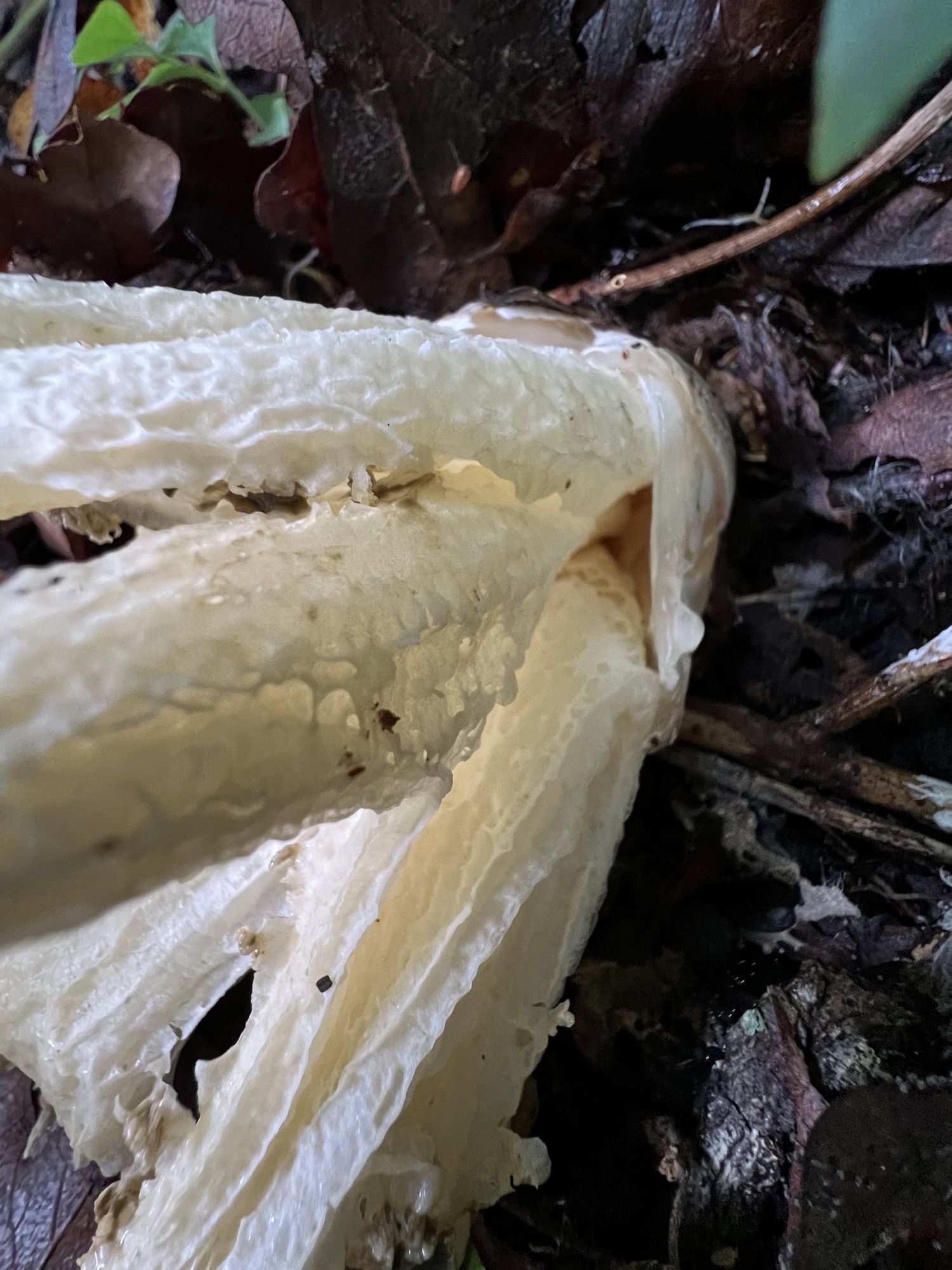
After a whole lot of rain, the oak leaves are coughing up quite a few interesting mushroom/fungus spores. I was cleaning one of my bird baths and spotted something in the tangle of yaupon, Japanese honeysuckle (no, I did not plant it!), mock orange, and who knows what else. It looked like a bunch of decaying celery to me. On closer inspection it looked more like the embryo of a space alien from a dark planet.

Of course, I couldn’t ignore it, just not in my nature. So, pushing and pulling the tangled limbs away, I crawled through the low tunnel with my trusty camera phone cocked and ready in case this little monster tried to attack. Fortunately, it didn’t. In actual fact, it was “rooted” to the ground. Had I known what it was I would have tried to dig it up.

Not nearly enough camera snaps and some pretty wet knees later, I edited my pictures and immediately posted them; only four are allowed on the iNaturalist phone app. In less than five minutes, a guy in Sweden identified it for me. I had entered it under the genus Blumenavia but @nSchwab took me a step further with Blumenavia rhacodes.

Not too much later, @masaki_hamaguchi from Hokkaido in Japan confirmed the identity for me. At 10:29 am Texas time, Masaki much have been burning the midnight oil like my friend LJC. I’m too lazy and really don’t care to figure out what time it was there. You techy types can figure it out if you want to. Thrilled to have my baby alien identified I quickly agreed with them.

Enough of the excitement of discovery. I proceded to dig deeper and found out that @loganwiedenfeld is at the top of the leaderboard as the top observer of “Blumy” with the massive number of three! Yes! 3! Three! The total observations on iNat is 37! Yes! Thirty-seven! This little old lady from south Milam, Texas has joined a pretty eite group with nothing more than a keen eye for spotting stuff! No months of observation, no collecting data, just plain dumb luck!

Just 37!

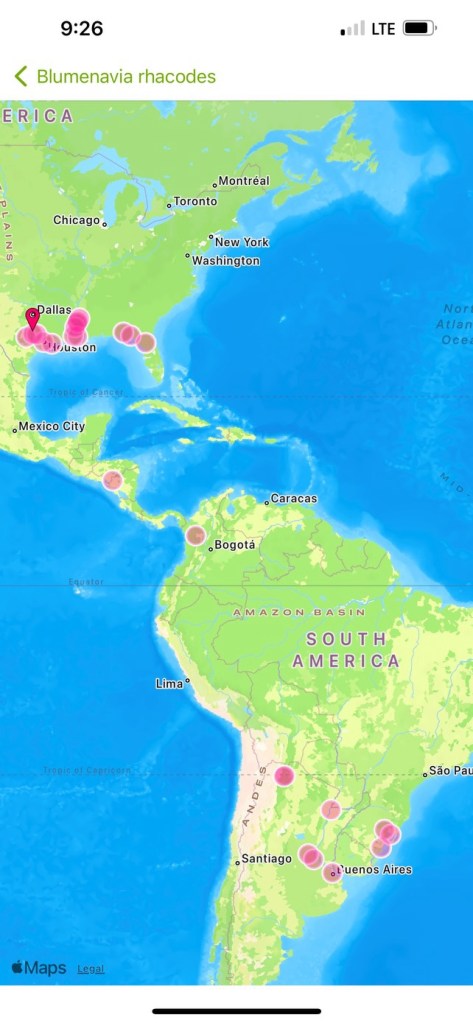
There’s not much information about Blumenavia online. Wikipedia simply says it’s “a genus of fungi in the family of Phallaceae.” The genus contains three species in South America and Africa. iNaturalist has a map locating sightings along the Gulf Coast of North America. A. Moller apparently named it in 1895.

Screenshot

Baby Bluebird Visitors

by Eric Neubauer

A bluebird family dropped by. While they hadn’t nested here, they came to visit daily for a while.

Missed photos: all three lined up on the edge of the porch roof; two fledglings on the feeder while a hummingbird closely studied them from all sides.

It’s bad enough that they’ve had to share the feeder with paper wasps, jumping spiders, and a rare praying mantis.