
by Catherine Johnson
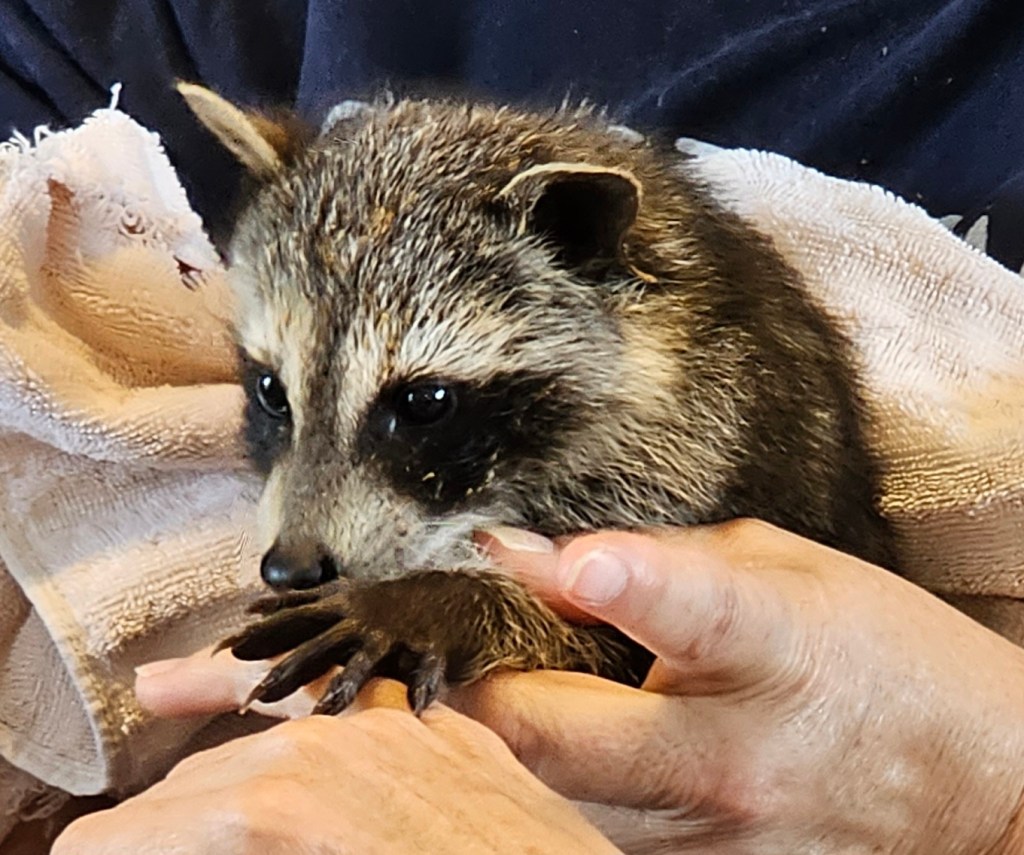
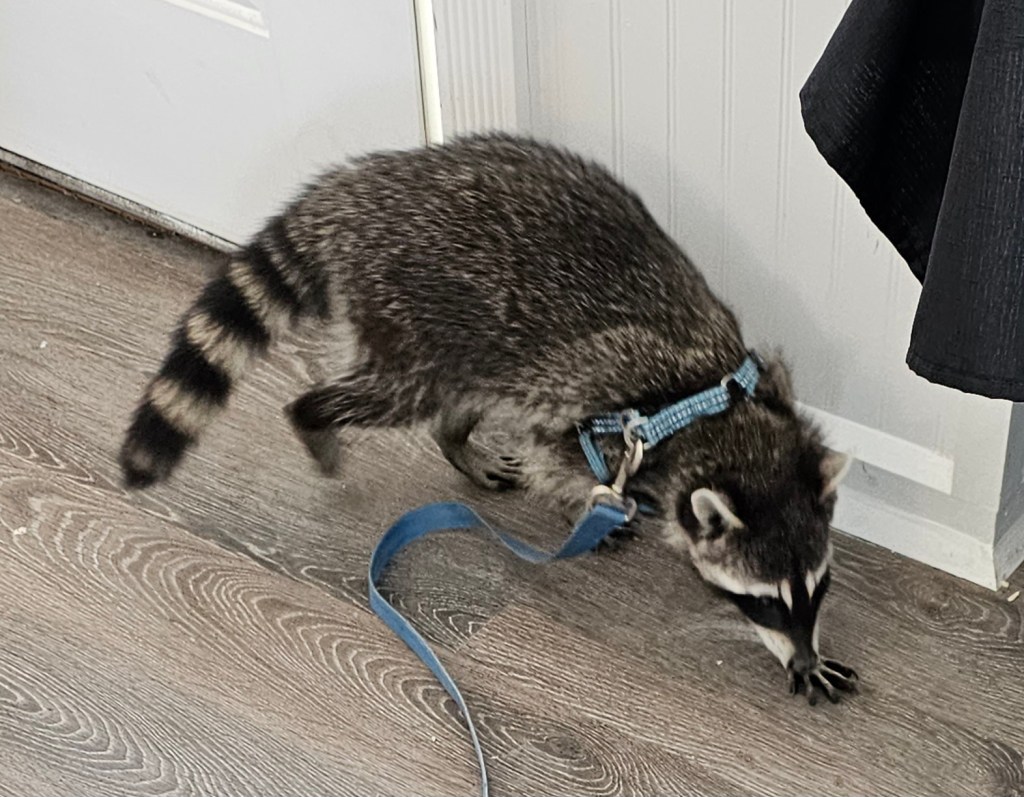
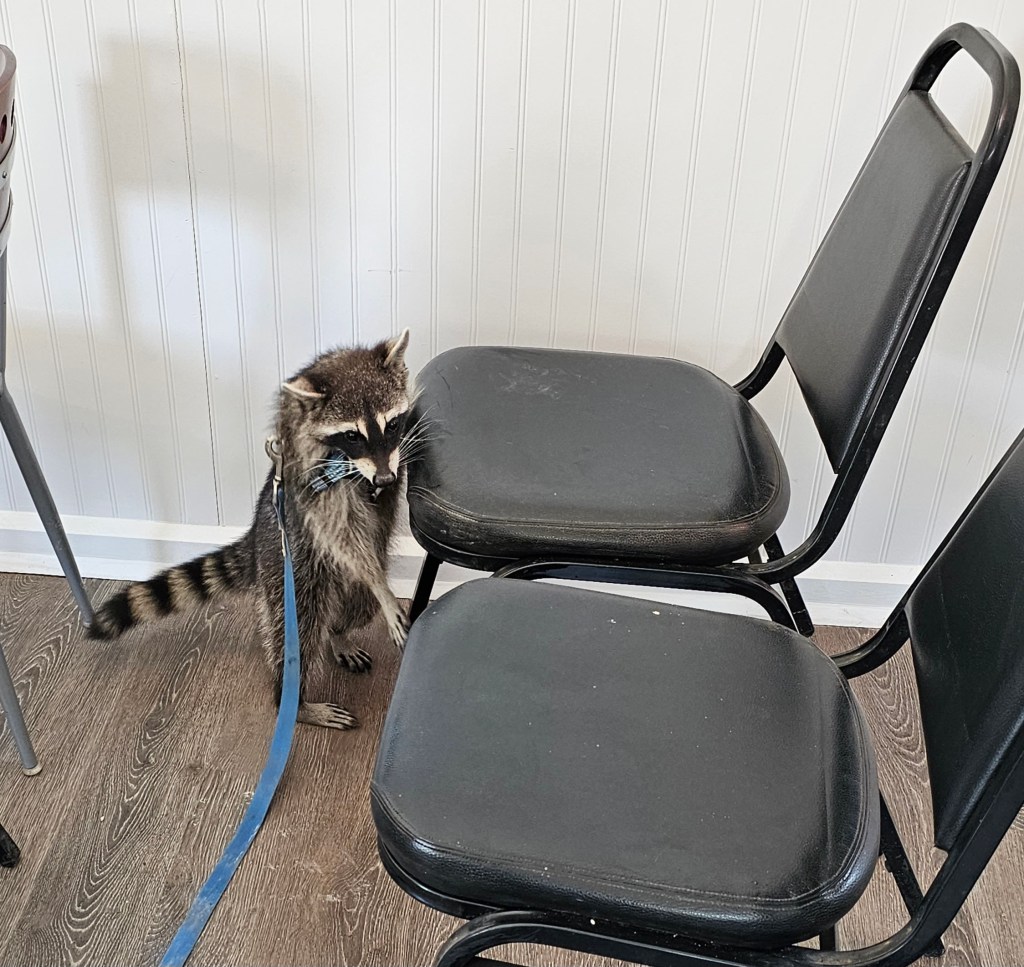
Master Naturalists attended a recent All Things Wild (our region’s wildlife rehabilitation center) program on raccoons. They are more active than the opossums we learned about recently and require much care from the TPWD-permitted volunteers.

Some facts about racoons:
- Raccoons eat almost anything, and rub items between their hands in water to tell what kind of food they have.
- Babies stay with their mothers for five months.
- They purr when happy.
- Their fur is not waterproof, so they do not swim much.
We were informed by the presenters of disease risks with racoons and how to humanely get them to leave your property. They do not make good pets, and as always, you should contact a rehabilitation center if in need of help with them.

Animal Ambassador River lives at the center and is blind and has seizures.

Exciting news from All Things Wild is that there are plans underway to acquire permanent land for an expanded center nearby with direct access from a highway.
By the way, make sure you sign up quickly for their programs, as they fill up within two hours.
 Nature Along the El Camino Real