
by Eric Neubauer
Wolf spiders are too hard for amateurs to identify
I’ve heard that, and you may already believe it even though there is at least one species, Rabidosa rabida, that most people are familiar with. On bad days I even believe it. Wolf spiders come in many kinds and sizes, and their rapid movements out in the open often bring them to our attention. Rabidosa rabida appears to seek out commotions in daylight, and we’ve all been surprised by seeing a big one standing motionless nearby when we’ve been busy doing something. There’s a game I play. I set foot on a property and say, “Now where are the wolf spiders?” With a little practice, you can be a regular winner. So, people are constantly reminded that they can’t put a name to those dang wolf spiders.
The life cycle of a wolf spider is simple compared to a butterfly. There are eggs, spiderlings clinging to their mother, and then spiders which get bigger and bigger and almost unnoticeably change from juvenile to adult, and then they grow some more. Since they have exoskeletons they have to moult repeatedly as they grow. During each molt they have the ability to make physiological changes including re-growing lost legs. None of the changes are as dramatic as a chrysalis turning into a butterfly, but many subtle changes can occur during each molt. It’s that long period of gradual development that causes most of the identification difficulties. I figure you’d need at least five separate identification guides to cover Hogna antelucana at various times during its growth. Because I rarely encounter older spiders, I was unaware of a later change in Hogna antelucana when I did the presentation back in July. Thanks to seeing other people’s observations come in during July and August I’m aware of it now, and an addendum will be forthcoming. Think of the difficulty of writing a guide on wolf spiders. Each species would take a half dozen pages and be too complicated to make sense of unless very carefully presented. And what about regional and seasonal differences?
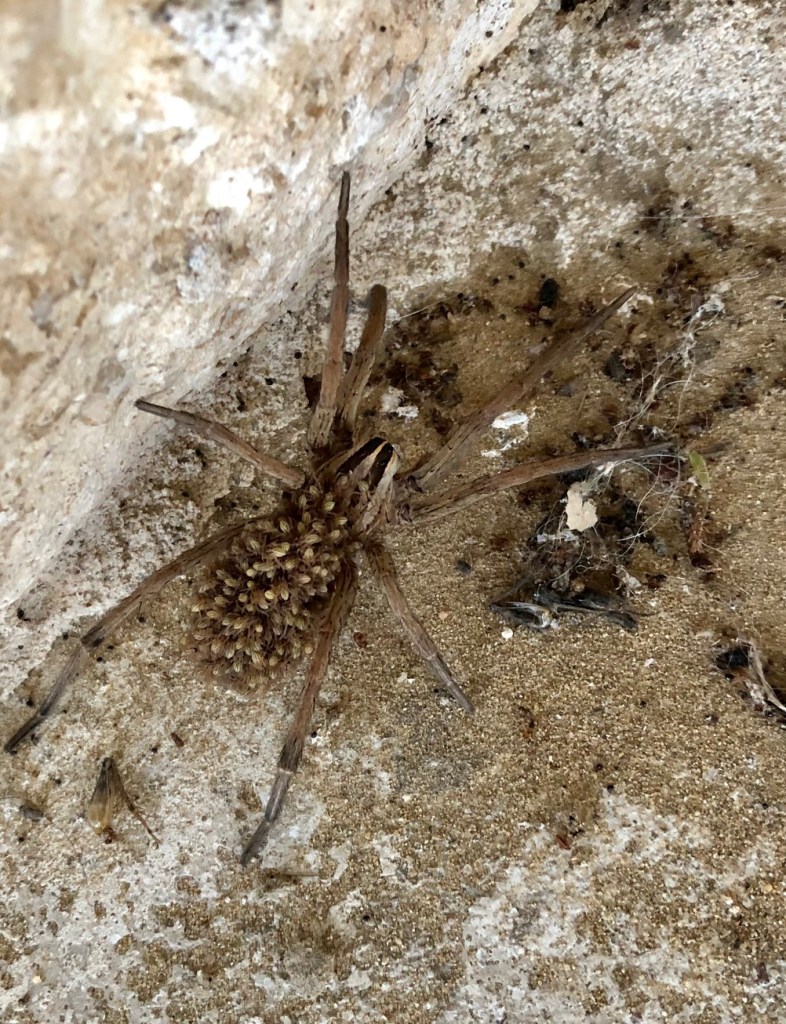
I don’t want to scare anyone away from trying to identify wolf spiders. The truth is, if you take photos of multiple spiders in one place at one time you’ll find many as alike as peas in a pod. Given the same history, the appearance of spiders is remarkably similar. Get to know a population and watch it for a year and then you will be able to identify the next individual on sight regardless of their age or sex. Going to a new place and encountering the spiders there the first time is a greater challenge, but it may turn out there is less regional variation than people thought after developmental changes are taken into consideration. In the long run we’ll work out which characteristics are most reliable for identifying each species. Having iNaturalist and BugGuide is a great asset. I was able to virtually travel 4,000 miles looking for a particular species group along the way in less than a week and without leaving my house. Nevertheless, I still prefer to interact with them in real life.

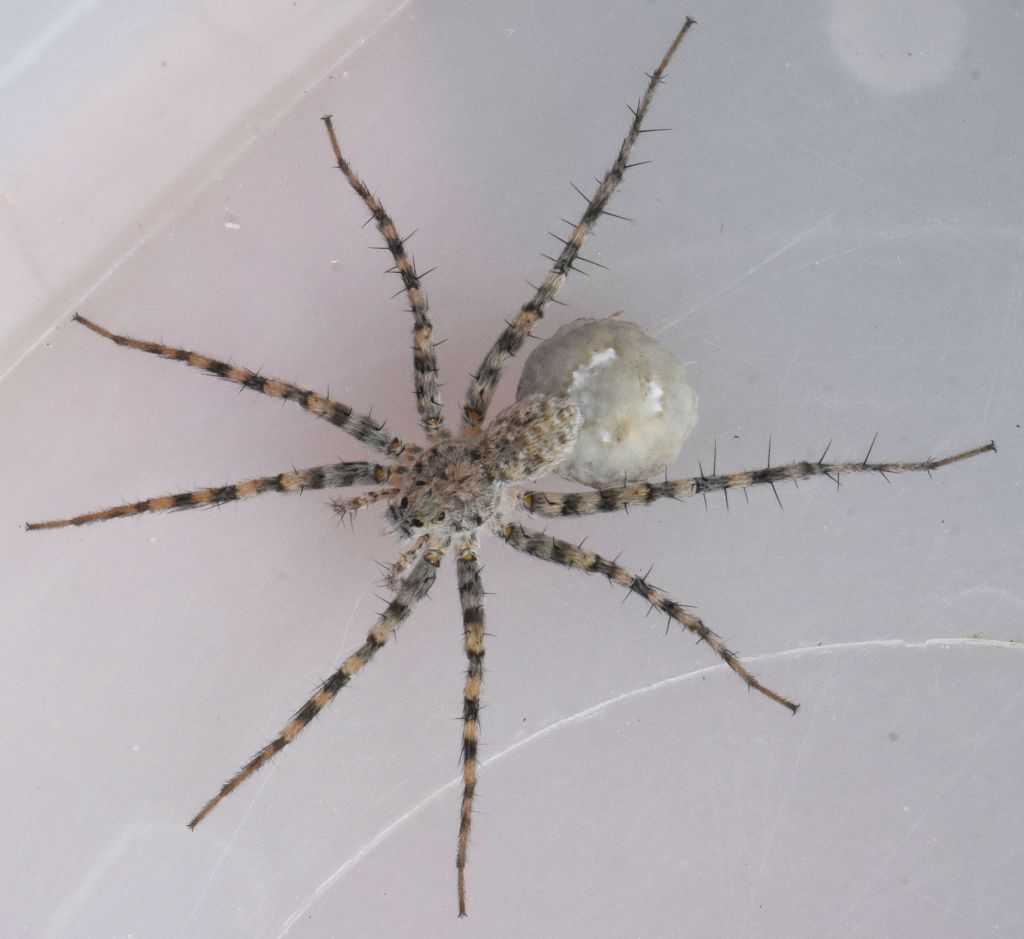
The main image of the observation below was taken on Mustang Creek under the U.S. 79 bridge southeast of Taylor. I was specifically looking for it there and found just one. After the photo session she was released right where I found her and is probably covered in spiderlings as I write this. I’m trying to locate all accessible populations of these in eastern Williamson and Milam Counties. At this point I found them in three locations, plus a single individual roaming downtown Taylor a half mile from where it should have been. That’s all I could find until water levels in the creeks and rivers drop. They like rocky or pebbly areas with water on one side and low vegetation on the other. If anyone has an accessible area like that on their property, I’d appreciate a chance to visit.







 Nature Along the El Camino Real