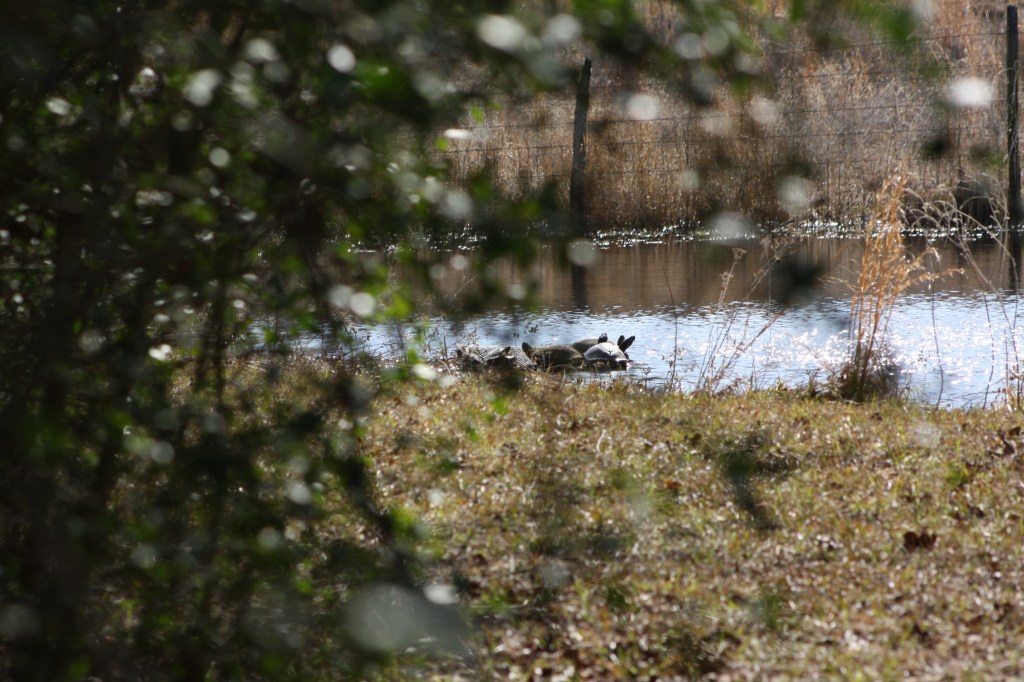
If you have ever tried to photograph our common pond turtle the, Red-eared Slider, you know how hard it is. The minute they see you, hear you, or even get a vibration, they jump into the water. So you never really get a good look at them up close.
It took days for me to sneak up on these guys down at our pond.
I think I hear Donna! Get ready to jump!
I also think my local crows call out to them that I am coming..
Red-eared sliders like muddy bottoms and slow moving water. These are the turtles that pet stores used to sell a lot of, which is not a happy thing for the turtle. They are wild and need to be out somewhere in a pond, in my opinion.
I built a turtle dock a few years ago for them to bask on. Rotten trees tend to eventually go down into the pond, filling it up with debris. As long as they can climb up onto the dock they are happy.
Investigating the Granger Lake area is something I’ve been meaning to do for more than two years. There are over a dozen access points, so this was no small task, and I still had several to go when I stopped for the day. Although it was warm, few animals were stirring and it wasn’t until the fourth stop that I found anything noteworthy. That was the area called eOSR 3, which I suspect refers to further information on-line.
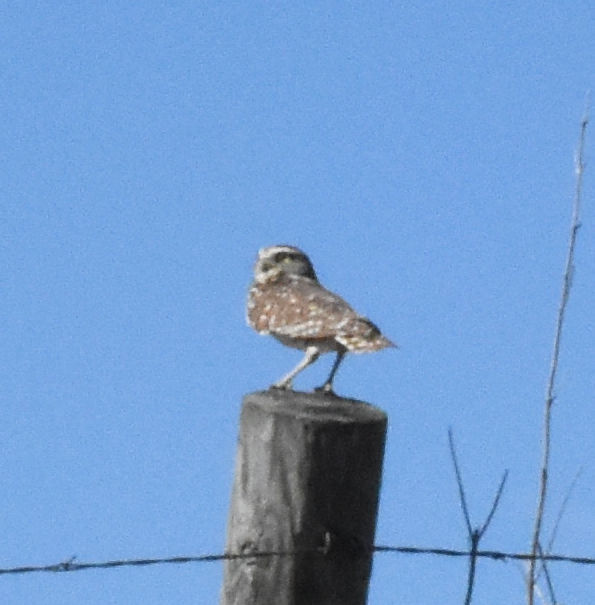
Burrowing owl
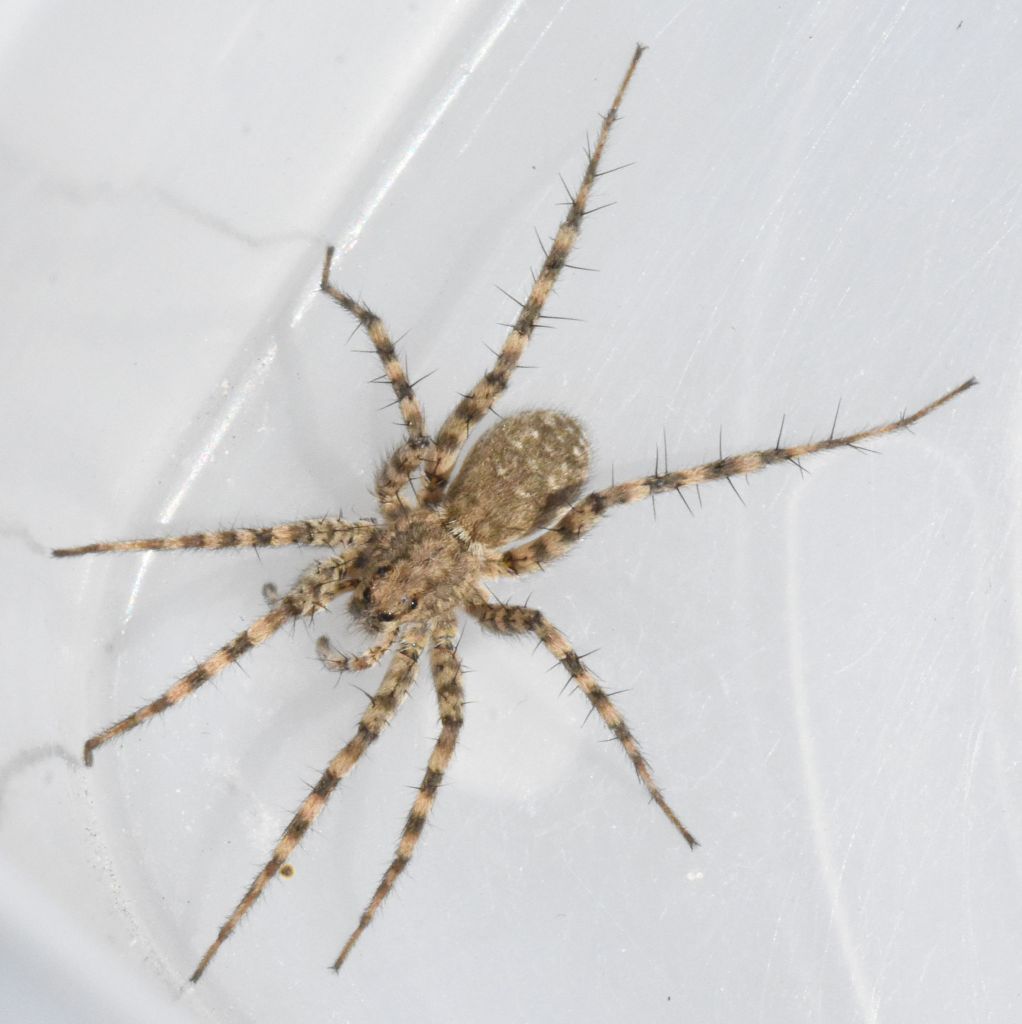
As I approached the parking area on CR 349, the road crossed a mostly dry deep ditch with a pebbly bottom. I immediately thought I might find some Stone Spiders (Pardosa lapidicina) there. I had recently encountered all four Pardosa species in the milvina group over in Burleson County and that left just four more Pardosa species to find in this area. It was my lucky day, because nature was unusually predictable. Nature even gave me a bonus as a Burrowing Owl flew up and sat on a fence post as I picked my way down into the ditch.
End of the story with the Stone Spiders? Not quite. After I got home I looked up photos of Pardosa lapidicina on iNat and BugGuide, and mine didn’t look sufficiently identical. There are three Pardosa spiders in the lapidicina group in the area, so I figured it must be one of the other two. After consulting a few scientific papers, I’ve tentatively identified mine as P. vadosa, first described in 1959, for which there are no living spider photos on-line. I’ve asked for expert help and await a reply. Reading between the lines a little, the western edge of vadosa range may coincide with the western edge of the Blackland Prairie. Father west, mercurialis takes over.
Here’s one of the Pardosas, perhaps a vardosa!
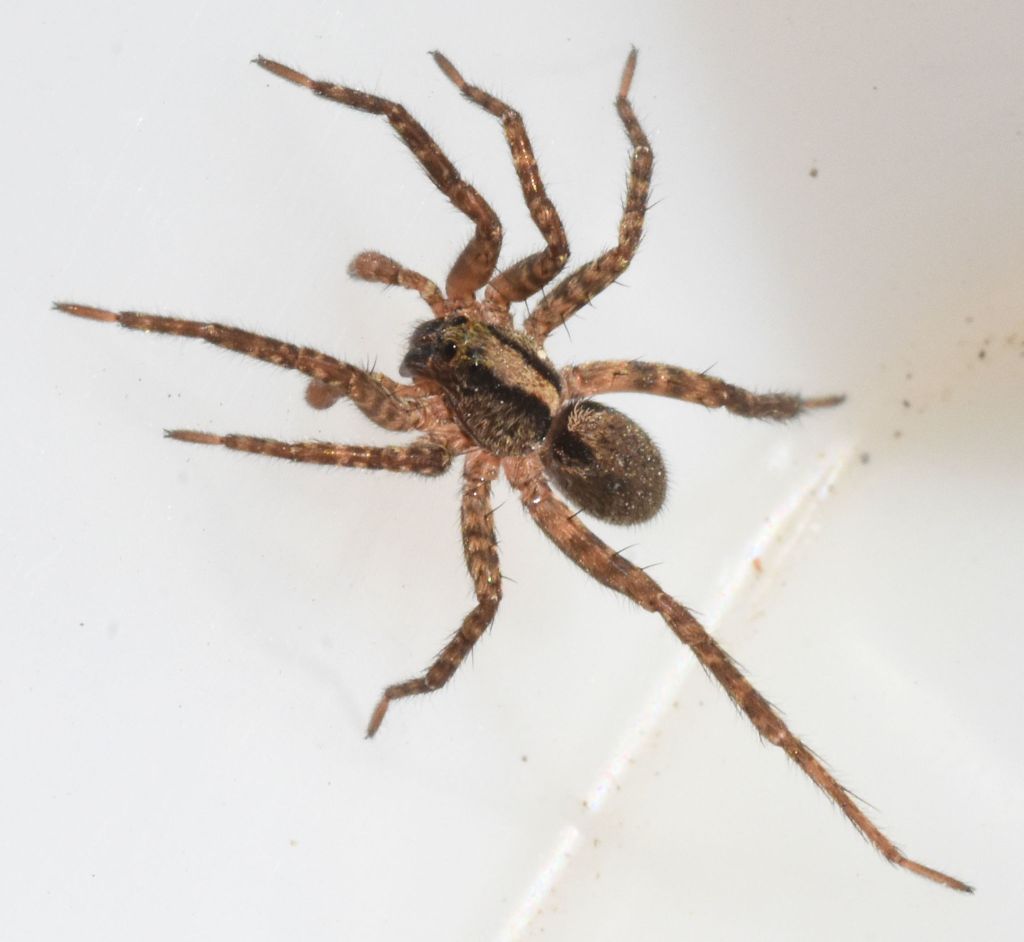
In more spider news, I’ve been finding these Trochosa sepulchralis in a small part of ditch on CR 418 adjacent to woodland. These are my most recent of eight observations and include a male and a female. Identification is difficult, but at least there are fairly recent papers on them. Camptocosa, Trochosa, and Varacosa each include similar species. The differences are subtle, so I’m not sure if I got it right. Not sure if these are adults yet, but they appear to be close. Incidentally, this species was first described from Philadelphia PA where I was born.
My report is nowhere near as fascinating as Eric’s, mainly because I only saw two insects other than fire ants, and they were too fast for me. I did get some nice photos of tiny flowers, and spent a lot of time puzzling over grasses, including once when I accidentally said a bunch grass was Bermuda grass. I’m sure that made Linda Jo laugh.
But it was a beautiful day, so I enjoyed seeing what there was lots of and what’s just poking out of the ground. There is lots of henbit deadnettle, that’s for sure. I’m enjoying seeing it cover whole fields, even if that bothers farmers.
I went a little overboard and made 72 observations, but was pleased to see that put me over 2,000 iNaturalist observations. And I sure know what’s growing around my property in early February now! I had a blast!
Common dandelion
False dandelion
A very thick poison ivy vine
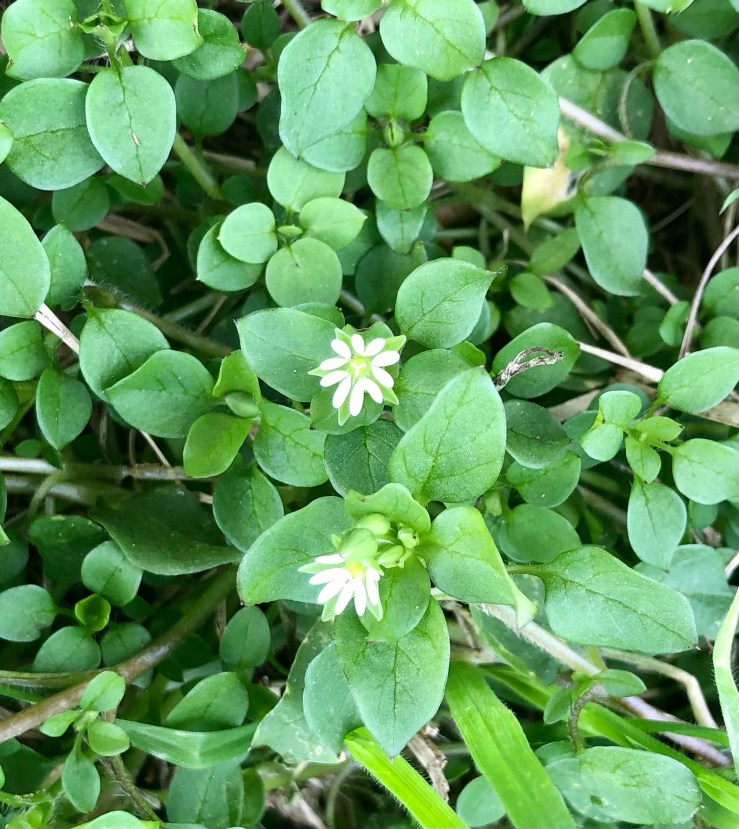
Burr clover, maybe
Common chicory
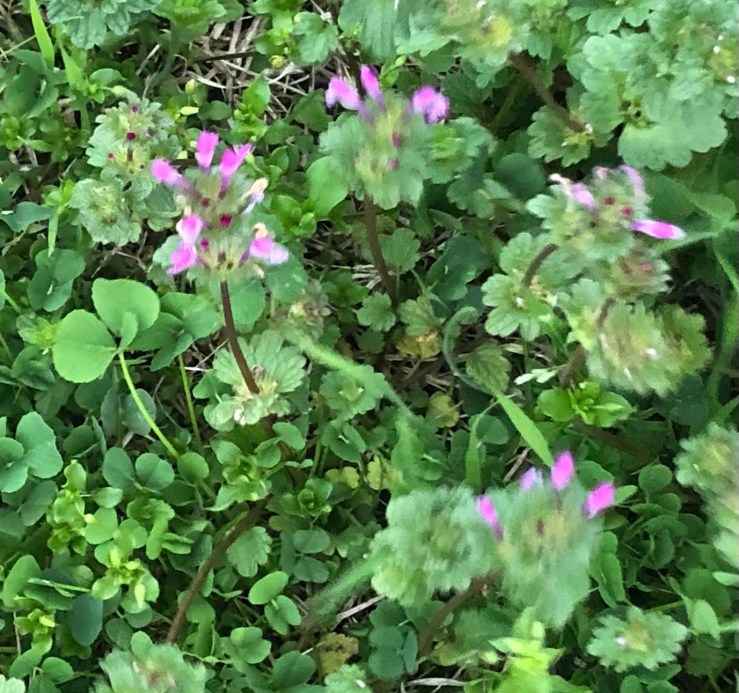
Henbit deadnettle, in the wind
Field madder
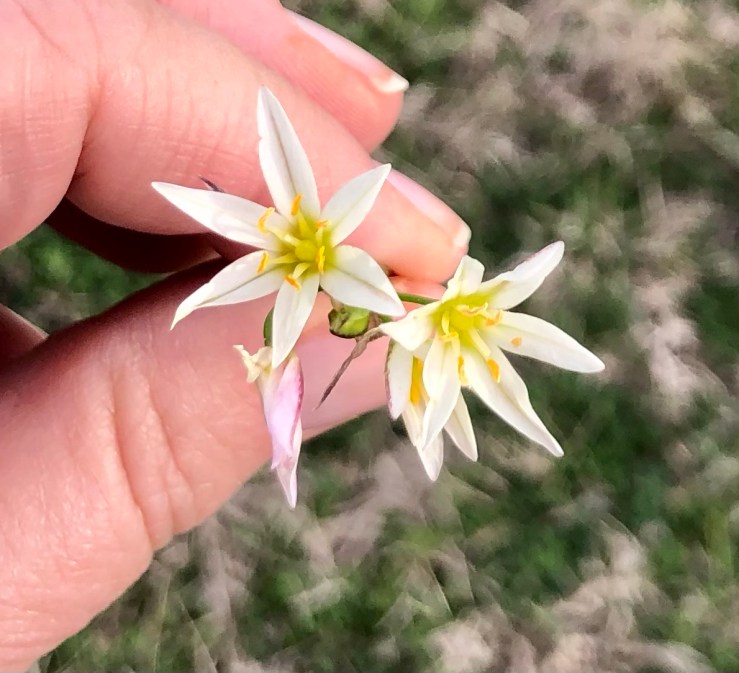
Crow poison
One of many grasses. Winter rye?
Stuff Sue Ann saw
Other Folks
I do want to point out that other members of our Chapter have made fun observations, too. Marian, Linda Jo, and Carolyn also got out and checked out their surroundings. Please go to the project page to keep track of our activities, and let Linda Jo know if you would like to participate! Just because it’s a bit chillier doesn’t mean it won’t be fun to get outside. My phoebes are certainly goading me!
Stats as of this morning. I promise to not report so many the rest of the week.
Thursday, February 4, marks the day! Our El Camino Real Seasonal Winter 2021 iNaturalist BioBlitz begins at 12:00 am that morning and continues until Wednesday midnight, February 10, the following week. For some time, our chapter has not been able to gather as a group for a nature survey, so the week will be an opportunity to figuratively join forces to document the fauna and flora of the areas where we reside. Yes, this does include our personal property as well as our neighborhood and the places we go as we physically distance during the COVID restrictions. So get that camera ready!
The BioBlitz is an iNaturalist project. See: https://www.inaturalist.org/projects/ecr-seasonal-winter-bioblitz. Yes, you must be a member of iNaturalist to participate. And yes, to get volunteer hour credit for participating, you must email connlindajo@gmail.com and state that you want to join the project. OK, I can hear the groans from miles away. Must I again emphasize that iNat is a valuable tool that documents nature and is used not only by TPWD but other organizations and university researchers as well?
A prime example is the rare sighting of a live Spotted Skunk (Spilogale putorius) by Ann Collins on her porch in the suburbs of Milano. It is the only Milam County observation on iNat and one of the few documented observations in Texas. (https://www.inaturalist.org/observations/2710384) Ann’s observation caused a lot of excitement and interest at TPWD. Clint Perkins, a graduate student at Texas Tech, did field research on Ann’s private property and continues to review all mammal observations on iNaturalist.
Eric Neubauer has the only observations of the Southwestern Dusky Grasshopper (Nebulatettix subgracilis in Milam County. (https://www.inaturalist.org/observations/34920111) Again, there are few documented sightings in Texas and those were probably not made at a state or city park.
Countless unique observations added to iNat have been documented on personal property by a Texas Master Naturalist, but those species we may consider common or mundane also have a definite need for documentation. I have personally noticed the apparent change in bloom times for wildflowers, the species of migrant birds I see, along with the disturbing spread of invasive species, and so I document even the ubiquitous species. Each and every legitimate observation has value.
So what is the point of all this? Some Texas Master Naturalists have been disgruntled by the exclusion of the time spent on iNaturalist observations on one’s private property as valid volunteer hours. As a result, many have lost interest in using iNaturalist as a personal tool for sharing and learning about nature.
Well, I have two points to make:
Number One: Since approximately 95% of the land in the state of Texas is privately owned, neglecting to enter observations from our personal properties skews the data. I urge you to continue your contributions as citizen scientists by observing and documenting on iNat what you see around you every day.
Number Two: This is an approved project where El Camino Real Master Naturalist members have an opportunity to observe at leisure on their private property and earn volunteer hours without having to travel to participate in a BioBlitz.
So join iNaturalist and the ECR project. Take photos. Share them on iNaturalist. Report your volunteer hours. It is that simple.







 Nature Along the El Camino Real