Alien Abductions in Milam County!

by Eric Neubauer

The rash of alien abductions in a certain sector of the Alligator Creek community has finally come to an end although they don’t know it yet. They have suffered being scooped up and moved through a series of examination rooms, often with bright lights, and being occasionally prodded for over two months now.

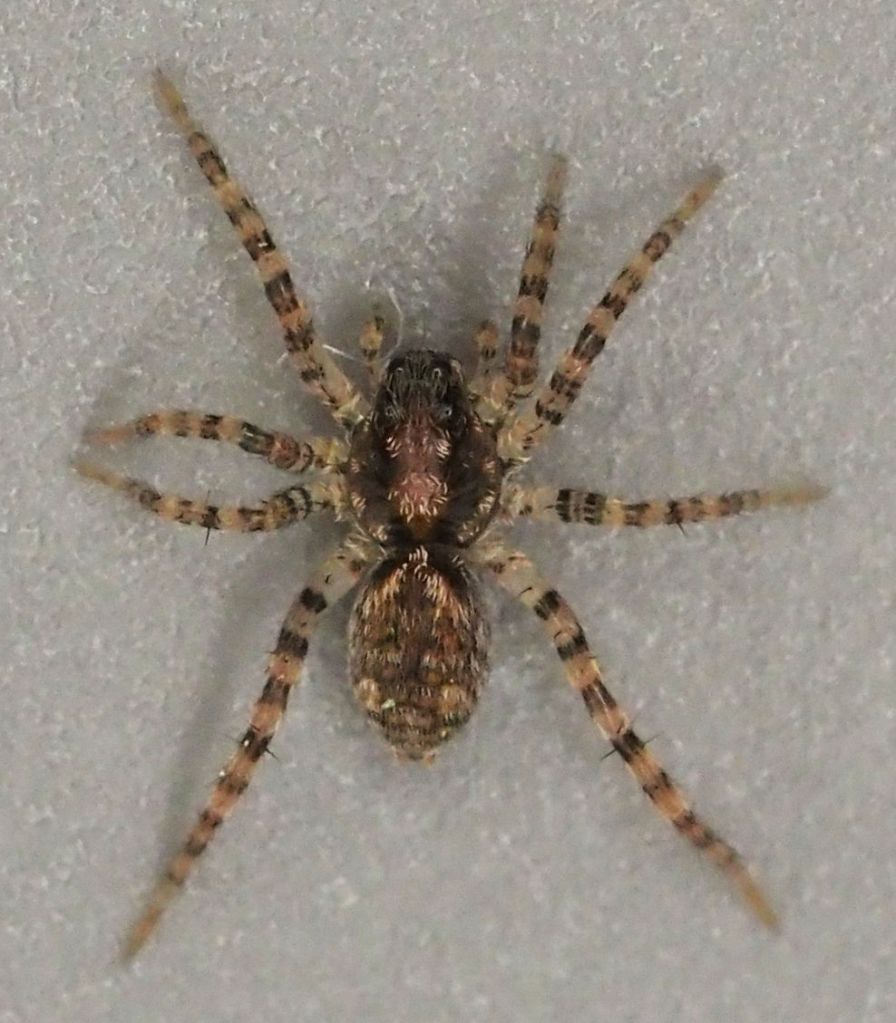
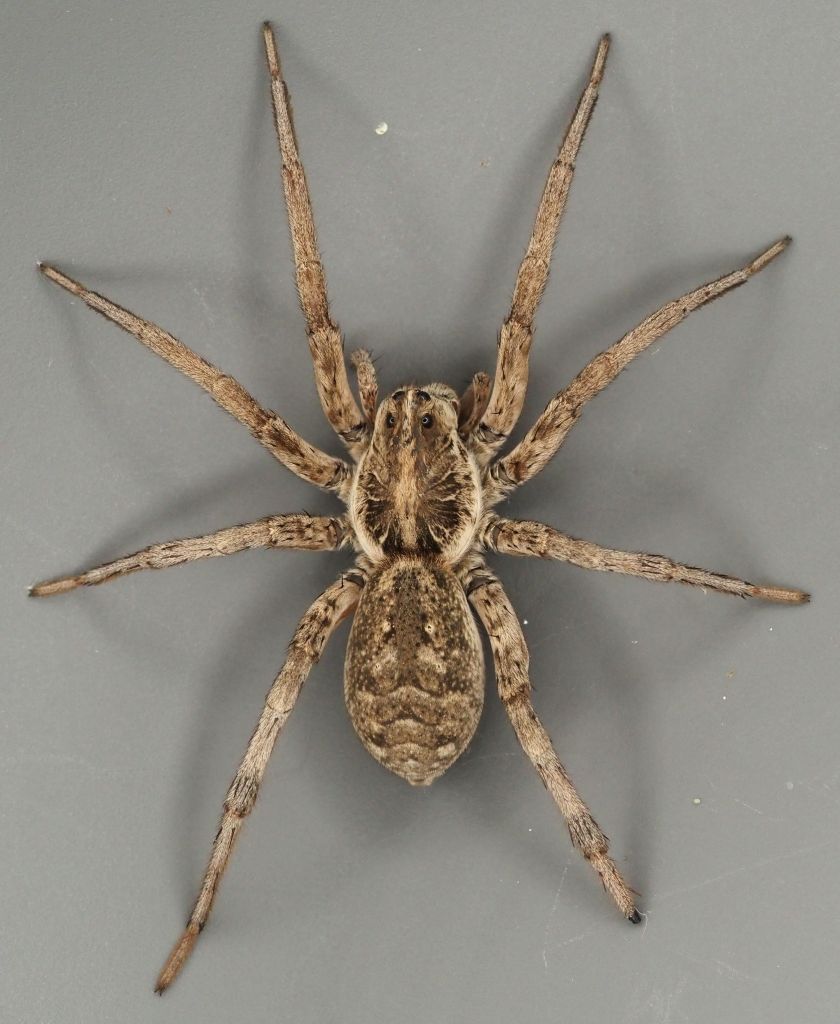
My earlier photos of Schizocosa perplexa weren’t good enough to do the species justice, so fixing that was on my project list for this winter. I started looking sooner, discovered the mid-juveniles in December and found they were easy to identify. Then I checked back whenever the weather was warm as the mating season approached. First the males became adults, and then finally the females just this week. Photos of a female are included here.

Whether they deserve a conservation status or not is unknown. They appear to have very specific habitat requirements, specifically wooded flood plains with long lasting vernal ponds. Substrate is important as I could only find them in two places in the Blackland Prairie part of the county. I’ve looked carefully in the Post Oak Savanna part and couldn’t find any. My local colony appears to have had a good year. The other colony in Milam County was gone this year. It may have been active
earlier but by the time I checked it last week, the ponds were already dried up and the leaf litter well picked through by armadillos. The original specimen came from Garland, Texas, and iNaturalist observations suggest robust populations in the Dallas-Ft. Worth area. These observations lack underside views so the species can’t be confirmed. S. perplexa is also known to be in Ohio.

No spiders were harmed during this project and all are alive, free, and well at home unless they got eaten by a frog, armadillo or suffered some other misadventure.

Return of Hogna Incognita

by Eric Neubauer

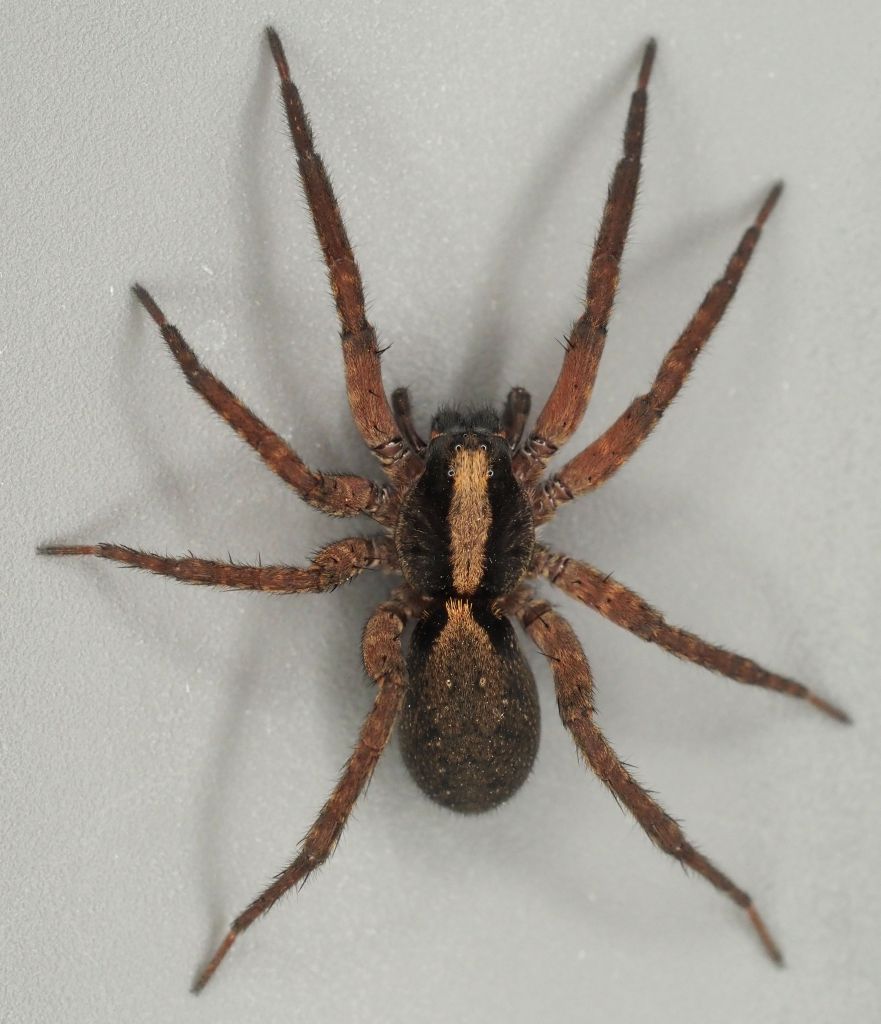
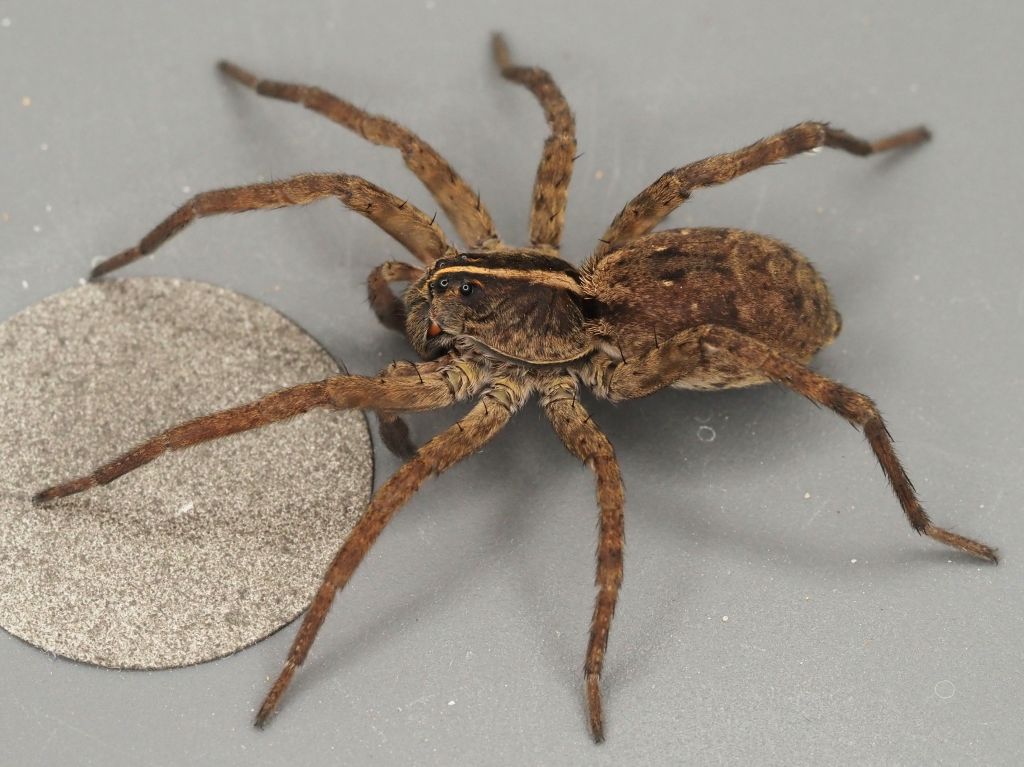
Just last Thursday night I mentioned I hadn’t seen any Hogna ‘incognita’ for a while. The last time was December 31 to be precise.

Early Friday morning, I found out they were back!

I’m back!

Based on another’s similar experiences, this nap time seems to be true of the species, regardless of environmental conditions. Its close relative, Hogna antelucana, passed on napping and is now significantly larger. That’s a neat thing about a new species. Every little discovery about it can be a surprise.

The three I found Friday are the newest at this link.

A Fine Spider Photo

by Eric Neubauer

I usually take photos for identification, but occasionally there’s one that could hang on a wall.

Look at those eyes!

Most wolf spider species pass the winter as juveniles. Tigrosa georgicola is an exception and one of the larger species. I’ve generally had trouble identifying Tigrosa to species, mostly because I hardly ever encounter adults.

This winter I have two locations where I can more or less reliably find Tigrosa georgicola adults and am taking full advantage of it. The females must be keeping to their lairs since I usually find males, but at least I’m getting practice identifying one of the sexes.

Spider Hunting on Alligator Creek

by Eric Neubauer

Sorry to miss the last meeting, but it was prime (for January) wolf spider weather in the early evening and I had unfinished business down near Alligator Creek.

Two images are attached. Both are adult males and would be considered large wolf spiders with a body length approaching a half inch. One is Tigrosa georgicola, a common species around here. I’ve seen them near the creek several times.

The other [P111694] has been baffling me after I found the first one on New Year’s Eve. Field identification guidance is fairly well developed for the larger wolf spiders, but there were reasons for eliminating all of them. I’ve found three now, so the first wasn’t an oddity.

Originally, I thought it might be Alopecosa, which only has a few images on the internet. At present I’m thinking it might be a morph of the other species I found there, Tigrosa georgicola. If I was still taking typical wolf spider photos, that is dorsal views only that weren’t highly detailed, it would have ended up as “something in the Schizocosa ocreata species group” and that would be the end of it.

As it is now, I can’t get beyond subfamily Lycosinae but am favoring a rare morph of an existing Tigrosa species or much less likely an undescribed Tigrosa species. Considering all three were found in the same area, they could all be siblings. Their mother would be proud.

I suppose there could be another option: a hybrid of Tigrosa georgicola and Schizocosa perplexa but I’d think the two are too unrelated to produce offspring.

Winter Spiders

by Eric Neubauer

Wolf spiders can be a winter activity; just use a headlamp at night when it’s relatively warm and humid.

Last Wednesday, I went out there to see what I could find, and came up with five species. Most were juveniles of course, and now is a good time to photograph them as they grow.

The ones I saw covered most of the possible size range. The smallest had a body
length of 0.11″/2.8 mm. At this size it could still be with its mother. The legs are short (fully stretched out in the photo) and they don’t run very fast. Their best defense is to pull their legs in close, stay still, and pretend they’re a wee lump of nothing worth notice.

Juvenile

The largest had a body length of 1.1″/27 mm. I’m still not certain which of two species it is and should have used a larger container for photos so she could stretch out her legs and show me another clue of her identity.

Adult

Doing the math suggests that the weight of 1,000 of the little ones would equal the weight of the large one.