
by Eric Neubauer
Finding wolf spiders during winter is a challenge since favorable temperatures are uncommon and often short lived. It’s a good time of year for me to concentrate on local species that need better photo
coverage. One such species is Gladicosa pulchra, the contrary wolf spider that dwells in the treetops. They seem to be absent from the Blackland Prairie, and I’m only aware of them being at one location in each of Burleson and Milam Counties.
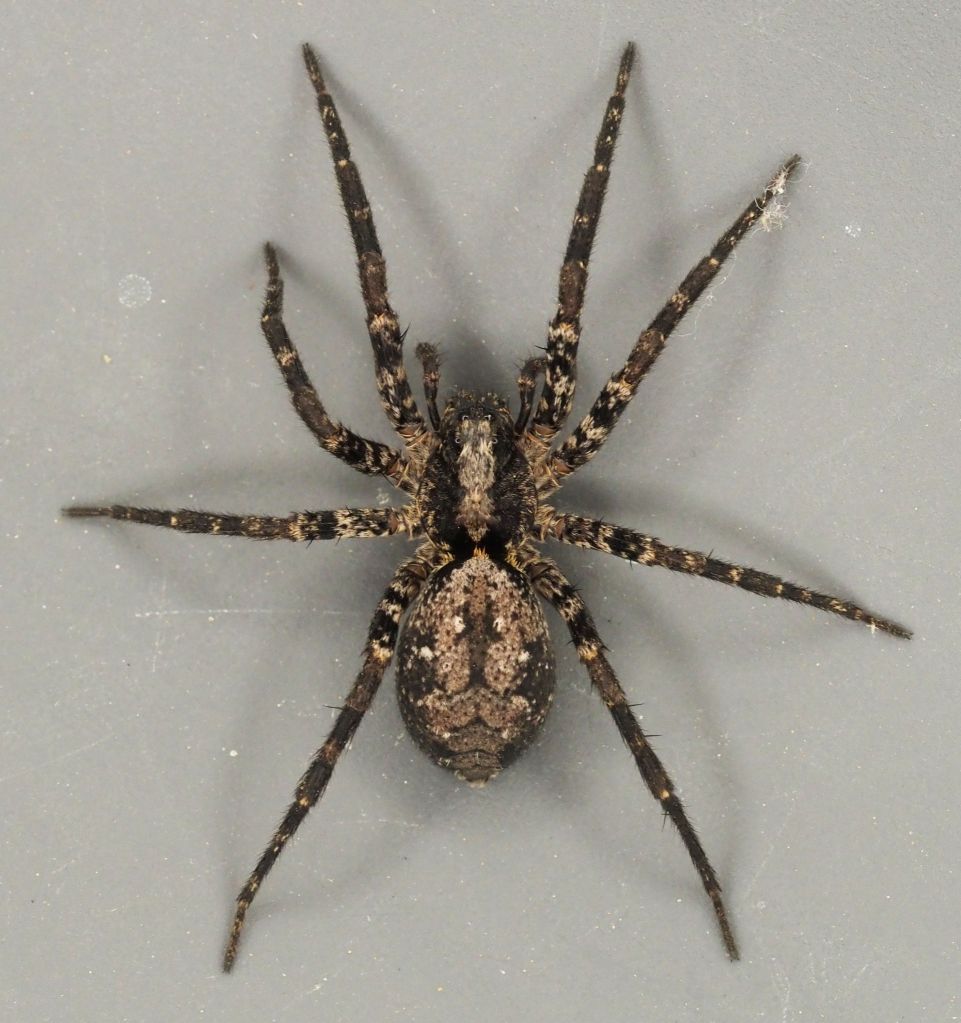
On December 25, I visited the Cedar Hill Nature Preserve, and on January 7 I visited Edwards Ranch. Spotlighting was the easiest way to find them. I quickly discovered they are more plentiful than I expected, and that December-January is the height of their mating season. I also found that while they live in the canopies of post oaks most of the time, they all follow the leaves down to the ground where they became a lot easier to catch for my photos of several adult females, some already gravid, and two adult males.
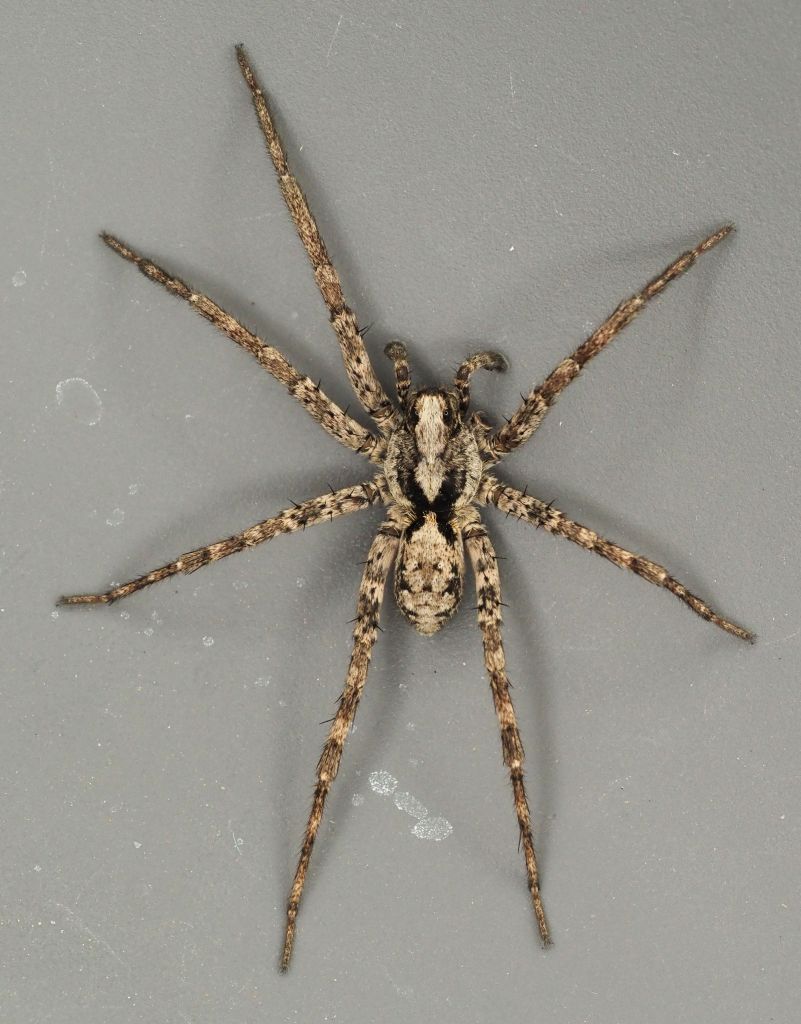
Gladicosa pulchra was first described in 1877, spent time in several different genera, and was ultimately put into a new Gladicosa genus by Brady in 1987. Regarding the color, he wrote,
“The range of color in G. pulchra is greater than that of G. gulosa. I have noted light forms and dark forms of pulchra. These do not represent a genetic polymorphism but are the extremes in a color continuum. There is no discernible correlation between geographic locality and color pattern among the specimens examined. The darker forms are much more numerous than the light colored ones.”
With my recent observations, I believe I have a natural explanation for the two forms, and it’s most certainly genetic polymorphism though of the sexual dimorphism variety. A little field work certainly paid off. True to the last sentence, I saw more dark females than pale males which is typical of most species since males don’t live as long as females as adults. Females may even delay egg production while waiting for better conditions.
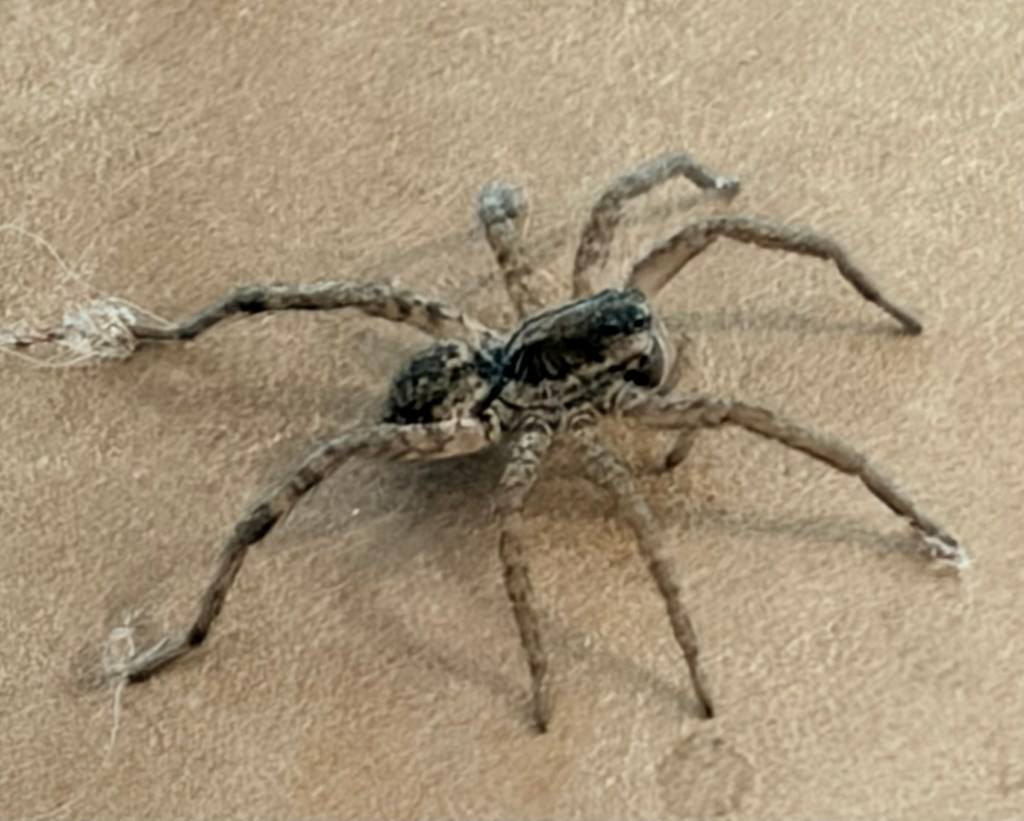
Addendum: Coincidentally, as I was getting this blog ready to upload, I looked over and there was a Hogna antelucana watching me. I took this friend outside to a warm spot — Sue Ann Kendall
 Nature Along the El Camino Real