Our Bird Station Is Under Construction

by Sue Ann Kendall

Members of the El Camino Real Texas Master Naturalist chapter, led by Ann Collins, our resident avian expert, are banding together to work on our latest project, which is an area created for the benefit of our Milam County birds that will allow for visitors to safely see and enjoy them. Ann will announce its name at an upcoming event, so stay tuned!

With much appreciated assistance from agencies such as Texas Parks and Wildlife and the Natural Resources Conservation Service, Gene Rek has been preparing the area that Ann selected for the station, which happens to be near the Wildscape we’ve created. Gene and his crew have built beautiful new fencing around the birding area, cleared brush and some trees to create open space, started a road that will lead to the area, with parking, too. Yaupon mulch will be used to protect new plants.

New fence and gate, and evidence of a removed tree.

There is already water running to the site as well, which will make the next stages of the project much easier.

Those future plans include planting many native plants that will provide food and shelter to birds and installing water features for both birds and people to enjoy. There will be different kinds of bird feeders in addition to natural sources of food like beauty berries, yaupon, pokeweed, and nuts. Benches will also be installed (and donations of benches with backs are welcome).

The pipe in the center will be made into a hanger for bird feeders

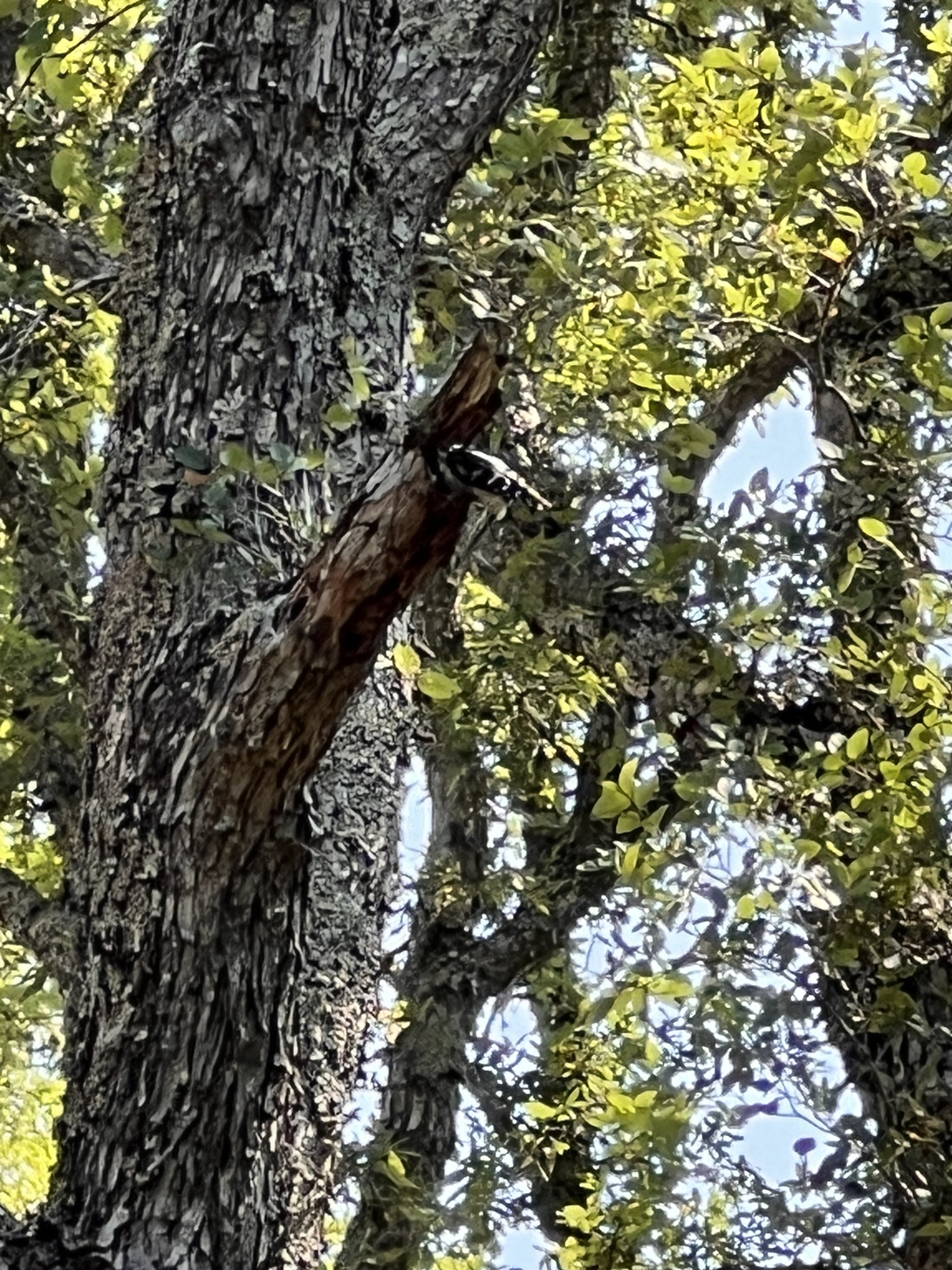
As of now, there are large logs created from trees that have been thinned outlining the main observation area and providing seating. I was there yesterday and observed a Downy Woodpecker busily hollowing out the remnants of a broken limb to create a house or somewhere to store food. I also watched dung beetles hard at work moving a ball of cow dung to wherever they wanted it to be. As this was happening, Carolina Chickadees were feeding in the oak trees and chirping merrily, as Painted Buntings, Carolina Wrens, and a Pileated Woodpecker contributed to the chorus.

Birds seen or heard yesterday:

  • Barn Owl
  • Barn Swallow
  • Carolina Chickadee
  • Carolina Wren
  • Downy Woodpecker
  • Northern Cardinal
  • Purple Martin
  • Painted Bunting
  • Pileated Woodpecker
  • Red-bellied Woodpecker
  • Yellow-billed Cuckoo

It’s already a beautiful and pleasant place to relax and observe our amazing world. I plan to help out with the project by documenting it here on the blog and keeping a count of birds I and others observe as time goes on.

Future residents await their time to shine (AI image; doesn’t look like real woodpeckers)

They Aren’t Supposed to Be Blooming!

by Gene Rek

Late January is the beginning of spring for the honeybees. That is when the cedar elm trees begin to blossom, and the bees start bringing in sacks of yellow pollen. Pollen is protein for bees, thus particularly important for a healthy hive.

Bees coming into their hive packed with yellow pollen from the elm trees

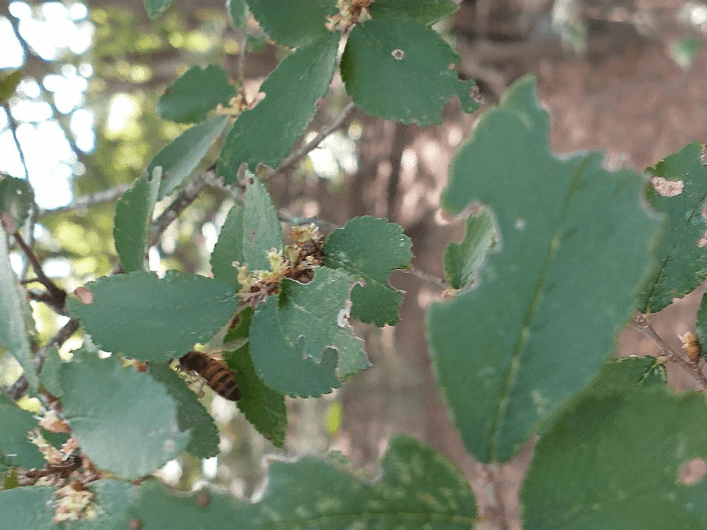
Today when I was in the woods the trees were buzzing. It’s not unusual to find bees busy in trees in late summer or fall when they might find galls on oak trees or dewy sap on pecan leaves. I was curious as to what was causing all this activity. I was not surprised to find them on the elm trees, but the reason they were there did surprise me.  The elms are in bloom! Some of the trees are in full bloom while others are fading.

A bee gathering pollen from elm trees

We received almost 2.5 inches of rain last week. After a brutal summer did this cooling off to ninety degrees fool the trees?

More bee action around the cedar elm blossoms

I’ve never observed this before. Maybe being a Master Naturalist is making me more observant of such things. 

[Editor’s note: I noticed that mesquite trees were blooming at my ranch this week. iNaturalist wasn’t able to ID my photo, perhaps because they were blooming at an unusual time.]

The Martins Are Close Now

by Donna Lewis

It is now time to have your Martin Housing ready to open.  If you noticed, I said ready, NOT open yet.  You do not want to open the cavities till you hear the Martins at your site.

If you do, you will have a House Sparrow hotel.  You cannot allow the House Sparrows to live in the Martin housing.  They will kill the Martins for the nest.

So, when you see or most likely hear your first Martins arrive, roll down your gourds or apartments and open only a few of the entrances. Open more as more Martins arrive.

It’s a delicate dance for sure. The more you do it, the better you get.

Putting everything back after the Martins have been gone for six months is hard on us senior folk. So, I was lucky this year to have some wonderful volunteers from our Master Naturalist Chapter come over and install the gourds and the Owl Guards for me. Cindy and Gene Rek came last week and did this for me.

The photo of my gourd rack shows the Reks installing the gourds.

As of 1-20-2023 the updated scout report has Martins arriving in Louisiana and Florida. So, they could arrive here in three to four weeks. 

The rack is in its down position for now.

I get asked why I would go to so much trouble for these birds.   Once you hear their beautiful songs, you will know why.  It’s truly a wonder you will not forget.

The Gourds with our friends in 2020.

I will run the houses up the first week in February and I will let everyone know when my first Martin arrives. Martins depend on human-supplied housing now, almost exclusively.

“How wonderful it is that nobody need wait a single moment before starting to improve the world” 

–Anne Frank