Farewell to the Garden Spiders

by Eric Neubauer

Fall is a sad time of year for some. I had garden spiders arrayed around my house again this year. One picked a low spot between the porch and skirting. It was a good spot at first and she grew quickly. There were lots of suitors while she was the only show in town, including some from the other species.
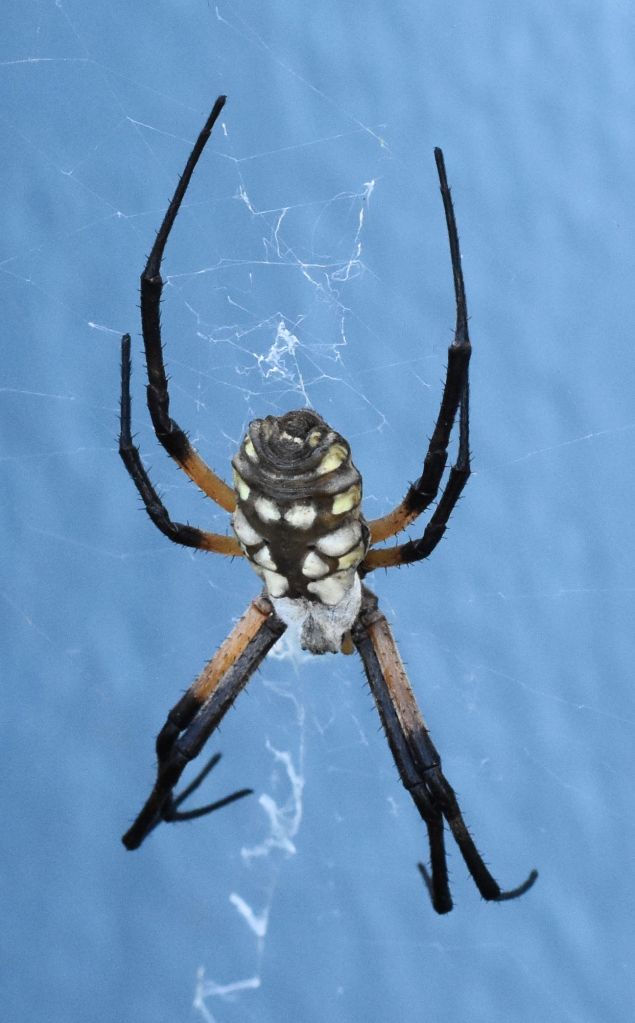
Argiope aurantia

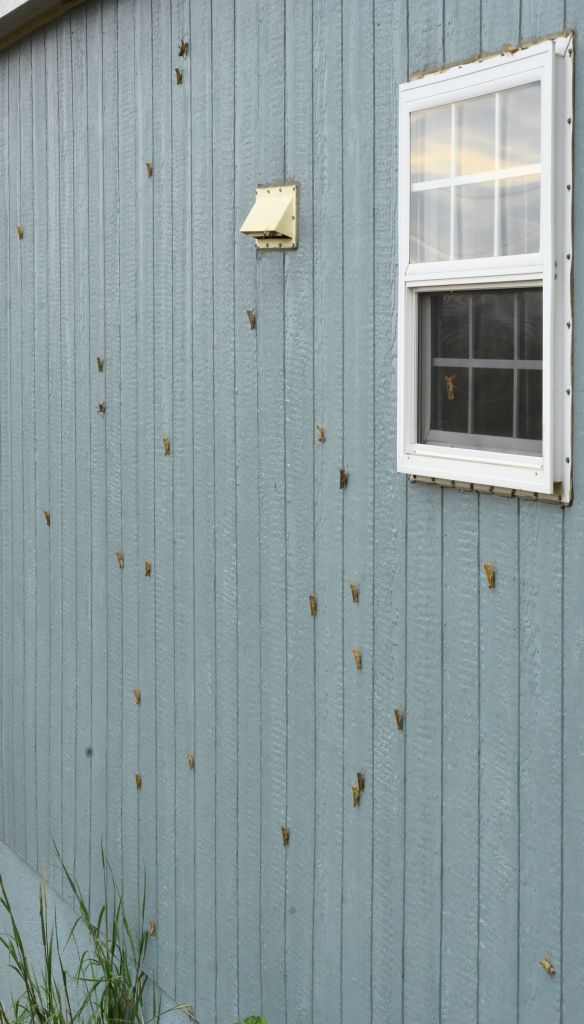
About that time, she wasn’t catching anything and looked like she might be starving to death, so I started throwing differential grasshoppers into her web. After a while she was doing OK on her own, so I stopped. In all she produced six egg sacs. No other spider came close and most never produced a single sac. After the last sac, she caught no more grasshoppers and died about a week after the photo was taken.
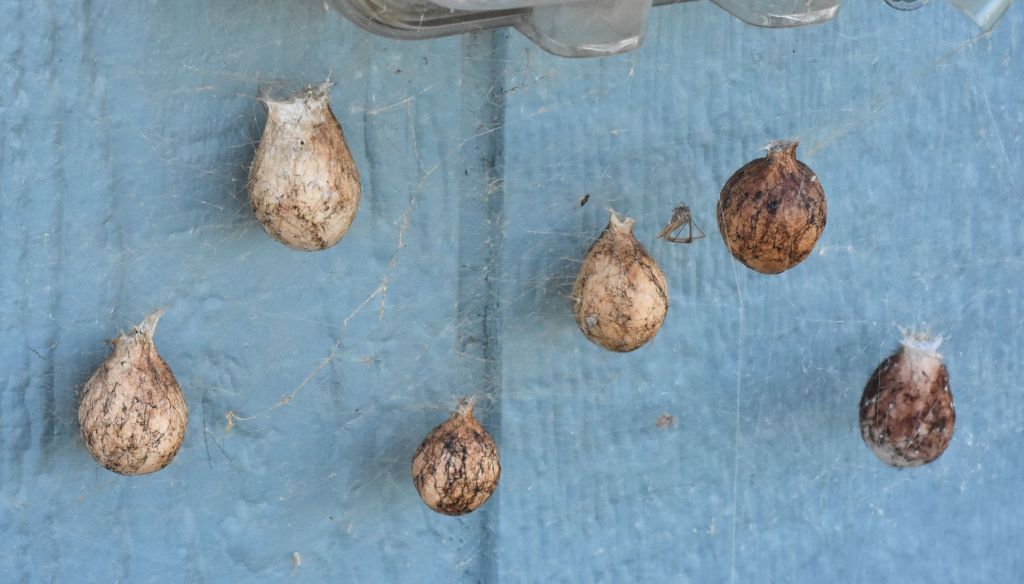
Egg sacs ad what appears to be a former suitor

Prairie Restoration Progress: Johnsongrass Removal

by Eric Neubauer

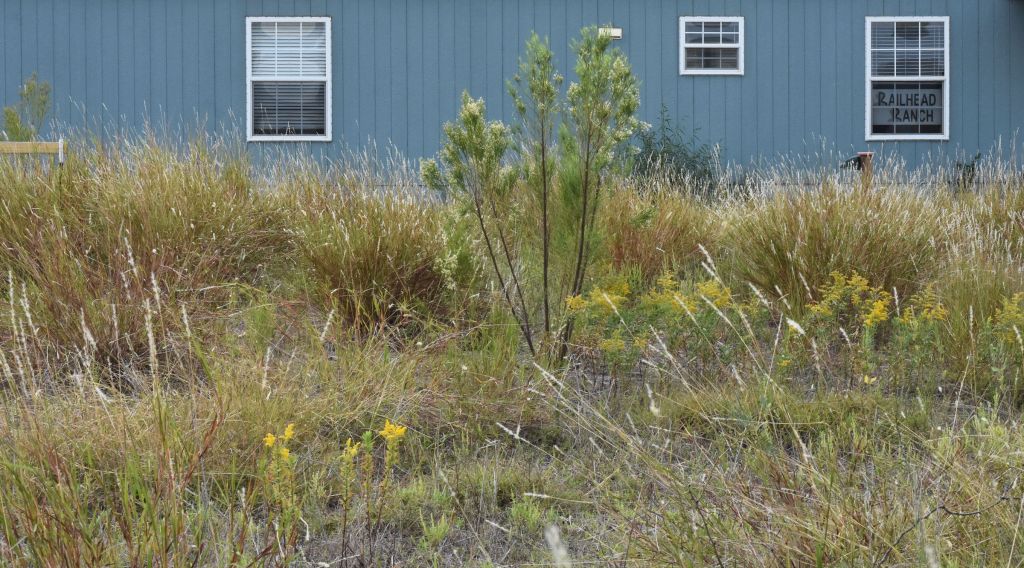
Many people in the chapter have probably heard about my continuing war on Johnsongrass. Here’s a shot from out in the yard of an area that was once overrun. You can see bunches of native grass which grow to about 4′, drifts of goldenrod, and a poverty weed. It’s about 30′ from the bunchgrass to the house. Although the initial Johnsongrass pulling was taxing, maintaining the area got easier with time. After several years it has dwindled to pulling scatted seedlings once or twice a year. The native plants were already there and just needed sunlight to thrive.

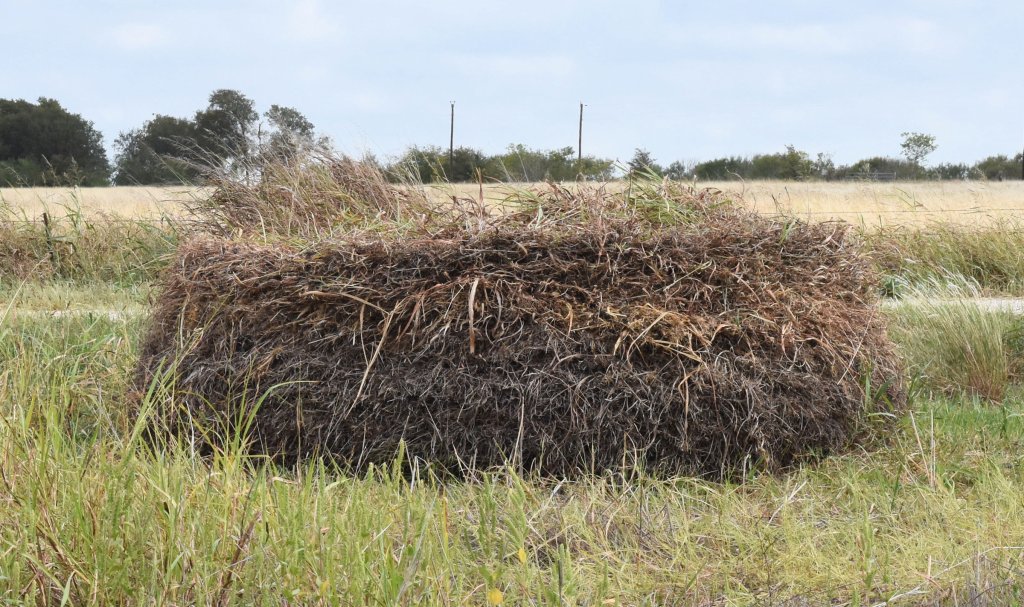
What do I do with all the pulled Johnsongrass? I decided to build haystacks to provide shelter for various animals. This one is conveniently located near the powerline that various raptors were hunting from last winter. The canes are arranged with the roots on the outside so they dry out and die, and the seed heads are on the inside where they won’t spread and germinate. The stack is about 12′ in diameter and 4′ tall now.

Johnson grass haystack

How long can wolf spiders live?

by Eric Neubauer

Sometimes people ask me how long wolf spiders live, and that’s a question I have too. I’ve been looking and lately spotlighting for spiders on my property for a while, and suddenly I can’t find any Schizocosa avida day or night. I know another observer on iNat about 150 miles to the northwest who hasn’t seen any recently either.

chizocosa avida

Checking the months of my observations, I find a peak in March and few from August to December. They have to be there, but are probably too small to be noticed. So, I have one answer: they live about 14 months and are mature for the last few.

Pardosa atlantica

Observations for their entire range on iNat show a similar pattern. On the other hand, adults of some Pardosa are present and breeding year round, so figuring out how long they live is a lot harder and could be less than a year. I suspect Hogna antelucana live well into their second year at least. So, it’s complicated.

Hogna antelucana

Not a Funnel Cake, a Funnel Spider Web

by Donna Lewis

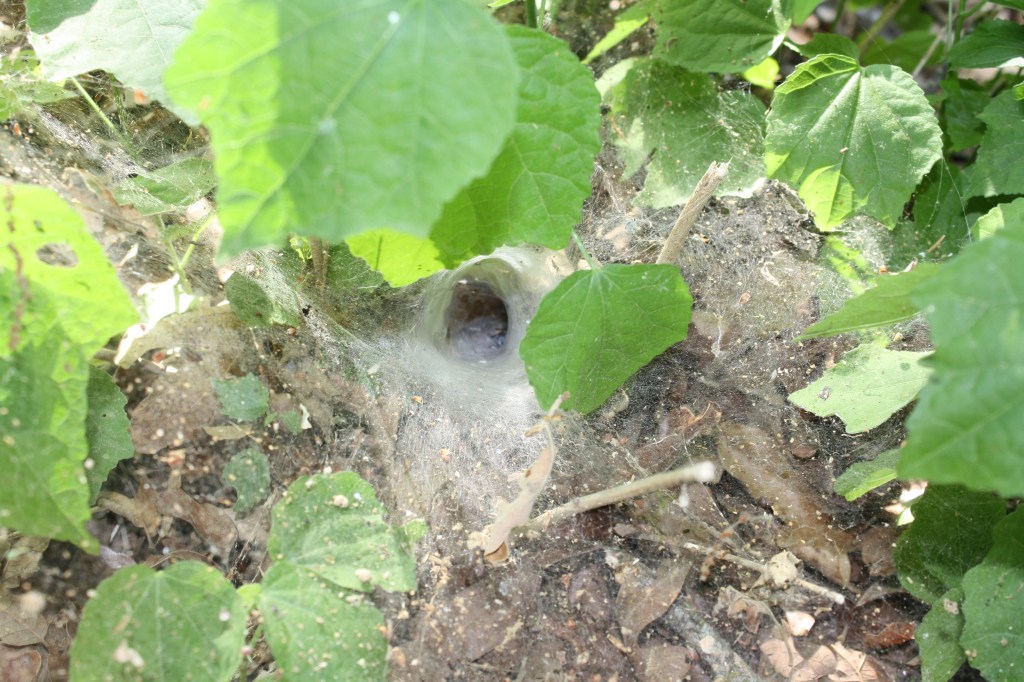
Just before it rained the other day, I saw this very interesting spider web under a tree, wound up in a Turk’s Cap plant.

I was not about to get too close as it looked like something that if I were a small insect, I would enter and never come out again. I think they make horror movies about these kinds of things.

But I was also struck by how intricate and, yes, beautiful it was. How can a tiny insect have the mind to construct something like this? Another one of nature’s secrets.

I sent the photo to Master Naturalist Eric Neubauer, who we are fortunate to have as a member of our Chapter to identify what spider made this. He said it was either in the family of Agelenopsis or  Agelenidae Funnel Spider.

They look similar to a Wolf Spider.  But I am not going to get that close to ask it.

The lesson is as usual, look around at nature and you will see wonderful things.