A Winter Mealworm Feeder for the Bluebirds

by Donna Lewis

I love the Bluebirds.  In the winter I try to help them out by feeding them dried mealworms.  They probably like live worms more, but they are more expensive and harder to get. But a little help during harsh weather is still a good thing.

Every year I hate to see the dried worms ruined by rain or ice. However, the Bluebirds will not use any feeder that is closed in. They want an open platform with a perch on it. They do not like anything that they have to go inside.

I have tried many types of feeders marketed for them. They have not worked.

I have been watching the birds for years, so I know what they do. I thought maybe a clear container with a small cover might do. I placed it on a square plywood board, put a back board on the North side to block some of the rain and wind, then watched to see if that would even take a chance and go for the worms.

Success!!  They did. Boy, was I excited.  Now, I will see what happens when the severe weather arrives.  That will be the real test.

They do not like rope or bungee cords attached to the feeder. They might think they are snakes?  I don’t know.  I hope the wind does not blow the feeder off.

Anyway, we will see soon if the feeder keeps some of the worms dry.

You have to observe our wild friends to see how they feel about something we have made for them.  Think like a bird. Keep learning by observing.

Who are you gardening for?
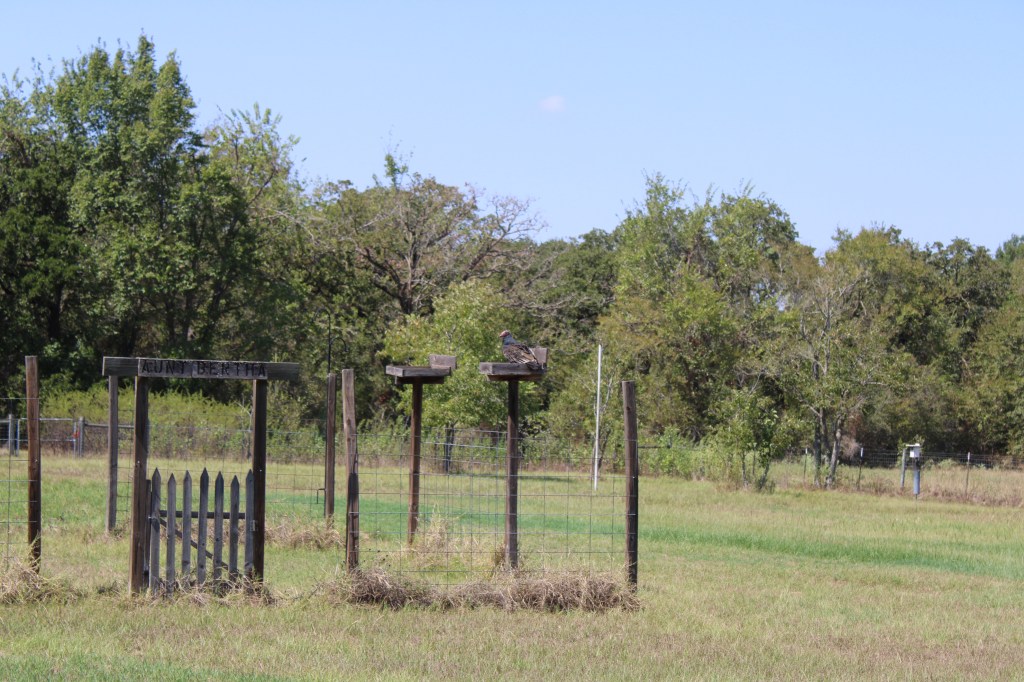
A Red-headed Visitor

by Donna Lewis

Right now, many birds are migrating South for the winter season.

Included in this very large group are the vultures, our friends who clean up decaying meat so we don’t have to. They are built just for this specific task. Lucky them.

We have two species of vultures that are commonly seen in Texas, the black vulture and the turkey vulture.

Vultures are BIG. They have a wingspan of six feet.  When you see them up close, you’ll know what I mean.

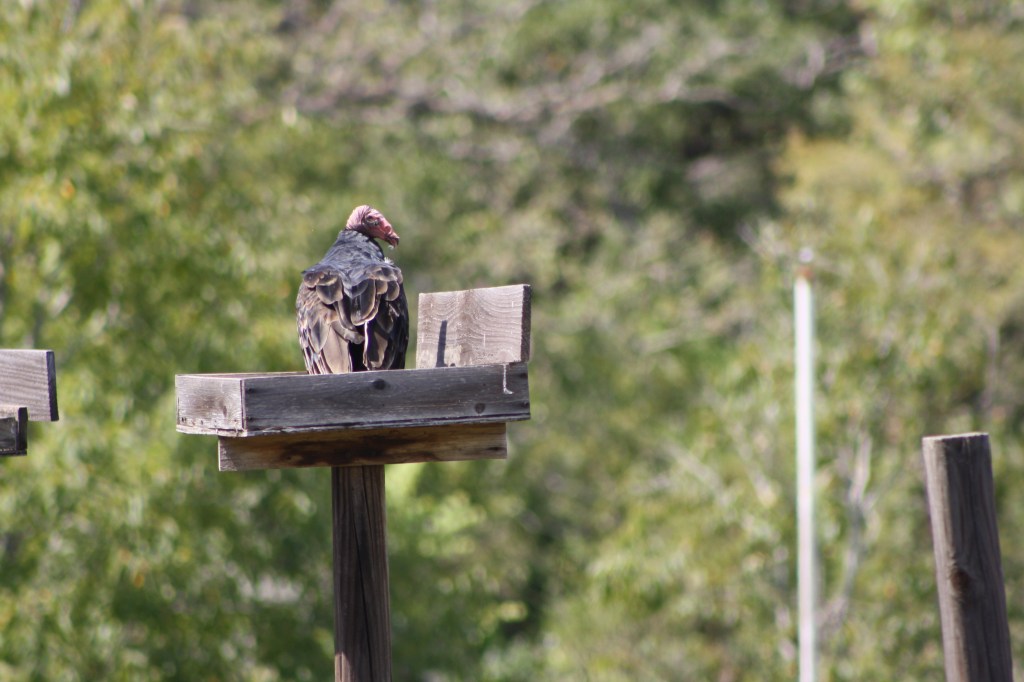
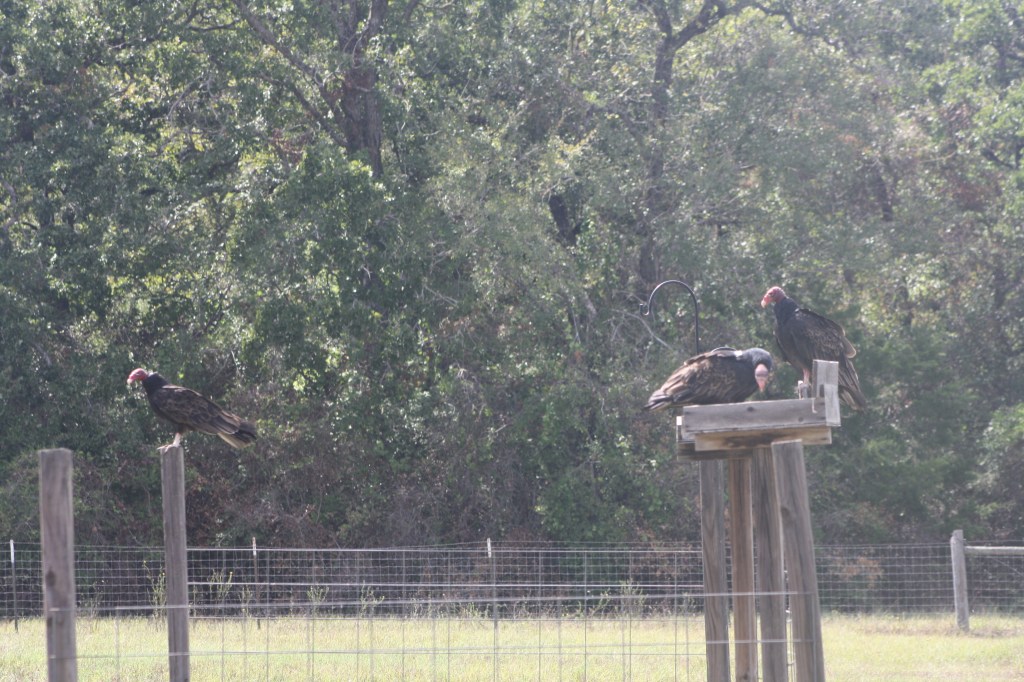
Yesterday, a turkey vulture landed on one of my platform feeders that I use for oyster shells for my purple martins.  A few other birds also like the shells for grit.

I put these structures in my bird area where I also feed bluebirds mealworms.

This guy sat there in the sun and heat for 5 hours. By now I am thinking that something is wrong. It’s 3:00 pm.  It should not normally do that.

I walked out to see if it would fly away, but it let me get close enough that I could have touched it.  I didn’t touch it of course; I value my face.

While it sat there, two of its friends came down to either encourage him or eat him.

 I called two rehabbers about it. I thought it might need medical help. They agreed.

I also called the local game warden but did not hear back from him.

So, I decided to call my neighbor to see if she would help me capture it, so I could transport it to the rehabber in College Station Texas.

I got a large towel, one of my largest dog crates, and some welding gloves together.

The rehabbers also warned me of something disgusting that vultures do when they are trapped and you try to move – they vomit on you! And it stinks big time.

My friend and I were careful to approach it from the rear using a ladder.

It just sat there and just before I was about to throw the towel over it, it flew off into a tree about twenty high near our woods.

Its wings look OK, but I feel it was sick. It should have flown up and away.

We could not help it now.  This morning I could not find it.  

I hope it was able to go on somehow and migrate with its friends.

I did what I could. I wish it fair skies and long life.

As goes the saying from you know who…” Live long and prosper.”

The Blues Brothers and Sisters

by Donna Lewis

As I have mentioned and you certainly know, this year has been a hard year for every living thing. Water and food are not as plentiful for our wild friends.

So, while I have lots of extra water stations, I also have put out extra bird food.

Black oil sunflower seeds are my favorite for most of the feeder birds, along with dried mealworms for the bluebirds and phoebes. Live mealworms are the best, but even more expensive than the dried ones.

I have spent way over my budget this year, so I need to win the lottery soon. Like me, the birds will have to be careful with our funds.

I took these photos this morning of first-year bluebirds sitting on one of my platform feeders eating mealworms I had just set out. They must fight the cardinals for them. The eastern phoebes also like the mealworms.

The bluebirds were born this spring, so they look a bit rough. They will look better in their second year.

It’s nice to do something for the birds. It’s nice to do something nice for anyone.

Remember who we garden for.

What’s That Orange Bird?

by Donna Lewis

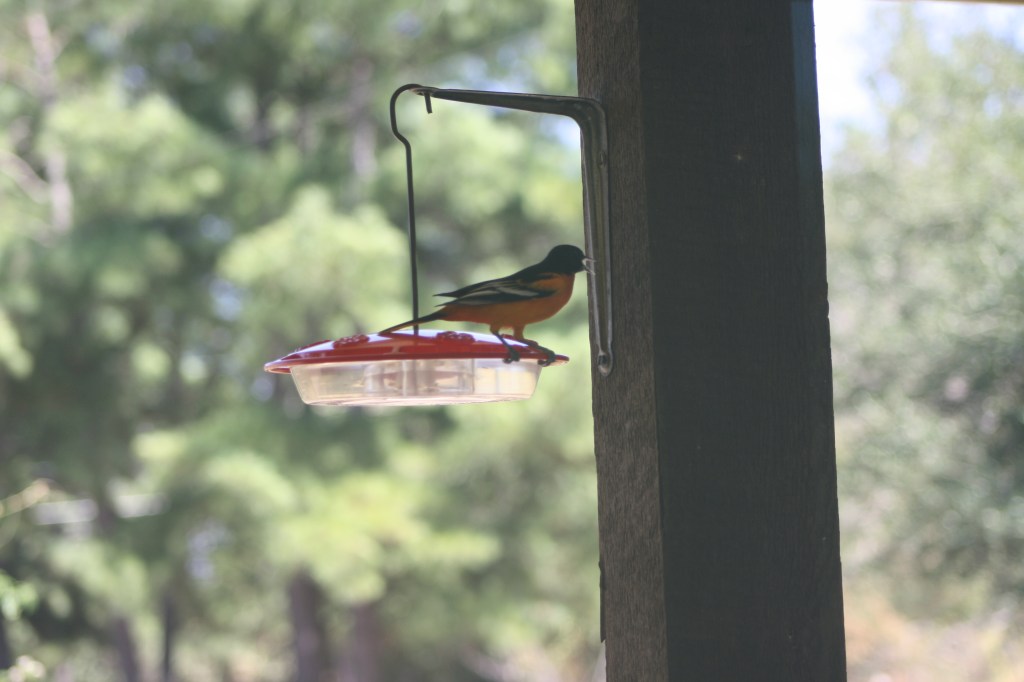
This morning I looked out our front window to check on one of my hummingbird feeders. I went oh, what is that big orange thing! It was a male Baltimore Oriole!!

It was trying to drink the sugar water from the hummer’s stash.  I rushed to see if I could take a photo through the window. I got a few that were good enough to clearly identify the bird. He was not there long because a couple of attacks to his head by one of my male ruby-throated hummers ran him off.

I had the bottom of an old feeder, so I got it out. I placed some grape jelly, pineapple chunks, and some Mandarin oranges in it and mixed a little sugar water in it also. An orange cut in half would have been better, but I had to use what I had on hand.

I took the feeder out to my garden and hung it on a shepherd’s hook.

In about an hour the Oriole found it. But so did the other hummers. Not so fast they cried.

Those little rascals simply think they own the garden. I have seen them run the butterflies off too. I love them all, so they will have to work it out amongst themselves.

I have noticed that for the past three years, I have had just one of these beautiful birds show up here at our place.  

So why is it alone? No one will ever know, he’s not talking.

The world is full of beautiful little nature events like this; you just have to pay attention.

Remember who you garden for.

Summer Hummers

by Donna Lewis

Here we are at the close of summer and we still have 100-degree temperatures. I maintain my hummingbird feeders year-round. In this heat, I change out the sugar water every third day.

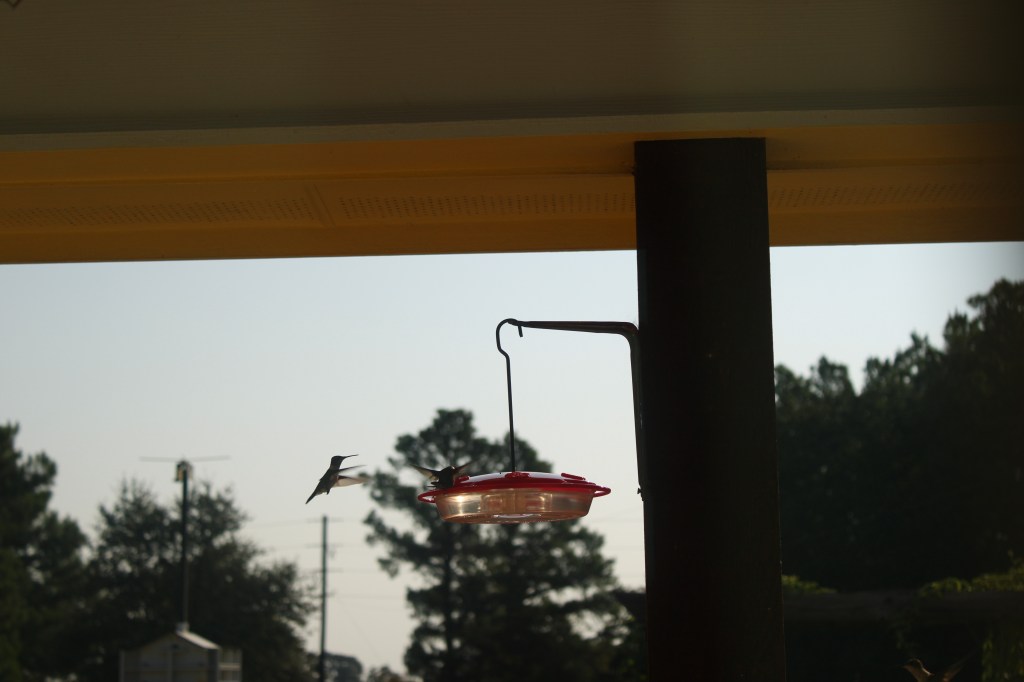
This morning I had a nice surprise!  I looked outside on our front porch and saw about 8 Ruby-throats trying to run each other off the feeder. Hummingbirds do not share very easily.  They must have to talk to each other first and come to an agreement before they all land and take a meal together.  Always competitive.

Out in the yard there are not many plants with nectar that are still alive. This drought has been very hard on all our wild friends, not just on us.

We have air conditioning and grocery stores; they have whatever didn’t die or dry up. Somehow, they manage each year to survive another season in Texas. I hope they always will. Need will find a way.

Remember to clean the feeders, change the water often and put the feeder under shade if possible.  If the water is not changed and is left out under the sun, it will become more like a hot toddy than a cool refreshing drink. Just a little care by humans will go a long way to helping out our tiny little winged friends.

I was lucky enough to attend a hummingbird banding years ago.

I paid the fee to adopt one at the event.  So, when a hummer was being released after it received the tiny lightweight band it was placed in my open hand. It stayed in my hand for a few seconds and flew up and away.

I have to say, it was so moving that I actually cried from the experience.

Its heartbeat and it felt like a bond was forged at that moment. I am sure it was scared, so I hope it got over that quickly. I would never harm an animal. Its band will help scientists follow their journey through Mexico.

Remember who we garden for…